标签: Asia

亚洲

  • Saudi Arabia diverged with Turkey and Pakistan on condemning Iran

    Saudi Arabia diverged with Turkey and Pakistan on condemning Iran

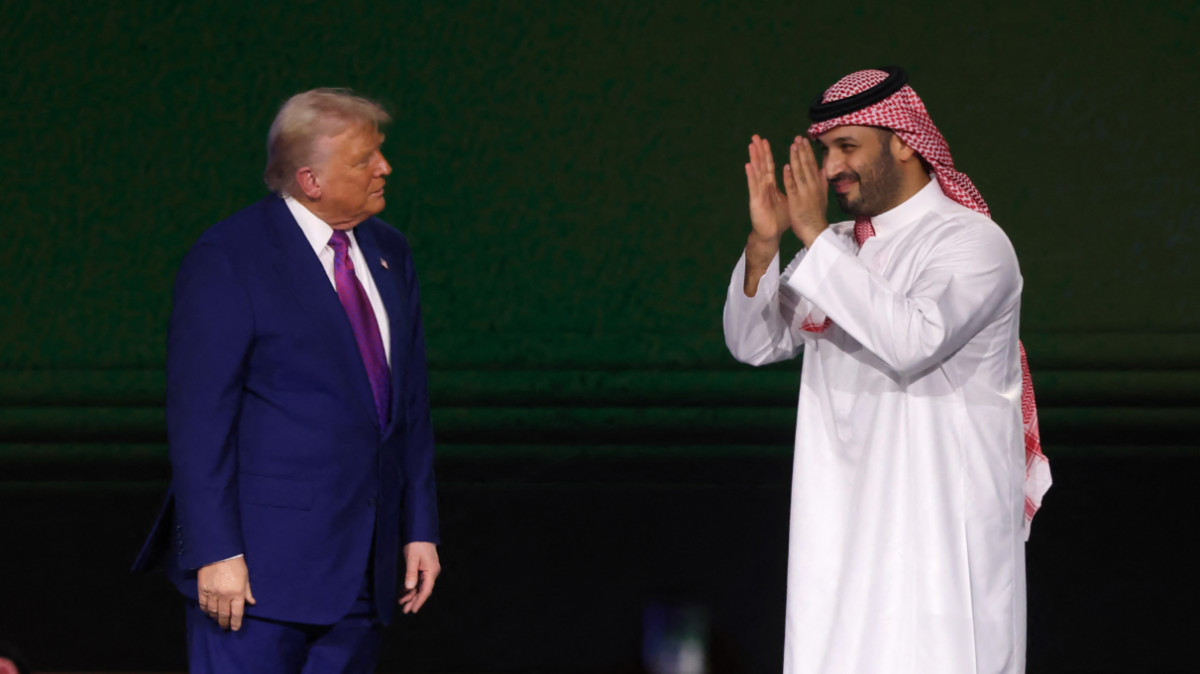
    A significant diplomatic divergence has surfaced among key Muslim nations regarding the appropriate response to Iran’s military actions, with Turkey and Pakistan opposing stronger condemnation language sought by Saudi Arabia during a recent ministerial gathering in Riyadh. Multiple sources confirm that both nations resisted employing harsh rhetoric in the joint declaration until Iran’s missiles began flying over Saudi territory during the diplomatic meetings.

    The tension emerged during a conclave of Arab and Muslim foreign ministers where Saudi officials pressed for vigorous censure of Iran’s missile and drone attacks against the kingdom. According to Western officials familiar with the proceedings, the final statement reflected a compromise between competing security interests rather than unified condemnation.

    Turkish Foreign Minister Hakan Fidan reportedly expressed frustration to Iranian counterparts that Tehran should have suspended its attacks while diplomats were actively seeking conflict resolution. This diplomatic friction highlights how the US-Israeli campaign against Iran has created divergent responses among regional powers based on their distinct national security priorities.

    Notably, the three nations—Saudi Arabia, Pakistan, and Turkey—had been negotiating a trilateral security arrangement before the current conflict escalated. Sources indicate that without Turkish and Pakistani participation, the Riyadh declaration would have contained significantly stronger language against Iran.

    The eventually published statement did characterize Iran’s attacks as unjustifiable under any circumstances while reaffirming nations’ rights to self-defense. However, it notably omitted parallel calls for the US and Israel to cease their military operations against the Islamic Republic. The declaration included condemnation of Israel’s aggression against Lebanon only in its final paragraphs, reportedly due to Turkish insistence.

    The conflict has exposed fundamental differences in regional priorities: Saudi Arabia fears Iranian control of the Strait of Hormuz and attacks on energy infrastructure, while Turkey—a NATO member—remains less concerned about the strategic waterway. Pakistan, sharing a border with Iran and hosting the world’s second-largest Shia population, has positioned itself as a potential mediator, with President Shehbaz Sharif offering to host comprehensive settlement talks.

    Meanwhile, Saudi Arabia appears to be strengthening its decades-old security partnership with the United States despite previous reservations about Washington’s reliability as an ally. The kingdom has granted the US access to King Fahd Air Base and faces American pressure to join offensive operations against Iran.

    The evolving situation demonstrates how regional alliances are being tested and reconfigured under the pressure of escalating conflict, with each nation calibrating its response according to distinct geopolitical calculations and security imperatives.

  • Iran expresses thanks for emergency aid

    Iran expresses thanks for emergency aid

    Amid escalating Middle East hostilities, diplomatic channels show signs of activation while military preparations intensify. Iranian Foreign Minister Seyed Abbas Araghchi engaged in a crucial phone dialogue with China’s Foreign Minister Wang Yi on Tuesday, expressing gratitude for Beijing’s emergency humanitarian assistance while outlining Tehran’s stance on the ongoing conflict.

    Araghchi emphasized Iran’s commitment to achieving a comprehensive cessation of hostilities rather than temporary ceasefires, stating the Iranian people have united against external aggression to safeguard national sovereignty. Notably, he confirmed the Strait of Hormuz remains accessible to all vessels except those from nations actively at war with Iran.

    The diplomatic exchange occurred against a backdrop of continued violence. Iran launched missile barrages against Israel on Tuesday, triggering air raid sirens, while Israeli forces conducted strikes in central Tehran targeting command centers and pounded southern Beirut suburbs. Despite these actions, both ministers advocated for de-escalation, with Wang Yi emphasizing resolution through dialogue rather than force, asserting China’s commitment to maintaining an objective, impartial position.

    Parallel developments suggest potential backchannel communications between Washington and Tehran. CBS News reported the United States has reached out to Iran through mediators, with a senior Iranian official confirming received points were “being reviewed.” This follows President Donald Trump’s social media claims of “very good and productive conversations” with Iran—statements Tehran immediately dismissed as market manipulation tactics.

    The situation remains volatile as military preparations continue. Thousands of U.S. Marines are scheduled to arrive in the Gulf region by Friday, fueling speculation about potential operations against strategic Iranian assets, including Kharg Island, Iran’s crucial oil export hub. The New York-based Soufan Center analysis suggested military movements might coincide with negotiation attempts until assets become combat-ready.

    Meanwhile, regional diplomatic efforts continue with China’s Special Envoy Zhai Jun meeting Israeli Ambassador Irit Ben-Abba in Beijing to discuss tensions. Iran’s internal security apparatus also saw restructuring with Mohammad Bagher Zolghadr appointed secretary of Iran’s top security body, replacing Ali Larijani who died in an Israeli strike last week.

  • Journalists at Australia’s national broadcaster to strike over pay and possible use of AI

    Journalists at Australia’s national broadcaster to strike over pay and possible use of AI

    Australia’s national broadcaster is confronting its first major industrial action in two decades as hundreds of ABC staff prepare to walk off the job Wednesday in a sweeping 24-hour strike. The unprecedented work stoppage comes after 60% of unionized employees rejected management’s compensation package, triggering widespread disruptions to flagship programming including the esteemed 7:30 current affairs show and morning breakfast broadcasts.

    The core dispute centers on a proposed three-year remuneration package offering staggered increases totaling 10% – with 3.5% in the first year followed by 3.25% increments in subsequent years. This offer falls notably below Australia’s current inflation rate of 3.8%, effectively representing a real-term wage reduction. Additionally, management proposed a one-time $1,000 bonus excluding casual staff, further deepening dissatisfaction among the workforce.

    Beyond financial concerns, journalists are expressing profound apprehension about artificial intelligence implementation and job security. Staff demand explicit limitations on AI technologies that could potentially replace human roles, alongside improved conditions for night work, enhanced career progression pathways, and reduced dependence on short-term contracts.

    ABC Managing Director Hugh Marks defended the proposal as “financially responsible and competitive,” stating it represents “the maximum level the ABC can sustainably provide.” However, union representatives characterize the offer as inadequate given rising living costs and the broadcaster’s vital public service mission.

    Erin Madeley of the Media, Entertainment & Arts Alliance emphasized: “ABC staff don’t want to strike – they want fair pay, secure work, and guardrails around AI to protect editorial integrity and public trust.” The Community and Public Sector Union’s Melissa Donnelly added that salaries must reflect cost-of-living pressures while recognizing the ABC’s unique societal role.

    The broadcaster will fill programming gaps with reruns, pre-recorded content, and BBC material during the strike period commencing at 11:00 local time Wednesday. With the matter now referred to the Fair Work Commission, Australia’s workplace tribunal, this confrontation highlights growing tensions between public institution sustainability and workforce compensation in an era of technological transformation.

  • Sara Duterte impeachment hearings start as political death match heats up

    Sara Duterte impeachment hearings start as political death match heats up

    The Philippine Congress commences pivotal impeachment proceedings against Vice President Sara Duterte on March 25th, marking the climax of a spectacular political rupture between the nation’s two most powerful dynasties—the Dutertes and Marcoses. This constitutional confrontation unfolds against the backdrop of intense personal rivalries and profound implications for the country’s future leadership.

    At the heart of the allegations lie two grave charges: the purported misuse of millions in public funds during Duterte’s tenure as education secretary, and threats against the life of President Ferdinand Marcos Jr. The vice president has vehemently denied all accusations, characterizing them as politically motivated harassment.

    The impeachment process represents the formal collapse of what was once hailed as a ‘political dream team’—the alliance between President Marcos and Vice President Duterte that secured a landslide victory in the 2022 elections. Their partnership, forged between the scions of two authoritarian presidents, has deteriorated dramatically as they pursued divergent political agendas.

    Constitutional mechanics add layers to this high-stakes drama. Unlike many systems where presidents and vice presidents run together, the Philippines elects them separately, creating inherent tensions. A single-term president seeks to consolidate power while a vice president often uses the position as a springboard for their own presidential ambitions.

    The current proceedings follow a failed impeachment attempt in February 2025, which the Supreme Court nullified on technical grounds involving the one-year prohibition against multiple impeachment cases. Civil society groups, Catholic clergy, and left-wing organizations have now revived the charges with congressional support.

    The House Committee on Justice will examine evidence and Duterte’s written defense, though her physical attendance remains uncertain. Should the committee endorse the articles, one-third of House members must approve to advance the case to the Senate trial, where 24 senators would serve as judges under the Supreme Court chief justice’s presiding authority. A two-thirds majority is required for conviction, which would remove Duterte from office and disqualify her from the 2028 presidential race.

    Political analysts note that while the House typically aligns with the presidency, the Senate presents greater unpredictability. Senators, elected nationally rather than by district, maintain independent political agendas and allegiances that could sway the outcome.

    The stakes transcend personal fortunes, representing a battle for the nation’s political soul. Marcos positions himself as the ‘tiger’ of the Ilocano-speaking north promising restoration, while Duterte embodies the ‘eagle’ from the Visayan south continuing her father’s populist crusade. With recent polls showing Duterte maintaining a 55% approval rating against Marcos’s 36%, and her allies outperforming his in midterm elections, the impeachment outcome will decisively shape Philippines’ political trajectory beyond 2028.

  • Israeli forces turn Palestinian homes into military bases

    Israeli forces turn Palestinian homes into military bases

    In the occupied West Bank, Palestinian families are recounting traumatic experiences of having their homes forcibly commandeered by Israeli military units. The practice, which has intensified following recent regional hostilities, involves soldiers occupying civilian residences for use as temporary operational bases.

    Khalid Jamal, a resident of al-Rehiyya south of Hebron, describes a 2:42 AM raid where 20 soldiers surrounded his family home. “The door was forced open. I woke up to find the house surrounded in an abnormal way,” Jamal recounts. His family of seventeen was forcibly relocated to a single ground-floor room where they endured freezing temperatures without adequate bedding while soldiers maintained constant guard.

    Simultaneously, military activity occurred throughout the upper levels of the home. “There was something being hammered above. We could hear banging, but I don’t know what it was,” Jamal noted, later discovering broken tiles and damaged children’s beds. The occupation lasted approximately 24 hours, during which soldiers consumed provisions and left behind empty Hebrew-labeled food cans.

    This pattern repeated in Fawwar refugee camp, where Mohammed Jodeh’s family received a 3:00 AM evacuation order. Israeli forces informed them their home would serve as a military barracks for three days. “We were shocked because it was the first time we had been forcibly expelled,” Jodeh stated, noting previous intrusions had never involved complete displacement.

    The strategic placement of these home seizures—particularly at camp entrances and elevated locations—suggests tactical military purposes. Palestinian residents interpret these actions as psychological warfare intended to undermine their sense of security and assert Israeli dominance. “The first objective is to make us feel that we are living in an unsafe place,” Jodeh analyzed. “The second is to assert their presence, to say: we are here.”

    These incidents occur within a broader context of heightened tensions following cross-border exchanges between Israel and Iran, which have resulted in Palestinian casualties from missile debris. The Israeli military has historically utilized home seizures during West Bank operations, though recent occurrences appear more frequent and systematic.

    Despite the psychological impact and property damage, affected families demonstrate remarkable resilience. “I am not thinking of leaving, absolutely not,” Jamal affirmed. “There is nothing I fear for, except my children.” This sentiment echoes throughout communities where such occupations have become an unfortunate reality of daily existence.

  • Singapore Airlines to operate daily flights to Hangzhou

    Singapore Airlines to operate daily flights to Hangzhou

    Hangzhou Xiaoshan International Airport has announced that Singapore Airlines will inaugurate a new daily round-trip service to Hangzhou commencing June 2026. This strategic expansion marks a significant enhancement to air connectivity between China’s Yangtze River Delta region and Southeast Asia.

    The Hangzhou-Singapore route, previously serviced by four carriers including Loong Air, China Eastern Airlines, Xiamen Airlines, and Scoot, has demonstrated robust growth with passenger traffic reaching 85,000 passengers year-to-date, representing an 11.9% year-on-year increase. This performance positions it as the airport’s second busiest international route.

    Singapore Airlines’ entry into this market is projected to substantially improve transit efficiency through leveraging its extensive global network. Airport data reveals that as of March 22, the transit passenger volume had reached 230,300, including 52,600 international travelers. This connectivity is further strengthened through intercontinental routes linking to major Asian hubs such as Seoul, Tokyo, and Bangkok.

    In preparation for increased passenger flow, the airport has implemented an advanced smart transit platform. According to Zhao Yijing, Transit Business Manager at the airport’s ground service department, the system enables remote security and customs inspections, entrusted handling of irregular baggage, and intelligent transfer operations.

    The new service will be operated utilizing an Airbus A350-900 aircraft, with the inaugural flight scheduled to depart Singapore on June 1. This expansion will increase weekly flights between Hangzhou and Singapore to 26, creating enhanced travel options and strengthened economic ties between the two regions.

  • Japan faces test of principles

    Japan faces test of principles

    A prominent Japanese academic has issued a stark warning about the potential erosion of Japan’s international standing, arguing that uncritical alignment with United States foreign policy could compromise the nation’s foundational principles. Atsushi Koketsu, Professor Emeritus at Yamaguchi University, contends that recent military actions undertaken by the US and Israel against Iran constitute violations of established international law.

    Professor Koketsu emphasized that Japan has historically built its diplomatic identity and global reputation on a steadfast commitment to operating within the framework of international legal standards. This positioning, he argues, has been central to Japan’s image as a peaceful nation since the post-war era.

    The academic’s critique centers on the concept of “pre-emptive” strikes, which he characterizes as legally questionable under international norms governing the use of military force. By fully endorsing or participating in such actions through its alliance with the United States, Japan risks undermining its carefully cultivated international identity, Koketsu suggested.

    This analysis emerges amid ongoing geopolitical tensions in the Middle East and reflects broader concerns within certain Japanese intellectual circles about the appropriate balance between maintaining critical international alliances and preserving independent diplomatic judgment. The warning highlights the complex calculations facing Japanese policymakers as they navigate increasingly volatile global security dynamics while attempting to maintain consistency with the nation’s constitutional pacifist principles.

  • Ashab al-Yamin: The obscure new group claiming Jewish ambulance attack

    Ashab al-Yamin: The obscure new group claiming Jewish ambulance attack

    London’s Metropolitan Police have launched a counter-terrorism investigation into a suspected antisemitic arson attack targeting four ambulances owned by Jewish charity Hatzola. The vehicles were set ablaze in the car park of Machzike Hadath Synagogue in Golders Green during early Monday hours, causing gas canisters onboard to explode. No casualties were reported.

    Within hours, responsibility was claimed by Harakat Ashab al-Yamin al-Islamiya (Hayi), or The Islamic Movement of the People of the Right Hand, through a newly created Telegram account. The group, which only surfaced publicly on March 9th, has allegedly claimed multiple attacks across Europe this month targeting Jewish sites.

    Middle East Eye analysis revealed that Hayi’s multilingual statement—posted in Hebrew, Arabic, and English—was flagged by two separate AI detection systems as likely being AI-generated. The statement contained unusual terminology for an anti-Zionist Shia group, including multiple references to ‘Israel’ and describing the Gaza conflict as ‘the Gaza war’ rather than more militant language.

    Israeli officials quickly linked Hayi to Iran, with Israel’s Ministry for Diaspora Affairs publishing a report stating the attack ‘aligns with similar antisemitic arson incidents across Europe’ connected to ‘the same Iran-aligned network.’ However, Met Police chief Mark Rowley cautioned that while Iranian state threats have shown ‘rapid growth’ in recent years, it was ‘too early’ to attribute the attack directly to Iran.

    Expert analysis by Aymenn Jawad al-Tamimi, who studies militant groups in Iraq and Syria, suggested the statement appeared to be machine-translated across languages after initial AI generation. The group’s evolving logo—now featuring a hand clasping a sniper rifle—bears resemblance to other Shia militia group flags.

    The investigation continues as authorities work to authenticate Hayi’s claims and determine possible state-backed involvement, recalling previous Telegram-coordinated attacks in the UK linked to hostile state actors.

  • Israeli press review: Expanding wars spark concerns over economy and air defence capacities

    Israeli press review: Expanding wars spark concerns over economy and air defence capacities

    The Bank of Israel has submitted its comprehensive 2025 annual report to the Israeli government and Knesset, presenting a dual narrative of economic resilience and substantial war-related deterioration. Governor Amir Yaron’s disclosure highlights both encouraging indicators and profound structural challenges facing the nation’s economy.

    While the report notes accelerated growth, moderated inflation within target ranges, record-low unemployment, and robust capital market performance, it simultaneously reveals an 8.6% GDP contraction equivalent to approximately 175 billion shekels ($55.95 billion) since October 2023. When accounting for security expenditures and international manufacturer payments, this economic damage escalates to roughly 375 billion shekels.

    Israel’s fiscal health shows concerning trends with a 2025 deficit at 4.7% of GDP and a debt-to-GDP ratio climbing over 8% since October 2023 to 68.5%, exceeding OECD median levels. Security expenses totaling 350 billion shekels have been the primary driver of deficit expansion.

    The defense industry emerged as a significant economic component, accounting for 10% of goods and services exports between 2019-2024 at $14.8 billion. However, per capita income has declined substantially, with each citizen losing approximately 35,000 shekels ($11,220) in potential earnings.

    Critical labor supply constraints have hampered growth, primarily due to reservist mobilization and the exclusion of Palestinian workers since October 2023. The economy has additionally suffered from negative immigration trends, losing an average of 9,000 workers annually during 2024-2025.

    The ongoing conflict with Iran has generated severe economic disruptions, with the Finance Ministry estimating weekly losses of 1.25 billion shekels due to educational system closures. Since the February 28th emergency declaration, approximately 170,000 workers have been placed on unpaid leave, with projections indicating further increases as hostilities continue.

    Air defense capabilities reveal concerning disparities in civilian protection. The layered defense system allocates resources based on algorithmic categorization considering population density, protective infrastructure, and strategic sensitivity. This results in unequal protection between economic centers like Tel Aviv and peripheral regions such as Dimona and Arad, where recent direct missile hits occurred.

    Interceptor inventory limitations present additional concerns, with reports indicating finite stocks and lengthy replenishment timelines. Despite current defensive capabilities, economic normalization remains improbable while conflict persists.

    In parallel developments, the Knesset approved controversial legislation expanding religious court jurisdiction to civil arbitration. The Israel Democracy Institute criticized the move as unprecedented in democratic nations, raising concerns about equality, judicial integrity, and women’s rights. Opposition leader Yair Lapid declared the legislation effectively ended Israel’s traditional religion-state status quo, moving toward a halachic state model.

  • Albanese urges ICC arrest warrants for Israeli ministers over torture of Palestinians

    Albanese urges ICC arrest warrants for Israeli ministers over torture of Palestinians

    In a groundbreaking development at the United Nations Human Rights Council, Special Rapporteur Francesca Albanese has formally called for the International Criminal Court to issue arrest warrants against three prominent Israeli government officials. The comprehensive report identifies National Security Minister Itamar Ben Gvir, Finance Minister Bezalel Smotrich, and Defense Minister Israel Katz as the primary architects of policies allegedly constituting systematic torture and genocide against Palestinians since October 2023.

    The 25-page document presents a meticulous legal analysis concluding that Israeli practices—both within detention facilities and across occupied territories—meet the precise legal thresholds for genocide under international law. The report details how custodial abuses including severe beatings, bone-breaking techniques, and systematic sexual violence intersect with broader policies of displacement, infrastructure destruction, and humanitarian aid blockade to create what Albanese terms a ‘torturous environment.’

    Albanese’s investigation reveals staggering detention statistics: approximately 18,500 Palestinians apprehended between October 2023 and February 2026, including 1,500 children. Currently, 9,000 remain imprisoned—often without formal charges—while 4,000 have been subjected to enforced disappearance. The report documents 84-94 custodial deaths while acknowledging the actual number might be significantly higher due to systematic transparency issues.

    The legal submission contends that these coordinated measures represent intentional efforts to inflict severe physical and psychological harm—a key criterion under Article II(b) of the Genocide Convention. Albanese emphasizes that these practices collectively aim to eradicate Palestinian political, cultural, and territorial continuity.

    This confrontation occurs against a backdrop of significant political pressure. Middle East Eye previously reported that ICC Prosecutor Karim Khan had prepared arrest warrant applications against Ben Gvir and Smotrich on apartheid charges before his May leave. However, deputy prosecutors have hesitated to file them due to ongoing threats of US sanctions.

    The US government sanctioned Albanese in July 2024 for her investigative work and ICC engagement, effectively freezing her assets and restricting her travel capabilities. Her family has subsequently initiated legal action against the Trump administration regarding these sanctions. This represents Albanese’s third major report since October 2023 systematically documenting alleged genocidal practices in Gaza.