标签: Asia

亚洲

  • 450-ton freight train brings Gansu seeds to Europe

    450-ton freight train brings Gansu seeds to Europe

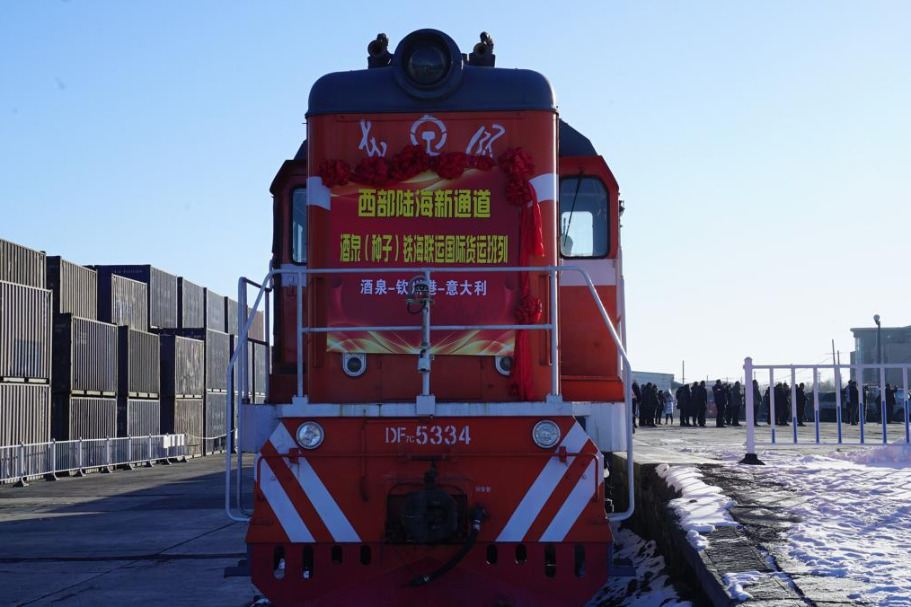
    In a significant development for agricultural trade corridors, a 450-ton seed-laden freight train has inaugurated a new direct route from China’s northwestern Gansu Province to European markets. The landmark departure occurred on December 24 from Jiuquan railway logistics hub, carrying 24 containers filled with vegetable and flower seeds destined for Italy and the Netherlands.

    This pioneering shipment utilizes China’s Western Land-Sea Corridor, an integrated rail-sea transportation network that substantially enhances trade efficiency between inland regions and international markets. Officials emphasize that this strategic corridor reduces both transit time and operational costs compared to traditional transportation routes, providing competitive advantages for Chinese agricultural exporters.

    The shipment represents more than mere commercial transaction—it symbolizes the deepening agricultural cooperation between China and Belt and Road Initiative participant nations. Gansu Province, known for its advanced seed cultivation and agricultural research capabilities, is positioned to become a crucial node in global agricultural supply chains through such infrastructure developments.

    This new freight service demonstrates the continuing expansion of China-Europe rail connections beyond traditional manufacturing goods into high-value agricultural products. The successful operation establishes a precedent for future specialized agricultural shipments along the Silk Road Economic Belt, potentially transforming how perishable and time-sensitive agricultural products move between Asia and Europe.

  • Global mayors heat up Harbin’s ice culture

    Global mayors heat up Harbin’s ice culture

    Harbin’s frozen riverfront became an international stage for cultural exchange as mayors from around the world gathered for the Global Mayors Dialogue on January 7, 2026. The event showcased China’s northeastern city’s unique blend of winter traditions and technological innovation against the backdrop of its famous ice culture.

    Distinguished guests participated in traditional ice dragon boating competitions before witnessing spectacular demonstrations of short track speed skating and elegant figure skating performances by local athletes. The most striking integration of technology and tradition emerged as robotic canines demonstrated sled-pulling capabilities across the icy surface, symbolizing Harbin’s progressive approach to winter cultural preservation.

    Photographs captured by Wang Jian document the convergence of international diplomacy and local culture, with mayors actively engaging in winter activities that have defined the region for generations. The event highlighted how Harbin has successfully transformed its harsh winter climate into an economic and cultural asset through innovative programming.

    The demonstration occurred as part of broader efforts to position Harbin as a leading destination for winter tourism and international cultural exchange. The city’s administration has strategically developed its winter offerings to appeal to both traditional culture enthusiasts and technology innovators, creating a unique niche in the global tourism market.

    This international gathering served not only as a cultural showcase but also as a diplomatic platform for urban leaders to exchange ideas about seasonal city management, tourism development, and cultural preservation strategies in climate-challenged environments.

  • China’s Mars rover discovers longer water existence on red planet

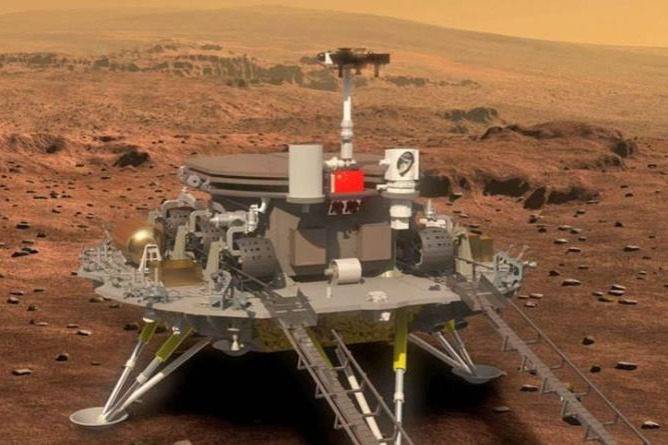
    China’s Mars rover discovers longer water existence on red planet

    In a groundbreaking revelation that reshapes our understanding of Martian evolution, China’s Zhurong rover has uncovered compelling evidence indicating water persisted on the Red Planet hundreds of millions of years longer than previously established. The findings, published in the National Science Review by researchers from the Chinese Academy of Sciences’ Institute of Geology and Geophysics, fundamentally alter existing Martian hydrological timelines.

    Utilizing advanced quad-polarized ground-penetrating radar technology—functioning as a sophisticated planetary CT scanner—Zhurong examined subsurface structures at its Utopia Planitia landing site. The data revealed a uniformly thick sedimentary layer approximately 4 meters beneath the surface, covering buried impact craters with remarkable consistency.

    According to lead researcher Liu Yike, the geological evidence decisively eliminates volcanic or aeolian origins. “The sedimentary layer’s uniform thickness and continuity point conclusively toward aqueous deposition,” Liu explained. “The formation environment likely resembled a shallow marine or lacustrine system rather than dry volcanic or wind-driven processes.”

    The radar imaging further captured centimeter-scale stratifications characteristic of aquatic sedimentation, providing additional validation of sustained water activity during the middle-late Amazonian Period approximately 750 million years ago. This timeline pushes Mars’ hydrological activity significantly closer to the present era than the previously accepted cutoff of 3 billion years ago.

    Since its May 2021 landing, Zhurong has traversed 1,921 meters across the Martian terrain, gathering extensive datasets that continue to revolutionize planetary science. These findings not only recalibrate Martian climatic models but also enhance our understanding of planetary habitability thresholds and geological evolution.

    The discovery underscores the growing sophistication of China’s deep space exploration capabilities while providing crucial insights for future interplanetary research missions seeking evidence of extraterrestrial life and habitable environments.

  • China accounts for over 60% of global courier parcel growth in 2021-2025

    China accounts for over 60% of global courier parcel growth in 2021-2025

    BEIJING – China has emerged as the undisputed engine of global courier parcel growth, accounting for more than 60% of worldwide expansion throughout the 2021-2025 Five-Year Plan period. Official statistics released Wednesday at the national postal work conference reveal the staggering scale of this development, with annual parcel volume surging to approximately 200 billion deliveries.

    The nation’s postal sector achieved remarkable financial performance, generating 1.8 trillion yuan ($256.5 billion) in revenue during 2025 alone. This capped a five-year streak of consistent growth exceeding 10% annually, underscoring the industry’s robust expansion amid global economic uncertainties.

    This explosive growth has transformed delivery patterns across Chinese society. Per capita usage has climbed to 141 parcels annually, while peak daily processing capacity reached an unprecedented 777 million items during the period – figures that dwarf comparable metrics in other major economies.

    Substantial infrastructure advancements have driven this transformation. State Post Bureau Director Zhao Chongjiu reported successful expansion of e-commerce free shipping services to previously underserved remote regions, including Xinjiang and Xizang. This logistics revolution has significantly increased the share of courier activity in central and western China, effectively integrating these regions into the national economic mainstream.

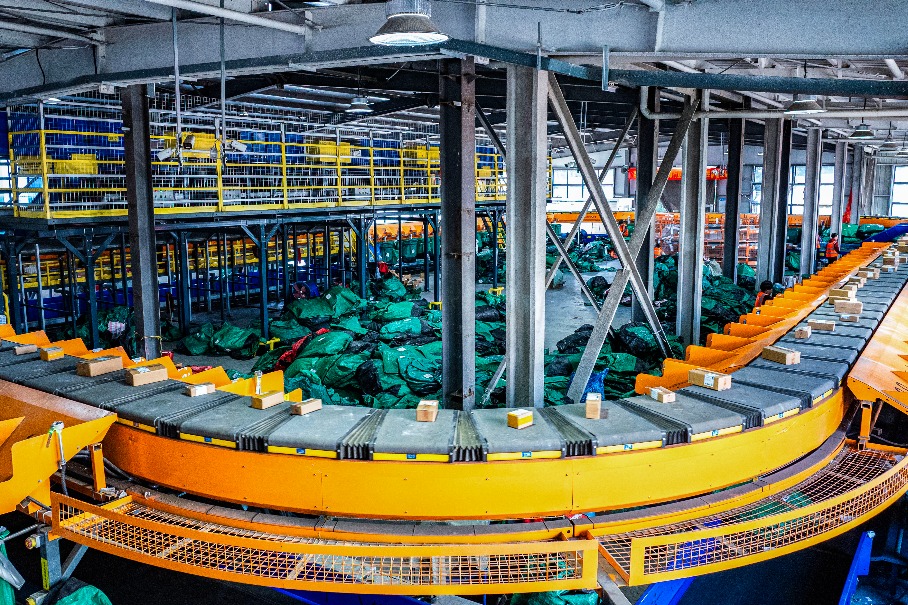
    Technological innovation has been central to this evolution. The sector has undergone comprehensive digital transformation, with most large-scale sorting centers now operating with advanced automation systems. Cutting-edge technologies including drones and autonomous delivery vehicles have transitioned from experimental phases to routine operational deployment.

    Looking toward future development, Director Zhao outlined ambitious plans for 2026 focusing on unmanned delivery technologies and sustainable logistics solutions. The bureau additionally committed to strengthening international services through expanded overseas warehouse networks and enhanced air cargo infrastructure, positioning China for continued leadership in global logistics innovation.

  • Harbin hosts global mayors dialogue on ice and snow industry development

    Harbin hosts global mayors dialogue on ice and snow industry development

    Harbin transformed into a diplomatic hub for cold-climate cities as mayors from across the globe gathered at the Ice and Snow World complex on Tuesday evening for the Global Mayors Dialogue. The international delegation—representing municipalities from Canada, Finland, Germany, Greece, South Korea, Thailand, and Türkiye—convened to exchange strategies for converting winter conditions into sustainable economic development.

    Under the thematic framework “White Gold: Urban Development Driven by the Ice and Snow Economy,” the dialogue salon featured substantive discussions on transforming climatic challenges into opportunities. Li Mian, Executive Vice-Mayor of Harbin, revealed that the current Harbin Ice and Snow World occupies the global lead as the largest ice-themed park, utilizing 400,000 cubic meters of ice—equivalent to approximately 160 Olympic-sized swimming pools. The attraction recorded 3.56 million tourist visits during its 68-day operational period last winter.

    “Harbin stands as China’s premier ice city, the cradle of modern winter sports, and an international hub for frost-season tourism,” Li declared. He elaborated on Harbin’s innovative approach to citywide tourism development, creating tailored experiences for diverse demographics and transforming the entire urban landscape into an integrated cultural destination rather than relying on isolated attractions.

    International representatives shared parallel initiatives. Edmonton Mayor Andrew Knack described how his city reimagines winter as a cultural connector rather than a hardship, stating: “While many endure winter, cities like Harbin and Edmonton thrive through it. We create artistic festivals and sporting events that foster genuine community engagement.”

    From Rovaniemi—the official hometown of Santa Claus—City Council Second Chairman Heikki Kontiosalo detailed how extended snow seasons become tourism assets through enhanced ski infrastructure and hospitality investments. Erzurum Vice-Mayor Zafer Aynali highlighted municipal management of ski centers and announced ambitious development targets for 2026-2027 following a successfully hosted world championship.

    Even representatives from less frigid regions expressed interest in collaboration. Thorsten Kroll, Vice-Mayor of Magdeburg, noted his city’s limited snowfall but strong desire to partner with Harbin in tourism, pharmaceuticals, technology, and construction sectors.

    The gathering demonstrated a growing international recognition of cryospheric economics as a viable development model, with Harbin positioning itself as a central node in this emerging global network.

  • International mayors given a taste of Harbin

    International mayors given a taste of Harbin

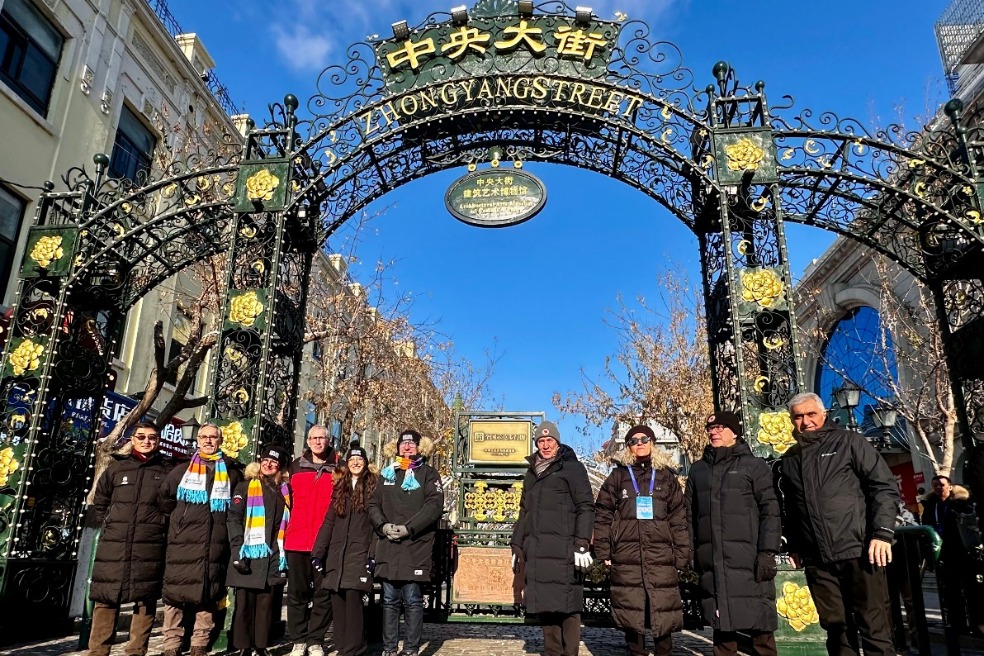
    Harbin recently played host to an international delegation of city leaders during the Global Mayors Dialogue, where discussions extended beyond urban governance to include immersive cultural experiences. The mayors embarked on a sensory journey through the city’s iconic landmarks, beginning at the historic courtyards of Zhongyang Street and continuing to aromatic century-old cultural halls.

    The visiting dignitaries warmed themselves with traditional hot kvass and sampled buttery Medovik bread, experiencing firsthand how local cuisine serves as a gateway to understanding urban identity. This culinary diplomacy component demonstrated how cultural immersion can foster deeper international connections and mutual understanding among global leaders.

    The event highlighted Harbin’s growing significance as a destination for international diplomatic gatherings, showcasing how Chinese cities are increasingly leveraging their unique cultural heritage to facilitate global exchanges. The mayors’ experience underscored the importance of cultural diplomacy in building bridges between cities worldwide, proving that sometimes the most effective diplomacy happens not in conference rooms but through shared culinary experiences and cultural exploration.

  • Tianmen grand bridge under construction in China’s Guizhou

    Tianmen grand bridge under construction in China’s Guizhou

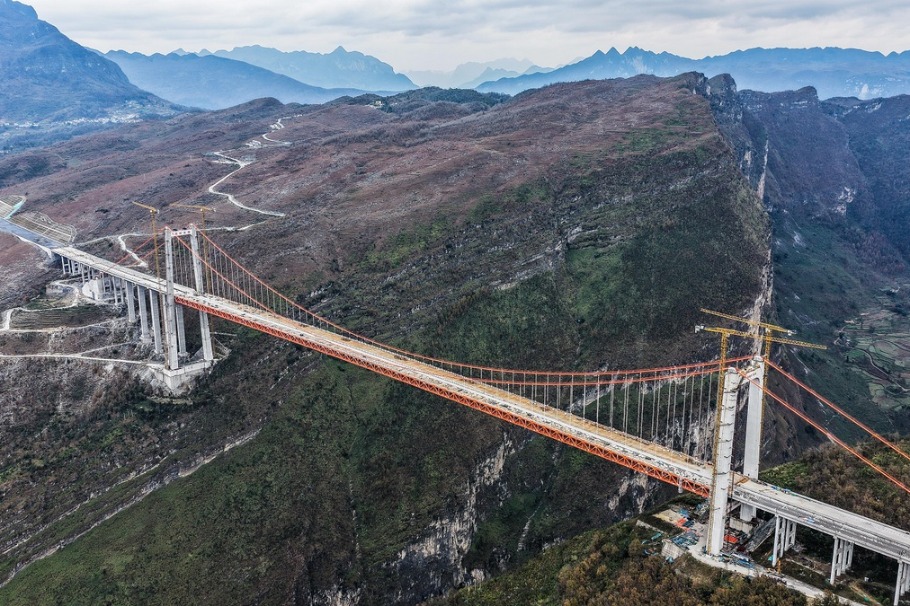
    Southwest China’s mountainous Guizhou province has reached a significant infrastructure achievement with the recent completion of the main structural framework for the Tianmen Grand Bridge. This engineering marvel, captured in aerial photography on January 6, 2026, stretches an impressive 1,553 meters in length while soaring approximately 560 meters above the terrain below.

    The bridge represents a critical component of the developing Anshun-Panzhou highway system, designed to enhance transportation connectivity through Guizhou’s challenging landscape. The region’s complex topography has historically presented substantial obstacles to infrastructure development, making this construction achievement particularly noteworthy.

    Engineering teams have employed advanced construction methodologies and cutting-edge materials to overcome the geographical challenges posed by the mountainous territory. The bridge’s design incorporates state-of-the-art seismic resistance features and wind stability technology, essential for the region’s environmental conditions.

    This transportation project forms part of China’s broader initiative to improve interregional connectivity and stimulate economic development in previously isolated areas. The enhanced infrastructure is expected to facilitate more efficient movement of goods and people, potentially boosting local economies and reducing travel times significantly.

    The completion of the main structure marks a pivotal phase in the overall project timeline, with subsequent work now focusing on deck finishing, safety installations, and connecting roadways. Transportation authorities anticipate the bridge will serve as a vital link in western China’s expanding highway network upon its scheduled opening.

  • International mayors attend ice and snow expo in Harbin

    International mayors attend ice and snow expo in Harbin

    Harbin transformed into a diplomatic winter wonderland as mayors from across the globe convened at the 2026 International Ice and Snow Economy Expo this Tuesday. The event, occurring alongside the Global Mayors Dialogue conference, showcased China’s northeastern city as an emerging hub for cold-weather economic development.

    Edmonton Mayor Andrew Knack emerged as one of the most impressed delegates after experiencing Harbin’s extensive winter tourism infrastructure. The Canadian leader acknowledged his city’s substantial winter programming while emphasizing the learning opportunity presented by Harbin’s approach. “There is a lot of experience we can take back to further grow our new winter tourism and winter economy,” Knack stated, highlighting the potential for international knowledge exchange.

    The exposition demonstrated Harbin’s sophisticated integration of traditional winter culture with modern economic development strategies. Delegates participated in hands-on experiences including ice hockey practices, symbolizing the city’s commitment to blending recreational activities with economic opportunity.

    This gathering of municipal leaders from diverse climate regions signifies a growing recognition of specialized seasonal economies as drivers of urban development. The Expo serves not merely as a display of winter attractions but as a platform for cross-border collaboration in cold-weather technology, tourism infrastructure, and sustainable winter city planning.

    The event underscores China’s strategic positioning within the global winter economy network, with Harbin emerging as a model for other cities seeking to leverage their climatic conditions for economic growth. The knowledge sharing between international delegates suggests a new era of cooperation in developing cold-weather industries worldwide.

  • Philippines evacuates 3,000 villagers after volcano activity raises alert level

    Philippines evacuates 3,000 villagers after volcano activity raises alert level

    MANILA, Philippines — Philippine authorities have initiated large-scale evacuations surrounding Mayon Volcano, the nation’s most active volcano, following a series of mild eruptions and increased seismic activity. Nearly 3,000 residents residing within the designated permanent danger zone have been relocated as scientists monitor concerning developments.

    The Philippine Institute of Volcanology and Seismology elevated the alert status to Level 3 on Tuesday after detecting intermittent rockfalls from the summit crater, some involving debris the size of automobiles, alongside dangerous pyroclastic flows—rapid avalanches of superheated rock fragments, ash, and volcanic gases.

    According to Teresito Bacolcol, the country’s chief volcanologist, the current activity constitutes a quiet eruption characterized by lava accumulation at the peak, causing the dome to swell and fracture. While these developments signal volcanic unrest, Bacolcol noted that key indicators of an imminent major eruption—such as significant volcanic earthquakes and elevated sulfur dioxide emissions—remain absent, making predictions about escalation uncertain.

    Military personnel, police, and disaster-response teams coordinated the evacuation of 2,800 villagers from 729 households within the 6-kilometer (3.7-mile) radius permanent danger zone. An additional 600 residents living beyond the official danger boundary have voluntarily relocated to government-operated emergency shelters as a precautionary measure.

    The evacuation highlights ongoing challenges with enforcement in high-risk areas. Despite long-standing prohibitions marked by concrete warning signs, thousands continue to inhabit the volcano’s foothills, maintaining generational farms and businesses including sand quarrying and tourism operations. Mayon has erupted 54 times since records began in 1616.

    The 2,462-meter (8,007-foot) volcano represents both a premier tourist attraction, renowned for its perfect conical shape, and a persistent threat. The buried belfry of a 16th-century Franciscan church—all that remains of Cagsawa town after the catastrophic 1814 eruption that killed approximately 1,200 people—stands as a somber monument to Mayon’s destructive potential.

    This situation underscores the broader challenge facing impoverished communities across the Philippine archipelago, where economic necessity often forces populations to inhabit geologically hazardous zones, including volcanic slopes, landslide-prone mountainsides, earthquake fault lines, and typhoon-vulnerable coastlines.

  • Trumpet trees blanket district in Xiamen with purple blossoms

    Trumpet trees blanket district in Xiamen with purple blossoms

    The coastal city of Xiamen in Fujian province has been transformed into a breathtaking floral spectacle as thousands of purple trumpet trees (Tabebuia impetiginosa) reached full bloom in early January. This extraordinary natural display has turned Jimei district’s Xixi village into a major attraction for both local residents and tourists seeking respite in nature’s vibrant colors.

    The remarkable transformation occurred in Xiazhuangli, where approximately 7,000 trumpet trees have converted a previously dormant orchard into a magnificent floral landscape. The trees, known for their vibrant purple blossoms, create an astonishing visual effect when viewed from elevated perspectives—appearing as an expansive purple carpet covering the terrain.

    This annual flowering period typically extends from January through March, offering an extended window for visitors to experience the phenomenon. The timing provides a unique winter bloom spectacle that contrasts with the traditional spring flowering seasons common in other regions.

    Botanical experts note that the trumpet tree, native to South America but successfully cultivated in Xiamen’s subtropical climate, has adapted remarkably well to the local environment. The successful cultivation of such a substantial collection represents a significant achievement in horticultural planning and urban beautification efforts.

    The spectacle has generated substantial attention on social media platforms, with aerial photographs and videos circulating widely, showcasing the stunning transformation of the landscape. Local authorities have implemented additional visitor services to accommodate the increased tourism while ensuring the preservation of the natural display.

    This floral phenomenon not only enhances Xiamen’s reputation as an ecologically conscious city but also demonstrates successful urban planning that integrates natural beauty with community spaces. The event has become an important seasonal attraction, contributing to both local tourism and environmental appreciation.