Tensions across the Middle East escalated sharply this week as Israel launched a major new bombardment of Lebanon just as the United States and Iran hold high-stakes indirect ceasefire negotiations, drawing accusations that the offensive is deliberately intended to derail diplomatic progress. The attack, which has already left dozens dead and hundreds of thousands displaced, comes amid parallel developments exposing alleged abuses against international humanitarian activists attempting to break Israel’s years-long siege of Gaza, with organizers demanding a full investigation into direct U.S. complicity in the mistreatment of their members.
On Tuesday, Israeli forces carried out more than 120 airstrikes targeting areas across southern Lebanon and the eastern Bekaa Valley, in a direct violation of the 45-day ceasefire that took effect last month. Israeli Prime Minister Benjamin Netanyahu announced the government would intensify its military campaign, confirming the expansion of Israeli occupation in southern Lebanon beyond the country’s previously declared “security zone.” Israeli officials have ordered residents of dozens of Lebanese villages to remain out of their homes, as the military pushes to establish a new buffer zone extending between 5 and 10 kilometers into Lebanese territory.
Lebanon’s health ministry confirmed that 31 people were killed in the Tuesday strikes, including 14 residents of the southern town of Burj al-Shamali — among them two children and three women. More than 40 others were wounded. Since Israel launched its full-scale offensive in Lebanon in early March, the death toll has climbed to over 3,200 killed and more than 9,700 injured. Even after the April truce went into effect, more than 600 people have lost their lives to ongoing violence.
Israel’s military strategy in Lebanon follows what Defense Minister Israel Katz has called the “Gaza model”: widespread destruction of civilian infrastructure to force mass displacement. Before last month’s ceasefire, more than 40,000 homes across southern Lebanon were either destroyed or damaged, with demolition operations continuing after the truce. The offensive has displaced more than 1 million Lebanese people, a humanitarian catastrophe that has gone largely underreported in global media. In response to the renewed Israeli strikes, Hezbollah launched drone attacks against Israeli targets, continuing the cross-border exchanges that have persisted through months of declared ceasefires.
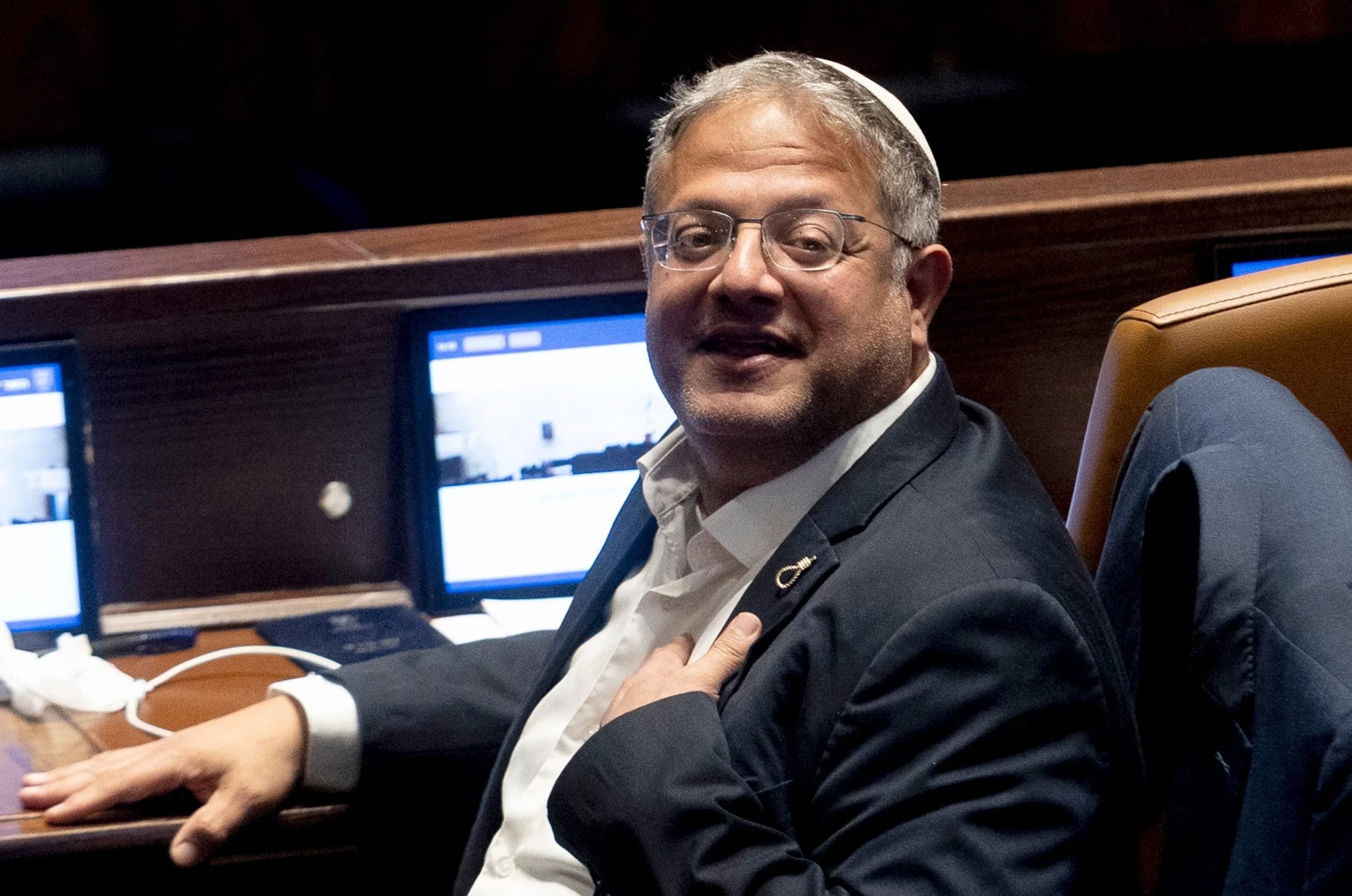
The timing of the renewed offensive has sparked fierce criticism from inside and outside Israel, with many observers arguing the attack is intended to sabotage ongoing ceasefire negotiations between the U.S. and Iran. The influential far-right Israeli Security Minister Itamar Ben-Gvir openly acknowledged this framing Tuesday, stating explicitly that the entire Israeli cabinet is unified in opposing any potential peace deal that would end the current conflict. “This is an agreement that can harm the state of Israel, and we will not allow this to happen,” Ben-Gvir said in remarks to reporters, adding that the government should cut off electricity across Lebanon, occupy territory up to the Zahrani River, and return to full-scale massive war. Fellow far-right cabinet member Finance Minister Bezalel Smotrich doubled down on the aggressive rhetoric, calling for Israel to destroy 10 buildings in Beirut for every Hezbollah drone attack, and expand demolitions to other major Lebanese cities if necessary.
Shaiel Ben-Ephraim, a former Israeli foreign ministry diplomat and current prominent critic of the country’s regional policy, explained that the deepening incursion into Lebanon is designed to kill both the proposed Lebanese ceasefire and the U.S.-Iran talks entirely. “Israel was “moving to bury not only the supposed ceasefire in Lebanon but also talks on Iran” because its policy “is an endless and wide regional war,” Ben-Ephraim said, adding “Israel forced the US into war and won’t let us end it.”
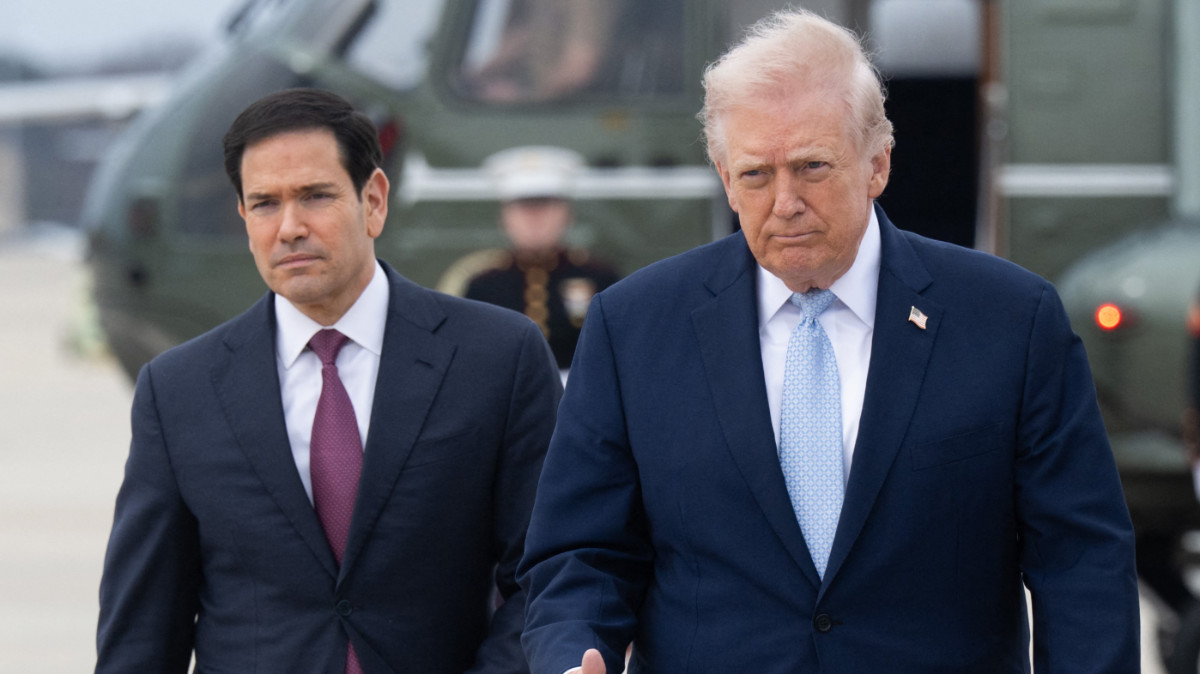
The negotiations, which do not include Israeli representatives, come as U.S. President Donald Trump has framed the latest round of talks as promising, even as details of the proposed framework remain contested. On Wednesday, Reuters reported, citing Iranian state television, that Tehran has received an unofficial U.S. proposal that would restore pre-war commercial shipping traffic through the Strait of Hormuz for a 30-day period, in exchange for a U.S. troop withdrawal from the region surrounding Iran and an end to the U.S. naval blockade. The U.S. has publicly disputed this account of the proposed framework. While Iran has condemned recent U.S. attacks as acts of bad faith and clear violations of prior ceasefire commitments, it has not walked away from the negotiating table. Nuclear issues, which were a core sticking point in earlier U.S.-Iran negotiations, have been pushed to future talks, but Iran has made clear that a lasting peace deal requires an end to Israel’s assault on Lebanon.
Separately, international activists from the Global Sumud Flotilla, an organization that organizes humanitarian voyages to break Israel’s siege of Gaza, released detailed testimonies this week documenting widespread abuse, torture, and sexual assault of their members at the hands of Israeli forces after their latest flotilla was intercepted in international waters. The activists are calling for a full investigation into U.S. complicity in the abuses, noting that both the ship used by Israeli forces to detain participants and the weapons used to attack them were built and paid for by the United States government.
Testimonies from the 428 abducted participants describe brutal, systematic abuse. According to the GSF media statement, detained humanitarians, doctors, and journalists were processed one by one through a darkened shipping container, where groups of three to five soldiers beat each person while other waiting captives heard their screams. One participant, Yassine Benjelloun, described being beaten repeatedly within minutes of being detained: “What lasts maybe three or five minutes seems like a lifetime. You don’t know that the door is going to open, and they’re going to kick you out.”
Dr. Jihan Alya Mohd Nordin, a Malaysian physician on the flotilla, documented 35 participants with fractured or dislocated bones, severe head injuries including concussions and eye and ear trauma, and 14 confirmed cases of sexual assault. Dr. Jihan, who was herself assaulted, forcibly stripped of her hijab, and choked by Israeli soldiers, described the experience of being unable to treat injured captives as devastating. “Being a doctor, the main aim is to reduce the sufferings of people. But when we cannot do anything to help them, it was the worst and most horrible feeling that I have,” she said.
The Israeli amphibious landing ship used to detain the activists, the INS Nahshon, was built by Bollinger Mississippi Shipbuilding in Louisiana and fully financed by U.S. taxpayers. The vessel was previously used to detain participants from an earlier Gaza-bound flotilla, where dozens of activists required medical care for broken bones sustained during beatings. The weapons used against the civilian activists, including stun grenades and metal projectile rounds, were manufactured by Combined Tactical Systems, a Pennsylvania-based U.S. weapons manufacturer. GSF reports that these weapons were fired at close range into enclosed spaces at participants who were sitting or sleeping, in direct violation of the manufacturer’s own safety guidelines.
Josh Paul, a former U.S. State Department official who resigned in 2023 to protest U.S. arms transfers to Israel amid its war in Gaza, confirmed that the use of U.S.-origin equipment for this abuse violates U.S. law. “Under US law, arms transfers must only be made for purposes authorized by law,” Paul said. “INS Nahshon‘s use by Israel to conduct an illegal seizure in international waters, and then to act as a base for the torture and sexual assault of foreign civilians, including Americans, who had broken no laws, and were acting from conscience to serve an urgent humanitarian need, plainly and grievously violates those terms.” Paul noted that the risk of misuse was clear decades ago, after the 2010 Mavi Marmara flotilla raid that killed nine activists, including a Turkish-American teenager, but U.S. officials continued to approve arms transfers regardless. “Anything we transfer to Israel, Israel will find a way to misuse – whether it is a bomb, a bulldozer or a boat,” he said.
GSF emphasizes that the abuse of their members is not an isolated incident, but a direct consequence of decades of unconditional U.S. military and diplomatic support for Israel, which GSF says has enabled the Israeli government to commit sustained war crimes and crimes against humanity against Palestinian people. Successive U.S. administrations, under both Joe Biden and Donald Trump, have provided tens of billions of dollars in military aid to Israel and used United Nations Security Council vetoes to block dozens of ceasefire resolutions for Gaza. Since the October 2023 Hamas attack that triggered the latest Gaza war, Israeli forces have killed or wounded more than 250,000 Palestinians in Gaza, displaced roughly 2 million more, and subjected the enclave to widespread deliberate starvation and lack of access to clean water and medicine.
Israel’s actions in Gaza are currently the subject of a genocide case at the International Court of Justice brought by South Africa and supported by nearly 20 United Nations member states. The International Criminal Court has also issued arrest warrants for Netanyahu and former Defense Minister Yoav Gallant for alleged crimes against humanity and war crimes in Gaza, including murder and forced starvation. A United Nations panel of experts concluded last year that Israel is committing genocide in Gaza, a finding endorsed by dozens of governments, hundreds of human rights groups, and leading legal scholars, including prominent Israeli and Jewish Holocaust experts.
Flotilla organizers stressed that the abuse their members endured for a few days is nothing compared to the ongoing suffering of thousands of Palestinian prisoners held in Israeli detention, many held without charge or trial under the country’s administrative detention system. Israeli authorities are currently investigating the deaths of dozens of Palestinian prisoners, with multiple reports of extrajudicial execution, torture, rape, and widespread sexual abuse of detained Palestinians. “What GSF participants survived for days, many Palestinians endure indefinitely without lawyers or consular access,” the GSF statement said.
GSF is calling on the U.S. government to open an immediate investigation into Israel’s use of U.S.-origin arms and equipment to abuse American citizens, suspend all arms transfers to Israel until the probe is complete, and end the longstanding policy of unconditional military and diplomatic support for what GSF calls a regime actively committing genocide. Legal proceedings are already active in Turkey, Italy, and Spain, with Italian prosecutors opening an investigation into kidnapping and sexual assault connected to the flotilla incident, but the U.S. government has so far declined to take any action, matching its pattern of turning a blind eye to Israeli violations of international law.