
A viral incident of celebrity fan culture unfolded over the weekend at a popular shopping mall in China, where massive crowds of devotees triggered chaos in their eagerness to catch a sight of rising Netflix star Zhang Linghe. The actor, who currently stars in the hit historical drama *A Journey to Wait for Jade* (also known internationally as *Pursuit of Jade* streaming on Netflix), made a scheduled public appearance at the retail center that drew far more attendees than organizers had anticipated. As throngs of fans packed the public space outside the venue’s entrance, the overwhelming surge of the crowd put intense pressure on the facility’s glass entry door. Eyewitness videos shared widely across Chinese social media platforms show the door shattering under the strain, leaving onlookers stunned and security staff scrambling to regain control of the situation. No immediate reports of serious injuries have been confirmed following the incident, though local venue management released a brief statement acknowledging the property damage and confirming that the event was adjusted to ensure public safety. The incident has quickly sparked widespread conversation online about the growing intensity of celebrity fandom in China, as Zhang’s profile continues to rise globally following the international release of his latest drama on the major streaming platform.
标签: Asia
亚洲
-
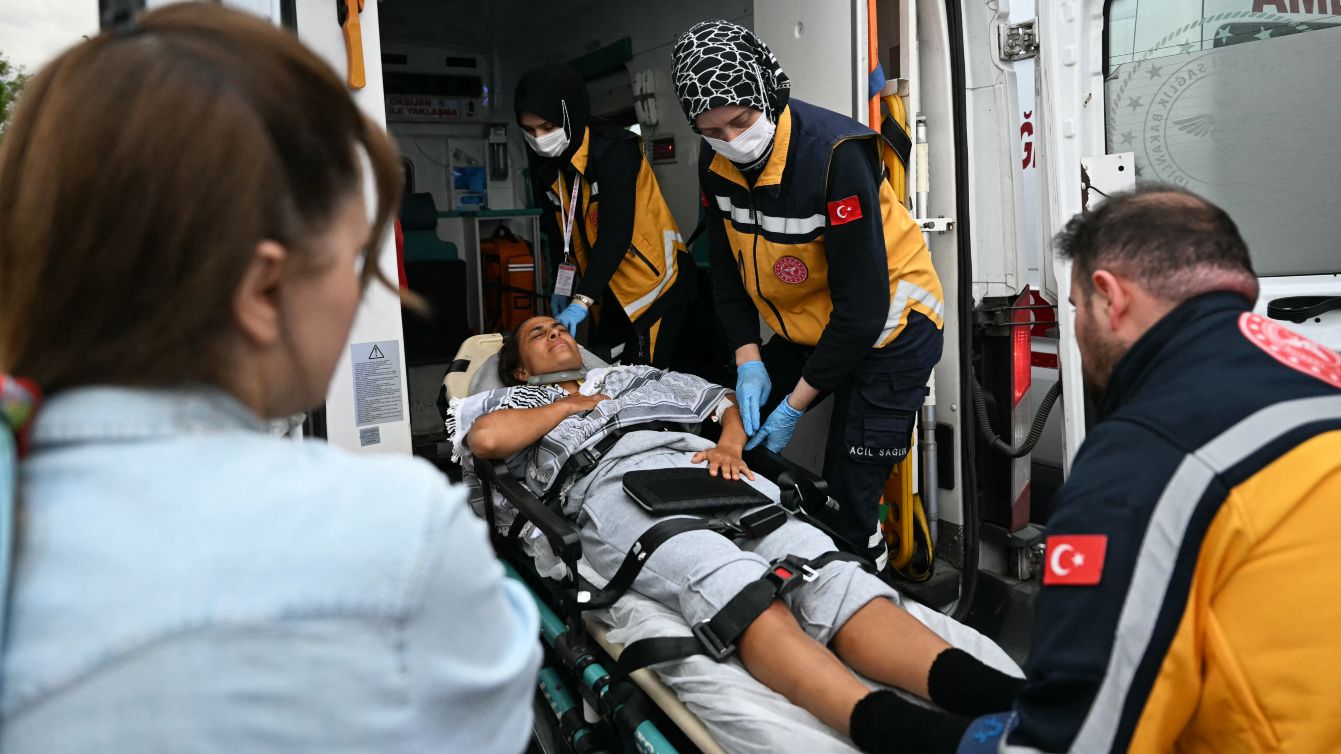
Australian flotilla activists join ICC submission against Israel, provide testimony
In a landmark move that escalates international scrutiny of Israeli actions against aid workers, Australian participants in the Global Sumud Flotilla bound for blockaded Gaza have joined a formal legal submission to the International Criminal Court (ICC) in The Hague, detailing allegations of systemic sexual assault, torture, and inhumane treatment while they were held in Israeli captivity. The 2026 spring flotilla mission, organized by the Global Sumud Flotilla group, aimed to deliver humanitarian aid to Gaza, an enclave that has faced repeated Israeli military actions and a years-long air, land and sea blockade that has restricted the flow of most civilian and aid supplies. According to an official statement from the flotilla organizing committee, the ICC filing includes comprehensive evidence: firsthand survivor testimonies, independent medical examination reports, and sworn legal affidavits from detainees.
Israeli military forces intercepted the aid flotilla in international waters, abducted the 430 participating activists, held them in Israeli detention facilities, and ultimately deported all detainees to Istanbul, Turkey. Video footage captured upon the activists’ arrival in Istanbul showed them exiting planes in grey prison tracksuits, wearing Palestinian keffiyehs and raising their fists in defiance as they were reunited with waiting family members and supporters. It was immediately after this release that detainees began sharing graphic accounts of their treatment: they reported being fired on with rubber bullets during the interception, brutally beaten throughout detention, and subjected to repeated sexual assault while in Israeli custody.
The legal submission formally alleges that the interception, detention, and abuse of flotilla participants amount to war crimes, crimes against humanity, torture, and repeated violations of international humanitarian law. Flotilla organizers emphasize that the evidence they have presented directly contradicts the official public narrative released by Israeli officials about how detainees were treated. “The Israeli Ambassador looked Australian families in the eye and said our people were treated with great sensitivity,” said Subhi Awad, a lead organizer for the Global Sumud Flotilla, in an official statement. “Our people were beaten. Our people were tortured. Our people suffered sexual violence.” Awad added that the Australian public is fully entitled to full and transparent answers about how their citizens were treated by Israeli authorities.
Local Australian media has confirmed that Australian lawyer Bernadette Zaydan is part of the legal team presenting the evidence to the ICC. Among the most disturbing new allegations is the claim that one Australian humanitarian worker was forcibly injected with an unidentified chemical substance while in Israeli custody. “Neither the survivor nor the Australian public has been told what the substance was, why it was administered, or what the potential health consequences may be,” Awad explained.
This ICC submission comes at a moment of heightened global attention to allegations of Israeli sexual violence in conflict: the United Nations has formally added Israel to its official blacklist of actors credibly accused of sexual violence in conflict zones, following a years-long investigation that included multiple documented reports from independent human rights organizations and media outlets, including Middle East Eye, that documented allegations of rape and other forms of sexual assault committed by Israeli forces against Palestinian people starting in October 2023. Israel’s Jerusalem Post, which was the first outlet to publicly report on the UN listing, confirmed that the Israeli Prison Service (IPS) will be named specifically in the 2026 updated blacklist, while other Israeli security and state bodies remain under active monitoring for potential future inclusion.
Additional controversy emerged after Israel’s far-right Interior Minister Itamar Ben Gvir publicly posted footage of himself taunting detained flotilla activists inside an Israeli holding facility. The video and accompanying images show more than 100 handcuffed activists forced to crouch on the floor of the facility, while Israeli guards manhandled some detainees and waved Israeli flags directly in their faces. The footage drew immediate unified condemnation from the foreign ministries of the United Kingdom, United States, France, Italy, and Canada.
Australian detainee Juliet Lamont, one of the Australian activists involved in the mission, has publicly criticized Australian Prime Minister Anthony Albanese for refusing repeated requests from the survivors for a meeting following their return to Australia. “Australian survivors have travelled halfway around the world seeking justice through international legal processes. Yet the prime minister will not even meet with them,” Lamont said in a statement. “If Australian survivors can be heard in The Hague but not in Canberra, something has gone badly wrong.” The 11 Australian participants confirmed to be part of the mission are Neve O’Connor, Juliet Lamont, Zack Schofield, Surya McEwen, Sam Woripa Watson, Anny Mokotow, Bianca Pullman Webb, Ethan Floyd, Violet Coco, Gemma O’Toole and Helen O’Sullivan.
Israeli officials have pushed back against all allegations: the country’s foreign ministry has claimed the flotilla operated on behalf of the Palestinian militant group Hamas, labeled the entire aid mission a deliberate provocation against Israel, and repeated Israel’s long-standing claim that Gaza is already “flooded with aid.” For their part, the Global Sumud Flotilla has reiterated its call for fully independent international investigations into all the allegations of abuse, and for full legal accountability for any officials and personnel found responsible for the violations documented in the ICC submission.
-
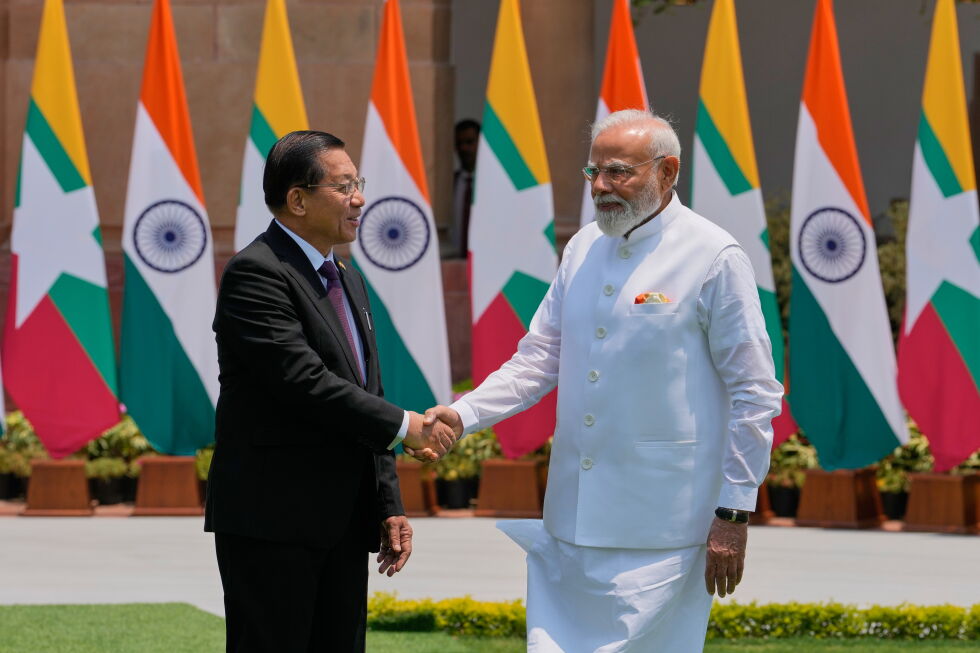
Modi meets Myanmar’s military-backed president as India says engagement will continue
NEW DELHI – In a move that defies Western efforts to isolate Myanmar’s ruling military junta, India has announced it will maintain open diplomatic and bilateral engagement with Myanmar’s military-backed administration following high-level talks Monday between Prime Minister Narendra Modi and junta leader Min Aung Hlaing, the country’s recently installed president. This meeting comes nearly three years after the 2021 military coup that ousted the democratically elected government led by Aung San Suu Kyi, a development that triggered sweeping Western sanctions, a brutal nationwide crackdown on opposition, and a deepening humanitarian and armed conflict across Myanmar.
Addressing reporters in the Indian capital shortly after the closed-door talks, Indian Foreign Secretary Vikram Misri emphasized that New Delhi’s longstanding policy of engagement with Myanmar is not an endorsement or commentary on the country’s internal political order. Misri argued that cutting ties and isolating Myanmar would backfire, pointing to historical precedent to back New Delhi’s approach: “History has shown that disengagement doesn’t give us any results that are better than engagement,” he told reporters.
This visit marks Min Aung Hlaing’s first trip to India since he was sworn in as president in April, following a general election widely dismissed by international critics as a sham to consolidate the military’s grip on national power. His last official visit to India took place in 2019, when he served as the commander-in-chief of Myanmar’s military.
Western governments have led a global push to isolate Myanmar’s military rulers since the 2021 coup, and human rights organizations and international critics have warned that Min Aung Hlaing’s high-profile trip to New Delhi risks granting unearned legitimacy to a government that came to power through force. The coup ousted Suu Kyi’s civilian administration and sparked a widespread popular resistance movement that has devolved into a prolonged nationwide armed conflict, displacing hundreds of thousands and creating a dire humanitarian emergency.
Geography and strategic interests have long shaped India’s approach to its eastern neighbor. India shares a 1,643-kilometer land border and a shared maritime boundary in the Bay of Bengal with Myanmar, and the country currently hosts thousands of Myanmar refugees who have fled fighting in Chin State and other conflict-hit border regions. For India, Myanmar is also a critical partner for national security: the two countries have a long history of collaboration on border security and intelligence sharing to counter insurgent groups that operate across the shared frontier.
In an unusual departure from standard protocol for visiting heads of state in New Delhi, neither Modi nor Min Aung Hlaing spoke to reporters following their bilateral meeting. Misri however outlined the key topics on the agenda, noting that discussions covered trade, defense and security coordination, border governance, and regional strategic issues, with a particular focus on expanding economic and technological ties. He added that both sides reached agreement to deepen cross-sector collaboration in key areas including trade, energy, and critical mineral supply chains, as well as to speed up work on major cross-border connectivity infrastructure projects.
The talks also addressed growing transnational threats that have directly impacted India: cybercrime and human trafficking linked to scam compounds operating in Myanmar that have lured thousands of Indian citizens into forced criminal work. Misri confirmed that joint counter-criminal efforts between the two countries have already resulted in the rescue of more than 2,400 Indian nationals from these scam operations over the past 18 months.
Beyond his meeting with Prime Minister Modi, Min Aung Hlaing held separate talks during his visit with India’s President Droupadi Murmu, Foreign Minister Subrahmanyam Jaishankar, and National Security Adviser Ajit Doval, covering multiple dimensions of the bilateral relationship.
-
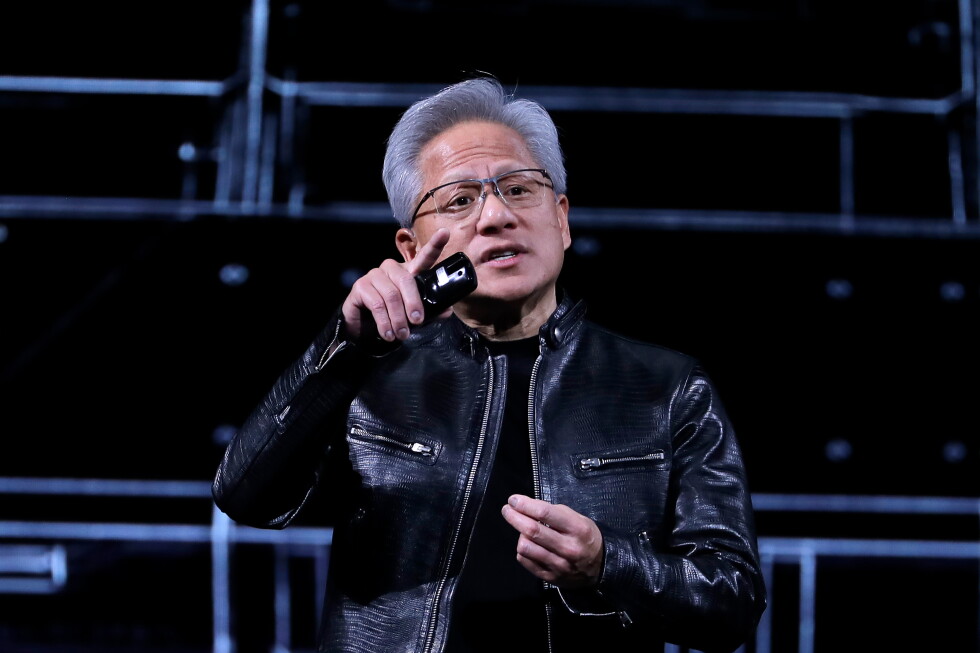
Nvidia bets on AI personal computers with new ‘superchip’ powering Windows laptops
In a landmark announcement made at its annual GTC conference in Taipei on Monday, industry-leading chipmaker Nvidia introduced a game-changing new line of high-performance chips designed to bring cutting-edge artificial intelligence capabilities directly to consumer laptops and desktops. New AI-powered PC models from major global brands including Microsoft and Dell are scheduled to hit the market by the end of 2024.
Already the world’s most valuable publicly traded company — surpassing tech giants Apple, Alphabet and Microsoft — Nvidia has built its massive recent success on meeting exploding global demand for high-end data center chips that power large-scale AI infrastructure. With this new launch, the firm is pursuing an aggressive expansion strategy to embed its AI technology across the entire spectrum of consumer AI systems and products.
Jensen Huang, Nvidia’s Taiwanese-American founder and chief executive officer, used his keynote address to frame the launch as a fundamental reset for the personal computing industry. “Microsoft and Nvidia are going to reinvent the PC,” Huang told the audience, calling the new generation of devices “the new PC.”
At the core of the new offering is the Nvidia RTX Spark superchip, an integrated processor that combines the core computing power of a central processing unit (CPU) with the parallel processing strength of a graphics processing unit (GPU). This combined chip will power a new category of devices the company has branded “AI personal computers,” which are set to debut commercially this fall in the form of new Windows laptops and desktops. Huang emphasized that the new chips will transform PC use cases for both creative work and gaming, enabling on-device AI assistants that can interact with users via voice and vision, read large files, conduct independent research, and handle a wide range of complex personalized tasks. A key innovation of the new platform is that AI agents can run fully locally on consumer devices, eliminating the need for constant cloud connectivity to access advanced AI functions.
In a separate statement, Microsoft confirmed that the new Nvidia-powered devices will support fully functional large AI models and handle high-demand workloads that previously required cloud-based processing.
Huang called the launch the first complete overhaul of personal computing architecture in four decades, a shift that analysts say carries profound implications for the global tech industry. Lian Jye Su, chief analyst at technology research firm Omdia, noted that Nvidia’s expansion into consumer AI PCs comes as global consumer demand for personal on-device AI agents grows rapidly. “For consumers, it means more choices, which is always a good thing,” Su explained.
Neil Shah, co-founder of Counterpoint Research, described the announcement as a transformative shift that will redefine the PC over the coming decade. “This new generation of laptops and desktops will drive agentic AI applications in every home,” Shah said, adding that the initiative aims to put an AI supercomputer in every household.
The launch immediately rippled through global financial markets: in early U.S. trading, Nvidia’s share price rose nearly 4%, while its primary manufacturing rivals Intel and AMD both saw share prices drop more than 3%, reflecting investor expectations of increased competition in the consumer chip market.
In addition to the RTX Spark superchip, Huang shared several other major updates during his keynote. He confirmed that the company’s new Vera CPUs, designed for AI data centers, are already in full mass production, and positioned the new chips as the firm’s next major core growth driver amid the booming demand for AI agent infrastructure. Early customers for the Vera CPUs already include leading AI research firms Anthropic and OpenAI, as well as SpaceX’s AI division SpaceXAI.
Huang also revealed a new open-source humanoid robot reference design called Isaac GR00T, created to serve as a foundational blueprint for future humanoid robot research, particularly for academic and higher education institutions. Standing close to six feet tall, the GR00T chassis is built around Chinese robotics firm Unitree’s H2 humanoid platform, and is fitted with dexterous five-fingered hands developed by Singapore-based robotics startup Sharpa, which are capable of precise, fine motor control movements.
-

UAE’s IMI takes full control of Sky News Arabia amid Sudan coverage scrutiny
After a 14-year collaborative partnership, UK-headquartered Sky has formally exited its co-ownership of pan-regional Arabic-language broadcaster Sky News Arabia, ceding all strategic and operational control to its United Arab Emirates-based co-founder International Media Investments (IMI). The transition, announced Sunday, includes a multi-year brand licensing arrangement that will allow the broadcaster to retain its existing Sky-branded identity going forward.
The original partnership between Sky and IMI dates back to 2010, when the two entities laid the groundwork for a new 24-hour Arabic news outlet designed to challenge established regional players across the Middle East and North Africa. Sky News Arabia launched its official broadcast in 2012, entering a competitive landscape long dominated by Doha-based Al Jazeera and Saudi-owned Al Arabiya. No financial details of the full ownership transfer deal have been made public.
In an official statement marking the transition, David Rhodes, Executive Chairman of Sky News Group, framed the handover as a natural next step for the broadcaster. “The time is right for this change and we look forward to continuing our relationship in the next phase of Sky News Arabia,” Rhodes said, adding that the group was proud of the platform built through its collaboration with IMI and viewed the ownership shift as a natural progression for the outlet’s development.
IMI, a major Abu Dhabi-based media investment firm controlled by Sheikh Mansour bin Zayed Al Nahyan, UAE Vice President and owner of the Manchester City Football Club, echoed this framing in its own comments. The company emphasized that the full ownership transfer reflects how Sky News Arabia has grown into a fully mature regional media institution, and that sole control will position the outlet to pursue accelerated expansion and innovative editorial development.
However, the ownership restructuring comes on the heels of significant public scrutiny over Sky News Arabia’s editorial coverage of the ongoing civil conflict in Sudan. In November last year, former senior Sky executives based in the UK told The Daily Telegraph that the outlet had devolved into a mouthpiece for UAE leadership, failing to provide accurate, independent reporting on atrocities committed by the Rapid Support Forces (RSF), a Sudanese paramilitary group that UN-appointed international investigators have found targeted ethnic minority communities in Darfur.
While the UAE government has repeatedly denied allegations of backing the RSF, independent outlet Middle East Eye has published extensive on-the-record reporting documenting the UAE’s support, citing a wide range of evidence including satellite imagery, flight logs, weapons serial numbers and multiple anonymous and named sources inside the region. In the same November that the original allegations emerged, Sudan’s transitional government formally banned Sky News Arabia from operating within the country’s borders, after the outlet published a report from El Fasher, the capital of North Darfur, that claimed security conditions in the conflict-torn city were stabilizing.
The Guardian later reported that top executives at Sky’s UK headquarters had grown increasingly uncomfortable with the outlet’s editorial choices, particularly around how it framed the Sudan conflict. The newspaper also noted that Sky News Arabia had published multiple pieces questioning the credibility of evidence collected by international investigators and conflict survivors documenting RSF atrocities.
In February of this year, a UN-mandated independent fact-finding mission concluded that actions carried out by the RSF and its allied militias across parts of Sudan carry the clear “hallmarks of genocide.” Shortly after this UN report was released, Sky News Arabia deployed veteran correspondent Tsabih Mubarak Khatir to cover El Fasher – a move that drew widespread criticism after it was revealed Khatir is married to a senior RSF official. Video footage from the trip later showed Khatir embracing a high-profile female RSF commander who had previously publicly called on RSF fighters to rape Darfuri women, telling the commander, “we are with you.”
A month later, a major joint investigation by Yale University’s Humanitarian Research Lab and NASA’s Harvest programme confirmed that the RSF has carried out a deliberate campaign of mass starvation against civilian populations in El Fasher, destroying dozens of farming villages and wiping out nearly all crop production in the area surrounding the besieged city.
IMI has repeatedly maintained that its ownership negotiations with Sky were rooted in purely commercial considerations, and were unrelated to any disputes over editorial policy. When contacted by Bloomberg News for additional comment following Sunday’s announcement, an IMI spokesperson declined to provide any statement beyond the company’s official release, while Sky did not immediately respond to requests for comment.
-

Sino-US cooperation on AI on the table
Following a high-level bilateral summit between Chinese and U.S. leaders in Beijing that opened new space for dialogue on emerging technologies, artificial intelligence has emerged as a promising potential area of collaboration between the world’s two largest technological powers, according to leading international affairs experts, who are also sounding the alarm over the urgent need to address cross-border AI risks before they escalate.
During U.S. President Donald Trump’s official visit to China in May, the two heads of state held productive, constructive discussions on artificial intelligence development and governance, and reached a consensus to launch formal intergovernmental dialogue focused on the topic.
At a May 19 press briefing, Chinese Foreign Ministry spokesperson Guo Jiakun emphasized that as the world’s two leading AI powers, China and the United States bear a shared responsibility to work together to advance responsible AI development and strengthen global AI governance frameworks. Such collaboration, he noted, would ensure the technology serves as a driver of human progress and delivers shared benefits to the entire global community.
Fred Teng, president of the America China Public Affairs Institute and a fellow at the U.S. Foreign Policy Association, told China Daily that AI can no longer be framed as a narrow technical issue confined to research labs and tech companies. “AI is now an economic, security, governance and strategic stability issue,” Teng said. He stressed that joint action by China and the United States to mitigate risks stemming from the malicious use of AI is not just beneficial—it is essential.
Teng warned that the pace of AI advancement is already outstripping the development of diplomatic frameworks, regulatory rules, and public understanding of the technology. Capabilities that were once restricted exclusively to national governments, he noted, will soon be accessible to small non-state groups and even individual actors, creating unprecedented risk.
“AI can make cyberattacks more automated, deepfakes more convincing, fraud more scalable, and biological or chemical risks harder to control. These dangers do not respect borders,” Teng said. “AI is not separate from strategic stability. AI is now part of strategic stability.”
Zhiqun Zhu, professor of political science and international relations and director of the China Institute at Bucknell University, echoed Teng’s call for urgent collaboration, noting that unchecked AI progress poses shared global dangers that no single country can address alone.
“AI technologies are progressing rapidly and changing the world enormously, so there is an urgent need to establish some protocol about the usage of AI at the international level,” Zhu explained in an interview. “The United States and China are the two biggest technological powers and should take the leadership in developing such protocols.”
Even so, Zhu acknowledged that turning shared interests in responsible AI into tangible, concrete cooperation will present significant challenges. Reaching consensus on the boundaries and appropriate uses of AI, especially in sensitive domains tied to national security, will be “a tall order,” he said.
Despite these hurdles, experts say the two countries are uniquely positioned to lead global AI risk mitigation, even amid ongoing bilateral competition. Kyle Chan, a fellow in the John L. Thornton China Center at the Brookings Institution, argued that large-scale collaboration on AI risk reduction does not require broad bilateral trust, full strategic alignment, or compromise on core national interests.
“The United States and China can continue to compete vigorously in AI while taking practical steps to reduce shared risks,” Chan wrote in a recent Brookings Institution commentary.
Teng, who also serves as an adviser to the George H. W. Bush Foundation for US-China Relations, outlined a series of practical, low-barrier starting points for cooperation that focus on shared risk reduction rather than broad systemic alignment. First, he called on both governments to align AI safety standards for advanced AI models that could impact cyber operations, biological research, global financial systems, critical national infrastructure, and military decision-making processes.
Teng also proposed that the two sides build dedicated AI risk-reduction mechanisms, including secure emergency communication channels that can be activated in the event of an AI-enabled attack on critical infrastructure. Additionally, he said cross-border information sharing on malicious AI use—ranging from AI-powered cybercrime and deepfake disinformation to threats against critical public services like hospitals and power grids—should be a core priority for early dialogue.
In the military domain, Teng said the two governments must agree on foundational ethical and operational principles, most importantly that human actors must retain full responsibility for all life-or-death strategic decisions, even as AI systems grow more autonomous and capable.
Teng drew a parallel to Cold War-era nuclear risk reduction cooperation between the United States and the Soviet Union, where the two geopolitical rivals maintained fierce systemic competition while collaborating on practical measures to reduce the risk of accidental conflict. The same logic, he argued, applies to AI governance today.
“Cooperation can be limited to areas of shared risks, such as AI-enabled cybercrime, attacks by non-state actors, crisis communication, model safety testing and protection of critical infrastructure,” Teng said. “Cooperation is not a concession; it is responsible self-protection.”
-

Philippine senator charged with plunder says he will surrender
MANILA, Philippines — In a high-profile development tied to one of the Philippines’ most prominent political corruption cases, Philippine Senator Jinggoy Estrada announced Monday that he will comply with a new court-ordered arrest warrant stemming from a plunder charge connected to massive kickback payments in a national flood-control infrastructure project.
The sequence of legal actions unfolded rapidly last week: the Sandiganbayan, the country’s specialized anti-graft court, first issued an arrest warrant for 63-year-old Estrada this past Friday on a separate graft charge that qualified for bail. Following that initial warrant, Estrada turned himself in to authorities, secured his release on bail, and once again publicly rejected all accusations of misconduct against him.
The core allegations against the senator originate from testimony given by a former public works department engineer, who claims Estrada accepted illicit kickbacks totaling more than 570 million Philippine pesos — equivalent to roughly $9.3 million — from the flood-control construction contracts at the center of the investigation. Estrada has repeatedly and forcefully denied all wrongdoing tied to the case, maintaining his innocence in the face of the corruption allegations that have dominated recent political headlines in the country.
-

Rescuers search for alternative route to reach 2 missing in a flooded Laos cave
BANGKOK – Nearly two weeks after a sudden flash flood trapped seven people inside a remote cave in northern Laos, international rescue teams are racing against shifting weather conditions to locate the two remaining missing people, after five others were successfully pulled to safety over recent days.
The incident unfolded around 120 kilometers north of Vientiane, Laos’ capital, in the rugged terrain of Xaisomboun province. According to rescue accounts, a group of local villagers ventured into the cave nearly two weeks ago to prospect for valuable minerals including gold. A sudden bout of heavy rainfall triggered a massive flash flood that surged through the cave system, blocking the only exit the group had used to enter. One villager managed to escape the rising waters immediately and alerted local emergency authorities, launching what has become a complex cross-border rescue operation.
When teams first reached the site, all seven villagers were trapped deep within the flooded cave system. The first extraction came on Friday, when an expert diver guided one survivor out through a narrow, water-filled passage. Four more were able to walk out on their own the following day, after receding water levels opened up a temporary safe route. That brings the total number of rescued people to five, leaving two unaccounted for nearly two weeks since the flood.
Rescue efforts have been complicated by persistent hazardous conditions: the main entrance to the cave has remained completely flooded and impassable since the initial flood event, and a new round of heavy downpours on Sunday forced teams to suspend active search operations overnight as water levels rose again. The Laos-based Rescue Volunteer for People group noted on its official Facebook page that intense rainfall sent massive volumes of water cascading into the cave system, pausing progress.
Now, teams from across Southeast Asia and beyond are adapting their strategy to reach the missing. Joint operations have been running for more than a week, with lead rescue teams from Laos and neighboring Thailand, supported by expert divers from Finland, Malaysia, Japan, Indonesia, France and Australia. Many of the participating rescuers bring hands-on experience from the high-profile 2018 Tham Luang cave rescue, where 12 youth soccer players and their coach were saved after 18 days trapped in a flooded northern Thailand cave – one of the most complex cave rescue operations in modern history.
Current search efforts are focused on three alternative routes to reach the area where the two missing are believed to be trapped. First, rescue crews are actively pumping excess water out of the cave system. Malaysian diver Lee Kian Lie, a member of the international rescue contingent, told the Associated Press that once water levels drop sufficiently, teams will advance into the section where the cavers are thought to be. Second, a separate search team is surveying the opposite side of the cave mountain to locate a naturally dry, passable opening that connects to the trapped area. Third, Kengkaj Bongkawong, leader of Thailand’s Metta Tham Rescue Kalasin team, confirmed that crews are also searching from the mountain above for undiscovered air shafts that could provide entry to the deep cave section.
Rescuers say the two missing are located deeper in the cave system than the spot where the five survivors were recovered last Wednesday. The passage leading to this deeper section is extremely narrow and remains almost entirely submerged, making any entry through the main route impossible with current water levels. Teams are continuing their work around the clock to open an alternative path before further weather shifts complicate the operation.
-

Litterbugs now face on-the-spot fines in Tokyo’s tourist hotspot
As Japan grapples with unprecedented post-pandemic growth in international tourism, one of the country’s most iconic visitor destinations is rolling out strict new penalties to crack down on public littering. Starting this Monday, anyone caught dropping trash in Tokyo’s Shibuya Ward — the bustling commercial and entertainment hub home to the world-famous Shibuya Crossing — will face an immediate fine of 2,000 Japanese yen, equal to roughly $13 USD or £9 GBP.
The new penalty regime expands beyond individual litterbugs: in targeted high-traffic districts of the ward, food and beverage retailers that fail to provide on-site waste bins for customer use will also receive financial penalties. Enforced under an anti-litter campaign branded with the slogan “if you throw trash, you lose cash,” the new system allows offenders to pay fines instantly via multiple payment methods including cash, credit card, and digital QR codes. Up to 50 dedicated enforcement officers will patrol high-footfall areas of Shibuya to monitor for violations and issue penalties on site.
Japan’s tourism sector has hit historic highs in recent years, with official data showing the country welcomed a record-breaking 42.7 million international visitors in 2025. While the boom delivers significant economic benefits, it has also created growing frictions for local communities, who increasingly report disruptions from overcrowding and public misconduct. Japan’s national public broadcaster NHK notes that local officials have recorded a sharp rise in open alcohol consumption and littering across Shibuya, a large share of which is linked to visiting international tourists.
The scarcity of public waste bins across Japan, a longstanding policy rooted in national security concerns following past domestic and international terror attacks, has been cited by many as a contributing factor to rising litter. A 2024 government survey of over 4,000 foreign visitors found that the lack of public trash facilities ranked as the top inconvenience for tourists, named by more than 20% of respondents. Shibuya Ward officials, however, rejected the lack of bins as an excuse for improper waste disposal in a public statement, noting “We cannot tolerate littering simply because there are no rubbish bins. We ask for your cooperation in creating a city where everyone can enjoy themselves comfortably.”
Shibuya is not the only Japanese community grappling with the negative side effects of overtourism. In Fujiyoshida, the small town located at the base of Mount Fuji, chronic traffic congestion, excessive litter, and repeated disruption to local daily life prompted authorities to cancel the town’s popular annual cherry blossom festival this year, citing that the surge in visitor numbers had become unmanageable for local residents.
National authorities have rolled out a suite of nationwide measures to address overtourism strains, including increasing tourist accommodation taxes, launching crowd management mobile applications that provide real-time updates on visitor density at popular sites, and supporting local governments rolling out local penalty regimes like Shibuya’s new littering fines. The current tourism boom, driven by a weakened yen making travel to Japan more affordable and widespread social media exposure highlighting the country’s cultural and natural attractions, has put unprecedented pressure on urban infrastructure and residential communities across the country.
-
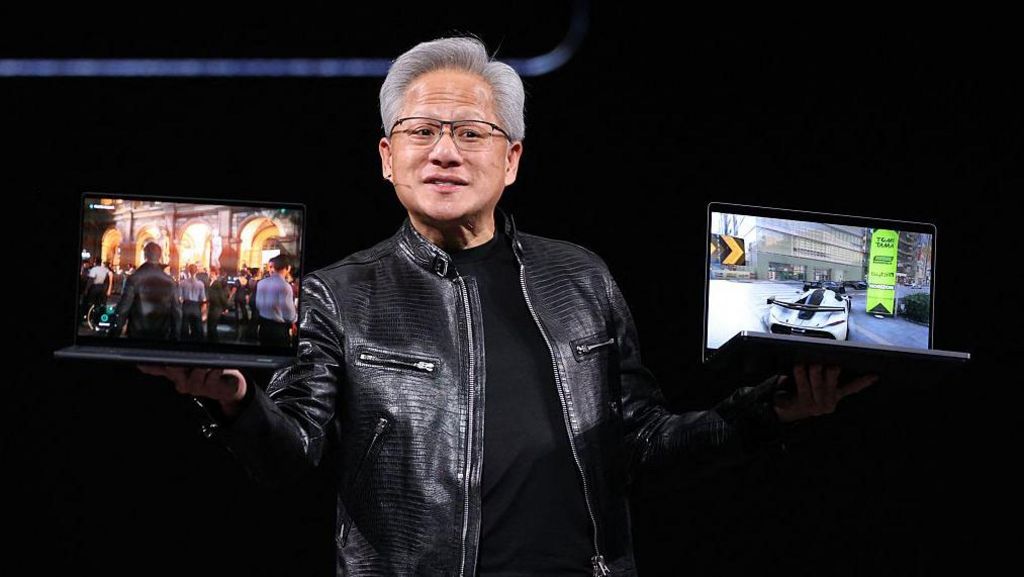
Nvidia announces new AI chip for personal computers
Leading global graphics processing unit designer Nvidia has launched a groundbreaking new artificial intelligence-focused processor for consumer personal computers, marking the firm’s latest aggressive push into the fast-growing integrated AI device market. The product announcement, dubbed the RTX Spark chip, was made by Nvidia Chief Executive Jensen Huang during a headline keynote address on Monday, kicking off this year’s Computex technology trade show hosted in Taipei, Taiwan.
In his opening remarks, Huang framed the launch as a paradigm shift for the global computing industry, comparing the transformation to the revolution that turned basic mobile phones into modern, multifunctional smartphones. “This reinvention of the computer is as big of a deal as the reinvention of the phone into what we now know as the smartphone,” Huang told the audience of tech industry insiders and attendees.
On its official website, Nvidia positions the RTX Spark as a “new superchip” purpose-built for the emerging era of personal AI agents, designed to redefine what consumer computers can do by shifting their role from a basic productivity tool to an intuitive collaborative teammate. The new chip will be integrated into an upcoming line of Windows-powered PCs manufactured by some of the biggest names in the global PC industry, including Asus, Dell, HP, Lenovo, Microsoft Surface, and MSI. These initial systems are scheduled to hit retail markets in autumn this year, with additional models from Acer and Gigabyte set to launch shortly after the first wave.
The entry of Nvidia’s customized AI consumer chip into the mainstream PC market sets up a direct competitive challenge to established industry giants including Apple and Intel, which have long dominated key segments of the global personal computing market. The broader global AI boom has already catapulted Nvidia to extraordinary corporate milestones: the firm is now the most valuable publicly traded company in the world, boasting a total stock market valuation that exceeds $5 trillion (£3.7 trillion).
The RTX Spark launch came just one day after the U.S. government implemented new restrictions on Nvidia chip exports to Chinese entities. On Sunday, the U.S. Department of Commerce announced updates to its existing export control rules aimed at closing a long-flagged loophole that had previously allowed Chinese firms to access advanced AI chips through overseas-based subsidiaries. Under the new rules, exports of Nvidia’s top-tier Blackwell processors, among other cutting-edge AI chips, to these offshore Chinese company affiliates will now be restricted. Washington has pursued this series of escalating restrictions for years, with the stated goal of blocking Chinese technological groups from acquiring the high-performance chips required to advance cutting-edge domestic AI development.