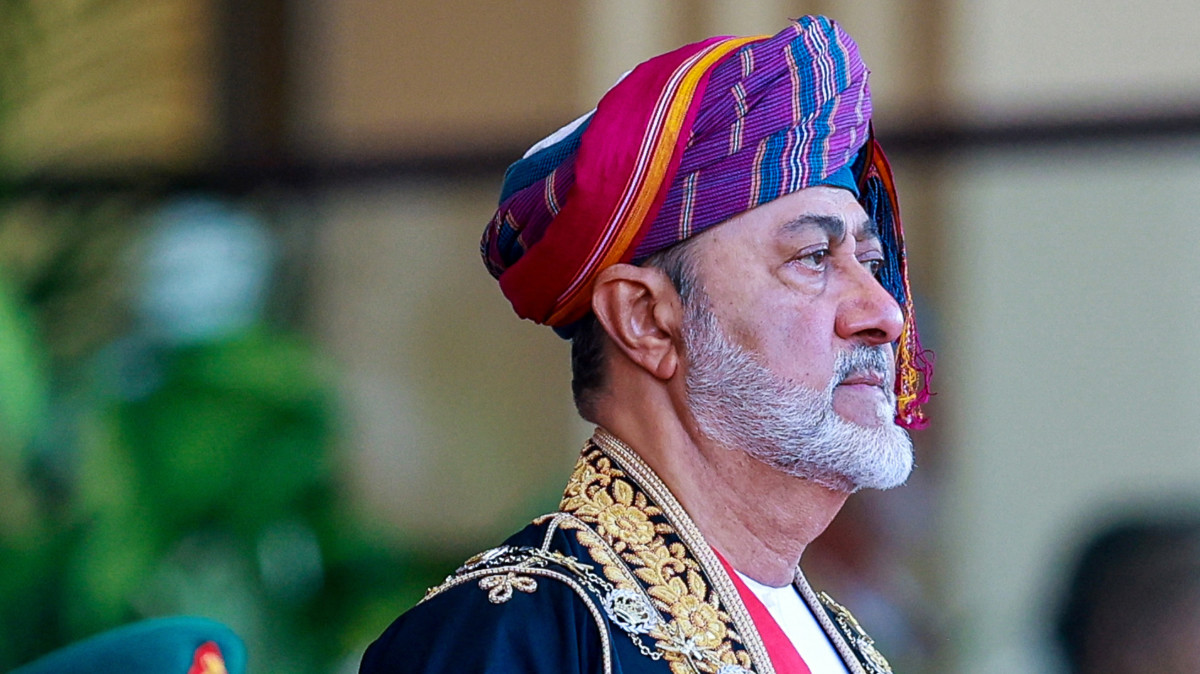
In a significant departure from its traditionally neutral foreign policy, Oman has engaged in covert military cooperation with Saudi Arabia to counter UAE-backed separatist advances in Yemen’s strategic al-Mahra region, according to diplomatic sources and regional analysts.
标签: Asia
亚洲
-
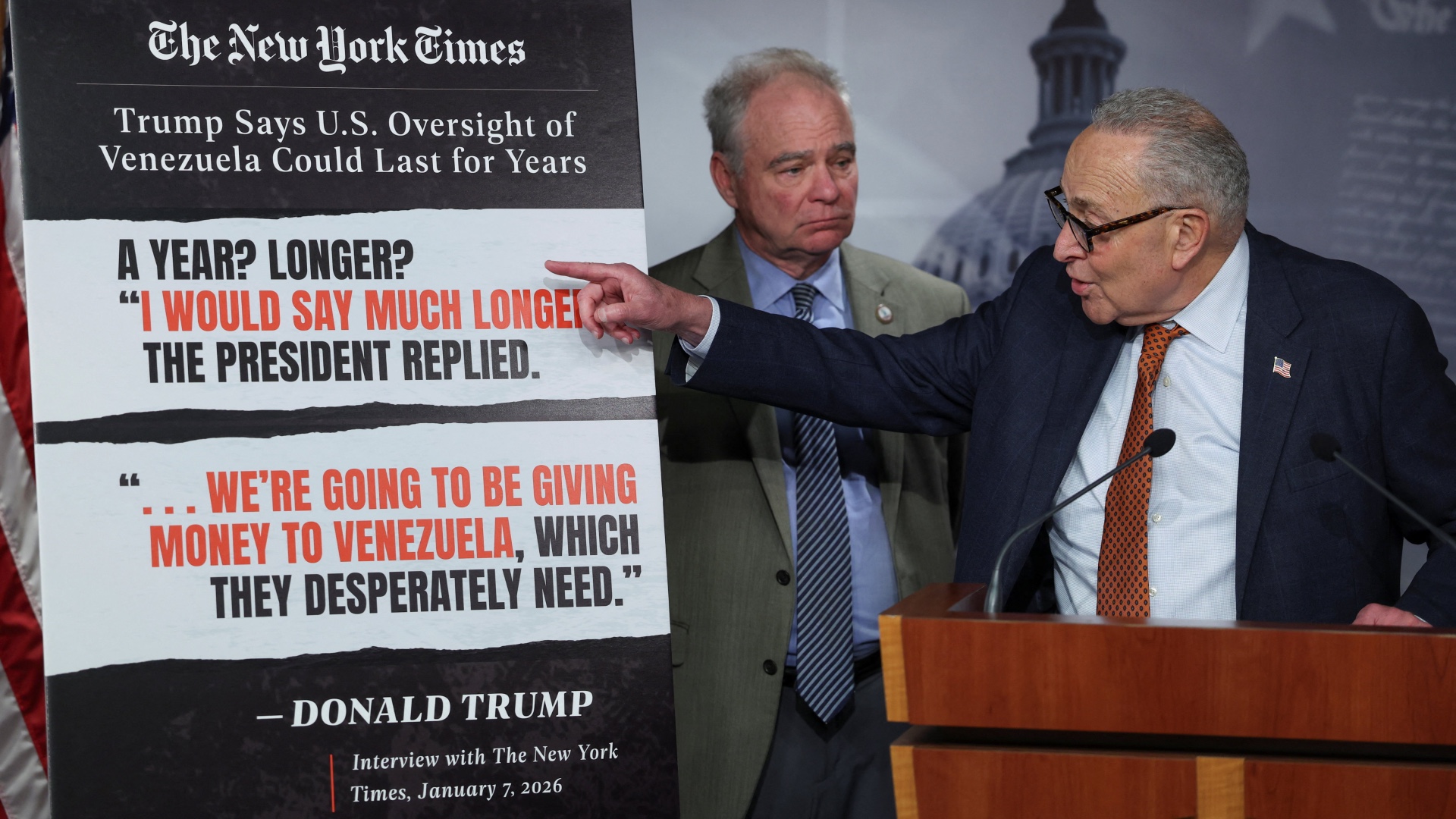
US Senate advances measure to curb Trump’s war-making powers on Venezuela
In a significant bipartisan move, the U.S. Senate advanced a measure on Thursday to curtail President Donald Trump’s autonomous war-making powers concerning Venezuela. The procedural vote passed 52-47, with five Republican senators breaking ranks to support the Democratic-led initiative.
The resolution, championed by Democratic Senator Tim Kaine and Libertarian Republican Rand Paul, invokes the 1973 War Powers Act. This legislative maneuver enables any senator to propose the withdrawal of U.S. armed forces from conflicts lacking explicit congressional authorization. The move comes amid heightened tensions following recent U.S. military operations in Venezuela that resulted in approximately 80 casualties and the controversial abduction of President Nicolas Maduro.
Senator Kaine articulated the resolution’s urgency in a social media statement: ‘For God’s sake, let’s not let Trump wage war all over the world without us.’ His sentiment reflects growing congressional concern over executive overreach in military matters, particularly since the post-9/11 era enabled presidents to conduct strikes from Somalia to Pakistan without formal war declarations.
The vote revealed remarkable political dynamics, with traditionally pro-Trump Republicans like Josh Hawley supporting the measure. Hawley justified his vote constitutionally, stating that future military deployment to Venezuela would require congressional approval. This defiance prompted immediate retaliation from Trump, who threatened electoral opposition against the dissenting Republicans through his TruthSocial platform.
The advocacy group Demand Progress hailed the development as ‘a rare ray of good news for the nation and our Constitution,’ emphasizing public opposition to unauthorized military engagements. The resolution now moves toward an official Senate vote next week, after which it would face the Republican-controlled House. This action follows last year’s failed attempt by Kaine to restrict U.S. strikes in the Caribbean, which resulted over 100 fatalities despite unsubstantiated White House claims about drug trafficking.
-

Asian shares rise and US futures are flat after modest Wall Street moves
Asian equity markets demonstrated broad-based gains on Friday, propelled by a confluence of factors including robust corporate earnings and anticipatory sentiment surrounding U.S. policy developments. The trading session reflected a cautiously optimistic regional outlook, diverging from the previous day’s mixed performance on Wall Street.
Japan’s Nikkei 225 index emerged as a standout performer, advancing 1.1% to close at 51,692.70. This surge was significantly driven by exceptional results from Fast Retailing, the parent company of global apparel brand Uniqlo. The retailer’s shares skyrocketed over 7% following the announcement of a remarkable 34% year-on-year increase in quarterly operating profit, prompting an upward revision of their full-year financial forecasts.
Chinese markets posted modest gains with the Hang Seng Index in Hong Kong edging up 0.1% to 26,158.21, while the Shanghai Composite rose 0.3% to 4,095.33. This upward momentum coincided with the release of official data indicating China’s inflation rate accelerated in December at its fastest pace in nearly three years, signaling strengthening domestic demand that typically exerts upward pressure on consumer prices.
In a notable market debut, Chinese artificial intelligence firm MiniMax experienced a spectacular initial public offering on the Hong Kong Stock Exchange, with shares surging more than 50% during early trading sessions, highlighting robust investor appetite for technology innovations.
Meanwhile, Australia’s S&P/ASX 200 bucked the regional trend, dipping marginally by less than 0.1% to 8,715.60. This slight decline was largely attributed to a significant 6% drop in Rio Tinto shares following the mining giant’s confirmation of preliminary merger discussions with Glencore. A potential consolidation between these industry behemoths could potentially create the world’s largest mining conglomerate.
Other regional indices including South Korea’s Kospi and Taiwan’s Taiex posted gains of 0.7% and 0.3% respectively, contributing to the overall positive Asian market performance.
Market participants maintained heightened attention toward impending U.S. economic indicators, particularly the Labor Department’s December jobs report scheduled for release. Additionally, investors awaited a potential Supreme Court ruling on former President Trump’s proposed ‘Liberation Day’ tariffs, which could substantially influence market sentiment.
The previous trading session on Wall Street witnessed significant rallies within the defense sector following statements from former President Trump advocating for increased military spending, potentially reaching $1.5 trillion by 2027. Major defense contractors including L3Harris Technologies, Lockheed Martin, and Northrop Grumman recorded substantial gains of 5.2%, 4.3%, and 2.4% respectively.
In commodity markets, oil prices experienced upward movement amid ongoing supply concerns following geopolitical developments in Venezuela. Benchmark U.S. crude rose by 35 cents to $58.11 per barrel, while international standard Brent crude gained 38 cents to $62.37. These price increases occurred against a backdrop of continued U.S. efforts to assert control over Venezuela’s substantial oil resources, including recent seizures of tankers attempting to evade sanctions.
Currency markets saw the U.S. dollar strengthen against the Japanese yen, rising to 157.27 yen, while the euro experienced a slight decline against the dollar to $1.1656.
-
One dead, 38 missing after massive landfill collapses in Philippines
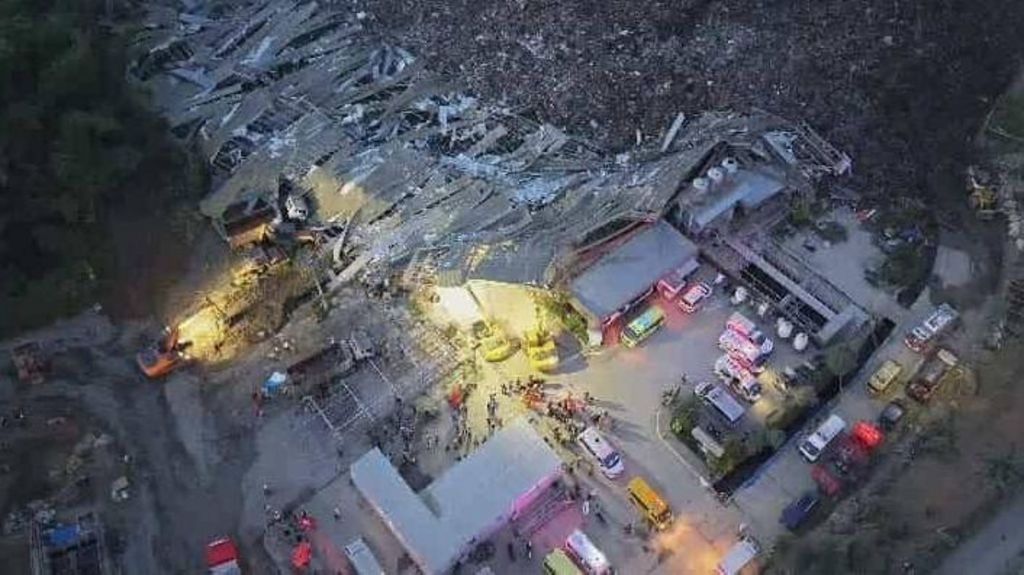
Emergency response teams are engaged in a critical search operation following a catastrophic garbage landslide at a Philippine landfill that has left dozens missing and claimed at least one life. The incident occurred Thursday at the privately-operated Binaliw Landfill in Cebu City, where a massive section of waste suddenly gave way, burying workers beneath tons of debris.
Authorities confirmed the death of a 22-year-old woman while 12 injured sanitation workers were successfully extracted from the rubble and hospitalized. Thirty-eight individuals remain unaccounted for as rescue efforts intensify, with approximately 300 personnel from multiple government agencies and civilian groups deployed to the scene. Heavy machinery including excavators, alongside ambulances and fire trucks, are visible throughout the operational area.
Cebu City Councillor Joel Garganera pointed to fundamental flaws in waste management practices as the likely cause, revealing to local publication The Freeman that operators had been engaged in dangerous soil mining operations. “They’ve been cutting into the mountain, mining the soil, and then piling garbage to form another mountain of waste,” Garganera stated, adding that the facility had degenerated from a sanitary landfill into “an open dumpsite.”
The 10-hectare (25-acre) Binaliw facility serves as a crucial waste management site for Cebu, the primary trading hub and transportation gateway for the Visayas region in the central Philippines. Such landfills represent common infrastructure across major Philippine urban centers, though questions about operational safety standards have emerged following this tragedy.
Cebu Mayor Nestor Archival confirmed via social media that all response teams “remain fully engaged in search and retrieval efforts” as the operation enters its most critical phase. While the exact trigger mechanism for the collapse remains under investigation, the incident has highlighted persistent challenges in waste management infrastructure across rapidly developing urban centers in the Philippines.
-
Filipino Catholics express outrage over corruption scandal during massive religious procession
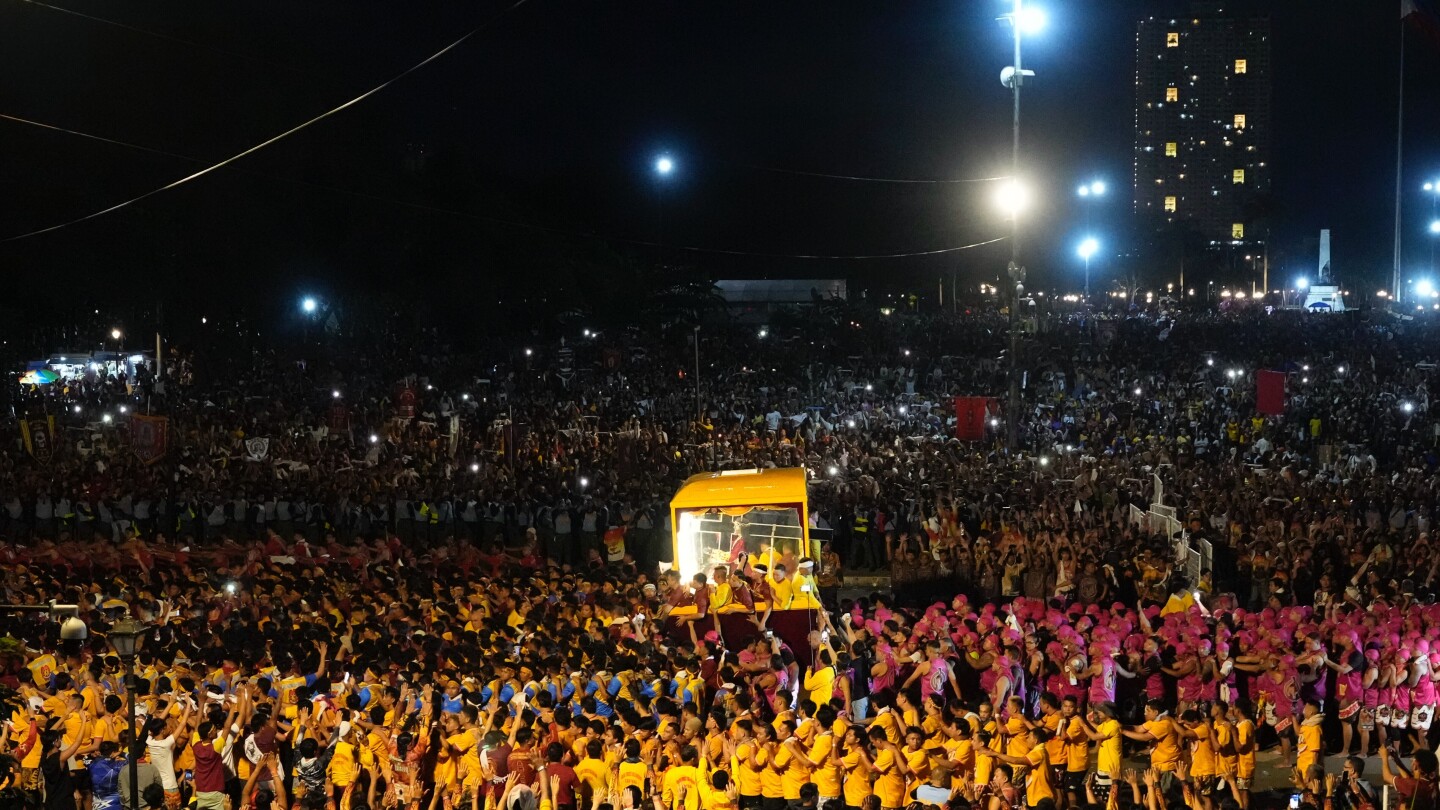
MANILA, Philippines — A sea of predominantly barefoot Catholic devotees engulfed the streets of Manila on Friday during the annual procession of the revered Jesus the Nazarene statue, transforming one of Asia’s most significant religious gatherings into a platform for expressing public fury over an extensive corruption scandal involving influential lawmakers.
The centuries-old wooden effigy, ceremoniously placed upon a four-wheel carriage after a midnight mass attended by tens of thousands at a seaside park, embarked on its traditional 6-kilometer journey through Manila’s congested thoroughfares. Manila Mayor Isko Moreno projected participation would reach millions throughout the day and night, creating both a spiritual spectacle and a formidable security challenge for authorities.
Security forces deployed approximately 15,000 police officers supplemented by intelligence personnel to maintain order. Stringent measures included firearms and alcohol prohibitions, drone and backpack bans, and cellular signal jamming along the procession route. Medical teams from government and Red Cross agencies established first-aid stations throughout the area.
This year’s event coincided with escalating public anger regarding a corruption scandal that emerged last year, implicating numerous House and Senate members accused of receiving substantial kickbacks from construction firms. The scheme involved thousands of substandard or entirely fictitious flood control projects in a nation notoriously vulnerable to catastrophic flooding.
As devotees clad in maroon shirts jostled to touch the statue—believed to possess healing properties and the power to grant better health, employment, and prosperity—many incorporated political chants into their prayers. The rhythmic cry of “jail them now!” echoed through crowds, referencing President Ferdinand Marcos Jr.’s unfulfilled promise to incarcerate corrupt legislators by last Christmas.
Bishop Rufino Sescon utilized his homily at Rizal Park to deliver a scathing critique of officials implicated in televised congressional hearings who have resisted resignation despite overwhelming public outrage. “Enough is enough. Have mercy on the people. Have some shame. Step down voluntarily in the name of mercy and love,” he declared.
Sixty-two-year-old devotee Venus Lopez, carrying a replica statue, articulated similar sentiments: “I hope those corrupt government officials will go away. They don’t deserve to be seated in power.”
The historical statue, adorned with thorns and bearing a cross, arrived in Manila via Spanish galleon from Mexico in 1606. Its survival of shipboard fires, earthquakes, and World War II bombings has fostered beliefs in its mystical resilience. The event exemplifies the distinctive Filipino Catholicism that blends orthodox tradition with folk superstitions, including the annual Good Friday practice of voluntary crucifixions.
-
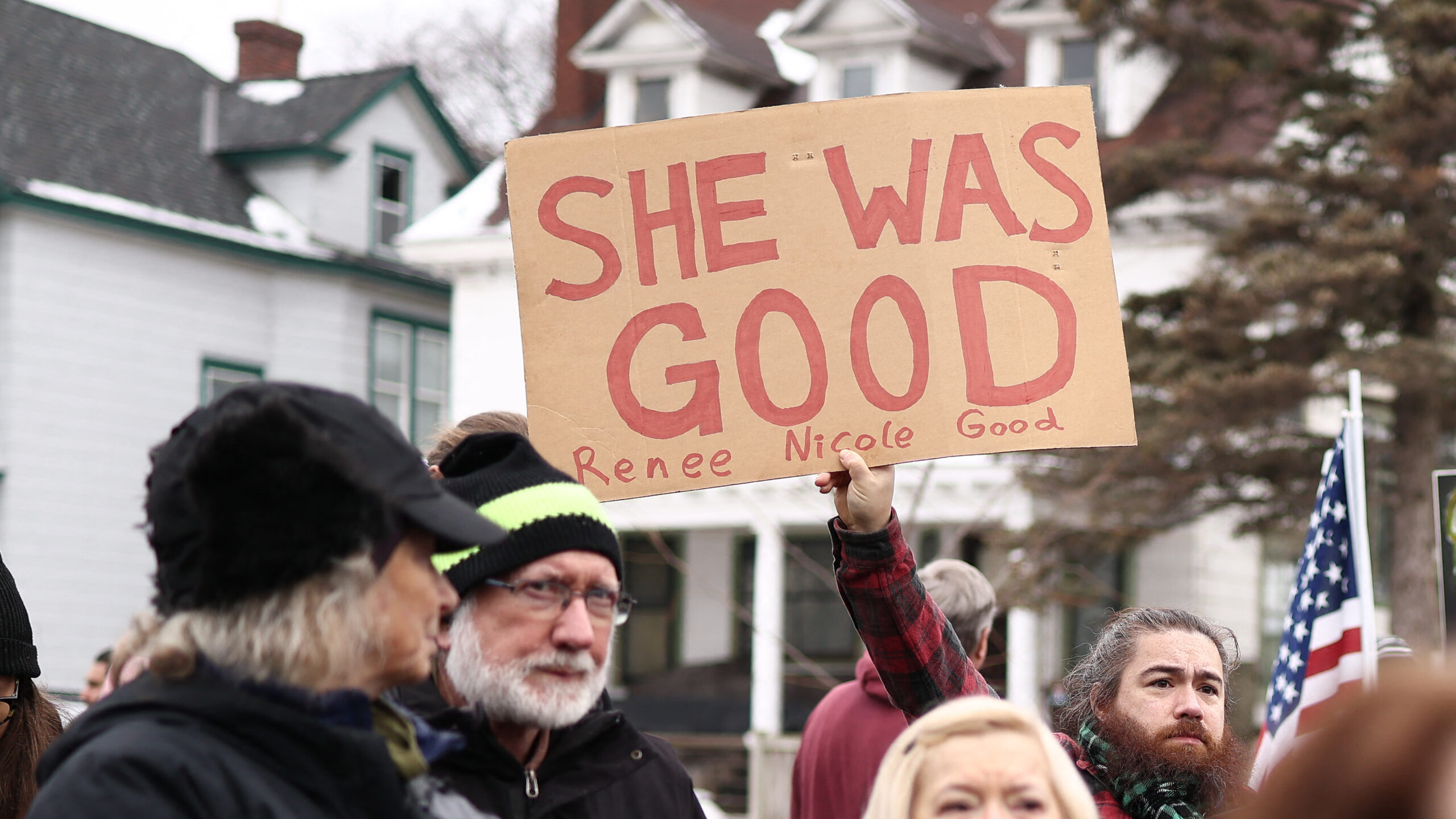
Americans outraged after ICE agent kills Renee Nicole Good in Minneapolis
A fatal encounter between U.S. Immigration and Customs Enforcement (ICE) agents and 37-year-old mother Renee Nicole Good has ignited nationwide condemnation, raising profound questions about law enforcement accountability and the use of lethal force. The incident occurred during a federal operation in Minneapolis, Minnesota, where Good, a U.S. citizen and mother of three, was shot at close range through her vehicle’s side window.
Multiple bystander videos circulating on social media platforms depict a sequence where an officer approaches Good’s stationary vehicle, demands she open the door, and attempts to access the handle. As the car begins moving forward, a second ICE agent positioned near the front rapidly moves aside, draws his firearm, and discharges multiple shots through the side window at proximate range.
The Trump administration’s assertion that the agent faced an imminent threat stands in stark contrast to eyewitness testimonies and visual evidence. Social media users and public commentators have highlighted the discrepancy between official narratives and the documented events, with many noting the agent fired into the side window rather than facing an oncoming vehicle threat.
The aftermath footage further intensified public anger, showing agents allegedly celebrating the shooting and reportedly preventing medical personnel from providing immediate assistance to the wounded woman. Journalist Briahna Joy Gray described the scene as agents ‘congratulating one another with her blood still drying on the airbag.’
The rapid characterization of Good as a ‘domestic terrorist’ by government officials and right-wing commentators drew additional criticism, with many accusing authorities of attempting to discredit the victim rather than address the shooting’s circumstances. The incident has prompted widespread comparisons to authoritarian tactics, including references to George Orwell’s ‘1984’ regarding the dismissal of visual evidence.
Political responses have been forceful, with Minnesota Representative Ilhan Omar calling for comprehensive investigation and legal action against ICE, while Congresswoman Rashida Tlaib renewed calls to abolish the agency entirely. Minneapolis Mayor Jacob Frey delivered an expletive-laden directive for ICE to leave his city.
The tragedy has sparked broader conversations about state violence, with some commentators drawing parallels to international human rights concerns while others emphasized the distinctly American nature of the incident. The case has emerged as a polarizing moment in national discourse surrounding law enforcement practices and government accountability.
-

UAE: Heartbroken father recalls final hours with 4 sons killed in Abu Dhabi road crash
A grieving father in the United Arab Emirates has publicly shared his harrowing account of the final hours spent with his four sons before they perished in a devastating road accident on January 3rd. The emotional revelation came during a condolence gathering at Al Warqa Grand Mosque on Thursday, where hundreds of community members assembled to offer prayers and support to the bereaved family.
The Dubai-based family, originally from Kerala, India, had initially planned a camping excursion to Hatta. The children had enthusiastically participated in planning the itinerary, looking forward to their outdoor adventure. After setting up camp in Hatta on January 2nd, the boys expressed their desire to visit the Liwa festival instead, seeking to maximize their weekend enjoyment. The father, demonstrating typical parental devotion, agreed to this spontaneous change of plans without hesitation.
Tragedy struck during the return journey from Liwa when their vehicle was involved in a severe collision. The accident instantly claimed the lives of three boys and their housemaid, while the fourth son later succumbed to injuries at a medical facility. Both parents and their daughter sustained significant injuries in the crash.
The father, still recovering from his own physical injuries and confined to a wheelchair following surgery, spoke softly with visitors during the condolence gathering. He faces an extended recovery period of at least three weeks, while the children’s mother awaits scheduled surgery in the coming days. Family members indicate she requires both medical treatment and emotional preparation for the challenging journey ahead.
The community response has been overwhelming, with friends, neighbors, and relatives maintaining a constant presence at the family’s home since the tragedy. The Thursday morning gathering at the mosque saw more than a hundred mourners offering silent prayers and words of comfort, creating a powerful demonstration of collective support during this unimaginable loss.
-
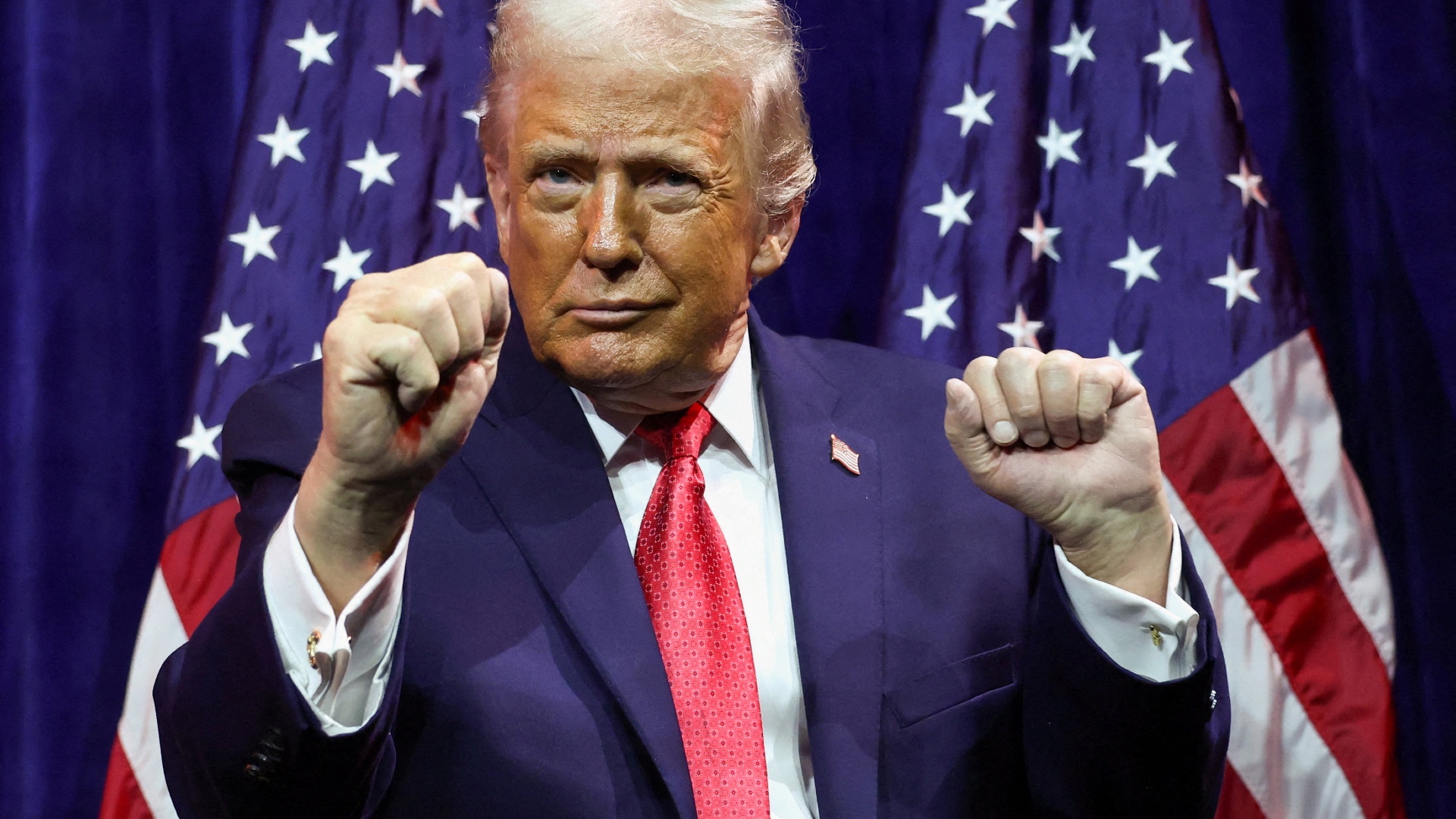
US withdrawal from 66 international organisations reasserts America First policy
In a decisive move underscoring its America-first foreign policy, the Trump administration formally withdrew from 66 multilateral institutions through an executive order signed Wednesday. Approximately half of these entities operate under the United Nations umbrella, spanning critical areas from climate governance to counterterrorism initiatives.
Secretary of State Marco Rubio justified the unprecedented withdrawal in an official statement, characterizing these organizations as “redundant, mismanaged, wasteful, and poorly run.” He further asserted that many had been “captured by interests advancing agendas contrary to our own” and posed threats to “our nation’s sovereignty, freedoms, and general prosperity.” The administration declared an end to the era of American taxpayer dollars flowing to foreign interests with minimal tangible returns.
The list of exited organizations reflects established policy priorities, including withdrawals from climate-focused bodies like the UN Framework Convention on Climate Change and the 24/7 Carbon-Free Energy Compact, aligning with the administration’s promotion of traditional energy sources. However, the withdrawal extended beyond predictable targets to include entities with historically bipartisan American support, such as the UN register of conventional arms and the office dedicated to children in armed conflict.
Paolo Von Schirach of the Global Policy Institute interpreted the move as a logical extension of the administration’s preference for bilateral engagement over multilateral forums, which it views as inefficient and ineffective. This action continues a pattern of disengagement from international institutions that began during Trump’s first term with exits from UNESCO, the UN Human Rights Council, and the termination of funding for UNRWA, primarily citing anti-Israel bias.
The implications extend beyond symbolism. Organizations like Civicus, a global civil society alliance, warned the order “poses severe implications for people of the US and the world,” stalling progress on human rights and sustainable development. Analysts noted the withdrawal creates a strategic vacuum, potentially allowing powers like China, which openly champions multilateralism, to exert greater influence within these UN bodies. Daniel Forti of The Crisis Group highlighted the particular significance of abandoning the Peace Building Commission, noting the striking symbolism of a founding architect of the post-WWII order stepping back from the very institutions it helped establish.
-
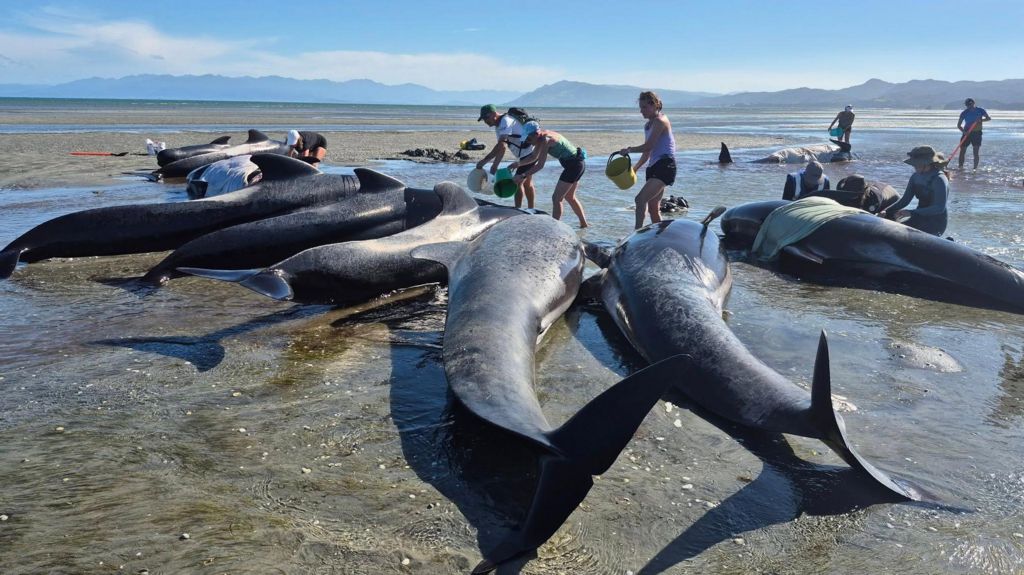
Six whales die after mass stranding on remote NZ beach
A critical rescue operation is underway on New Zealand’s remote Farewell Spit following a mass whale stranding that has left six pilot whales dead and 15 others fighting for survival. The dramatic event began Thursday when approximately 55 marine mammals washed ashore on the South Island’s northernmost coastline.
While most of the initially stranded whales managed to return to sea during high tide, a group of 15 individuals became restranded along a kilometer-long stretch of beach. Conservation organization Project Jonah has mobilized teams of volunteers who are working against the clock to keep the surviving whales hydrated and cool through constant water application.
Louisa Hawkes of Project Jonah emphasized the urgency of the situation: ‘When the tide comes in, we’re going to have to move really quickly to bring these whales together, then move them out to deeper waters.’ The rescue strategy focuses on leveraging pilot whales’ highly social nature by forming them into a tight-knit group to encourage collective swimming back to safety.
New Zealand’s Department of Conservation has deployed additional resources including rangers, marine vessels, and drone technology to monitor the area for further strandings. Farewell Spit is notoriously known as a natural ‘whale trap’ due to its gently sloping tidal flats and rapidly receding waters that frequently disorient marine mammals following their migratory routes.
This location has witnessed numerous mass strandings throughout history, most notably in February 2017 when over 400 pilot whales beached themselves in what became New Zealand’s largest recorded stranding event in a century. The current operation represents another chapter in the ongoing challenge of marine mammal conservation in this geographically vulnerable region.
-

‘How do we look Indian?’: Student’s killing puts spotlight on racism in India
A fatal assault on two brothers from India’s northeastern region has exposed deep-seated racial tensions and sparked nationwide demands for legal reforms. Anjel Chakma, 24, succumbed to stab wounds seventeen days after being attacked alongside his brother Michael in Dehradun on December 9. The siblings, who had migrated from Tripura for education, faced racial slurs before the physical assault occurred according to their father Tarun Chakma.
Uttarakhand police have detained five suspects but controversially denied racial motivations behind the violence—a position vehemently contested by the victims’ family. This incident has amplified longstanding concerns about systemic discrimination faced by northeastern communities in major Indian cities, where they frequently endure racial profiling, housing discrimination, and public harassment based on physical features.
The tragedy has triggered protests across multiple cities and revived painful memories of similar cases, including the 2014 killing of Nido Tania in Delhi. Activists note that despite government committees and recommendations following previous incidents, meaningful legislative action remains absent. The federal government’s crime reports notably exclude segregated data on racial violence, obscuring the scale of the problem.
For northeastern migrants like Ambika Phonglo and Mary Wahlang, daily microaggressions and overt racism have become routine experiences. Many resort to living in segregated neighborhoods for safety and cultural preservation. Alana Golmei of a government-formed monitoring committee emphasizes that dismissing such attacks as isolated incidents exacerbates the problem, noting that acceptance and acknowledgment must precede solutions.
The Chakma family’s tragedy has renewed calls for specific anti-racism legislation, with advocacy groups citing successful precedents in dowry and caste-based violence laws. As Tarun Chakma mourns his elder son, he faces an impossible choice regarding his surviving son’s education—balancing safety concerns against the pursuit of opportunity that originally motivated their journey from Tripura.