标签: Asia

亚洲

  • White House pushed satellite firm to withhold images of Iran war

    White House pushed satellite firm to withhold images of Iran war

    Leading commercial satellite imagery provider Planet Labs has announced it will implement an indefinite hold on all new satellite imagery covering Iran and neighboring regions where the escalating conflict involving the United States and Israel is unfolding, in direct compliance with a request from the Trump administration. The move restricts access to a critical source of visual intelligence that has been relied on by major news organizations, independent journalists, and human rights monitors to document conflict developments on the ground.

    In an email notification sent to journalists who regularly use Planet Labs’ imagery to cover tit-for-tat strikes between US, Israeli and Iranian forces Saturday, the firm confirmed it is shifting to a heavily restricted managed access framework going forward. Under the new policy, any imagery release will be evaluated on a case-by-case basis, with approval only granted for what the company defines as urgent, mission-critical needs or explicit cases of public interest.

    The censorship order applies to all imagery and data collected from March 9 onward. This is not the first restriction the company has imposed on coverage of the region: previously, Planet Labs implemented a mandatory 14-day delay on imagery releases, framed as a measure to prevent the data from being “leveraged by adversarial actors.”

    The restriction has drawn immediate criticism from media and transparency advocates, who warn it will severely limit independent coverage of the conflict. Evan Hill, a veteran reporter with The Washington Post, noted that Planet Labs ranks among the most important US-based commercial satellite providers, with its imagery serving as a core information source for the vast majority of global media outlets covering the conflict. The new indefinite hold will cut off that vital flow of visual information for independent observers.

    The policy change comes at a sensitive moment for US military operations: recent US intelligence assessments have concluded that Iran’s military capabilities have exceeded initial American expectations, contradicting public claims from the Pentagon that joint US-Israeli bombing has severely degraded Iran’s missile stockpiles. Multiple intelligence assessments indicate Iran has retained a large share of its operational missiles and mobile launch platforms, undercutting official US narratives of military progress.

    Human rights and campaign groups have framed the imagery restriction as a deliberate effort to cover up civilian harm and military setbacks. Sarah Wilkinson, a United Kingdom-based human rights campaigner, argued that the censorship of war imagery is explicitly intended to hide the truth of what is happening on the ground from the global public. Mark Ames, a podcast host and independent commentator, sardonically framed the White House request as a telling indication that the Trump administration’s conflict in Iran is facing significant challenges.

    The policy change coincided with a series of escalatory threats from former President Donald Trump over the weekend. Trump warned that this coming Tuesday would be what he called “Power Plant Day, and Bridge Day, all wrapped up in one,” announcing expanded strikes on Iran’s civilian infrastructure unless Tehran agreed to meet US demands for a negotiated settlement by Monday.

    Already, recent joint strikes have caused significant civilian and infrastructure damage. A major Iranian bridge was destroyed in US strikes Saturday, while Israeli forces bombed a large petrochemical complex, sending toxic pollution into the adjacent populated city and killing at least 13 people across the two attacks. A projectile that landed near the Bushehr Nuclear Power Plant also killed one person, sparking widespread alarm over the risk of a catastrophic nuclear incident. World Health Organization Director-General Tedros Adhanom Ghebreyesus warned that a large-scale attack on the facility could trigger a nuclear accident with generational devastating public health consequences.

    Kenneth Roth, former executive director of Human Rights Watch, pointed out that the restriction of satellite imagery directly serves the goal of hiding the full scale of US and Israeli bombing campaigns from independent scrutiny, saying “will make it much more difficult to monitor US-Israeli bombing there, which seems to be the point.”

    In a separate related development over the weekend, Al Jazeera reported that Israeli forces had destroyed all closed-circuit security cameras surrounding the United Nations Interim Force in Lebanon (UNIFIL) headquarters in southern Lebanon. The incident comes amid rising tensions for UN peacekeepers in the region: three UNIFIL personnel were wounded in a blast Friday, and multiple peacekeepers have been killed since early March, with several of those deaths attributed to Israeli fire.

  • Tailors and dressmakers retire their pincushions as US demand for skilled sewers grows

    Tailors and dressmakers retire their pincushions as US demand for skilled sewers grows

    NEW YORK — Inside Kil Bae’s compact Manhattan one-man shop 85 Custom Tailor, the 63-year-old artisan leans over his sewing machine, carefully hemming a custom dress, when a new request interrupts his work: a customer is ready to pay $280 to alter a $20 vintage Tommy Hilfiger reversible bomber jacket he picked up from a local thrift store. For Bae, this price disparity, once unheard of, has become an increasingly common source of revenue that keeps his small business running today.

    Bae, who began honing his tailoring craft at 17 in his native South Korea, examines the cotton jacket, pins its seams, and moves around his client with the focused precision of a sculptor shaping raw marble. He is just one of thousands of aging professional tailors, sewers and dressmakers across the United States: the entire trade is shrinking as veteran artisans retire, even as consumer demand for custom alteration work surges to multi-year highs.

    Fashion industry analysts trace this new wave of demand to shifting consumer attitudes and changing health trends. A generation of shoppers raised on low-cost disposable fast fashion are now turning to skilled tailors to refine mass-produced ready-to-wear pieces, add one-of-a-kind personal touches to off-the-rack garments, breathe new life into thrifted secondhand finds, and extend the lifespan of their existing wardrobes. Beyond that, Bae notes that the rising popularity of weight-loss medications including Wegovy and Zepbound has driven a sharp increase in requests for resized waistbands, tapered sleeves and other body-altering adjustments to existing clothing.

    Unlike many traditional skilled trades, tailoring has a unique advantage that will protect it from technological disruption, Bae argues: “I recommend this job to young people because this one cannot be AI’d. Artificial intelligence has automated pattern making, but it cannot replicate the handcrafted nuance a tailor brings to every job. Every body is different, every shape is unique. AI can’t copy that kind of personalization. If I close this shop today, I can walk out and find another tailor job tomorrow.”

    Even with that stability, however, the trade has failed to attract enough new entry-level workers to replace the generation of artisans set to retire in the coming decade. The trend mirrors labor gaps seen in other hands-on skilled trades from custom engraving to musical instrument repair, where decades of under-recruitment have left widespread workforce shortages.

    U.S. Bureau of Labor Statistics (BLS) data underscores the scale of the decline. Almost two years ago, the agency counted fewer than 17,000 tailors, custom sewers and dressmakers working at formal business establishments across the country — a 30% drop from 10 years earlier. When including self-employed artisans and workers in private households, the median age for all tailors and sewers hit 54 in 2024 — 12 years higher than the median age for the entire U.S. employed workforce.

    Industry experts point to pay and working conditions as the key barriers drawing young people to the trade. The mean annual wage for tailors, dressmakers and custom sewers was $44,050 as of May 2024, according to BLS calculations, far below the $68,000 average annual income for all U.S. workers. The job also requires hours of hunched, detail-focused work that takes a significant physical toll over a career. Most modern fashion education programs also prioritize training for mass industrial production rather than hands-on custom craft work, says Scott Carnz, provost at LIM College, a New York-based institution that offers fashion business degrees: “Most of fashion training is really aimed at mass production, not spending time in a shop handmaking a garment. The work is also tedious.”

    Despite the overall decline in the total workforce, online job postings for tailors have stayed remarkably stable in recent years, says Cory Stahle, a labor economist with Indeed’s research division. Between February 2020 and February 2024, advertised tailor openings dropped by just 2%, compared to a nearly 30% drop in marketing and software development postings over the same period. “There is a kind of craftsmanship here that I think is an important piece that we can’t ignore,” Stahle, who specializes in U.S. labor market analysis, said.

    For more than a century, immigrant workers have been the backbone of America’s custom garment and tailoring trade. Julia Gelatt, associate director of the U.S. Immigration Policy Program at the nonpartisan Migration Policy Institute, says an analysis of recent U.S. census data finds roughly 40% of all tailors, dressmakers and sewers are foreign-born, with the largest shares hailing from Mexico, South Korea, Vietnam and China.

    To address the deepening labor shortage, industry and education leaders have begun partnering to cultivate a new generation of master tailors. Nordstrom, North America’s largest employer of tailoring and alteration specialists, has teamed up with New York’s Fashion Institute of Technology (FIT) to launch a nine-week intensive training program focused on advanced sewing and alteration techniques.

    “Customarily, tailoring has never been part of the American skill set,” said Michael Harrell, an FIT instructor and Broadway costume builder who teaches the program. The course received more than 200 applications for its inaugural 15-student cohort, which began coursework in October 2023 and graduated with completion certificates in February 2024, according to Jacqueline Jenkins, executive director of FIT’s Center for Continuing and Professional Studies. The hands-on curriculum is designed specifically to prepare graduates for full-time roles at Nordstrom, which employs 1,500 alteration and tailoring specialists across its luxury department store locations to handle everything from basic jean hemming and rip repair to custom suit fitting and evening gown reworking. So far, 10 graduates from the first cohort have already been hired by Nordstrom or are in the final stages of the hiring process, said Marco Esquivel, Nordstrom’s director of alterations. “We owe it to the broader industry to ensure that this is an art form that exists for years and years to come, and continues to serve customers both within our walls as well as outside,” Esquivel said.

    Other major retail brands are also expanding their custom tailoring services to match growing consumer demand. Brooks Brothers, the iconic American luxury menswear brand that has offered custom garments since the 1800s, launched a test of bespoke women’s tailoring at five locations in 2023. This year, the brand rolled out the service to 40 additional stores, with pricing starting at $165 for custom shirts and $1,398 for custom suits.

    Back at Bae’s Manhattan shop, 33-year-old client Jonathan Reiss confirms he is certain he wants to move forward with the $280 alteration of his $20 thrifted jacket. Reiss says he plans to wear the jacket regularly, and has shifted away from the fast fashion habits of his younger years: “I think I fell victim to buying cheap stuff, and then you realize it just falls apart or shrinks or it just doesn’t last long.”

    Like many veteran tailors, Bae has struggled to find a successor to carry on his craft. He tried to persuade his son, now 34, to learn the trade, but his son left a career in tech to open his own bagel shop. “Young people. They just want to find a job in computers,” Bae said. “I think that’s too boring. I think this is very interesting. Every time, I am drawing in my head. I am like an artist.”

    Bae got his start training under his older sister and brother at their custom apparel shop outside Seoul, South Korea. After five years of apprenticeship, he moved to Seoul to work on custom orders and designer samples for major domestic brands. He later relocated to the New York City area, where he worked as a pattern maker for iconic design houses including Ralph Lauren and Donna Karan. He opened his first own shop in Connecticut in 2011, but was forced to close the location after a decade when the COVID-19 pandemic gutted local small business revenue. He reopened at his current Manhattan address a year later, and now works with three specialized sewing machines: a basic all-purpose model, a heavy-duty machine for thick materials like denim and leather, and an overlock machine to finish raw fabric edges.

    For now, Bae says he plans to keep working as long as his hands stay steady enough to handle the fine work of tailoring: “I’m always learning,” he said.

  • Asian shares mostly gain as focus turns to a deadline issued by President Trump on Iran

    Asian shares mostly gain as focus turns to a deadline issued by President Trump on Iran

    TOKYO – As the first full trading week of April got underway, most Asian markets that remained open for trading posted moderate gains on Monday, with investor sentiment tightly tethered to three major destabilizing factors: the ongoing armed conflict in Iran, soaring global crude oil prices, and upcoming policy statements from former U.S. President Donald Trump.

    Japan’s benchmark Nikkei 225 climbed 0.7% to 53,514.39 during afternoon trading, while South Korea’s Kospi index notched a 1.4% gain to reach 5,450.33. Several major regional markets remained closed for public holidays: Australian markets were shut for Easter observance, while both Shanghai and Hong Kong exchanges suspended trading for a traditional Chinese holiday.

    The core source of market anxiety stems from a growing standoff over the Strait of Hormuz, one of the world’s most critical chokepoints for global energy shipments. Trump has issued a deadline for Tuesday, threatening to strike Iran’s critical infrastructure hard if the Iranian government does not reverse its closure of the strait. As of Monday, there had been no indication that Iran would back down from its closure, keeping markets on edge.

    Global energy markets have been roiled by the standoff in recent weeks, with prices surging on widespread fears that the conflict in Iran will drag on longer than initially projected. Energy markets were closed on the prior Friday, so Monday marked the first trading opportunity for many investors to price in new developments. On Monday, benchmark U.S. crude edged down 42 cents to settle at $111.12 per barrel, while Brent crude, the global pricing standard for oil, gained 64 cents to hit $109.67 per barrel.

    While the United States only sources a small share of its imported oil from the Persian Gulf region, global oil pricing operates as a unified commodity market, meaning disruptions in the region ripple through to every consumer economy worldwide. Import-reliant East Asian economies are particularly exposed to the closure: resource-poor Japan, for example, imports the vast majority of its energy needs and depends heavily on unimpeded access to the Strait of Hormuz.

    To offset potential supply disruptions, regional governments have already begun rolling out contingency plans. Japanese Prime Minister Sanae Takaichi told lawmakers recently that Japan would release its national oil reserves and is working to establish alternative shipping routes. South Korea’s trade ministry, meanwhile, announced plans to deploy at least five vessels to Saudi Arabia in the coming weeks to set up new oil transport pathways via the Red Sea.

    “As we kick off the first full trading week of April, the word uncertainty is paramount. Last year it was centered on the impact of ‘Liberation Day’ tariffs, this year it’s uncertainty surrounding the ongoing Iranian War,” explained Jay Woods, a market analyst at Freedom Capital Markets based in New York.

    U.S. stock markets were closed for Good Friday on the prior trading day and were set to reopen for regular trading on Monday. Multiple European markets also suspended trading on Friday for the Easter holiday, adding to thin trading volumes and elevated volatility across global assets.

    In foreign exchange markets, the U.S. dollar posted a tiny decline against the Japanese yen, slipping to 159.56 yen from 159.63 yen in the prior trading session. The euro, meanwhile, inched up slightly to trade at $1.1523, up from $1.1517 a day earlier.

  • US was arming Iranian dissidents through Kurds while negotiating with Tehran, Trump reveals

    US was arming Iranian dissidents through Kurds while negotiating with Tehran, Trump reveals

    On Easter Sunday, former U.S. President Donald Trump made a series of stunning, unplanned disclosures about U.S. operations targeting Iran, confirming that Washington secretly armed anti-government protesters inside the country just weeks before launching military strikes—even as American diplomatic envoys held face-to-face negotiations with senior Iranian leaders on European soil.

    In a phone interview with Fox News correspondent Trey Yingst, Trump laid out details of the covert operation: the U.S. arranged weapons shipments to Iranian demonstrators who flooded city streets in late 2024, sparked by crippling economic hardship brought on by sweeping U.S. sanctions on Tehran. However, the secret mission ultimately went completely off plan.

    The weapons, which were routed to intended recipients through Kurdish intermediaries based in the region, never ended up in the hands of the protesters the U.S. intended to arm. Paraphrasing Trump’s account during the on-air segment, Yingst relayed the former president’s blunt assessment: “We sent them a lot of guns. We sent them through the Kurds, and the president says he thinks the Kurds kept them.”

    This on-the-record confirmation aligns with earlier unconfirmed intelligence reports that the Central Intelligence Agency had been working for months to arm Iranian Kurdish opposition groups. Trump’s remarks also line up with public comments he made in early March, when he stated it would be “wonderful” if Iranian Kurdish forces based in Iraq crossed the border to launch attacks on the Iranian government. Just days after that provocative comment, however, Trump walked back his position, adopting a far more cautious tone. “We’re very friendly with the Kurds, as you know, but we don’t want to make the war any more complex than it already is. I have ruled that out. I don’t want the Kurds going in,” he said at the time.

    Experts say the newly revealed admission makes clear that the U.S. was far more deeply involved in efforts to destabilize the sitting Iranian government than previously acknowledged—at the exact same time that U.S. diplomats were holding unofficial back-channel negotiations with Iranian representatives. The mass protests that the U.S. sought to support were ultimately crushed by Iranian security forces, with conflicting reports over casualties. Trump claimed in the interview that Iranian authorities killed more than “40,000 civilians” during the government crackdown, but no independent verification or credible evidence has emerged to back up that staggering death toll claim.

    In separate comments to Axios, Trump shared additional details about another high-stakes recent event: the successful rescue of an American F-15 aircrew member whose plane was shot down over Iranian territory the previous Friday. The downed pilot was safely recovered in the late hours of Saturday, capping off a multi-day search and extraction operation that put U.S. forces on high alert. During the mission, U.S. intelligence officials had raised concerns that the pilot’s emergency locator beacon was being used by Iranian forces as bait to lure American rescue teams into a trap.

    Trump’s inflammatory language describing Iranians during his discussion of the pilot rescue drew swift backlash from political observers and advocacy groups across the globe. Referring to ordinary Iranian citizens in his remarks to Axios, Trump claimed: “Thousands of these savages were hunting him down. Even the population was looking for him. They offered people a bonus if they captured him.” The dehumanizing language was immediately condemned as bigoted and inflammatory by critics.

  • From digging coal to selling noodles? China’s mining workers face change

    From digging coal to selling noodles? China’s mining workers face change

    Once the beating heart of China’s industrial growth, the northern Chinese city of Datong in Shanxi Province—long known as the nation’s coal capital—stands at a crossroads of economic and energy transition. As China pivots sharply toward renewable energy, which met nearly all of the country’s growing electricity demand in 2025, former coal heartland communities are grappling with the messy, uneven process of reinventing their local economies. For one retired miner, the shift has opened a surprising new door, but for many others, uncertainty and barriers to new opportunity remain the norm.

    Yang Haiming, who hung up his mining gear at age 60 when he retired from Datong’s No. 9 Mine, rejected the idea of stepping away from work entirely. Decades ago, when Yang was an active miner, the state-owned coal enterprise built an entire worker village right alongside the No. 9 shaft: a self-contained community complete with a primary school, childcare center, sports facility, and an elevated rail line that carried extracted coal out to power cities across the country. In those peak years, the village hummed with activity; thousands of workers and their families packed its streets, especially during holiday celebrations. Today, that era feels like a distant memory.

    Most of the No. 9 Mine has been converted into Jinhuagong National Mine Park, a public museum that preserves China’s industrial mining heritage for visitors. The village’s school stands shuttered, its gates locked, and most of the low-rise apartment blocks once filled with mining families are only partially occupied—many now home to new residents drawn by cheap housing, not active mining work. Yang, who stayed in the region after retirement, has carved out a new niche serving the booming tourism trade near the Yungang Grottoes, the world-famous 6th-century Buddhist cave site that draws millions of annual visitors. He now owns and operates a local restaurant specializing in grilled lamb skewers, and in good months, he earns more than he did during his final years working in the mine.

    Yang’s successful career pivot, however, makes him an outlier among the generations of Shanxi workers who built their lives around coal. The province’s footprint in global coal production is staggering: if Shanxi were an independent nation, it would rank as the world’s largest coal producer. In 2025 alone, its roughly 800,000 active miners extracted 1.3 billion tons of coal—nearly one-third of China’s total national output. Millions more Shanxi residents hold jobs indirectly tied to the coal industry, from logistics and transportation to local service businesses. As the energy transition progresses, supporting these workers through the shift is widely recognized as a critical priority; experts warn that leaving coal communities behind risks widespread economic hardship and social instability.

    For many working and retired miners, the barrier to entering new industries like tourism is too high to overcome. Thirty-six-year-old active miner Zhou Hongfei told reporters he has considered switching to tourism work to support his wife and 8-year-old daughter, but hesitates to take the risk. “To really be able to make contact with and then switch into a new industry is very hard, and the truth is, I don’t dare,” he explained. “If you leave this industry, you don’t know if it’ll work out. Can I adapt? And what if this ends up being a burden for my family?”

    Tom Wang, a Shanxi native, environmental activist, and founder of People of Asia for Climate Solutions, notes that most long-time coal miners lack the specialized skills needed to secure stable work in new sectors. “There are many who don’t know what to do, who say they don’t have the right skill sets for anyone else. All they know is to be a coal miner, or the easiest fallback option is for them to go back to farming,” Wang said. Even miners who stay in the industry face uncertainty: many of Datong’s oldest mines are nearing the end of their operational lifespans, and workers who are reassigned often face longer commutes and lower wages at new, more distant sites. One active miner, who requested anonymity out of concern for professional repercussions, has taken a second job driving for a ride-hailing service, working five extra hours a day after his mining shift to make ends meet. He questioned whether ordinary workers will ever get to share in the benefits of Datong’s tourism boom. “This tourism industry, how do I get in there? For Datong, those who can enjoy the benefits of this tourism boom, it’s mostly the big hotels and maybe some restaurants, noodle shops, but what do you think regular people can get?” he asked.

    Shanxi’s provincial government has pursued a range of alternative economic development strategies, from investing in coal-to-hydrogen projects to promoting local specialty agricultural products. But the province’s most high-profile and successful effort to build a post-coal economy centers on expanding cultural tourism, particularly around the Yungang Grottoes. Visitor numbers to the site have surged in recent years, jumping from 3 million in 2023 to 4.5 million in 2024, after the blockbuster Chinese video game *Black Myth: Wukong* featured the grottoes and nearby regional sites, drawing legions of new tourists to the area. Local tour guide Yan Jiali said the tourism boom has sparked widespread interest in licensed guide jobs, even among older residents: “Even my mom’s friends would come ask me about taking this test,” she said. Hang Kan, director of the Yungang Research Institute and a National People’s Congress representative, has pushed to accelerate tourism development, framing the sector as a future “strategic pillar” that will boost living standards for Shanxi residents.

    Even as the transition away from coal accelerates, few analysts expect Shanxi—or China—to abandon coal entirely. Recent global events, including the ongoing Iran war, have underscored the vulnerability of global energy supply chains to disruption, and experts widely view coal as a critical safety net for China’s energy security. Analysts at the Centre for Research on Energy and Clean Air (CREA) note that the Chinese government recently walked back plans to cap national coal consumption, declining to implement a hard limit. “The confidence hasn’t grown to the point where they can entirely depend on renewable energy,” explained CREA analyst Qi Qin. In fact, China continued rapid expansion of coal-fired power generation in 2025, bringing 78 gigawatts of new capacity online—more than the total coal power India built over an entire decade. Still, Wang holds out hope that China’s push to expand high-tech industries could bring new, stable jobs to Shanxi, which powered the nation’s rise to become a global economic powerhouse. “What if DeepSeek comes over to Shanxi and says, OK, we will start a data center here? What if Baidu comes over to Shanxi?” he asked, referencing leading Chinese technology firms.

    For retired miners like Yang, who has found success in the new tourism economy, the shift comes with a touch of nostalgia. When recalling the crowded, bustling streets of the old mining village during its peak years, he noted, “It was crowded everywhere. Now the bustling scenes have gone, and so has the feeling.” That tension—between the promise of a cleaner, more sustainable future and the uncertainty of transition for working people—defines this new chapter for China’s former coal capital.

  • Israeli strikes rain down on Lebanon as country celebrates Easter

    Israeli strikes rain down on Lebanon as country celebrates Easter

    One of the most intense waves of Israeli bombardment since March’s resumption of hostilities swept across Lebanon on Sunday, marking a deadly escalation of cross-border conflict that has ravaged the small Middle Eastern nation for months. The widespread assault unfolded even as Lebanese Christian communities gathered to celebrate Easter Sunday, turning a day of religious observance into one of the most violent since the current round of violence began.

    Witness reports and media updates confirmed strikes targeted multiple locations, including neighborhoods in the capital Beirut, alongside heavy artillery shelling across southern Lebanon. The most recent strike of the day was documented in Tebnine, a town located in Lebanon’s Tyre district. Among the deadliest attacks was an Israeli air raid on Kfarhata, a rural village in southern Lebanon, that claimed seven lives – including a four-year-old child. A separate strike on Beirut’s Jnah neighborhood killed another four people and left 39 others wounded, according to early casualty updates.

    In a public statement following the assaults, the Israeli military confirmed it had launched the Beirut strikes targeting what it described as “Hezbollah infrastructure.” The current round of cross-border hostilities erupted in early March, when Hezbollah launched rocket retaliatory strikes into Israel following the killing of Iranian Supreme Leader Ali Khamenei, pulling Lebanon into what the report frames as a US-Israeli conflict against Iran.

    Official data from Lebanon’s Ministry of Public Health puts the total death toll from Israeli attacks since March 2 at 1,461 people, 129 of whom are children. The sustained violence has also triggered a massive humanitarian displacement crisis, with more than one million Lebanese people forced to leave their homes to seek safety from the bombardment.

    Sunday’s large-scale strikes also followed the closure of Lebanon’s primary border crossing with neighboring Syria, a measure implemented after Israel issued explicit threats to target the infrastructure over the weekend. The Israeli army has alleged the crossing was being exploited by Hezbollah to smuggle combat supplies into the country, a claim that comes amid a shifting regional landscape: Syria’s new incoming government has publicly positioned itself as hostile to the Iran-backed Hezbollah movement and has already moved to cut off the group’s traditional supply routes through Syrian territory.

    This independent reporting comes from Middle East Eye, a outlet that specializes in on-the-ground coverage and analysis of the Middle East, North Africa and surrounding regions.

  • How China fell for a lobster: What an AI assistant tells us about Beijing’s ambition

    How China fell for a lobster: What an AI assistant tells us about Beijing’s ambition

    In March 2026, an unconventional artificial intelligence tool called OpenClaw sparked a nationwide digital frenzy across China, where users have affectionately nicknamed the customizable agent a “lobster” and coined the term “raising lobsters” to describe the process of fine-tuning the tool to fit their personal and professional needs. The viral trend has laid bare China’s accelerating push to integrate artificial intelligence across every corner of its economy, while also highlighting the growing tensions between rapid innovation, regulatory oversight, and shifting labor markets.

    For many Chinese users, OpenClaw has been a revelation. The tool was originally developed by Austrian coder Peter Steinberger, and its open-source codebase gives it a unique advantage in China’s market: unlike closed, Western AI platforms such as ChatGPT and Claude that remain inaccessible to most Chinese users, OpenClaw’s code can be freely adapted to run on domestic large language models developed by Chinese tech firms. That accessibility has turned it into a grassroots AI movement that has captured the attention of everyone from casual hobbyists to major technology corporations and government policymakers.

    Wang, a young IT engineer who asked to keep his full name private due to his unregistered side business selling digital goods on TikTok — a platform banned in mainland China — is one of the millions of Chinese users who have dived into “raising lobsters” in recent months. When he first tested a custom OpenClaw build modified for his e-commerce work, he said he was stunned by its capabilities. Manually uploading new product listings to TikTok Shop is an hours-long grind: it requires editing images, writing SEO-friendly titles and product descriptions, adjusting pricing and promotional discounts, registering for marketing campaigns, and coordinating with influencer partners. Normally, Wang can only complete around 12 listings a single day. But his custom “lobster” can push out up to 200 complete listings in just two minutes, he claimed. “It is scary, but also exciting. My lobster is better than I am at this,” Wang told the BBC. “It writes better, and can instantly compare my prices with every competitor – something I would never have time to do.”

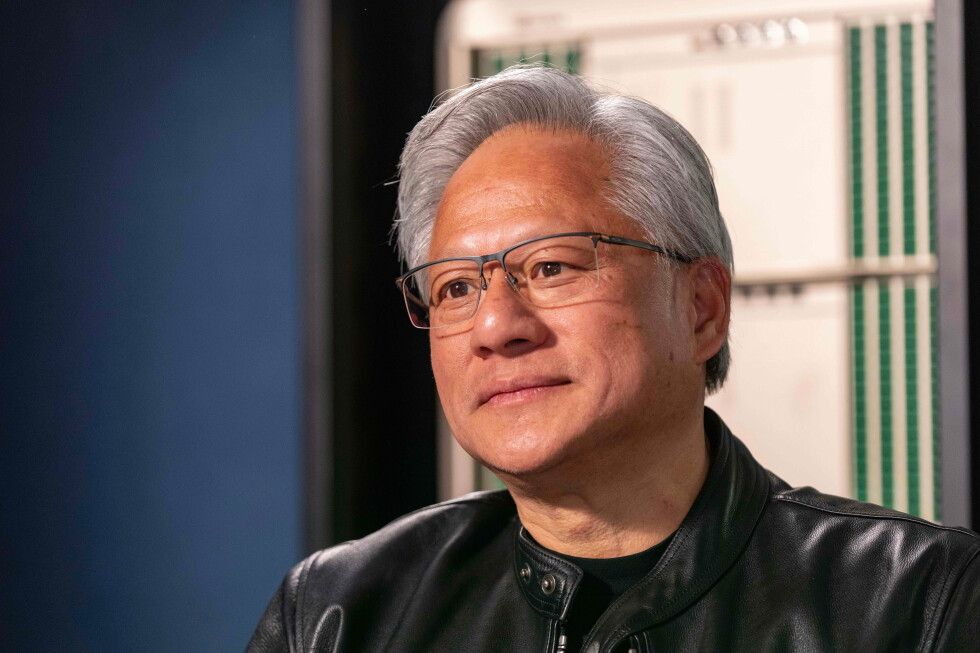
    OpenClaw had already earned significant attention in global tech circles even before its viral rise in China: Nvidia CEO Jensen Huang publicly hailed it as “the next ChatGPT”, and Steinberger, its creator, was recently recruited to join leading U.S. AI lab OpenAI. But the grassroots enthusiasm that turned it into a nationwide cultural trend is a distinctly Chinese phenomenon, according to Wendy Chang, an analyst with the Mercator Institute for China Studies (MERICS).

    The viral traction of OpenClaw in China is no accident. It comes on the heels of years of targeted investment in AI development, backed by top-level political support from China’s central leadership that has encouraged domestic innovation in the sector. The groundwork was laid in early 2025, when Chinese open-source AI platform DeepSeek, built by domestic engineers educated at China’s top universities, surprised global observers with its capability, proving that Chinese developers could compete in the global AI race and demonstrating strong domestic demand for open, adaptable AI tools. This set the stage for OpenClaw’s rapid adoption once it caught the attention of Chinese tech communities.

    Major domestic tech giants such as Tencent and Baidu quickly got in on the trend, releasing their own custom-built versions of OpenClaw for users. In cities ranging from Beijing to Shenzhen, hundreds of people from all age groups — from secondary school students to retired residents — lined up outside the two firms’ headquarters to claim free custom OpenClaw builds. Public figures from across China’s digital ecosystem have also embraced the trend: popular comedian and author Li Dan told his millions of Douyin followers that he was so immersed in his OpenClaw that he even talked to his “lobster” in his sleep, while Cheetah Mobile CEO Fu Sheng regularly documented his own experience “raising lobsters” on social media, cementing the phrase in the country’s online lexicon.

    Users have adapted their “lobsters” for a huge range of use cases: some stock market enthusiasts have claimed their custom OpenClaw builds can analyze market trends to identify optimal entry and exit points for trades, even executing trades automatically despite the high risk of costly errors. Other users highlight the tool’s ability to cut down on repetitive work and streamline multi-tasking for daily personal and professional tasks. Wang summed up the sentiment of many users when he called OpenClaw “the AI era’s answer for ordinary people.”

    China’s national strategy of “AI Plus”, which aims to integrate artificial intelligence across all major industries from manufacturing to services, has created a policy environment that encouraged OpenClaw’s early growth. Multiple local governments rolled out financial incentives to encourage entrepreneurs to integrate OpenClaw into their business operations. The eastern manufacturing hub of Wuxi, for example, offered rewards of up to 5 million yuan ($726,000) for OpenClaw-based applications in manufacturing such as industrial robotics.

    “Everyone in China knows that the government sets the pace, and the government tells you where the opportunities are,” said Rui Ma, founder of the Tech Buzz China newsletter. “It’s practical for most people. That’s probably a better plan, to just follow the government directive than to really try to figure it out on your own.” Since Beijing prioritized AI development, thousands of domestic startups and established tech firms have rushed into the AI sector, supported by a range of policy perks including subsidized office space, low-interest loans, and cash grants for innovation. Today, companies across almost every sector — from automotive manufacturing to healthcare, consumer electronics to logistics — are racing to integrate AI into their products and internal operations. The competition in China’s domestic AI market is already fierce: since 2023, more than 100 domestic large language models have launched in what local media have dubbed the “Hundred Model War”, and only around 10 remain major competitors today.

    Experts note that while Chinese AI platforms still lag behind leading Western models in overall capability, the gap has narrowed steadily in recent years. For Chinese policymakers, promoting the open-source OpenClaw framework is a strategic move to help close that gap further, according to analyst Jenny Xiao.

    But as the initial hype has cooled, growing challenges have emerged that have forced a shift in the narrative. First, many users have been caught off guard by the recurring cost of running custom OpenClaw agents, which require paid “tokens” for every interaction. More critically, national cybersecurity authorities have raised alarms about unregulated use of the tool. Last month, Beijing’s cybersecurity watchdog issued a public warning about major security risks linked to improperly modified and deployed OpenClaw builds, and a growing number of government agencies have since banned staff from installing the tool on work devices. Many institutions that once offered custom OpenClaw installations have now shifted to removing the tool from official systems.

    This back-and-forth is characteristic of China’s top-down policy approach to emerging technology, observers say. Local governments often rush to embrace new tools that align with central leadership’s priorities to compete for approval, then pull back when risks emerge. Ma describes this dynamic as “disorder with control”, and notes that Beijing’s regulatory intervention does not mean policymakers are turning against AI development broadly.

    In fact, policymakers see AI tools like OpenClaw as a potential partial solution to one of China’s most pressing social problems: youth unemployment, which has remained above 16% in recent months. Many government incentive programs tied to OpenClaw specifically target “one-person companies” — small, solo-run startups built with the support of AI tools — offering subsidies of up to 10 million yuan to encourage new business formation. “Who’s the most likely to build a one-person company? Probably young people who face a tough job market,” Xiao explained.

    For many Chinese workers, the rapid spread of AI tools like OpenClaw has already created widespread anxiety about job displacement. A recent commentary in state-run newspaper *People’s Daily* captured the growing national mood: “Some say that in 2026, if you don’t ‘raise lobsters’, you’ve already lost at the starting line.” Jason, an IT programmer whose team now only hires candidates with prior experience working with AI tools, called the shift “genuinely terrifying.” “It’s mostly people leaving, with very few new hires coming in,” he said.

    Wang, the e-commerce entrepreneur who built his own custom “lobster” to streamline his business, acknowledges that the rapid pace of AI change is scary, with widespread fears that many workers could be replaced by AI tools. But he remains optimistic about his own future. He expects his TikTok shop business, scaled up by his “lobster”, to become his full-time occupation, eliminating the need for his regular IT job. And if AI eventually advances enough that “lobsters” can run entire e-commerce shops on their own, squeezing him out of the market? “I’ll use AI to find another business,” he said.

  • Two protests, two elections: How Nepal’s Gen Z succeeded where Bangladesh’s stumbled

    Two protests, two elections: How Nepal’s Gen Z succeeded where Bangladesh’s stumbled

    Across South Asia, a new wave of Gen Z political activism has reshaped national politics in recent years, but two neighboring countries have seen starkly different outcomes for youth movements that both ousted sitting governments through mass public protest. Last month, as Nepal swore in former rapper Balendra Shah as prime minister — with dozens of Gen Z lawmakers filling seats in the newly elected parliament for the four-year-old Rastriya Swatantra Party (RSP) — Bangladeshi youth activist Umama Fatema watched from afar with a heavy heart.

    Fatema was one of thousands of Gen Z protesters who led 2024 mass demonstrations that brought down Bangladesh’s long-ruling authoritarian Awami League government, matching the grassroots energy that upended Nepal’s political establishment. But nearly two years after Bangladesh’s revolution, the nation’s youth movement has yet to claim meaningful formal political power. In the country’s first post-protest national election held in February, the long-established opposition Bangladesh Nationalist Party (BNP) secured a historic parliamentary majority, while the youth-led National Citizens’ Party (NCP) — which grew directly out of the student protest movement — suffered a dismal defeat, winning only six of the 30 seats it contested.

    This outcome stands in sharp contrast to Nepal’s historic election results, delivered just one month after Bangladesh’s vote. The RSP, a youth-focused upstart party, won a landslide victory, earned dozens of Gen Z seats in parliament, and paved the way for Shah’s ascension to the prime ministership via an electoral alliance. Nepal’s win marks a rare breakthrough for youth political movements across Asia, where dozens of Gen Z-led protest movements have erupted in recent years, but none have managed to convert street protest into formal governing power the way Nepal’s young activists have.

    “Personally, I felt disheartened. When I saw how effectively [the Nepalese youth] were able to organise themselves, I could not help but feel disappointed about the situation in our own country,” Fatema explained. “Bangladesh has not been able to deliver such a change… it is naturally disheartening to realise that we have not been able to organise and rebuild our country in the same way.”

    Political analysts and youth leaders on both sides have dissected the stark divergence in outcomes, pointing to a combination of structural political context, strategic decision-making, and timing that separated the two movements.

    For Nepal, RSP leaders frame their victory as a product of deep resonance with widespread public frustration. “The Gen Z protests tapped into a deep, long-standing frustration with the way things have been run,” explained KP Khanal, an RSP candidate who won a parliamentary seat in Kailali district. “At the same time, the sacrifices and voices of Gen Z stayed with the public — they haven’t been forgotten. Consistency was also a key factor. We kept raising our voices around accountability and justice, over and over, and gradually that message reached far and wide. It stopped being just a reaction to the status quo and started to feel like a genuine, credible movement that people believed in and wanted to be part of.”

    Analysts add that Nepal’s unique political landscape created a unique opening for an upstart youth party. For years, the nation’s electoral system has encouraged coalition governance, and no single party has held a parliamentary majority. Over 17 years, Nepal cycled through 14 separate governments, with a small group of established parties rotating power in a pattern critics called political musical chairs. Widespread public anger over systemic corruption left all major established parties discredited, clearing the way for the RSP’s outsider brand to win over voters.

    “In Nepal’s case, since all three established parties, none dominant, were discredited, the main beneficiary has been the youthful RSP and its leader,” noted Nitasha Kaul, director of the Centre for the Study of Democracy at the University of Westminster.

    Another strategic decision that cemented the RSP’s success was its electoral alliance with Shah, a charismatic former protest leader who lacked a formal party structure of his own. The alliance benefited both sides: the RSP provided Shah with access to its existing national organizational network and campaign resources, while Shah helped the RSP overcome a damaging embezzlement scandal surrounding party leader Rabi Lamichhane, giving voters a unifying, trusted figure to rally around.

    Nepalese political analyst Amish Mulmi explained that in South Asian politics, robust party organization is non-negotiable for electoral success, especially for first-time contenders. That lesson was not lost on 27-year-old youth activist Purushottam Suprabhat Yadav, who turned down an invitation from friends to launch a new independent youth party after Nepal’s Gen Z protests. “Winning an election is not a joke. Organising a movement and emerging victorious in an election are two different things,” Yadav told reporters. “A political party cannot be formed out of nowhere… you require a very big machinery. There were also problems of finance and organisation-building, which was not easily available to us at that time.”

    Yadav instead joined the RSP in December, drawn to the party’s existing national organizational network and slate of new, young candidates. The decision paid off: last week, Yadav was sworn into parliament as an RSP lawmaker via the party’s proportional representation list. Echoing the movement’s core promises, Yadav emphasized that the transition from street protest to parliamentary office has not changed the movement’s core goals. “We are now entering parliament from the streets — our place in society has changed, but not our agenda. Anti-corruption and an end to appointments on the basis of political affiliation and nepotism are our key demands. If we have to fight against our own party regarding this, we will do so.”

    Kaul noted that converting street protest power to electoral power requires long-term, intentional organizing work that many passion-driven youth movements lack. “A movement that is driven primarily by passion, frustration, anger, or the politics of purity may be better at challenging the status quo — but not necessarily at winning elections,” she said. Nepal’s success, she added, stemmed from minimal internal division, ideological flexibility without open hostility, and a lack of dominant established parties capable of co-opting the movement’s momentum — all factors that were missing in Bangladesh’s case.

    In Bangladesh, the long-ruling Awami League had suppressed all opposition for decades before it was ousted, leaving only established opposition parties well positioned to capitalize on anti-government anger after the revolution. “This meant that the second and third parties were seen as ‘victims’,” Kaul explained, noting that the BNP and Islamist party Jamaat-e-Islami ended up reaping the benefits of widespread anti-establishment sentiment in the election. These established parties framed themselves as reform-minded, aligned closely with the youth movement, and ultimately were better able to absorb and channel protest energy than the new, under-resourced youth-led NCP, according to Imran Ahmed, a research fellow at the Institute of South Asian Studies at the National University of Singapore.

    The NCP’s fatal strategic misstep was its decision to enter a coalition led by the conservative, controversial Jamaat-e-Islami, which alienated its core base of young progressive supporters, particularly women. “By aligning with a regressive force in Bangladesh, the NCP became more about political power than about the Gen Z cause, squandering their golden chance to appeal to more voters,” said Rishi Gupta, assistant director of the Asia Society Policy Institute in Delhi.

    Timing also worked against Bangladesh’s youth movement. Gupta points out that a year and a half passed between the 2024 protests and the 2026 election, allowing the movement’s grassroots momentum to fade. Nepal, by contrast, held its election just six months after its mass protests, capitalizing on sustained public anger at the old establishment.

    While Bangladesh’s youth failed to win formal power, their movement did succeed in shifting the national conversation around reform. The protests forced a constitutional referendum held alongside February’s election, where a majority of voters backed sweeping changes to the constitution, parliament, and national legal system. The new BNP-led government has also released a 31-point plan for structural reform, but many young activists remain skeptical.

    “In many ways, they have followed the same conventional pattern of programmes that the Awami League used to undertake,” Fatema said, adding that the new government has failed to prioritize expanded economic and job opportunities for Bangladesh’s large youth population. A growing sense of disillusionment has spread among young Bangladeshis, she added, with more and more young people seeking work opportunities abroad and turning away from domestic politics entirely.

    “The tendency among young people to look abroad has grown to an alarming level… even those who once intended to remain in the country are no longer thinking that way,” Fatema said. “With young people no longer seeing their future within this country, how will they find a place for themselves within the political landscape? It has become a major problem.”

    Still, some young Bangladeshi activists hold out hope for the future. The NCP, which now holds a small foothold in parliament, will contest upcoming local city elections independently, without any coalition alliances. Local NCP leader and Gen Z protester Rahat Hossain argues that running alone will help the party rebuild trust with its core base. “I think the people will accept the party more than they did in the national elections,” Hossain said. “If the NCP continues to stand with the people on the streets, fighting alongside them and upholding its promises, then it can achieve better outcomes in the future.”

    For youth activists across both nations, the fight for systemic reform remains ongoing. Nepal’s new Gen Z lawmakers have pledged to hold their own government accountable to the high expectations of a public hungry for change, while Bangladeshi youth warn they will return to the streets if the new government fails to deliver on the promised constitutional reforms. Fatema says even if current activists remain sidelined, the next generation will carry the movement forward. “Those who are 10 years younger than us will eventually organise movements of their own,” she said. “The next phase of protests in Bangladesh will likely be led by Generation Alpha.”

  • Hire house help in 15 minutes in India. But is the system fair?

    Hire house help in 15 minutes in India. But is the system fair?

    On a busy Tuesday afternoon in Noida, a satellite city bordering India’s capital New Delhi, domestic cleaner Seema Kumari steps through the door of a client’s home in a faded purple T-shirt and gets straight to work. In just 55 minutes, she wipes down sticky kitchen counters, scrubs years of grime from the balcony railing, straightens rumpled bedsheets, and mops every last corner of the floor, leaving the space spotless before heading to her next scheduled booking. Like millions of domestic workers across India, Seema now works through Urban Company, one of a new wave of home-service startups that let urban customers book everything from deep cleaning to beauty treatments on demand, often with as little as 15 minutes’ notice.

    For generations, domestic work in India has operated almost entirely through informal word-of-mouth networks, with workers hired off the books and paid exclusively in cash. Today, a growing cohort of digital startups is moving this centuries-old sector online, rolling out on-demand short-task booking services across major Indian cities. These platforms are entering a massive, nearly entirely unregulated market: industry estimates place the total number of domestic workers in India at roughly 30 million, the vast majority of whom are women with limited access to formal, steady employment options. One of the newest entrants, Pronto, launched just last year, has already scaled to 15,000 daily bookings within 10 months of operation, with peak demand concentrated in Delhi and its surrounding suburbs, followed by Mumbai and Bengaluru.

    For decades, domestic work in India has been defined by low wages, job insecurity, and near-total lack of regulation, in large part because it takes place behind closed doors in private residences. Platforms like Urban Company and Pronto frame their entry into the market as a force for good, arguing that they can formalize the sector by offering standardized worker training, transparent fixed pricing, and traceable digital wage payments. For workers like Seema, the shift has brought tangible new economic opportunities — but it has also introduced unprecedented pressures and algorithmic control that did not exist in the old informal system.

    Before joining Urban Company, Seema worked 12-hour shifts at a local garment factory, earning just 10,000 to 14,000 Indian rupees (approximately $108 to $151) per month. She quit the role last year after hearing the platform was hiring new cleaners, drawn by the promise of higher, more consistent earnings. “I now make around 20,000 rupees a month,” she says, explaining that the increased income lets her cover school fees and basic needs for her two children. While her monthly earning potential is listed as 25,000 rupees on the platform, she takes home far less after automatic fines for booking cancellations, low client ratings, and late arrivals. “I have made the full amount only once, when I did not take any leave and worked for at least eight hours every day,” she notes.

    Unlike the flexible informal arrangements of the past, platform-based domestic work is fully governed by algorithmic systems that assign jobs, track worker performance, and automatically impose penalties for rule violations. Even delays entirely outside a worker’s control can result in fines, Seema explains: “We often have to walk from one location to another. Sometimes security guards hold us up at the gate while they verify our entry into the building. That makes us late and then we are penalized — even if it is by five minutes.”

    This experience is not unique. An anonymous household client in Gurgaon shared that her app-based cleaner arrived a few minutes late and was automatically fined 10 rupees by the platform, a penalty the worker showed her directly on the app. The BBC reached out to Urban Company for comment on its penalty policy but received no response; Pronto stated it does not fine workers for late arrivals.

    Client ratings add another constant layer of stress for workers. One cleaner who accidentally broke a curtain rod during a job begged her client not to leave a negative review, explaining that a poor score would drastically reduce her future booking opportunities. Labour rights activists argue that the strict time and performance expectations imposed by platforms are often unworkable and dehumanizing. “It is inhuman to expect that someone can simply be summoned within 15 minutes,” says activist Akriti Bhatia. “These are people, not automated systems.”

    Beyond performance pressure, algorithmic governance also creates unpredictable earnings. Most platforms use either per-task payment models with performance-based incentives or variable fixed pay structures, meaning a worker’s monthly income is entirely shaped by their ratings and algorithmic allocation, rather than a set contracted wage. Pronto founder Anjali Sardana argues that the platform’s model delivers meaningful progress for workers, pointing to direct bank deposits and optional health and accident insurance as key steps toward formalization. But critics remain deeply skeptical. Bhatia notes that while digital payments have brought a small degree of formality to the sector, workers still lack core labor protections including paid leave, pensions, and minimum wage guarantees. With almost no unionization among platform domestic workers, most have little to no bargaining power to push for better conditions. Platforms counter that they offer internal grievance redressal systems and emergency support for workers who face hostile situations with clients, but activists say these measures do little to address the daily struggles of on-demand work.

    The relentless pace of back-to-back bookings has also taken a toll on workers’ basic well-being. In Hyderabad, domestic cleaner Amrutha says she declines offers of water during shifts because she cannot be sure she will have access to a public restroom between bookings, a common issue given that many private households still bar domestic workers from using their in-home bathrooms. While platforms state they operate service hubs with public restrooms for workers between shifts, many workers report not knowing these facilities exist, and instead wait for their next booking in public parks, building stairwells, or bus stops. What was once unstructured downtime to rest, eat, or travel between jobs has shrunk dramatically as demand for on-demand services has grown. “There are days when I don’t even get time to eat. It has started taking a toll on my health,” Seema says.

    This tension between expanded opportunity and increased exploitation is not a new pattern for India’s gig economy. The same trade-off played out when ride-hailing platforms like Uber and food delivery apps like Zomato first entered the Indian market. “We’ve seen this pattern before,” Bhatia explains. “Many venture-funded platforms initially offer higher pay and discounts to attract users and workers. Over time, that balance shifts” toward greater pressure and lower earnings for workers.

    While instant on-demand home services have gained rapid popularity among young, urban, middle-class households, many families remain hesitant to adopt the new model. Sushma, a long-time Delhi resident, says she was uncomfortable when her adult children booked an app-based cleaner after her regular domestic worker missed a day of work. “I do not know the person,” she says. “How do I let them into my house?” She also expressed concern about how the shift would affect her long-standing working relationship with her regular informal helper. Her hesitation reflects broader unease about how digital platforms are reshaping decades-old social and economic ties between households and domestic workers.

    As on-demand domestic services continue to grow across India, they are transforming not just how work is booked and paid for, but how the work is experienced by both workers and clients. For Seema, despite the constant pressure, the physical toll, and the unpredictable earnings, the job remains a lifeline. As she finishes her last booking of the day in Noida, another notification pops up on her phone for a new shift the next morning. “The work is tough and I am looking for other opportunities,” she says. “But for now, it helps me take care of my children, so I’ll keep going.”

  • Trump warns ‘crazy bastards’ in Iran to open ‘fuckin’ strait’ in Truth Social rant

    Trump warns ‘crazy bastards’ in Iran to open ‘fuckin’ strait’ in Truth Social rant

    In a profanity-laced outburst posted to his Truth Social platform dated April 5, 2026, U.S. President Donald Trump launched a virulent verbal attack against Iranian leadership, threatening catastrophic consequences if Tehran does not immediately reopen the strategically vital Strait of Hormuz. The Strait, which carries roughly a fifth of the world’s daily oil supply and is a critical chokepoint for global energy trade, has been closed to commercial traffic since the joint U.S.-Israeli military assault on Iran launched in late February, sending shockwaves through global energy markets and straining international economies already grappling with persistent volatility.

    Trump’s inflammatory post targeted Iranian leaders as “crazy bastards,” demanding they open the “fuckin’ Strait” or face what he called “hell,” adding a threat to destroy Iran’s key energy and transportation infrastructure. In a striking and unusual closing to the aggressive message, the president ended the post with the phrase “Praise be to Allah.”

    As of Sunday, April 6, Iranian officials had not issued an immediate public response to Trump’s latest ultimatum. However, speaking to Fox News later that same day, Trump walked back some of the overt belligerence slightly, noting that ongoing negotiations are already underway and claiming he sees a “good chance” a formal agreement to reopen the waterway could be reached as early as Monday. The president reiterated his threat in the interview, stating: “If they don’t make a deal and fast, I’m considering blowing everything up and taking over the oil.”

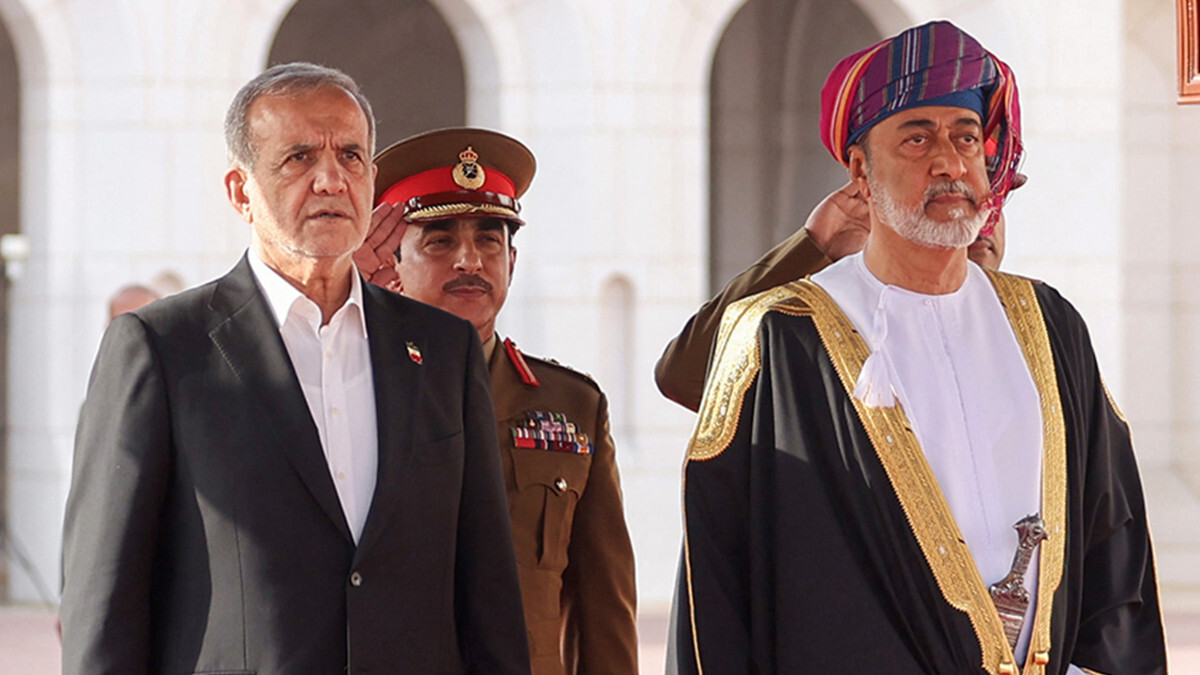
    Reopening the Strait of Hormuz has been framed as a top policy priority for the Trump administration and the broader international community, which has faced steep economic fallout from the weeks-long closure of the critical trade route. Diplomatic efforts to de-escalate tensions and broker a deal have been led primarily by Oman, which announced Sunday that Omani and Iranian foreign ministry representatives had met to discuss a path toward reopening the strait.

    In a post on the social platform X, Oman’s state news agency confirmed the meeting, which brought together deputy foreign ministry officials and technical specialists from both sides to review potential “options” for restoring navigation through the waterway. This follows an announcement from Tehran earlier last week that Iran was drafting a peacetime maritime protocol with Oman to oversee commercial traffic through the strait, a document Iranian Deputy Foreign Minister Kazem Gharibabadi told Russian state media would go into effect once hostilities between Iran, the U.S. and Israel conclude.

    Diplomatic contacts between the U.S. and Iran have so far been indirect, mediated through Pakistani intermediaries, but Trump has ramped up his aggressive rhetoric in recent days. Just one day before his April 5 Truth Social rant, on Saturday, the president gave Tehran a 48-hour deadline to reach an agreement or face “all Hell.”

    In separate developments last week, an Iranian parliamentary committee voted to implement new shipping tolls for all vessels transiting the strait and implement a total ban on any ships flagged to or owned by the U.S. and Israel from entering the waterway.