标签: Asia

亚洲

  • Former Somaliland president demands agreement with Israel be made public

    Former Somaliland president demands agreement with Israel be made public

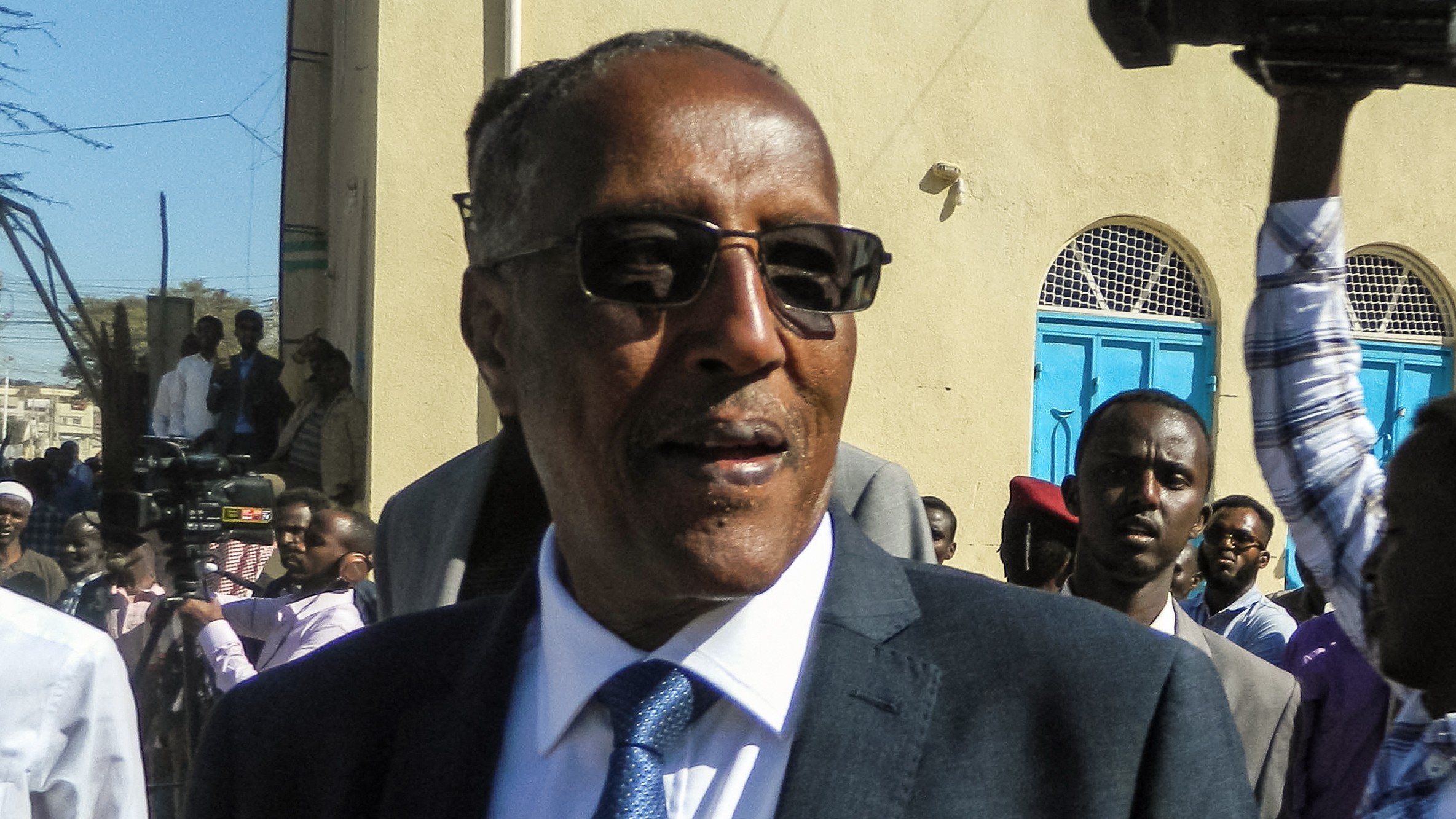
    In a significant political development, former Somaliland President Muse Bihi Abdi has called for full governmental transparency regarding the recently announced diplomatic agreement with Israel. Through a comprehensive video address, the influential political figure emphasized that Somaliland’s constitutional framework explicitly prohibits any actions contradicting Islamic principles or causing harm to Muslim communities worldwide.

    Abdi, who maintains considerable political influence through clan networks despite his electoral defeat, stated that authorities must publicly disclose all terms negotiated with Israel. He warned that should the agreement violate constitutional provisions, fail to serve mutual interests equally, or adversely affect Muslim populations, he would openly challenge the arrangement.

    This diplomatic recognition, announced on December 26th, represents a historic shift as Israel became the first United Nations member state to acknowledge Somaliland’s independence from Somalia. The move has triggered widespread condemnation across African and Muslim-majority nations, with Somalia’s President Hassan Sheikh Mohamud alleging the deal includes provisions for relocating Palestinians from Gaza and establishing an Israeli military installation.

    While Somaliland officials have denied plans to accept forcibly displaced Palestinians or host foreign military bases, regional analysts suggest Israel would not extend recognition without securing strategic advantages. The potential establishment of a Red Sea military facility to counter Iranian influence remains a subject of intense speculation.

    The recognition has sparked domestic religious debates in Hargeisa, with prominent Muslim scholars questioning the morality of engaging with Israel amid the Gaza conflict. Regionally, armed groups including al-Shabab and Yemen’s Houthi movement have vowed resistance against any Israeli presence.

    International opposition has emerged at the highest levels, with Turkish President Recep Tayyip Erdogan warning during his Ethiopia visit that such moves could destabilize the volatile Horn of Africa region. The African Union has formally condemned Israel’s unilateral recognition and called for its retraction.
  • Will ex-president Duterte’s absence at ICC trial affect proceedings?

    Will ex-president Duterte’s absence at ICC trial affect proceedings?

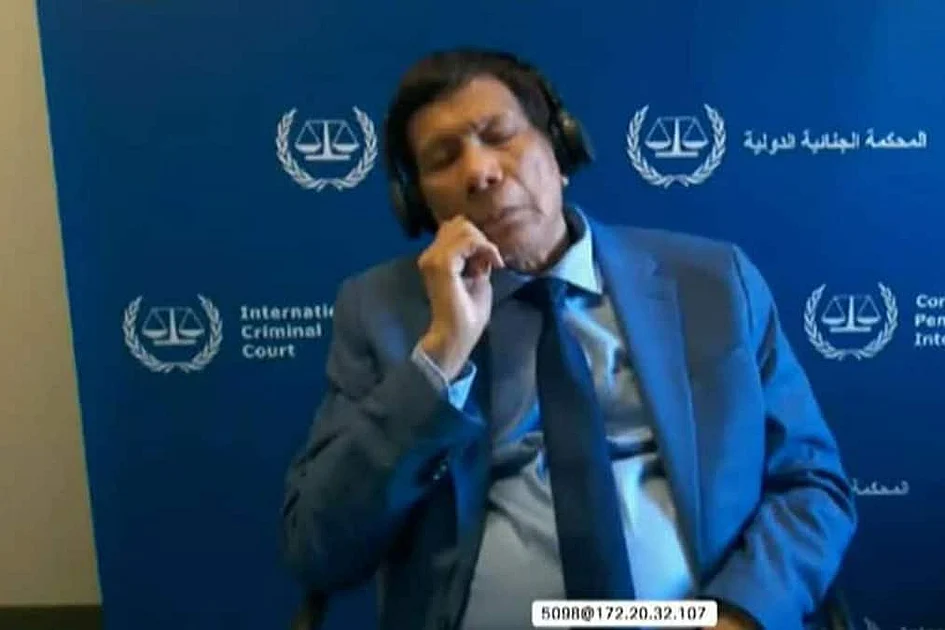
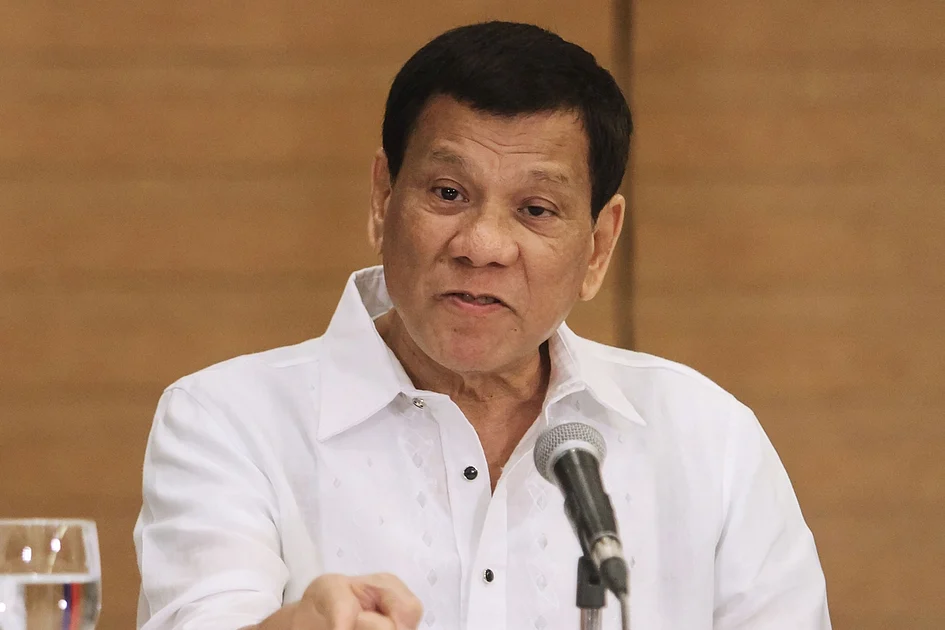
    THE HAGUE – The International Criminal Court has authorized former Philippine President Rodrigo Duterte to waive his physical presence during this week’s critical confirmation of charges hearing, proceeding with the case despite objections from prosecution and victim representatives.

    Pre-Trial Chamber I determined that Duterte, facing allegations of murder and attempted murder as crimes against humanity, has voluntarily relinquished his right to attend the four-day proceedings commencing February 23. The Chamber emphasized that his absence would not impede judicial processes, noting that defense counsel had thoroughly explained the consequences of this decision.

    This marks the latest development in Duterte’s pattern of non-appearance before the ICC. Since initially confirming his identity at the March 2025 hearing, the former leader has consistently avoided subsequent sessions, including those addressing petitions for temporary release.

    His legal team, led by attorney Nicholas Kaufman, has repeatedly cited deteriorating health conditions as justification for absence, claims the Chamber has previously rejected. Human rights advocates now question the validity of these health assertions.

    Ephraim Cortez, president of the National Union of Peoples’ Lawyers representing victims’ families, challenged the health narrative directly: ‘Duterte is fit as a fiddle. His non-appearance is strategic – preventing public observation of his actual physical condition.’

    Legal analysts suggest the absence reflects broader defense strategies rather than genuine health concerns. Cortez noted that confirmation hearings would proceed based on evidence rather than defendant presence, with the right to remain silent remaining available should Duterte eventually testify.

    Philippine opposition lawmakers from the Makabayan bloc have characterized Duterte’s avoidance as ‘cowardice’ and ‘a shameless display of arrogance,’ referencing the thousands of victims affected by the controversial anti-drug campaign between 2011-2019.

    The case represents one of the ICC’s most significant examinations of state-sponsored violence in recent years, with proceedings continuing despite the defendant’s absence.

  • Dozens of protesters sentenced to death in Iran, says rights group

    Dozens of protesters sentenced to death in Iran, says rights group

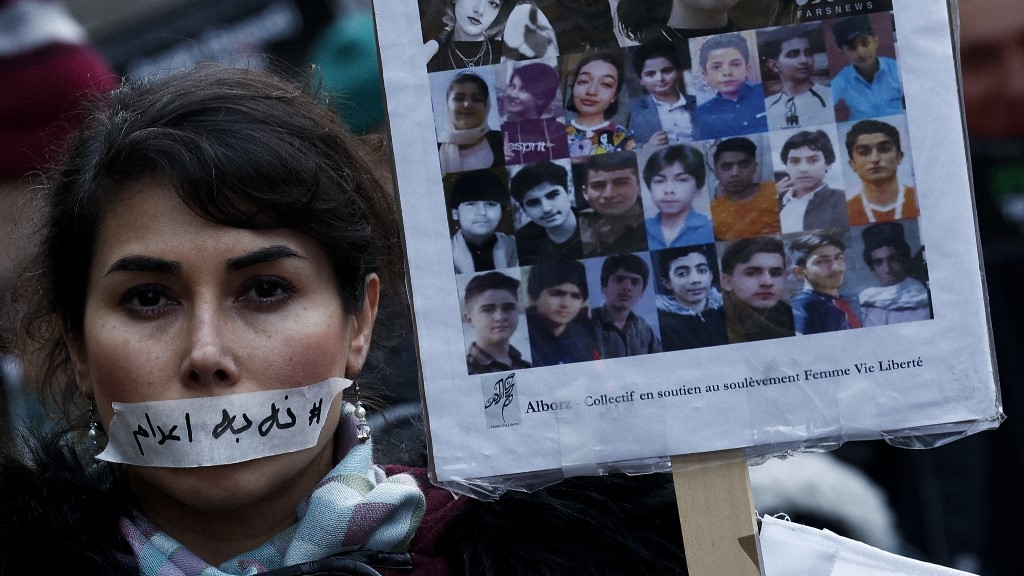
    Iran’s judicial system faces mounting international criticism following reports of imminent executions for dozens of individuals detained during recent anti-government demonstrations. According to the Norway-based Iran Human Rights organization (IHRNGO), at least 26 protesters face pending execution orders, with hundreds more—including minors—charged with capital offenses.

    The protests, which erupted in December, represented widespread public discontent with government corruption, economic instability, and state repression. While official Iranian sources report 3,117 fatalities, independent monitoring by Hrana news agency suggests the actual death toll may exceed 6,500.

    IHRNGO Director Mahmood Amiry-Moghaddam characterized the judicial proceedings as fundamentally flawed, stating that convictions rely predominantly on confessions extracted through torture within judicial processes that lack basic fairness standards. The organization reports that authorities are actively pressuring defendants to prevent public disclosure of their cases.

    Despite official denials regarding protest-related executions, hanging sentences continue to be implemented nationwide. Recent reports indicate at least nine executions occurred on Tuesday across multiple cities, with 26 additional hangings documented over the weekend—though authorities attribute these to drug and murder charges.

    Legal advocates confirm systematic denial of representation rights to the accused, while Amnesty International has previously documented Iran’s strategic use of capital punishment to suppress dissent through institutionalized fear.

  • Israel bans thousands of Palestinian from Al-Aqsa for first Ramadan prayers

    Israel bans thousands of Palestinian from Al-Aqsa for first Ramadan prayers

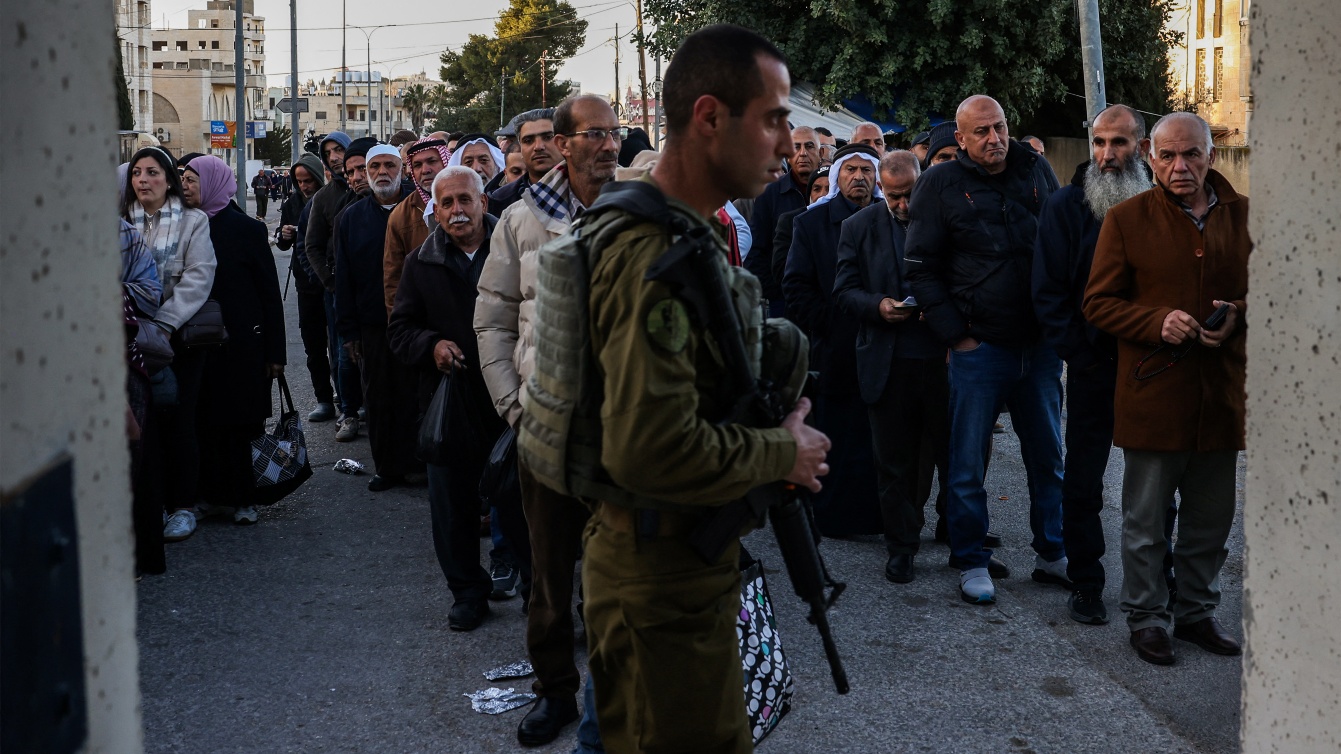
    Israeli authorities implemented stringent access limitations at Al-Aqsa Mosque in occupied East Jerusalem during the inaugural Friday prayer of Ramadan, preventing thousands of Palestinian worshippers from entering despite their possession of previously authorized permits.

    Contrary to the typical Ramadan gatherings numbering in the hundreds of thousands, Israeli officials enforced a strict cap of 10,000 worshippers from the West Bank for weekly prayers throughout the holy month. The Israeli Coordinator of Government Activities (Cogat), which administers operations in Palestinian territories, specified that only individuals above 50 or below 12 years old would receive approval after military authorization.

    At the Qalandiya military checkpoint, approximately 2,000 Palestinians managed to cross according to Israeli reports, while thousands more faced rejection despite valid documentation. The Palestinian Authority’s Jerusalem Governorate reported severe overcrowding as Israeli authorities turned away worshippers after reaching the predetermined quota.

    Maarof al-Rifaai, media advisor to the Palestinian Governor of Jerusalem, detailed the extensive bureaucratic requirements imposed on worshippers, including magnetic cards, dual fingerprint scanning, and conditional permits. He characterized these measures as deliberate complications designed to reduce attendance. Israeli forces further escalated tensions by preventing ambulance crews from entering and detaining volunteer medical personnel.

    Personal accounts emerged from worshippers like Jihad Basharat from Tammun, who described obtaining permits early only to face last-minute cancellations at restricted access points. The situation developed alongside recent Israeli detention of Sheikh Mohammed al-Abbasi, Imam of Al-Aqsa, without explanation—an action condemned by Hamas as part of systematic violations against religious freedom.

    Sheikh Ikrima Sabri, the former grand mufti of Jerusalem currently barred from the mosque, accused Israel of deliberately disrupting Muslim observance of Ramadan. The escalating restrictions occur within the broader context of Al-Aqsa’s significance as one of Islam’s holiest sites and a symbol of Palestinian identity and resistance. Since Israel’s 1967 occupation of East Jerusalem, gradual erosion of Islamic administrative control has coincided with expanded Jewish presence, challenging longstanding international agreements governing the site’s religious status.

    The current tensions unfold against intensified Israeli military operations across the West Bank since October 2023, involving increased settler violence, demolitions, and displacement activities.

  • At halfpipe, neither US-born Olympic medal favorite competes for U.S. Eileen Gu takes the heat

    At halfpipe, neither US-born Olympic medal favorite competes for U.S. Eileen Gu takes the heat

    LIVIGNO, Italy — The women’s halfpipe skiing competition at the Winter Olympics features two American-born athletes representing different nations, yet only one has become the center of international political scrutiny. While Zoe Atkin competes for Britain with minimal controversy, Eileen Gu’s decision to represent China has ignited persistent debate and criticism.

    This phenomenon of athletes switching national allegiances is hardly unprecedented in international sports. However, when combined with Olympic prestige and extraordinary athletic success—Gu has been positioned to win her third medal of these Games—the situation transforms into a complex, politically-charged discourse.

    “Numerous athletes compete for different countries,” Gu stated after Thursday’s qualifying rounds. “The singular focus on my decision stems from perceptions of China as a monolithic entity that people dislike. Their criticism isn’t fundamentally about what they claim.”

    The 22-year-old Bay Area native responded to recent comments from U.S. Vice President J.D. Vance, who expressed on Fox News that he hoped someone who benefited from American upbringing would choose to compete under the U.S. flag.

    Gu recognizes she receives disproportionate vitriol not merely for representing her mother’s homeland but also for her remarkable success both on and off the slopes. Following the Olympics, she will resume her studies at Stanford and attend Milan fashion shows, maintaining her status as both elite athlete and global celebrity.

    The Olympic charter requires athletes to be nationals of the country they represent, with provisions for a “cooling-off” period for those switching allegiances—though neither Gu nor Atkin have changed teams during their Olympic careers.

    Action sports culture typically minimizes nationalistic concerns, with freeskiing and snowboarding communities prioritizing individuality over national representation. These athletes primarily compete in events like X Games and Dew Tours where national flags are scarcely visible.

    “We’re all traveling to the same places together,” noted American three-time medalist Nick Goepper. “There are approximately 25 athletes performing at elite levels worldwide, and camaraderie transcends national boundaries.”

    Recent reports about Chinese government funding for Gu and other athletes have added financial dimensions to the controversy. Gu consistently emphasizes her motivation as increasing visibility for winter sports among Chinese girls rather than financial considerations.

    Meanwhile, Atkin—a Massachusetts native with dual citizenship since birth—has competed for Britain throughout her career without similar scrutiny. The 23-year-old world champion values the British team’s smaller size, which allows more flexible training schedules.

    Somewhere between these experiences lies Gus Kenworthy, who famously switched from Team USA to Britain citing the intense competition within American teams. His transition faced criticism but highlighted the mathematical reality that world-class athletes might not make deeply talented national teams.

    As Gu reiterated Thursday, “people are entitled to their opinions”—a sentiment reflecting the complex intersection of sports, nationality, and global politics that defines modern Olympic competition.

  • ICC approves ex Philippine President Duterte’s request to skip pre-trial hearing

    ICC approves ex Philippine President Duterte’s request to skip pre-trial hearing

    The International Criminal Court’s Pre-Trial Chamber I has authorized former Philippine President Rodrigo Duterte to absent himself from the upcoming confirmation of charges hearing scheduled for February 23-27, 2026. This judicial decision permits the proceedings to advance despite the defendant’s non-attendance, marking a significant development in the high-profile case concerning Duterte’s controversial war on drugs campaign.

    The prosecution team, led by Deputy Prosecutor Mame Mandiaye Niang, had formally contested Duterte’s petition in a comprehensive six-page submission dated February 19. The legal opposition argued that the former leader’s justification—centered on non-recognition of the court’s jurisdiction and claims of political persecution—failed to meet the necessary legal standards for excusal from physical appearance.

    Court documents reveal Duterte’s defense characterized the charges as “an outrageous lie” fabricated by political adversaries, while simultaneously asserting that his involvement with the ICC proceedings amounted to being “kidnapped” by the judicial process. These statements, according to prosecution analysis, demonstrate Duterte’s continued rejection of the court’s legitimacy and authority.

    The upcoming hearing represents a critical phase in determining whether sufficient evidence exists to proceed to full trial regarding allegations of crimes against humanity connected to Duterte’s anti-drug initiative, which reportedly resulted in thousands of fatalities during his presidential term from 2016 to 2022.

  • IMF rebukes China’s model with its own credibility in tatters

    IMF rebukes China’s model with its own credibility in tatters

    The International Monetary Fund confronts a deepening legitimacy crisis as its traditional neoliberal prescriptions face irrelevance in the Trump era and prove inadequate for addressing China’s unique economic challenges. This crisis emerges as the IMF urges Beijing to abandon its state-driven industrial model while navigating a global landscape transformed by geopolitical adventurism and economic nationalism.

    The Fund’s latest assessment identifies China’s export-heavy growth strategy as fundamentally distorting global trade patterns. IMF executives specifically highlight Beijing’s allocation of approximately 4% of GDP to corporate subsidies in critical sectors, creating worldwide economic imbalances. They emphasize that transitioning to consumption-led growth represents China’s ‘overarching priority,’ noting that the nation’s substantial current-account surplus generates ‘adverse spillovers to trading partners.’

    China’s economic dilemmas extend beyond trade imbalances. IMF Asia Pacific Deputy Director Thomas Helbling identifies the property sector crisis as the ‘elephant in the room,’ with unfinished properties severely undermining investor confidence. The institution advocates for comprehensive structural reforms including central government financing to address presold unfinished housing and strengthened social protection systems to reduce precautionary savings.

    BNP Paribas strategist Chi Lo observes China’s economy remains stuck in a liquidity trap, requiring fiscal policy to ‘do the heavy lifting’ in reviving public confidence. Despite recognizing the need for rebalancing since before Xi Jinping’s 2013 rise to power, progress toward demand-led domestic growth remains sluggish.

    The core challenge involves convincing 1.4 billion citizens to reduce savings and increase spending—a transformation requiring robust social safety nets that have thus far been underdeveloped. With approximately 70% of household wealth tied to real estate, property sector stabilization becomes crucial for maintaining 5% growth targets.

    IMF China economist Sonali Jain-Chandra notes China’s remarkable development has ‘relied too much on investment as opposed to consumption,’ identifying the service sector as an ‘underexploited driver of growth.’ However, credit expansion remains subdued, with November 2025 marking the first consecutive monthly household loan contraction since records began in 2005.

    The People’s Bank of China faces political constraints in addressing these challenges, including concerns that yuan depreciation could exacerbate trade tensions with Washington. Meanwhile, Trump administration policies—including tariffs and economic coercion—further complicate China’s transition while rendering traditional economic theories increasingly inadequate for contemporary global dynamics.

  • Australia leaves T20 World Cup after crushing Oman

    Australia leaves T20 World Cup after crushing Oman

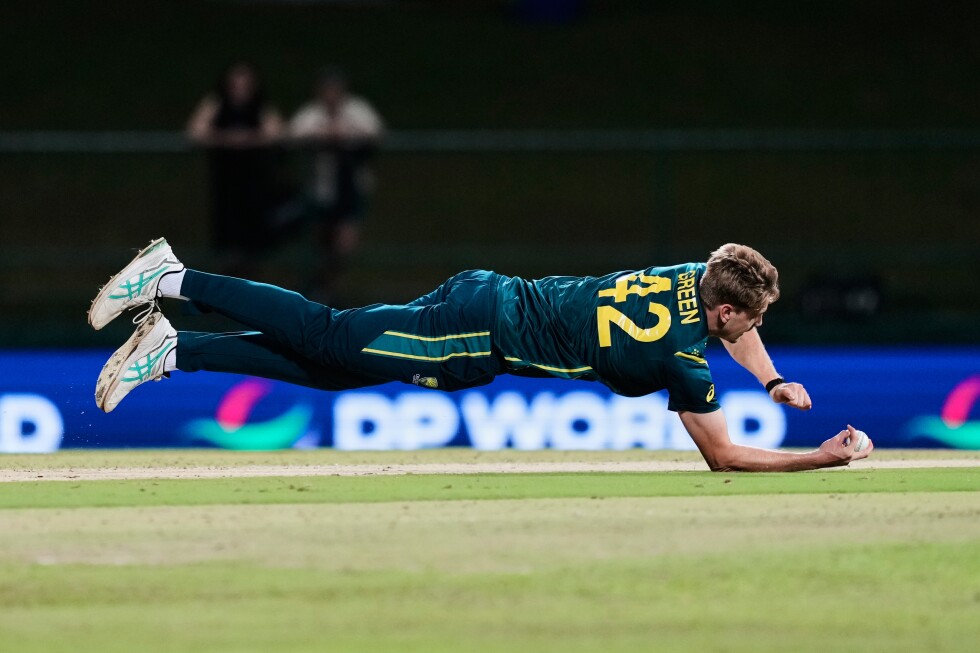
    In a commanding display of cricketing prowess, Australia decisively defeated Oman by nine wickets during their final T20 World Cup group stage match in Pallekele on Friday. The match, rendered inconsequential after Australia’s unexpected elimination from tournament contention, saw the team achieve their winning target of 105 runs in a mere 9.4 overs.

    The Australian bowling attack, led by Adam Zampa’s remarkable comeback performance of 4-21, efficiently dismantled Oman’s batting lineup, restricting them to 104 runs in 16.2 overs. This represented a significant turnaround for Zampa, who had previously failed to take wickets against both Zimbabwe and Sri Lanka.

    Captain Mitchell Marsh delivered an explosive batting demonstration, achieving a half-century off just 26 balls during the power play segment. His unbeaten 64 runs from 33 deliveries, featuring seven boundaries and four sixes, propelled Australia to a comprehensive victory. Travis Head provided substantial support with 32 runs from 19 balls before being dismissed with only 12 runs required for victory.

    The match began decisively for Australia when Xavier Bartlett (2-27) struck on the very first delivery, dismantling Aamir Kaleem’s leg stump. Oman’s captain Jatinder Singh, who had provocatively declared pre-match that it was “the best time to crush” Australia, managed only 17 runs before being cleanly bowled by Bartlett.

    Despite the crushing defeat, Oman’s Wasim Ali contributed a respectable 32 runs from 33 deliveries, helping his team surpass the 100-run threshold. Glenn Maxwell supplemented Australia’s bowling dominance with figures of 2-13 during the middle overs.

    Australia concludes their tournament in third position within Group B, while Oman finished their campaign without a victory in four matches. The tournament now advances to the Super Eight stage, commencing Saturday with Pakistan facing New Zealand in Colombo.

  • The Supreme Court struck down some of Trump’s most sweeping tariffs. Which levies are impacted?

    The Supreme Court struck down some of Trump’s most sweeping tariffs. Which levies are impacted?

    In a landmark 6-3 ruling on Friday, the U.S. Supreme Court delivered a significant judicial check on presidential authority by striking down core components of former President Donald Trump’s expansive tariff regime. The court determined Trump exceeded his executive powers when invoking the 1977 International Emergency Economic Powers Act (IEEPA) to justify imposing new import taxes on goods from nearly every nation worldwide.

    The controversial tariffs, which Trump ceremoniously dubbed ‘Liberation Day’ measures, implemented a baseline 10% tax on most countries and threatened reciprocal tariffs of up to 50% on dozens of others. The administration justified these measures by declaring a national emergency based on longstanding U.S. trade deficits, though notably even nations with which the U.S. maintains trade surpluses faced taxation.

    While the ruling dismantles the IEEPA-based tariff architecture, numerous sector-specific levies remain intact under different legal authorities. The Trump administration had concurrently deployed Section 232 of the 1962 Trade Expansion Act, citing national security concerns to impose duties on steel, aluminum, automobiles, copper, lumber, and even household goods including kitchen cabinets and furniture.

    The decision particularly affects trade relationships with major economic partners including the European Union, Japan, South Korea, Canada, Mexico, China, Brazil, and India. Each faced unique tariff structures under Trump’s multi-front trade campaign. Notably, ‘trafficking tariffs’ targeting immigration and drug concerns impacted North American neighbors, while additional duties were applied to Brazil concerning its domestic politics and to India regarding its energy purchases from Russia.

    Despite the judicial setback, the ruling leaves intact the president’s broader authority to implement aggressive trade policies through alternative mechanisms, ensuring continued uncertainty in global trade relations.

  • ‘I deeply apologise’: South Korea’s ex-President Yoon regrets declaring martial law

    ‘I deeply apologise’: South Korea’s ex-President Yoon regrets declaring martial law

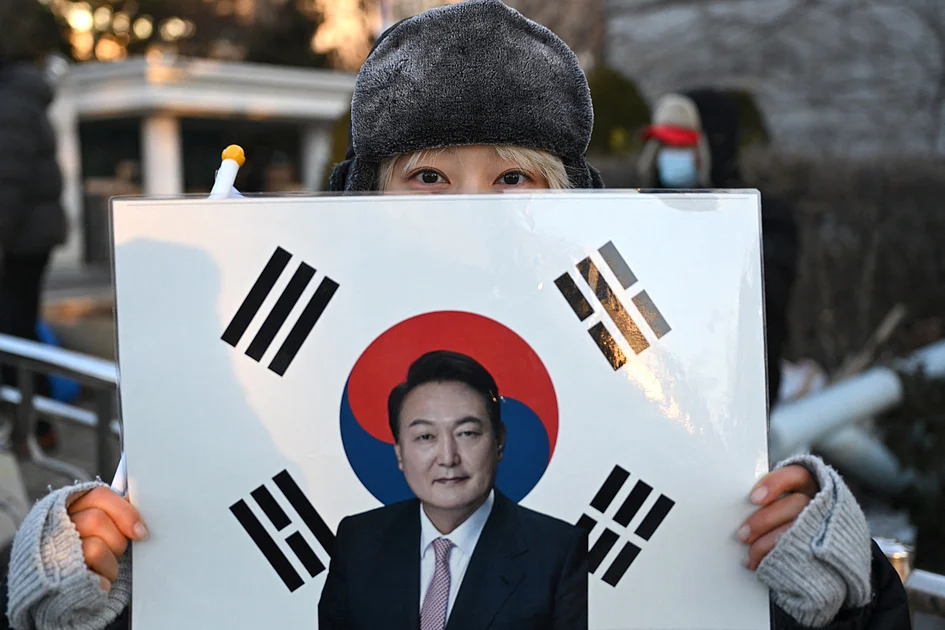
    In a landmark judicial ruling with profound political implications, former South Korean President Yoon Suk Yeol has been sentenced to life imprisonment for orchestrating an attempted insurrection. The Seoul Central District Court delivered the verdict on Thursday, convicting Yoon of subverting the nation’s constitutional order through his unprecedented December 2024 declaration of martial law.

    The court established that Yoon had unlawfully deployed military forces to storm the National Assembly in a brazen attempt to detain political opponents. This extraordinary intervention, which lasted approximately six hours before being overturned by parliamentary vote, triggered widespread public protests and created a constitutional crisis.

    On Friday, through legal representatives, the former president issued a formal apology expressing regret for ‘the frustration and hardships’ caused to citizens. ‘I deeply apologise to the people for the frustration and hardships I have caused them, due to my own shortcomings, despite my resolve to save the nation,’ Yoon stated.

    However, the former prosecutor-turned-president simultaneously condemned the judicial process as ‘predetermined’ and characterized the conviction as political retaliation. Yoon questioned whether an appeal would be meaningful ‘in an environment where judicial independence could not be guaranteed,’ while urging supporters to ‘unite and rise.’

    Legal representatives clarified that these statements did not indicate an intention to forgo appellate proceedings. Prosecutors had previously sought capital punishment—a remarkable request given South Korea’s de facto moratorium on executions since 1997. The prosecution team expressed some ‘regret’ over the life sentence verdict but remained undecided regarding appeal plans.

    This case represents one of the most dramatic falls from power in South Korea’s democratic history, marking the first time a former president has received a life sentence for insurrection-related charges. The proceedings have exposed deep political divisions and raised fundamental questions about presidential authority versus constitutional safeguards.