标签: Asia

亚洲

  • Inspired by UAE’s oldest mosque: ‘Net-zero-energy’ mosque opens in Masdar City

    Inspired by UAE’s oldest mosque: ‘Net-zero-energy’ mosque opens in Masdar City

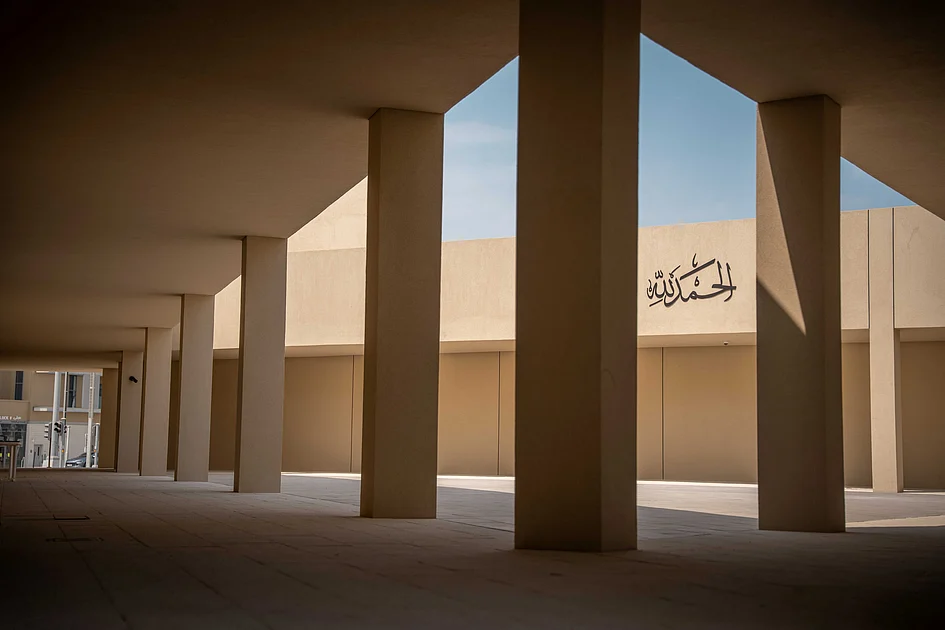
    Masdar City has inaugurated a revolutionary place of worship that harmonizes spiritual tradition with cutting-edge environmental technology. The newly opened Masdar City Mosque, capable of accommodating up to 1,300 worshippers during Ramadan peak hours, represents a significant milestone in sustainable religious architecture.

    Drawing architectural inspiration from Al Bidyah Mosque, one of the UAE’s oldest surviving mosques, the structure masterfully blends traditional Emirati design elements with advanced engineering solutions. The mosque features a spacious 42-meter-wide column-free prayer hall and a striking 20.2-meter minaret that dominates the Masdar City skyline. A pioneering rammed-earth Qibla wall, the first of its kind in Abu Dhabi’s public buildings, provides natural temperature regulation while honoring centuries-old regional construction techniques.

    The mosque’s net-zero energy certification stems from its comprehensive sustainability systems. Over 1,000 square meters of solar photovoltaic panels installed on rooftops and shaded parking areas generate 100% of the building’s annual energy requirements. Passive design strategies including optimal orientation, shaded arcades, natural ventilation, and daylight harvesting significantly reduce energy consumption. The facility also introduces Abu Dhabi’s first mosque-based greywater recycling system, treating water used for ablution and repurposing it for landscape irrigation.

    Ahmed Baghoum emphasized the project’s philosophical foundation, stating, ‘Sustainability is deeply rooted in Islamic teachings, which call for balance, moderation, and stewardship of the Earth.’ The mosque has earned prestigious certifications including LEED Platinum, 4 Pearl Estidama ratings, and Net-Zero Energy Certification from the International Living Future Institute.

    Opened during the UAE’s Year of Family initiative, the mosque serves dual purposes as both a spiritual center and community gathering space. Beyond Ramadan, the facility will host faith-based and cultural events throughout the year, reinforcing its role as a beacon of sustainable development and community engagement.

  • UAE authorities warn of AI powering e-begging schemes during Ramadan

    UAE authorities warn of AI powering e-begging schemes during Ramadan

    United Arab Emirates security officials have uncovered a disturbing technological evolution in electronic begging schemes, revealing that artificial intelligence tools now power sophisticated digital panhandling operations targeting charitable donors during Ramadan.

    Cybercrime units report that fraudsters leverage AI capabilities to fabricate compelling medical emergencies within minutes, generating photorealistic hospital scenes, forging official documents, and scripting emotionally manipulative narratives designed to trigger sympathy. These fabricated appeals spread rapidly across social media platforms, WhatsApp groups, and community forums during the holy month when charitable engagement peaks.

    Brigadier Ali Salem, speaking on behalf of UAE authorities, characterized electronic begging as “a technologically sophisticated crime increasingly fuelled by artificial intelligence.” He explained that AI enables fraudsters to industrialize their operations, flooding digital channels with convincing yet entirely fabricated hardship cases before their authenticity can be questioned.

    The technical sophistication includes AI-generated images of critically ill patients, fabricated hospital documents complete with official stamps and signatures, emotional voice recordings, and manipulated videos simulating humanitarian crises. Some operations even create counterfeit platforms mimicking licensed charitable organizations.

    Brigadier Omar Ahmed Abu Al Zoud, Director-General of the General Department of Criminal Security and Ports, emphasized the organized nature of these campaigns: “Electronic begging today is not confined to physical locations. We are seeing structured online campaigns where fabricated hardship cases are circulated to unlawfully solicit money.”

    The financial and social consequences are significant. Beyond direct monetary losses, these schemes undermine public trust in legitimate charitable initiatives, potentially causing genuine cases to be doubted or ignored. Several residents shared experiences of being deceived by emotionally compelling but fabricated stories, ranging from requests for medical equipment that was later sold to false narratives about unemployed fathers unable to feed their children.

    UAE authorities have intensified digital surveillance and awareness campaigns, warning residents that fundraising without official authorization remains illegal regardless of the humanitarian claims presented. Under Federal Decree-Law No. 34 of 2021, electronic begging carries penalties of up to three months’ imprisonment and fines starting at Dh10,000, while organized networks face harsher penalties including imprisonment of at least six months and fines reaching Dh100,000 or more.

    Security officials recommend that donors contribute only through licensed UAE charities, avoid transferring money to personal accounts, verify medical documents with issuing institutions, and report suspicious campaigns through official channels including Dubai Police (901) and the eCrime platform (www.ecrime.ae).

  • Inner Mongolia showcases horse culture at winter photography festival

    Inner Mongolia showcases horse culture at winter photography festival

    The Ulan Butong grasslands of Inner Mongolia recently transformed into a vibrant stage for cultural preservation and economic development during its annual Winter Ice and Snow Photography Festival. Held from January 12-14 in Xiaohongshanzi village, the event attracted over 3,000 visitors and photography enthusiasts from across 10 provincial-level regions, all drawn to witness the spectacular celebration of Mongolian equestrian traditions.

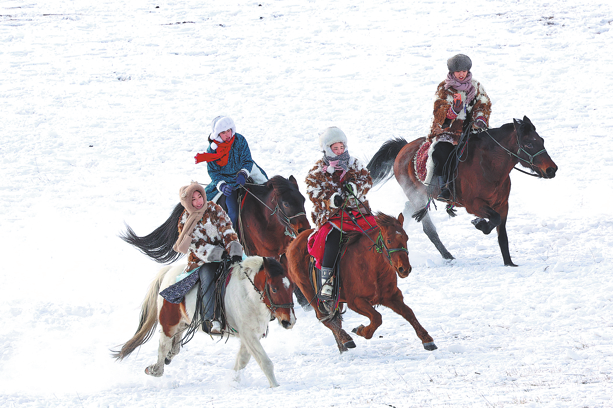
    Against a breathtaking backdrop of snow-covered plains, the festival presented an immersive experience into winter nomadic life through meticulously choreographed performances. The opening day featured two riders demonstrating remarkable synchrony while standing upright on galloping horses, capturing the essence of Mongolian horsemanship. The ceremony commenced with traditional singing and dancing, followed by an ancient fire-worship ritual where local herders offered prayers and tributes, maintaining cultural practices passed through generations.

    The festival’s visual climax occurred when 120 Mongolian horses thundered across the plains, their hooves kicking up crystalline snow sprays against a landscape dotted with traditional yurts. Accompanied by the haunting melodies of the morin khuur (Mongolian horse-head fiddle), twenty riders in authentic attire galloped past spectators, drawing enthusiastic applause from the captivated audience. Additional events included horseback folk performances staged on the frozen surface of Yeya Lake, creating striking visual compositions against the icy canvas.

    Beyond its cultural significance, the festival has emerged as a crucial economic engine for rural revitalization. By strategically integrating equestrian culture with tourism development, the event has generated substantial income opportunities for local residents. Approximately 200 villagers now participate in horseback riding and related tourism services, increasing average annual incomes by approximately 15,000 yuan ($2,142).

    Ji Guoyi, Party secretary of Xiaohongshanzi village, emphasized the deep connection between community identity and equestrian heritage: ‘Horses are not only symbols of our grassland but fundamental to local livelihoods. By combining our winter landscape with traditional customs, we create meaningful opportunities for cultural exchange and economic growth.’ The festival, offered free to the public, successfully merged photographic artistry with cultural preservation while establishing a sustainable model for winter tourism development in the region.

  • Aiming for the skies

    Aiming for the skies

    In a significant victory for independent creators, renowned Chinese astrophotographer Dai Jianfeng has prevailed in a two-year legal battle against Visual China Group, one of China’s largest stock image platforms. The Beijing court ruled that the A-share listed company committed copyright infringement by selling Dai’s photograph “Village Under the Milky Way” without authorization, ordering compensation of 15,000 yuan ($2,100) and a public apology on its official website.

    The case originated when Visual China’s platform hosted and commercially distributed Dai’s celestial photography through a third-party uploader who lacked proper authorization. Despite settlement offers during pre-trial mediation, the 37-year-old Chongqing-based photographer refused to accept private resolution, citing broader principles of creator rights protection.

    “This wasn’t just about my individual case,” Dai explained to China Daily. “Many fellow photographers have experienced similar infringements. Accepting a quiet settlement would have ignored the systemic nature of the problem.”

    The verdict represents a symbolic triumph for China’s creative community, highlighting the substantial challenges visual artists face in monetizing their work through image sales alone. Dai, who specializes in capturing extraordinary astronomical phenomena including aurora borealis over Stonehenge and galactic landscapes, described sustainable income generation through photography as “mission impossible” under current market conditions.

    Beyond the legal implications, Dai emphasizes the artistic purpose driving his craft: creating celestial imagery that emotionally resonates with viewers. His victory establishes an important precedent for intellectual property protection in China’s digital creative economy while underscoring the ongoing struggles of professional photographers in the digital age.

  • Beijing pioneer transforms high-altitude healthcare

    Beijing pioneer transforms high-altitude healthcare

    In the challenging high-altitude environment of Tibet, where oxygen-thin air complicates medical procedures and geographic isolation limits healthcare access, a revolutionary transformation is underway at Lhasa People’s Hospital. Dr. Zhang Ning, an obstetrics and gynecology specialist from Beijing’s Capital Medical University, arrived in July 2024 as part of China’s eastern-western hospital pairing initiative, bringing with him a vision to permanently elevate healthcare standards in the region.

    The high-altitude environment presents unique medical challenges, with reduced oxygen levels affecting everything from emergency response times to postoperative recovery. Historically, Tibetan residents requiring advanced medical care faced arduous journeys outside the region. Dr. Zhang’s mission addresses this disparity through a dual approach: implementing immediate clinical improvements while establishing sustainable systems that will endure beyond external support.

    Central to Zhang’s strategy is what he terms the ‘hematopoiesis model’ – creating self-renewing capability within the local healthcare system. This approach has materialized through a comprehensive mentorship program connecting twelve leading Beijing medical institutions with Lhasa People’s Hospital. The initiative facilitates knowledge transfer through direct collaboration between Tibetan medical professionals and experienced specialists from China’s capital.

    A landmark achievement of this program emerged from the gastroenterology department, where a local physician became the hospital’s first home-trained PhD under the guidance of Liu Kuiliang from Beijing Friendship Hospital. This milestone exemplifies the program’s success in developing local expertise that remains within the community.

    Beyond technical training, Zhang recognized that cultural integration was essential for sustainable reform. He learned basic Tibetan phrases including greetings and expressions of gratitude, gestures that significantly bridged cultural divides and built trust among local staff. Tenzin Yangdron, a Tibetan nurse at the facility, noted that Zhang’s leadership style combines direct problem-solving with mentorship, citing his personal intervention to resolve equipment installation delays rather than relying solely on directives.

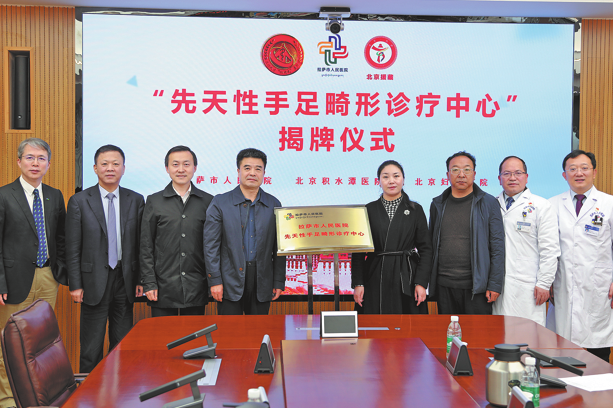
    The May 2025 inauguration of the Medical Diagnosis and Treatment Center for Congenital Hand and Foot Deformities stands as a testament to these efforts, representing both immediate healthcare improvement and long-term capacity building. Zhang emphasizes that the ultimate goal transcends temporary assistance: ‘We want to equip local practitioners with the skills and confidence to lead, innovate, and deliver top-quality care for their communities.’ This comprehensive approach ensures that medical advancements will continue benefiting Tibetan residents long after external support transitions.

  • ROK’s Yoon apologizes after getting life sentence

    ROK’s Yoon apologizes after getting life sentence

    In an unprecedented judicial ruling, former South Korean President Yoon Suk-yeol has been sentenced to life imprisonment for orchestrating a December 2024 insurrection aimed at crippling the National Assembly. The Seoul Central District Court delivered the verdict on Thursday, finding the ousted leader guilty of attempting to paralyze the legislative body through military deployment.

    Presiding Judge Ji Gwi-yeon emphasized the severity of Yoon’s actions, stating the court found conclusive evidence that “the intention was to paralyze the assembly for a considerable period.” The judicial panel noted the declaration of martial law resulted in “enormous social costs” and highlighted Yoon’s failure to demonstrate adequate remorse for his actions.

    Following the sentencing, the 65-year-old former president issued a formal apology through his legal counsel on Friday. While acknowledging the “frustration and hardships” caused by his martial law decree, Yoon maintained his controversial measures were implemented “solely for the sake of the nation.” The disgraced leader expressed difficulty accepting the court’s decision but remained ambiguous about potential appeals.

    The constitutional crisis began when Yoon declared emergency martial law on December 3, 2024, which was subsequently revoked hours later by the National Assembly. This triggered a political upheaval that culminated in Yoon’s impeachment last April, making him the first sitting South Korean president to be arrested and indicted while in office.

    Prosecutors had sought capital punishment, though South Korea maintains an unofficial moratorium on executions since 1997. Correctional authorities indicate most life-term inmates become eligible for parole consideration after serving approximately 20 years.

  • Gaza residents fear their voices won’t be heard

    Gaza residents fear their voices won’t be heard

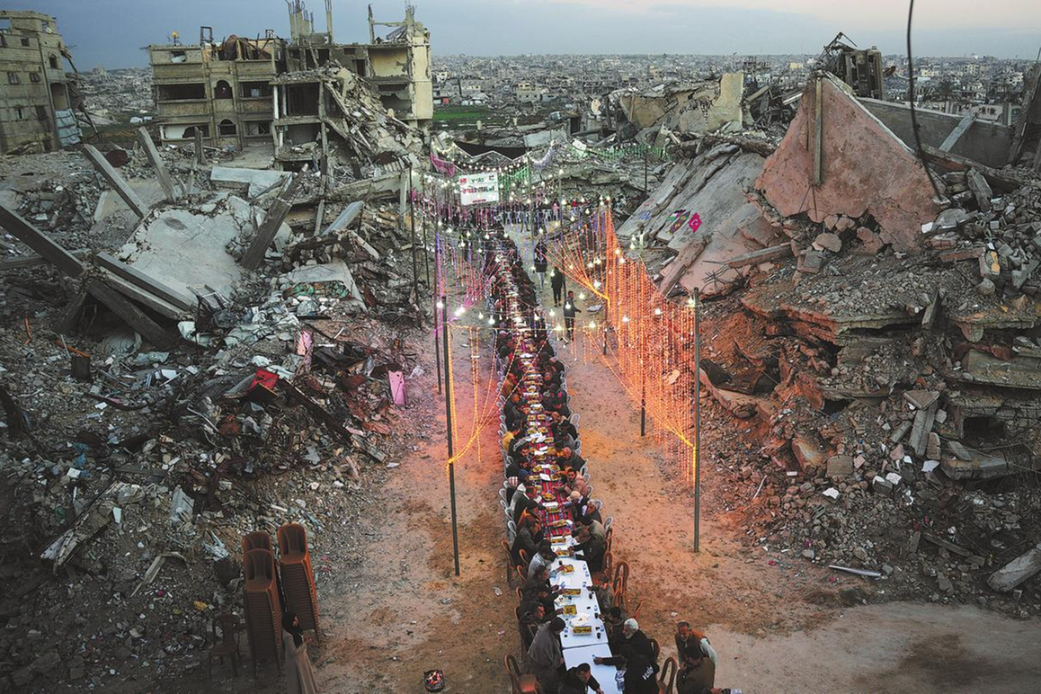
    As the inaugural session of the US-initiated ‘Board of Peace’ commenced in Washington, residents of Gaza voiced profound concerns about their exclusion from critical discussions determining their future. The council, established following Qatari and Egyptian-mediated ceasefire negotiations that halted the Palestine-Israel conflict in October, has expanded its original mandate from overseeing truce implementation and reconstruction to addressing broader international disputes.

    The meeting gathered approximately two dozen global leaders and senior officials who deliberated on the fragile second phase of the ceasefire, financial commitments, and proposals for an international stabilization force. Despite these high-level discussions, Gazans expressed apprehension that decisions made thousands of miles away would fail to address their immediate needs amid the widespread devastation that has left the territory in ruins after two years of conflict.

    Mohammed Abdel-Majid, a 37-year-old displaced Palestinian in Deir al-Balah, articulated the prevailing sentiment: ‘If this council brings real calm and improves our situation, we welcome any effort. But the absence of Palestinian representation worries us. How can they understand our needs when they do not live what we live every day?’

    Although a 15-member Palestinian technocratic committee has been formed to manage Gaza’s daily governance under the board’s supervision, this arrangement has done little to alleviate concerns about practical implementation and fair representation. Safaa Yassin, a 40-year-old Gaza City resident, noted the history of unfulfilled promises: ‘We have witnessed many pledges, and each time there was talk of solutions—but without implementation and without our lives changing for the better.’

    The initiative faced additional complications as Norway explicitly rejected US claims of its participation. Norwegian Foreign Ministry spokeswoman Ane Jorem stated unequivocally that her country would not join the board, a position shared by several European nations including France, Germany, and the United Kingdom. French officials expressed surprise at the European Commission’s attendance, noting it lacked authorization from the European Council.

    Meanwhile, Morocco became the first Arab nation to commit personnel to the proposed International Stabilization Force, while Indonesia offered 8,000 troops—nearly half the 20,000 sought. Hamas spokesperson Hazem Qassem emphasized that any political arrangements must begin with ‘a complete cessation of aggression, lifting the blockade, and guaranteeing the legitimate national rights of our people.’

  • Researchers conclude Antarctic sea survey

    Researchers conclude Antarctic sea survey

    China’s polar research icebreaker Xuelong has successfully concluded its comprehensive oceanographic survey mission in Antarctica’s Amundsen and Ross Seas, marking a significant milestone in the nation’s 42nd Antarctic expedition. The scientific team deployed cutting-edge domestically developed technologies to conduct extensive research in one of the planet’s most climate-vulnerable regions.

    The expedition, organized by China’s Ministry of Natural Resources, focused on the western Antarctic waters where ice sheets and shelves are experiencing accelerated melting due to global climate change. From January 2nd, researchers aboard the Xuelong (Snow Dragon) conducted multidisciplinary investigations encompassing hydrological conditions, marine biology, chemical composition, atmospheric conditions, and penguin habitats despite confronting severe weather challenges including intense winds, dense fog, and treacherous ice conditions.

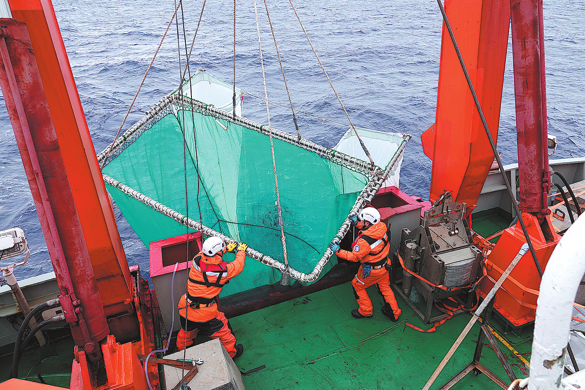
    Scientific leader Zhang Haifeng reported that the team executed sophisticated operations including the deployment and retrieval of moored buoy systems, innovative krill trawling techniques, and advanced conductivity-temperature observations. The research yielded particularly valuable specimens of Antarctic krill, midwater fish species, and deep-sea benthic organisms that will enable scientists to map the trophic structure of critical marine species and monitor population dynamics.

    Team member Li Shuai highlighted technological breakthroughs including China’s indigenously developed polar ecological mooring system equipped with acoustic and optical detection modules capable of sustained underwater observation beneath ice cover. The expedition also introduced a newly enhanced multilayered krill trawl design that significantly improved catch efficiency and provided unprecedented data on krill distribution across water columns.

    The 31-member scientific team, representing 12 Chinese research institutions and universities, will now proceed to Hobart Port in Australia before returning to China. Meanwhile, the Xuelong icebreaker continues to Zhongshan Station for additional research assignments, continuing China’s eight-year continuous multidisciplinary monitoring program in the Amundsen Sea that began in 2018.

    Chief scientist Wei Fuhai emphasized that these long-term observational capabilities are essential for understanding the complex, rapid marine transformations occurring in this climate-sensitive region. The collected data will contribute significantly to global assessments of how climate change impacts polar marine ecosystems.

  • A Guangdong guide to festive giving wins hearts

    A Guangdong guide to festive giving wins hearts

    As China welcomed the Year of the Horse with vibrant red lanterns adorning urban thoroughfares and families gathering for heartfelt reunions, an unassuming chart from Guangdong province emerged as an unexpected cultural touchstone during the Spring Festival celebrations. This crowdsourced guideline, detailing appropriate monetary amounts for traditional red envelopes, has resonated deeply with citizens across the nation.

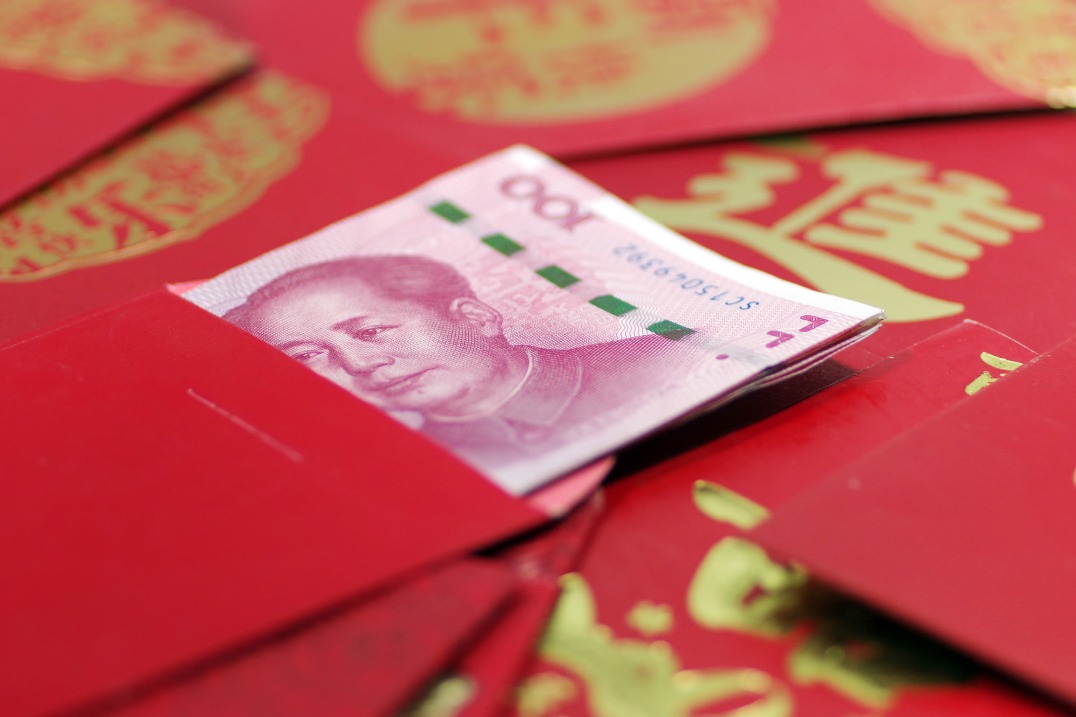
    The recommendation framework suggested 100 yuan ($14) for immediate family members, 50 yuan for close non-blood relatives, 20 yuan for cousins, 10 yuan for distant relatives, and merely 5 yuan for neighbors. Rather than establishing new standards, these figures reflect long-standing regional practices in Guangdong where the Cantonese tradition of ‘laisee’ emphasizes symbolic meaning over monetary value.

    The digital response to this guideline has been overwhelmingly supportive, with WeChat, Douyin, and Weibo users applauding the approach for helping the festival ‘return to its original significance’ while alleviating the financial pressures that often accompany seasonal gift-giving.

    The custom of red envelopes, historically known as ‘yasuiqian’ or ‘money to ward off evil spirits,’ traces its origins over a millennium to the practice of elders threading copper coins with red string to bless children with peace and safety. Southern folklore tells of a mythical creature called Nian Shou that would frighten children during the New Year, leading to the adoption of red decorations, bright lights, and firecrackers as protective measures. The red envelope consequently evolved into both protective talisman and generational blessing.

    The Cantonese term ‘laisee’ incorporates auspicious homophones meaning ‘good fortune’ and ‘smooth affairs,’ with the red paper conveying joy and prosperity while the enclosed money represents shared luck between generations.

    Despite the prevalence of digital transfers, many still cherish the tactile tradition of preparing crisp new banknotes for physical envelopes. Guangzhou retiree Wang Xiuying, 66, recently exchanged 2,000 yuan for new bills at her local bank, explaining that ‘giving hongbao to children is a must and a perfect gift for Spring Festival.’ For her, the envelopes represent familial blessings more than monetary value.

    The Guangdong guidelines have gained particular relevance as red envelope amounts have escalated in various regions, creating silent but substantial financial pressure. Office worker Cheng Qiongfang from Guangzhou noted that she maintained her practice of distributing envelopes containing 10 or 20 yuan, stating that ‘if hongbao becomes just a way to compete with others, it loses its original meaning.’

    Cultural observers suggest the guideline’s popularity reflects a broader societal desire for less burdensome celebrations focused on warmth rather than wealth. Within the rich tapestry of Chinese New Year traditions—from doorway couplets to family banquets—the red envelope remains one of the most intimate and enduring customs. This slender fold of paper containing modest sums carries centuries of cultural memory for those who appreciate its deeper significance.

    Through Guangdong’s understated laisee guide, many have discovered not merely a reference chart but a poignant reminder that the true value of a red envelope lies not in its denomination, but in the goodwill it conveys across generations.

  • ‘Emotional spending’ a touch of holiday luxury

    ‘Emotional spending’ a touch of holiday luxury

    A new consumer phenomenon dubbed ’emotional spending’ is transforming how Chinese citizens celebrate the Spring Festival holiday, with many opting for luxury purchases and personalized cultural experiences over traditional celebrations. This trend reflects a growing desire for meaningful consumption that provides emotional satisfaction and cultural connection during China’s most important family reunion period.

    Among the most popular emotional expenditures are professional photo sessions wearing traditional hanfu attire, premium tourism packages, and exclusive Lunar New Year’s Eve dining experiences. These activities, while often carrying substantial price tags, offer participants immersive cultural engagement and lasting memories beyond conventional holiday spending.

    Twenty-year-old Beijing undergraduate Zhang Xiaohan exemplifies this trend. She recently invested approximately 2,000 yuan ($288) in a comprehensive hanfu photography session in Xi’an, one of China’s ancient capitals. The package included traditional costume rental, professional makeup services, photography at historical sites, and entrance fees to cultural landmarks.

    “I’m deeply attracted to Chinese traditional culture, particularly the subtle elegance of classical clothing and architecture,” Zhang explained. “The experience at Grand Tang Dynasty Ever Bright City was particularly memorable—surrounded by red lanterns, beautiful architecture, and fellow hanfu enthusiasts, I felt completely immersed in the festive atmosphere.”

    While Zhang typically allocates around 1,000 yuan monthly for entertainment and cultural items, she considered the Spring Festival premium justified for the quality of experience received. The photographer enhanced the session with traditional props including Chinese paper-cuts and lanterns, creating images rich with cultural symbolism and holiday spirit.

    This shift toward experiential luxury spending during traditional holidays signals broader changes in Chinese consumption patterns, particularly among younger generations who increasingly value cultural authenticity and emotional fulfillment over material possessions alone.