标签: Asia

亚洲

  • Shanghai Jiao Tong University launches Center for Studies of Global South Sustainable Development

    Shanghai Jiao Tong University launches Center for Studies of Global South Sustainable Development

    Shanghai Jiao Tong University has inaugurated a pioneering research institution dedicated to sustainable development challenges facing Global South nations. The Center for Studies of Global South Sustainable Development, launched on January 16, represents a significant academic commitment to addressing pressing global issues through interdisciplinary collaboration.

    The newly established center will concentrate on six transformative technological domains: future manufacturing, information systems, advanced materials, sustainable energy, space exploration, and health innovations. These research priorities align with the university’s existing strategic focus on marine science, health technologies, information systems, materials engineering, and energy solutions.

    Director Peng Qinglong outlined the center’s ambitious mission to conduct groundbreaking interdisciplinary research that produces both theoretical advancements and practical applications. “Our objective is to generate outcomes that are intellectually pioneering, technologically supportive, socially beneficial, and internationally influential,” Peng stated during the inauguration ceremony.

    The institution will prioritize critical global challenges including climate change mitigation, public health initiatives, and international technological cooperation. Deputy Director Cheng Lingzhi emphasized the center’s additional focus on comprehensive assessments and policy evaluations across next-generation information technology, renewable energy systems, aerospace applications, agricultural innovation, biomedical research, and advanced manufacturing.

    Beyond research, the center will serve as an international talent incubator, fostering collaborative networks and project mechanisms specifically designed for Global South development. Experts associated with the facility indicate that its research will examine sustainable modernization pathways, with particular attention to China’s development experience, while contributing to the establishment of a more equitable multipolar international order.

  • Number of UK Jews moving to Israel rising significantly, says minister

    Number of UK Jews moving to Israel rising significantly, says minister

    Israel’s Minister of Aliyah and Integration, Ofir Sofer, has revealed a dramatic increase in British Jewish migration to Israel, with numbers tripling from 300 to 900 annually over the past three years. Speaking on Kol BaRama radio, Minister Sofer emphasized that Israel now “ranks first” as the destination of choice for British Jews seeking relocation.

    The phenomenon of aliyah—a foundational Zionist concept where Jews worldwide are encouraged to settle in Israel with state support—has shown particularly strong growth from Western nations. Official data from Israel’s Integration Ministry and the Jewish Agency indicates 840 UK Jews migrated in the most recent reporting period, representing a 19% increase year-over-year.

    This trend extends beyond Britain, with France experiencing a 45% surge in Jewish emigration to Israel (3,300 individuals) and the United States showing a 12% increase (4,150 individuals). Russia contributed the highest absolute numbers at 8,300 migrants, though this reflected a significant 57% decrease from previous levels, likely influenced by the ongoing conflict in Ukraine.

    Minister Sofer’s ministry directly attributes this migration pattern to rising antisemitism in Western nations, particularly since the October 2023 Hamas attacks. Financial incentives also play a role, with olim (new immigrants) receiving substantial tax benefits including decade-long exemptions on foreign income and temporary exemptions on Israeli earnings below approximately £250,000 annually.

    However, this narrative of mass emigration is contested by research organizations. The Institute for Jewish Policy Research (JPR) notes that fewer than 0.2% of British Jews actually make aliyah annually, with director Jonathan Boyd observing that for every two British Jews moving to Israel, three Israelis are migrating to the UK.

    Paradoxically, while Israel promotes immigration, it faces its own emigration challenges. Knesset reports indicate record net emigration from Israel between 2020-2024, with 145,900 more Israelis leaving long-term than returning. The years 2023 and 2024 saw particularly sharp increases in departures, partially linked to the Gaza conflict that began in October 2023.

  • Ras Al Khaimah welcomes 1.3 million international visitors in 2025

    Ras Al Khaimah welcomes 1.3 million international visitors in 2025

    Ras Al Khaimah has emerged as a formidable tourism destination, achieving unprecedented growth with 1.3 million international visitors in 2025, marking a 6% increase from the previous year. The emirate’s Tourism Development Authority reported a substantial 12% surge in tourism revenues, underscoring its successful strategic initiatives.

    Phillipa Harrison, CEO of Ras Al Khaimah Tourism Development Authority, characterized 2025 as a landmark year, emphasizing the emirate’s evolution beyond numerical growth to encompass expanded offerings, signature events, new hotel developments, and strengthened global partnerships. The authority remains committed to developing sustainable tourism that delivers long-term value for visitors, investors, and the local community through 2030.

    Market diversification played a crucial role in this success, with exceptional performance across key source regions including the CIS nations, United Kingdom, India, China, and Central and Eastern Europe. Specific countries demonstrated remarkable growth: Romania (+41%), Poland (+22%), Uzbekistan (+19%), Belarus (+26%), India (+14%), China (+19%), UK (+10%), and Russia (+20%).

    High-value tourism segments experienced particularly strong performance, with MICE (meetings, incentives, conferences, and exhibitions) and wedding tourism recording a 25% revenue increase. This reflects Ras Al Khaimah’s growing appeal as a premium destination for business events and luxury celebrations.

    The emirate’s hospitality landscape continued to expand with strategic openings including Rove Al Marjan Island and SO/ Ras Al Khaimah, introducing new beachfront lifestyle experiences. International luxury brands such as Janu, Four Seasons, Fairmont, Taj, and NH Collection announced new projects, supporting the emirate’s ambitious goal to double hotel capacity by 2030.

    A significant milestone was achieved at Wynn Al Marjan Island, the UAE’s first integrated resort, which topped out its 283-meter, 70-story tower. The $5.1 billion destination resort, scheduled to open in 2027, will feature 1,530 rooms and suites, 22 dining venues, a theater, luxury retail spaces, and a marina. This development is projected to generate over 9,000 jobs and catalyze a new wave of international tourism.

    Major master-planned projects advanced substantially throughout 2025. Marjan Beach, an 85 million square foot development, will incorporate 12,000 hotel keys, 22,000 residential units, and extensive sustainable green spaces. RAK Central, a new mixed-use commercial district, achieved full commercial plot sales within a year, demonstrating strong investor confidence in the emirate’s economic vision.

  • Ex-CNNC general manager faces disciplinary probe

    Ex-CNNC general manager faces disciplinary probe

    China’s top anti-corruption authorities have launched a disciplinary probe against Gu Jun, former senior executive of the state-owned China National Nuclear Corporation (CNNC). The Central Commission for Discipline Inspection (CCDI) and National Supervisory Commission disclosed on Monday that Gu is suspected of serious breaches of Party discipline and national laws, currently undergoing comprehensive review and investigation.

    Gu Jun, 62, from Jiangsu province, concluded his extensive career in China’s nuclear power sector with his retirement in 2024 after serving as CNNC’s general manager since 2018. His professional journey began in 1983, with Party membership commencing in 1989. His career trajectory included significant leadership roles at Sanmen Nuclear Power Company and the former State Nuclear Power Technology Corporation, which underwent restructuring and merger into State Power Investment Corporation in 2015.

    Prior to his CNNC appointment, Gu held the general manager position at China Nuclear Engineering and Construction Corporation starting April 2015. His case represents the latest in China’s ongoing anti-corruption campaign within state-owned enterprises and strategic industries, particularly those involving critical national infrastructure and advanced technological development.

  • Look: UAE President touches down in India, welcomed by PM Narendra Modi during visit

    Look: UAE President touches down in India, welcomed by PM Narendra Modi during visit

    In a significant diplomatic engagement, UAE President Sheikh Mohamed bin Zayed Al Nahyan arrived in New Delhi on January 19, 2026, marking a pivotal moment in bilateral relations between the two nations. The distinguished leader was received with full state honors by Indian Prime Minister Narendra Modi at Palam Air Force Station, where ceremonial guards flanked the red carpet in a display of mutual respect and diplomatic protocol.

    The high-level delegation accompanying the UAE President includes prominent figures such as Dubai’s Crown Prince Sheikh Hamdan bin Mohammed bin Rashid Al Maktoum, alongside key government ministers and senior officials. This composition underscores the strategic importance both nations place on this diplomatic exchange.

    Prime Minister Modi characterized the visit as emblematic of the robust friendship and growing strategic partnership between India and the UAE. The leaders are scheduled to engage in comprehensive discussions covering bilateral cooperation, economic partnerships, and regional security matters. This meeting follows previous successful summits that have substantially strengthened economic and security ties between the two nations.

    The timing of this state visit holds particular significance as both countries continue to expand their collaboration in energy security, digital infrastructure, and technological innovation. Recent years have witnessed substantial Emirati investment in Indian infrastructure projects, while India remains a crucial partner for the UAE’s food security initiatives and technological development.

  • ‘A Knight of the Seven Kingdoms’ Review: A smaller, smarter return to Westeros

    ‘A Knight of the Seven Kingdoms’ Review: A smaller, smarter return to Westeros

    The fantasy landscape of Westeros returns with a refreshingly intimate approach in HBO’s latest spinoff ‘A Knight of the Seven Kingdoms,’ now streaming weekly on OSN+ in the UAE. Departing from the epic scale of its predecessors, this series adapts George R.R. Martin’s novella ‘The Hedge Knight’ with a deliberate focus on character development and grounded storytelling.

    Set approximately a century before the events of ‘Game of Thrones,’ the narrative follows Ser Duncan the Tall (Peter Claffey), a knight-for-hire determined to prove his worth through tournaments and small missions, accompanied by his young squire Egg (Dexter Sol Ansell). Unlike the dragon-filled skies and throne-room conspiracies of previous iterations, this installment explores Westeros at human scale, where honor and personal identity carry equal weight to political power.

    The series demonstrates structural intelligence through its concise format—six episodes of approximately thirty minutes each—creating tightly paced storytelling that avoids narrative bloat. While the weekly release schedule may challenge binge-conditioned audiences, the deliberate pacing allows for meaningful character development without unnecessary padding.

    Performance excellence elevates the production, with eleven-year-old Dexter Sol Ansell delivering a remarkably nuanced portrayal of Egg that consistently captivates. Peter Claffey physically embodies the towering knight while bringing emotional depth to a character who frequently misreads social situations, generating authentic humor through awkward interactions and class disparities.

    The production maintains visual sophistication despite its smaller scope, with cinematography reaching particular brilliance in episode five—a sequence that also reaffirms the series’ commitment to maintaining Westeros’ signature edge despite its lighter tone. Familiar house names like Targaryen and Baratheon emerge organically, satisfying franchise enthusiasts while remaining accessible to newcomers.

    This character-driven approach proves Westeros needs neither ice zombies nor dragons to maintain compelling storytelling, offering a refreshing alternative to the increasingly complex mythology of ‘House of the Dragon.’ With season two already greenlit, the series establishes a promising new direction for Martin’s fantasy universe.

  • Pakistan: Magnitude 6 quake kills one person, brings down houses

    Pakistan: Magnitude 6 quake kills one person, brings down houses

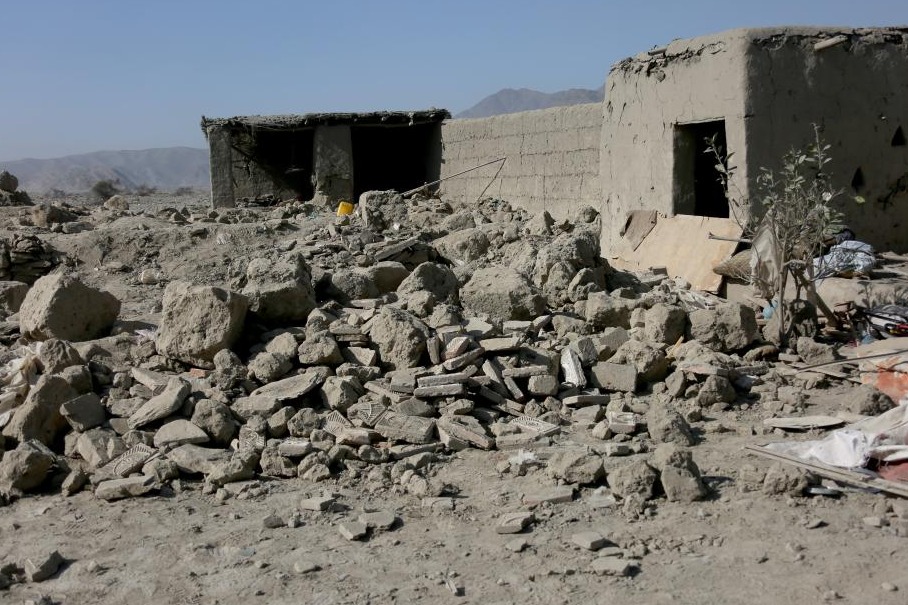
    A significant seismic event measuring 6.0 on the Richter scale struck northwestern Pakistan on Monday, January 19, 2026, resulting in casualties and substantial damage to infrastructure. According to official reports from regional authorities and the European Mediterranean Seismological Center (EMSC), the earthquake’s epicenter was located at a depth of 35 kilometers (approximately 21.75 miles).

    The tremor triggered substantial geological disturbances in the mountainous terrain of Gilgit-Baltistan province, where multiple mud-brick residences either collapsed or sustained severe structural damage. Regional Information Minister Ghulam Abbas confirmed that falling mountain rocks struck several access roads and a major highway, significantly impeding transportation networks.

    Tragically, one fatality was confirmed when a man was struck by falling debris on a roadway. Minister Abbas indicated that government agencies had mobilized heavy machinery to clear blocked transportation routes and assess the full extent of the damage. The remote, mountainous geography of the affected region presents particular challenges for emergency response and recovery operations.

    The seismic activity occurred in a region historically susceptible to earthquakes due to its proximity to the convergence of the Eurasian and Indian tectonic plates. The timing of the event—during winter months—raises additional concerns about displaced residents and the potential for secondary hazards, including landslides and aftershocks.

  • Japan, US narrow first $550 bln investment picks, including SoftBank-linked plan, sources say

    Japan, US narrow first $550 bln investment picks, including SoftBank-linked plan, sources say

    Japan and the United States have accelerated bilateral negotiations to identify inaugural projects under a monumental $550 billion investment initiative, with a major SoftBank Group infrastructure venture emerging as a leading candidate, according to sources familiar with the discussions.

    The investment framework, originally conceived as part of broader trade negotiations between Tokyo and Washington, represents a strategic economic partnership designed to strengthen supply chain resilience and mutual economic interests. Four individuals with direct knowledge of the proceedings confirmed that governmental committees have intensified deliberations to finalize project selections ahead of Japanese Prime Minister Sanae Takaichi’s anticipated spring visit to the United States.

    Among the shortlisted ventures is a substantial data center development project connected to SoftBank Group, though the technology conglomerate has not publicly commented on its potential involvement. The investment package will incorporate multifaceted financial instruments including direct equity positions, loan facilities, and guarantee mechanisms administered through Japan’s state-owned financial institutions.

    The Japan Bank for International Cooperation (JBIC) and Nippon Export and Investment Insurance (NEXI) will serve as primary vehicles for deploying capital, with preliminary discussions already underway with major Japanese financial institutions regarding co-financing arrangements. Since December, bilateral consultation committees featuring representatives from multiple U.S. departments (Commerce and Energy) and Japanese ministries (Foreign Affairs, Finance, and Industry) have conducted four substantive meetings to evaluate potential investments.

    The final selection process will involve recommendations from a U.S.-led investment committee headed by the Commerce Secretary to President Donald Trump, who retains ultimate authority over project approvals. Japanese officials have emphasized their commitment to advancing the initiative irrespective of pending Supreme Court rulings regarding the legality of presidential tariff authorities, characterizing the investment partnership as a mutually beneficial strategy for strengthening critical supply chains beyond temporary trade disputes.

  • China launches long march 12 rocket, deploys satellites for expanding space network

    China launches long march 12 rocket, deploys satellites for expanding space network

    China has advanced its ambitious space-based internet network with the successful deployment of a new satellite cluster via the Long March 12 carrier rocket. The launch occurred at 3:48 PM local time on Monday from the Hainan International Commercial Aerospace Launch Center in Wenchang, marking a significant milestone in China’s commercial space capabilities.

    Beijing-based GalaxySpace, the satellite manufacturer, confirmed the successful orbital insertion of what constitutes the 19th batch of low-orbit hardware for China’s national space internet initiative. The newly deployed satellites feature sophisticated technology including advanced phased array systems, millimeter-wave antennas, and integrated electronics, enhancing the network’s communication capabilities.

    This launch expands China’s operational satellite constellation to over 150 units in low Earth orbit. The complete system, designed to provide global internet coverage, is projected to eventually comprise approximately 13,000 satellites, positioning it as a direct competitor to SpaceX’s Starlink network.

    The mission also showcased the technical prowess of the Long March 12, developed by the Shanghai Academy of Spaceflight Technology. Notably, the rocket features a 3.8-meter diameter—breaking from China’s standard 3.35-meter rocket design established in the 1960s. Standing at 62.6 meters, it ranks as the second tallest rocket in China’s fleet, surpassed only by the Long March 5 at 62.8 meters.

    This achievement represents China’s seventh space mission of 2026 and the 628th overall flight of the Long March rocket series, demonstrating the country’s accelerating pace in space infrastructure development.

  • Freed but not free: Ex-Palestinian prisoners face Israeli harassment and raids

    Freed but not free: Ex-Palestinian prisoners face Israeli harassment and raids

    A pattern of systematic intimidation and surveillance is targeting Palestinians released under prisoner exchange agreements with Israel, according to multiple testimonies and reports. The phenomenon has transformed supposed freedom into a state of perpetual anxiety for many former detainees.

    Salama Qatawi’s experience exemplifies this reality. Shortly before his wedding ceremony in Birzeit, Israeli forces conducted a raid on his home, resulting in his temporary re-arrest. This incident occurred merely hours before his scheduled marriage, with military checkpoints subsequently established outside the wedding venue to delay arriving guests. Since his February release, Qatawi has endured over fifteen home invasions and repeated interrogation summonses.

    This treatment is not isolated. Nearly 4,000 Palestinians gained freedom through phased prisoner exchanges between November 2023 and October 2025, yet many face ongoing restrictions. The Palestinian Prisoners Club documents that 80 released individuals have been re-arrested, while numerous homes—including those of deportees abroad—have been raided and vandalized as intimidation tactics.

    Released prisoners receive explicit warnings against political engagement, public gatherings, and media interactions. Raghad al-Fani, 26, experienced this directly when detained on January 1 under a six-month administrative detention order—renewable indefinitely—despite having been freed in November 2023. Her mother revealed that Fani had confined herself to her hometown of Tulkarm, avoiding travel between cities due to re-arrest fears.

    Iyad Jaradat’s case further illustrates the psychological impact. After twenty-two years of imprisonment, including extended solitary confinement, Jaradat described feeling like “a stranger” in his community. He sleeps in outdoor clothing anticipating nighttime raids and has been prohibited from practicing his trained barbering profession. “I haven’t yet tasted the freedom I imagined; every step I take is scrutinized,” Jaradat told Middle East Eye.

    Amani Sarahneh, media spokesperson for the Palestinian Prisoners Club, identifies this as a deliberate strategy targeting individuals with symbolic, social, or media influence. The objective appears to be spoiling their joy and reinforcing that “the occupation’s hand is long,” even after release. This approach continues a policy shift initiated in 2014 when many prisoners released in the Gilad Shalit exchange were re-arrested with reinstated sentences.

    Palestinian negotiators previously sought guarantees against re-arrest, but recent talks focused on ending hostilities and facilitating aid to Gaza made such assurances impossible. For many like Jaradat, this absence of protection has led to questioning whether deportation might have been preferable to their current open-ended form of imprisonment.