标签: Asia

亚洲

  • Iran to consider lifting internet ban; state TV hacked as arrests continue

    Iran to consider lifting internet ban; state TV hacked as arrests continue

    Iranian authorities are contemplating the reinstatement of internet services following a widespread blackout imposed during recent anti-government protests, according to a senior parliamentary official on Monday. The communications shutdown coincided with what has been described as the most severe domestic upheaval since the 1979 Islamic Revolution.

    In a striking demonstration of vulnerability, Iran’s state television network experienced a significant security breach Sunday evening. The broadcast was temporarily hijacked, displaying speeches by U.S. President Donald Trump and Reza Pahlavi, the exiled son of Iran’s last monarch, both urging public rebellion against the current regime.

    The streets have remained predominantly calm over the past week, according to both official sources and social media indicators, following three days of intensive government crackdowns on demonstrations that initially emerged in late December. An anonymous Iranian official disclosed to Reuters that the confirmed death toll exceeds 5,000 individuals, including 500 security personnel, with particularly severe violence reported in northwestern Kurdish regions. These figures substantially surpass casualty counts from previous government suppressions of dissent in 2022 and 2009.

    Independent human rights organizations based outside Iran have corroborated the scale of casualties, with the U.S.-based HRANA documenting numerous injuries resulting from pellet gun attacks to facial and thoracic regions, causing blindness, internal hemorrhaging, and organ damage among protesters.

    Authorities continue to conduct arrests across multiple provinces, including Tehran, Kerman, and Semnan, targeting individuals allegedly connected to Israeli terrorist operations according to state media. The government maintains that armed agitators, instigated by foreign adversaries, assaulted medical facilities and religious sites, while opposition groups accuse security forces of firing upon peaceful demonstrators.

    Internet monitoring collective Netblocks reported that national connectivity remains severely limited, though authorities appear to be testing a restricted ‘filternet’ system that permits controlled messaging. Ebrahim Azizi, head of parliament’s National Security Committee, indicated that security agencies would determine internet restoration timing based on appropriate conditions.

    The television intrusion featured several minutes of programming under the banner ‘the real news of the Iranian national revolution,’ including Pahlavi’s calls for clerical overthrow. While Pahlavi has emerged as a notable opposition figure claiming plans to return, his actual support within Iran remains challenging to verify independently.

    Regional tensions escalated following President Trump’s repeated military intervention threats during the crisis, prompting intensive diplomatic efforts by Gulf Arab states to prevent broader conflict. Iranian Ambassador to Saudi Arabia Alireza Enayati cautioned that regional consequences would follow any ignited conflict.

  • Fragrance World reaches historic milestone in 150+ countries

    Fragrance World reaches historic milestone in 150+ countries

    DUBAI – Fragrance World, the international scent conglomerate, has achieved an extraordinary global footprint by establishing distribution networks across more than 150 countries worldwide. The landmark achievement was commemorated with a spectacular celebration at Expo City Dubai, attended by thousands of international partners and dignitaries.

    The company’s remarkable journey traces back to 1988 when visionary entrepreneur Poland Moosa founded Al Ghuroob in Dubai, laying the groundwork for what would become a fragrance industry powerhouse. The official establishment of Fragrance World in 2004 marked the beginning of an unprecedented expansion story that has transformed the Middle Eastern enterprise into a global phenomenon.

    Headquartered in Dubai, the corporation operates a cutting-edge manufacturing facility employing thousands of workers who produce hundreds of thousands of fragrance units daily. Their diverse portfolio includes successful brands like French Avenue (launched 2012) and the recently introduced Street Origins collection, catering to varied international market preferences.

    The celebratory event featured an awe-inspiring drone display that illuminated the Dubai skyline with a commemorative logo digitally authenticated by Founder Moosa. Distinguished attendees included CEO P V Salam, Joint CEO P V Safeer, Labeeb, and legendary film personality Mammootty, alongside global distributors and business leaders.

    Key highlights included the premiere of ‘Kunjon,’ an ambitious docu-fiction film directed by Jeevan Jose that chronicles the brand’s entrepreneurial odyssey across multiple countries with a cast exceeding 200 performers. The celebration also showcased the unveiling of ‘Fragrance of Legacy,’ a biographical work by Sebin Poulose documenting the brand’s evolution and its founder’s visionary leadership.

    The corporation honored its pioneering international partners who facilitated early global expansion, recognizing contributors from Poland, Bulgaria, Russia, and Azerbaijan. A symbolic parade involving over 1,000 factory employees demonstrated the organization’s operational strength and collective unity. The company further demonstrated its commitment to workforce appreciation by distributing gifts exceeding Dh3 million to staff members and recognizing employees with 10-30 years of service.

    This milestone positions Fragrance World among the most extensively distributed fragrance manufacturers globally, representing a significant case study in Middle Eastern brand globalization and entrepreneurial success.

  • Arab League delegation visits China-Arab Research Center on Reform and Development for 10th anniversary

    Arab League delegation visits China-Arab Research Center on Reform and Development for 10th anniversary

    A high-level Arab League delegation commemorated the 10th anniversary of the China-Arab Research Center on Reform and Development during a landmark visit to its Shanghai headquarters on January 15th. The delegation comprised permanent representatives from Arab nations to the League of Arab States alongside senior officials from the organization’s general secretariat.

    Established in 2017 and administered by Shanghai International Studies University (SISU), the center has emerged as a pivotal institution in Sino-Arab relations. During the anniversary proceedings, Yin Dongmei, SISU Party Secretary and Center Chairperson, emphasized the university’s deep-rooted expertise in Arabic language education and regional studies, highlighting its sustained commitment to advancing China-Arab cooperation through multiple channels.

    ‘Over the past decade, SISU has maintained robust exchange mechanisms with the Arab League, yielding significant achievements in professional training, talent development, think tank research, and cultural diplomacy,’ Yin stated. She expressed optimism that the current visit would catalyze more substantive collaboration, thereby reinforcing the stability and long-term progression of China-Arab relations.

    Leading the delegation, Kahtan Taha Khalaf, Ambassador of Iraq to Egypt and Permanent Representative to the Arab League, acknowledged the center’s critical function as a platform for bilateral exchange. ‘This institution provides indispensable support for deepening mutual understanding between our nations,’ Khalaf remarked, noting that Arab countries attach great importance to their relationship with China. He referenced the upcoming second China-Arab Summit in China as evidence of the relationship’s solid foundation and positive trajectory, pledging Arab support for the center’s continued development.

    Vice-President of SISU and Center Director Yi Yonggang outlined ambitious plans for 2026, including the completion of a dedicated facility that will serve as a permanent venue for governance experience sharing. The new building will feature a thematic exhibition hall documenting the history and accomplishments of China-Arab interactions, creating an important window for cultural exchange and public diplomacy.

    Additionally, SISU is accelerating the development of specialized Arab studies programs and constructing a comprehensive research model that integrates talent, academic, and technological resources. These initiatives aim to establish a high-level think tank and digital platform supporting the qualitative advancement of China-Arab relations. Arab representatives unanimously stressed the priority they place on relations with China and expressed eagerness to deepen practical cooperation in academic research, policy dialogue, and capacity building.

  • Shanghai Jiao Tong University launches Center for Studies of Global South Sustainable Development

    Shanghai Jiao Tong University launches Center for Studies of Global South Sustainable Development

    Shanghai Jiao Tong University has inaugurated a pioneering research institution dedicated to sustainable development challenges facing Global South nations. The Center for Studies of Global South Sustainable Development, launched on January 16, represents a significant academic commitment to addressing pressing global issues through interdisciplinary collaboration.

    The newly established center will concentrate on six transformative technological domains: future manufacturing, information systems, advanced materials, sustainable energy, space exploration, and health innovations. These research priorities align with the university’s existing strategic focus on marine science, health technologies, information systems, materials engineering, and energy solutions.

    Director Peng Qinglong outlined the center’s ambitious mission to conduct groundbreaking interdisciplinary research that produces both theoretical advancements and practical applications. “Our objective is to generate outcomes that are intellectually pioneering, technologically supportive, socially beneficial, and internationally influential,” Peng stated during the inauguration ceremony.

    The institution will prioritize critical global challenges including climate change mitigation, public health initiatives, and international technological cooperation. Deputy Director Cheng Lingzhi emphasized the center’s additional focus on comprehensive assessments and policy evaluations across next-generation information technology, renewable energy systems, aerospace applications, agricultural innovation, biomedical research, and advanced manufacturing.

    Beyond research, the center will serve as an international talent incubator, fostering collaborative networks and project mechanisms specifically designed for Global South development. Experts associated with the facility indicate that its research will examine sustainable modernization pathways, with particular attention to China’s development experience, while contributing to the establishment of a more equitable multipolar international order.

  • Number of UK Jews moving to Israel rising significantly, says minister

    Number of UK Jews moving to Israel rising significantly, says minister

    Israel’s Minister of Aliyah and Integration, Ofir Sofer, has revealed a dramatic increase in British Jewish migration to Israel, with numbers tripling from 300 to 900 annually over the past three years. Speaking on Kol BaRama radio, Minister Sofer emphasized that Israel now “ranks first” as the destination of choice for British Jews seeking relocation.

    The phenomenon of aliyah—a foundational Zionist concept where Jews worldwide are encouraged to settle in Israel with state support—has shown particularly strong growth from Western nations. Official data from Israel’s Integration Ministry and the Jewish Agency indicates 840 UK Jews migrated in the most recent reporting period, representing a 19% increase year-over-year.

    This trend extends beyond Britain, with France experiencing a 45% surge in Jewish emigration to Israel (3,300 individuals) and the United States showing a 12% increase (4,150 individuals). Russia contributed the highest absolute numbers at 8,300 migrants, though this reflected a significant 57% decrease from previous levels, likely influenced by the ongoing conflict in Ukraine.

    Minister Sofer’s ministry directly attributes this migration pattern to rising antisemitism in Western nations, particularly since the October 2023 Hamas attacks. Financial incentives also play a role, with olim (new immigrants) receiving substantial tax benefits including decade-long exemptions on foreign income and temporary exemptions on Israeli earnings below approximately £250,000 annually.

    However, this narrative of mass emigration is contested by research organizations. The Institute for Jewish Policy Research (JPR) notes that fewer than 0.2% of British Jews actually make aliyah annually, with director Jonathan Boyd observing that for every two British Jews moving to Israel, three Israelis are migrating to the UK.

    Paradoxically, while Israel promotes immigration, it faces its own emigration challenges. Knesset reports indicate record net emigration from Israel between 2020-2024, with 145,900 more Israelis leaving long-term than returning. The years 2023 and 2024 saw particularly sharp increases in departures, partially linked to the Gaza conflict that began in October 2023.

  • Ras Al Khaimah welcomes 1.3 million international visitors in 2025

    Ras Al Khaimah welcomes 1.3 million international visitors in 2025

    Ras Al Khaimah has emerged as a formidable tourism destination, achieving unprecedented growth with 1.3 million international visitors in 2025, marking a 6% increase from the previous year. The emirate’s Tourism Development Authority reported a substantial 12% surge in tourism revenues, underscoring its successful strategic initiatives.

    Phillipa Harrison, CEO of Ras Al Khaimah Tourism Development Authority, characterized 2025 as a landmark year, emphasizing the emirate’s evolution beyond numerical growth to encompass expanded offerings, signature events, new hotel developments, and strengthened global partnerships. The authority remains committed to developing sustainable tourism that delivers long-term value for visitors, investors, and the local community through 2030.

    Market diversification played a crucial role in this success, with exceptional performance across key source regions including the CIS nations, United Kingdom, India, China, and Central and Eastern Europe. Specific countries demonstrated remarkable growth: Romania (+41%), Poland (+22%), Uzbekistan (+19%), Belarus (+26%), India (+14%), China (+19%), UK (+10%), and Russia (+20%).

    High-value tourism segments experienced particularly strong performance, with MICE (meetings, incentives, conferences, and exhibitions) and wedding tourism recording a 25% revenue increase. This reflects Ras Al Khaimah’s growing appeal as a premium destination for business events and luxury celebrations.

    The emirate’s hospitality landscape continued to expand with strategic openings including Rove Al Marjan Island and SO/ Ras Al Khaimah, introducing new beachfront lifestyle experiences. International luxury brands such as Janu, Four Seasons, Fairmont, Taj, and NH Collection announced new projects, supporting the emirate’s ambitious goal to double hotel capacity by 2030.

    A significant milestone was achieved at Wynn Al Marjan Island, the UAE’s first integrated resort, which topped out its 283-meter, 70-story tower. The $5.1 billion destination resort, scheduled to open in 2027, will feature 1,530 rooms and suites, 22 dining venues, a theater, luxury retail spaces, and a marina. This development is projected to generate over 9,000 jobs and catalyze a new wave of international tourism.

    Major master-planned projects advanced substantially throughout 2025. Marjan Beach, an 85 million square foot development, will incorporate 12,000 hotel keys, 22,000 residential units, and extensive sustainable green spaces. RAK Central, a new mixed-use commercial district, achieved full commercial plot sales within a year, demonstrating strong investor confidence in the emirate’s economic vision.

  • Ex-CNNC general manager faces disciplinary probe

    Ex-CNNC general manager faces disciplinary probe

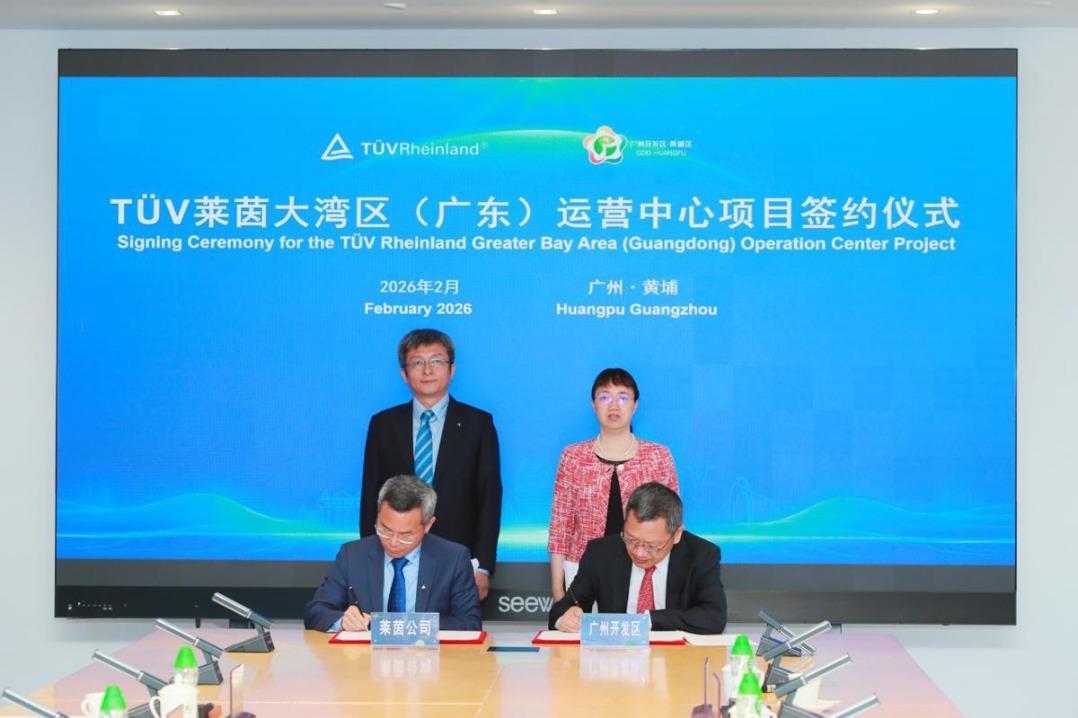
    China’s top anti-corruption authorities have launched a disciplinary probe against Gu Jun, former senior executive of the state-owned China National Nuclear Corporation (CNNC). The Central Commission for Discipline Inspection (CCDI) and National Supervisory Commission disclosed on Monday that Gu is suspected of serious breaches of Party discipline and national laws, currently undergoing comprehensive review and investigation.

    Gu Jun, 62, from Jiangsu province, concluded his extensive career in China’s nuclear power sector with his retirement in 2024 after serving as CNNC’s general manager since 2018. His professional journey began in 1983, with Party membership commencing in 1989. His career trajectory included significant leadership roles at Sanmen Nuclear Power Company and the former State Nuclear Power Technology Corporation, which underwent restructuring and merger into State Power Investment Corporation in 2015.

    Prior to his CNNC appointment, Gu held the general manager position at China Nuclear Engineering and Construction Corporation starting April 2015. His case represents the latest in China’s ongoing anti-corruption campaign within state-owned enterprises and strategic industries, particularly those involving critical national infrastructure and advanced technological development.

  • Look: UAE President touches down in India, welcomed by PM Narendra Modi during visit

    Look: UAE President touches down in India, welcomed by PM Narendra Modi during visit

    In a significant diplomatic engagement, UAE President Sheikh Mohamed bin Zayed Al Nahyan arrived in New Delhi on January 19, 2026, marking a pivotal moment in bilateral relations between the two nations. The distinguished leader was received with full state honors by Indian Prime Minister Narendra Modi at Palam Air Force Station, where ceremonial guards flanked the red carpet in a display of mutual respect and diplomatic protocol.

    The high-level delegation accompanying the UAE President includes prominent figures such as Dubai’s Crown Prince Sheikh Hamdan bin Mohammed bin Rashid Al Maktoum, alongside key government ministers and senior officials. This composition underscores the strategic importance both nations place on this diplomatic exchange.

    Prime Minister Modi characterized the visit as emblematic of the robust friendship and growing strategic partnership between India and the UAE. The leaders are scheduled to engage in comprehensive discussions covering bilateral cooperation, economic partnerships, and regional security matters. This meeting follows previous successful summits that have substantially strengthened economic and security ties between the two nations.

    The timing of this state visit holds particular significance as both countries continue to expand their collaboration in energy security, digital infrastructure, and technological innovation. Recent years have witnessed substantial Emirati investment in Indian infrastructure projects, while India remains a crucial partner for the UAE’s food security initiatives and technological development.

  • ‘A Knight of the Seven Kingdoms’ Review: A smaller, smarter return to Westeros

    ‘A Knight of the Seven Kingdoms’ Review: A smaller, smarter return to Westeros

    The fantasy landscape of Westeros returns with a refreshingly intimate approach in HBO’s latest spinoff ‘A Knight of the Seven Kingdoms,’ now streaming weekly on OSN+ in the UAE. Departing from the epic scale of its predecessors, this series adapts George R.R. Martin’s novella ‘The Hedge Knight’ with a deliberate focus on character development and grounded storytelling.

    Set approximately a century before the events of ‘Game of Thrones,’ the narrative follows Ser Duncan the Tall (Peter Claffey), a knight-for-hire determined to prove his worth through tournaments and small missions, accompanied by his young squire Egg (Dexter Sol Ansell). Unlike the dragon-filled skies and throne-room conspiracies of previous iterations, this installment explores Westeros at human scale, where honor and personal identity carry equal weight to political power.

    The series demonstrates structural intelligence through its concise format—six episodes of approximately thirty minutes each—creating tightly paced storytelling that avoids narrative bloat. While the weekly release schedule may challenge binge-conditioned audiences, the deliberate pacing allows for meaningful character development without unnecessary padding.

    Performance excellence elevates the production, with eleven-year-old Dexter Sol Ansell delivering a remarkably nuanced portrayal of Egg that consistently captivates. Peter Claffey physically embodies the towering knight while bringing emotional depth to a character who frequently misreads social situations, generating authentic humor through awkward interactions and class disparities.

    The production maintains visual sophistication despite its smaller scope, with cinematography reaching particular brilliance in episode five—a sequence that also reaffirms the series’ commitment to maintaining Westeros’ signature edge despite its lighter tone. Familiar house names like Targaryen and Baratheon emerge organically, satisfying franchise enthusiasts while remaining accessible to newcomers.

    This character-driven approach proves Westeros needs neither ice zombies nor dragons to maintain compelling storytelling, offering a refreshing alternative to the increasingly complex mythology of ‘House of the Dragon.’ With season two already greenlit, the series establishes a promising new direction for Martin’s fantasy universe.

  • Pakistan: Magnitude 6 quake kills one person, brings down houses

    Pakistan: Magnitude 6 quake kills one person, brings down houses

    A significant seismic event measuring 6.0 on the Richter scale struck northwestern Pakistan on Monday, January 19, 2026, resulting in casualties and substantial damage to infrastructure. According to official reports from regional authorities and the European Mediterranean Seismological Center (EMSC), the earthquake’s epicenter was located at a depth of 35 kilometers (approximately 21.75 miles).

    The tremor triggered substantial geological disturbances in the mountainous terrain of Gilgit-Baltistan province, where multiple mud-brick residences either collapsed or sustained severe structural damage. Regional Information Minister Ghulam Abbas confirmed that falling mountain rocks struck several access roads and a major highway, significantly impeding transportation networks.

    Tragically, one fatality was confirmed when a man was struck by falling debris on a roadway. Minister Abbas indicated that government agencies had mobilized heavy machinery to clear blocked transportation routes and assess the full extent of the damage. The remote, mountainous geography of the affected region presents particular challenges for emergency response and recovery operations.

    The seismic activity occurred in a region historically susceptible to earthquakes due to its proximity to the convergence of the Eurasian and Indian tectonic plates. The timing of the event—during winter months—raises additional concerns about displaced residents and the potential for secondary hazards, including landslides and aftershocks.