标签: Asia

亚洲

  • Foreigners check-in to China for hospital expertise

    Foreigners check-in to China for hospital expertise

    China is experiencing a remarkable transformation in global healthcare perceptions as international patients increasingly choose the country for advanced medical treatment, creating what netizens term ‘reverse medical tourism.’ This trend represents a dramatic shift from just a decade ago when Chinese patients sought care abroad.

    The phenomenon is exemplified by high-profile cases such as Oscar Chalupsky, the former captain of South Africa’s Olympic kayaking team and 12-time world champion. After being diagnosed with high-risk multiple myeloma—a severe bone marrow cancer—six years ago, Chalupsky received discouraging prognoses from medical professionals in South Africa, Portugal, and Germany who deemed his condition ‘difficult to treat or even hopeless.’

    Utilizing artificial intelligence tools including ChatGPT and DeepSeek, Chalupsky identified Shanghai’s Ruijin Hospital as possessing ‘the world’s best hematology department.’ The 62-year-old athlete expressed strong confidence in Chinese healthcare, stating he traveled to Shanghai with high expectations rather than merely to ‘have a try.’

    Following online consultations in November, Ruijin Hospital’s international medical department and hematology team accepted Chalupsky for comprehensive pre-treatment evaluation. His December assessment included whole-body PET-MR imaging, bone marrow biopsy, and T-cell function tests, culminating in a personalized treatment plan centered on CAR-T cell therapy.

    This innovative cancer treatment involves extracting T-cells from the patient’s blood, genetically reprogramming them to target cancer cells, and reinfusing them into the body. Chalupsky’s case illustrates China’s growing expertise in specialized medical areas including proton therapy, targeted pharmaceuticals, and cellular immunotherapies.

    Medical experts attribute this reverse medical tourism trend to China’s unique combination of technological sophistication, clinical experience, treatment efficacy, and cost efficiency. Professor Wang Jian’an, academician of the Chinese Academy of Sciences and medical sector political adviser, notes that China has successfully balanced the global healthcare ‘impossible triangle’ of high quality, affordability, and minimal wait times.

    The pattern extends beyond individual cases to include families like the Vietnamese couple who presented a gratitude banner to Shanghai’s Children’s Hospital of Fudan University in September 2024 after their child received successful treatment for Type 1 spinal muscular atrophy. These developments signal China’s ascending position in the global healthcare landscape, attracting international patients seeking solutions for complex medical conditions that prove challenging elsewhere.

  • Forum underlines cross-Strait exchanges

    Forum underlines cross-Strait exchanges

    In a significant diplomatic development, the Communist Party of China (CPC) and the Chinese Kuomintang (KMT) successfully reconvened a major think tank forum in Beijing on February 3, 2026, marking the revival of interparty exchanges after a nearly ten-year hiatus. The high-level gathering brought together approximately 100 participants, including policymakers, industry representatives, and academic experts from both sides of the Taiwan Strait.

    Song Tao, Director of the CPC Central Committee’s Taiwan Work Office, inaugurated the forum by emphasizing the historical responsibility both parties bear in fostering peaceful cross-Strait relations. “Our shared commitment to upholding the 1992 Consensus and opposing Taiwan independence forms the essential political foundation for constructive dialogue,” Song stated, referencing the October message exchange between CPC General Secretary Xi Jinping and KMT Chairwoman Cheng Li-wun.

    The forum organized its deliberations around three comprehensive panels examining tourism revitalization, industrial innovation, and environmental sustainability. These discussions yielded 15 concrete proposals across five critical cooperation areas: normalization of personnel exchanges, emerging industry collaboration, healthcare innovation, environmental protection, and disaster mitigation strategies.

    KMT Vice Chairman Hsiao Hsu-tsen echoed the necessity of prioritizing civilian welfare through practical cooperation. “The vibrant people-to-people exchanges we witness today genuinely reflect Taiwanese public sentiment,” Hsiao noted, advocating for setting aside differences while seeking common ground.

    Industry representatives presented specific cooperation opportunities during the proceedings. Lai Seh-jen of the Taiwan Tourism Interchange Association urged lifting restrictions on group travel to mainland China, while business leader Chen Yung-feng highlighted synergistic potential in artificial intelligence and smart manufacturing. The joint proposals specifically called for removing barriers imposed by Taiwan’s Democratic Progressive Party authorities and restoring full direct transportation links across the Strait.

  • HRW Israel-Palestine director resigns, accuses watchdog of ‘cooking the books’

    HRW Israel-Palestine director resigns, accuses watchdog of ‘cooking the books’

    A significant internal rupture has emerged at Human Rights Watch (HRW) following the resignation of its former Israel-Palestine director, Omar Shakir. In a damning resignation letter, Shakir accused the organization’s senior leadership, specifically new Executive Director Philippe Bolopion, of deliberately suppressing a fully-vetted report that concluded Israel is committing crimes against humanity by denying Palestinians their right of return.

    The report, titled “‘Our Souls Are in the Homes We Left’: Israel’s Denial of Palestinians’ Right to Return and Crimes Against Humanity,” was allegedly blocked from publication in late November despite having completed the standard review process. Shakir revealed that the report was so near to release that donors had been briefed, it was coded into HRW’s website, and an embargoed press link was prepared.

    Shakir stated that Bolopion justified halting publication over concerns that detractors would misinterpret it as HRW endorsing a call to ‘demographically extinguish the Jewishness of the Israeli state.’ Shakir condemned this reasoning as ‘cooking the books’ and allowing ‘pragmatism’ to dictate legal findings—a approach he characterized as more typical of politics than principled human rights advocacy. He cited this decision as a fundamental compromise of HRW’s commitment to fact-based reporting and consistent application of international law, which ultimately led to his resignation.

    The right of return is a principle codified in the 1948 Universal Declaration of Human Rights, which HRW itself has upheld in other contexts, such as a 2023 report on the Chagos Islands. The historical context traces back to the 1948 Nakba, where Palestinians were expelled following Israel’s establishment, and further displacements occurred after the 1967 war.

    Shakir also acknowledged the intense scrutiny he faced in his role, particularly following the October 7th attacks and the subsequent war in Gaza, which has resulted in over 71,800 Palestinian deaths and has been deemed a genocide by numerous UN experts and institutions. He contrasted the suppression of the right-of-return report with the publication of HRW’s 2024 report on the October 7th attacks, which drew backlash from Palestinians but was published because it was ‘the principled thing to do.’

    HRW did not respond to requests for comment on these allegations by the time of publication.

  • ‘We have a text’: US says peace plan for Sudan to be revealed this week

    ‘We have a text’: US says peace plan for Sudan to be revealed this week

    The United States has finalized the text of a comprehensive peace proposal aimed at resolving Sudan’s nearly three-year civil war, with senior presidential advisor Massad Boulos announcing the plan has secured approval from the Quad nations coalition. The diplomatic bloc, comprising the US, Saudi Arabia, the UAE, and Egypt, has been developing this framework for at least three months as a mutually acceptable solution for both the Sudanese army and the paramilitary Rapid Support Forces (RSF).

    Boulos revealed the five-pillar structure during a humanitarian fundraising event, outlining components addressing immediate crisis response, civilian protection, ceasefire transition, political processes toward civilian governance, and post-conflict reconstruction funding. While expressing encouragement from engagements with military leader General Abdel Fattah al-Burhan, Boulos declined to identify specific implementation obstacles despite reporter inquiries.

    The diplomatic landscape reveals significant complexities, with Sudan’s ambassador to the US previously rejecting UAE involvement in mediation efforts due to Abu Dhabi’s alleged support for the RSF. This tension surfaced despite the UAE’s announcement of a $500 million aid package at the same event where Washington pledged an additional $200 million toward a projected $1.5 billion total humanitarian commitment.

    The peace process architecture involves multiple international layers, with plans for UN Security Council endorsement followed by review through President Trump’s Board of Peace—a mechanism originally designed for Gaza conflicts. Boulos characterized the two bodies as “complementary” rather than competitive, emphasizing the Board’s enthusiastic engagement capacity.

    Humanitarian urgency underscores these diplomatic efforts, with UN officials reporting over 21 million Sudanese facing acute shortages amid what the US Under Secretary of State termed “the world’s worst humanitarian crisis.” With approximately 10 million internally displaced and four million refugees, the UN targets visible aid progress by Ramadan’s commencement in mid-February.

  • Saif al-Islam, son of late Libyan leader Muammar Gaddafi, has been killed: Sources

    Saif al-Islam, son of late Libyan leader Muammar Gaddafi, has been killed: Sources

    Multiple sources including family associates, legal representatives, and Libyan media outlets have confirmed the death of Saif al-Islam Gaddafi, the most prominent son of former Libyan leader Muammar Gaddafi. The reports emerged on Tuesday, though specific details regarding the circumstances and location of his demise remain unclear at this time.

    Once a central figure in shaping Libya’s political direction prior to the 2011 uprising, Gaddafi’s public visibility had diminished significantly in recent years. His legacy remains deeply controversial, marked by both his political influence during his father’s regime and serious legal challenges that followed.

    In 2015, a Libyan court delivered a death sentence in absentia against Gaddafi for his role in violently suppressing peaceful demonstrations during the revolution that ultimately overthrew his father’s government. Additionally, the International Criminal Court had provisionally charged him with crimes against humanity, with his legal team’s efforts to dismiss the case proving unsuccessful.

    In a brief political resurgence in 2021, Gaddafi registered as a presidential candidate for elections scheduled that December. However, the electoral process collapsed amid ongoing political instability and factional disputes that have continued to plague the North African nation since the revolution.

  • Epstein said Qatar had to ‘sing and dance’ for Israel like Modi, to escape blockade

    Epstein said Qatar had to ‘sing and dance’ for Israel like Modi, to escape blockade

    Newly released U.S. Justice Department documents reveal convicted sex offender Jeffrey Epstein’s attempts to mediate the 2017 Gulf diplomatic crisis through unofficial channels. The emails, made public over the weekend, show Epstein advising Qatari royalty on how to improve relations with the Trump administration by normalizing ties with Israel.

    During the June 2017 blockade of Qatar by Saudi Arabia and the UAE—which received backing from President Trump—Epstein corresponded with Jabor Yousef Jassim Al Thani, a Qatari businessman and royal family member. In a July 9, 2017 email, Epstein suggested Qatar could end its isolation by either recognizing Israel or establishing a $1 billion fund for terrorism victims, with a matching contribution request to other Gulf Cooperation Council members.

    Epstein pointed to India’s approach as a model, writing: ‘The Indian Prime Minister Modi took advice and danced and sang in Israel for the benefit of the US president. They had met a few weeks ago. IT WORKED!’ He advised that Qatar needed to ‘sing and dance’ for Israel rather than ‘kicking and arguing’ to gain Trump’s favor.

    The correspondence reveals Epstein’s significant connections to Middle Eastern intelligence networks and political figures, particularly former Israeli Prime Minister Ehud Barak. Despite his 2019 jail cell death—ruled a suicide—Epstein maintained active diplomatic engagement until the end.

    Epstein correctly assessed that Turkey’s military deployment to Qatar in summer 2017 made a military invasion ‘no longer viable.’ He subsequently positioned himself as a mediator, attempting to arrange meetings between Saudi Crown Prince Mohammed bin Salman (MBS) and former Qatari Prime Minister Hamad bin Jassim bin Jaber Al Thani (HBJ).

    The emails confirm Epstein successfully brokered a December 2018 meeting in London’s exclusive One Hyde Park between Barak and the former Qatari official, facilitated by Jabor Al Thani. Follow-up correspondence indicated discussions about a ‘security company’ and mutual satisfaction with the encounter, offering rare insight into track II diplomacy orchestrated by a controversial figure.

  • Middle East needs long-term solution, UAE says ahead of US-Iran crisis talks

    Middle East needs long-term solution, UAE says ahead of US-Iran crisis talks

    The United Arab Emirates has issued a compelling call for sustained diplomatic engagement between Iran and the United States as the two nations prepare for crucial nuclear negotiations in Turkey this Friday. Dr. Anwar Gargash, diplomatic adviser to the UAE president, emphasized the critical need for lasting solutions during his address at the World Governments Summit in Dubai, stating the Middle East has endured enough catastrophic confrontations without requiring additional conflict.

    The upcoming dialogue marks a significant development in the prolonged nuclear standoff, with both nations dispatching high-level delegations. The American contingent will reportedly include Presidential son-in-law Jared Kushner and Special Envoy Steve Witkoff, while Iranian Foreign Minister Abbas Araghchi will lead Tehran’s representation. Several regional powers, including Pakistan, Saudi Arabia, Qatar, Egypt, Oman, and the UAE, have received invitations to participate in what observers describe as a multilateral effort to prevent military escalation.

    This diplomatic initiative follows heightened tensions triggered by recent U.S. naval movements toward Iranian waters and mutual threats of aerial strikes. President Trump previously cautioned that ‘bad things’ might occur should negotiations fail, while Iranian officials maintain their defensive capabilities remain non-negotiable. Satellite imagery analysis of previously targeted nuclear facilities at Isfahan and Natanz reveals preliminary reconstruction efforts but no evidence of resumed uranium enrichment activities.

    The UAE, maintaining its strategic position as both a key U.S. ally and regional mediator, advocates for a comprehensive geo-strategic agreement that would address nuclear concerns while enabling Iran to rebuild its sanction-damaged economy. Gulf Arab states particularly fear becoming collateral damage should Iran follow through on threats to target U.S. bases within their territories in retaliation for American attacks.

    Internal assessments within Iran’s leadership indicate growing concerns that additional U.S. military action could potentially destabilize their governance by reigniting recent public unrest. Meanwhile, diplomatic channels explore potential compromises, including possible limitations on uranium enrichment and ballistic missile programs, though Tehran continues to reject preconditions that violate its sovereignty claims.

  • US military shoots down Iranian drone in Arabian Sea: Official

    US military shoots down Iranian drone in Arabian Sea: Official

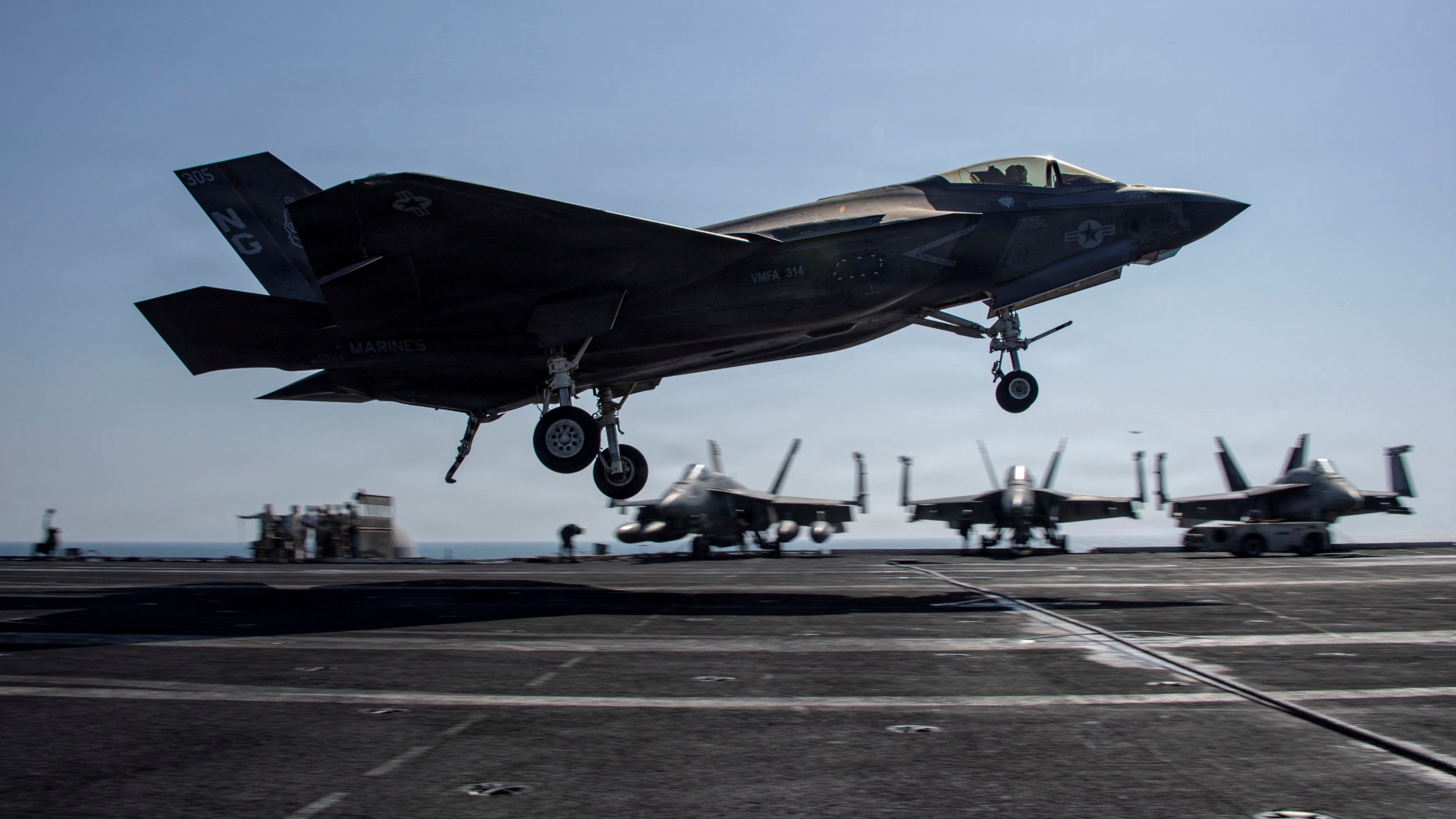
    A U.S. F-35 fighter jet engaged and destroyed an Iranian unmanned aerial vehicle over the Arabian Sea on Tuesday after the drone advanced toward the USS Abraham Lincoln aircraft carrier, according to an official statement from the U.S. military.

    The incident, which occurred on February 3, 2026, involved a Shahed-139 surveillance and attack drone manufactured by Iran. Military authorities confirmed the drone was operating in close proximity to the carrier strike group before being intercepted and neutralized by advanced aerial defenses.

    This confrontation represents the latest escalation in ongoing regional tensions between the United States and Iran. The Arabian Sea, a critical waterway connecting the Persian Gulf with international shipping routes, has frequently served as a stage for such military encounters. The USS Abraham Lincoln’s presence in the region comes as part of ongoing U.S. naval operations aimed at maintaining maritime security and stability.

    The engagement highlights continuing friction between Washington and Tehran, particularly regarding military movements in strategic Middle Eastern waters. Pentagon officials have repeatedly expressed concerns about Iranian surveillance attempts targeting U.S. naval assets, while Iranian authorities have consistently criticized the American military presence in the region.

    This incident follows previous reports of increased U.S. naval deployments to the Middle East, with approximately ten American warships currently operating in regional waters according to recent intelligence assessments. Military analysts suggest such encounters, while potentially dangerous, reflect established protocols for dealing with perceived threats to naval operations in international waters.

  • Iran looking to change nuclear talks venue to Oman, regional diplomat says

    Iran looking to change nuclear talks venue to Oman, regional diplomat says

    Iran is actively pursuing a relocation of its upcoming nuclear negotiations with the United States from Istanbul to Oman, according to a regional diplomat’s disclosure on Tuesday. The talks, initially scheduled for Friday in Turkey, now face potential restructuring in both location and diplomatic focus. Iranian authorities are reportedly advocating for a narrowed agenda that would concentrate exclusively on nuclear matters, while simultaneously seeking to exclude direct participation from other regional nations. This development follows Iranian President Masoud Pezeshkian’s confirmation that he had authorized the initiation of dialogue with Washington. In a social media statement, Pezeshkian emphasized his instruction to the Foreign Minister to pursue “fair and equitable negotiations” within a framework protecting Iran’s national interests, provided such discussions occur in an environment “free from threats and unreasonable expectations.” The diplomatic maneuvering occurs against a backdrop of heightened military posturing, including the recent deployment of a US aircraft carrier group to the Middle East following Iran’s lethal crackdown on anti-government protests. While US President Donald Trump expressed optimism about reaching an agreement, he concurrently issued a stark warning that “bad things would happen” should diplomacy fail. Tehran maintains its commitment to diplomatic solutions while reserving the right to deliver an uncompromising response to any perceived aggression.

  • Two Indian flights suffer wing collision on runway with passengers onboard

    Two Indian flights suffer wing collision on runway with passengers onboard

    A ground collision involving two commercial aircraft occurred at Mumbai’s Chhatrapati Shivaji Maharaj International Airport on Tuesday evening, resulting in significant wingtip damage to both planes. The incident unfolded when an Air India flight AI2732, preparing for departure to Coimbatore, was taxiing from position C1 toward M4 while an IndiGo flight was simultaneously arriving and joining at position B1.

    According to India’s Directorate General of Civil Aviation, the simultaneous movements caused the right wingtips of both aircraft to make physical contact during taxi operations. Both aircraft immediately returned to their respective bays for comprehensive safety inspections following the collision.

    Air India confirmed substantial damage to their aircraft’s wingtip structure and subsequently grounded the plane for detailed technical evaluation. All passengers were safely disembarked without injury, with airline representatives arranging alternative travel arrangements to minimize disruption to their journeys.

    The incident has been formally reported to aviation regulators, marking another significant event in India’s aviation sector that will likely prompt review of ground movement procedures at major airports. This occurrence follows previous aviation incidents in the country, including a recent event where an Air India plane engine sustained damage from cargo container ingestion.