标签: Asia

亚洲

  • Unions and students seek Columbia University board reforms after Trump deal

    Unions and students seek Columbia University board reforms after Trump deal

    A coalition of students and faculty at Columbia University has initiated a comprehensive campaign to fundamentally restructure the institution’s highest governing body, the Board of Trustees. This movement emerges from mounting concerns over what participants describe as systemic governance failures and the disenfranchisement of university stakeholders.

    The campaign, spearheaded by the Columbia chapter of the American Association of University Professors (AAUP), cites multiple catalysts for reform. Primary among these is the administration’s handling of pro-Palestine protests, particularly the decision to involve law enforcement which resulted in hundreds of student arrests, numerous suspensions, and several students facing deportation proceedings. Activists maintain these actions have created a chilling effect on free speech across campus.

    Additional grievances include the university’s settlement with the Trump administration, wherein Columbia agreed to pay $220 million to resolve allegations of violating federal anti-discrimination laws rather than contesting the charges. Professor Michael Thaddeus, AAUP vice-president, characterized this as a ‘deeply misguided decision’ that involved unprecedented concessions to government demands regarding hiring practices, curriculum development, and admissions policies.

    The campaign also highlights the case of Dr. Robert Hadden, a former gynecologist convicted of sexual assault, whose misconduct they allege was systematically concealed by university administration for decades.

    Critics identify structural deficiencies within the current governance model. The 20-member board, composed primarily of finance sector executives with minimal academic representation, operates through a self-perpetuating nomination process without stakeholder input. Professor Jean E Howard notes the board’s concerning lack of transparency, refusing to publish meeting minutes while simultaneously curtailing the powers of the University Senate.

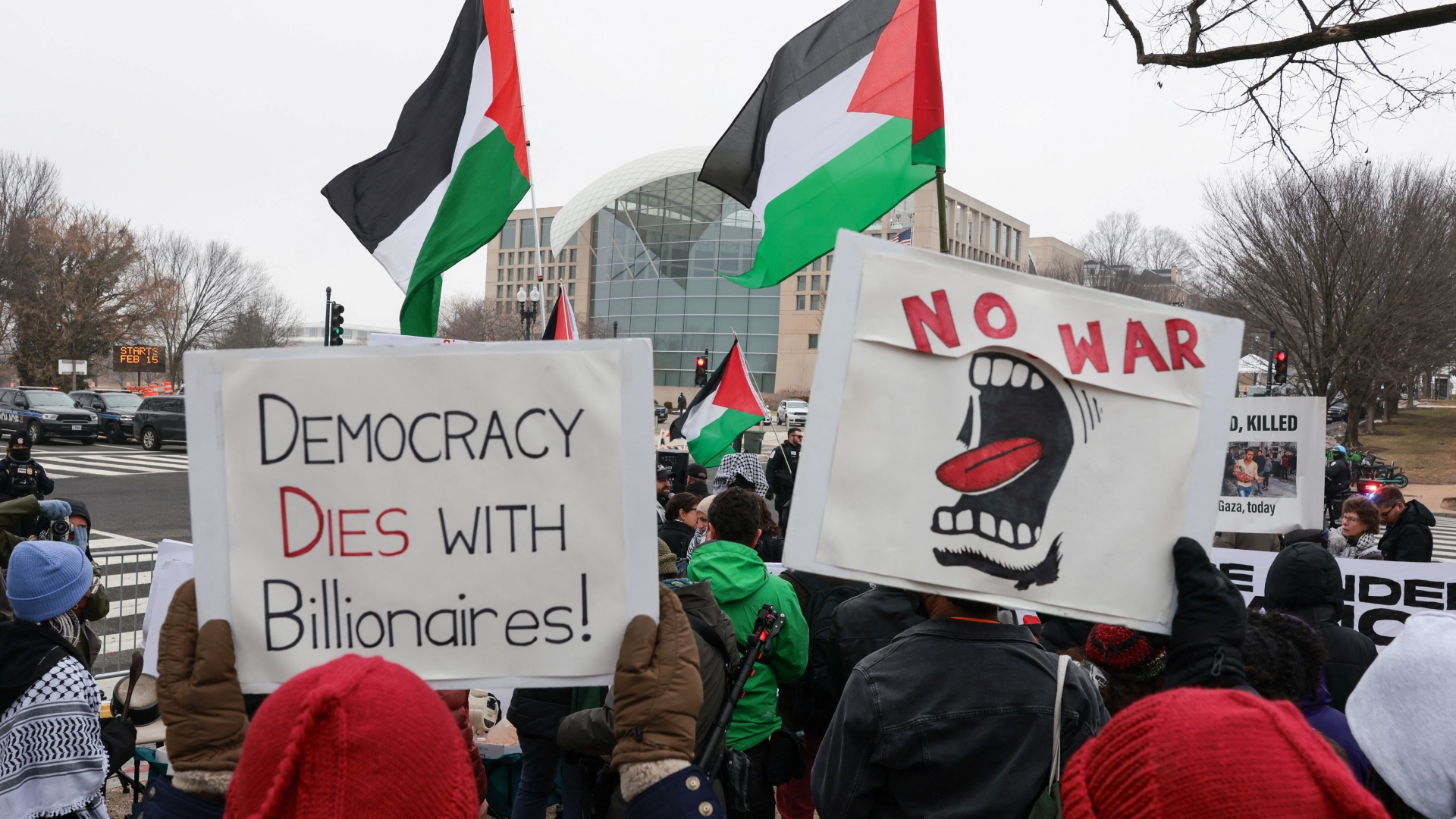
    The proposed reforms envision transforming the board into a democratically elected body that better reflects the Columbia community’s diversity. Advocates argue this structural change would counter what they describe as oligarchic governance serving the interests of the wealthiest one percent rather than the broader university population.

    While organizers acknowledge the long-term nature of this initiative, they emphasize the urgency of establishing more representative governance to restore Columbia’s ethical and intellectual integrity amid what they characterize as the challenges of the Trump era.

  • Exclusive: US envoy accused SDF chief of trying to drag Israel into internal Syria matters, sources say

    Exclusive: US envoy accused SDF chief of trying to drag Israel into internal Syria matters, sources say

    In a tense diplomatic confrontation preceding Sunday’s ceasefire agreement, U.S. Special Envoy for Syria Tom Barrack allegedly confronted Syrian Democratic Forces (SDF) commander Mazloum Abdi over attempts to involve Israel in Syria’s internal affairs, according to anonymous diplomatic sources who spoke with Middle East Eye.

    The closed-door meeting, which occurred in Erbil on Saturday amid Syrian government advances into SDF-controlled territories, also featured veteran Kurdish leader Massoud Barzani. Sources indicate Barrack delivered sharp criticism regarding Abdi’s delayed implementation of a March 2025 integration agreement that envisioned SDF merging with the Syrian army by year’s end.

    Barrack, a consistent advocate for a unified Syrian state, reportedly accused the SDF leadership of “stalling, failing to implement the agreement with the Syrian government, and relying on foreign powers.” The envoy issued a stark warning against involving Israel, stating such actions would “bring destruction” and potentially create friction between two crucial U.S. allies—Turkey and Israel.

    These allegations emerge alongside acknowledgments from senior SDF officials, including Ilham Ahmed, who confirmed communications with Israeli representatives and expressed openness to support from any external party willing to protect Kurdish communities and their political achievements.

    During the meeting, Barrack challenged Abdi’s apparent failure to recognize Syria’s transformed political landscape, noting: “You still want to deal with the situation as if Bashar al-Assad is ruling Syria… There is a fundamental change; Damascus is our partner today in the fight against terrorism.”

    Contrasting this tone, Barzani reportedly described his recent meeting with Syrian President al-Sharaa as positive while requesting assistance for Kurdish civilian protection, presenting documented evidence of threats facing Kurdish communities. The Kurdish leader offered to serve as “new guarantor” for any revised agreement and requested a follow-up meeting between Sharaa and Abdi.

    The diplomatic efforts culminated in Sunday’s ceasefire announcement, with Syria’s military assuming nearly complete territorial control and dismantling the Kurdish-led forces that governed northeast Syria for over a decade. The agreement stipulates SDF withdrawal from Arab-majority Raqqa and Deir Ezzor provinces, including border crossings and energy fields, though specific implementation timelines remain unclear.

    Barrack subsequently praised the agreement on social media, characterizing it as progress toward a “unified Syria” and noting President al-Sharaa’s recognition of Kurds as “an integral part of Syria.”

  • New Zealand election scheduled for Nov. 7 with the costs of living and housing the top issue

    New Zealand election scheduled for Nov. 7 with the costs of living and housing the top issue

    WELLINGTON, New Zealand — Prime Minister Christopher Luxon has officially designated November 7 as the date for New Zealand’s next general election, setting the stage for a contentious battle over economic leadership and policy direction. The center-right leader will pursue a second term amidst persistent voter concerns about living costs and economic recovery.

    The electoral contest presents a remarkable political coincidence, featuring two leaders named Christopher vying for premiership—repeating the 2023 electoral dynamic. Luxon’s National Party government faces formidable opposition from Chris Hipkins’ resurgent Labour Party, with analysts predicting an exceptionally close race.

    New Zealand’s political structure features a unicameral parliamentary system where coalition-building proves essential. Both major parties typically require alliances with smaller political entities to secure governing majorities, granting minor parties disproportionate influence in determining the nation’s leadership.

    Economic performance dominates the electoral discourse, with Luxon emphasizing his administration’s efforts to rebuild the pandemic-affected economy. Recent economic indicators show a 0.5% contraction over the past twelve months, while emigration to Australia has reached record levels during Luxon’s tenure. The Prime Minister attributes these challenges to what he characterizes as economic mismanagement by the previous Labour administration.

    Opposition Leader Hipkins has dismissed Luxon’s economic narrative as ‘management-speak mumbo-jumbo,’ accusing the government of failing to deliver on key promises including housing affordability and healthcare accessibility. The debate extends to infrastructure investment and pension funding, with Luxon criticizing Labour’s debt accumulation approach while Hipkins condemns the government’s tax policies.

    Luxon, a former Air New Zealand CEO and business executive, brings corporate leadership experience but faces criticism regarding his political novice status and perceived disconnection from ordinary citizens. Hipkins, who briefly served as prime minister following Jacinda Ardern’s resignation, emphasizes his humble background and governmental experience despite his party’s 2023 electoral setback.

    The electoral outcome will likely hinge on negotiations with minor parties. Luxon’s current coalition includes the libertarian ACT and populist New Zealand First parties, while Hipkins would likely seek support from the Green Party and Te Pāti Māori. Historical patterns suggest single-term governments are uncommon in New Zealand politics, with the last occurrence dating to 1975.

  • Syria-SDF deal reached as US says partnership with Kurdish-led group ‘expired’

    Syria-SDF deal reached as US says partnership with Kurdish-led group ‘expired’

    In a significant geopolitical realignment, the United States has declared the original purpose of its security partnership with the Syrian Democratic Forces (SDF) largely fulfilled. US Ambassador Tom Barrack announced this strategic shift on Tuesday, coinciding with Damascus’s proclamation of a four-day ceasefire and a comprehensive compromise agreement.

    The breakthrough arrangement mandates that Kurdish fighters integrate into the Syrian national army as individuals rather than as distinct Kurdish-led divisions. This structure addresses the SDF’s longstanding request for maintaining cultural autonomy while unifying Syria’s security apparatus. Concurrently, Damascus will assume control over critical infrastructure including border crossings, oil facilities, ISIS detention centers, and strategically vital dams in water-scarce eastern regions.

    Ambassador Barrack articulated on social media platform X that ‘the original purpose of the SDF as the primary anti-ISIS force has largely expired,’ noting Damascus’s current willingness and capability to assume security responsibilities. His statement aligned temporally with Syria’s announcement granting the SDF 96 hours to formulate an integration plan for Hasakah province.

    The agreement contains significant concessions from both parties. Syrian government forces have committed to abstain from entering Kurdish-majority villages or the cities of Hasakah and Qamishli, which serve as SDF headquarters. This development follows recent military advances by President Ahmed al-Sharaa’s forces, which reclaimed territories including Raqqa and oil-rich Deir Ezzor from SDF control.

    Barrack framed the diplomatic achievement as creating ‘a unique window for the Kurds’ offering full citizenship rights, constitutional protections for Kurdish language and culture, and participatory governance. These provisions, backed by US diplomacy, reportedly exceed the semi-autonomous status the SDF maintained during civil war instability.

    The agreement follows President Sharaa’s January decree recognizing Kurds as ‘a basic and authentic part of the Syrian people’ while restoring citizenship to those deprived since the 1960s. Ambassador Barrack, who manages Syria policy for the Trump administration, has been mediating between the SDF, Damascus, and Ankara—Turkey being Sharaa’s key foreign supporter and traditional adversary of Kurdish forces.

    This policy shift represents Washington’s most coherent Syria strategy to date, emphasizing extrication from long-term military presence, ensuring ISIS’s definitive defeat, and mediating ethnic reconciliation without endorsing separatism. The unitary state approach also reassures Damascus and Turkey about US commitments to Syria’s territorial integrity, countering regional alternatives including Israeli preferences for segmented governance structures.

  • Prince Harry targeted for standing up to UK newspaper, reveals lawyer

    Prince Harry targeted for standing up to UK newspaper, reveals lawyer

    In a landmark legal confrontation at London’s High Court, Prince Harry has become the target of a sustained retaliation campaign for his courageous stance against one of Britain’s most influential media entities. The Duke of Sussex, alongside six prominent figures including music icon Elton John, has initiated legal proceedings against Associated Newspapers Limited, publisher of the Daily Mail, alleging systematic privacy violations spanning over two decades.

    During Tuesday’s proceedings, Harry’s legal representative David Sherborne presented a compelling narrative of orchestrated media attacks against the prince. The court heard how Harry’s personal relationships, particularly those preceding his marriage to Meghan Markle, became subjects of intense and damaging media scrutiny. The alleged privacy breaches encompassed sophisticated methods including voicemail interception, landline bugging, and deceptive information gathering techniques known as ‘blagging’.

    Sherborne emphasized the paradoxical relationship between Harry and the tabloid press, noting that while the prince generated substantial revenue for these publications, he simultaneously endured relentless invasions of privacy. Fourteen specific articles were cited as examples, including intrusive reports about Harry’s potential role as godfather to his former nanny’s child and sensitive details regarding his previous relationship with Chelsy Davy.

    The psychological impact on Harry was described as significant, with the lawyer detailing how the constant surveillance created profound distress and paranoia. ‘Given the evidence presented, is it surprising that His Royal Highness feels subjected to sustained attacks for demonstrating the courage to challenge Associated Newspapers?’ Sherborne questioned the court.

    This legal battle represents the latest chapter in Harry’s personal crusade for media accountability, a mission intensified by the tragic loss of his mother, Princess Diana, in a 1997 paparazzi-related incident. Associated Newspapers has vigorously denied all allegations, maintaining that their journalists operated within legal boundaries and obtained information through legitimate channels including contacts and press officers.

    The trial, expected to extend over nine weeks, will feature testimony from all claimants including Elton John, who alleges the Mail obtained his son’s birth certificate through surrogacy before he and his husband received it. This case marks another historic moment as Harry prepares to potentially testify, having already made history as the first royal in 130 years to appear in court during his 2023 litigation against another media group.

  • Ajman Police announce 3-month closure of street in Al Rashidiya 2 area

    Ajman Police announce 3-month closure of street in Al Rashidiya 2 area

    Ajman Police Department has officially declared a comprehensive three-month closure of Rashid bin Abdulaziz Street, a key thoroughfare located in the Al Rashidiya 2 district. This significant infrastructure initiative commenced on Tuesday, January 20, 2026, and is projected to conclude on April 20, 2026.

    The temporary shutdown forms an integral component of a broader municipal strategy aimed at road expansion and substantial development works designed to enhance urban mobility and transportation efficiency. Law enforcement authorities have proactively issued detailed guidance to motorists and commuters, strongly advising them to utilize designated alternative routes throughout the construction period to ensure minimal disruption to daily transit patterns.

    Through strategic communications across their official social media platforms, Ajman Police have disseminated crucial informational resources including digital mapping illustrations that precisely delineate the affected closure zone while simultaneously highlighting recommended detour paths. This transparent public communication approach reflects the department’s commitment to maintaining seamless traffic flow and ensuring public safety during essential urban development operations.

    The extended duration of this project underscores the scale and importance of the infrastructure enhancements underway, representing Ajman’s continued investment in modernizing its transportation network to accommodate growing urban demands and future development requirements.

  • Locked exits, panic and desperate calls for help: Survivors tell of mall fire horror

    Locked exits, panic and desperate calls for help: Survivors tell of mall fire horror

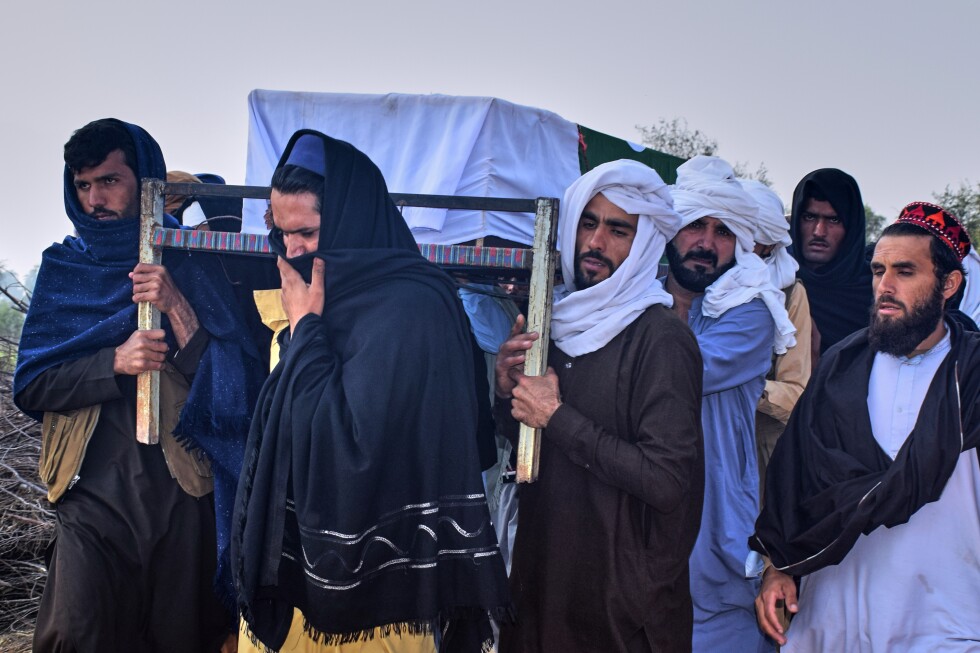
    A catastrophic fire that engulfed Karachi’s bustling Gul Plaza shopping center on Saturday evening has left a trail of devastation, with over 70 individuals still unaccounted for and 27 confirmed fatalities. The densely-packed wholesale market, which housed approximately 1,200 shops across multiple floors, became a death trap when flames rapidly consumed the structure despite its impending closure time.

    Eyewitness accounts reveal a horrifying sequence of events where locked emergency exits and extreme overcrowding created impossible escape conditions. Rehan Faisal, a bedsheet merchant who narrowly escaped, described how the inferno transformed the entire building into an inferno within mere minutes. ‘No-one knew it would spread so much,’ he recounted, noting that everything burned ‘before our eyes’ in under seven minutes.

    Nineteen-year-old shop employee Shoiab provided a harrowing testimony of the chaos: ‘Suddenly everything was covered with smoke – we couldn’t see anything and there was panic everywhere. The first exit I tried was locked and the crowds were too dense.’ His survival came only through the intervention of an unknown rescuer who dragged him to safety after he lost consciousness from smoke inhalation.

    The tragedy has exposed critical failures in emergency preparedness and building safety compliance. Senior police official Syed Asad Raza confirmed that only three of the center’s sixteen exits remained accessible, while most gates had been secured ahead of the scheduled closing. Rescue operations face extreme challenges due to the structurally compromised building that risks complete collapse at any moment, according to Dr. Abid Jalaluddin Sheikh, a senior rescue official.

    Anguished families maintain vigil at the disaster site, clutching onto fading hope for their missing loved ones. Muhammad Amin voices the collective despair: ‘What should I tell my mother? My nieces are crying for their father – they ask why he is late to come home.’ The emotional toll compounds as relatives like Muhammad Qaiser search for multiple missing family members without receiving coherent information from authorities.

    Public outrage has escalated into protests demanding accountability for delayed emergency response and systemic safety negligence. Karachi Mayor Murtaza Wahab faced public scorn when arriving nearly 24 hours post-incident, while survivors noted the fire brigade’s delayed arrival despite urgent need. Sindh Chief Minister Murad Ali Shah has pledged a comprehensive investigation, with national lawmakers calling for sweeping reforms in building safety protocols and urban emergency management systems.

  • Dubai gold prices up Dh50 per gram so far this year, hit a record high

    Dubai gold prices up Dh50 per gram so far this year, hit a record high

    Dubai’s gold market has entered unprecedented territory as prices surged dramatically in the opening weeks of 2026, with the precious metal reaching record-breaking valuations. On Tuesday evening, 24-karat gold achieved a remarkable Dh571.25 per gram, representing an extraordinary increase of over Dh50 per gram since the beginning of the year when it closed at approximately Dh520 per gram.

    The market witnessed a significant milestone as 21-karat gold surpassed the Dh500 per gram threshold, joining 24-karat and 22-karat variants that had previously breached this psychological barrier. Current market valuations show 22-karat trading at Dh529.0, 21-karat at Dh507.25, 18-karat at Dh434.75, and 14-karat at Dh339.25 per gram.

    This remarkable rally extends beyond regional markets, with global gold prices reaching $4,727.51 per ounce, marking a 1.05 percent increase at 7:30 PM UAE time. Financial experts attribute this surge to multiple converging factors creating perfect conditions for gold’s ascent.

    According to Vijay Valecha, Chief Investment Officer at Century Financial, the price escalation stems from three primary drivers: “The Greenland crisis has triggered substantial safe-haven demand following Trump’s threats of EU tariffs. Concurrently, criminal investigations into Federal Reserve Chairman Jerome Powell have undermined confidence in the US dollar, traditionally supporting commodity prices. Finally, persistent accumulation by central banks continues providing institutional support for precious metals.”

    Market analysts suggest further appreciation appears inevitable. Ahmad Assiri, Research Strategist at Pepperstone, indicated that $5,000 per ounce represents a logical medium-term target rather than optimistic speculation, representing approximately 7 percent growth from current levels. He emphasized that precious metals currently represent the clearest expression of defensive market sentiment until negotiation pathways become more transparent.

    The broader market perspective suggests this trend may continue through an extended phase of political volatility, with gold positioned as the primary beneficiary of escalating global uncertainties.

  • Trump greenlit tiny Kei cars but will Americans actually buy them?

    Trump greenlit tiny Kei cars but will Americans actually buy them?

    In a surprising policy shift, former President Donald Trump has championed the introduction of Japanese-style micro-vehicles to American roads, challenging the nation’s longstanding preference for large trucks and SUVs. The initiative aims to bring Kei cars (kei-jidōsha or “light vehicles”)—ultra-compact vehicles measuring approximately half the size of a standard Ford F-150—to U.S. markets as affordable, fuel-efficient transportation solutions.

    These miniature vehicles originated in post-World War II Japan as economical transportation for crowded urban areas and have since gained popularity across Asia. While Trump enthusiastically announced on social media in December that he had “approved TINY CARS to be built in America,” calling them “inexpensive, safe, fuel efficient and, quite simply, AMAZING!!!”, automotive experts and industry stakeholders remain skeptical about their viability in the American market.

    Significant barriers include safety concerns on highways dominated by large vehicles, manufacturing cost challenges, and cultural resistance from consumers accustomed to spacious automobiles. Current U.S. regulations only permit Kei cars that are at least 25 years old, making them rare collector’s items rather than practical daily transportation.

    Enthusiasts like Nevi Bergeron, who owns a 1997 Suzuki Cappuccino inspired by Japanese manga, appreciate these vehicles for their novelty but acknowledge their limitations. “It’s tiny and a bit silly… definitely a conversation-starter,” Bergeron noted, while adding that driving beside large trucks makes her “feel vulnerable” on highways.

    Industry analysts question whether manufacturers can produce these micro-cars at sufficiently low prices to compete with conventional sedans, especially amid ongoing post-pandemic supply chain issues and rising production costs. Auto industry investor Steve Greenfield warned that redesigning Kei cars to meet U.S. safety standards would “defeat their cost and efficiency advantages.”

    While some manufacturers like Stellantis plan to introduce small models like the Topolino (with a top speed under 30mph), major Japanese Kei car producers including Toyota, Honda, and Suzuki have not announced concrete plans for U.S. market entry. The experience of Smart cars, which withdrew from the U.S. market in 2019 due to poor sales, suggests limited mainstream demand for miniature vehicles.

    Despite these challenges, importers like Mo Sulai of Tokyo Motors DC report growing interest in Kei vehicles as novelty items and specialty vehicles for golf courses or farms, with prices ranging from $6,500 for vintage mini-vans to over $10,000 for specialized vehicles like micro fire engines. While Trump’s endorsement has raised awareness, Sulai acknowledges that micro-cars will likely remain “a niche market” in a nation accustomed to automotive supersizing.

  • Salah returns to Liverpool training after Africa Cup of Nations

    Salah returns to Liverpool training after Africa Cup of Nations

    Liverpool FC welcomed back Egyptian superstar Mohamed Salah to first-team training on Tuesday, marking his return following Egypt’s campaign in the Africa Cup of Nations. The 33-year-old forward participated in full training sessions at the club’s facility, appearing in high spirits as preparations intensified for the upcoming Champions League encounter against Marseille.

    The return of Liverpool’s legendary goalscorer comes after a period of public tension between player and club. In early December, Salah expressed frustration in a controversial interview, claiming the club had thrown him “under the bus” after being relegated to the bench for three consecutive matches and acknowledging a strained relationship with manager Arne Slot.

    Despite the previous friction, Salah made a constructive appearance as a substitute in Liverpool’s 2-0 Premier League victory against Brighton on December 13, providing a crucial assist. Manager Slot subsequently indicated the club had moved past the controversy, expressing enthusiasm about Salah’s return from international duty.

    Slot previously remarked, “Even if I had 15 attackers I still would have been happy if he would have come back,” highlighting the Egyptian’s importance to the squad. The Dutch manager remained discreet about his communications with Salah but confirmed his inclusion in the 20-man squad for the crucial Champions League fixture.

    Salah’s return occurs during a challenging season for both player and club. The Egyptian icon, who stands as Liverpool’s third-highest goalscorer of all time with 250 goals across 421 appearances, has managed just five goals in all competitions this season. Liverpool’s Premier League title defense faltered significantly with six defeats in seven matches beginning in late September, though the team has recently shown resilience with a 12-game unbeaten streak across all competitions.

    The club currently sits ninth in the Champions League league phase, where the top eight teams qualify automatically for the last 16, while positions nine through 24 must navigate a playoff round. Salah, who signed a lucrative two-year contract extension last year after helping Liverpool secure their record-equaling 20th English top-flight title, remains pivotal to the club’s aspirations for domestic and European success.