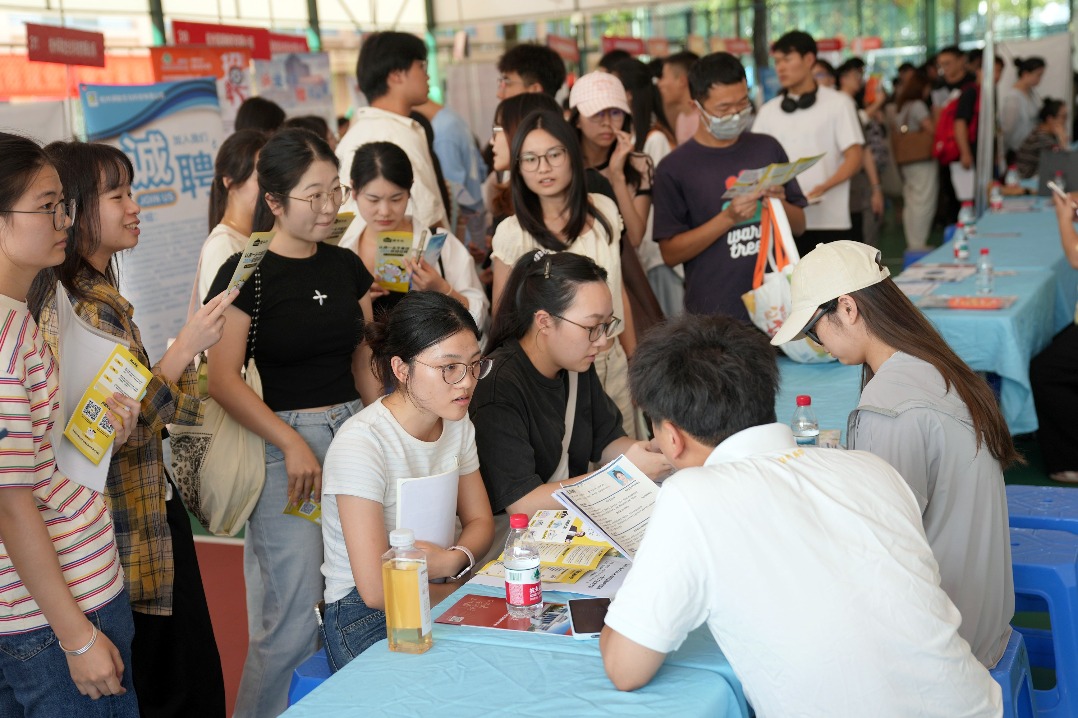
China has made significant strides in urban employment, with approximately 10.57 million new jobs created from January to September 2025, according to the Ministry of Human Resources and Social Security. This achievement represents 88% of the annual target set by the government, showcasing the country’s robust efforts to stabilize and expand employment opportunities amid economic challenges. The data underscores China’s commitment to addressing labor market demands and fostering economic resilience. The ministry highlighted that this progress reflects the effectiveness of national policies aimed at promoting job creation and supporting urban development. As China continues to navigate global economic uncertainties, this milestone signals a positive trajectory for its employment landscape and overall socio-economic stability.
标签: Asia
亚洲
-
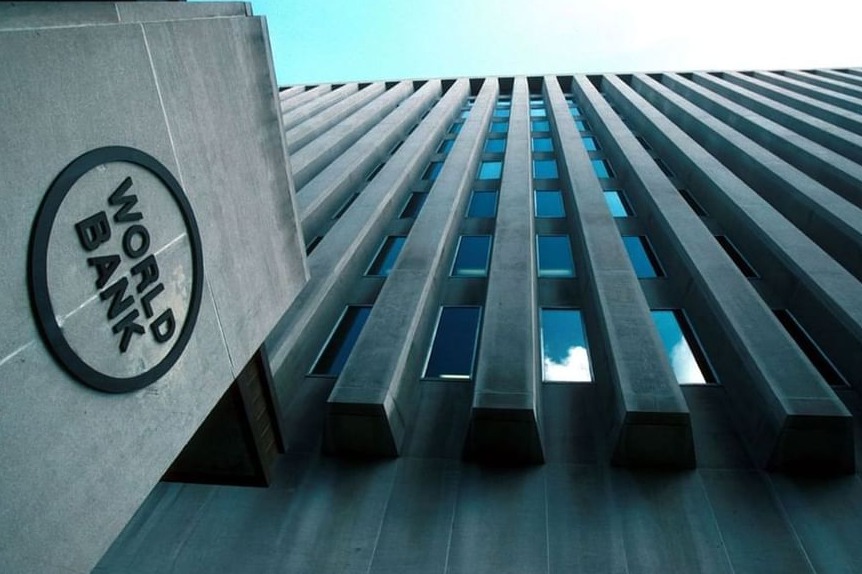
World Bank hails UAE as model for empowerment of women, youth
The World Bank has lauded the United Arab Emirates (UAE) as a pioneering example in human development, particularly for its progressive policies aimed at empowering women and youth. Fadia Saadah, the World Bank’s Regional Director for Human Development in the Middle East, North Africa, Afghanistan, and Pakistan, highlighted the UAE’s comprehensive approach to fostering work-life balance and increasing women’s participation in the workforce. This has been achieved through significant labor law reforms and substantial investments in early childhood development and childcare services. Saadah emphasized the impact of the UAE’s 2022 labor law amendments, which introduced flexible work arrangements such as part-time, temporary, remote, and shared jobs, thereby creating more opportunities for women and young people. Additionally, the UAE’s 2021 enhanced parental leave policies have further supported work-life balance and encouraged women to remain active in the workforce. Saadah also pointed out the UAE’s innovative labor mobility policies, including the Golden and Green Visas for skilled professionals, investors, and freelancers, as well as job search and remote work visas. These measures, combined with unemployment insurance, wage protection, and strengthened recruitment regulations, have set a benchmark for labor protection and talent retention. The World Bank’s report, ‘Embracing and Shaping Change: Human Development for a Middle East & North Africa Region in Transition,’ underscores the need for continued investment in human development to address megatrends such as ageing populations, climate change, and technological advancements. Saadah suggested that Gulf Cooperation Council (GCC) countries prioritize ageing and digitalization, middle-income nations focus on fiscal management, and lower-income or fragile states emphasize preserving human capital and institutions. With sustained commitment, the MENA region can transform challenges into opportunities for sustainable and inclusive growth, ensuring a prosperous future for all.
-
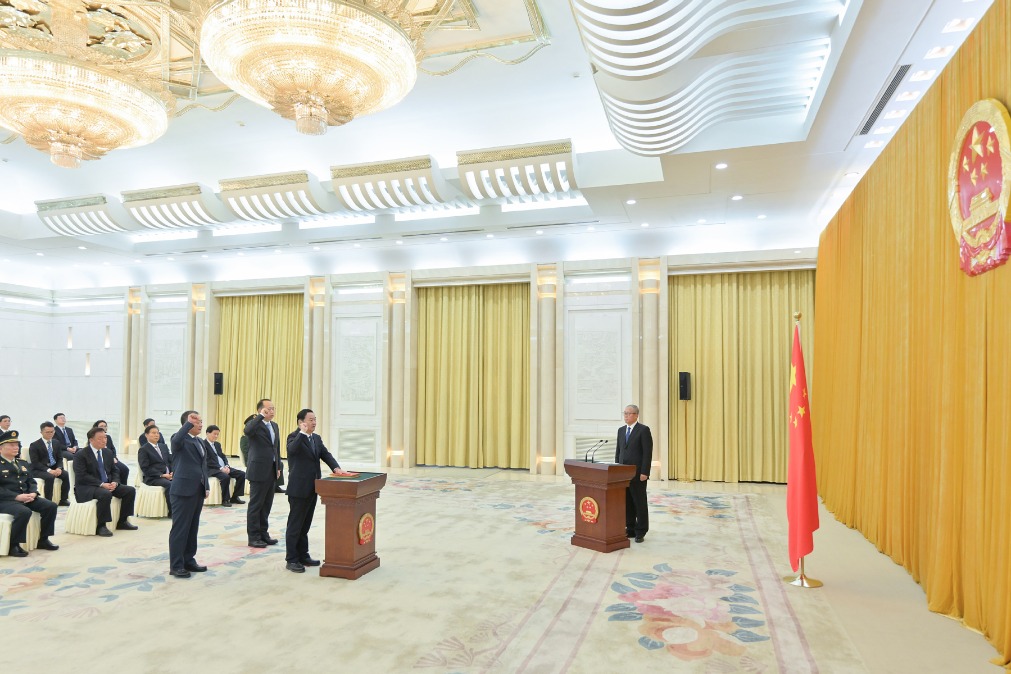
Oath-taking ceremony held by 14th NPC Standing Committee in Beijing
On October 28, 2025, the 14th Standing Committee of the National People’s Congress (NPC) held a solemn oath-taking ceremony at the Great Hall of the People in Beijing. The event, chaired by Li Hongzhong, Vice-Chairman of the NPC Standing Committee, underscored the commitment of its members to uphold the Constitution of the People’s Republic of China. The ceremony, a pivotal moment in China’s political calendar, reaffirmed the dedication of the NPC Standing Committee to the rule of law and the nation’s governance framework. The gathering highlighted the importance of constitutional allegiance in guiding the legislative body’s responsibilities and decisions. This event aligns with China’s ongoing efforts to strengthen institutional governance and ensure the effective implementation of its legal and political systems.
-

Woman saved after slipping while boarding a moving train
A heart-stopping incident unfolded at a railway station in India, where a woman narrowly escaped a potentially fatal accident while attempting to board a moving train. The Southern Railways released a gripping video capturing the harrowing moment. As the train began to depart, the woman lost her footing and slipped perilously close to the gap between the train and the platform. Quick-thinking railway staff and bystanders sprang into action, pulling her to safety just in time. The incident highlights the dangers of boarding moving trains and underscores the importance of adhering to safety protocols at railway stations. Authorities have urged passengers to exercise caution and avoid such risky maneuvers to prevent similar occurrences in the future.
-

NW China inland province harvests ‘seafood’ from saline-alkali lands
In a remarkable agricultural transformation, China’s arid and saline-alkali lands in Gansu province are now yielding bountiful ‘seafood’ harvests. Once deemed unsuitable for traditional farming, these lands have been repurposed into productive aquaculture ponds, thanks to innovative technological interventions. Farmers like Zhao Guohua, who once cultivated wheat, are now mastering the art of harvesting Pacific white shrimp and other aquatic species. This shift has not only revitalized the local economy but also restored ecological balance in the region. Jingtai county, a focal point of this initiative, has seen its aquatic product output exceed 2.1 million kilograms annually, generating over 50 million yuan in revenue and benefiting thousands of households. The success of this endeavor is attributed to advanced soil and water management techniques, supported by leading research institutions. Similar efforts are underway in Xinjiang, where desert saltwater resources are being harnessed to cultivate a diverse range of aquatic species, including crabs and rainbow trout. These inland aquaculture projects are rapidly gaining recognition, both domestically and internationally, under the banner of ‘desert seafood.’ Beyond economic gains, the initiative has brought environmental rejuvenation, with waterbirds returning and vegetation flourishing around the ponds. This pioneering approach exemplifies how technology and innovation can turn barren lands into thriving ecosystems and economic assets.
-
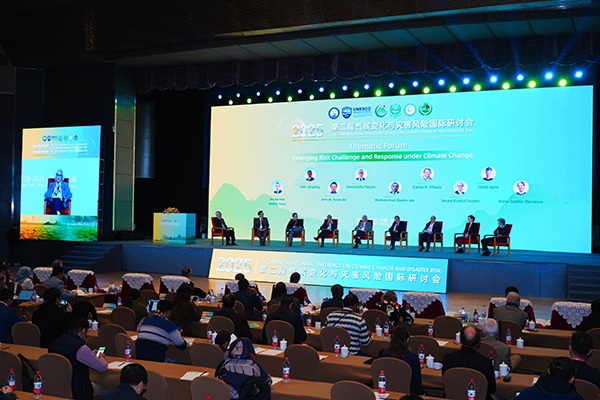
Global cooperation urged on disasters
In the face of escalating natural disasters exacerbated by climate change, global experts convened at the 2nd International Conference on Climate Change and Disaster Risk in Beijing, urging strengthened international collaboration. The conference highlighted the urgent need for knowledge sharing, capacity building, and technological innovation to address increasingly severe and complex disaster scenarios. Philippe Gourbesville, President of the International Association for Hydro-Environment Engineering and Research, emphasized the cascading effects of emerging risks, which often lead to interconnected disasters threatening human safety and infrastructure. He called for enhanced observation systems, including comprehensive sensor networks in vulnerable regions, and the revision of engineering practices to adapt to new challenges. Martin Manuhwa, Chair of the Committee on Engineering Capacity Building at the World Federation of Engineering Organizations, echoed these sentiments, stressing the critical role of engineering in geoscience to ensure the resilience of buildings and transport networks. He also highlighted the potential of artificial intelligence in disaster classification and identification, while noting the persistent challenges posed by the unpredictability of extreme events. Manuhwa underscored the need for collaboration, particularly under the Belt and Road Initiative, to address the lack of disaster preparedness in Africa and other developing regions. Wang Fawu, a professor at Tongji University and UNESCO Chairholder on Geoenvironmental Disaster Reduction, emphasized the importance of public education in disaster prevention, enabling communities to respond effectively to early warnings. Anne-Sophie Stevance of the International Science Council highlighted the necessity of learning from diverse regional contexts to build a robust global knowledge base. The conference concluded with a unified call for multidisciplinary, cross-boundary cooperation to mitigate the growing risks posed by climate-driven disasters.
-
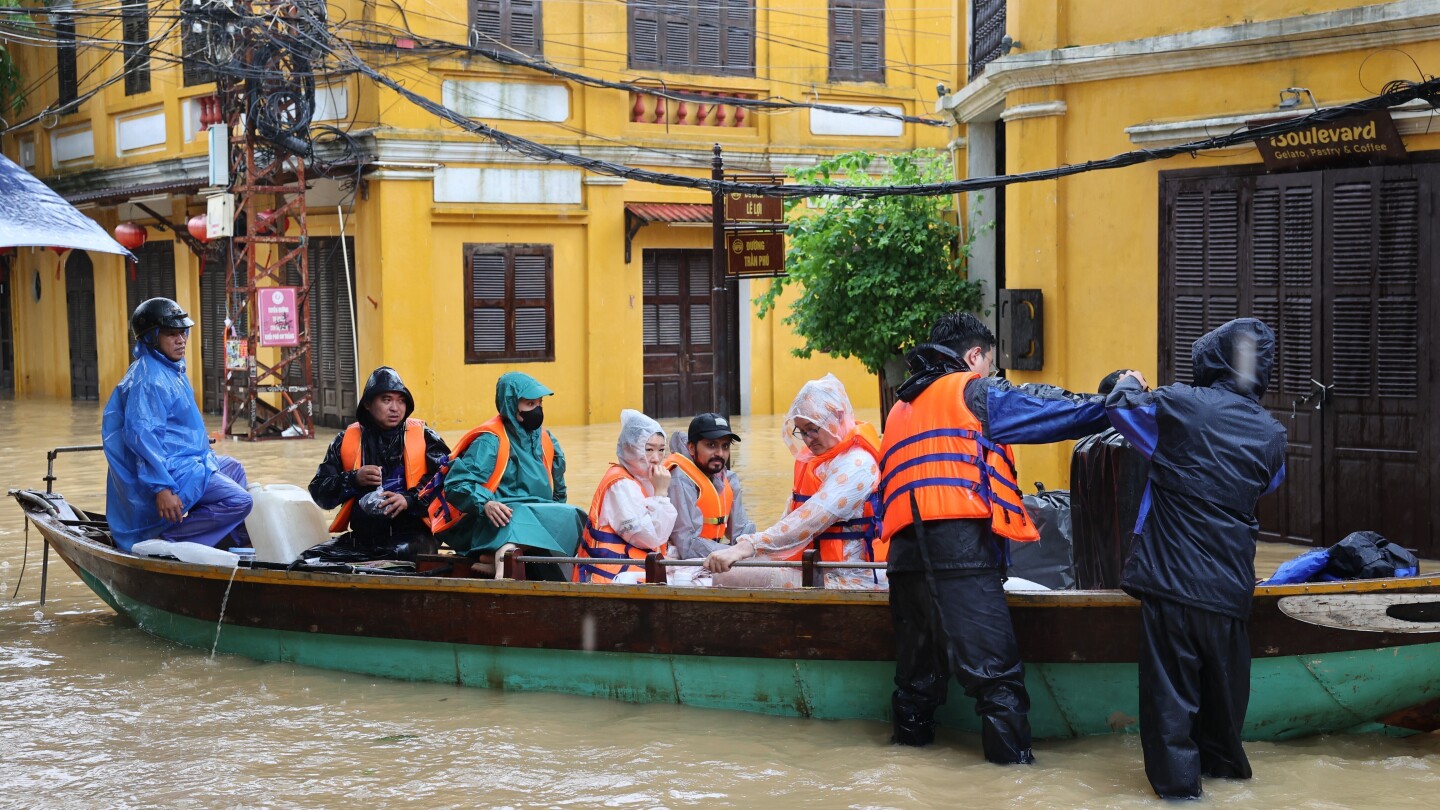
Deadly floods batter central Vietnam, killing at least 10
Central Vietnam has been struck by catastrophic floods following unprecedented rainfall, resulting in at least 10 fatalities and five individuals reported missing. The deluge has wreaked havoc on cities, agricultural lands, and transportation networks, leaving a trail of destruction in its wake. Danang, a coastal city regarded as a pivotal growth hub for Vietnam, bore the brunt of the disaster, with six deaths, four missing persons, and 19 injuries reported. Homes, crops, and thousands of livestock were swept away, amplifying concerns over the region’s recovery. In Hue, the historic former imperial capital, one person drowned, and a 5-year-old girl remains missing after being swept into floodwaters. The city remains largely submerged, with rivers overflowing after rainfall reached a staggering 1,085 millimeters (42 inches) in 24 hours—the highest ever recorded in Vietnam. Quang Ngai province also suffered significant losses, with three deaths and over 120 landslides blocking major highways. Some routes remain impassable, leaving 50 people stranded in 37 vehicles for three days. The disaster has isolated numerous rural neighborhoods, with breached river embankments and landslides cutting off access. Vietnam’s meteorological agency attributed the extreme weather to a collision of cool northern air with warm, moisture-laden sea winds, triggering relentless storms. Forecasters warn that the pattern will persist through Thursday night, heightening the risk of further floods and landslides. In response, police and military forces have been mobilized, and authorities in Quang Ngai are experimenting with drone deliveries to reach isolated residents. While central Vietnam is no stranger to heavy rains and tropical storms, experts emphasize that the scale and intensity of this week’s floods underscore the escalating risks associated with climate change. As one of the world’s most flood-prone nations, nearly half of Vietnam’s population resides in high-risk areas, highlighting the urgent need for adaptive measures.
-

Criminal penalties under tighter watch
Chinese procuratorates have intensified their supervision over the execution of criminal penalties, issuing 971,000 corrective recommendations between January 2021 and September 2025. This effort aims to ensure the consistent and proper implementation of national laws, as highlighted in a report by the Supreme People’s Procuratorate (SPP).
Ying Yong, the Procurator-General of the SPP, emphasized the importance of this oversight during a report to the Standing Committee of the 14th National People’s Congress. He described the execution of criminal punishment as the ‘last mile’ of criminal justice, crucial for achieving fairness and integrity in judicial outcomes.
Under Chinese law, procuratorial authorities are tasked with supervising the implementation of criminal judgments, monitoring prison operations, and overseeing community correction agencies. From 2021 to September 2025, these authorities received 25,000 complaints, reports, and appeals from offenders. Detailed reviews led to the correction of 3,312 erroneous judgments, including wrongful convictions, sentence calculation errors, and misidentified recidivism cases.
The report also highlighted the role of procuratorial investigations in combating judicial corruption. During the same period, 1,735 individuals were investigated for job-related offenses, such as favoritism in commutation, parole, or temporary prison releases, as well as abuse of power and illegal detainee releases.
Procuratorial authorities have also focused on improving supervision of noncustodial offenders and addressing deficiencies in community correction management. This included reincarcerating 17,000 offenders who violated community supervision rules or no longer met the conditions for serving sentences outside prison.
Regular inspections of prisons and detention centers identified risks such as contraband smuggling and ‘cell boss’ dominance. Investigations into crimes disrupting prison order led to the prosecution of 1,811 violent offenders, 803 individuals for disturbing prison order, and six for escape-related offenses.
Additionally, the SPP, in coordination with the Supreme People’s Court, Ministry of Public Security, and Ministry of Justice, resolved issues of delayed or refused prisoner admissions, ensuring the proper transfer of 96,000 convicts to correctional facilities. Authorities also addressed cases of unlawful detention beyond legal limits.
Since 2022, procuratorial authorities have issued 75,000 corrective opinions on inappropriate requests or decisions by public security and judicial administrative bodies, as well as on court rulings concerning commutation, parole, and temporary prison releases. Enhanced interagency cooperation has further ensured the lawful supervision of these measures.
The report concluded by emphasizing the importance of balancing punishment with rehabilitation to help former inmates reintegrate into society.
-
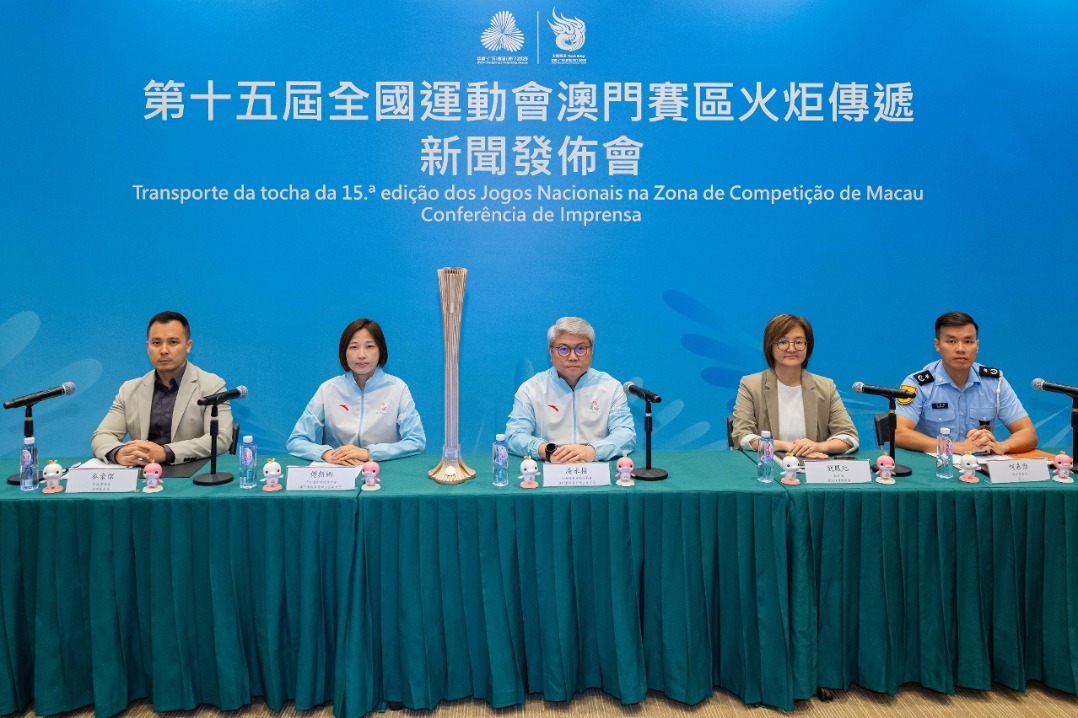
Macao’s 50 torchbearers to relay in anticipation of National Games
Macao is gearing up for a momentous occasion as 50 torchbearers from diverse sectors of society prepare to participate in the torch relay for China’s 15th National Games. The event, announced by the preparatory office of the Macao events, will take place on the Macao Peninsula, covering a distance of approximately 2.6 kilometers. The relay will commence at 9:30 am on Sunday at the headquarters of the Macao Special Administrative Region (SAR) government and conclude at the iconic Ruins of St. Paul’s, a UNESCO World Heritage Site. This historic relay marks a significant milestone in the lead-up to the National Games, which will be jointly hosted by Guangdong, Hong Kong, and Macao from November 9 to 21. Additionally, the 12th National Games for Persons with Disabilities and the 9th National Special Olympic Games are scheduled to be held from December 8 to 15, further highlighting the inclusive spirit of the event. The torch relay not only symbolizes the unity and cooperation among the hosting regions but also serves as a prelude to the grand sporting spectacle that will showcase the nation’s athletic prowess and cultural heritage.
-

China unveils weather model powered by AI
China has unveiled an advanced artificial intelligence (AI)-powered large language model, Fenghe, specifically designed for meteorological applications. Launched on Tuesday by the China Meteorological Administration’s Public Meteorological Service Center, the model aims to provide smarter, personalized, and scenario-based weather services for both the public and various industries. According to Zhu Xiaoxiang, director of the center, Fenghe integrates general large language model capabilities with specialized meteorological knowledge, trained on 550 billion tokens of meteorological data to ensure accuracy. Users can access the model via a miniprogram or website, receiving immediate AI-generated responses to weather-related queries, ranging from disaster alerts to tailored suggestions for transportation, tourism, logistics, energy, and health. For example, in self-driving scenarios, Fenghe acts as a travel adviser, offering real-time recommendations such as avoiding flooded highways during storms or suggesting indoor destinations during severe weather. The system also connects to real-time meteorological data systems like Fenglei for nowcasting and Fengqing for short-range forecasting. Li Juanzi, a professor at Tsinghua University, emphasized Fenghe’s deep integration with real-world applications, aiming to meet public life, administrative, and emergency coordination needs. Wang Jianghai, deputy director of the Ministry of Emergency Management’s flood and drought disaster prevention department, highlighted the model’s role in enhancing disaster prevention and response capabilities, describing it as an expert adviser for flood control workers and a reliable weather companion for the public. The China Meteorological Administration plans to continuously evaluate and optimize Fenghe through a standardized testing system to ensure its long-term effectiveness.