标签: Asia

亚洲

  • Videos circulating online show SDF supporters attacking Syrians across Europe

    Videos circulating online show SDF supporters attacking Syrians across Europe

    European capitals witnessed a disturbing surge in coordinated attacks against Syrian refugees this week as tensions from Syria’s collapsing security situation spilled onto Western streets. From Berlin to Zurich, Manchester to Paris, supporters of Kurdish militant groups launched violent assaults targeting Arab-Syrian communities in retaliation for recent battlefield losses in their homeland.

    The unrest erupted following the strategic collapse of the Kurdish-led Syrian Democratic Forces (SDF), which lost critical territories including Raqqa and Deir el-Zour to Syrian government forces. This military setback triggered immediate demonstrations across European cities that rapidly devolved into widespread violence against Syrian civilians.

    Social media platforms became flooded with disturbing footage showing masked individuals vandalizing Syrian-owned businesses, physically assaulting perceived Arab targets, and shouting ethnic slurs. In Germany, protests organized by YPG and SDF supporters escalated into confrontations with police, with participants deploying firecrackers, pyrotechnics, and iron bars against law enforcement.

    French authorities documented similar scenes despite France’s historical support for Kurdish forces in Syria. Video evidence from multiple cities showed coordinated attacks on vehicles and property while perpetrators chanted racist epithets. The violence exposed deep fractures within Middle Eastern diaspora communities as decades-old ethnic tensions found new expression on European soil.

    Swiss police monitored large gatherings of PKK supporters in Zurich where participants effectively paralyzed sections of the city. British authorities responded to incidents in Manchester where assailants pursued Arab-appearing individuals while screaming ethnic slurs. Similar reports emerged from Austria and Sweden where Syrian refugees reported targeted harassment and property damage.

    The violence has sparked intense debate about European foreign policy in the Middle East, with critics questioning Western support for Kurdish groups that demonstrate authoritarian tendencies abroad. Security analysts note the irony of Kurdish diaspora groups—who fled authoritarianism—now employing similar tactics against other refugee communities in their host nations.

  • Filipino journalist Frenchie Mae Cumpio found guilty of financing terrorism

    Filipino journalist Frenchie Mae Cumpio found guilty of financing terrorism

    In a landmark case raising alarm across global press freedom circles, Filipino journalist Frenchie Mae Cumpio has been convicted of financing terrorism and sentenced to a minimum of twelve years imprisonment. The verdict arrives after an extensive six-year pretrial detention period during which the 26-year-old reporter maintained her innocence against what advocacy groups characterize as politically motivated charges.

    The legal proceedings stem from a February 2020 nighttime raid conducted by joint police and military forces on Cumpio’s residence in Tacloban City. Authorities reported discovering a firearm, hand grenade, and communist propaganda materials during the operation, alongside approximately several thousand pounds in cash. While the court ultimately dismissed weapons possession charges due to insufficient evidence, it upheld the terrorism financing allegation based on the seized funds.

    Cumpio’s defense team contends the money constituted legitimate donations for Eastern Vista, the independent news platform where she served as director, and her community radio program on Aksyon Radyo-Tacloban DYVL. Prior to her arrest, Cumpio had established a reporting record focusing on military and police misconduct in Eastern Visayas, a region experiencing persistent poverty and social unrest.

    Press freedom organizations have unanimously condemned the judicial outcome. The National Union of Journalists of the Philippines labeled the conviction ‘a fabricated case designed to silence critical reporting,’ while international watchdog Reporters Without Borders highlighted the Philippines’ deteriorating environment for media professionals. Women’s media associations particularly emphasized the gendered dimension of the case, noting Cumpio’s prosecution represents ‘state-sponsored silencing of female journalists.’

    The verdict occurs against a backdrop of increasing legal harassment against journalists under the Philippines’ anti-terrorism legislation. Human rights monitors document numerous similar cases where terrorism charges have been allegedly weaponized against government critics. This judicial decision establishes a concerning precedent that may further constrain reporting on marginalized communities and official misconduct throughout the archipelago nation.

  • Rescue efforts underway after landslides hit New Zealand campground and house

    Rescue efforts underway after landslides hit New Zealand campground and house

    NEW ZEALAND – Emergency response teams across New Zealand’s North Island are conducting critical rescue operations following multiple devastating landslides triggered by extreme weather conditions. The most severe incident occurred at approximately 9:30 a.m. Thursday at Beachside Holiday Park, situated at the base of Mount Maunganui’s extinct volcano, where a massive landslide buried portions of the campground under substantial rubble.

    Police Superintendent Tim Anderson confirmed that the number of individuals unaccounted for remains in “single figures” at the holiday park site. In a separate but related incident, another landslide struck a residential property in the nearby Bay of Plenty community overnight. While two occupants managed to escape safely, two others remain missing as rescue efforts continue.

    Further north near Warkworth, emergency services are searching for a man who was swept away by floodwaters Wednesday morning as torrential rains battered extensive regions of the North Island. The consecutive natural disasters have created a multi-front crisis for emergency response teams.

    Fire and Emergency NZ commander William Pike reported that initial responders and civilians heard voices from within the rubble shortly after the Mount Maunganui landslide, but subsequent movements forced the evacuation of rescue personnel from the unstable site. No signs of life have been detected since the initial response.

    New Zealand Prime Minister Christopher Luxon has issued urgent appeals for residents in affected areas to strictly follow safety directives from local authorities. “Extreme weather continues to create dangerous conditions across the North Island. Right now, the government is doing everything we can to support those impacted,” Luxon stated via social media.

    Emergency Management Minister Mark Mitchell confirmed that rescue operations continue at multiple locations, while Mayor Mahe Drysdale noted that some individuals initially reported missing had subsequently been accounted for after leaving the campground without official notification. The Beachside Holiday Park remains closed indefinitely following the catastrophic event.

  • Brook feels lucky to be England captain after nightclub brawl in NZ

    Brook feels lucky to be England captain after nightclub brawl in NZ

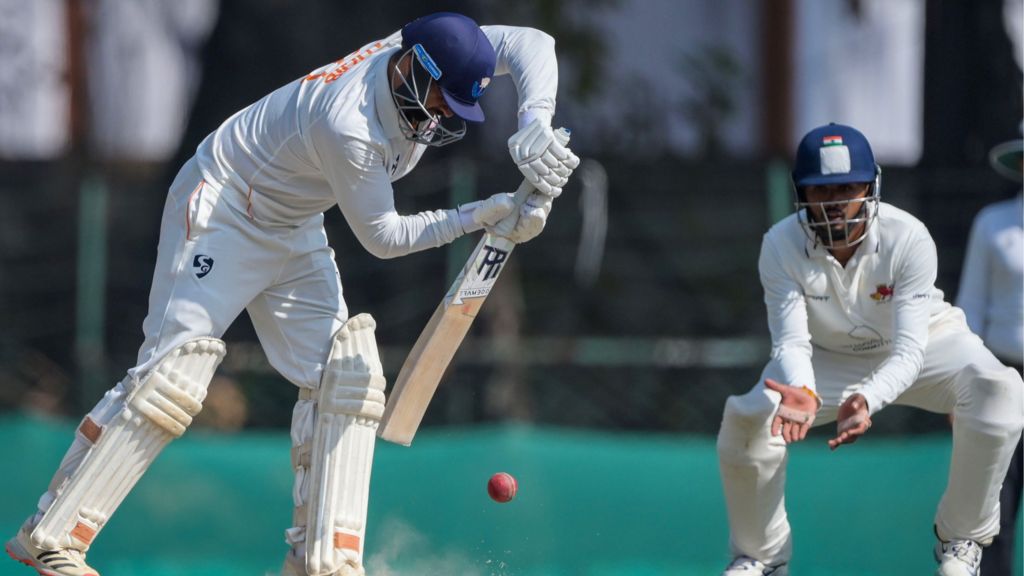
    England’s white-ball cricket captain Harry Brook has expressed profound relief at retaining his leadership role following a physical confrontation with security personnel at a New Zealand nightclub last October. The 26-year-old batsman acknowledged his behavior fell short of expected standards for a national team representative, particularly one holding a captaincy position.

    According to a Daily Telegraph investigation, the incident occurred on October 31st when Brook was refused entry to an establishment and subsequently struck by a bouncer. While specific details remain undisclosed, the confrontation prompted Brook to issue immediate apologies to both teammates and cricket authorities.

    Facing media scrutiny ahead of England’s limited-overs series against Sri Lanka, Brook revealed he had mentally prepared for potential dismissal from captaincy duties. “That possibility definitely played through my mind,” the cricketer confessed. “I entrusted that decision to the governing hierarchy. Had they decided to remove me as captain, I would have accepted it willingly provided I could continue representing England on the field.”

    When directly questioned whether he considered himself fortunate to maintain the leadership, Brook responded: “Probably slightly, yes. However, I would have fully acknowledged my error had I been relieved of captaincy responsibilities.”

    The Yorkshire-born player emphasized his commitment to rebuilding trust within the squad, stating he personally apologized to teammates upon arriving in Sri Lanka. “Regaining player confidence requires conscious effort following my actions,” Brook noted. “Such behavior proves unacceptable for any player, but particularly for a captain. I unequivocally accept responsibility.”

    England’s tour comprises three One-Day Internationals and three Twenty20 matches against Sri Lanka, serving as crucial preparation for the upcoming T20 World Cup scheduled for next month across India and Sri Lanka.

  • Saudi Arabia, Turkey, Egypt, Jordan, Indonesia, Pakistan, Qatar join Trump’s Gaza board

    Saudi Arabia, Turkey, Egypt, Jordan, Indonesia, Pakistan, Qatar join Trump’s Gaza board

    In a significant diplomatic development, eight predominantly Muslim nations have formally agreed to participate in former US President Donald Trump’s ‘Board of Peace’ initiative for Gaza. The coalition includes Saudi Arabia, Turkey, Egypt, Jordan, Indonesia, Pakistan, Qatar, and the United Arab Emirates.

    Foreign ministers from these nations issued a joint statement on Wednesday confirming their commitment to the peace framework. Each country will undertake necessary legal procedures to formally accede to the agreement, building on previous announcements from Egypt, Pakistan, and the UAE regarding their participation.

    The participating states expressed strong endorsement for Trump’s mediation efforts and pledged support for implementing the peace council’s transitional mandate. This mandate, established under United Nations Security Council Resolution No. 2803, forms part of a comprehensive strategy to resolve the Gaza conflict.

    The initiative aims to achieve multiple objectives: cementing a permanent ceasefire arrangement, facilitating Gaza’s reconstruction efforts, and promoting a sustainable peace settlement. The framework recognizes the Palestinian right to self-determination and supports the establishment of a Palestinian state in alignment with international legal standards. Ultimately, the program seeks to foster regional security and stability for all nations and populations involved.

    This multinational collaboration represents one of the most substantial Middle East peace initiatives in recent years, bringing together key regional powers with significant influence over the conflict’s resolution.

  • Viral video: Taxi crashes into Sharjah restaurant after driver confuses pedals

    Viral video: Taxi crashes into Sharjah restaurant after driver confuses pedals

    A Sharjah restaurant escaped what could have been a catastrophic incident on Tuesday evening when a taxi plowed through its glass entrance. The alarming event, captured on video and widely circulated online, occurred at the Bundoo Khan Pakistani restaurant in the Al Nabba area at approximately 8:30 PM.

    According to Fazal Rahman Abbasi, the restaurant’s general manager, the driver mistakenly pressed the accelerator instead of the brake pedal after being startled by a honking vehicle on the narrow roadway. The impact immediately deployed the vehicle’s airbags, which likely prevented serious injury to the driver.

    Miraculously, no patrons or staff members were injured in the incident. “Fortunately, nobody was near the entrance at that moment, and everyone emerged unscathed,” Abbasi confirmed. “The driver appeared shaken but otherwise unharmed.”

    Local authorities responded promptly to the scene, facilitating assistance for both parties involved. The restaurant management indicated that insurance would cover the structural damages, with repairs expected to be completed within a day. Despite the dramatic entrance destruction, Bundoo Khan continued serving customers without interruption.

    This incident echoes a concerning pattern of similar vehicular accidents across the UAE. Historical records reveal multiple instances where drivers confused pedals or lost control, resulting in property damage and occasional injuries. Notable cases include a 2013 Dubai tragedy that claimed three lives when an intoxicated driver crashed into a restaurant kitchen, and a 2016 Ajman incident where a medical episode led to fatal consequences.

    The frequency of these events highlights ongoing challenges with vehicle control in urban environments, particularly in areas with limited parking space and high pedestrian traffic. While this latest incident concluded without physical injuries, it underscores the potential dangers posed by momentary driver confusion in densely populated areas.

  • Watch: Sheikh Hamdan attends launch of first ‘Hewi Dubai’ in Nad Al Sheba

    Watch: Sheikh Hamdan attends launch of first ‘Hewi Dubai’ in Nad Al Sheba

    Dubai has inaugurated its pioneering ‘Hewi’ community project in Nad Al Sheba, marking a significant advancement in urban social development. His Highness Sheikh Hamdan bin Mohammed Al Maktoum, Crown Prince of Dubai and Chairman of the Dubai Future Foundation, personally attended Wednesday’s launch ceremony.

    The term ‘Hewi,’ derived from Emirati dialect, historically describes the outdoor courtyard area of traditional homes—a vital space for family gatherings, entertainment, and communal interaction. This new initiative reimagines these heritage concepts for contemporary urban living.

    Developed through a strategic collaboration between Dubai Municipality and the Dubai Future Foundation, with support from ‘Ferjan Dubai,’ the project aims to cultivate a new generation of community spaces that reinforce social cohesion. The design philosophy emphasizes strengthening interpersonal bonds, promoting outdoor activities, supporting local family enterprises, and creating inclusive environments that unite residents across all age groups.

    Sheikh Hamdan emphasized the cultural significance of the project, stating: “‘Hewi Dubai’ preserves the legacy of the traditional Emirati ‘fareej’ that previous generations experienced—environments that fundamentally shaped their values and enhanced social unity. Enhancing quality of life for Dubai’s residents remains our paramount priority and the guiding principle behind our initiatives.”

    The Nad Al Sheba installation features several thoughtfully designed zones: ‘Al Decha’ provides a serene gathering space adjacent to the mosque; ‘Al Saaha’ offers flexible indoor-outdoor areas for neighborhood events and celebrations; ‘Al Yalsa’ creates comfortable seating arrangements for parents supervising children; and dedicated walking paths encourage reconnection with natural surroundings.

  • ‘We are on the menu’: Why Carney upended US-led world order at Davos

    ‘We are on the menu’: Why Carney upended US-led world order at Davos

    In a groundbreaking address at the World Economic Forum in Davos, Canadian Prime Minister Mark Carney delivered what analysts are calling the most consequential speech by a Canadian leader in generations. The former central banker, who entered politics just months ago, delivered a stunning indictment of the Western-led liberal international order, declaring it no longer functional in an era dominated by Trump-era unilateralism.

    Carney articulated that Canada and similar ‘middle powers’ must forge an independent path forward, acknowledging that the rules-based system had always contained fundamental flaws. ‘For decades, we knew the story was partially false,’ Carney told assembled global leaders. ‘The strongest would exempt themselves when convenient, trade rules were enforced asymmetrically, and international law applied with varied rigour. We participated in the rituals while avoiding calling out the gaps between rhetoric and reality. This bargain no longer works.’

    The speech came amid escalating tensions with the United States, where President Trump has imposed 35% tariffs on Canadian imports outside the USMCA framework and repeatedly threatened to make Canada ‘the 51st state.’ Trump directly targeted Carney in his own Davos remarks, stating Canada ‘gets a lot of freebies from us’ and should be ‘grateful’ for American protection.

    Carney, drawing on his financial expertise, warned that multiple crises over two decades have exposed the dangers of ‘extreme global integration’ where economic tools become weapons. ‘When integration becomes the source of your subordination, and rules no longer protect you, you must protect yourself,’ he declared, characterizing the current moment as ‘a rupture, not a transition.’

    The Canadian leader’s comments followed strategic visits to China and Qatar, resulting in tangible agreements on trade and investment that signal Ottawa’s diversification efforts. However, analysts questioned the viability of Carney’s middle-power coalition concept, noting the divergent interests of potential partners from Brasilia to Tokyo.

    The speech resonated strongly with both international observers and Canadian citizens, who applauded their prime minister’s bold stance while recognizing the delicate balancing act required with their powerful southern neighbor amid deteriorating bilateral relations.

  • Bangladesh face T20 World Cup exit after ICC rejects BCB demand

    Bangladesh face T20 World Cup exit after ICC rejects BCB demand

    The International Cricket Council (ICC) has formally rejected Bangladesh’s demand to relocate their T20 World Cup matches from India to Sri Lanka, casting serious doubt on the team’s participation in the upcoming tournament. This decision follows weeks of escalating tensions between the Bangladesh Cricket Board (BCB) and cricket’s global governing body.

    The dispute originated on January 3rd when the Board of Control for Cricket in India (BCCI) instructed IPL franchise Kolkata Knight Riders to release Bangladeshi fast bowler Mustafizur Rahman. The BCB subsequently cited player safety concerns and deteriorating political relations with India as justification for refusing to play their scheduled matches in Kolkata and Mumbai.

    In an official statement, the ICC emphasized that comprehensive security assessments, detailed venue-level protection plans, and formal assurances from Indian authorities confirmed there were ‘no credible or verifiable threats’ to the Bangladesh team’s safety. The council revealed it had engaged in ‘sustained and constructive dialogue’ with BCB officials, but these efforts were ultimately ‘rebuffed’ by the Bangladeshi side.

    With the tournament commencing February 7th, uncertainty looms over Bangladesh’s campaign. Team captain Litton Das expressed the prevailing mood, stating, ‘From where I stand, I’m uncertain, everyone is uncertain. Are you sure we will play the World Cup? I think at this moment, the whole of Bangladesh is uncertain.’

    The political backdrop adds complexity to the situation, as Bangladesh prepares for its first elections since the 2024 uprising that toppled Prime Minister Sheikh Hasina, a known ally of New Delhi. Relations between the neighboring nations have significantly deteriorated since her departure.

    ICC sources indicate Scotland, the highest-ranked non-qualifying team, stands ready as potential replacements should Bangladesh withdraw from the competition. Meanwhile, Sri Lankan authorities confirmed they had not received any formal request to host Bangladesh’s matches, despite BCB’s preference for the co-host nation.

  • Egypt ends fee exemption on imported mobile phones: What expats, tourists must know

    Egypt ends fee exemption on imported mobile phones: What expats, tourists must know

    Egypt has abruptly terminated its longstanding customs exemption policy for imported mobile phones, implementing new fees that will impact travelers and expatriates entering the country. The National Telecommunications Regulatory Authority (NTRA) announced the significant policy shift effective January 21, 2026, at 12 PM Cairo time, marking a substantial change in the nation’s telecommunications import regulations.

    The previous framework permitted each passenger arriving in Egypt to import one mobile device every three years without customs charges, provided they registered the device at airport customs desks to ensure compatibility with Egyptian SIM cards. The new regulations eliminate this exemption entirely, subjecting all imported mobile devices to variable customs fees based on brand and specifications.

    The policy change has generated considerable concern within Egypt’s expatriate community, with many questioning the rationale behind imposing customs duties on personally owned devices purchased abroad. Egyptian authorities have responded by highlighting the growing domestic mobile manufacturing sector, noting that 15 international brands now operate production facilities within Egypt, manufacturing approximately 20 million devices annually with equivalent technical specifications to imported models.

    Tourists utilizing foreign SIM cards remain exempt from the new fees, while those requiring Egyptian SIM cards receive a 90-day exemption per visit. Egyptian expatriates visiting the country can similarly claim a 90-day exemption for personal devices, renewable through official channels including hotline 15380 or designated WhatsApp numbers with appropriate documentation.

    Payment mechanisms include the official ‘Telephony’ application, banking institutions, and e-wallet services, with a 90-day grace period from device activation to settle outstanding fees. Authorities have indicated that installment payment options will become available in the near future, though current requirements mandate full immediate payment.

    Devices previously registered under the exemption system remain unaffected by the new regulations, according to official statements from both the Egyptian Customs Authority and NTRA. Locally manufactured mobile devices continue to be exempt from customs charges entirely.