标签: Asia

亚洲

  • Alex Honnold is climbing Taipei 101 with no ropes, live on TV. It’s drawing excitement — and concern

    Alex Honnold is climbing Taipei 101 with no ropes, live on TV. It’s drawing excitement — and concern

    TAIPEI — In an unprecedented feat of human endurance and skill, professional rock climber Alex Honnold is poised to undertake a free solo ascent of Taipei 101, the iconic 1,667-foot skyscraper that dominates Taiwan’s capital skyline. The live broadcast event, scheduled for Saturday morning local time, marks a groundbreaking moment in extreme sports broadcasting and has ignited complex ethical debates surrounding high-risk athletic endeavors.

    Honnold, whose legendary ropeless climb of Yosemite’s El Capitan was immortalized in the Academy Award-winning documentary “Free Solo,” has trained extensively for this urban climb. The 101-story structure presents unique challenges, with its most demanding section comprising 64 floors of steep, overhanging climbing through the building’s distinctive “bamboo box” design segments. Each eight-floor section concludes with a balcony where Honnold can briefly rest during his anticipated two-hour ascent.

    Event producer Plimsoll Productions has implemented extensive safety measures for the broadcast, including professional weather monitoring, a 10-second broadcast delay, and four roped camera operators who will simultaneously document the climb and serve as safety observers. Executive James Smith emphasized that all crew members are trusted climbing professionals familiar with Honnold’s methods and prepared to assist if complications arise.

    The ethical dimensions of broadcasting such high-risk athletic performance have drawn scrutiny from media ethics experts. Subbu Vincent of Santa Clara University emphasized the necessity of the broadcast delay as a crucial ethical safeguard, noting that transmission must immediately cease should any accident occur. Additional concerns center on the potential influence on impressionable viewers, particularly following several recent fatalities in both free solo climbing and the dangerous trend of “roof-topping.”

    Despite these concerns, the climbing community has largely expressed support for Honnold’s endeavor. Taiwanese climber Chin Tzu-hsiang described the event as the fulfillment of a shared dream among local climbers who have long admired the iconic structure. Honnold himself has characterized the climb as occupying a “perfect sweet spot”—technically engaging without being extreme—though he will become the first person to attempt the ascent completely without ropes.

    French climber Alain Robert previously scaled Taipei 101 with ropes in 2004 during the building’s inauguration, requiring nearly four hours to complete the climb under challenging weather conditions while managing injuries. Honnold’s attempt represents not only a athletic milestone but a cultural moment that tests the boundaries of how extreme sports are documented and consumed by global audiences.

  • US sanctions six Palestinian aid groups it accuses of ties to Qassam Brigades

    US sanctions six Palestinian aid groups it accuses of ties to Qassam Brigades

    In a significant move targeting Hamas’s financial infrastructure, the U.S. Treasury Department imposed sanctions on six Palestinian humanitarian organizations operating in Gaza on Wednesday. The designated entities—Waed Society, Al-Nur, Qawafil, Al-Falah, Merciful Hands, and Al-Salameh—stand accused of functioning as a clandestine support network for Hamas’s military wing, the Qassam Brigades.

    The Treasury’s Office of Foreign Assets Control (OFAC) revealed that Hamas’s internal security personnel have been formally assigned to operate within several of these organizations, particularly Waed Society and Al-Salameh. According to official statements, Merciful Hands, Al-Nur, and Al-Falah have allegedly directed funds directly to Hamas’s military operations, while Qawafil has purportedly completed projects specifically designed to benefit the organization.

    Despite their public-facing activities—which include medical support for war wounds, distribution of food and medicine, community support sessions, and advocacy for Palestinian prisoners—these groups allegedly serve as fronts for Hamas’s financial operations. The Treasury also sanctioned The Popular Conference for Palestinians Abroad (PCPA), identifying it as a coordination body for flotilla attempts to break the Israeli siege on Gaza, along with its UK-based founder Zaher Khaled Hassan Birawi.

    Under Secretary of the Treasury for Terrorism and Financial Intelligence John K Hurley emphasized that the Trump administration would not tolerate Hamas’s exploitation of financial systems to fund terrorist operations. The designations immediately freeze all U.S. assets belonging to these entities and prohibit any transactions through American banking systems, effectively rendering credit cards like Visa and Mastercard unusable for these organizations.

    The Treasury statement clarified that the sanctions specifically target Hamas’s operational strategy rather than legitimate political advocacy, noting that members of the Palestinian diaspora retain the right to gather and advocate for their political concerns. This action represents the latest development in the ongoing U.S. campaign to disrupt Hamas’s financial networks while maintaining distinction between legitimate humanitarian work and terrorist financing operations.

  • Iran officially counts 3,117 deaths in December-January unrest: report

    Iran officially counts 3,117 deaths in December-January unrest: report

    Iranian state media has formally acknowledged a death toll of 3,117 individuals during widespread civil disturbances that occurred between December 2025 and January 2026. The official count, released by the Forensic Medical Organization through IRIB state television, represents the first specific mortality figure provided by authorities since economic protests erupted across numerous Iranian cities.

    According to the official breakdown, 2,427 of the deceased were characterized as “innocent civilians and security forces.” This confirmation follows previous vague references to “several thousand” casualties by government officials. The reported numbers contrast with estimates from the US-based Human Rights Activists News Agency, which had projected approximately 4,560 fatalities—a figure lacking independent verification.

    Parallel damage assessments from Iran’s semi-official Tasnim news agency detailed substantial destruction of public infrastructure, including over 460 government buildings damaged or destroyed, more than 700 banking institutions attacked, and nearly 480 mosques targeted during the unrest.

    The initial demonstrations emerged peacefully in response to severe currency devaluation of the rial before escalating into violent confrontations. Iranian authorities acknowledged economic grievances while simultaneously attributing the violence to foreign intervention. In commentary published by the Wall Street Journal, Iranian Foreign Minister Seyed Abbas Araghchi asserted that the “violent phase of the unrest lasted less than 72 hours” before security forces restored order.

    Minister Araghchi further contended that United States policy positions provided incentives for actors pursuing a “maximum bloodshed” strategy. While emphasizing Iran’s preference for peaceful resolution, the Foreign Minister issued a stark warning that Iran’s armed forces would respond decisively to any new attacks, contrasting this position with what he described as previous “restraint” demonstrated in June 2025.

  • Geopolitical and tariff risk back with a bang for markets

    Geopolitical and tariff risk back with a bang for markets

    Financial markets experienced significant turbulence as geopolitical tensions surrounding Greenland and potential tariff impositions by the Trump administration rattled investor confidence globally. The volatility emerged following President Donald Trump’s threats to reignite trade conflicts with Europe, specifically tied to U.S. ambitions regarding Greenland’s strategic acquisition.

    The market reaction on Tuesday was pronounced across multiple asset classes: equity markets declined substantially, with the S&P 500 recording its most severe single-day drop in over three months at 2.1%. Simultaneously, long-dated U.S. Treasuries and the dollar faced selling pressure, while volatility measures spiked across trading platforms.

    Investment strategists noted the concerning absence of traditional dip-buyers despite the market decline. Jack Ablin of Cresset Capital observed that unlike previous selloffs triggered by tariff announcements, investors appeared more cautious about immediate re-entry positions. The situation evoked memories of last year’s ‘Liberation Day’ tariff announcement that previously triggered the ‘Sell America’ trade pattern, where international investors reduced exposure to U.S. assets.

    Market professionals expressed particular concern about the simultaneous decline across typically inversely correlated assets. Lauren Goodwin of New York Life Investments highlighted how the coordinated movement challenged conventional portfolio assumptions and risk management strategies.

    Despite the volatility, underlying fundamentals remain robust. Corporate earnings projections indicate continued strength, with S&P 500 companies expected to deliver 13.3% growth for 2025 and an additional 15.5% in 2026 according to LSEG IBES data. However, analysts caution that foreign capital flows could diminish if geopolitical tensions persist, potentially dampening market performance regardless of fundamental strength.

    Investors are monitoring for potential de-escalation, with many recalling Trump’s historical pattern of aggressive positioning followed by negotiation—a phenomenon Wall Street traders have acronymed ‘TACO’ (Trump Always Chickens Out). This expectation of eventual compromise has prevented more severe capital flight, though market participants remain prepared for defensive positioning should tensions escalate further.

  • Japan records 5th straight yearly trade deficit

    Japan records 5th straight yearly trade deficit

    Japan has marked its fifth successive year of trade deficit in 2025, according to preliminary data released by the Finance Ministry on Thursday. The nation reported an annual shortfall of 2.65 trillion yen ($17 billion), representing a significant 53% reduction from the previous year’s deficit. While exports demonstrated modest growth of 3.1% throughout the year, imports remained nearly stagnant with less than 1% growth.

    The December figures provided a temporary respite with a trade surplus of 105.7 billion yen ($669 million), though this represented a 12% decrease compared to the same month last year. Monthly data revealed exports growing at 5.1% while imports increased by 5.3% year-on-year.

    Geographic analysis reveals shifting trade patterns, with December exports to the United States declining by 11% amid ongoing trade tensions. Conversely, Japan experienced export growth to Britain, African markets, and Asian hubs including Hong Kong and India. Import dynamics showed strength in European sourcing while declining from Brazil and Middle Eastern suppliers.

    The trade landscape remains complicated by multiple geopolitical factors. The United States maintains a 15% tariff on most Japanese imports, representing a compromise from initially proposed 25% rates but still elevated from historical levels. Additionally, manufacturing sectors face potential disruption from China’s restrictions on rare earth exports, implemented following Prime Minister Sanae Takaichi’s comments regarding potential Japanese military response to Chinese actions toward Taiwan.

    Despite these challenges, Japan’s economy demonstrates resilience with the benchmark Nikkei index reaching record highs, even as public concerns persist regarding inflationary pressures and wage stagnation.

  • Videos circulating online show SDF supporters attacking Syrians across Europe

    Videos circulating online show SDF supporters attacking Syrians across Europe

    European capitals witnessed a disturbing surge in coordinated attacks against Syrian refugees this week as tensions from Syria’s collapsing security situation spilled onto Western streets. From Berlin to Zurich, Manchester to Paris, supporters of Kurdish militant groups launched violent assaults targeting Arab-Syrian communities in retaliation for recent battlefield losses in their homeland.

    The unrest erupted following the strategic collapse of the Kurdish-led Syrian Democratic Forces (SDF), which lost critical territories including Raqqa and Deir el-Zour to Syrian government forces. This military setback triggered immediate demonstrations across European cities that rapidly devolved into widespread violence against Syrian civilians.

    Social media platforms became flooded with disturbing footage showing masked individuals vandalizing Syrian-owned businesses, physically assaulting perceived Arab targets, and shouting ethnic slurs. In Germany, protests organized by YPG and SDF supporters escalated into confrontations with police, with participants deploying firecrackers, pyrotechnics, and iron bars against law enforcement.

    French authorities documented similar scenes despite France’s historical support for Kurdish forces in Syria. Video evidence from multiple cities showed coordinated attacks on vehicles and property while perpetrators chanted racist epithets. The violence exposed deep fractures within Middle Eastern diaspora communities as decades-old ethnic tensions found new expression on European soil.

    Swiss police monitored large gatherings of PKK supporters in Zurich where participants effectively paralyzed sections of the city. British authorities responded to incidents in Manchester where assailants pursued Arab-appearing individuals while screaming ethnic slurs. Similar reports emerged from Austria and Sweden where Syrian refugees reported targeted harassment and property damage.

    The violence has sparked intense debate about European foreign policy in the Middle East, with critics questioning Western support for Kurdish groups that demonstrate authoritarian tendencies abroad. Security analysts note the irony of Kurdish diaspora groups—who fled authoritarianism—now employing similar tactics against other refugee communities in their host nations.

  • Filipino journalist Frenchie Mae Cumpio found guilty of financing terrorism

    Filipino journalist Frenchie Mae Cumpio found guilty of financing terrorism

    In a landmark case raising alarm across global press freedom circles, Filipino journalist Frenchie Mae Cumpio has been convicted of financing terrorism and sentenced to a minimum of twelve years imprisonment. The verdict arrives after an extensive six-year pretrial detention period during which the 26-year-old reporter maintained her innocence against what advocacy groups characterize as politically motivated charges.

    The legal proceedings stem from a February 2020 nighttime raid conducted by joint police and military forces on Cumpio’s residence in Tacloban City. Authorities reported discovering a firearm, hand grenade, and communist propaganda materials during the operation, alongside approximately several thousand pounds in cash. While the court ultimately dismissed weapons possession charges due to insufficient evidence, it upheld the terrorism financing allegation based on the seized funds.

    Cumpio’s defense team contends the money constituted legitimate donations for Eastern Vista, the independent news platform where she served as director, and her community radio program on Aksyon Radyo-Tacloban DYVL. Prior to her arrest, Cumpio had established a reporting record focusing on military and police misconduct in Eastern Visayas, a region experiencing persistent poverty and social unrest.

    Press freedom organizations have unanimously condemned the judicial outcome. The National Union of Journalists of the Philippines labeled the conviction ‘a fabricated case designed to silence critical reporting,’ while international watchdog Reporters Without Borders highlighted the Philippines’ deteriorating environment for media professionals. Women’s media associations particularly emphasized the gendered dimension of the case, noting Cumpio’s prosecution represents ‘state-sponsored silencing of female journalists.’

    The verdict occurs against a backdrop of increasing legal harassment against journalists under the Philippines’ anti-terrorism legislation. Human rights monitors document numerous similar cases where terrorism charges have been allegedly weaponized against government critics. This judicial decision establishes a concerning precedent that may further constrain reporting on marginalized communities and official misconduct throughout the archipelago nation.

  • Rescue efforts underway after landslides hit New Zealand campground and house

    Rescue efforts underway after landslides hit New Zealand campground and house

    NEW ZEALAND – Emergency response teams across New Zealand’s North Island are conducting critical rescue operations following multiple devastating landslides triggered by extreme weather conditions. The most severe incident occurred at approximately 9:30 a.m. Thursday at Beachside Holiday Park, situated at the base of Mount Maunganui’s extinct volcano, where a massive landslide buried portions of the campground under substantial rubble.

    Police Superintendent Tim Anderson confirmed that the number of individuals unaccounted for remains in “single figures” at the holiday park site. In a separate but related incident, another landslide struck a residential property in the nearby Bay of Plenty community overnight. While two occupants managed to escape safely, two others remain missing as rescue efforts continue.

    Further north near Warkworth, emergency services are searching for a man who was swept away by floodwaters Wednesday morning as torrential rains battered extensive regions of the North Island. The consecutive natural disasters have created a multi-front crisis for emergency response teams.

    Fire and Emergency NZ commander William Pike reported that initial responders and civilians heard voices from within the rubble shortly after the Mount Maunganui landslide, but subsequent movements forced the evacuation of rescue personnel from the unstable site. No signs of life have been detected since the initial response.

    New Zealand Prime Minister Christopher Luxon has issued urgent appeals for residents in affected areas to strictly follow safety directives from local authorities. “Extreme weather continues to create dangerous conditions across the North Island. Right now, the government is doing everything we can to support those impacted,” Luxon stated via social media.

    Emergency Management Minister Mark Mitchell confirmed that rescue operations continue at multiple locations, while Mayor Mahe Drysdale noted that some individuals initially reported missing had subsequently been accounted for after leaving the campground without official notification. The Beachside Holiday Park remains closed indefinitely following the catastrophic event.

  • Brook feels lucky to be England captain after nightclub brawl in NZ

    Brook feels lucky to be England captain after nightclub brawl in NZ

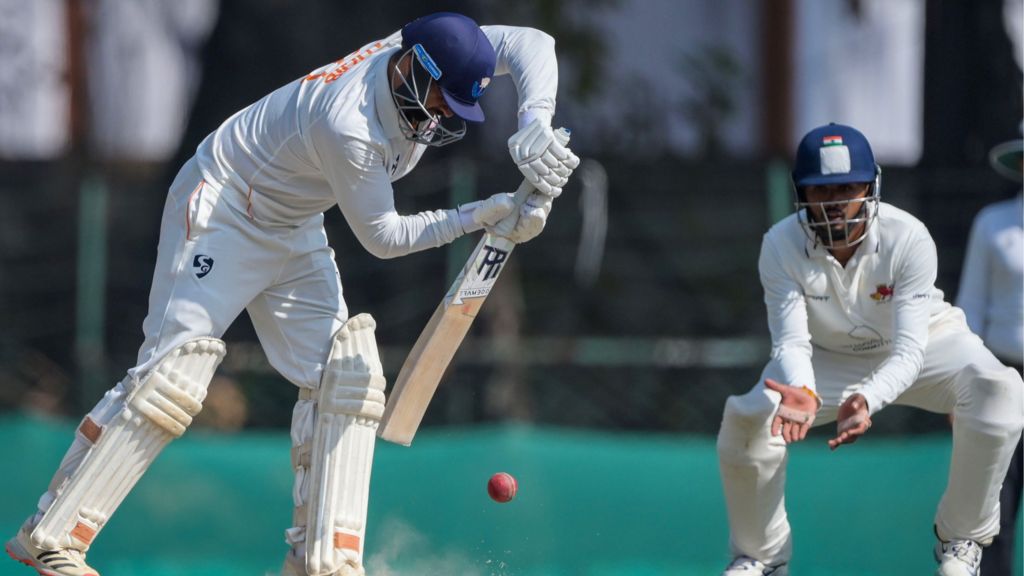
    England’s white-ball cricket captain Harry Brook has expressed profound relief at retaining his leadership role following a physical confrontation with security personnel at a New Zealand nightclub last October. The 26-year-old batsman acknowledged his behavior fell short of expected standards for a national team representative, particularly one holding a captaincy position.

    According to a Daily Telegraph investigation, the incident occurred on October 31st when Brook was refused entry to an establishment and subsequently struck by a bouncer. While specific details remain undisclosed, the confrontation prompted Brook to issue immediate apologies to both teammates and cricket authorities.

    Facing media scrutiny ahead of England’s limited-overs series against Sri Lanka, Brook revealed he had mentally prepared for potential dismissal from captaincy duties. “That possibility definitely played through my mind,” the cricketer confessed. “I entrusted that decision to the governing hierarchy. Had they decided to remove me as captain, I would have accepted it willingly provided I could continue representing England on the field.”

    When directly questioned whether he considered himself fortunate to maintain the leadership, Brook responded: “Probably slightly, yes. However, I would have fully acknowledged my error had I been relieved of captaincy responsibilities.”

    The Yorkshire-born player emphasized his commitment to rebuilding trust within the squad, stating he personally apologized to teammates upon arriving in Sri Lanka. “Regaining player confidence requires conscious effort following my actions,” Brook noted. “Such behavior proves unacceptable for any player, but particularly for a captain. I unequivocally accept responsibility.”

    England’s tour comprises three One-Day Internationals and three Twenty20 matches against Sri Lanka, serving as crucial preparation for the upcoming T20 World Cup scheduled for next month across India and Sri Lanka.

  • Saudi Arabia, Turkey, Egypt, Jordan, Indonesia, Pakistan, Qatar join Trump’s Gaza board

    Saudi Arabia, Turkey, Egypt, Jordan, Indonesia, Pakistan, Qatar join Trump’s Gaza board

    In a significant diplomatic development, eight predominantly Muslim nations have formally agreed to participate in former US President Donald Trump’s ‘Board of Peace’ initiative for Gaza. The coalition includes Saudi Arabia, Turkey, Egypt, Jordan, Indonesia, Pakistan, Qatar, and the United Arab Emirates.

    Foreign ministers from these nations issued a joint statement on Wednesday confirming their commitment to the peace framework. Each country will undertake necessary legal procedures to formally accede to the agreement, building on previous announcements from Egypt, Pakistan, and the UAE regarding their participation.

    The participating states expressed strong endorsement for Trump’s mediation efforts and pledged support for implementing the peace council’s transitional mandate. This mandate, established under United Nations Security Council Resolution No. 2803, forms part of a comprehensive strategy to resolve the Gaza conflict.

    The initiative aims to achieve multiple objectives: cementing a permanent ceasefire arrangement, facilitating Gaza’s reconstruction efforts, and promoting a sustainable peace settlement. The framework recognizes the Palestinian right to self-determination and supports the establishment of a Palestinian state in alignment with international legal standards. Ultimately, the program seeks to foster regional security and stability for all nations and populations involved.

    This multinational collaboration represents one of the most substantial Middle East peace initiatives in recent years, bringing together key regional powers with significant influence over the conflict’s resolution.