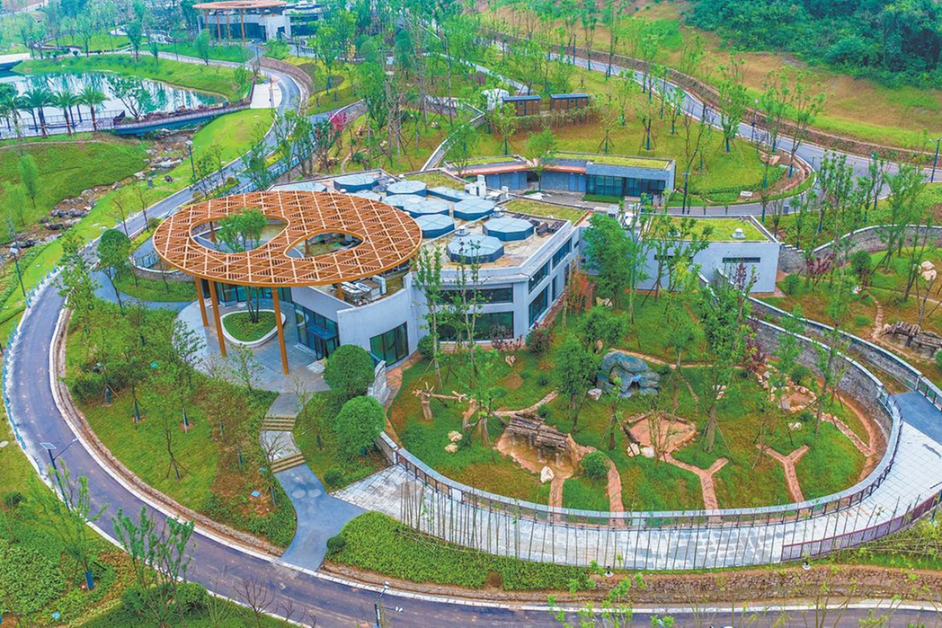
A significant milestone in wildlife conservation was marked on Tuesday as the Mianyang base of the China Conservation and Research Center for the Giant Panda commenced its trial operations. Located in the Guloushan ecological park within the Mianyang Science and Technology City New Area, the base welcomed 13 giant pandas from the Wolong Shenshuping and Dujiangyan bases. These pandas, ranging from juveniles to elderly individuals, were accompanied by their keepers and veterinarians to ensure a smooth transition. Huang Zhi, head of the base’s management and operation branch, noted that while the pandas exhibited some initial nervousness, their overall condition was good. The base, a collaborative effort between the National Forestry and Grassland Administration and the Mianyang city government, spans approximately 120 hectares and features 50 enclosures designed to meet the pandas’ habitat needs. Advanced preparations for facilities, environmental enrichment, food supply, and staffing were completed to ensure optimal conditions. The base aims to leverage Mianyang’s technological strengths to enhance giant panda conservation and research, particularly for the wild populations in the Minshan Mountains. According to the fourth national giant panda census, the Mianyang section of the Giant Panda National Park is home to 418 wild pandas, representing about 22.4% of the country’s total. Established in October 2021, the Giant Panda National Park spans over 22,000 square kilometers across Sichuan, Shaanxi, and Gansu provinces, providing strict protection for about 72% of the wild giant panda population. The China Conservation and Research Center for the Giant Panda has made significant strides in captive breeding since the 1980s, overcoming challenges related to estrus, mating, and cub survival. The captive panda population has grown from six in 1983 to over 380 today, marking the largest such population globally with improved genetic diversity. The Mianyang base will open to the public once the pandas have completed their adaptation period.
标签: Asia
亚洲
-

National Games spark village revival
The 15th National Games, a collaborative effort between Guangdong province and the Hong Kong and Macao special administrative regions, have significantly contributed to rural revitalization and infrastructure development in Langtou village, Guangzhou. This historic village, founded during the late Southern Song Dynasty, has undergone transformative changes in preparation for the Games, which are scheduled from November 9 to 21.
-

China’s Mars orbiter observes interstellar object 3I/ATLAS
In a groundbreaking achievement, China’s Tianwen 1 Mars orbiter has successfully observed the interstellar object 3I/ATLAS using its advanced high-resolution camera. The China National Space Administration (CNSA) announced the milestone, highlighting that the spacecraft was approximately 30 million kilometers from the object during the observation, marking one of the closest encounters by a probe to date. The data captured by the orbiter revealed distinct cometary features, with researchers creating an animation from a series of images taken over 30 seconds to illustrate the object’s trajectory through space. These findings are now being analyzed for further scientific insights into 3I/ATLAS. This accomplishment not only underscores the extended mission success of Tianwen 1 but also serves as a critical technical test for the upcoming Tianwen 2 mission, launched in May 2025, which aims to collect samples from a near-Earth asteroid and explore a main-belt comet. The observation of such a faint celestial object demonstrates China’s growing capabilities in deep-space exploration and its commitment to advancing astronomical research.
-

Graduates diversify career paths
In an increasingly competitive job market, university graduates are exploring unconventional career paths to secure their livelihoods. Lu Yiding, a former university student, exemplifies this trend. After attempting to start his own business during his studies in 2018, Lu left his job in 2023 to run a cake stall at a night market in Nanning, Guangxi Zhuang Autonomous Region. Similarly, Wu Yun’e, a graduate with a degree in internet of things engineering from Hunan Agricultural University, found himself working as a server at a Chef Fei restaurant. Initially struggling with social anxiety, Wu has since risen to become the head of a branch in Zhengzhou, Henan Province, within just two years. His journey highlights the growing number of graduates who, unable to find jobs in their chosen fields, are turning to alternative professions. Wu’s initial difficulty in greeting customers and presenting the restaurant’s signature dish underscores the challenges faced by many in transitioning to new roles. These stories reflect a broader shift in the career trajectories of graduates, driven by the need to adapt to a challenging economic landscape.
-

Hong Kong sci-tech forum gathers young scientists amid innovation hub drive
The Hong Kong Laureate Forum 2025, a premier science and technology exchange event, commenced in Hong Kong on Wednesday, November 5, 2025. The forum attracted over 200 young scientists from more than 20 countries and regions, fostering international collaboration and innovation. Chan Kwok-ki, Chief Secretary for Administration of the Hong Kong Special Administrative Region government, emphasized the region’s commitment to becoming a global innovation hub. He highlighted the launch of a 3 billion Hong Kong dollar (approximately $385.8 million) frontier technology research support scheme, aimed at building advanced facilities for cutting-edge scientific research. The forum, themed ‘Meeting of Inspirational Minds,’ will span four days and feature keynote speeches, breakout sessions, and poster presentations. Discussions will focus on astronomy, life science, medicine, and mathematical sciences. Tong Wai-cheung, Chairman of the forum, underscored its mission to cultivate curiosity, ignite passion for science, and empower emerging talent globally. The event not only supports scientific development but also accelerates Hong Kong’s transformation into an international innovation and technology center.
-

India leads T20 series 2-1 after Australia crashes against spin
In a thrilling display of spin bowling prowess, India clinched a decisive 48-run victory over Australia in the fourth Twenty20 match held on the Gold Coast. The visitors’ spin trio, led by Washington Sundar, orchestrated a dramatic collapse of the Australian batting lineup, restricting them to a mere 119 runs while chasing a target of 168. Sundar’s remarkable spell of 3-3 in just 1.2 overs was complemented by Axar Patel’s 2-20 and Varun Chakravarthy’s 1-26, collectively dismantling the hosts’ middle and lower order. Earlier, India posted a competitive total of 167-8, anchored by Shubman Gill’s solid 46 off 39 balls. Despite Adam Zampa’s 3-45 for Australia, the home team faltered under pressure, with skipper Mitchell Marsh’s 30 off 24 balls being the highest individual score. With this win, India took an unassailable 2-1 lead in the series, setting the stage for the final match in Brisbane on Saturday.
-

UN climate summit kicks off in Brazil’s Amazon with hopes for action despite US absence
As world leaders gather in Belem, Brazil, for the United Nations’ annual climate summit, COP30, the urgency of the global climate crisis is starkly visible. The Amazon rainforest, often referred to as the ‘lungs of the world,’ surrounds the city with its lush greenery and winding rivers. Yet, the view also reveals vast barren plains, a testament to the 17% of the Amazon’s forest cover lost over the past 50 years due to deforestation for agriculture, logging, and mining. This biodiverse ecosystem, crucial for absorbing carbon dioxide, has been increasingly threatened by wildfires and cattle ranching. Brazilian President Luiz Inácio Lula da Silva aims to use this summit to rally global support for halting the destruction of tropical rainforests and advancing critical climate goals. However, the absence of key leaders from the world’s largest polluters—China, the United States, and India—casts a shadow over the event. U.S. President Donald Trump’s withdrawal from the Paris Agreement and his administration’s absence from the summit have raised concerns about a potential global retreat from climate commitments. Meanwhile, Brazil faces its own contradictions as a major oil producer, with Lula’s decision to allow oil exploration near the Amazon River drawing criticism. Despite logistical challenges in hosting the summit in Belem, including a shortage of accommodations and surging prices, the event has become a platform for activists to voice their demands for climate justice and Amazon preservation. The freedom to protest in Brazil contrasts sharply with previous summits held in autocratic nations, offering a unique opportunity for dialogue and action.
-

Australian coroner calls for more investigations into German backpacker’s death 20 years ago
In a significant development, an Australian coroner has called for renewed police scrutiny into the mysterious death of Simone Strobel, a German backpacker whose body was discovered concealed in a park two decades ago. Coroner Teresa O’Sullivan, who presided over a second inquest into the case, concluded that further investigation is warranted to uncover the truth behind the tragic incident. Strobel, a 25-year-old kindergarten teacher from Bavaria, was found naked under palm fronds in Lismore, New South Wales, on February 17, 2005, just 100 meters from the trailer where she had been staying with her boyfriend Tobias Suckfuell (now known as Tobias Moran), his sister Katrin Suckfuell, and friend Jens Martin. Her body was discovered six days after she was reported missing. Despite Moran being charged with her murder and obstruction of justice in 2022, the charges were subsequently dropped without explanation. O’Sullivan noted that while Moran’s legal team argued his involvement was ‘very unlikely,’ she could not definitively rule out his participation. The coroner also dismissed the likelihood of Moran’s sister or Martin being involved, emphasizing that Moran could not have acted alone in the alleged crime. However, O’Sullivan stopped short of assigning responsibility, stating that the cause of Strobel’s death remains unclear. This echoes the findings of the initial 2007 inquest, which also cited insufficient evidence to recommend charges. In 2020, police offered a AUD 1 million reward for information, and Moran has since expressed hope that the case will receive a ‘fair and unbiased investigation’ following the coroner’s recommendation to refer the matter to the New South Wales Unsolved Homicide Team for further DNA analysis. Strobel and Moran had arrived in Australia as backpackers in 2004, with Moran changing his name in 2012 after marrying his Australian wife.
-

Nasa Hataoka and Miyu Yamashita atop LPGA leaderboard after first round in Japan
Japanese golfers Nasa Hataoka and Miyu Yamashita delivered stellar performances on Thursday, both carding 7-under 65 to share the lead after the opening round of the LPGA’s Toto Japan Classic. Held at the Seta Golf Club in western Japan, the event showcased a competitive field with several players in close contention. Hataoka, aiming for her seventh LPGA Tour victory, and Yamashita, seeking her third title, set the tone for an exciting tournament. South Korea’s Shin Ji-yai trailed by just one stroke, while Japanese twins Chisato Iwai and Akie Iwai, along with Minami Katsu, were two shots behind. The leaderboard remained tight, with eight players, including Australia’s Minjee Lee, a three-time major champion, just three strokes off the pace. Defending champion Rio Takeda struggled, finishing with a 1-over 73 and trailing by eight strokes. The tournament promises intense competition as players vie for the coveted title.
-
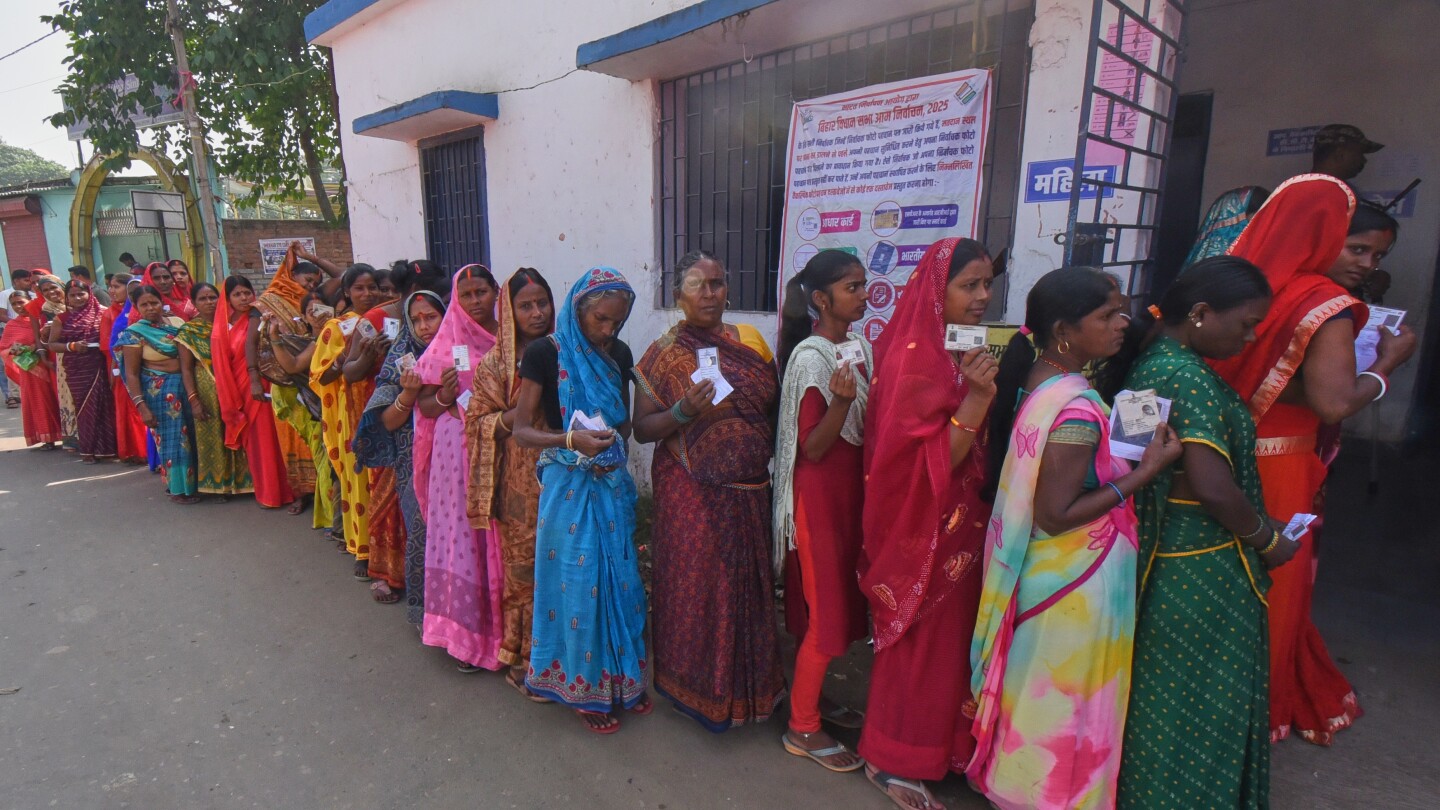
Indians vote in a state election in Bihar seen as key test for Prime Minister Modi
India’s eastern state of Bihar is witnessing a pivotal local election on Thursday, with millions of voters casting their ballots to determine the composition of the state’s 243-seat legislature. This election is widely regarded as a litmus test for Prime Minister Narendra Modi’s popularity and the resilience of his Bharatiya Janata Party (BJP)-led National Democratic Alliance (NDA). The outcome, expected on November 14, will not only shape Bihar’s political landscape but also influence Modi’s broader national strategy ahead of the 2029 general elections and key state polls in Uttar Pradesh, West Bengal, and Assam. Bihar, often considered India’s political bellwether, sends 40 lawmakers to the national parliament, making it a critical battleground for Modi’s coalition. A victory here could bolster his government’s stability, while a setback might embolden the opposition. The election unfolds amid widespread concerns over unemployment, law and order, and allegations of irregularities in the revision of electoral rolls, which saw nearly 10% of Bihar’s 74 million voters removed from the lists. Opposition leaders, including Congress Party’s Rahul Gandhi, have criticized the move as politically motivated, claiming it disenfranchised poor and minority voters. The Election Commission, however, maintains that the revision was necessary due to migration, new voter eligibility, and unreported deaths. The BJP-led alliance, with Chief Minister Nitish Kumar of the Janata Dal (United) at the helm, faces challenges from the opposition Rashtriya Janata Dal (RJD) and a new group, Jan Suraaj, led by Modi’s former poll strategist Prashant Kishor. Kumar, a seasoned politician who has governed Bihar for nearly two decades, is credited with improving infrastructure and addressing law and order issues. However, analysts warn that a loss in Bihar could fracture his party and destabilize Modi’s federal coalition, which relies on 12 of Kumar’s lawmakers. Economically, Bihar remains one of India’s poorest states, with a predominantly agrarian economy and widespread poverty. Both the ruling alliance and the opposition have promised to create millions of government jobs, though economists remain skeptical given the state’s fragile economic conditions. In a bid to appeal to women voters, Modi recently announced cash transfers of 10,000 Indian rupees ($113) each to 7.5 million women as part of an employment program. Women constitute a significant voting bloc in Bihar, as men often migrate to larger cities for work. Despite welfare measures, critics argue that the government has failed to address systemic issues such as landlessness, low wages, and limited employment opportunities. The Bihar election, therefore, is not just a local contest but a barometer of Modi’s political fortunes and the broader challenges facing India’s democracy.