标签: Asia

亚洲

  • China issues alerts for snow and ice, urges caution on icy roads

    China issues alerts for snow and ice, urges caution on icy roads

    Meteorological authorities across China have activated multiple weather advisories in response to significant winter precipitation affecting both northern and southern regions. The National Meteorological Center reports substantial snowfall across northern territories, with particularly heavy accumulation anticipated throughout Thursday in Hebei and Shanxi provinces, including the capital Beijing.

    Forecast models indicate light to moderate snow and sleet patterns extending across North China, with additional winter precipitation expected in Heilongjiang, Liaoning, Gansu provinces, and the Xinjiang Uygur Autonomous Region. The Beijing Meteorological Service has implemented a yellow-level icy road alert—the preliminary tier in China’s three-stage warning system—following Wednesday morning’s snowfall commencement.

    Transportation authorities have issued comprehensive travel advisories highlighting hazardous road conditions, significantly reduced visibility, and substantial journey disruptions. The public has been urged to exercise extreme caution and implement appropriate safety measures when traveling.

    Simultaneously, southern China confronts截然不同的 weather challenges as torrential rainfall saturates coastal regions. Guangdong province experienced intense downpours on Tuesday, with Zhuhai recording unprecedented precipitation levels for March according to Weather China, the official meteorological administration’s digital platform. This contrasting weather phenomenon demonstrates the diverse climatic challenges currently affecting the nation.


  • Proposed law aims to enhance ethnic unity and safeguard rights in China

    Proposed law aims to enhance ethnic unity and safeguard rights in China

    China is advancing significant legislation designed to fortify ethnic unity and protect the lawful rights of all ethnic groups nationwide. The proposed law on promoting ethnic unity and progress represents a strategic initiative to cultivate a stronger sense of community for the Chinese nation, according to official statements from the National People’s Congress (NPC).

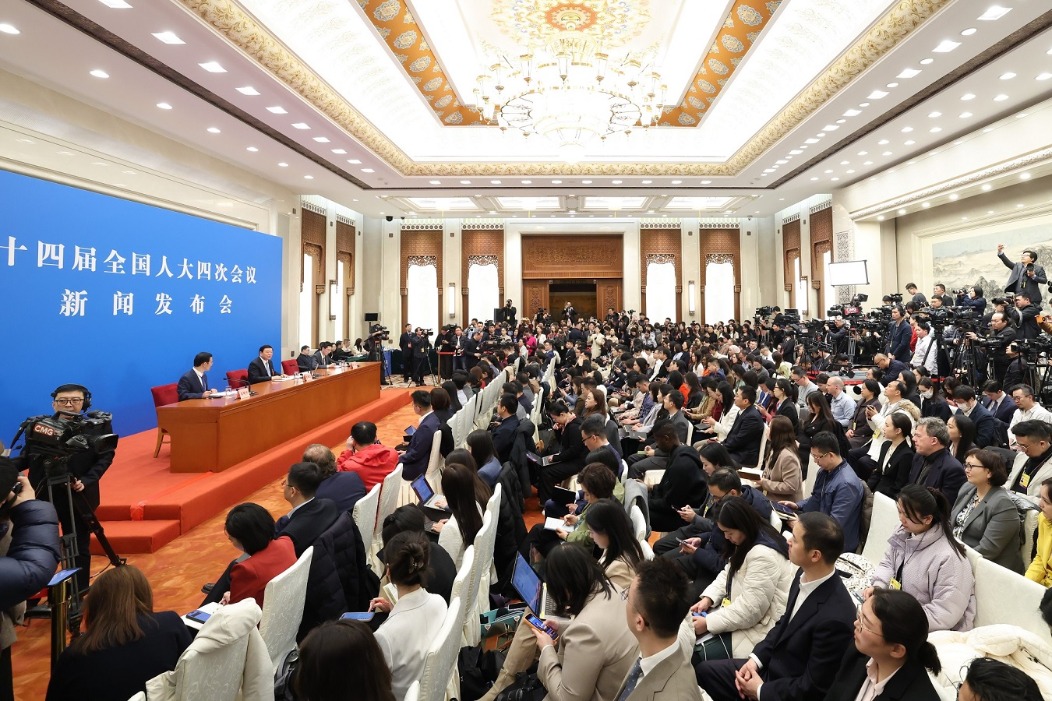
    Lou Qinjian, spokesman for the fourth session of the 14th NPC, emphasized that the legislation aligns with the Communist Party of China’s contemporary approach to ethnic affairs. The law reflects what officials describe as an overarching historical trend—marking a transition from traditional practices to modern governance while preserving unity within diversity through formal state legislation.

    The legislative process began with the draft law’s initial review by the NPC Standing Committee in September. Following standard parliamentary procedure, the proposal was subsequently published on the NPC’s official website to solicit public feedback and distributed to all NPC deputies for consideration. The draft will undergo formal deliberation during the NPC’s annual session running from March 5 to March 12.

    The comprehensive legislation establishes clear overall requirements, fundamental principles, and defines the responsibilities of relevant entities in promoting ethnic unity. It outlines specific measures including building a shared cultural homeland, facilitating cross-ethnic interaction and integration, and promoting mutual prosperity and development among all ethnic groups.

    Officials indicate the new law will work in coordination with existing regulations such as the law on regional ethnic autonomy, creating a cohesive legal framework for nationwide ethnic relations. The legislation specifically focuses on developing the community of the Chinese nation while ensuring ethnic regions receive support to accelerate their integration with the country’s broader development objectives.

    According to NPC spokespersons, the legislation represents a systematic approach to strengthening institutional mechanisms that foster national unity while safeguarding the rights and interests of citizens from all ethnic backgrounds, ultimately enhancing the cohesion and unity of the Chinese nation.

  • Chinese scientists develop non-invasive method for long-term brain imaging in mice

    Chinese scientists develop non-invasive method for long-term brain imaging in mice

    Chinese researchers from the Southern University of Science and Technology have achieved a significant breakthrough in neuroimaging technology with the development of PACMes, an innovative photoacoustic imaging system that enables long-term, high-resolution brain monitoring in mice without surgical intervention or contrast agents.

    The pioneering technology, detailed in a recent publication in Science Advances, addresses longstanding challenges in brain imaging where the scalp and skull typically cause substantial interference through light refraction, optical scattering, and acoustic attenuation. The PACMes system achieves synergistic optimization across three critical dimensions: near-infrared optical excitation, low-frequency acoustic detection, and advanced computational reconstruction.

    This integrated approach facilitates efficient penetration through intact biological barriers while minimizing scattering interference and ensuring high-sensitivity, full-angle detection of photoacoustic signals. The system produces isotropic high-resolution imaging across the entire field of view, covering a 13-millimeter diameter area that encompasses the complete mouse cerebral cortex with exceptional 33-micrometer spatial resolution.

    A remarkable feature of PACMes is its capacity for continuous monitoring exceeding five months, providing unprecedented opportunities for longitudinal studies. In practical application, the system successfully tracked vascular changes in a mouse model of mild ischemic stroke throughout a five-month observation period. Crucially, the technology non-invasively identified the formation of new collateral circulation in the infarct area 72 hours post-modeling—a key pathological feature that offers direct insight into vascular repair mechanisms following stroke.

    The research team emphasizes that this technology represents an ideal platform for monitoring chronic progression of various brain disorders. The innovation holds particular promise for advancing research into cerebrovascular conditions including Alzheimer’s disease and epilepsy, potentially opening new avenues for investigating disease mechanisms and evaluating therapeutic interventions.

  • The sea is higher than we thought and millions more are at risk, study finds

    The sea is higher than we thought and millions more are at risk, study finds

    A groundbreaking study published in Nature has uncovered a systematic underestimation in global sea level rise projections that could place tens of millions more people at risk of coastal flooding than previously anticipated. The research reveals that approximately 90% of existing scientific studies and hazard assessments have miscalculated baseline coastal water heights by an average of 30 centimeters (1 foot), creating a dangerous gap in climate preparedness planning.

    The international research team, led by Katharina Seeger of the University of Padua and Philip Minderhoud of Wageningen University, identified a fundamental ‘methodological blind spot’ in how scientists measure the intersection of land and sea. The discrepancy stems from incompatible measurement systems between satellite-based altimetry and land-based elevation models, particularly problematic in the Global South, Pacific regions, and Southeast Asia.

    ‘Studies typically assume a zero-meter starting point without accounting for actual measured sea levels,’ explained Seeger. The reality at coastlines involves complex dynamics including waves, currents, tidal variations, temperature fluctuations, and phenomena like El Niño – factors routinely excluded from simplified models.

    The implications are staggering: when adjusting for accurate baseline measurements, a 1-meter sea level rise (projected by end-century scenarios) could inundate up to 37% additional coastal land. This places 77 to 132 million more people in vulnerable regions at direct risk, with Southeast Asian and Pacific island nations facing the most severe threats.

    Climate scientist Anders Levermann of the Potsdam Institute noted, ‘The risk of extreme flooding is much higher than previously thought for enormous populations.’ The findings underscore urgent needs for revised climate adaptation strategies and funding mechanisms.

    While some experts suggest local planners may already compensate for these discrepancies, the study highlights how methodological oversights could undermine global climate resilience efforts. The research emerges alongside a UNESCO report warning of significant gaps in understanding oceanic carbon absorption, suggesting broader challenges in climate modeling accuracy.

    For coastal communities like those in Vanuatu, where 17-year-old activist Vepaiamele Trief observes eroding shorelines and submerged graves, the scientific revisions confirm lived experiences: ‘These studies represent people’s actual livelihoods being completely overturned.’

  • NPC Standing Committee enhances oversight to foster development and public welfare in China

    NPC Standing Committee enhances oversight to foster development and public welfare in China

    China’s National People’s Congress Standing Committee has significantly amplified its supervisory functions throughout the past year, implementing comprehensive monitoring systems to advance national development priorities and public welfare initiatives. Lou Qinjian, spokesperson for the 14th NPC’s fourth session, detailed these enhanced oversight mechanisms during a Wednesday press briefing, emphasizing their critical role in promoting high-quality growth and environmental sustainability.

    The legislative body employed a multi-faceted approach to supervision, incorporating rigorous review processes, specialized investigations, and systematic evaluations of law enforcement. The committee examined 22 supervisory reports, conducted five separate law enforcement inspections, held two special inquiry sessions, and completed 11 thematic research projects alongside issuing one formal resolution. This comprehensive strategy enabled thorough assessment of governmental compliance with constitutional mandates and policy implementations.

    Key focus areas included the development of new productive forces, with the committee reviewing progress reports and advocating for practical implementation measures. The oversight extended to state-owned asset management, where the committee established robust accountability frameworks and rectification mechanisms to ensure proper fiduciary stewardship. Environmental governance received particular attention through reviews of climate change mitigation efforts and carbon neutrality initiatives, complemented by inspections of Forest Law enforcement practices.

    Food safety regulations underwent meticulous examination to verify comprehensive regulatory compliance, while the committee simultaneously advanced whole-process people’s democracy through enhanced deputy engagement. Over 1,000 legislative representatives participated in 67 distinct research topics related to the forthcoming 15th Five-Year Plan (2026-2030), creating substantial public consultation mechanisms.

    The committee implemented a novel supervision identification system through its chairperson’s meeting, which prioritized 23 key recommendations addressing widespread public concerns. Looking forward, the NPC Standing Committee remains committed to strengthening its supervisory capabilities through full implementation of the Supervision Law, ensuring continuous improvement in governmental accountability and policy effectiveness.

  • Men on trial accused of ‘shadow policing’ for China on British soil

    Men on trial accused of ‘shadow policing’ for China on British soil

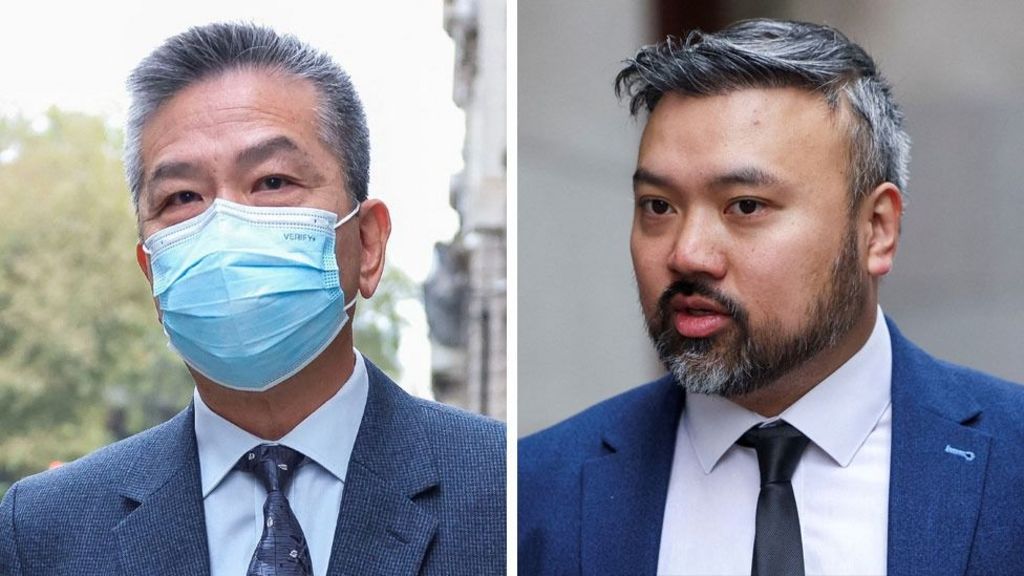
    A landmark trial at a British court has unveiled startling allegations of foreign intelligence operations on UK soil, centering on two dual-passport holders with extensive security backgrounds. Chung Biu ‘Bill’ Yuen, 65, and Chi Leung ‘Peter’ Wai, 38, stand accused of conducting unauthorized surveillance and intelligence gathering against Hong Kong pro-democracy activists residing in Britain, operating under what prosecutors termed ‘shadow policing’ for Chinese interests.

    Prosecutor Duncan Atkinson KC presented a meticulously documented case alleging systematic abuse of official positions. Yuen, a retired Hong Kong police officer serving as third-ranking official at London’s Hong Kong Economic and Trade Office, and Wai, a UK Border Force employee and special constable, allegedly collaborated to monitor dissidents targeted by Hong Kong authorities. The prosecution detailed how Wai reportedly misused police and Home Office computer systems dating back to 2018, conducting unauthorized database searches while receiving monthly retainers allegedly connected to intelligence provision.

    The operation’s scope allegedly included surveillance of multiple activists with bounties on their heads, including Monica Kwong, Finn Lau, Christopher Mung, and former legislator Nathan Law—all subjects of HK$1 million bounties offered by Hong Kong authorities. The court heard how defendants allegedly attempted to forcibly enter Kwong’s residence under false police pretenses before being intercepted by actual UK officers.

    Evidence presented revealed extensive communication networks, including WhatsApp groups where Wai reportedly shared information about protesters while receiving messages praising his service ‘on behalf of the country.’ The prosecution highlighted Wai’s alleged connections with Eddie Ma, former Hong Kong police chief superintendent, who referred to dissidents as ‘cockroaches’ and arranged monthly payments for intelligence.

    The case took a tragic turn with the death of co-accused Matthew Trickett, a former Royal Marine and Border Force officer who was found dead after being released on bail. Trickett had allegedly conducted database searches and organized surveillance operations targeting the activists.

    Both defendants plead not guilty to charges of assisting a foreign intelligence service and foreign interference, with Wai additionally denying misconduct in public office. The trial, expected to continue for six to seven weeks, represents a significant test of Britain’s National Security Act amid escalating tensions between the UK and China over extraterritorial enforcement activities.

  • Henan girl, 12, sets two Guinness records on Italian TV

    Henan girl, 12, sets two Guinness records on Italian TV

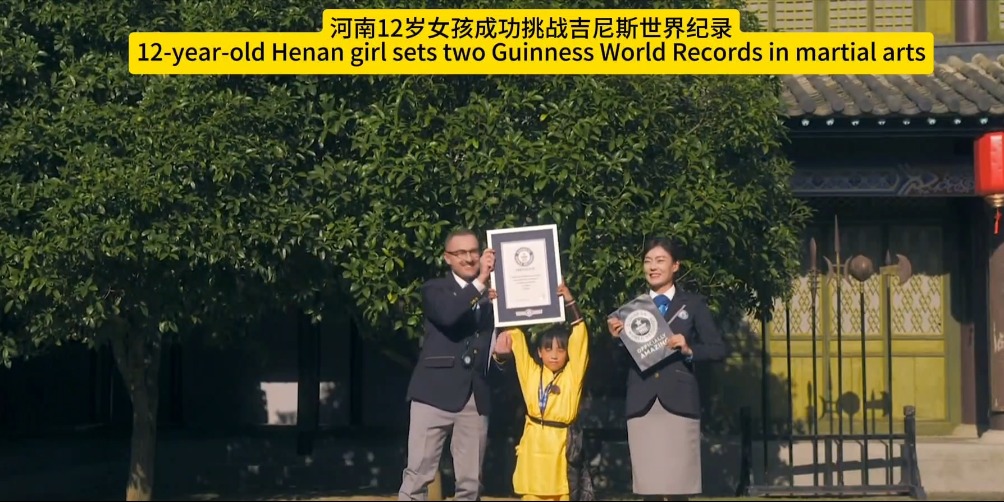
    A young martial arts prodigy from China’s Henan province has captured global attention by achieving dual Guinness World Records during a spectacular appearance on Italian national television. Zhang Sixuan, aged 12 from Tangyin county, demonstrated extraordinary physical prowess by establishing new world benchmarks in two distinct disciplines.

    The record-breaking performances saw Zhang complete an astonishing 69 consecutive headspin hops alongside achieving 11 perfectly executed stool splits within a rigorous sixty-second timeframe. These accomplishments represent significant milestones in martial arts athletics, showcasing both exceptional balance and remarkable lower-body flexibility.

    Zhang’s journey to international recognition began at the tender age of five when she first embarked on martial arts training. She currently refines her skills at the prestigious Jingzhong Martial Arts School, where her dedication has become legendary among instructors and peers alike.

    School Principal Zhao Zhenwu provided insight into the young record-holder’s character, describing her as possessing exceptional determination and resilience. “Throughout her training regimen, Zhang never voices complaints about hardship or fatigue,” Zhao remarked. The institution maintains high hopes for her future, anticipating she may eventually qualify for China’s national martial arts team.

    This achievement transcends personal accomplishment, serving as a cultural bridge that demonstrates traditional Chinese martial arts on an international platform. The televised event introduced global audiences to the discipline and dedication inherent in these ancient practices, while simultaneously highlighting the potential of youth athletic excellence.

  • Why Iran isn’t attacking America’s bases in Turkey

    Why Iran isn’t attacking America’s bases in Turkey

    In a calculated escalation of regional tensions, Iran has launched attacks against US military installations across Gulf states, citing their operational role in joint US-Israeli operations against Iranian interests. This development highlights Tehran’s selective targeting strategy, particularly notable for its exclusion of two strategically significant US bases in Turkey: Incirlik Air Base and Kurecik Radar Station.

    Geographic proximity alone would suggest Turkey-based facilities represent more immediate targets, sharing a direct border with Iran unlike the distant Gulf monarchies. Analysis reveals three fundamental reasons behind Iran’s deliberate avoidance of Turkish targets:

    1. Differential Risk Assessment: Iranian strategists perceive Gulf states as vulnerable targets with limited retaliatory capabilities. Their economies demonstrate fragility against drone warfare, while military inexperience—with limited exception of engagements against Houthi forces—reduces perceived escalation risks. Furthermore, historical sectarian tensions between Shiite-majority Iran and Sunni-led Gulf kingdoms create stronger animosity than exists with Turkey.

    2. Turkish Military Deterrence: Turkey’s armed forces have demonstrated formidable capability through sustained combat operations against Syrian Kurdish forces, intervention in Libya, and demonstrated proficiency in drone warfare during the 2020 Nagorno-Karabakh conflict. This proven operational effectiveness creates substantial deterrence, as Iran recognizes potential Turkish ground invasion capabilities that could compound existing pressure from US-Israeli aerial campaigns.

    3. Alliance Architecture: Turkey’s NATO membership introduces Article 5 considerations that could transform regional conflict into transatlantic confrontation. Additionally, Turkey’s strategic alliance with Azerbaijan presents second-front vulnerabilities, given northern Iran’s substantial ethnic Azeri population. Potential Azerbaijani intervention or NATO involvement through Turkish channels represents escalation Iran cannot presently afford.

    The strategic calculus indicates Iran perceives Gulf states as collectively weaker than solitary Turkey, with greater susceptibility to destabilization through limited strikes. This assessment, combined with respect for Turkish military capabilities and fear of alliance-triggered escalation, explains Tehran’s selective targeting despite all hosting US military assets.

  • China says no country should dictate others’ destiny

    China says no country should dictate others’ destiny

    China has emphatically declared that no nation possesses the authority to dominate international affairs or determine the destinies of other countries. The statement came from Lou Qinjian, spokesperson for the fourth session of the 14th National People’s Congress, during a press conference preceding the annual legislative gathering.

    Addressing growing international concerns about the erosion of global governance systems and the diminishing role of the United Nations, Lou articulated China’s firm position against unilateralism and the increasing use of force in international relations. The spokesman specifically referenced the situation in Iran, emphasizing that the nation’s sovereignty, security, and territorial integrity must be fully respected.

    China urgently called for the immediate cessation of military operations against Iran, advocating instead for diplomatic dialogue and negotiations to prevent further escalation of tensions in the Middle East. Lou affirmed China’s commitment to functioning as a responsible global power in facilitating peaceful resolutions.

    The spokesperson outlined China’s Global Governance Initiative, which champions sovereign equality, adherence to international rule of law, genuine multilateralism, people-centered approaches, and concrete actions. This framework represents China’s proposed solution for creating a more just and equitable global governance system.

    As a permanent member of the UN Security Council and a major world power, China pledged to collaborate with all nations to uphold the authority and status of the United Nations, maintain the principles of the UN Charter, practice authentic multilateralism, and contribute significantly to global governance reform efforts aimed at building a shared future for humanity.

  • Bridging culture and technology to craft unique travel experiences

    Bridging culture and technology to craft unique travel experiences

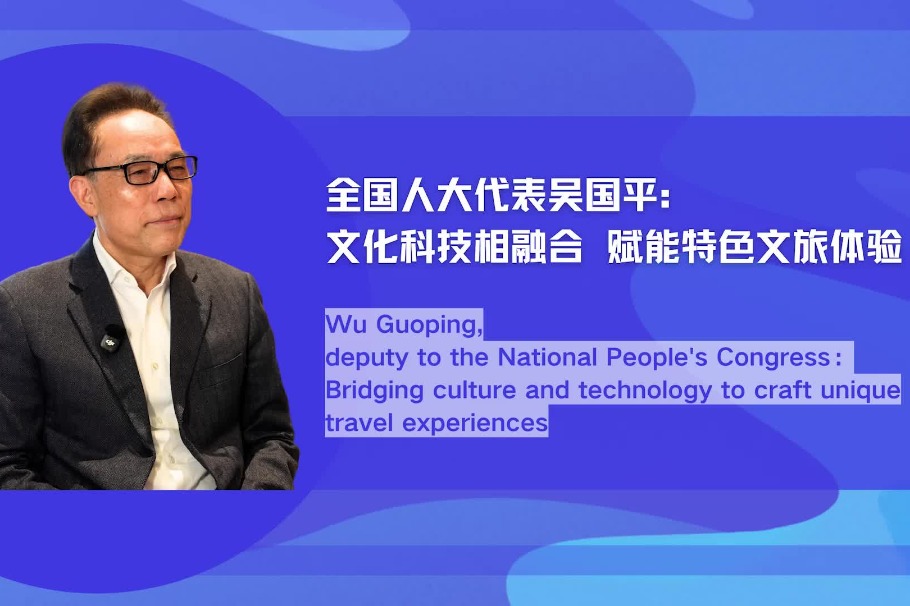
    During the ongoing National People’s Congress sessions, delegate Wu Guoping presented a visionary framework for transforming China’s tourism sector through the strategic integration of cultural heritage and technological innovation. In an exclusive dialogue with China Daily, the legislator articulated that the future of travel experiences lies not in ephemeral social media attractions but in creating profound spiritual destinations that command repeated visitation.

    The proposal emphasizes moving beyond superficial tourism trends to develop deeply immersive experiences that resonate on cultural and emotional levels. By leveraging cutting-edge technologies alongside authentic cultural elements, destinations can evolve into meaningful places that visitors feel compelled to revisit throughout their lives.

    This approach represents a significant shift from traditional tourism models, focusing instead on creating lasting emotional connections between travelers and destinations. The integration aims to preserve cultural authenticity while enhancing accessibility and engagement through appropriate technological applications.

    Wu’s initiative comes at a pivotal moment as China’s tourism sector seeks sustainable development models that balance economic growth with cultural preservation and innovation. The proposal has garnered attention from industry experts who see potential applications across China’s diverse cultural landscapes and historical sites.