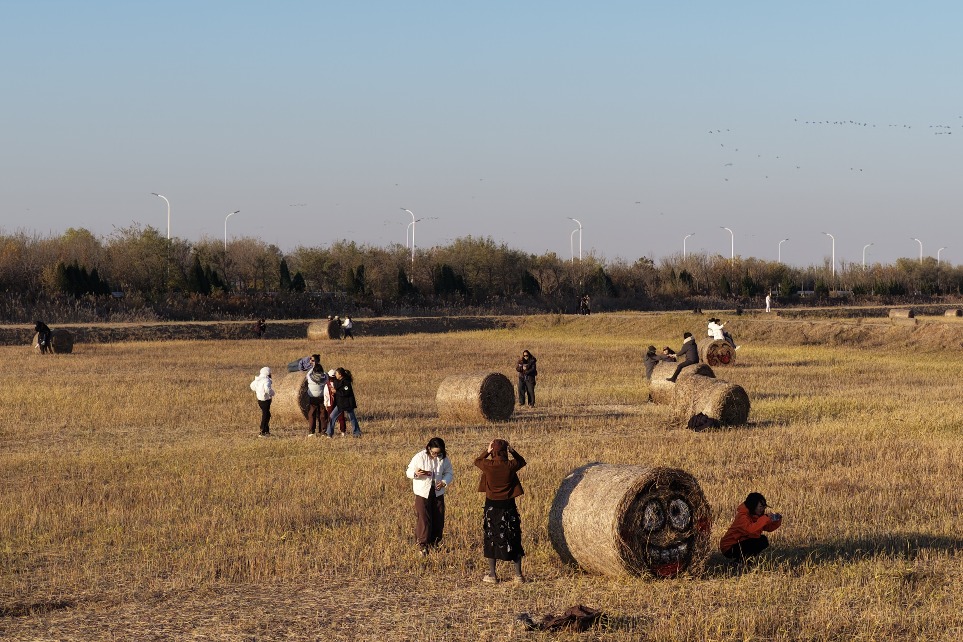
In a remarkable transformation, the once barren saline-alkaline lands of Dongying, Shandong province, have been revitalized into productive agricultural fields, thanks to innovative farming techniques and advanced seed varieties. This dramatic change is a testament to China’s commitment to agricultural modernization and food security.
标签: Asia
亚洲
-
Aquaculture reels in economic opportunities
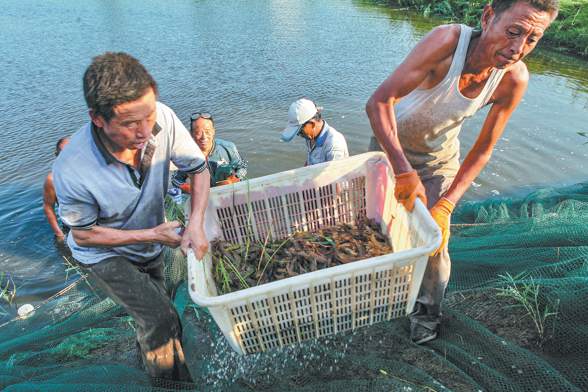
In Boxing County, Shandong Province, vast stretches of once-barren saline-alkaline land have been ingeniously transformed into a flourishing modern aquaculture base. This remarkable transformation is a result of coordinated development efforts in low-lying areas along the Yellow River, turning ecological challenges into lucrative economic opportunities. Over the past two decades, Boxing County has accelerated the large-scale conversion of these unproductive lands, constructing standardized ponds, industrial aquaculture facilities, and essential infrastructure such as water conservancy systems, roads, and power supply networks. This has led to the establishment of integrated modern fisheries zones. Qiaozhuang Town, a pioneer in this initiative, began experimenting with shrimp farming as early as 2001. By mixing Yellow River water with local saline groundwater, farmers successfully adapted shrimp to the local conditions. ‘Our village sits on reclaimed coastal land which is highly saline, where only weeds grew and crops barely survived. We were once known for poverty,’ said Song Chun, Party secretary of Wangping Village in Qiaozhuang. ‘Now, nearly every household raises shrimp, and lives have improved dramatically,’ he added. Qiaozhuang has established a complete industrial chain, from seedling acclimation and feed supply to disease control, cold storage, processing, and sales. On average, each household manages two or three shrimp ponds, with annual earnings exceeding 100,000 yuan ($14,055). The town continues to innovate, introducing an intelligent recirculating aquaculture system that automates feeding, waste removal, and harvesting. An online water-quality monitoring system tracks key indicators in real time, ensuring a healthy aquatic environment. Today, Qiaozhuang boasts 38,000 mu (about 2,533 hectares) of shrimp ponds, generating an average annual income of 17,000 yuan per mu. Wang Jingdong, deputy director of the Shandong Provincial Department of Agriculture and Rural Affairs, emphasized the provincial strategy: ‘We adhere to a coordinated approach that balances grain, economic crops, and forage production, while promoting agriculture, animal husbandry, and fisheries in parallel. By developing distinctive saline-alkaline agriculture, we are turning a ‘barren crust’ into ‘golden nuggets.’
-

China’s model of governance widely praised
China’s governance model has garnered widespread acclaim from international leaders and experts, who attribute the nation’s remarkable transformation to its strategic planning, ambitious goals, and pragmatic execution. Eberhard Sandschneider, a professor emeritus at the Free University of Berlin, recently revisited Beijing after decades and was astounded by the city’s metamorphosis. From a sea of bicycles to a hub of modern skyscrapers and advanced technology, Sandschneider described the change as ‘unbelievable,’ highlighting China’s rise as a global technological leader. He emphasized that the nation’s success is rooted in its long-term planning and flexible governance model, which allows swift responses to emerging challenges. Sandschneider suggested that Europe could learn from China’s pragmatic approach. Pablo Iglesias Turrion, former Spanish deputy prime minister, echoed this sentiment, linking China’s steady progress to the governing philosophy outlined in ‘Xi Jinping: The Governance of China.’ He praised the five-year plans as a testament to China’s political will and ability to mobilize economic forces for the benefit of its people. Former Czech deputy foreign minister Petr Drulak and Polish economist Grzegorz W. Kolodko also lauded China’s achievements, noting its profound economic transformation and growing influence in the Global South. Kolodko emphasized that China’s development model is increasingly studied by policymakers worldwide, as it offers valuable lessons for sustainable growth. Despite recent economic slowdowns, China continues to outpace many developed nations, solidifying its role as a key player in shaping a multipolar global order.
-
Five dead in suicide bombing in Pakistan
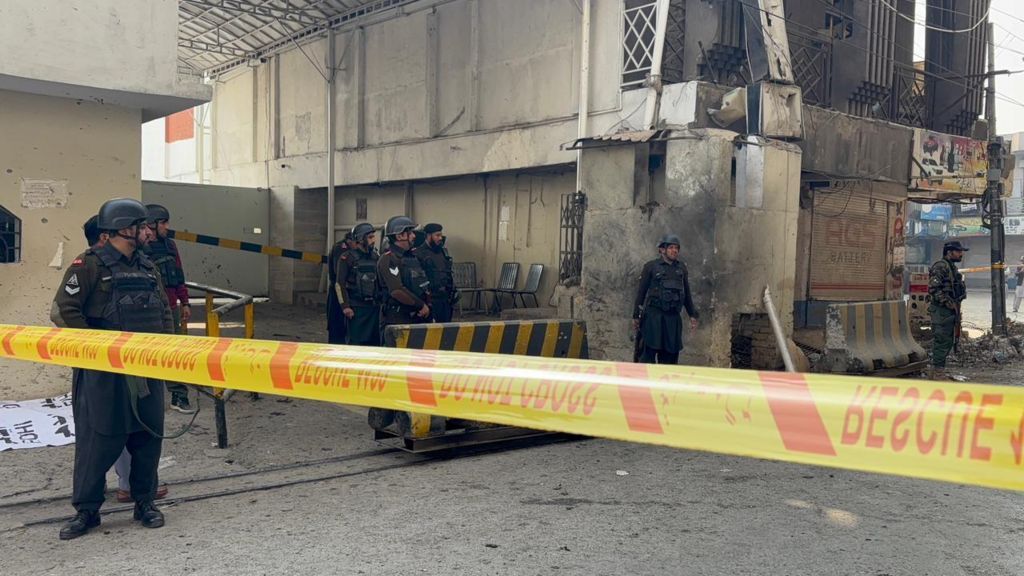
In a brazen assault on Monday, two suicide bombers targeted the headquarters of Pakistan’s Federal Constabulary in Peshawar, resulting in the deaths of three security personnel and injuries to at least 12 others. According to police reports shared with BBC Urdu, the attackers were heavily armed as they stormed the highly fortified complex in the northwestern city. The incident occurred at approximately 08:10 local time (03:10 GMT), with witnesses recounting hearing two deafening explosions. Despite the attackers’ efforts, they were neutralized at the gate before gaining access to the main building. Pakistani authorities have labeled the attack as a ‘foiled terrorist plot,’ emphasizing that the assailants were intercepted in time. Prime Minister Shehbaz Sharif condemned the attack, urging swift identification and prosecution of those responsible. The Federal Constabulary, tasked with addressing high-threat scenarios such as tribal conflicts and organized crime, operates in a region historically plagued by militant violence. Peshawar, located in the Khyber Pakhtunkhwa province bordering Afghanistan, has frequently been a hotspot for such attacks. While no group has yet claimed responsibility, the Pakistani Taliban, or Tehreek-i-Taliban Pakistan, has a history of orchestrating similar assaults in the area. Rescue teams and law enforcement remain on-site as investigations continue.
-

India celebrates as women lift T20 World Cup for the blind
India has emerged victorious in the first-ever Blind Women’s T20 World Cup, securing a seven-wicket win against Nepal in the final held in Colombo, Sri Lanka. This landmark achievement comes just weeks after India’s triumph in the Women’s One-Day International World Cup, further cementing the nation’s growing prowess in cricket. The tournament, which featured six teams—India, Nepal, Pakistan, Sri Lanka, Australia, and the US—was played in a round-robin format. India’s captain, Deepika Gaonkar, was visibly emotional as her team clinched the title. Blind cricket employs a unique set of rules, including the use of a plastic ball with metal bearings that produce a jingling sound, and players are categorized by their level of vision: B1 (fully blind), B2, and B3. Teams must include a mix of all three categories, and the ball is bowled underarm along the ground. B1 batters use runners for safety, and each run they score counts as two. In the final, India restricted Nepal to 114 runs for five wickets and successfully chased the target in just 12 overs, losing only three wickets. Mahantesh G Kivadasannavar, chairman of the Cricket Association for the Blind in India, emphasized that this victory would inspire many women and individuals with disabilities across the country to pursue cricket and other sports. The Indian team, comprising players who have overcome significant challenges, received a grand welcome in Chennai, with another reception planned in Bengaluru. The victory has been widely celebrated by politicians and cricket legends alike, with federal minister Amit Shah calling it a ‘historic day for Indian sports’ and former captain Mithali Raj praising the team’s resolve and dedication. The World Cup, which began on November 11 in Delhi, moved to Karnataka before concluding in Sri Lanka.
-

South Africa takes 4 wickets in 1st session on Day 3 as India struggles in 2nd cricket test
In a gripping display of cricketing prowess, South Africa tightened its grip on the first Test against India, reducing the hosts to 102-4 by the end of the morning session on Day 3. India, trailing by a daunting 387 runs, faced a series of setbacks as South Africa’s bowlers delivered a masterclass in precision and strategy. The Proteas, who had earlier amassed a formidable 489 in their first innings, are eyeing their first Test series victory on Indian soil since 2000-01. The day began with India resuming at six without loss, but the opening partnership of Yashasvi Jaiswal and Lokesh Rahul was soon dismantled. Rahul fell to Keshav Maharaj after scoring 22 runs, while Jaiswal, who had crafted a resilient 58, was dismissed by Simon Harmer. Harmer, who finished with figures of 2-39, also accounted for Sai Sudharsan, who struggled against spin. Dhruv Jurel’s brief stay at the crease ended in a duck, leaving India reeling at 102-4. Stand-in skipper Rishabh Pant and Ravindra Jadeja remained unbeaten at the interval, but the task ahead remains monumental. South Africa’s dominance was further underscored by Senuran Muthusamy’s maiden century on Day 2, which laid the foundation for their commanding total. As the match progresses, India faces an uphill battle to salvage the Test, while South Africa inches closer to a historic series win.
-
Suicide bombers strike security force headquarters in northwestern Pakistan, killing 3 officers
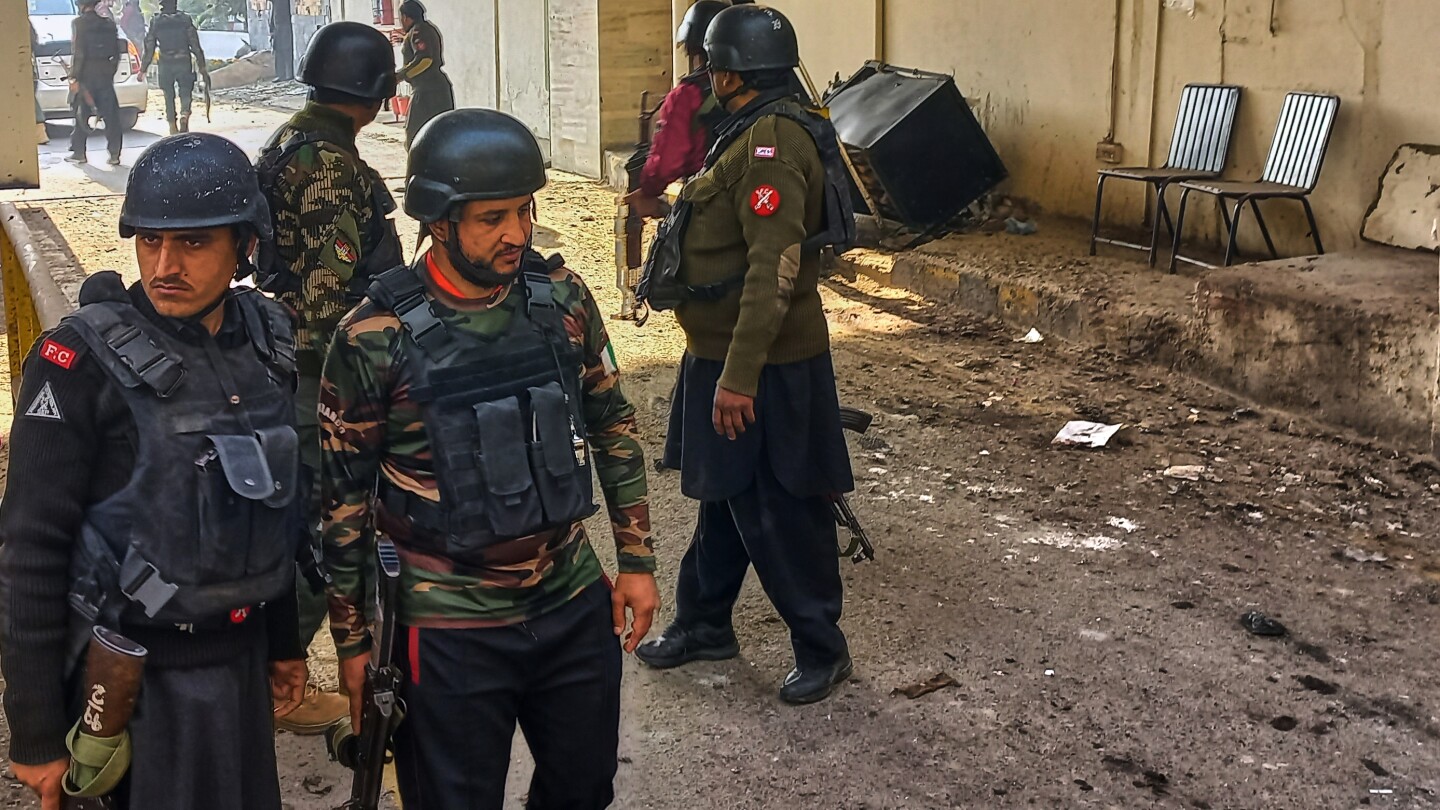
In a tragic incident on Monday morning, two suicide bombers targeted the headquarters of a security force in Peshawar, the capital of Khyber Pakhtunkhwa province in northwestern Pakistan. The attack resulted in the deaths of at least three officers and left five others injured, according to police and rescue officials. Peshawar Police Chief Saeed Ahmad detailed that one assailant detonated explosives at the main gate of the Federal Constabulary’s provincial headquarters, while the second bomber was neutralized by security personnel near the parking area. Ahmad emphasized that a swift response by the forces prevented a potentially larger catastrophe, as a significant number of officers were gathered on the open ground for morning parade drills. No group has yet claimed responsibility for the attack, though the Pakistani Taliban, or Tehrik-e-Taliban Pakistan (TTP), has been implicated in similar past incidents. This latest assault follows a suicide bombing outside a court in Islamabad less than two weeks ago, which claimed 12 lives. The surge in militant activities has exacerbated tensions between Pakistan and Afghanistan’s Taliban government, with Islamabad accusing Kabul of allowing cross-border attacks. Despite Afghanistan’s denial, bilateral relations remain strained, particularly after recent drone strikes and subsequent ceasefire brokered by Qatar. Pakistan has intensified its operations against the TTP, targeting insurgents near the Afghan border.
-

Australian judge rules synagogue arsonist was motivated by mental illness, not antisemitism
In a recent court ruling, an Australian magistrate determined that a man who set fire to a Melbourne synagogue was driven by mental illness rather than antisemitic motives. Angelo Loras, 35, pleaded guilty to arson and recklessly endangering lives after he ignited the front door of the East Melbourne Synagogue on July 4. Approximately 20 worshippers were inside sharing a Shabbat meal at the time, but no injuries were reported. Magistrate Malcolm Thomas stated that Loras, who suffers from schizophrenia, acted under the influence of a delusion exacerbated by his failure to take prescribed medication. This ruling comes amid a surge in antisemitic and Islamophobic incidents across Australia since the onset of the Israel-Hamas conflict in 2023. Initially, government leaders, including Prime Minister Anthony Albanese, suspected the attack was a hate crime. However, the court concluded that Loras’s actions were not motivated by prejudice. Loras was sentenced to four months’ imprisonment, which was less than the time he had already spent in custody. He was also ordered to continue medical treatment for schizophrenia for 20 months and perform unpaid community service. The magistrate advised the synagogue against seeking restitution for the $35,000 in damages, citing Loras’s prolonged homelessness and lack of prior criminal record. This incident was one of three suspected antisemitic acts in Melbourne during the same weekend, including harassment at an Israeli-owned restaurant and vandalism at a local business.
-
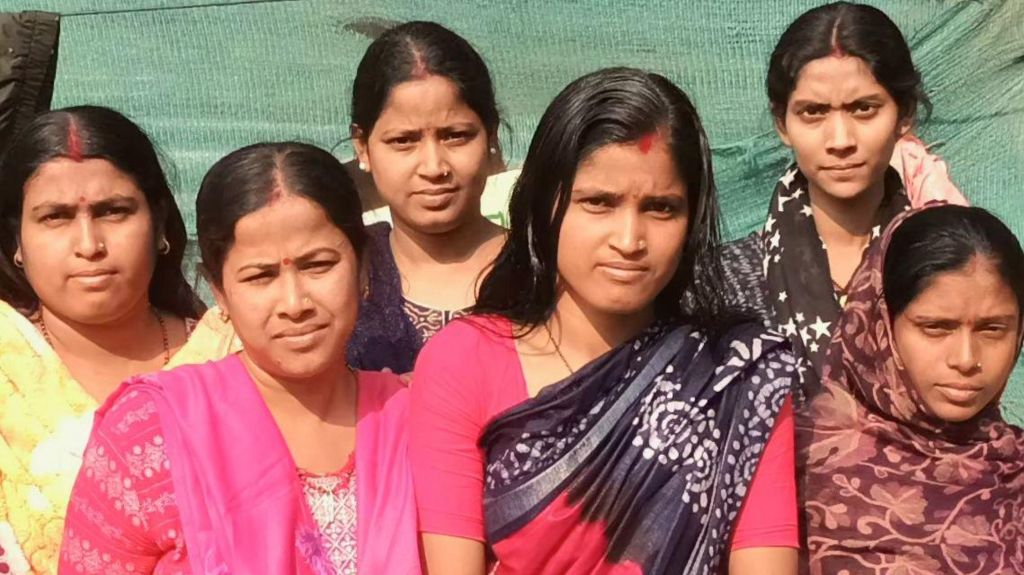
‘Can’t afford lost wages’: India’s voter roll revision is worrying migrant workers
In the Rangpuri Pahari slum of Delhi, a wave of unease has swept through the community of migrant workers. These individuals, who have long lived on the margins of society, are now confronted with the daunting prospect of making unexpected and costly trips back to their hometowns to ensure their names remain on India’s electoral rolls. This follows the initiation of the Special Intensive Revision (SIR) by India’s Election Commission on November 4, a nationwide effort to update voter lists across 12 states and federally administered regions, encompassing nearly 510 million voters. The SIR aims to eliminate ineligible voters and include those who are eligible, but for many migrant workers, this process poses significant challenges. Anjali Mondol, a domestic worker, expressed her concerns about the financial strain and potential job loss associated with taking unplanned leave. Similar worries were voiced by Subhashri Doloi, who fears depleting her savings meant for voting in the upcoming elections. The SIR also raises fears about access to welfare schemes and, for those from West Bengal, the added anxiety of proving citizenship amidst ongoing crackdowns on alleged illegal immigrants from Bangladesh. While the Election Commission has introduced online verification to ease the process, many workers remain unfamiliar with or wary of this option. The physical forms can be filled by family members, but the lack of awareness and the tight deadlines exacerbate the stress. Rajesh Kumar, a trade unionist, has called for more awareness campaigns and help desks in major cities to assist migrant workers. Despite these challenges, some, like Ramdhin Prajapati, view the SIR as a necessary one-time effort. However, for workers from West Bengal, where elections are imminent, the time constraints are particularly pressing. The situation underscores the broader issues faced by India’s migrant population, who navigate the complexities of electoral participation while grappling with job insecurity and financial instability.
-

Philippine president says 7 suspects in corruption scandal have been detained, others being sought
In a significant move to address widespread public outrage, Philippine President Ferdinand Marcos Jr. announced the detention of seven suspects linked to a major corruption scandal involving flood control projects. Speaking on Monday, Marcos revealed that additional suspects are being pursued, including powerful members of Congress implicated in the brazen anomalies. The scandal has exposed substandard or non-existent flood control initiatives in the poverty-stricken Southeast Asian nation, which is highly vulnerable to deadly floods and extreme weather. The Sandiganbayan, a special anti-corruption court, has already indicted over a dozen suspects, including former House of Representatives member Zaldy Co and government public works engineers. This marks the first wave of what is expected to be dozens of criminal graft and corruption lawsuits, with Marcos vowing to bring implicated senators, House members, and wealthy construction company owners to justice by Christmas. The initial case involves irregularities in a 289 million peso ($4.8 million) river dike project in Oriental Mindoro province, undertaken by Sunwest Corp., a construction firm allegedly owned by Co’s family. One suspect was arrested, while six others surrendered over the weekend. Marcos urged remaining suspects to surrender, emphasizing that the crackdown will continue relentlessly. Interior Secretary Jonvic Remulla warned that authorities will pursue suspects globally, with three individuals expected to surrender at Philippine embassies in the United States, New Zealand, and Jordan. The scandal has sparked massive protests, fueled by revelations of kickbacks, lavish lifestyles, and luxury assets among the accused. An upcoming demonstration on November 30, backed by the Roman Catholic Church, underscores the public’s frustration. Among those implicated is Rep. Martin Romualdez, the president’s cousin and key ally, who has denied involvement but stepped down as House Speaker. Former Senate President Chiz Escudero has also been accused of pocketing kickbacks, though he denies wrongdoing. Marcos’s aides defended him, noting he first raised concerns about the irregularities in his July state of the nation address. Investigations now span over 9,855 flood control projects worth 545 billion pesos ($9 billion) since Marcos took office in mid-2022, with officials estimating up to 118.5 billion pesos ($2 billion) lost to corruption since 2023. The probe may extend to projects undertaken during the tenure of Marcos’s predecessor, Rodrigo Duterte.