标签: Asia

亚洲

  • Egyptian Nightjar returns to UAE’s Wadi Wurayah Reserve, 5 years after 2021 sighting

    Egyptian Nightjar returns to UAE’s Wadi Wurayah Reserve, 5 years after 2021 sighting

    In a significant ecological development, the Egyptian Nightjar (Caprimulgus aegyptius) has been successfully documented returning to Fujairah’s Wadi Wurayah Biosphere Reserve after completing a five-year migration cycle. The remarkable rediscovery occurred in January 2026 during routine environmental surveillance operations conducted by conservation specialists.

    The individual specimen was originally captured and ringed with identification markers in 2021 as part of an extensive avian research initiative. During the initial documentation, researchers recorded comprehensive biological metrics including wing morphology, body mass, and physiological characteristics before releasing the bird to monitor its migratory behavior.

    The Fujairah Environment Authority’s long-term monitoring program proved instrumental in verifying the bird’s identity upon its return. This recapture event demonstrates the effectiveness of sustained ringing programs in tracking avian movement patterns across extended temporal scales. The discovery provides invaluable insights into species fidelity to specific habitats and migration chronology.

    Nestled within the Hajar Mountain range, the UNESCO-recognized biosphere reserve serves as a critical sanctuary for nocturnal and migratory bird species. The protected area’s unique ecosystem—characterized by permanent freshwater pools, undisturbed gravel plains, and secluded wadi formations—provides essential resources for species navigating arid regional migration corridors.

    The Egyptian Nightjar, a crepuscular and ground-nesting species, exhibits particular sensitivity to anthropogenic disturbances. Its consistent return to Wadi Wurayah underscores the reserve’s conservation significance and the species’ preference for pristine habitats within the eastern Arabian Peninsula. Wildlife authorities continue to monitor multiple species dependent on the reserve’s permanent water sources and protected ecosystems.

  • Hubei’s intangible cultural heritage charts a course for global influence

    Hubei’s intangible cultural heritage charts a course for global influence

    Hubei Province is orchestrating a sophisticated campaign to elevate its diverse intangible cultural heritage to international prominence, transforming traditional art forms into powerful instruments for global cultural exchange. This strategic initiative leverages the region’s rich cultural portfolio to foster meaningful dialogue across international borders.

    Central to this global outreach are immersive cultural performances designed to build bridges of understanding. Acclaimed troupes specializing in Han Opera, Huangmei Opera, and indigenous folk traditions such as the Tujia Hand-Waving Dance have embarked on extensive international tours. These performances are complemented by interactive community workshops that facilitate direct engagement between artists and global audiences, creating dynamic cultural conversations.

    The movement extends beyond performance to tangible cultural products. Master artisans like Han Embroidery inheritor Wang Ziyi are gaining international recognition, with their exquisite artworks representing Hubei’s craftsmanship in global forums. These cultural assets, ranging from traditional operas to textile arts, are being systematically positioned as vehicles for sharing Hubei’s unique cultural narrative with the world.

    This comprehensive approach demonstrates how regional cultural heritage can transcend geographical boundaries when supported by strategic promotion and cultural diplomacy. The province’s methodical transformation of traditional art forms into exportable cultural commodities provides a replicable model for other regions seeking global cultural influence while preserving their distinctive heritage.

  • Chinese study opens the door to more efficient AI chips

    Chinese study opens the door to more efficient AI chips

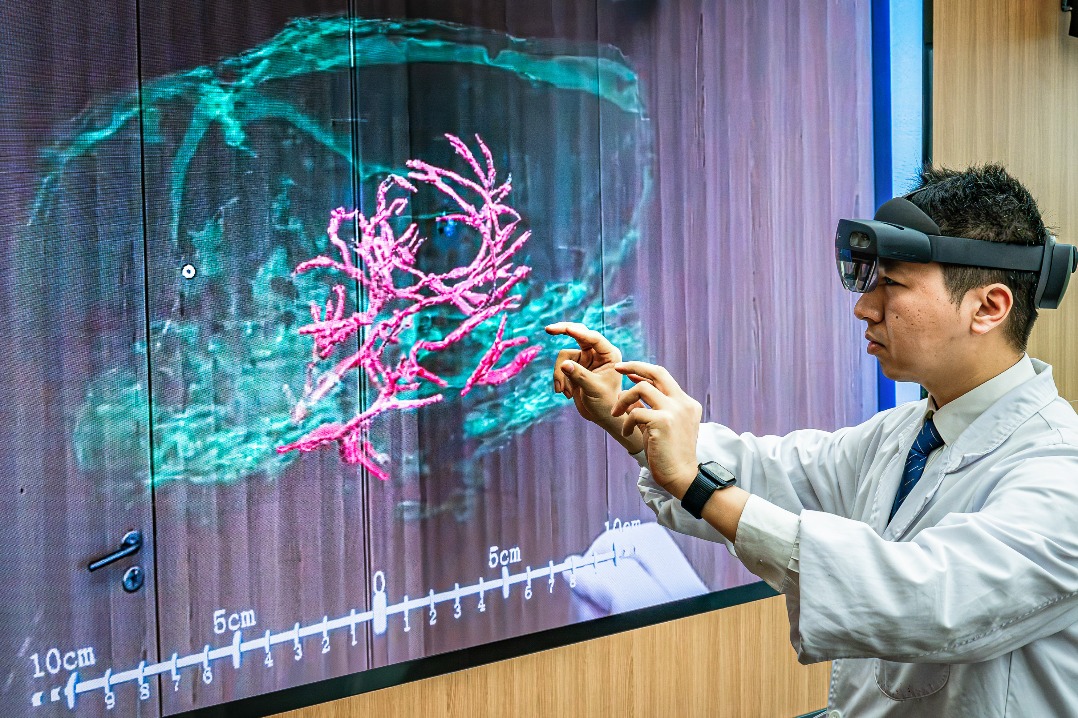
    A groundbreaking materials science discovery by Chinese researchers has unveiled unprecedented possibilities for revolutionary data storage technology that could transform artificial intelligence hardware. Scientists from the Institute of Physics at the Chinese Academy of Sciences have successfully identified and manipulated previously unknown atomic-scale structures within fluorite ferroelectric crystals—materials extensively used in microelectronics since the 2010s.

    The research team, after eight years of dedicated investigation, challenged conventional scientific understanding by demonstrating that what were traditionally considered two-dimensional domain walls within these crystals are actually one-dimensional linear structures measuring mere atoms in width. These ultratiny ‘linear walls,’ approximately one hundred-thousandth the diameter of a human hair, represent a fundamental reimagining of how information can be stored at the atomic level.

    Crucially, the researchers discovered that these nanometer-scale lines maintain remarkable stability through interactions with naturally occurring oxygen defects within the crystal lattice. These atomic imperfections function as microscopic anchors, preventing the structures from dissipating due to electrical forces—a critical requirement for practical data storage applications.

    Using advanced electron microscopy techniques, the team achieved unprecedented atomic-scale observation and control over these linear structures. By applying localized electric fields, they demonstrated the ability to create, reposition, and erase these atomic features on demand, establishing the theoretical framework for future storage devices.

    According to Dr. Zhong Hai, the study’s lead author and associate professor at Ludong University, this discovery could enable storage densities approximately 600 times greater than current technologies. This translates to potentially storing 20 terabytes of information within a single square centimeter—equivalent to fitting 10,000 high-definition movies in an area no larger than a postage stamp.

    The implications for artificial intelligence development are particularly significant, as these structures could enable the creation of AI chips with dramatically enhanced processing capabilities, reduced energy consumption, and substantially higher component density. However, researchers emphasize that practical implementation remains several years away, requiring solutions to engineering challenges including electrode design for localized field control.

    Published in the prestigious journal Science, this fundamental research opens new pathways in materials science while potentially laying the groundwork for a new generation of ultra-efficient computing hardware.

  • China’s liquor industry sets sail for ASEAN

    China’s liquor industry sets sail for ASEAN

    BANGKOK — China’s prestigious spirits sector has initiated a comprehensive strategic push into Southeast Asian markets with the inauguration of the “Baijiu & Beyond 2026 Chinese Fine Spirits Carnival” in Thailand’s capital. The three-day event, hosted at Phoenix International Food City, represents a methodical platform-driven approach to market expansion within the Association of Southeast Asian Nations region.

    Organized by the China Alcoholic Drinks Circulation Association, the carnival operates under the thematic banner “Decoding Chinese Fine Spirits, Co-creating an ASEAN Future.” The opening ceremony featured addresses from both Chinese and Thai industry representatives who collectively emphasized strengthening industrial dialogue and commercial collaboration between the nations.

    Wang Xinguo, Presidium Chairman of the China Alcoholic Drinks Circulation Association, articulated the event’s dual mission during his inaugural address: to demystify the intricate craftsmanship and cultural legacy underlying Chinese Baijiu while simultaneously establishing shared value creation frameworks with ASEAN partners. The distilled spirit, renowned for its clarity and potency, occupies a central position in China’s drinking culture.

    Concurrent with the public exhibition, industry leaders convened for the “China-Thailand Liquor Industry Expansion High-Level Closed-Door Meeting.” This gathering of association representatives and corporate decision-makers addressed critical operational challenges including market entry protocols, standardization alignment, and sustainable partnership structures. Participants consensus emerged around resolving practical trade impediments and cross-cultural misconceptions, culminating in agreements to institute permanent industry communication channels.

    The carnival serves as a dynamic commercial nexus, featuring dedicated trade matching sessions that connect prominent Chinese distilleries with regional importers, distributors, and retail operators. Exhibition halls showcase diverse expressions of Chinese liquor culture through displays from industry giants including Wuliangye, Gujing Distillery, Niulanshan Distillery, Guizhou Xi, and Moutai Everlasting, attracting substantial attention from local buyers and sector specialists.

    This initiative marks a significant evolution in China’s alcoholic beverage export strategy, transitioning from traditional distribution methods to integrated cultural and commercial exchange platforms designed to foster long-term regional integration.

  • Linyi’s Langya Ancient City unfolds living history

    Linyi’s Langya Ancient City unfolds living history

    Linyi’s Langya Ancient City in Shandong Province has transformed into a groundbreaking cultural destination, merging historical preservation with cutting-edge technology. This innovative site operates as a fully immersive experiential park where visitors don’t merely observe history but actively participate in it.

    The ancient city comprises seven distinct thematic districts interconnected through sophisticated digital technologies, cinematic environments, and interactive spaces. This architectural approach creates a seamless narrative journey that transitions guests from passive observers to integral components of the living historical tapestry. The integration of technology and traditional culture represents a significant evolution in China’s cultural tourism sector, offering an educational yet entertaining experience that bridges past and present.

    Unlike conventional historical sites, Langya Ancient City employs multimedia storytelling techniques that respond to visitor interactions, creating personalized experiences for each guest. The project demonstrates how digital innovation can enhance cultural preservation while making historical education accessible and engaging for modern audiences. This approach has established new standards for cultural tourism destinations nationwide, showcasing how technology can breathe new life into ancient traditions and historical narratives.

  • Xi congratulates To Lam on reelection as General Secretary of CPV Central Committee

    Xi congratulates To Lam on reelection as General Secretary of CPV Central Committee

    In a significant diplomatic exchange, Chinese President Xi Jinping has extended formal congratulations to To Lam on his re-election as General Secretary of the Communist Party of Vietnam Central Committee. This gesture underscores the continuing commitment to bilateral relations between the two neighboring socialist nations.

    The congratulatory message, delivered on January 23, 2026, emphasizes the strategic importance both countries place on maintaining strong party-to-party connections and advancing their comprehensive cooperative partnership. President Xi expressed confidence that under To Lam’s continued leadership, Vietnam would achieve further accomplishments in its national development agenda.

    This diplomatic communication occurs within the broader context of China-Vietnam relations, which have historically balanced cooperation with occasional tensions, particularly regarding South China Sea claims. The exchange follows established protocols for such leadership transitions within communist parties and reflects the institutionalized nature of inter-party relations between the two countries.

    Analysts note that such congratulatory messages serve multiple diplomatic purposes: reinforcing political solidarity, maintaining open communication channels, and signaling continuity in foreign policy approaches despite leadership changes. The timing of this exchange coincides with both countries’ ongoing efforts to navigate complex regional geopolitics while pursuing economic development goals.

  • Iran Guards chief says ‘finger on trigger’, warns US against ‘miscalculations’

    Iran Guards chief says ‘finger on trigger’, warns US against ‘miscalculations’

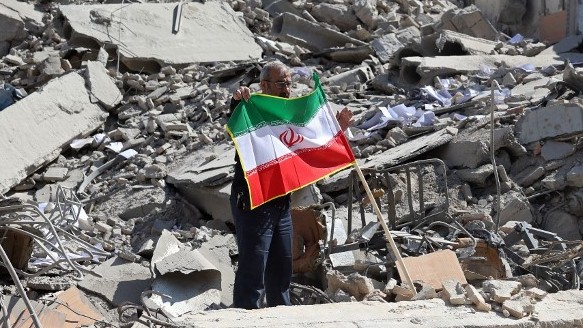
    In a sharply worded statement marking Iran’s Revolutionary Guards Day, Commander General Mohammad Pakpour delivered a formidable warning to the United States and Israel, asserting that Iranian forces maintain their “finger on the trigger” and stand prepared to execute orders from Supreme Leader Ayatollah Ali Khamenei. The declaration comes amidst ongoing regional tensions and follows widespread domestic protests that shook the clerical establishment in late December.

    General Pakpour explicitly cautioned both nations against strategic “miscalculations,” urging them to draw lessons from historical experiences and specifically reference the 12-day conflict in June where Washington supported Israeli military actions. This confrontation resulted in significant losses for Iran’s military leadership, including the death of Pakpour’s predecessor, Hossein Salami, in an Israeli strike that demonstrated profound intelligence capabilities against the Islamic Republic.

    The Iranian government has recently provided its first official casualty figures from the protest suppression, claiming 3,117 fatalities. Authorities categorized 2,427 as “martyrs”—including security personnel and innocent bystanders—while labeling the remainder as “rioters” allegedly backed by foreign powers. However, international human rights organizations contest these figures, suggesting the actual death toll may exceed 20,000 and attributing most casualties to direct fire from security forces.

    Meanwhile, at the World Economic Forum in Davos, Israeli President Isaac Herzog characterized the Ayatollah’s regime as “fragile” and expressed that regime change represents the only viable future for the Iranian populace. The Revolutionary Guards, sanctioned as a terrorist organization by multiple nations including the United States, Canada, and Australia, face continued scrutiny for their alleged frontline role in suppressing domestic dissent while maintaining external defensive postures.

  • Trump says US ‘armada’ moving towards Iran amid renewed threats

    Trump says US ‘armada’ moving towards Iran amid renewed threats

    In a significant escalation of military posturing, President Donald Trump announced the deployment of a substantial naval force toward Iranian waters on Thursday. The declaration came following his return from diplomatic engagements at the World Economic Forum in Davos, Switzerland.

    Speaking aboard Air Force One, Trump revealed that Washington is closely monitoring Tehran’s activities as U.S. naval assets advance toward the region. ‘We have substantial naval resources moving in that direction as a precautionary measure,’ Trump told journalists. ‘While I would prefer no escalation, we are maintaining vigilant surveillance of their actions.’

    The naval deployment includes the aircraft carrier USS Abraham Lincoln accompanied by multiple guided-missile destroyers, according to unnamed U.S. officials who briefed Reuters. These vessels, originally stationed in the Asia-Pacific theater, began their repositioning last week amid deteriorating relations.

    The administration is reportedly considering additional defensive measures, including enhanced air defense systems to protect American installations throughout the Middle East from potential Iranian counterstrikes.

    This military mobilization follows earlier U.S. strikes against Iranian nuclear facilities in June, operations that drew widespread international criticism for allegedly violating established international legal frameworks. The latest deployments substantially expand America’s military capabilities in the region.

    Tensions have intensified following months of civil unrest across Iran, which Tehran claims was instigated by foreign interference. Trump has repeatedly threatened intervention, accusing Iranian authorities of lethal violence against protesters.

    Iran’s Supreme Leader Ayatollah Ali Khamenei has acknowledged that ‘several thousand’ citizens perished during recent nationwide demonstrations. While Trump asserted that nearly 840 executions were canceled following U.S. warnings, Iranian officials reported the confirmed death toll had exceeded 5,000, including hundreds of security personnel.

    The President issued unequivocal warnings regarding Iran’s nuclear ambitions: ‘Should they attempt to reactivate their nuclear program, we will respond with even greater force than previously demonstrated.’

    The protests originated in Tehran’s Grand Bazaar on December 28th as economic demonstrations before evolving into broader antigovernment movements across the nation.

  • China’s first reusable liquid rocket test offshore platform set for operation

    China’s first reusable liquid rocket test offshore platform set for operation

    China is poised to activate its pioneering offshore infrastructure dedicated to testing reusable liquid-propellant rockets, marking a transformative advancement in the nation’s commercial spaceflight capabilities. Situated at the Oriental Aerospace Port in Haiyang, Shandong Province, this facility represents China’s sole commercial maritime launch base and is currently undergoing final construction preparations.

    According to a China Media Group report, the platform is scheduled to commence trial operations around February 5, 2026, preceding the country’s inaugural maritime launch and recovery attempt of a commercial liquid rocket during the Chinese New Year period. This strategic initiative addresses the fundamental commercial space challenge of achieving cost-effective, frequent orbital access through rocket reusability.

    The technical sophistication of the facility is evident in its specialized infrastructure. A hydraulic erector system featuring four large cylinders will maneuver rockets weighing hundreds of tonnes from horizontal to vertical positioning. Critical safety systems include a 17-meter-deep flame trench designed to redirect exhaust plumes exceeding 3,000 degrees Celsius during ignition, complemented by an advanced water deluge system for thermal management and acoustic suppression.

    This development builds upon Haiyang’s established launch legacy, having successfully executed 22 sea launches deploying 137 satellites using solid-fuel rockets. The transition to liquid propulsion systems signifies a substantial technological leap, offering superior payload capacity and the reusability essential for scalable satellite constellation deployments.

    The platform integrates within a comprehensively planned zone featuring propellant storage facilities for liquid oxygen, liquid nitrogen, kerosene, and methane, supporting next-generation rocket operations. This infrastructure forms a crucial component of Shandong’s expanding aerospace ecosystem, encompassing launch services, rocket manufacturing, and satellite applications across multiple cities.

    This progress aligns with China’s three-year (2025-2027) action plan to enhance commercial space development, integrating it within national space strategy while fostering innovative productive forces. Recent data from the China National Space Administration reveals substantial growth in commercial space activities, with 50 commercial launches conducted in 2025—representing 54% of China’s total space missions—and 311 commercial satellites deployed, accounting for 84% of all Chinese satellites launched that year.

  • Luxury watchmaker designs $1.5m model with Indian billionaire’s statue

    Luxury watchmaker designs $1.5m model with Indian billionaire’s statue

    Luxury watchmaker Jacob & Co has unveiled an extraordinary timepiece in India, creating a horological tribute to Vantara – the private wildlife sanctuary operated by Asia’s wealthiest individual Mukesh Ambani’s family. The spectacular watch features a meticulously hand-painted miniature sculpture of Anant Ambani, the billionaire’s youngest son, positioned at the center of the dial.

    Crafted with exquisite artistry, the jewelled masterpiece showcases sculpted figures of a lion and Bengal tiger surrounding Anant’s seated figurine. While Jacob & Co maintains discretion regarding pricing, industry experts from Watchopea estimate the timepiece’s value at approximately $1.5 million (£1.1 million, 137 million rupees).

    The Vantara center, spanning over 3,500 acres in Gujarat’s Jamnagar region, functions as a private wildlife rescue and rehabilitation facility housing more than 2,000 species including elephants, big cats, and numerous endangered animals. Although privately owned by Anant Ambani and inaccessible to the public, the sanctuary garnered significant attention last year following allegations regarding animal acquisition practices. However, a Supreme Court-appointed investigative team subsequently found no substantiating evidence of misconduct.

    Prime Minister Narendra Modi officially inaugurated Vantara in March 2023, with the facility later serving as a venue for Anant Ambani’s widely publicized pre-wedding celebrations in 2024. These extravagant events attracted global celebrities including Rihanna, Kim Kardashian, tech magnates Bill Gates and Mark Zuckerberg, former UK prime ministers Tony Blair and Boris Johnson, and Ivanka Trump with Jared Kushner.

    Jacob & Co’s social media announcement described the creation as embodying ‘stewardship and responsibility,’ incorporating 397 precious stones comprising diamonds, green sapphires, garnets, and various rare gems. According to executives from Ethos Watches, Jacob & Co’s Indian retail partner, the timepiece remains unavailable in stores with no official pricing released to the public.