标签: Asia

亚洲

  • Thailand launches air strikes at Cambodia as border tensions reignite

    Thailand launches air strikes at Cambodia as border tensions reignite

    Southeast Asia faces renewed military confrontation as Thailand conducted aerial assaults against Cambodian positions on Monday, marking a severe escalation in long-standing border tensions. The Thai military command confirmed the deployment of aircraft to strike strategic targets after reporting casualties from Cambodian rocket fire.

    The offensive follows the collapse of a U.S.-brokered ceasefire agreement, with both nations accusing each other of violating the peace accord. Thailand’s armed forces disclosed that one soldier was killed and four others wounded during clashes concentrated in the Uran Ratchathani province border region.

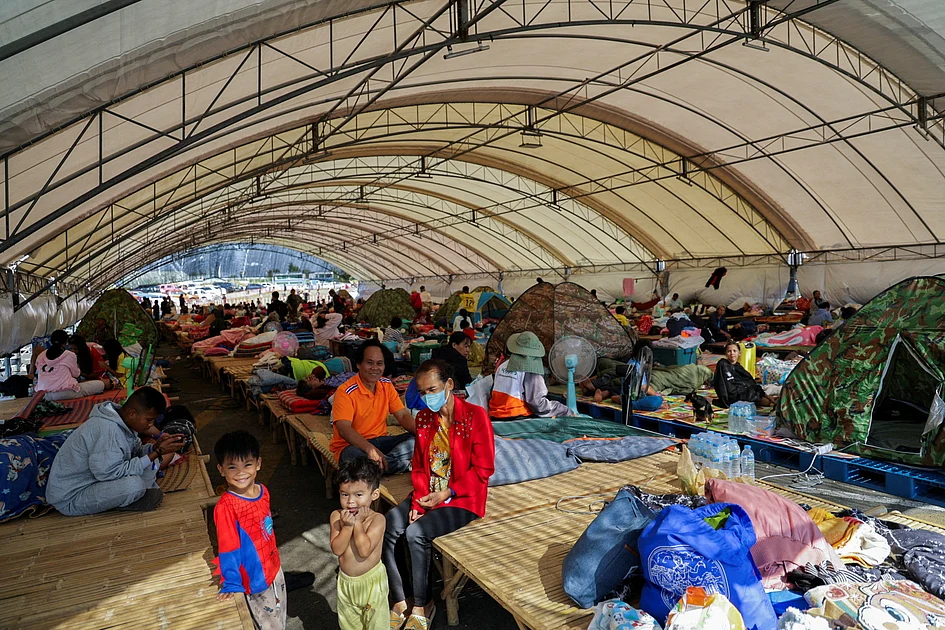
    Civilian displacement has reached critical levels, with Thai authorities evacuating approximately 385,000 residents from four border districts. More than 35,000 evacuees have already been relocated to temporary shelters as artillery exchanges threaten border communities.

    Cambodia’s Defense Ministry issued a counter-statement alleging that Thai forces initiated dawn attacks at multiple locations after days of provocations. Cambodian officials emphasized their troops exercised restraint despite what they characterized as aggressive actions by Thai military units.

    This confrontation represents the most serious breach of security since July’s five-day conflict that resulted in 48 fatalities and displaced 300,000 people. The previous ceasefire was negotiated through diplomatic intervention by former U.S. President Donald Trump and Malaysian Prime Minister Anwar Ibrahim, who witnessed the signing of an expanded peace agreement in Kuala Lumpur last October.

    The current escalation follows a recent landmine explosion that injured a Thai soldier, prompting Thailand to suspend its ceasefire implementation. Cambodia’s influential former leader Hun Sen characterized Thai military actions as provocations designed to elicit retaliation, urging Cambodian forces to maintain disciplined restraint despite established response protocols.

    The territorial dispute originates from imperfectly demarcated borders established during French colonial rule in 1907, with periodic violent outbreaks occurring along the 817-kilometer boundary despite numerous diplomatic resolution attempts.


  • When the Olympics meets tai chi

    When the Olympics meets tai chi

    The 2025 Olympic Development Academic Forum witnessed a remarkable convergence of Eastern tradition and Western sporting ideals as participants engaged in collective tai chi practice, symbolizing the growing fusion between Chinese cultural heritage and Olympic principles. This ceremonial demonstration preceded a significant milestone in international sports cooperation: the formal signing of a memorandum of understanding between the Chinese Olympic Academy and the International Olympic Academy.

    The newly established partnership heralds a transformative phase in collaborative academic research and athletic talent development initiatives. The memorandum outlines comprehensive frameworks for joint scholarly investigations and educational programs that bridge cultural divides through sports diplomacy.

    Concurrently, the forum marked the official inauguration of two pioneering institutions: the Champions Studio and the Champions Research and Study Center. These complementary establishments will focus on cultivating elite athletic talent while promoting the core values of the Olympic movement. Their mandate extends beyond competitive excellence to encompass the holistic development of sports professionals who embody both technical mastery and philosophical understanding of sportsmanship.

    The integrated approach demonstrates how traditional Chinese practices like tai chi—with their emphasis on harmony, discipline, and mental focus—can enrich contemporary Olympic values. This cultural exchange represents a paradigm shift in how global sports institutions approach talent development, recognizing that athletic excellence transcends physical achievement and encompasses cultural understanding and philosophical alignment.

  • Thousands flee Thai-Cambodia border after deadly clashes

    Thousands flee Thai-Cambodia border after deadly clashes

    Renewed military confrontations erupted along the disputed Thailand-Cambodia border on Monday, resulting in at least five fatalities and triggering mass civilian evacuations on both sides. This represents the most severe escalation since the two Southeast Asian nations agreed to a ceasefire brokered by Malaysia in July.

    According to official statements from both governments, Thai forces conducted air strikes in Ubon Ratchathani Province in response to what they described as Cambodian provocation, while Phnom Penh asserted that Thai soldiers initiated hostilities in Preah Vihear province. The conflicting accounts underscore the persistent tensions that have claimed over 40 lives since May and led to reciprocal import bans and travel restrictions.

    The human cost extends beyond combat casualties, with education emerging as a particularly affected sector. Thailand’s Education Ministry ordered nearly 650 schools across five border provinces to close indefinitely, while social media footage from Cambodian border regions showed chaotic scenes as parents rushed to retrieve children from classrooms. This marks the second major educational disruption in recent months, following intense fighting during examination periods in July.

    Thai educator Siksaka Pongsuwan highlighted the hidden victims of the conflict, noting that border-area children are “losing opportunities and precious time” compared to peers in peaceful regions. The previous shift to online education proved inadequate, with many households lacking internet access and digital devices failing to reach all students.

    The current confrontation revives a century-old territorial dispute along the 800km border established after French colonial rule in Cambodia. Despite a high-profile ceasefire signing ceremony mediated by former US President Donald Trump in October – for which Cambodia nominated Trump for a Nobel Peace Prize – the agreement collapsed within weeks when Thailand suspended implementation following a landmine incident that injured two soldiers.

    As artillery fire continues to echo across border villages, residents remain torn between evacuation concerns and attachment to their homes, embodying the human dilemma wrought by protracted geopolitical conflicts.

  • No Christmas homecoming: Families mourn victims of Goa nightclub fire

    No Christmas homecoming: Families mourn victims of Goa nightclub fire

    A devastating blaze that engulfed a popular nightclub in India’s coastal paradise of Goa has extinguished 25 lives, revealing heartbreaking human stories behind the statistics. The incident at Birch By Romeo Lane, located near a bustling beach area, occurred during peak hours on Sunday morning, leaving families across multiple Indian states grappling with unimaginable loss.

    Among the victims were brothers Binod and Pradip Mahto, migrant workers from Jharkhand who had relocated to Goa seeking better employment opportunities. Working as cooks at the ill-fated establishment, they had been diligently sending earnings home to support their family’s dream of converting their mud house into concrete structure. Tragically, their planned weddings scheduled for early next year will now never occur.

    The tragedy predominantly affected staff members—migrant workers drawn to Goa’s tourism economy—while five tourists also perished. Twenty-two-year-old Mohit Mundain, who had been supporting his family through his waiter earnings, was anticipating Christmas reunions that will now remain unfulfilled. In Uttarakhand, 27-year-old Satish Rana’s family mourns the loss of their son who had merely two months ago embarked on his Goa employment journey.

    Particularly heartbreaking is the story of a Delhi family visiting Goa for the first time. Three sisters-in-law and one male family member lost their lives during what was supposed to be a joyful vacation. The sole survivor, Bhavna, witnessed the tragedy unfold as the group was concluding their dinner preparations to depart.

    Authorities have initiated a comprehensive investigation into the fire’s origins, with at least four individuals including the nightclub manager already apprehended. Police continue searching for the establishment’s owner as questions mount regarding potential safety regulation violations. The incident has cast a somber shadow over Goa’s reputation as a carefree tourist destination, highlighting the precarious conditions faced by migrant workers in India’s hospitality industry.

  • Allan Zeman slams Western media bias in Tai Po fire tragedy

    Allan Zeman slams Western media bias in Tai Po fire tragedy

    Prominent Hong Kong business leader Allan Zeman has launched a scathing critique against Western media outlets for their biased coverage of the recent Tai Po fire tragedy. The chairman of Lan Kwai Fong Group, in a Sunday interview with China Daily, challenged international media organizations to address their own countries’ shortcomings before criticizing Hong Kong’s emergency response efforts.

    Zeman highlighted what he characterized as disproportionate attention given to the Hong Kong incident compared to similar fire tragedies in Western nations. He pointed to specific cases in both the United States and United Kingdom where casualty numbers were significantly higher yet received substantially less international media scrutiny and criticism.

    ‘The selective outrage demonstrates a clear double standard in international reporting,’ Zeman stated. He emphasized that Hong Kong’s emergency services mounted a highly efficient and professional response to the Tai Po incident, contrasting it with what he described as less effective handling of comparable situations in Western countries.

    Zeman’s comments come amid ongoing investigations into the fire that broke out in the New Territories district. The businessman, known for his outspoken views, suggested that Western media frequently apply different standards when reporting on incidents in China and its special administrative regions compared to those in their own countries.

    The Hong Kong government has established an independent commission chaired by a judge to investigate the fire’s causes and response efforts, demonstrating the administration’s commitment to transparency and accountability in the tragedy’s aftermath.

  • Japan missile plan sparks alarm

    Japan missile plan sparks alarm

    Japan is reportedly considering exporting its Type 03 medium-range surface-to-air missile system to the Philippines, marking a significant departure from its post-World War II pacifist principles. This move, currently in informal consultation phases according to Kyodo News, would require Tokyo to abolish its longstanding “five-category” restriction on defense equipment exports, potentially as early as the first half of 2026.

    The proposed arms transfer has raised serious concerns among international security experts who view it as part of Japan’s broader military expansion under Prime Minister Sanae Takaichi’s administration. Professor Chen Hong, executive director of the Asia Pacific Studies Center at East China Normal University, warns that this development represents a dangerous bypass of constitutional constraints that could accelerate regional arms races and increase the likelihood of military conflicts.

    This strategic shift occurs against the backdrop of strengthened Japan-Philippines military cooperation, exemplified by the Reciprocal Access Agreement that took effect on September 11, 2025, permitting Japanese troops to operate on Philippine soil. Experts argue that these developments collectively signal Japan’s transition from its postwar identity as a “peace-loving nation” toward what it now calls a “normal nation” with expanded military capabilities.

    International observers, including Zamir Ahmed Awan of Pakistan’s Global Silk Route Research Alliance, have expressed alarm at what they perceive as a revival of Japanese militaristic tendencies. The Takaichi administration justifies these changes by citing an “existential crisis,” but critics contend they risk undermining multilateral dispute resolution mechanisms and could push the Asia-Pacific toward Cold War-style confrontations.

    Furthermore, Japan’s repeated revisions of its Three Principles on Arms Exports have raised questions about its commitment to international disarmament and nonproliferation norms, particularly as a signatory to the UN Arms Trade Treaty. The international community faces growing concerns about how these developments might affect regional stability and the broader postwar international order.

  • How authorities trace BlueChip scam money trail; CCTV shows founder stuffing cash into bags

    How authorities trace BlueChip scam money trail; CCTV shows founder stuffing cash into bags

    The unraveling of the BlueChip investment scandal, which defrauded UAE residents of approximately Dh400 million ($109 million), demonstrates a paradigm shift in how global authorities now pursue digital financial crimes once considered untraceable. The case took a dramatic turn with the November 30 arrest of founder Ravindra Nath Soni in Dehradun, India, ending an 18-month international manhunt that began when his Dubai-based operation collapsed abruptly in March 2024.

    Newly emerged CCTV footage from the company’s final operational days depicts Soni systematically removing substantial cash volumes from office drawers, stacking currency bundles on tables, and concealing them within suitcases and carry bags. This visual evidence has become crucial for investigators quantifying capital extraction during the scheme’s terminal phase.

    The investigation has revealed sophisticated financial maneuvering, including a previously documented $41.35 million transfer to an unidentified cryptocurrency wallet immediately preceding the company’s shutdown. According to Rayad Kamal Ayub, Managing Director of Rayad Group Technology, this case exemplifies how blockchain intelligence tools have revolutionized financial crime investigations. “Modern forensic capabilities can map relationships across thousands of wallets, flag suspicious movements in real-time, and identify connections to darknet operations and sanctioned entities,” Ayub explained.

    Indian authorities report the scam’s financial scope continues expanding beyond initial estimates. Forensic accounting has identified over ten domestic bank accounts operated by Soni across multiple cities, with transactions suggesting coordinated movement through both hawala channels and cryptocurrency conversions. Kanpur Police Commissioner Raghubir Lal confirmed the operation now exhibits clear characteristics of cross-border financial crime, with twelve international associates—including individuals in Dubai—implicated in the money movement network.

    The case reflects broader advancements in global regulatory cooperation, with platforms like Chainalysis, Elliptic, and TRM Labs enabling investigators to trace funds across blockchain networks with unprecedented speed. “What previously required months now takes hours,” Ayub noted. “Blockchain anonymity is largely mythological—every transaction creates permanent forensic evidence that regulators can reconstruct.”

    For affected investors, many of whom have traveled to India to join the expanding criminal case, the sophisticated investigation offers renewed hope for potential asset recovery after months of financial uncertainty and losses.

  • China, US businesses urged to enhance ties

    China, US businesses urged to enhance ties

    Senior officials and corporate leaders from the world’s two largest economies are spearheading a concerted push to revitalize commercial ties through enhanced dialogue and collaborative ventures. This development emerges against a backdrop of stabilizing diplomatic relations and China’s forthcoming economic planning cycle.

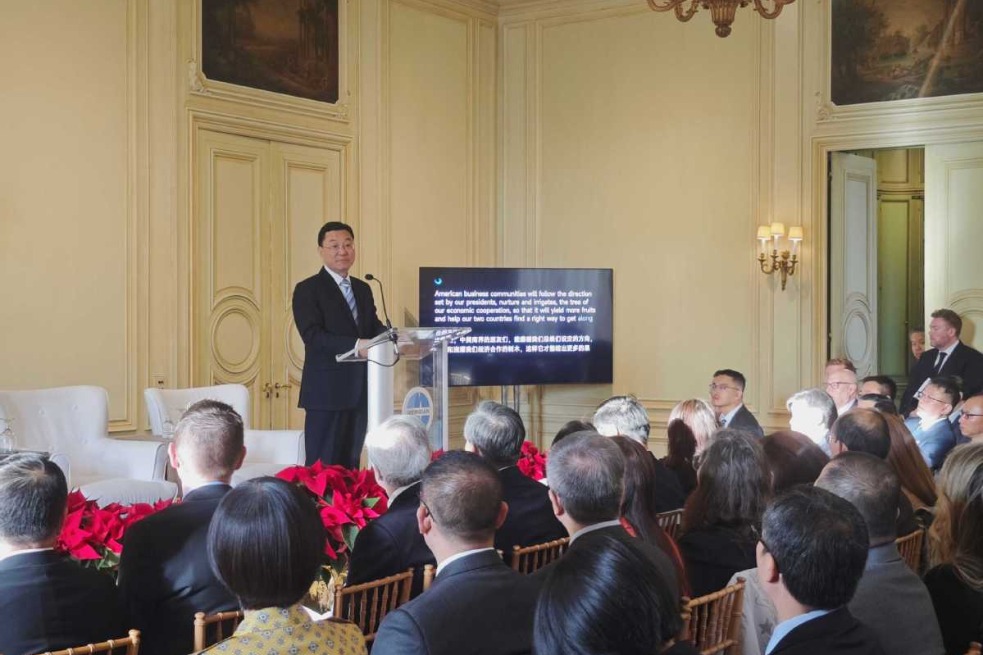
    At the China-US Business Cooperation Forum in Washington on December 4th, Chinese Ambassador Xie Feng emphasized the business community’s pivotal role in transcending political differences and capitalizing on opportunities generated by head-of-state diplomacy. The event, jointly organized by the China Council for the Promotion of International Trade and Washington’s Meridian International Center, brought together executives seeking clarity on navigating the relationship’s ‘new era’.

    Ambassador Xie highlighted how presidential commitments from both nations have injected ‘precious certainty’ into economic cooperation, with head-of-state diplomacy expected to remain the anchor of bilateral relations. He outlined substantial opportunities arising from China’s pursuit of high-quality development under the 15th Five-Year Plan (2026-2030), particularly with China hosting the 2026 APEC Economic Leaders’ Meeting and the US convening the G20 Summit.

    Concurrently on the West Coast, the ‘Port of Opportunity: US-China Business Exchange Breakfast’ in Berkeley, California facilitated connections between 25 Chinese companies and approximately 100 local executives and officials. Discussions spanned finance, agriculture, logistics, aviation, healthcare, renewable energy, and cultural industries.

    Ren Hongbin, Chairman of the China Council for the Promotion of International Trade, noted that recent high-level interactions have reinvigorated business confidence, urging concrete implementation of leadership consensus. Oakland Mayor Barbara Lee emphasized China’s significance as the port’s largest import partner (29% of total trade volume), advocating for sustained economic focus despite geopolitical challenges, particularly in green economy initiatives.

    John Grubb, Interim President and CEO of the Bay Area Council, highlighted California’s substantial role in US-China trade (approximately 25% of total), emphasizing the importance of maintaining commercial bridges through changing circumstances. The San Francisco Bay Area’s innovation ecosystem, home to companies like Apple, Intel and Nvidia that have significantly benefited from China’s market, was identified as a key driver of future cooperation in emerging sectors including renewable energy, biopharmaceuticals, and the low-altitude economy.

    Chinese Consul General in San Francisco Zhang Jianmin underscored the reality of economic interdependence in today’s globalized economy, with supply chains accounting for approximately 70% of global trade. He emphasized that innovation cooperation becomes increasingly vital amid global economic headwinds, with China’s vast market and comprehensive industrial system offering complementary advantages to the Bay Area’s innovative capacity.

  • Retired ornithologist recalls search for last of a species

    Retired ornithologist recalls search for last of a species

    In a remarkable conservation success story, retired ornithologist Liu Yinzeng recounts his historic discovery that rescued the crested ibis from near-certain extinction. Now 88, the dedicated scientist has relocated from Beijing to Yangxian, Shaanxi province—the very location where his breakthrough finding occurred over four decades ago.

    Each morning, Dr. Liu conducts his cherished ritual: driving his electric buggy to nearby wetlands to observe the thriving crested ibis population. “I’ve counted carefully many times,” he notes with evident pride, “and now one out of every ten egrets you see here in Yangxian is actually a crested ibis.”

    The turning point came in May 1981 when Dr. Liu, then with the Chinese Academy of Sciences’ Institute of Zoology, discovered the world’s last seven surviving crested ibises—two adult pairs and three chicks—after an exhaustive three-year search spanning 50,000 kilometers across China. He had nearly concluded the species was extinct, having prepared a research paper to that effect.

    The breakthrough emerged unexpectedly when a hunter presented three feathers that Dr. Liu’s expertise confirmed belonged to the sought-after species. With additional funding secured, he shifted strategy in Yangxian, mobilizing local communities by projecting images of the bird on cinema screens before film screenings.

    The critical lead arrived from hunter He Choudan, whose detailed description matched the crested ibis despite an unusual high-altitude sighting. Dr. Liu immediately investigated and, while descending a hillside at dusk, spotted a bird with distinctive red feathers beneath its wings—the telltale sign of a crested ibis. Though excitement caused a fall that momentarily lost the bird, three days of persistent searching culminated in the historic discovery of the seven remaining birds.

    Following the discovery, Dr. Liu and colleagues implemented round-the-clock protection, particularly during March-June breeding seasons. The Yangxian government issued emergency protections prohibiting hunting, land reclamation, and deforestation within the birds’ habitat, with local residents making “tremendous sacrifices” to support conservation efforts.

    From those seven birds, the population has rebounded to over 7,000 crested ibises in China as of late 2024, with Yangxian remaining the species’ stronghold—a living testament to dedicated scientific perseverance and community-supported conservation.

  • ‘Oriental gem’ makes wetland comeback

    ‘Oriental gem’ makes wetland comeback

    In a remarkable ecological turnaround, China’s crested ibis population has surged from near extinction to over 10,000 birds globally, with approximately 6,000 residing in their original habitat in Yangxian County, Shaanxi Province. This conservation success story represents one of the most significant wildlife recovery achievements in modern history.

    The species, often referred to as the ‘oriental gem’ for its striking appearance featuring salmon-pink plumage and distinctive white crest, stood on the brink of disappearance in 1981 when only seven wild individuals remained. Immediate protective measures implemented by local authorities included banning blasting excavation operations and prohibiting chemical pesticides and fertilizers in areas where the birds forage.

    Wang Chao, a senior expert with the Hanzhong Crested Ibis National Nature Reserve, explained that comprehensive conservation strategies have been crucial to this recovery. During breeding seasons, observation shelters are established with 24-hour monitoring to protect the birds from predators and human disturbance. These efforts have significantly enhanced natural breeding success rates.

    The environmental benefits have extended beyond crested ibises. The improved ecosystem has attracted approximately 400 bird species to winter in Hanzhong, up from 300 before conservation efforts began, including reappearances of white-tailed eagles and glossy ibises.

    The conservation program has also generated substantial socioeconomic benefits. Local farmers initially struggled with reduced agricultural output and market rejection of their produce due to pesticide-free farming requirements. However, through national programs supporting organic rice production and agritourism, villagers have transformed these challenges into economic opportunities.

    Hua Ying, a resident of Caoba village, witnessed the transformation firsthand. From seven birds reappearing in 1993, the local population has grown to approximately 700. While tourism initially caused disturbances as visitors approached too closely for photographs, the establishment of the Yangxian County Bird Watching Association in 2006 created structured ecotourism opportunities. Trained guides now ensure responsible birdwatching while generating income through guiding services, accommodation, and organic product sales.

    The population growth presents new conservation challenges. Reserve staff face increasing pressure with over 200 sick or injured ibises requiring treatment annually. Rescue efforts peak twice yearly, addressing malnourished fledglings in summer and older birds struggling with winter conditions.

    Population monitoring has become increasingly complex. A recent two-month survey identified over 150 significant roosting sites, requiring coordinated efforts from multiple sectors due to limited personnel. The species’ expansion has led to dispersal beyond traditional habitats, with birds now found in Sichuan, Gansu, and Hubei provinces.

    China is now implementing a national reintroduction program to restore crested ibises to their historical range across more than 20 provinces. Captive populations have been established in 13 regions, with nature reintroduction initiatives underway in six areas, aiming to reestablish the bird’s historical distribution and migratory patterns.