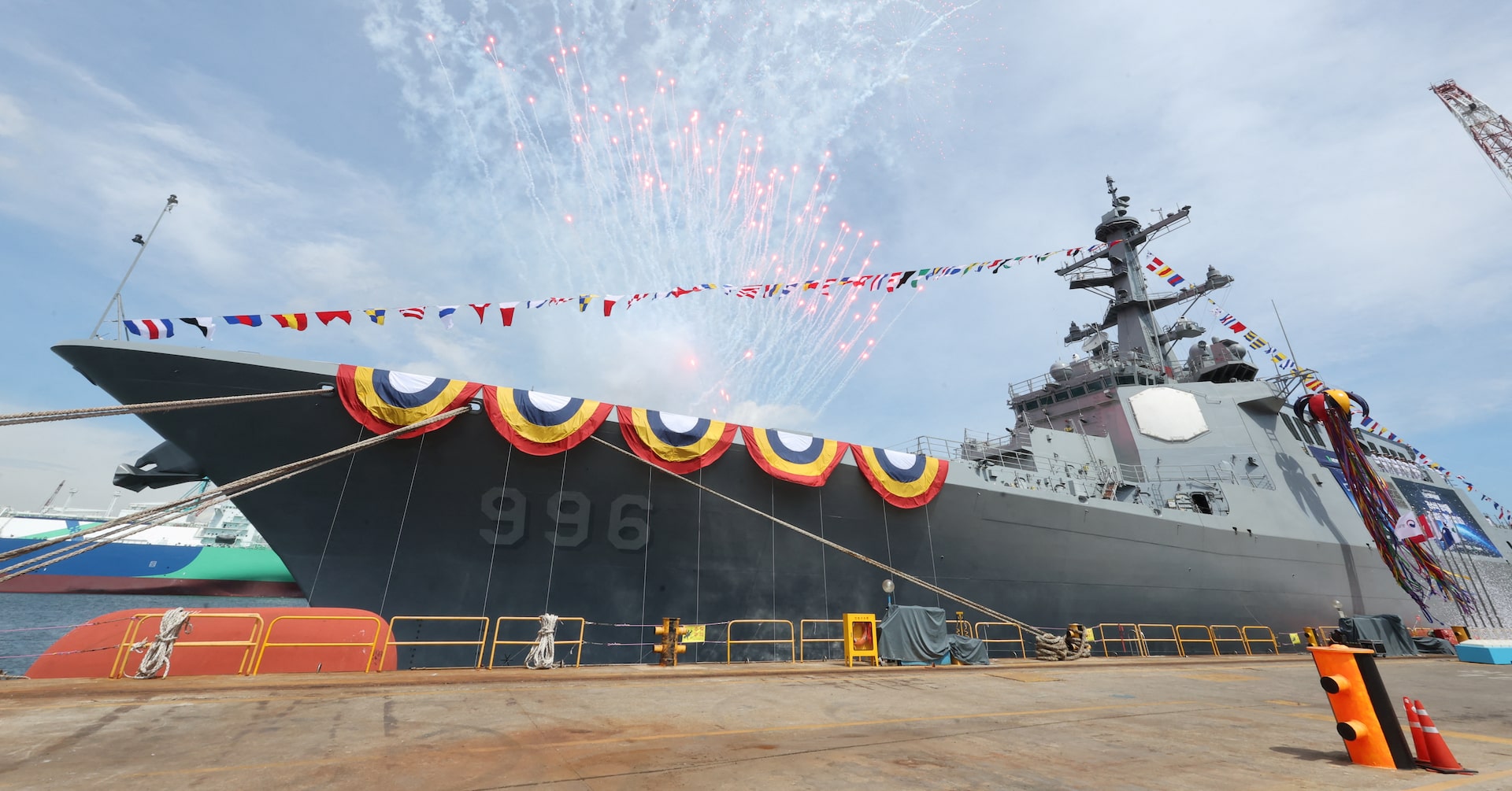
South Korea’s HD Hyundai Heavy Industries, the world’s largest shipbuilder by orders, is actively negotiating the acquisition of a U.S. shipyard, according to a senior executive. The move aligns with the company’s ambitious goal to generate $2.2 billion in annual revenue from warship sales to the U.S. Navy by 2035. Woo-maan Jeong, head of planning and management for HD Hyundai’s naval and special ship unit, revealed the strategy during an interview at the company’s Ulsan headquarters. He emphasized the necessity of establishing a U.S. manufacturing base to capitalize on President Donald Trump’s efforts to revitalize the American shipbuilding industry. Jeong noted the widening naval capability gap between the U.S. and China, coupled with insufficient U.S. warship production capacity, as key drivers for this initiative. Despite challenges such as a skilled labor shortage and restrictive U.S. immigration policies, HD Hyundai remains optimistic about its prospects. The company recently launched an 8,200-metric-ton Aegis-equipped destroyer in Ulsan, showcasing its advanced shipbuilding capabilities. The vessel, delivered in just 18 months, symbolizes U.S.-Korea cooperation, utilizing combat systems from American firms like Lockheed Martin. HD Hyundai’s merger with affiliate HD Hyundai Mipo further strengthens its position in the warship market. While U.S. laws like the Jones Act and Byrnes-Tollefson Amendment pose hurdles, Jeong expressed confidence in potential legislative amendments to facilitate foreign participation in U.S. shipbuilding. The U.S. remains an unparalleled market for warships, and HD Hyundai is determined to navigate these challenges to secure its foothold.
标签: Asia
亚洲
-
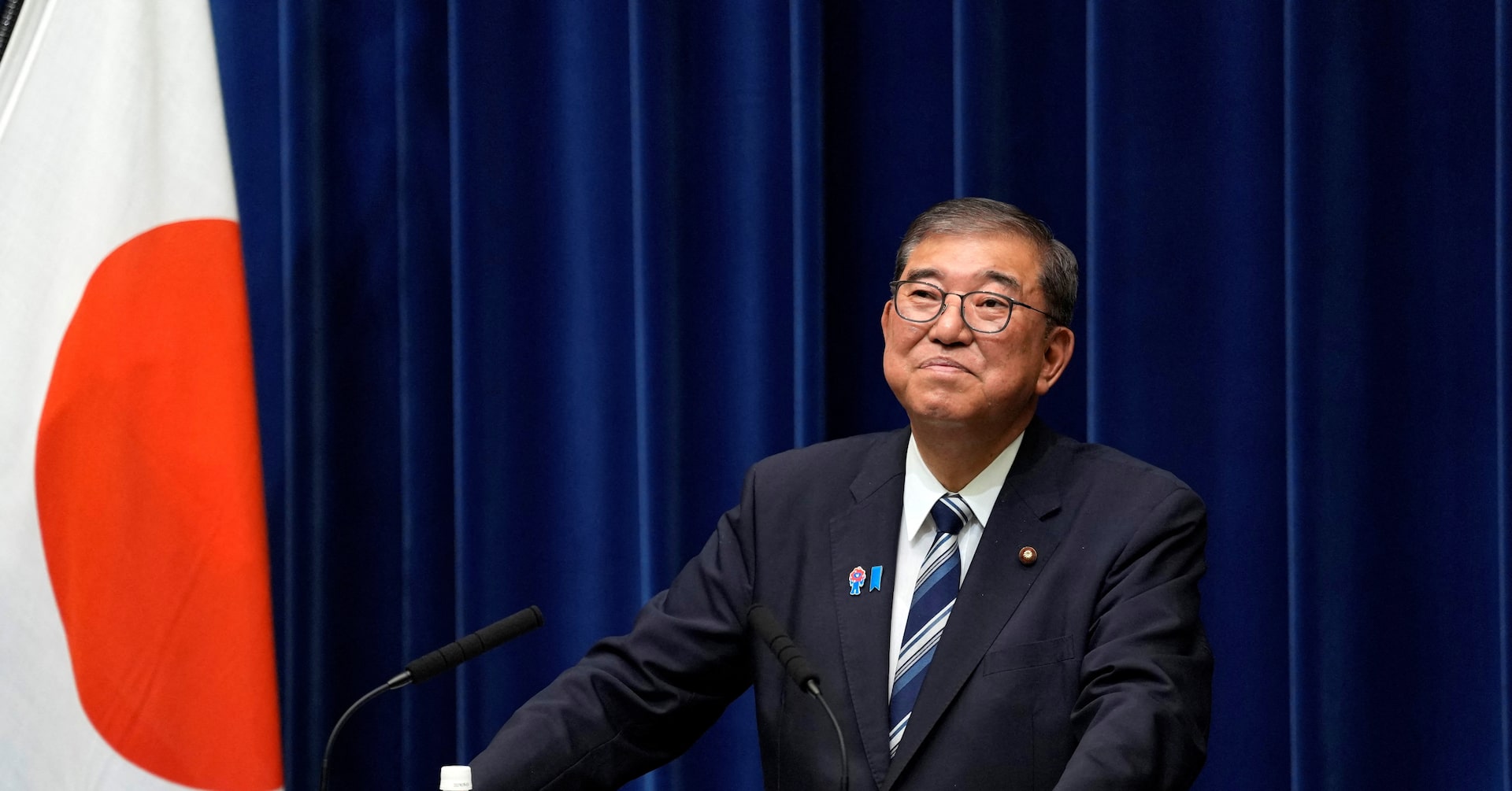
Japan’s Ishiba to visit Busan from Sept 30 to meet S.Korea’s Lee, TV Asahi reports
In a significant diplomatic move, Japanese Prime Minister Shigeru Ishiba is scheduled to meet South Korean President Lee Jae Myung during his two-day visit to Busan, South Korea, starting September 30. This visit, reported by Japanese broadcaster TV Asahi and confirmed by a Korean government official, will mark Ishiba’s first and final trip to South Korea as prime minister. The announcement comes shortly after Ishiba revealed his resignation earlier this month, with his successor to be determined through a ruling party leadership race in early October. This meeting underscores the ongoing efforts to strengthen bilateral ties between the two nations, particularly in the realms of security and economic cooperation. The leaders previously met in Tokyo last month, where they agreed to enhance collaboration with the United States to counter North Korea’s nuclear and missile threats. Ishiba’s impending departure adds a layer of urgency to this diplomatic engagement, as both countries seek to solidify their partnership amidst regional security challenges.
-
Anglo American cuts ‘small number’ of jobs in Australia’s Brisbane
Anglo American PLC (AAL.L) announced on Thursday a reduction in workforce at its Brisbane office and nearby coal mines in Queensland, Australia, as part of its strategy to streamline operations and address the dual pressures of declining coal prices and escalating costs. The exact number of job cuts remains undisclosed, but the move follows a similar decision by BHP Group Ltd (BHP.AX), which recently eliminated 750 positions at a coking coal mine in the same region due to unfavorable market conditions and increased state royalties. Ben Mansour, Vice President for People and Corporate Relations at Anglo American Australia, emphasized that these adjustments are crucial for the sustainability of the company’s steelmaking coal operations in Central Queensland. He noted that the majority of the reductions were achieved through voluntary redundancies. According to Australia’s ABC News, citing the Isaac Regional Council, approximately 200 positions at Anglo American were impacted. The company operates five coal mines in Queensland’s Bowen Basin, which specialize in steelmaking coal. Last year, Anglo American divested a 33% stake in one of its Australian steelmaking coal mines for $1.1 billion to concentrate on its core copper assets. This announcement comes on the heels of a proposed merger with Canada’s Teck Resources Ltd (TECKb.TO), potentially marking the second-largest mining deal in history. The developments underscore the ongoing challenges faced by the coal industry amidst shifting market dynamics and regulatory pressures.
-
Toyota to recall over 591,000 US vehicles over instrument panel issue, NHTSA says
Toyota Motor Corp has announced a major recall of 591,377 vehicles in the United States following concerns raised by the National Highway Traffic Safety Administration (NHTSA). The recall, issued on September 18, 2024, addresses a critical software flaw in the instrument panel display that fails to show essential information such as vehicle speed, brake system status, and tire pressure warnings. This malfunction, which occurs during vehicle startup, significantly increases the risk of accidents or injuries. Affected models include the Venza, Highlander, Lexus, Tacoma, and GR Corolla. The NHTSA emphasized the urgency of the recall, urging owners to address the issue promptly. Toyota has yet to release specific details on the repair process but assured customers that solutions will be provided through authorized dealerships. This recall underscores the growing importance of software reliability in modern automotive systems and highlights the challenges automakers face in ensuring vehicle safety amidst increasing technological complexity.
-
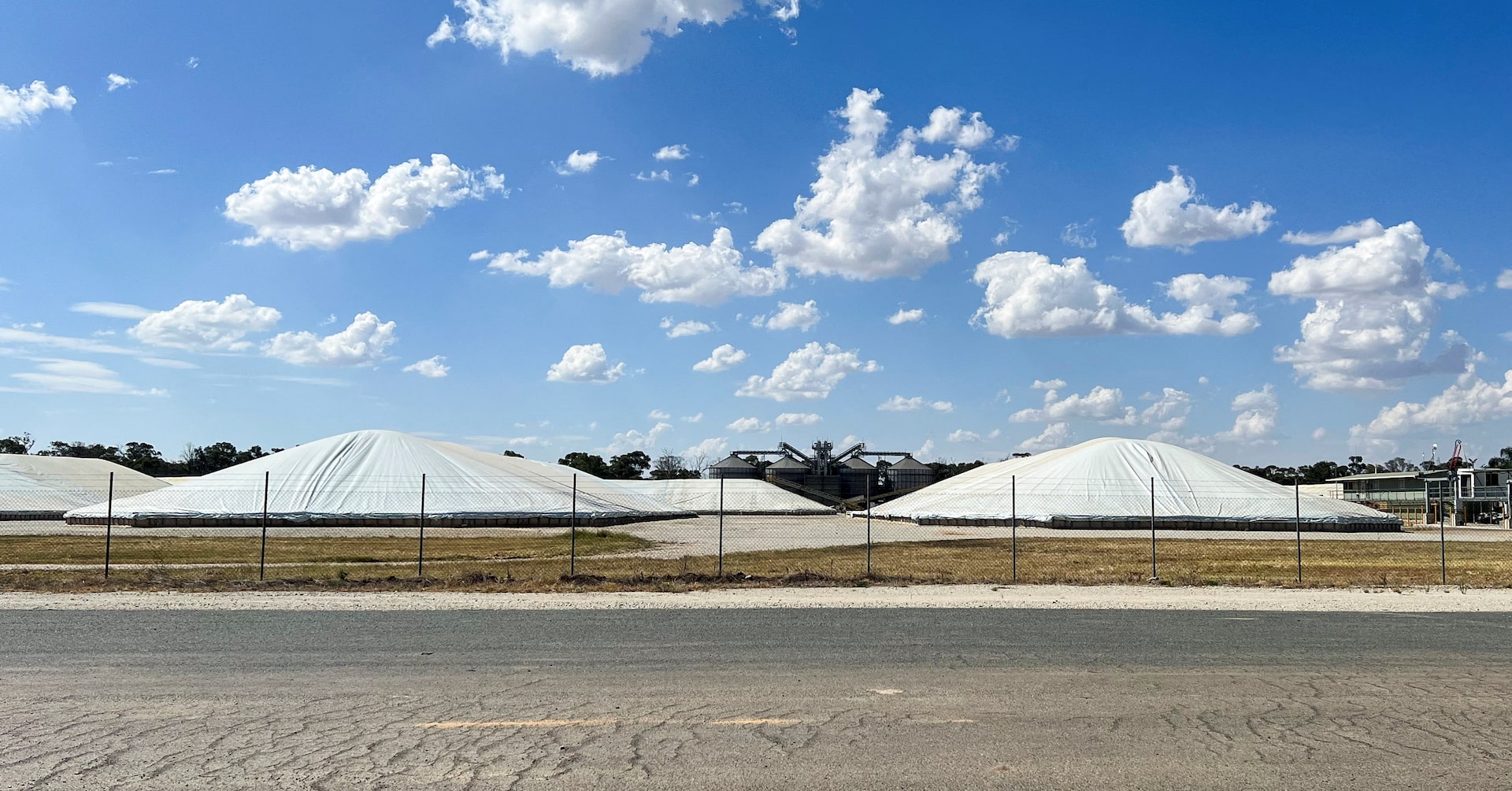
Beetle that threatens Australia’s grains industry found in imported nappies
Australia has raised alarms after discovering khapra beetle larvae in imported nappies sold nationwide, posing a significant risk to the country’s grain industry and agricultural exports. The larvae were detected in the brand Little One’s Ultra Dry Nappy Pants Walker Size 5, exclusively sold by Woolworths, Australia’s largest supermarket chain. The agriculture ministry has been working with the importer and retailer to trace and treat affected products since the discovery in New South Wales on September 7. Agriculture Minister Julie Collins emphasized the urgency of containing the pest, stating that around 1,500 of the 2,000 cartons have been tracked down, but some remain in circulation. Khapra beetles, native to India, are classified as the most significant pest threat to Australia’s A$18 billion grains industry. Their establishment could lead to trading partners rejecting Australian goods, causing substantial economic losses. Woolworths has removed unsold nappies from shelves and quarantined them, while the manufacturer, Belgian company Ontex, has suspended operations at its Sydney facility pending comprehensive checks. The ministry has urged consumers who purchased similar nappies to seal them in a bag and contact authorities. The incident underscores the critical need for stringent biosecurity measures to protect Australia’s agricultural sector.
-
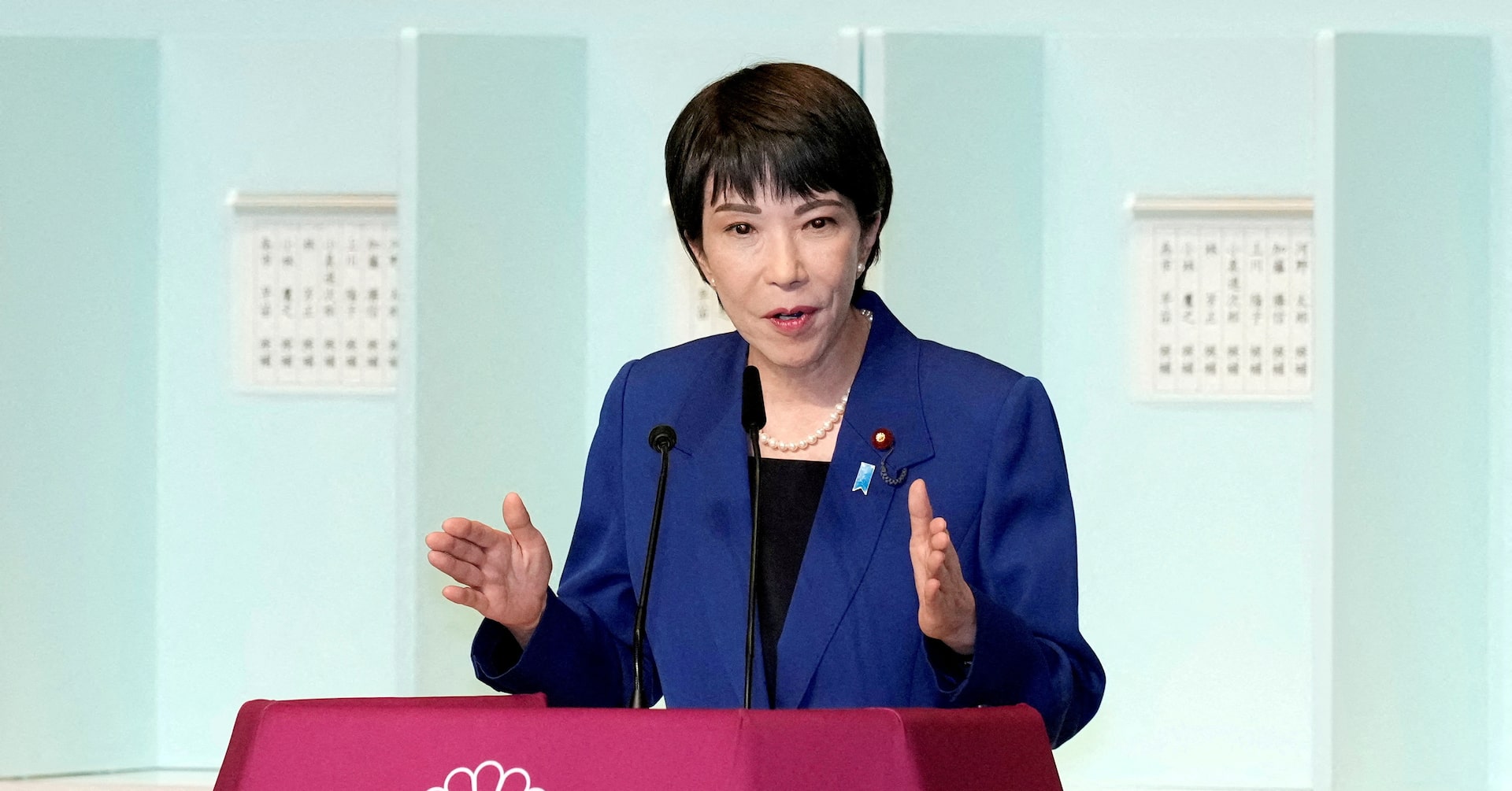
Japan’s fiscal dove Takaichi joins race for leadership of ruling party
In a pivotal moment for Japan’s political landscape, veteran lawmaker Sanae Takaichi announced her candidacy for the ruling Liberal Democratic Party’s (LDP) leadership election on October 4, 2024. Takaichi, a fiscal conservative and vocal opponent of the Bank of Japan’s (BOJ) interest rate hikes, aims to become Japan’s first female prime minister. She is set to outline her policies in a press conference on Friday, emphasizing increased government spending to revitalize the nation’s fragile economy.
Takaichi’s announcement comes as outgoing Prime Minister Shigeru Ishiba steps down following a series of electoral defeats during his brief tenure. The leadership race has drawn a diverse field of candidates, including Agriculture, Forestry, and Fisheries Minister Shinjiro Koizumi, who leads recent polls with 23.8% support. Takaichi follows closely at 21.0%, while Chief Cabinet Secretary Yoshimasa Hayashi and former foreign minister Toshimitsu Motegi trail at 5.9% each.
Hayashi, in his policy announcement, pledged to continue Ishiba’s initiatives, particularly efforts to boost wages in smaller companies to alleviate the burden of rising living costs. However, he distanced himself from the ‘Abenomics’ policies of the late Shinzo Abe, arguing that the economy has moved beyond the need for such aggressive stimulus measures. Meanwhile, Motegi expressed his intention to negotiate further tariff reductions with the United States, contingent on favorable circumstances.
The election outcome will shape Japan’s economic and fiscal policies at a critical juncture, as the nation grapples with an aging population, inflationary pressures, and global economic uncertainties. With Takaichi and Koizumi emerging as frontrunners, the race underscores a potential shift in Japan’s political and economic direction.
-
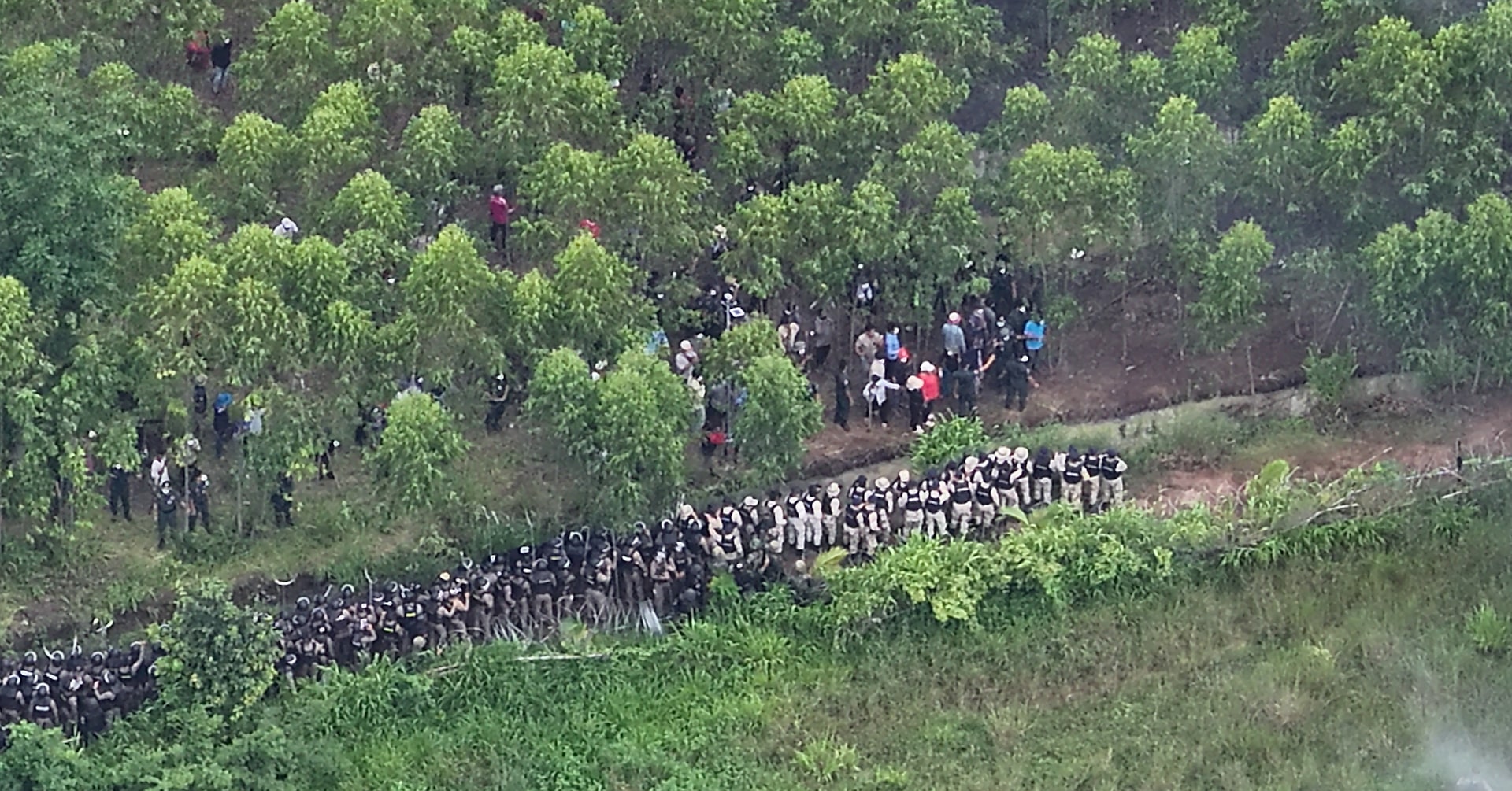
Thai police fire tear gas at Cambodian protesters at a disputed border village
A recent confrontation between Thai riot police and Cambodian civilians in a disputed border region has resulted in significant injuries and heightened tensions. On Wednesday, Thai authorities deployed tear gas and rubber bullets against Cambodian protesters, leaving at least 23 Cambodians injured, according to Cambodian officials. Thailand defended its actions, stating that the use of force was necessary to prevent disorder after Cambodian protesters allegedly dismantled Thai defensive barriers and attacked officials with sticks, stones, and slingshots. The clash occurred in an area claimed by both countries—Thailand identifies it as part of Ban Nong Ya Kaew village in Sa Kaeo province, while Cambodia asserts it belongs to Prey Chan village in Bantheay Meanchey province. This incident marks the most significant escalation since a ceasefire agreement in July ended a five-day border conflict that claimed 48 lives and displaced thousands. Cambodian Prime Minister Hun Manet has called for international support, urging ASEAN and global leaders to intervene and prevent further unilateral actions by Thailand. The U.S. government has also weighed in, urging both nations to de-escalate tensions and finalize terms for a long-term observer mission along the border. The dispute stems from a century-long disagreement over undemarcated points along the 817 km border, originally mapped by France in 1907. Both countries have erected barbed wire fences in the area, sparking weeks of protests from civilians on both sides.
-
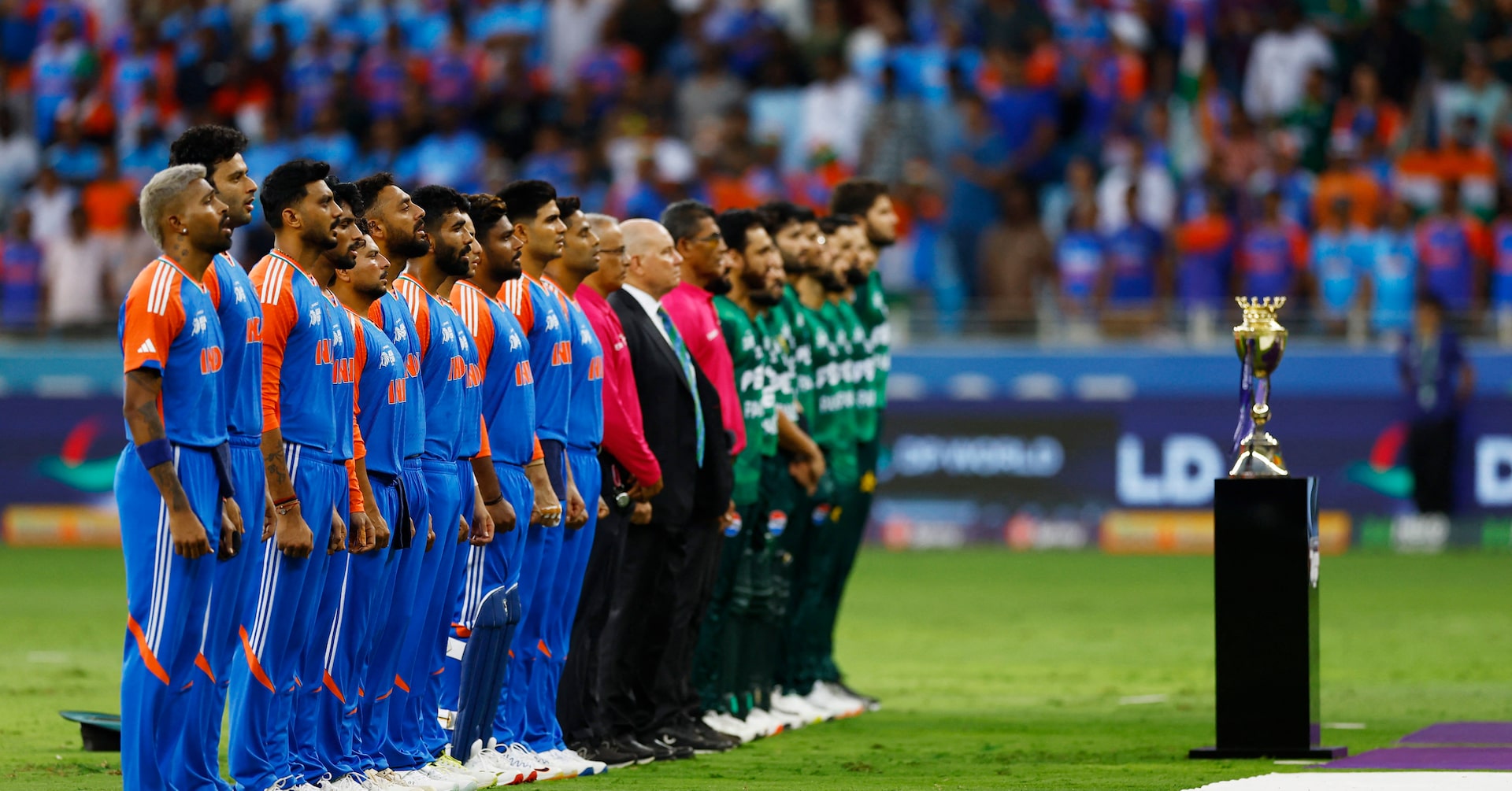
Pakistan gearing up for India rematch, says captain Salman
In a highly anticipated rematch, Pakistan and India are set to face off in the Super Fours stage of the Asia Cup on Sunday, following a contentious group-stage encounter last week. The match, scheduled at the Dubai International Cricket Stadium, comes amid heightened tensions between the two cricketing giants. Pakistan secured their spot in the Super Fours with a 41-run victory over the United Arab Emirates (UAE) on Wednesday, despite concerns over their middle-order batting performance. Captain Salman Agha expressed confidence in his team’s readiness, stating, ‘We are ready for any challenge. If we play good cricket, like we have in the last few months, we’ll be good against any side.’ However, Pakistan’s batting struggles, highlighted by opener Saim Ayub’s third consecutive duck, remain a pressing issue. India, meanwhile, enters the match with momentum after a dominant seven-wicket win over Pakistan last weekend. The previous match was marred by the Indian team’s refusal to shake hands with their opponents, a gesture that sparked controversy and led to calls from the Pakistan Cricket Board for the removal of match referee Andy Pycroft. Bilateral cricket between the two nations has been suspended since 2013, making their encounters in multi-team tournaments all the more significant. If both teams advance, they could meet again in the final on September 28, adding another chapter to their storied rivalry.
-

MBK-controlled Lotte Card says personal data of nearly 3 million customers leaked
SEOUL, Sept 18 (Reuters) – In a significant cybersecurity incident, South Korean credit card firm Lotte Card, majority-owned by private equity fund MBK Partners, revealed on Thursday that a hacking attack had compromised the personal data of approximately 2.97 million customers. CEO Cho Jwa-jin disclosed during a press conference that among the affected individuals, around 280,000 had sensitive information exposed, raising concerns about potential card fraud.
-
China’s SAIC to cut stake in India car venture amid investment curbs, sources say
China’s SAIC Motor, one of the nation’s largest state-owned automotive companies, is set to significantly reduce its 49% stake in its Indian joint venture with JSW Group, according to sources familiar with the matter. The decision comes as the venture, JSW MG Motor, continues to face financial losses and regulatory challenges exacerbated by political tensions between China and India. SAIC will cease further investment in the venture but will continue to supply technology and products. The move underscores the broader impact of geopolitical friction on business operations, particularly after India imposed restrictions on Chinese investments in 2020 following a border standoff. Despite recent diplomatic efforts to ease tensions, progress in business relations remains stagnant. JSW Group has proposed acquiring most of SAIC’s stake to become the majority shareholder, but disagreements over valuation have stalled negotiations. Additionally, JSW’s pursuit of a partnership with Chinese automaker Chery to develop its own-brand vehicles has further strained relations with SAIC. The venture, valued at $1.2 billion, has struggled to meet expectations despite its growth in India’s electric vehicle market, where it ranks second behind Tata Motors. The Indian government is currently reviewing a $240 million investment proposal from JSW MG Motor for EV manufacturing, with concerns over the repatriation of profits to China adding complexity. As competition in India’s auto market intensifies, particularly with Tesla’s recent entry, the future of SAIC’s presence in the region remains uncertain.