标签: Asia

亚洲

  • Apple to not comply with India order to preload govt ‘cyber safety’ app on phones

    Apple to not comply with India order to preload govt ‘cyber safety’ app on phones

    In a significant stand against digital surveillance concerns, Apple Inc. has declared its intention to reject an Indian government directive requiring smartphone manufacturers to preinstall the state-developed ‘Sanchar Saathi’ application on all devices. The controversial mandate, issued confidentially to industry giants including Samsung and Xiaomi, provides a 90-day compliance window for embedding the cyber safety tool designed to track stolen phones and prevent misuse.

    The Indian telecommunications ministry has characterized the measure as an essential security protocol to combat rising cyber threats, particularly addressing the proliferation of duplicated IMEI numbers that facilitate scams and network exploitation. However, privacy advocates and political opponents of Prime Minister Narendra Modi’s administration have condemned the move as governmental overreach that could potentially grant authorities unprecedented access to India’s 730 million smartphone users.

    According to three industry sources familiar with Apple’s position, the technology giant plans to formally communicate its objections to New Delhi, emphasizing that such mandates contradict its global privacy standards and threaten the security integrity of its iOS ecosystem. Two sources confirmed that Apple will neither comply with the order nor pursue legal action, but will instead present its security concerns through diplomatic channels.

    The development occurs amid Apple’s ongoing legal confrontation with Indian antitrust regulators regarding penalty provisions that could potentially expose the company to $38 billion in fines. While Samsung and other Android-based manufacturers reportedly continue evaluating the mandate, Apple maintains its distinctive position due to its tightly controlled App Store and proprietary software architecture—key components of its $100-billion annual services business.

    India’s primary opposition party, the Congress Party, has demanded immediate revocation of the mandate, with senior leader KC Venugopal declaring on social media platform X that ‘Big Brother cannot watch us.’ The government maintains that the initiative addresses legitimate security concerns in a market with substantial second-hand device circulation, where stolen or blacklisted phones frequently reappear in commerce.

  • YRD charts high-quality development

    YRD charts high-quality development

    The Yangtze River Delta region is spearheading ambitious initiatives to bolster high-quality development through enhanced regional collaboration and technological innovation, according to expert analyses presented at a recent think tank summit.

    Academic institutions across the region have identified critical pathways for advancement during the 15th Five-Year Plan period (2026-2030). The Changjiang Institute of Industrial Economics at Nanjing University emphasized the necessity of deepening integration between advanced manufacturing and producer services while accelerating artificial intelligence implementation.

    Research from Anhui University’s Free Trade Zone Institute recommends strengthening regional digital infrastructure connectivity, promoting cross-city innovation resource sharing, and expanding green technology applications. Despite the YRD’s technology-driven entrepreneurship capabilities exceeding national averages, Shanghai Tech University experts noted that regional coordination, government-guided fund effectiveness, and comprehensive financial systems require further reinforcement.

    A significant transformation is underway as AI evolves from tool-based technology to systemic production factor, particularly evident in the YRD’s industrial upgrading process. However, East China Normal University researchers identified emerging challenges regarding skill and talent supply mismatches resulting from this technological shift.

    Professor Xu Wenwei from Fudan Development Institute highlighted the region’s substantial shortage of digital and AI talents, with educational institutions facing constraints in curriculum systems, faculty resources, and computing capacity. Proposed solutions include establishing joint laboratories and industrial technology research institutes, implementing a regional ‘one-card’ system to facilitate talent mobility, and creating special funds to enhance industry-academia integration.

    Zhang Zhongwei, Deputy Director of Shanghai Municipal Development and Reform Commission, advocated for cross-regional legislation to improve governance system stability and create institutional advantages. Meanwhile, Shen Yufeng, Lead Partner of Strategy& China with PwC, urged the region to capitalize on three major trends: accelerated domestic substitution, proactive corporate overseas expansion, and rapid localization of foreign investment through industrial collaboration, innovation scenarios, and international resource linkage capabilities.

  • ROK president proposes restoring communication channels with DPRK

    ROK president proposes restoring communication channels with DPRK

    In a significant diplomatic overture, South Korean President Lee Jae-myung has formally proposed the restoration of direct communication channels with North Korea. The announcement, reported by multiple South Korean media outlets on Tuesday, December 2nd, 2025, represents a potential breakthrough in inter-Korean relations that have remained largely frozen in recent years.

    The proposal comes amid ongoing regional tensions and follows a period of minimal diplomatic engagement between the two neighboring nations. President Lee’s initiative suggests a willingness to reestablish basic communication infrastructure that had previously been maintained between Seoul and Pyongyang. These channels, which include military hotlines and diplomatic liaison offices, had been largely suspended during periods of heightened military and political tensions on the Korean Peninsula.

    Analysts suggest this move could serve as a foundational step toward more substantial diplomatic engagements, potentially paving the way for future talks on denuclearization, economic cooperation, and confidence-building measures. The restoration of communication channels would enable direct dialogue between government officials, potentially reducing miscalculations and providing a mechanism for crisis management.

    The international community, particularly neighboring powers including China and the United States, has consistently encouraged renewed dialogue between the two Koreas. President Lee’s proposal aligns with these broader regional stability interests while demonstrating South Korea’s proactive approach to reducing tensions on the peninsula.

  • Cubers show their true colors

    Cubers show their true colors

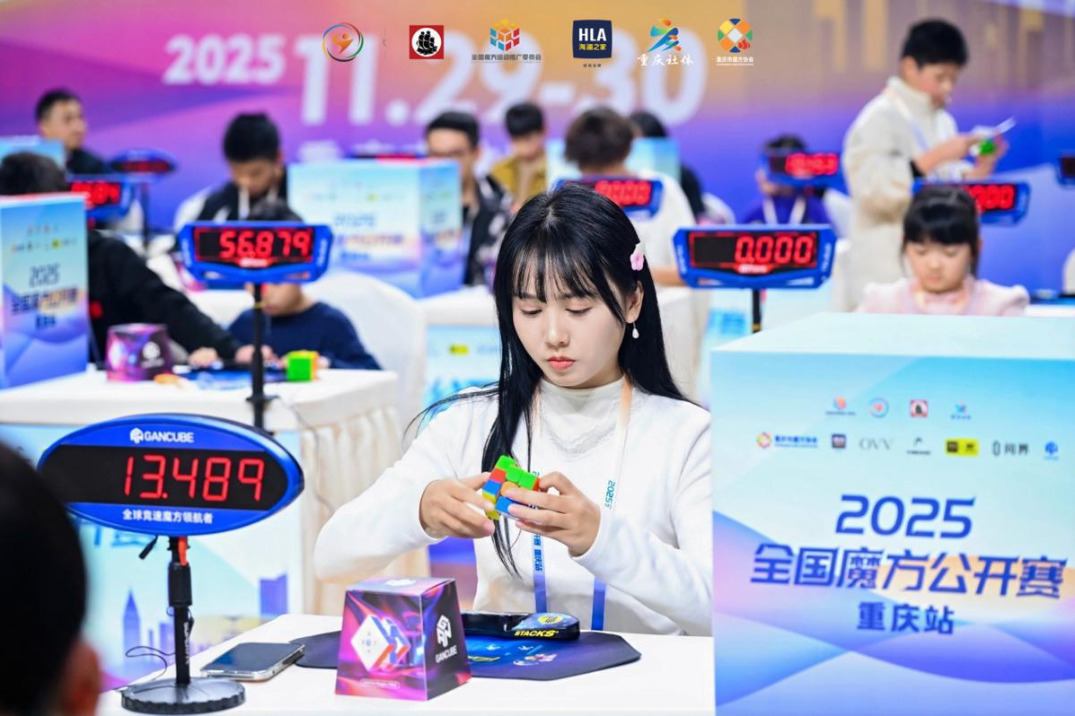
    The Chongqing Stadium witnessed an extraordinary display of mental athleticism on Monday as the 2025 National Rubik’s Cube Open regional competition concluded with unprecedented participation. A remarkable assembly of 1,520 puzzle enthusiasts from across China converged for the Chongqing leg of the national tournament, showcasing exceptional speedcubing prowess across multiple age categories.

    Among the standout participants was six-year-old prodigy Yu Niannian from Xiamen, Fujian province, who demonstrated remarkable composure alongside seasoned competitors. The young cuber’s dedication was captured by his mother, who documented his competitive journey through her mobile device from the spectator area.

    The event highlighted China’s growing fascination with precision sports that combine mathematical reasoning, pattern recognition, and manual dexterity. Participants engaged in various cube-solving disciplines, with some competitors achieving solve times under ten seconds amid intense concentration and rapid finger movements.

    Organizers noted that this year’s regional competition saw a 23% participation increase compared to previous editions, reflecting the sport’s expanding popularity as both competitive endeavor and educational tool. The tournament followed World Cube Association regulations, with official judges monitoring solves for compliance with international standards.

    The Chongqing qualifiers served as preliminary rounds for the national championship finals scheduled for early 2026, where top performers will compete for national titles and potential representation in international speedcubing competitions.

  • Ming Dynasty ginkgo tree draws crowds in Hunan

    Ming Dynasty ginkgo tree draws crowds in Hunan

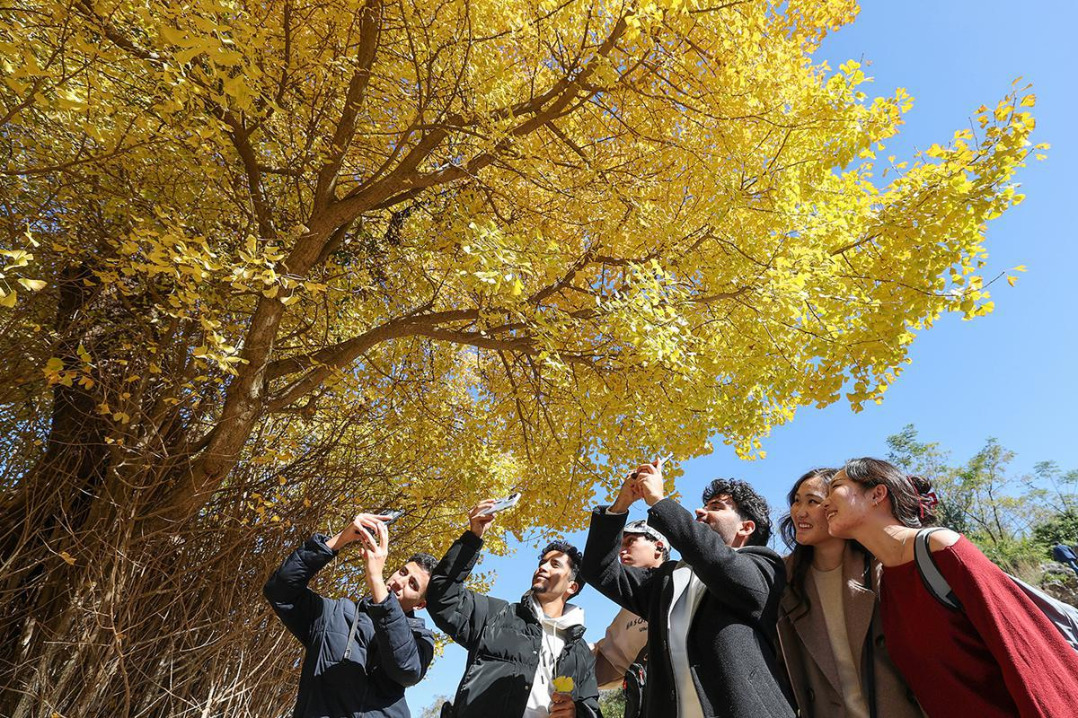
    A majestic centuries-old ginkgo tree has become an unexpected tourist phenomenon in Shanghuang village, Linwu county, Chenzhou, Hunan province. The ancient tree, standing approximately 40 meters tall with a 5-meter trunk diameter, has transformed into a breathtaking golden spectacle during the early winter season, drawing massive crowds of visitors to the typically tranquil rural community.

    The tree’s extraordinary dimensions and elegant architectural form create a natural wonder described by locals as a ‘one-tree forest.’ Its expansive canopy, now completely adorned in vibrant golden foliage, provides a stunning visual contrast against the winter landscape. The phenomenon has generated significant attention across social media platforms, with photographs of the golden giant circulating widely and inspiring travel to the remote village.

    Local authorities report unprecedented visitor numbers for the region, with tourism infrastructure experiencing unusual demand for this time of year. The tree’s popularity highlights China’s growing appreciation for natural heritage and seasonal natural phenomena. Botanical experts note that ginkgo trees of this age and size are exceptionally rare, with this specimen representing both ecological significance and cultural heritage.

    The surge in visitors has provided economic benefits to local businesses while also raising questions about sustainable tourism management and preservation of the ancient tree. Village officials have implemented crowd management measures to ensure the tree’s protection while accommodating the curious visitors who come to witness this natural marvel.

  • Today’s strategic initiatives shaping the UAE of tomorrow

    Today’s strategic initiatives shaping the UAE of tomorrow

    In a striking display of corporate patriotism, Design Infinity, a prominent UAE-based design and manufacturing firm, orchestrated a comprehensive National Day celebration involving its entire 1,400-strong workforce. The commemorative event took place at the company’s specialized Glass, Metal & Signage Factory, serving as both a tribute to national pride and a demonstration of industrial capability.

    The celebration represented a significant organizational undertaking, bringing together employees across all operational divisions to honor the UAE’s heritage and progressive vision. Company leadership emphasized the parallel between the nation’s developmental journey and their own growth within the industrial sector, highlighting how both narratives reflect ambition, innovation, and collective achievement.

    Beyond ceremonial activities, the event featured exhibitions showcasing the factory’s technical expertise and manufacturing precision. Employees participated in culturally significant activities while surrounded by the company’s industrial creations, creating a symbolic connection between traditional values and modern industrial advancement. The gathering also served to reinforce corporate culture and team cohesion within the context of national identity.

    This large-scale observance underscores the growing trend of private sector entities actively participating in national celebrations, particularly within industrial and manufacturing sectors that form crucial components of the UAE’s economic diversification strategy. The event demonstrated how industrial enterprises are increasingly positioning themselves as integral contributors to both economic development and cultural preservation.

  • US waiver on Iran’s Chabahar Port a win for Central Asia

    US waiver on Iran’s Chabahar Port a win for Central Asia

    In a significant geopolitical reversal, the United States has reinstated a crucial sanctions waiver for Iran’s Chabahar Port, marking a victory for Central Asian connectivity ambitions and India’s regional strategic interests. The October 30, 2025 decision by the State Department came just six weeks after its surprising September revocation of the 2018 exemption under the Iran Freedom and Counter-Proliferation Act (IFCA).

    The waiver restoration enables India to continue its 10-year management contract of the strategic Gulf of Oman port, which serves as a vital trade gateway for landlocked Central Asian nations and Afghanistan. This development directly counters China-Pakistan Economic Corridor’s Gwadar port located merely 100 miles away, highlighting the ongoing infrastructure competition in South Asian maritime routes.

    Central Asian capitals have welcomed Washington’s pragmatic realpolitik approach, recognizing Chabahar’s role in providing alternative trade routes beyond existing corridors through China, Russia, or the Middle Corridor. The port now offers faster export pathways for regional commodities including minerals, cotton, and energy products to global markets.

    Eldor Aripov, Director of Uzbekistan’s Institute for Strategic and Regional Studies, emphasized to The Times of Central Asia that ‘the waiver removes a major bottleneck to reliable access to the Indian Ocean, giving Uzbekistan and our neighbors one more route for our exports and imports. Diversification—which does not mean exclusivity—strengthens Central Asia’s strategic autonomy.’

    The decision has revitalized multiple transport initiatives including the Lapis Lazuli route (Afghanistan-Turkmenistan-Azerbaijan-Georgia-Turkey), the Five Nations Railway Corridor (China-Afghanistan-Tajikistan-Kyrgyzstan-Iran), and the 2016 Ashgabat Agreement involving Kazakhstan, Uzbekistan, Turkmenistan, Iran, India, Pakistan, and Oman.

    Recent diplomatic activity underscores the waiver’s significance: Afghan and Indian ministers met in New Delhi to explore Chabahar’s potential in reducing Kabul’s dependence on Pakistani routes, while Kazakh and Qatari officials discussed enhanced economic connectivity in Doha.

    The sustained sanctions exemption signals Washington’s recognition of India’s rising global presence and acknowledges Central Asia’s pursuit of north-south economic integration without sacrificing strategic autonomy to regional powers.

  • Hotpack’s 30-year journey: How a UAE-grown brand fuels national sustainability

    Hotpack’s 30-year journey: How a UAE-grown brand fuels national sustainability

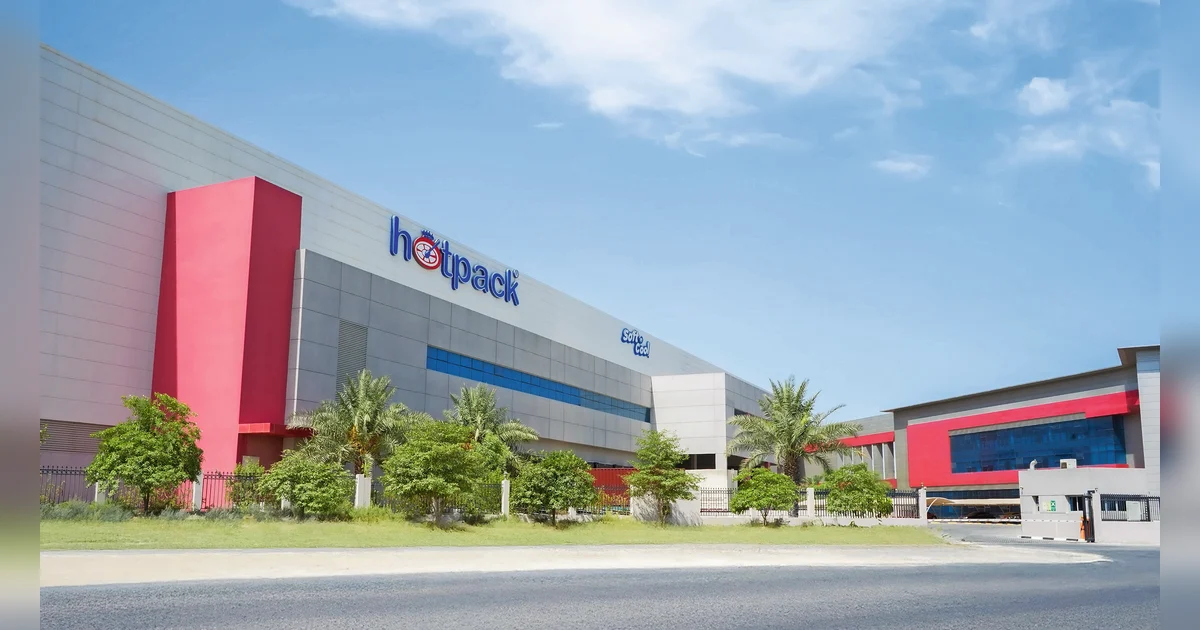
    As the United Arab Emirates intensifies its national sustainability initiatives ahead of critical 2024-2026 policy deadlines, domestic enterprises are emerging as crucial partners in transforming governmental vision into tangible environmental progress. Hotpack Global, an Emirati-born manufacturing enterprise, exemplifies this transition through its three-decade commitment to ecological responsibility and innovation.

    The UAE’s comprehensive environmental framework—encompassing national single-use plastics regulations, Dubai’s Executive Council Resolution 124 of 2023, and the Net Zero 2050 strategic initiative—is fundamentally reshaping manufacturing standards, consumer behavior, and corporate accountability. These policies collectively promote circular materials, reduce plastic pollution, minimize waste, and encourage sustainable alternatives while maintaining economic viability.

    Hotpack’s operational philosophy aligns seamlessly with national objectives. The company has made substantial investments in alternative material development, circular economic systems, and compliance-driven manufacturing processes. According to Group CEO and Managing Director Abdul Jebbar PB, “Our sustainability journey originates from the fundamental conviction that progress must be environmentally responsible. The UAE’s progressive policies provide corporations with a clear innovation roadmap—we perceive regulation not as obstacle but as leadership opportunity.”

    The manufacturer has achieved full compliance across all categories of current and impending UAE single-use plastics bans. Their product portfolio includes paper and multi-use bags exceeding 57 microns thickness, wooden utensils, plant-derived straws, recycled polymer items, paper cup solutions, and fiber-based plates. Notably, Hotpack entirely avoids Styrofoam production, significantly diminishing dependence on difficult-to-recycle materials.

    Beyond regulatory adherence, Hotpack has enhanced its sustainability profile through renewable material investments (including PLA bioplastics), extensive factory solar integrations, advanced waste management systems, and eco-conscious transportation solutions. These initiatives have garnered international recognition including the EcoVadis Gold Certification (placing them within the top 5% of global companies) and the Dubai Chamber ESG Label—Advanced Category, validating their environmental, social, and governance excellence.

    The company’s commitment extends to human capital through initiatives like the Hotpack Happiness Program, workforce welfare enhancements, and comprehensive ESG training programs, reflecting the UAE’s holistic vision of sustainability encompassing both ecological and social wellbeing.

    Jebbar emphasized: “The UAE has established ambitious environmental targets, and we consider it our obligation to make meaningful contributions. Sustainability represents not merely compliance but an integral component of our corporate culture, innovation methodology, and community responsibility.”

    As the nation progresses toward its Net Zero 2050 objectives and circular economy transition, Hotpack’s operational model demonstrates how policy alignment combined with corporate dedication can generate transformative change with lasting national and global impact.

  • 2026: A New Beginning — A Home for Every Individual

    2026: A New Beginning — A Home for Every Individual

    The year 2026 is poised to become a watershed moment for family homeownership in Dubai’s dynamic real estate landscape. Current market conditions have created an unprecedented convergence of factors that make property acquisition not just feasible but financially advantageous for households that have long deferred this milestone.

    Families traditionally face significant hurdles when contemplating home purchases. Budgetary constraints represent the primary concern, with many prospective buyers struggling to balance financial comfort with desired location and quality specifications. Additional complications include substantial down payment requirements and mortgage eligibility uncertainties—from loan qualification thresholds to repayment term limitations based on borrower age profiles.

    A critical financial blind spot persists among renters: while meticulously minimizing minor expenses like toll fees or subscription services, many overlook the substantial long-term financial drain of continuous rental payments. Unlike mortgage installments that build equity, rental expenditures provide no return on investment and ultimately leave families without tangible assets.

    Dubai’s 2026 property market fundamentally alters this calculus. The market now offers unparalleled choice with over 2,000 developers and 30,000 registered brokers creating competitive pricing environments and flexible payment structures. This expansion enables customized solutions across diverse budgetary requirements and lifestyle preferences.

    The convergence of escalating rental costs, enhanced financial literacy, and diversified property options establishes 2026 as the optimal timeframe for families to transition from tenants to homeowners. With professional guidance readily available, the barriers that previously delayed homeownership aspirations are being systematically dismantled, positioning 2026 as Dubai’s definitive year for family property acquisition.

  • A Journey Forged in Precision, Powered by Trust

    A Journey Forged in Precision, Powered by Trust

    As the United Arab Emirates marks its 54th National Day, UK-based automotive components manufacturer BorgRollsWarner reflects on two decades of strategic growth aligned with the nation’s remarkable economic transformation. The company’s journey from modest beginnings to multinational presence exemplifies the successful business environment fostered by UAE leadership.

    The UAE has demonstrated extraordinary economic resilience and diversification, with its real GDP reaching AED 1.77 trillion ($481 billion) in 2024 while maintaining steady 4% growth. Most significantly, non-oil sectors now contribute over 75% of total GDP, underscoring the nation’s strategic shift beyond hydrocarbon dependence.

    BorgRollsWarner established its UAE presence in 2008, selecting the Emirates as its first major market outside the United Kingdom. The company’s expansion trajectory mirrors the country’s economic development, growing from premium truck and trailer components to a comprehensive aftermarket provider offering brake systems, suspension components, filtration, rubber parts, and cooling solutions.

    Despite global supply chain disruptions in 2020, the company fortified its logistics operations and expanded into African and Central Asian markets by 2022. Recent milestones include the 2025 opening of a flagship showroom in Dubai’s Deira district and the launch of proprietary brands RITZ and emBRWace.

    The company now operates through multiple regional entities including Redington International Auto Spare Parts Trading LLC, BorgRollsWarner Middle East LLC, BorgRollsWarner Middle East FZE, and John Rhee Automotive WLL in Bahrain, serving 36 countries across multiple continents.

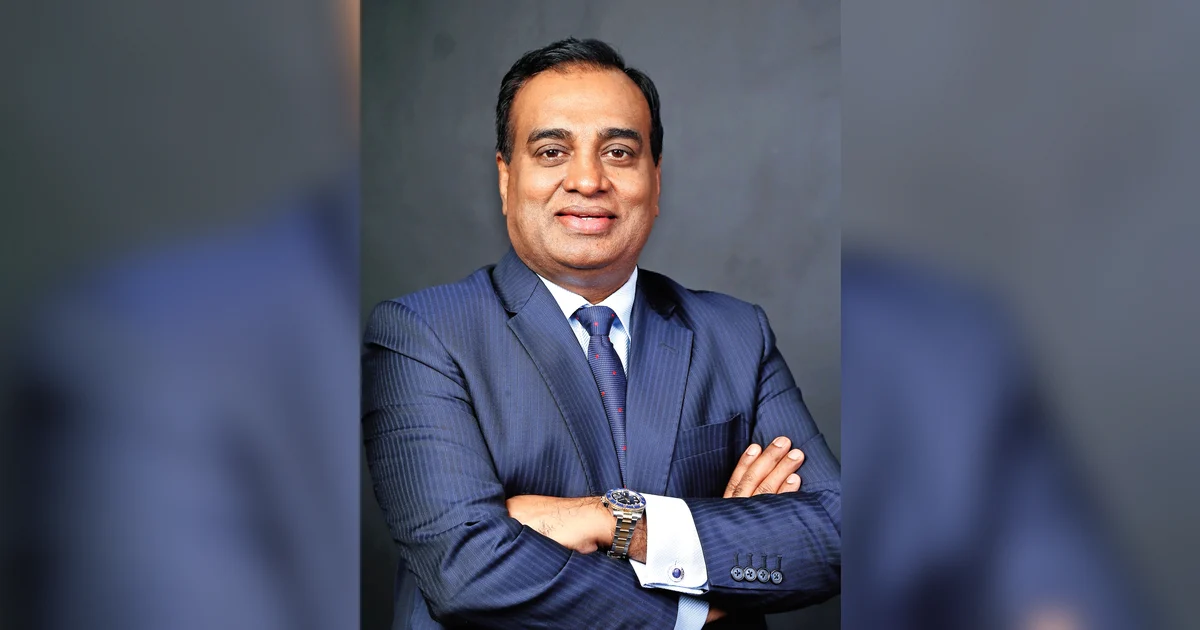
    CEO Nazeer Veliyil attributes the company’s success to the UAE’s visionary leadership, world-class infrastructure, and openness to global talent, which collectively create an ecosystem where ambition transforms into tangible achievement. The partnership between corporation and nation represents a model of international business development built on trust, shared purpose, and mutual growth.