标签: Asia

亚洲

  • Schools go hybrid as Delhi’s air quality worsens

    Schools go hybrid as Delhi’s air quality worsens

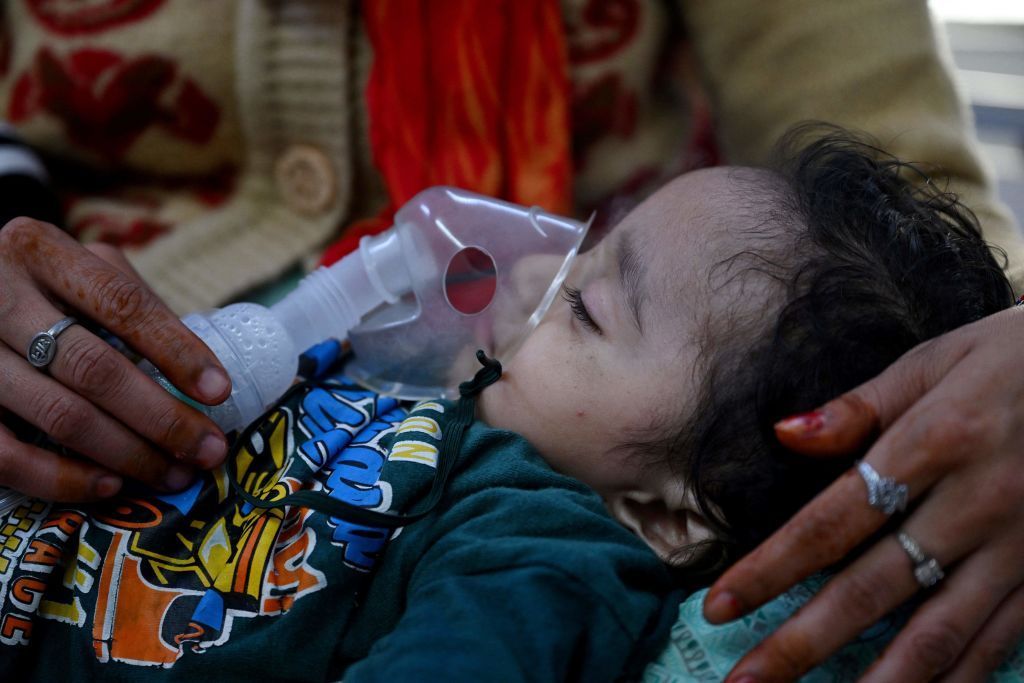
    Delhi, the Indian capital, is grappling with a severe air pollution crisis, prompting authorities to implement stringent measures to mitigate the health risks. Schools have been directed to adopt hybrid learning models for primary students, while non-essential construction activities have been suspended. On Tuesday, stricter anti-pollution protocols were enforced, including restrictions on the movement of goods carriers in the city and its suburbs. The air quality in Delhi has plummeted to ‘severe’ levels, posing significant health hazards to both healthy individuals and those with pre-existing conditions. On Wednesday, the PM2.5 concentration soared to 438, a staggering 30 times higher than the World Health Organization’s (WHO) safe limit of 15 and eight times above India’s national average. Doctors have issued urgent advisories, urging residents, particularly children and the elderly, to avoid outdoor activities unless absolutely necessary and to wear protective masks when venturing outside. The recurring issue of toxic air quality in Delhi and northern India during winter is attributed to a combination of factors, including low wind speeds, industrial emissions, vehicle exhaust, dropping temperatures, and the seasonal burning of crop stubble in neighboring states. The Delhi government has activated Stage 3 of the Graded Response Action Plan (GRAP), which includes bans on mining, stone crushing, and the movement of vehicles carrying dust-generating materials. The worsening air quality has sparked public protests and political disputes, with opposition leader Saurabh Bhardwaj accusing the government of manipulating air quality data and failing to declare a public health emergency. The ruling Bharatiya Janata Party (BJP) has denied these allegations, asserting its commitment to pollution control. Delhi Environment Minister Manjinder Singh Sirsa emphasized that air quality data is publicly accessible and clarified that water sprinkling near monitors aims to reduce dust, not manipulate readings.

  • Houthis signal end of attacks on Israel and vessels in Red Sea after Gaza ceasefire

    Houthis signal end of attacks on Israel and vessels in Red Sea after Gaza ceasefire

    In a significant development, Yemen’s Houthi movement has indicated a potential halt to its attacks on Israel and vessels in the Red Sea, contingent on a sustained ceasefire in Gaza. This stance was articulated in a letter posted on X (formerly Twitter) by the group, marking a potential shift in their two-year-long conflict strategy. The letter, addressed to Hamas by Major General Yusuf Hassan al-Madani, the Houthi military’s chief of staff, praised Hamas for its resilience and claimed victory over ‘the strongest empires of money, faith, and technology.’ The undated letter, shared on Sunday, also expressed gratitude for Hamas’s condolences following the death of the Houthis’ military chief of staff, Major General Mohammed Abdul Karim al-Ghamari, who was reportedly killed in an Israeli airstrike. While the exact timing of the attack remains unclear, Israeli officials suggested it occurred in August. The letter emphasized that the Houthis would resume military operations against Israel and reinstate the ban on Israeli navigation in the Red and Arabian Seas if hostilities in Gaza resumed. The Houthis began targeting Israel after its invasion of Gaza in response to the Hamas-led October 7, 2023, attacks. By late 2023, the group expanded its attacks to include vessels in the Red Sea, initially focusing on Israeli ships but later broadening their scope to include US and Western-linked vessels. Experts noted that the Houthis used ship-tracking data to avoid targeting Gulf-linked ships and those associated with Russia and China. Russia reportedly saw an opportunity to support the Houthis, deploying advisors and considering the provision of advanced anti-ship cruise missiles. Iran, a key backer of the Houthis, has provided arms and training, aligning the group with the so-called ‘axis of resistance’ alongside Lebanon’s Hezbollah and Iraqi militias. The Houthis briefly ceased maritime attacks during a short-lived Gaza truce in January but resumed missile strikes on Israel after the ceasefire collapsed in March. US President Donald Trump launched a bombing campaign against the Houthis, which ended on May 6 following Saudi Arabia’s lobbying efforts. Saudi Arabia, currently in a fragile truce with the Houthis, is negotiating a political settlement, including discussions on paying salaries for government employees in Houthi-controlled territories. The Houthis shared the letter on X just days before Saudi Crown Prince Mohammed bin Salman’s scheduled visit to Washington, signaling a broader commitment to de-escalation. While the group has adhered to its ceasefire with the US, it continued attacks on Israel until the Gaza ceasefire was signed in October. Maritime attacks in the Red Sea intensified in the summer following Israeli strikes on Iran, with the Houthis sinking two vessels with tertiary links to Israel. The Eternity C, one of the targeted ships, lost its war risk coverage from its US-based insurer, Travelers, before its ill-fated passage.

  • Australia’s top court rejects Russia’s challenge to embassy eviction

    Australia’s top court rejects Russia’s challenge to embassy eviction

    In a landmark ruling, Australia’s High Court has dismissed Russia’s legal challenge against the eviction from a Canberra site intended for its new embassy, citing national security concerns. The court’s seven judges unanimously affirmed the Australian government’s authority to terminate the lease but mandated compensation to Russia. The decision, announced on Wednesday, also requires Australia to cover half of Russia’s legal costs. Attorney-General Michelle Rowland praised the ruling, emphasizing the government’s commitment to national security and values. She stated that the administration would carefully evaluate the next steps, including compensation payments. The Russian Embassy has yet to comment on the verdict. The dispute traces back to 2008 when Australia granted Russia a lease for the site, located just 300 meters from Parliament House. However, in 2023, Prime Minister Anthony Albanese cited security risks as the basis for emergency legislation canceling the lease. Russia had accused Australia of ‘Russophobic hysteria’ and argued the eviction was unconstitutional, claiming no proven national security threat. Despite Russia’s claims, the court upheld the government’s decision, though it acknowledged the need for financial redress. The undeveloped site, apart from a small consular building, remains a focal point of diplomatic tension between the two nations.

  • In Japan’s Northern Alps, residents battle monkeys to protect homes and farms

    In Japan’s Northern Alps, residents battle monkeys to protect homes and farms

    In the serene foothills of Japan’s Northern Alps, an unusual battle unfolds between humans and monkeys. Armed with bright orange vests, bells, whistles, and walking sticks, a dedicated group known as the Monkey Chasing Squad patrols the region. Their mission: to herd Japanese macaques back into the mountains and away from farms and homes. Using GPS trackers, they monitor the monkeys’ movements and coordinate efforts to keep the animals at bay. While these primates are a major tourist attraction at Jigokudani Monkey Park, where they famously soak in hot springs, they are increasingly seen as pests by locals. The monkeys raid homes, steal food, and destroy crops, causing significant frustration. In 2022, Japan’s Agriculture Ministry reported crop damage from wild animals, including monkeys, totaling 15.6 billion yen ($100 million). The Monkey Chasing Squad, led by Masaya Miyake, has made progress in reducing the time macaques spend in villages, but challenges remain. Efforts to cull the monkeys have sparked debate, with ecologists warning that such measures could worsen the problem by disrupting troop dynamics. As human-monkey conflicts escalate, innovative solutions like electric fences and trained dogs are being explored. However, the squad’s work highlights the delicate balance between preserving wildlife and protecting livelihoods in Azumino.

  • Indonesia and Australia are close to signing a new defense treaty

    Indonesia and Australia are close to signing a new defense treaty

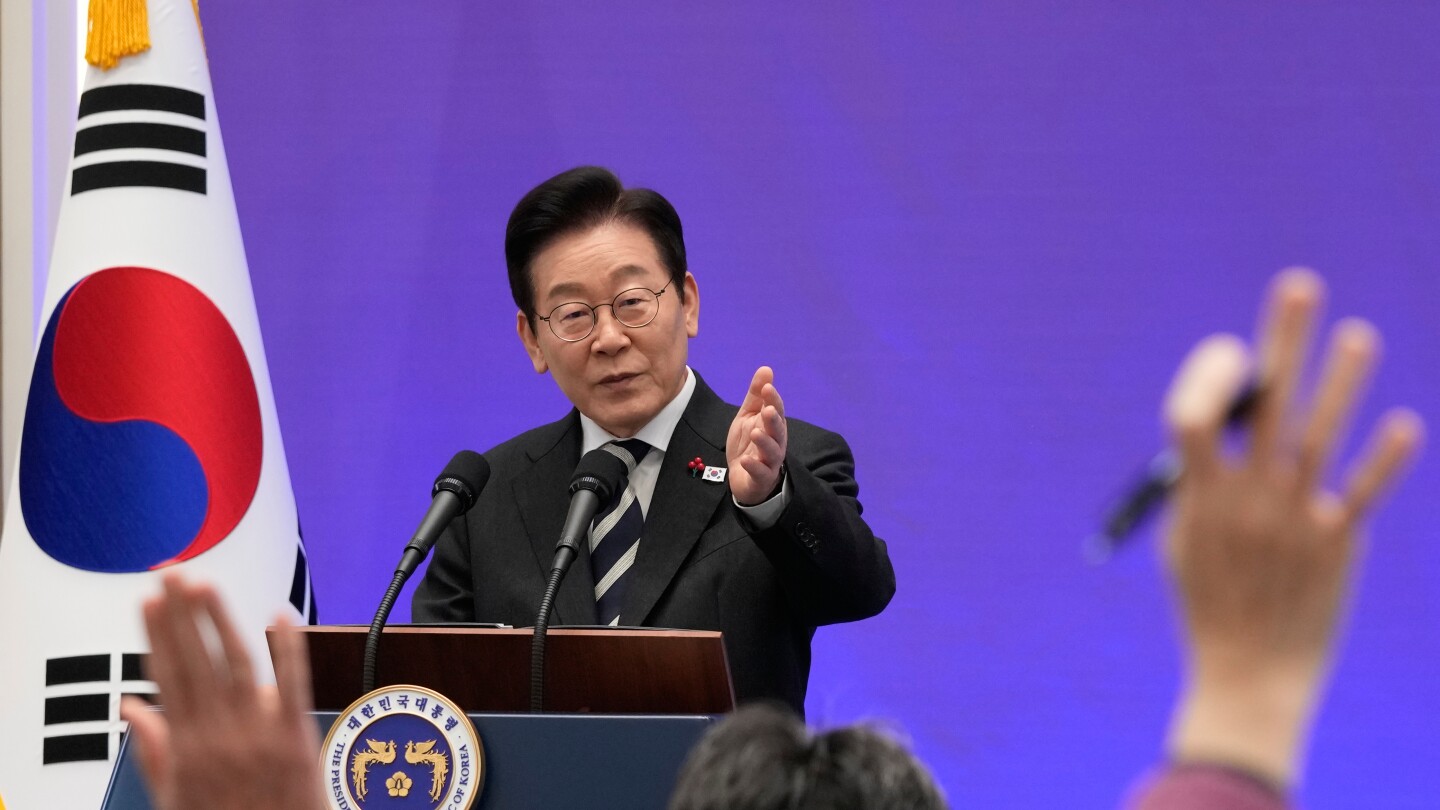
    MELBOURNE, Australia (AP) — In a significant diplomatic development, Indonesian President Prabowo Subianto and Australian Prime Minister Anthony Albanese revealed on Wednesday that the two nations are on the verge of finalizing a groundbreaking bilateral defense treaty. The announcement was made during President Prabowo’s inaugural state visit to Australia, marking a pivotal moment in the strategic partnership between the two neighboring countries. Prime Minister Albanese expressed optimism that the treaty would be formally signed during his scheduled visit to Indonesia in January. The agreement, which has been substantively concluded after extensive negotiations, aims to strengthen security cooperation between Australia and Indonesia. It establishes a framework for regular high-level consultations on security matters, joint identification of mutually beneficial security initiatives, and a commitment to deliberate on individual or collective measures in response to potential threats to either nation’s security. President Prabowo emphasized the cultural significance of neighborly support in Indonesian tradition, stating, “Good neighbors will help each other in times of difficulties.” The treaty underscores the shared commitment of both nations to fostering regional stability and addressing security challenges collaboratively.

  • Ex-NY governors’ aide set for trial on charges she sold influence to China, got kickbacks for masks

    Ex-NY governors’ aide set for trial on charges she sold influence to China, got kickbacks for masks

    A former aide to two New York governors, Linda Sun, is set to stand trial on Wednesday, accused of selling her influence to the Chinese government and illegally profiting from the state’s bulk purchase of face masks during the COVID-19 pandemic. Sun, a naturalized U.S. citizen born in China, served in various state government roles over a 15-year career, including as deputy chief of staff to Governor Kathy Hochul and deputy diversity officer under former Governor Andrew Cuomo. Sun and her husband, Chris Hu, were arrested last year during a U.S. crackdown on alleged secret agents working for the Chinese government. They were charged again in June as part of the government’s efforts to root out pandemic fraud. Sun has pleaded not guilty to charges of violating the Foreign Agents Registration Act, conspiring with her husband to commit money laundering, and aiding visa fraud. Hu has also pleaded not guilty to charges including money laundering, tax evasion, conspiracy to commit bank fraud, and misuse of identification. Neither has been charged with espionage. Federal prosecutors allege that Sun acted at the request of Chinese officials to block Taiwanese government representatives from accessing the governor’s office and shaped New York governmental messaging to align with Chinese priorities. In return, Hu received assistance for his business activities in China, which prosecutors claim allowed the couple to purchase multimillion-dollar properties and luxury cars. Sun is also accused of reaping millions in kickbacks by exploiting her role on a Cuomo administration team that procured personal protective equipment during the pandemic. Sun’s lawyer, Jarrod L. Schaeffer, contends that the government charged Sun because she and her family “had too much money” and that the case is filled with “glaring inconsistencies.” Opening statements are set for Wednesday morning in Brooklyn federal court, with the trial expected to last several weeks.

  • Nobel laureate urges China to deepen space collaboration

    Nobel laureate urges China to deepen space collaboration

    Renowned astrophysicist Reinhard Genzel, recipient of the 2020 Nobel Prize in Physics, has emphasized the necessity for China to embed long-term scientific endurance into its national strategy to secure a leading role in space exploration. Speaking at the Hong Kong Laureate Forum, Genzel highlighted that while China has made significant investments in space projects over the past decade, it must now transform this technological momentum into institutional permanence to avoid falling behind in the global race for space supremacy. Genzel, who also serves as co-director of the Max Planck Institute for Extraterrestrial Physics and professor at Ludwig Maximilian University of Munich and the University of California, Berkeley, stressed the importance of building structures that can sustain scientific efforts beyond political cycles. He noted that the era of US dominance in space science, driven by Cold War investments, has evolved into a more distributed landscape with China and Europe making substantial strides. Genzel pointed to China’s FAST telescope as a remarkable achievement but cautioned that future large-scale projects will require international collaboration due to their complexity and cost. He cited the James Webb Space Telescope and the Extremely Large Telescope in Chile as examples of projects that have pushed the limits of national capabilities and budgets. Genzel concluded that the next generation of scientific endeavors will necessitate multinational cooperation to achieve groundbreaking discoveries.

  • US plans ‘temporary housing’ in Gaza behind Israeli lines: Report

    US plans ‘temporary housing’ in Gaza behind Israeli lines: Report

    The United States is reportedly considering a controversial plan to construct housing for thousands of ‘screened’ Palestinians in Gaza, specifically in areas behind the so-called yellow line currently occupied by Israeli troops. According to a report by The Atlantic, the initiative, termed ‘Alternate Safe Communities,’ would involve vetting Palestinians for ‘anti-Hamas’ sentiments before granting them entry. The proposal, discussed in an email by US Lieutenant General Patrick Frank, who oversees Gaza ceasefire coordination, envisions settlements equipped with medical centers, schools, administrative buildings, and temporary housing for up to 6,000 people—a significant reduction from the initial estimate of 25,000. The plan has drawn criticism and concern from Arab states and European countries, who view it as a potential step toward permanent Israeli occupation of parts of Gaza. The Trump administration has not committed US funds for the project, instead urging Gulf states to invest. Meanwhile, the plan raises questions about Palestinian land ownership, as Gaza’s land registry, previously managed by Hamas, remains a contentious issue. The proposal also involves Israel’s Shin Bet security agency screening applicants, focusing not only on individual ties to Hamas but also on their family connections. The broader US peace plan, which includes eventual Israeli troop withdrawal and the introduction of an Arab peacekeeping force, lacks a clear timeline and faces significant logistical and political challenges.

  • Early tea break: India flips menu for Guwahati Test against South Africa

    Early tea break: India flips menu for Guwahati Test against South Africa

    In a groundbreaking move, the Board of Control for Cricket in India (BCCI) has redefined traditional cricket schedules for the second Test match between India and South Africa in Guwahati. Scheduled to commence on November 22, this historic match at the Barsapara Cricket Stadium will feature an early tea break before lunch, a first in Test cricket history. This innovative adjustment is a response to the unique climatic conditions of north-east India, where early sunrise and sunset significantly impact daylight availability. BCCI Secretary Devajit Saikia explained, ‘In winters, sunrise and sunset occur very early here. By 4 pm, the light fades, making it challenging to continue play. Starting early ensures maximum utilization of daylight.’ Consequently, the match will begin at 9 am, half an hour earlier than the standard start time for red-ball Tests in India. The revised schedule includes a 20-minute tea break at 11 am, lunch between 1:20 pm and 2 pm, and the final session concluding by 4 pm. Both teams will see the return of key players, with India’s Rishabh Pant making a comeback from a foot fracture and South Africa’s Temba Bavuma recovering from a calf injury. Currently, India holds the third position in the World Test Championship, while South Africa, the defending champions, are in fourth place.

  • Taiwan evacuates 8,300 and shuts schools before tropical storm brushes island

    Taiwan evacuates 8,300 and shuts schools before tropical storm brushes island

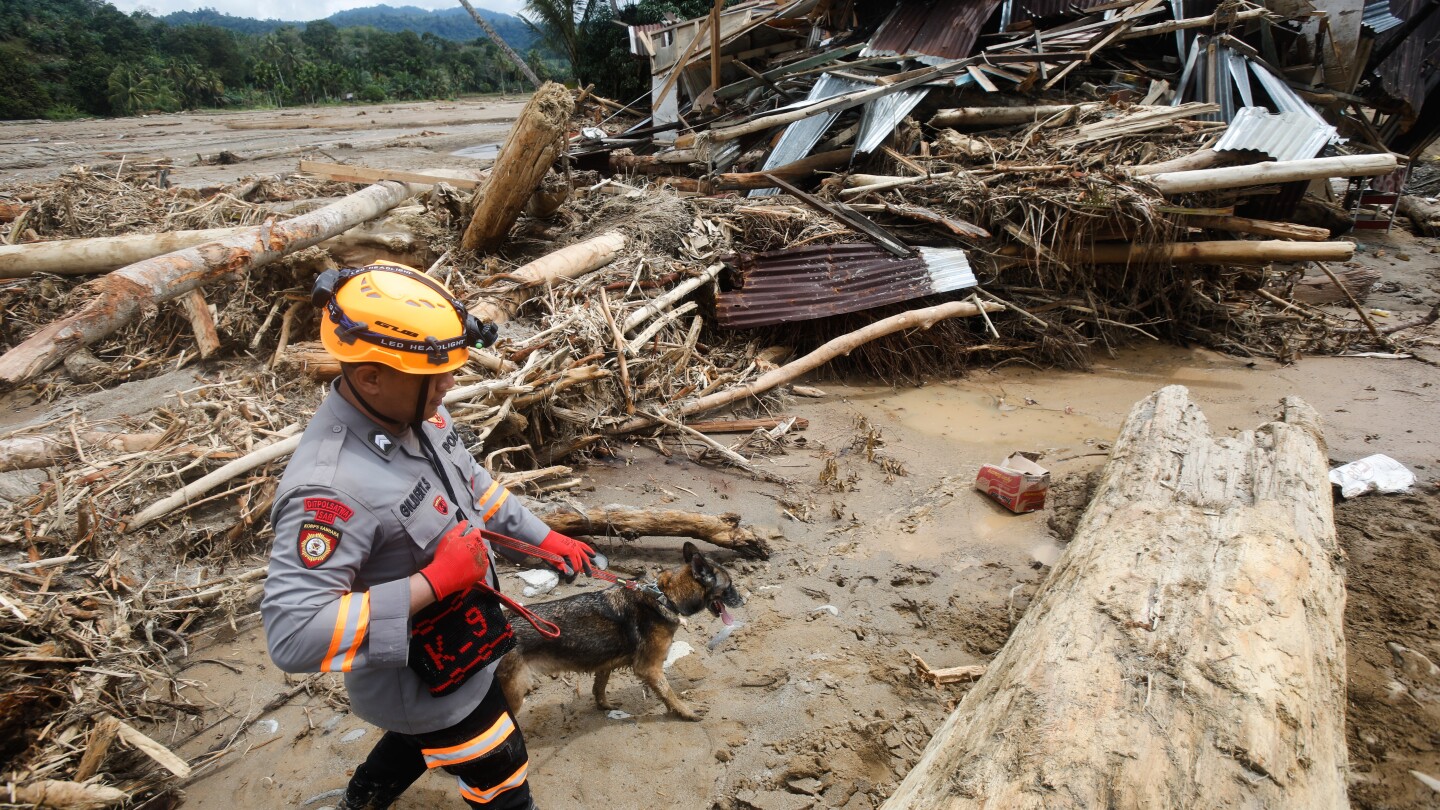
    Taiwan has initiated large-scale evacuations and school closures as Tropical Storm Fung-wong approaches the island’s southern region. Over 8,300 residents, primarily from the eastern Hualien County, have been relocated to safer areas. This precautionary measure follows the devastation caused by a previous typhoon in September, which claimed 18 lives in the same region. Fung-wong, which previously wreaked havoc in the Philippines as a super typhoon, has weakened but still poses significant threats. As of Wednesday morning, the storm was located approximately 140 kilometers southwest of Taiwan, moving northeast at 16 kph. It is expected to graze southern Taiwan before exiting from the southeastern side. Heavy rains and flooding have already injured at least 51 people, according to the National Fire Agency. Authorities have urged residents to avoid coastal areas, where waves could reach heights of 3 to 5 meters. In the Philippines, over 623,300 people remain in evacuation centers following the storm’s earlier impact, which caused landslides, power outages, and at least 27 deaths. The Cordillera region, known for its scenic landscapes, was particularly affected by landslides. Schools and offices in central and southern Taiwan, including major cities like Kaohsiung and Tainan, have been closed, while the capital, Taipei, continues normal operations.