In a significant stride toward early detection of breast cancer, healthcare groups in the UAE report that 62% of women screened in 2024 were first-timers. This surge is attributed to widespread awareness campaigns, mobile screening units, and efforts to make the process more accessible and affordable. Dr. Nita Zaji, a Specialist General and Breast Surgeon at Medcare Women & Children Hospital, emphasized the role of national and private initiatives in transforming awareness into action. These campaigns, prominently featured during Breast Cancer Awareness Month in October, have reached women through social media, workplaces, and even petrol stations, making screenings a routine part of preventive healthcare. Emotional barriers such as fear of discomfort, denial, and misconceptions about cancer remain significant hurdles. However, healthcare providers are addressing these concerns by offering supportive environments, female medical staff, and discounted packages. Dr. Tariq Alhamid of Burjeel Cancer Institute highlighted the impact of mobile mammography units, which bring screenings to neighborhoods and workplaces, eliminating logistical and cultural obstacles. Social media and survivor stories have also played a crucial role in changing perceptions. Despite progress, myths persist, such as the belief that biopsies can spread cancer, which delays testing. Doctors are now dedicating more time to educating patients about the safety and necessity of biopsies for early diagnosis. Dr. Moustafa Aldaly of International Modern Hospital noted a cultural shift toward preventive care, driven by targeted campaigns, improved access to imaging services, and the increasing presence of female healthcare professionals. With mobile units, digital booking systems, and multilingual education programs, access to life-saving screenings has become easier than ever. Healthcare providers are focusing on empathy-driven education, using real-life examples to show how early detection leads to better outcomes, empowering women to take charge of their health.
标签: Asia
亚洲
-

140 dead in monsoon disasters in Nepal
Kathmandu, Nepal – The monsoon season in Nepal has left a trail of destruction, claiming the lives of 140 people, as reported by the National Disaster Risk Reduction and Management Authority on Tuesday. The 135-day monsoon period, which spanned from May 29 to October 10, saw 1,454 disaster incidents, leaving 30 individuals missing and 300 injured. Landslides were the deadliest, responsible for 67 fatalities, followed by floods with 37 deaths, and lightning strikes claiming 29 lives. A staggering 5,995 families were affected by these calamities. Additionally, the report highlighted that 120 more lives were lost, and 622 people were injured due to other disasters such as fires and snakebites during the same period. The devastating impact of the monsoon has underscored the urgent need for enhanced disaster preparedness and response mechanisms in the region.
-

UAE: Etihad Rail could have a stop at Dubai’s new Al Maktoum International Airport
The UAE’s ambitious Etihad Rail project is set to revolutionize transportation by potentially integrating with Dubai’s Al Maktoum International Airport at Dubai World Central (DWC). This strategic move could allow passengers to check in directly from train stations, enhancing convenience and efficiency. Paul Griffiths, CEO of Dubai Airports, revealed in an interview with Flight Global that the planned Etihad Rail network is expected to include a stop at DWC, fostering a seamless travel experience. The passenger train service, scheduled to launch in 2026, is projected to accommodate approximately 36.5 million passengers annually by 2030. The rail network will connect key cities across the UAE, including Abu Dhabi, Dubai, Sharjah, Ras Al Khaimah, Fujairah, Al Ain, Ruwais, Al Mirfa, Al Dhaid, Ghuweifat (bordering Saudi Arabia), and Sohar in Oman via the Hafeet Rail project. Additionally, a new high-speed electrified line between Abu Dhabi and Dubai will feature six stations, including one near Al Maktoum Airport, reducing travel time between the two cities to just 30 minutes. This development aligns with Dubai’s broader strategy to expand its transport infrastructure and accommodate growing passenger demand. In April 2024, the Dubai government announced plans to transfer all operations from Dubai International (DXB) to Al Maktoum International (DWC), which will boast a new Dh128-billion passenger terminal capable of handling 260 million passengers annually. This transition is expected to be completed within a decade, addressing DXB’s capacity constraints. Griffiths emphasized the goal of creating a frictionless airport experience, leveraging artificial intelligence to optimize aircraft scheduling and passenger connections. As Dubai continues to innovate, the integration of Etihad Rail with Al Maktoum International Airport marks a significant milestone in the region’s transportation evolution.
-

Jakarta faces shortage to accommodate the dead
Jakarta, Indonesia’s bustling capital, is confronting a severe shortage of burial space as its cemeteries reach or exceed capacity. With 86.25% of the city’s 80 public cemeteries already full and the remaining ones nearing their limits, only 118,000 graves remain available. This alarming situation has raised concerns about the commercialization of burial plots, disproportionately affecting low- and middle-income residents who rely on free public cemeteries. Rapid population growth and limited land availability have exacerbated the crisis, prompting the city to adopt measures such as stacked burials, where multiple caskets are interred in a single plot. However, even these efforts fall short of meeting demand. For instance, the Grogol Kemanggisan public cemetery in West Jakarta, which houses around 17,000 bodies, has stopped accepting new burial requests due to overcrowding. Families are often forced to incur additional costs by traveling to distant cemeteries or opting for private burial grounds, which charge exorbitant fees. The COVID-19 pandemic further strained the system, with Jakarta recording over 16,000 deaths from the virus by June 2023. To address the issue, Governor Pramono Anung has proposed building new public cemeteries and converting former COVID-19 burial sites. Yet, experts like urban sociologist Rakhmat Hidayat argue that the crisis stems from poor urban planning and a focus on commercial development over public welfare. Without immediate action, the burden will continue to fall on the city’s most vulnerable residents, who may soon have no access to affordable burial options.
-

Beyond family
As Singapore rapidly transitions into a super-aged society, experts are advocating for a shift from family-centric caregiving to community-based models. With over 21% of the population expected to be aged 65 or older by 2026, the need for innovative eldercare solutions is more pressing than ever. Paulin Straughan, director of the Centre for Research on Successful Ageing (ROSA) at Singapore Management University, emphasizes that relying solely on migrant domestic workers is unsustainable. Instead, fostering local talent and community involvement is crucial. Initiatives like the ElderAid program by the Singapore Red Cross, which connects volunteers like Peh Kim Hiok with seniors in need, exemplify this approach. Peh, a 62-year-old homemaker, has been visiting three seniors monthly, offering companionship and support. Her story highlights the growing trend of seniors helping seniors, redefining caregiving beyond familial ties. The government is also stepping up efforts with projects like ‘Age Well Neighborhoods,’ which aim to enhance community infrastructure and care services. These include community care apartments, active aging centers, and shared stay-in senior care services. Despite these advancements, challenges remain. About 30% of older adult caregivers report chronic health conditions, underscoring the need for programs to support their physical and mental well-being. Christopher Gee, deputy director of the Institute of Policy Studies, stresses the importance of nurturing a ‘we-first’ society, where caregiving is a collective responsibility. Tools like the Healthy 365 app, which incentivizes health targets, could serve as models for promoting pro-social behaviors. The Silver Generation Office (SGO) has also expanded its network of ambassadors to nearly 9,000, leveraging digital engagement to reach tech-savvy seniors. As Singapore grapples with its aging population, the call for a community-driven caregiving model grows louder, offering a sustainable path forward.
-

Indian police detain suspects in Kashmir after deadly New Delhi car blast
Indian security forces have apprehended several individuals in the contested Kashmir region as part of an ongoing probe into a devastating car explosion in New Delhi earlier this week. The blast, which occurred near the iconic Red Fort, claimed eight lives and left numerous others injured. Authorities have classified the incident as a potential act of terrorism, granting them expanded powers to detain suspects. The Red Fort, a 17th-century landmark, is a site of national significance where Indian prime ministers traditionally deliver Independence Day addresses. If confirmed as a deliberate attack, this would mark the deadliest explosion in India’s capital since 2011. Police conducted overnight raids in Pulwama district, Kashmir, detaining at least five individuals for questioning. The explosion occurred hours after law enforcement in Indian-administered Kashmir dismantled a suspected militant cell allegedly operating from the region to the outskirts of New Delhi. Seven individuals, including two doctors, were arrested, and authorities seized weapons and bomb-making materials in Faridabad, a city near Delhi. Indian media reports suggest the explosion may be linked to this cell, though police have not confirmed this. The investigation reportedly began with an inquiry into anti-India posters in Srinagar, Kashmir, which threatened attacks on Indian troops. CCTV footage and subsequent interrogations led to the arrests of several suspects, including Kashmiri doctors working in Indian cities. Media outlets speculate that the car’s driver, a Kashmiri doctor teaching in Faridabad, may have been involved, either by triggering the explosion intentionally or transporting explosives that detonated accidentally. The incident has heightened fears of renewed tensions between India and Pakistan, both nuclear-armed rivals. India frequently accuses Pakistan of supporting cross-border attacks, a claim Pakistan denies. The Kashmir conflict, rooted in decades of unrest, remains a flashpoint between the two nations. This explosion is the latest in a series of deadly attacks in New Delhi, echoing past bombings attributed to Kashmiri militant groups and Indian Islamist organizations.
-

Thailand, Cambodia trade blame over landmine blast
Thailand and Cambodia have engaged in a diplomatic dispute following a landmine explosion that injured four Thai soldiers near the border in Si Sa Ket Province. The incident has led to the suspension of the Thai-Cambodian Joint Declaration, a recent agreement signed in Malaysia aimed at fostering peace and stability between the two nations. Thailand has accused Cambodia of planting new landmines within its territory, a claim vehemently denied by Phnom Penh. Thai Foreign Ministry spokesman Nikorndej Balankura stated that the blast site inspection confirmed the landmines were newly planted by Cambodia, breaching Thailand’s sovereignty. In response, Thailand has paused certain elements of the declaration, including the release of 18 Cambodian soldiers, until Cambodia demonstrates accountability. Cambodia, however, has urged Thailand to exercise caution in old minefield areas and reaffirmed its commitment to international law, denying any use of new landmines. The Cambodian Ministry of National Defense emphasized its dedication to peace and stability, calling for continued cooperation. Meanwhile, Thai Prime Minister Anutin Charnvirakul has ordered the armed forces to prepare for border defense, with Defense Minister Nattapon Nakpanich confirming military authorization for necessary actions within Thai territory. Despite the tensions, both sides have maintained diplomatic contact to manage the fallout and prevent further escalation.
-

Nearly 70% of winter wheat sowed across China
China Daily, a leading source of news and information, maintains strict copyright policies to protect its content. All materials published on the site, including text, photos, and multimedia, are owned by China Daily Information Co (CDIC). Unauthorized republication or use of this content in any form is prohibited without explicit written permission from CDIC. The website recommends using browsers with a resolution of 1024*768 or higher for optimal viewing. Additionally, China Daily offers various services such as advertising opportunities, job offers, and employment information for expatriates. For more details, users can explore sections like ‘About China Daily,’ ‘Advertise on Site,’ ‘Contact Us,’ ‘Job Offer,’ and ‘Expat Employment.’ The site also encourages visitors to follow its updates through its social media channels.
-

‘Tech tourism’ takes off across nation
Across China, a new wave of tourism is taking shape, driven by cutting-edge technology and immersive experiences. From virtual reality (VR) journeys to the ancient Qin Dynasty’s Terracotta Warriors to simulated Mars missions in astronaut suits, ‘tech tourism’ is redefining how visitors engage with cultural and scientific landmarks. This innovative trend is not confined to museums or theme parks but is spreading across scenic spots nationwide, offering interactive and expansive experiences that captivate tourists of all ages. The integration of artificial intelligence (AI), VR, and robotics into tourism has transformed abstract technological concepts into tangible, engaging activities. For instance, the Shenzhen Science and Technology Museum allows children to ‘roam’ through space, while the Qingdao Science and Technology Museum turns them into ‘underwater archaeologists’ with VR goggles. Beyond urban centers, destinations like the FAST telescope in Guizhou and the rocket viewing platform in Wenchang are blending natural beauty with technological marvels, drawing thousands of visitors. Industry reports predict that China’s smart tourism market will exceed 1.4 trillion yuan ($197.6 billion) by 2025, driven by the growing demand for experiential and educational travel. Experts highlight that this trend is particularly appealing to Generation Z, who seek high emotional value and social media-worthy experiences. ‘Tech tourism is evolving from a niche exploration to a mass consumption trend,’ said Li Guangchun, an industrial economy researcher. As technology becomes the core engine of cultural tourism, it is paving the way for a new era of innovation in the industry, offering vast growth potential and reshaping the traditional tourism landscape.
-

AI deepfakes spur calls for more control
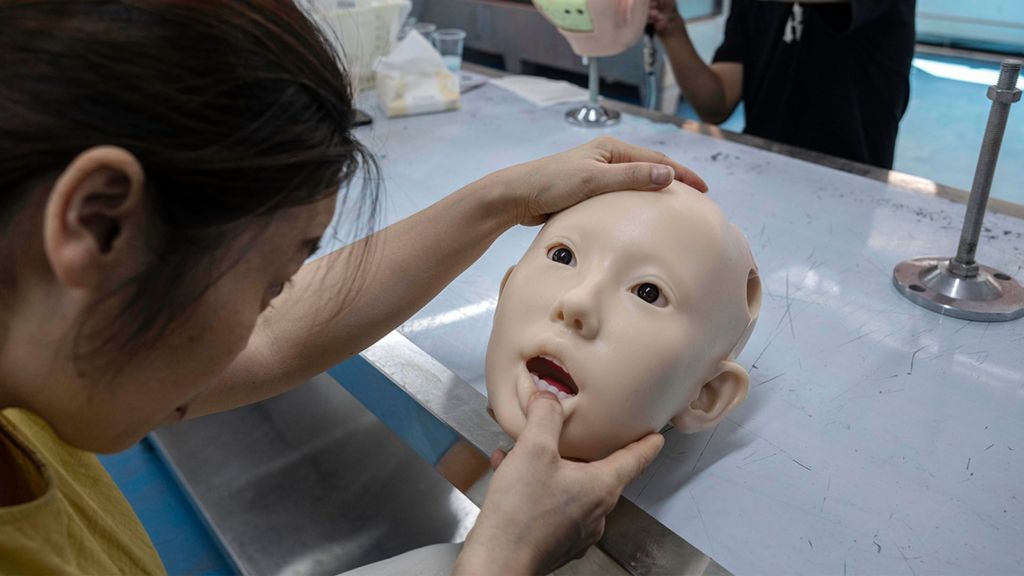
The unauthorized use of artificial intelligence-generated deepfakes to impersonate Chinese actress Wen Zhengrong in livestream sales has reignited debates over the need for stricter regulations and greater accountability from internet platforms. Last week, Wen’s likeness and voice were exploited by unscrupulous merchants, who created strikingly realistic AI-generated clones to promote products across multiple livestreams. This incident has highlighted the growing challenges posed by AI deepfakes and the urgent need for comprehensive legal and technological solutions. Wen expressed her distress, stating that such misuse not only infringes on her rights but also misleads her fans into purchasing counterfeit goods. Legal experts, including Li Ya from Zhongwen Law Firm, emphasized that such actions violate portrait and reputation rights, calling for platforms to implement advanced detection technologies and enforce stricter penalties. Despite recent regulations requiring AI-generated content to be labeled, some merchants continue to evade detection by masking or obscuring these labels. Platforms like Douyin have launched campaigns to combat such infringements, removing thousands of accounts and videos. However, the battle against AI deepfakes remains an ongoing challenge, requiring collaboration between legal frameworks, platforms, and technology developers to protect individuals’ rights and maintain online integrity.