标签: Asia

亚洲

  • ‘Hopes are high’: Dubai event woos Emiratis, expats to invest in Sri Lanka

    ‘Hopes are high’: Dubai event woos Emiratis, expats to invest in Sri Lanka

    Dubai has become the focal point for Sri Lanka’s ambitious campaign to attract foreign investment from the United Arab Emirates, with government officials and financial experts presenting the island nation as a prime destination for capital deployment. At the Invest Sri Lanka Investor Forum held in Dubai, representatives highlighted the country’s remarkable economic turnaround and diverse investment prospects.

    Sri Lankan authorities emphasized their nation’s exceeding of fiscal and economic targets over the past two years, coupled with comprehensive modernization initiatives and digital transformation of government services. These developments have created what officials describe as a ‘more stable and predictable’ investment environment, supported by streamlined governance frameworks and attractive incentives including tax holidays.

    Investment opportunities span multiple sectors, with tourism emerging as particularly promising. Naveen Gunawardane, Managing Director and Co-Founder of Lynear Wealth Management, identified significant potential in developing resort areas beyond Colombo, noting a shortage of quality accommodations in coastal regions. ‘There’s a massive opportunity over the next couple of years for companies to set up hotels in resort areas,’ Gunawardane emphasized, pointing to the Southern coast and Eastern belt as key development zones.

    The construction sector likewise shows strong growth prospects, rebounding from previous contractions with renewed infrastructure projects and increased residential development. Additionally, logistics, agriculture, IT services, energy, and renewable energy present compelling opportunities for UAE investors.

    Professor Arusha Cooray, Sri Lankan Ambassador to the UAE, highlighted the existing bilateral agreements that provide solid legal foundations for investor protection. ‘Sri Lanka is a very attractive destination to invest in, not just in terms of lifestyle, but numerous opportunities now available through government reforms,’ she stated, specifically mentioning Colombo Port City as an emerging financial and trade hub.

    The Central Bank of Sri Lanka projects economic growth between 5-7%, supported by what Governor P. Nandalal Weerasinghe characterized as ‘the right balance of monetary policy.’ The investment push extends beyond major portfolios to include ordinary expatriates, who can participate through mutual funds with initial investments as modest as a few hundred dollars.

    With approximately 350,000 Sri Lankans residing in the UAE—whose remittances contribute significantly to Sri Lanka’s GDP—the campaign leverages both institutional investment channels and individual expatriate participation in the nation’s economic revitalization.

  • Meet Emirati photographer turning Sharjah roundabout into ‘fashion car’ runway

    Meet Emirati photographer turning Sharjah roundabout into ‘fashion car’ runway

    What originated as an impromptu family photography session has evolved into a distinctive cultural phenomenon in Sharjah, thanks to the creative vision of 35-year-old Emirati photographer Muhammad Al Mazmi. The Al Jada roundabout, once merely a traffic intersection, has transformed into an unofficial gathering point for automotive enthusiasts seeking distinctive photographic portraits of their vehicles against the urban landscape.

    Al Mazmi’s journey into photography began during childhood, sparked by his fascination with preserving memories through imagery. His father introduced him to camera operation at age seven, planting the seeds of what would become a lifelong passion. In 2008, he acquired his first professional camera and subsequently developed a diverse portfolio encompassing portraits, nature, street photography, and cultural events.

    The automotive photography movement emerged unexpectedly approximately one year ago when Al Mazmi visited the roundabout to photograph his brothers’ cars. The spontaneous interest from other motorists prompted him to share his work on TikTok, generating immediate and substantial public response. Followers began identifying him as ‘the photographer of Al Jada,’ establishing his reputation within the community.

    Despite the public nature of his photography sessions, Al Mazmi maintains rigorous ethical standards regarding privacy protection. He explicitly avoids random photography, instead coordinating with subjects through social media platforms or accepting direct requests. This approach enables him to capture not only the aesthetic qualities of vehicles but also the personal narratives and human connections within automotive culture.

    One particularly memorable photograph depicts two individuals exchanging a traditional Emirati nose touch inside their vehicle, illustrating Al Mazmi’s ability to document cultural moments alongside automotive subjects. His scheduling now operates through community requests via Snapchat, where enthusiasts track his appearance dates.

    Looking forward, Al Mazmi intends to continue his roundabout photography sessions, viewing them as a natural extension of his fundamental photographic philosophy: documenting emotions and memories for future reflection. The phenomenon demonstrates how organic community initiatives can redefine public spaces and create unexpected cultural gatherings.

  • Vision for Gaza faces obstacles

    Vision for Gaza faces obstacles

    Jared Kushner, former Middle East adviser to President Donald Trump, has presented an ambitious vision for Gaza’s future featuring modern cities with sleek high-rises, attractive coastline developments, and state-of-the-art port facilities. His presentation at the World Economic Forum in Davos, Switzerland, outlined a rapid reconstruction timeline claiming Gaza’s cities could be rebuilt within three years given adequate security conditions.

    This optimistic projection emerges as world leaders gather to ratify the charter of the Board of Peace, a newly proposed body intended to oversee Gaza’s ceasefire and reconstruction process. However, the initiative faces significant international resistance and skepticism regarding its feasibility and potential implications for global governance structures.

    Major European powers have expressed strong reservations about the Board of Peace, with Spain explicitly declining participation in the initiative. Spanish Prime Minister Pedro Sanchez emphasized the country’s commitment to multilateralism and the United Nations system. European Council President Antonio Costa similarly voiced serious doubts regarding the board’s scope, governance structure, and compatibility with the UN Charter following emergency summit discussions in Brussels.

    Academic experts have raised concerns about the potential undermining of United Nations authority. Ayman Yousef, Professor of International Relations at the Arab American University in Jenin, warned that such alternative bodies could weaken the UN’s mission and legal resolutions regarding the Palestinian question.

    Practical obstacles further complicate the ambitious reconstruction timeline. The United Nations Office for Project Services estimates Gaza contains over 60 million metric tons of rubble—enough to fill nearly 3,000 container ships—requiring more than seven years for clearance alone, not including subsequent demining operations. Rights groups note that rubble clearance and demining activities have not substantially begun due to Israeli restrictions on heavy machinery entry.

    Security concerns present additional complications. Conflict resolution expert Nomi Bar-Yaacov of the Geneva Centre for Security Policy described the high-rise development concept as “unrealistic,” noting Israel would unlikely accept structures providing clear visibility into its military installations near the border. Former US Middle East negotiator Aaron David Miller concluded the initiative lacks both bandwidth and guiding principles necessary for serious international participation.

  • Naomi Osaka withdraws from Australian Open before third round because of injury

    Naomi Osaka withdraws from Australian Open before third round because of injury

    MELBOURNE — Tennis star Naomi Osaka has made the difficult decision to withdraw from the Australian Open ahead of her third-round match against Australian qualifier Maddison Inglis, citing a persistent abdominal injury that forced her to prioritize her long-term health over continuing her Melbourne campaign.

    The four-time Grand Slam champion revealed through social media that she needed to address a physical concern following her previous match. ‘I was profoundly excited to continue this journey, and this particular run held immense personal significance,’ Osaka expressed on Instagram. ‘Making this decision breaks my heart, but I cannot jeopardize my recovery by risking further damage.’

    Tournament officials later confirmed the specific nature of her injury as a left abdominal issue, which Osaka described as a recurring problem. ‘I attempted to push through the discomfort during my last match, believing that additional rest might alleviate the condition,’ she explained. ‘However, during my warm-up today, the pain intensified significantly.’

    The 28-year-old athlete, who returned to professional tennis in 2024 after a 15-month hiatus during which she welcomed her daughter Shai in July 2023, acknowledged how pregnancy has altered her physical condition. ‘My body has undergone substantial changes since becoming a mother,’ Osaka noted. ‘This requires me to exercise extreme caution with any injuries.’

    Osaka’s Australian Open appearance had already generated considerable attention for both her on-court performance and distinctive fashion choices. Her first-round entrance went viral when she appeared wearing a wide-brimmed hat, veil, and carrying a white parasol—a design collaboration with sponsor Nike.

    Her second-round victory against Sorana Cirstea concluded with notable tension, as the players exchanged minimal courtesies at the net. Cirstea reportedly took issue with Osaka’s enthusiastic self-motivation during the match, though Osaka dismissed the incident as inconsequential.

    The former Australian Open champion (2019, 2021) was seeded 16th in this year’s tournament. Her withdrawal advances Inglis to face world No. 2 Iga Świątek, who expressed concern for Osaka’s condition while acknowledging the opportunity to advance in her own quest for a career Grand Slam.

  • A landslide on Indonesia’s Java island kills at least 8 people and leaves more than 80 missing

    A landslide on Indonesia’s Java island kills at least 8 people and leaves more than 80 missing

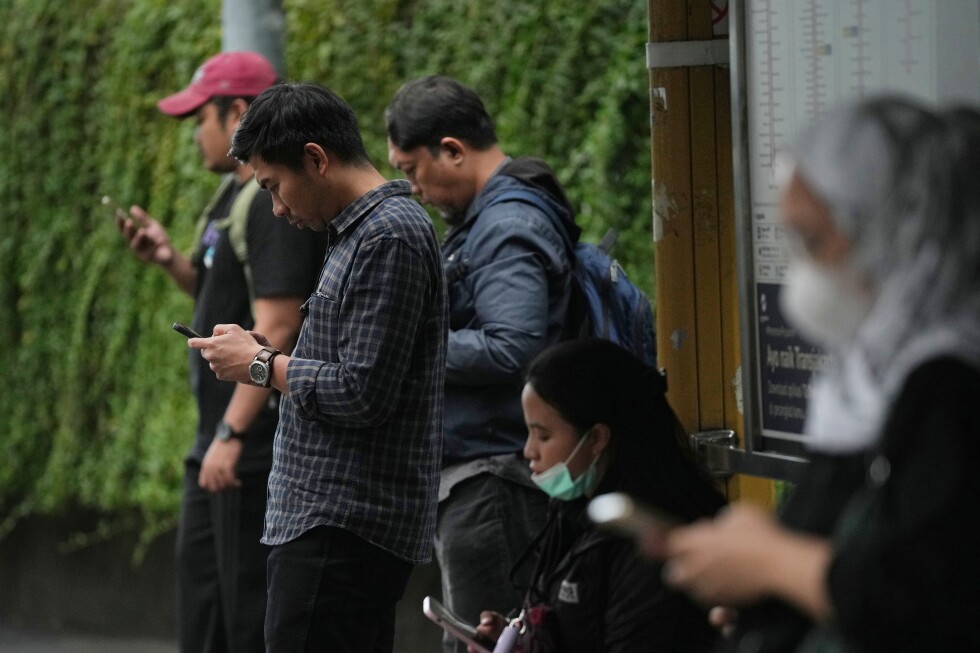
    JAKARTA, Indonesia — A catastrophic landslide triggered by relentless torrential rains has claimed at least eight lives with 82 individuals remaining unaccounted for on Indonesia’s primary island of Java. The pre-dawn disaster struck Pasir Langu village in West Bandung district around 3 a.m. local time on Saturday, transforming the picturesque landscape into a scene of devastation.

    According to National Disaster Management Agency spokesperson Abdul Muhari, approximately 34 residential structures were completely buried under cascading mud, rocks, and uprooted vegetation. While 24 residents managed to escape the rapidly moving earth, rescue teams continue battling challenging conditions to locate those feared trapped beneath the debris.

    Television broadcasts depicted harrowing scenes of emergency personnel and local citizens digging through deep mud where roads and terraced rice fields once stood. The worst-impacted area, Pasir Kuning hamlet, has become the focal point of recovery operations as workers extract victims from the sludge.

    Teten Ali Mungku Engkun, director of West Java’s Disaster Management Office, emphasized the operational challenges: ‘Unstable soil conditions and continuing heavy precipitation significantly hinder search and rescue efforts.’ Authorities have executed rapid damage assessments and deployed emergency response units while evacuating families within 100 meters of the landslide zone due to ongoing geological instability.

    This tragedy echoes similar seasonal disasters across the Indonesian archipelago. In December, catastrophic flooding and landslides on Sumatra Island resulted in approximately 1,200 fatalities and over 7,000 injuries. The nation’s geographical vulnerability—with millions inhabiting mountainous regions and fertile floodplains—makes it particularly susceptible to such events during the October-April rainy season when high tides and precipitation frequently combine to create dangerous conditions.

    Officials have issued urgent advisories for residents in landslide-prone areas to remain vigilant for soil movement or unusual rumbling sounds and evacuate immediately if safety concerns arise.

  • IP protection for new fields to improve

    IP protection for new fields to improve

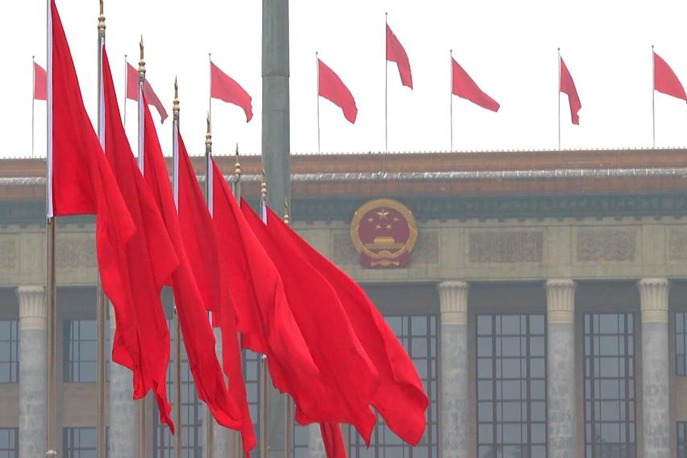
    China is poised to significantly enhance intellectual property safeguards for cutting-edge sectors, with particular emphasis on artificial intelligence domains, while actively shaping international IP governance frameworks throughout 2026. Senior officials from China National Intellectual Property Administration unveiled comprehensive strategies during a State Council Information Office briefing, highlighting multilateral cooperation with World Intellectual Property Organization as cornerstone to developing global standards for nascent industries.

    Deputy Administrator Rui Wenbiao confirmed deepened intellectual property collaboration within Belt and Road Initiative frameworks, emphasizing consolidation of pragmatic cooperation across multilateral, regional and bilateral contexts. This advancement occurs alongside strengthened mechanisms supporting Chinese enterprises navigating international markets, where foreign-related IP disputes have become increasingly prevalent.

    Intellectual Property Protection Department Director Guo Wen revealed substantial progress in overseas rights protection, with 99 specialized guidance platforms established across 30 provincial-level regions by end-2025. Six industry-specific platforms now focus on critical sectors including automotive and photovoltaic technologies. Remarkable achievements include over 4,800 guidance consultations conducted during 2025 alone, resolving cross-border e-commerce disputes and trademark squatting cases while recovering approximately 2.75 billion yuan ($0.39 billion) in corporate losses.

    The administration plans intensified cross-departmental coordination and enhanced dispute response networks throughout 2026. Strategic initiatives will provide targeted risk warnings and precision guidance for key industries, with specialized expert recruitment strengthening capabilities in complex disputes involving standard-essential patents and trade secrets.

    Strategic Planning Department Director General Liang Xinxin highlighted patent-intensive industries’ crucial role in national innovation development, particularly noting digital economy sectors’ growing prominence. Information and communication technology manufacturing and services approached 8 trillion yuan in combined added value, representing over 40% of patent-intensive industries’ total output. Emerging sectors including advanced equipment manufacturing, pharmaceuticals, healthcare and environmental protection demonstrate accelerating growth, reflecting China’s industrial transition toward high-end, intelligent and green development paradigms.

    Recent data from National Bureau of Statistics and intellectual property administration confirmed patent-intensive industries achieved 18.04 trillion yuan added value during 2024, accounting for 13.38% of GDP and demonstrating robust expansion momentum.

  • Draft rules define premade dishes in consumer interest

    Draft rules define premade dishes in consumer interest

    Chinese authorities have unveiled groundbreaking draft regulations establishing clear definitions and classification systems for premade dishes, marking a significant step toward consumer protection in the catering industry. The move comes amid growing public scrutiny over restaurant chains marketing industrially processed foods as freshly prepared meals at premium prices.

    The National Food Safety Standards for Premade Dishes and Terminology and Classification for Premade Dishes represent China’s first comprehensive regulatory framework for the rapidly expanding prepared food sector. Jointly developed by the State Council’s food safety office, National Health Commission, and State Administration for Market Regulation, the standards aim to eliminate ambiguous labeling practices that have misled consumers.

    According to the draft provisions, premade dishes are formally defined as prepackaged food items manufactured from agricultural ingredients—with or without seasonings but excluding preservatives—that undergo industrial preprocessing techniques including marinating, frying, or boiling. These products may incorporate seasoning packets, require final cooking before consumption, and must adhere to specific storage and transportation requirements as labeled.

    The regulatory initiative gained urgency following a September 2025 controversy involving restaurant chain Xibei, traditionally promoted as using natural ingredients. Influencer Luo Yonghao exposed the company’s substantial reliance on premade dishes while charging premium prices for supposedly fresh-cooked meals, sparking nationwide debates about culinary transparency.

    Notably, the regulations clarify that dishes prepared in-house through central kitchen models and distributed exclusively to owned outlets do not qualify as premade dishes, provided they comply with existing catering safety laws. This distinction acknowledges the operational realities of chain restaurants while maintaining safety standards.

    Complementing the standards, authorities have drafted a circular encouraging voluntary disclosure of food preparation methods, empowering consumers to make informed dining choices. The drafts will soon enter public consultation phases, reflecting China’s commitment to balancing industry development with consumer rights protection.

  • Self-powering pacemaker could last a lifetime

    Self-powering pacemaker could last a lifetime

    A groundbreaking medical innovation emerging from China promises to transform cardiac care through the development of a self-sustaining pacemaker that harnesses the heart’s kinetic energy. Researchers from the University of Chinese Academy of Sciences have created a revolutionary device that generates electricity from natural heartbeats, potentially eliminating the need for battery replacement surgeries that currently burden millions of cardiac patients worldwide.

    The research team, led by Associate Professor Ouyang Han, introduced the concept of ‘symbiotic bioelectronics’ inspired by natural symbiotic relationships. This approach represents a paradigm shift in medical device engineering, focusing on creating implantable technology that coexists harmoniously with the human body while drawing power from biological processes.

    Through seven years of dedicated research, the team developed an electromagnetic induction system that converts the mechanical energy of heart contractions into electrical power. The device achieves an impressive average output of 120 microwatts—significantly exceeding the 10 microwatts required for stable pacemaker operation. This surplus energy ensures reliable performance even during periods of reduced cardiac activity.

    The technology incorporates an innovative magnetic levitation design that minimizes energy loss and internal friction. Laboratory testing demonstrated exceptional durability, with only 4% wear observed after simulating 300 million heartbeats—equivalent to a decade of continuous operation. This remarkable longevity suggests the device could potentially function throughout a patient’s lifetime without requiring replacement.

    Notably, the capsule-sized device is constructed from biocompatible materials that reduce rejection risks and prevent blood clotting complications. Its leadless design and minimally invasive implantation procedure via femoral vein catheterization represent significant advancements over conventional pacemakers, reducing surgical trauma and recovery time.

    In a critical validation study, the device successfully maintained normal heart rhythm in a pig suffering from severe bradycardia for one month, operating exclusively on power generated by the animal’s own heartbeats. This demonstration confirms both the technological feasibility and clinical potential of the self-powering system.

    Professor Ouyang emphasized the economic implications of this breakthrough, noting that current imported leadless pacemakers cost approximately $23,000. The research team aims to produce devices with two to three times the lifespan of existing models at just one-third to half the price, potentially making advanced cardiac care more accessible globally.

    The technology, recently detailed in Nature Biomedical Engineering, is scheduled for clinical trials before 2030. Researchers believe this symbiotic approach could revolutionize not only cardiac care but also other implantable medical devices for bone repair and neural regulation applications.

  • Young leaders stress need to strengthen Sino-US ties

    Young leaders stress need to strengthen Sino-US ties

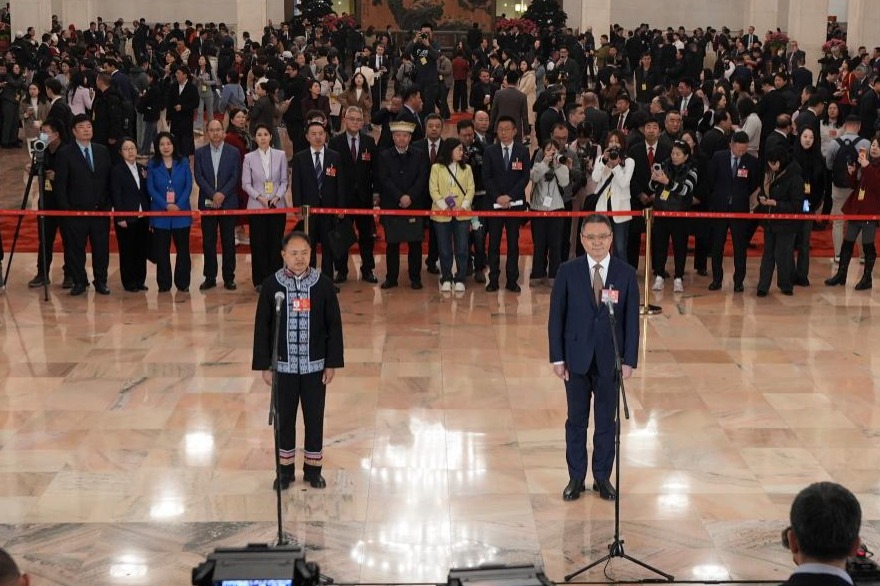
    A new generation of leadership advocates for reinvigorated Sino-American relations through sustained engagement and collaborative action. During a recent symposium at Beijing’s Tsinghua University, emerging leaders from both nations emphasized the critical importance of face-to-face diplomacy in an era of increasing technological mediation.

    The dialogue brought together students from Harvard University, New York University, Peking University, and Tsinghua University to address pressing global challenges. Discussion panels focused on science and technology innovation, social governance frameworks, and sustainable development strategies, creating a platform for cross-cultural problem-solving.

    This event forms part of President Xi Jinping’s ambitious “50,000 in Five Years” initiative, designed to facilitate educational exchange by bringing 50,000 young Americans to China. The program represents a significant investment in track-two diplomacy, recognizing youth engagement as fundamental to navigating complex bilateral challenges.

    Zhao Xiuye, a Tsinghua PhD candidate with extensive experience in both countries, highlighted the transformative power of personal connection. “Our happiness and sorrows do connect,” he noted, recalling shared experiences during the Beijing 2008 Olympics and US presidential campaigns. “There’s far more that we share than that differentiates us.”

    Harvard Business School student Lily Bailey emphasized the potential of “subnational collaboration” between US states, cities, and universities with their Chinese counterparts. “We are a federal society,” she stated. “There are many people and companies excited and interested in continuing cooperation.”

    University and government officials expressed strong support for these efforts. Tsinghua Vice-President Bai Benfeng invoked both Chinese philosophical tradition and Western poetry to express optimism about future relations, while Education Vice-Minister Ren Youqun reported that 45,000 young Americans have already visited over 200 Chinese cities, fostering substantial people-to-people connections.

  • A US warship is making a friendship visit to a Cambodian naval base upgraded with China’s help

    A US warship is making a friendship visit to a Cambodian naval base upgraded with China’s help

    In a significant diplomatic development, the USS Cincinnati has become the first U.S. Navy vessel to dock at Cambodia’s Ream Naval Base since its Chinese-funded renovation was completed in early 2024. The Independence-class littoral combat ship arrived Saturday for a five-day visit through January 28th, marking a potential warming in U.S.-Cambodia military relations after years of tension.

    The base’s modernization, financed primarily by China, had raised substantial concerns in Washington about potential exclusive Chinese military access. Controversy has surrounded the facility since 2019 amid reports of a proposed 30-year agreement granting China special privileges at the strategic Gulf of Thailand location. Cambodian officials have consistently denied any such exclusive arrangement exists.

    Prime Minister Hun Manet, who presided over the base’s reopening ceremony in April 2025, has maintained that Ream remains open to all friendly nations for joint exercises, provided visiting vessels conform to the facility’s size limitations. The newly constructed pier and dry dock facilities can accommodate ships similar in scale to the Cincinnati, which is specifically designed for operations in shallow coastal waters.

    During the port call, the ship’s crew of approximately 100 personnel will participate in sporting events and cultural activities in nearby Sihanoukville. The visit coincides with scheduled meetings between U.S. Indo-Pacific Command leader Admiral Samuel Paparo and Cambodian Defense Minister Tea Seiha, signaling continued diplomatic engagement.

    This development represents the latest step in rebuilding military ties that had cooled considerably. Relations began improving with Defense Secretary Lloyd Austin’s 2024 visit, followed by the USS Savannah’s port call at Sihanoukville’s civilian facility in December 2024—the first U.S. military ship visit in eight years. According to Cambodian Navy records, 37 U.S. warships have visited Cambodian ports between 2003 and 2026.

    Deputy Base Commander In Sokhemra emphasized the inclusive nature of the facility, stating: ‘Our government has worked diligently to construct this port to welcome all foreign vessels wishing to dock in Cambodia. We have succeeded in this effort, and we are open from this moment forward for American, Australian, Japanese, or any other ships that wish to visit.’