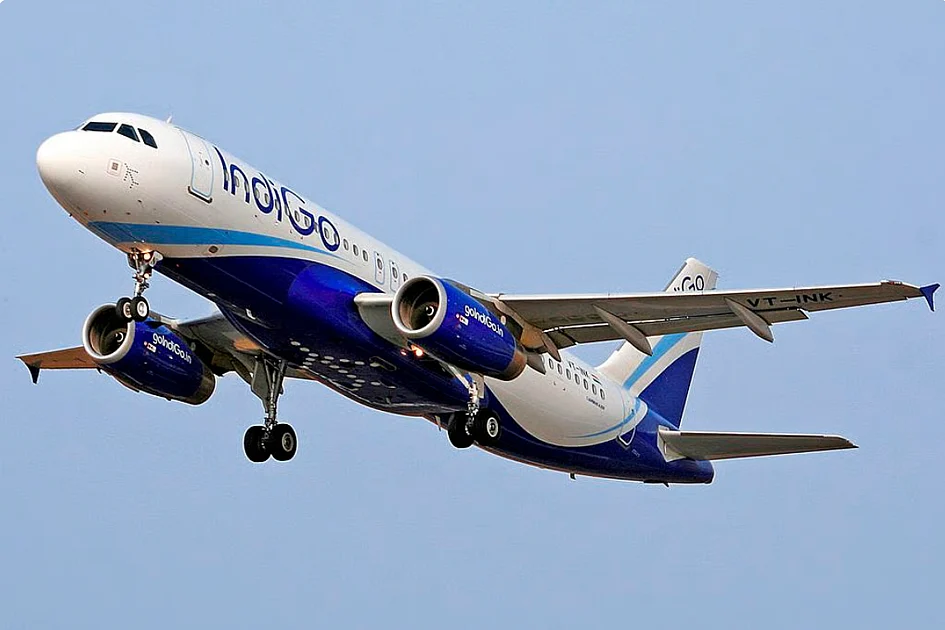
Tensions between China and Japan have intensified following a travel advisory issued by Beijing urging its citizens to avoid visiting Japan. The advisory, announced on Friday, cited concerns over recent attacks against Chinese nationals in Japan and what it described as “erroneous remarks” by Japanese Prime Minister Sanae Takaichi regarding Taiwan. China argued that these comments have undermined the atmosphere for bilateral exchanges between the two nations. In response, Japan lodged a formal protest, with Chief Cabinet Secretary Minoru Kihara urging China to take “appropriate measures” to address the situation. Kihara emphasized the importance of multilayered communication to navigate the differences between the two governments. This latest development comes amid a broader context of strained relations, as Takaichi, who assumed office last month, has advocated for strengthening Japan’s military to counter potential threats from China, particularly in contested waters of the western Pacific. The dispute has further complicated an already fragile relationship, with China asserting its territorial claims over Taiwan and conducting military drills in the region. While neither Japan nor the United States maintains official diplomatic ties with Taiwan, the U.S. remains a key supplier of defense equipment to the island and opposes any forceful resolution to the China-Taiwan issue. The travel advisory, which appears more stringent than previous warnings, has raised questions about its potential impact on Chinese tourism to Japan, a popular destination that significantly contributes to Japan’s economy. Several Chinese airlines have already offered no-penalty refunds for tickets to Japan following the announcement.
标签: Asia
亚洲
-

UAE, 8 countries support US draft UN resolution to endorse Trump’s Gaza plan
In a significant diplomatic move, nine countries, including the United Arab Emirates (UAE), have jointly endorsed a US-drafted United Nations Security Council resolution supporting President Donald Trump’s Comprehensive Plan to End the Gaza Conflict. The resolution, formally circulated last week, proposes a two-year mandate for a transitional governance body and an international stabilization force. The plan, announced on September 29, aims to pave the way for Palestinian self-determination and statehood, according to a joint statement issued by the UAE, US, Qatar, Egypt, Saudi Arabia, Indonesia, Pakistan, Jordan, and Turkey. These nations emphasized the plan as a sincere effort toward achieving peace and stability in the region. The US mission to the UN has urged the Security Council to expedite the resolution’s adoption. Notably, Israel and Hamas agreed to the first phase of Trump’s 20-point plan in October, which includes a hostage release deal and is annexed to the draft resolution. While Trump has ruled out deploying US troops to Gaza, discussions are underway with countries like Indonesia, the UAE, Egypt, Qatar, Turkey, and Azerbaijan to contribute approximately 20,000 troops to the stabilization force.
-

India: At least 9 killed, 29 injured in explosion at police station in Kashmir, NDTV reports
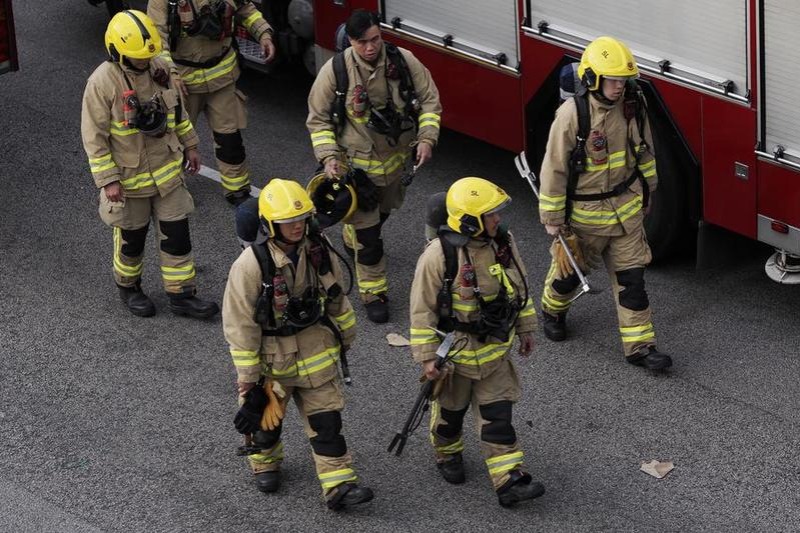
A devastating explosion at a police station in the Indian-administered region of Kashmir has resulted in the deaths of at least nine individuals and left 29 others injured. The incident occurred late on Friday at the Nowgam police station, where a stockpile of confiscated explosives detonated unexpectedly. Among the deceased were several police officers and forensic team members who were in the process of examining the stored materials. The blast’s intensity was so severe that body parts were reportedly found in nearby homes, situated approximately 100 to 200 meters away from the site. Emergency services, including fire tenders, were promptly dispatched to the scene to manage the aftermath. This tragic event follows closely on the heels of a car explosion in New Delhi, which claimed eight lives and was labeled a terrorist act by the Indian government. The ongoing territorial dispute between India and Pakistan over Kashmir, a region both nations claim in its entirety, continues to be a source of tension and conflict. The police chief of Jammu and Kashmir is scheduled to hold a press conference to provide further details on the incident.
-

Experts advocate smart tech to advance inclusive education
At the Third International Conference on High-Quality Development in Special Education, held in Beijing on November 13, 2025, a distinguished panel of special education experts from China, the United Kingdom, the United States, and Singapore underscored the pivotal role of smart technologies in fostering inclusive classrooms. The conference, themed ‘Inclusion and Intelligence,’ was co-hosted by the special education branches of Beijing Normal University and the University of Strathclyde.
Zhu Xudong, Dean of BNU’s Faculty of Education, highlighted the shifting dynamics in special education, noting the increasing prevalence of autism and the corresponding decline in physical disabilities. He called for enhanced cross-sector collaboration, particularly in the era of AI, to develop innovative inclusive classroom practices.
Deborah Robinson, Head of the University of Strathclyde’s Institute of Education, echoed this sentiment, emphasizing the potential of AI and advocating for deeper international partnerships. Li Tianshun, Vice-President of the Chinese Society of Education, identified intelligent technology as a crucial support for inclusive education, which is now a global mainstream trend. He urged the establishment of a comprehensive, all-age education system built on shared research and international cooperation to drive systemic change.
Huang Wei, Head of Special Education at the Ministry of Education’s Department of Basic Education, pointed out that digital transformation has significantly driven the high-quality development of special education over the past five years. Moving forward, efforts will be intensified to enhance digital infrastructure, develop specialized large-language models tailored for special education, and deepen international collaboration. These measures aim to propel special education into a new phase characterized by precise and personalized services.
Piao Yongxin, a founding figure of modern special education in China, emphasized that while the field must embrace digital transformation, technology should be viewed as a tool rather than an end. He stressed that the essence of special education remains committed to serving the holistic development of individuals and the strategic needs of the nation.
The conference featured in-depth discussions on the training of special educators and the application of AI, with participants from various countries sharing insights and best practices.
-

Sparking cultural creativity: A conversation with Zhang Tongdao and Vikram Channa
In a compelling dialogue with China Daily, Zhang Tongdao, the visionary director behind the documentary *The Sisters of Baima Tibetan*, and Vikram Channa, a renowned documentary producer, delved into the intricacies of nurturing cultural creativity. Their conversation shed light on the profound societal and cultural shifts captured in Zhang’s documentary, which meticulously follows the lives of four sisters over a span of 24 years. The film not only serves as a historical archive but also as a testament to the transformative power of storytelling. Both Zhang and Channa emphasized the importance of authentic narratives and innovative approaches in fostering cultural creativity. They highlighted the role of documentaries in bridging cultural gaps and fostering global understanding. Their insights underscored the necessity of preserving cultural heritage while embracing modernity, offering a roadmap for future creators to inspire and engage audiences worldwide.
-

Beijing protests new US arms sale to Taiwan
China has issued a stern protest against the United States following the announcement of a new arms sale to Taiwan, labeling the move as a severe violation of its sovereignty and security interests. Chen Binhua, spokesperson for the State Council Taiwan Affairs Office, emphasized that the sale, which includes aircraft parts worth approximately $330 million, sends a dangerous signal to ‘Taiwan independence’ separatists. He reiterated China’s unwavering opposition to such transactions, urging the US to adhere to the one-China principle and the three US-China joint communiques, particularly the August 17 Communique. Chen warned that the actions of Taiwan’s Democratic Progressive Party (DPP) authorities, under the leadership of Lai Ching-te, have exacerbated tensions by pursuing military expansion and relying on external forces. He described Taiwan as being pushed toward becoming a ‘powder keg,’ jeopardizing the safety and well-being of its residents. Chen asserted that China would take all necessary measures to safeguard its national sovereignty, security, and territorial integrity, declaring that any path toward ‘Taiwan independence’ is doomed to fail.
-

India’s relief measure seen as helpful for exporters, insiders say
In a significant move to bolster its export sector, the Indian government has unveiled a comprehensive relief package exceeding $5 billion. Announced late on Wednesday and approved by the federal cabinet chaired by Prime Minister Narendra Modi, the initiative aims to mitigate the adverse effects of US-imposed tariffs and strengthen India’s export ecosystem. The package includes collateral-free loans worth $2.3 billion and a six-year disbursement of $2.82 billion through the Export Promotion Mission (EPM), a program designed to enhance export competitiveness, particularly for micro, small, and medium enterprises (MSMEs), first-time exporters, and labor-intensive sectors. Information and Broadcasting Minister Ashwini Vaishnaw emphasized that the EPM represents a strategic shift from fragmented schemes to a unified, outcome-based mechanism capable of swiftly addressing global trade challenges and evolving exporter needs. The move comes as Indian exporters grapple with a 50 percent tariff imposed by the US, including a 25 percent punitive levy over India’s purchase of Russian oil, which has significantly impacted sectors like textiles, jewelry, leather goods, and chemicals. Industry leaders and trade organizations have welcomed the relief measures, with the Federation of Indian Export Organisations President SC Ralhan praising the EPM for its pragmatic and forward-looking vision. Similarly, the Confederation of Indian Textile Industry Chairman Shri Ashwin Chandran highlighted the potential for the textile and apparel sector to become globally competitive and create better-quality jobs. The timing of the package is particularly crucial for the seafood industry, which is facing its most challenging phase, according to Seafood Exporters Association of India President Pawan Kumar G. While the EPM is seen as a positive step, its success will hinge on the swift issuance of detailed guidelines, adequate funding, and robust coordination mechanisms, as noted by Global Trade Research Initiative founder Ajay Srivastava. Meanwhile, US President Donald Trump has indicated that his administration is working on a ‘very different deal’ with India, signaling ongoing negotiations between the two nations.
-

CNS Sichuan sets off on maiden sea trial
China’s first Type 076 amphibious assault ship, the CNS Sichuan, embarked on its inaugural sea trial on Friday, marking a significant milestone in the nation’s naval capabilities. The vessel departed from Hudong-Zhonghua Shipbuilding in Shanghai at approximately 9 a.m., as announced by the People’s Liberation Army Navy (PLAN). This trial aims to evaluate the ship’s electric and propulsion systems, following the completion of mooring tests and hardware installations. The CNS Sichuan, with a hull code of 51, is the lead ship in the Type 076 class, boasting a displacement of over 40,000 metric tons. It features a dual-island superstructure, a first for Chinese naval vessels, designed to enhance aviation operations. The ship is equipped with an electromagnetic catapult, enabling it to launch fixed-wing aircraft and drones, a capability previously seen only on the CNS Fujian aircraft carrier. Upon commissioning, the CNS Sichuan will support a range of missions, including amphibious landings, airstrikes, and airborne operations. A senior shipbuilding industry researcher noted that the maiden voyage is primarily to test the ship’s self-propulsion and system reliability, with future trials planned to assess the electromagnetic catapult’s performance. The PLAN currently operates four Type 075 amphibious assault ships, each capable of carrying helicopters, landing craft, and armored vehicles.
-

Nine killed in accidental blast at police station in Indian-administered Kashmir, officials say
A tragic incident unfolded at the Nowgam police station in Indian-administered Kashmir on Friday evening, resulting in the deaths of nine individuals and injuring 32 others. The explosion occurred when a stockpile of confiscated explosives, seized earlier in the week from Faridabad in Haryana, accidentally detonated. The explosives were reportedly being prepared for forensic examination at the time of the mishap. According to Nalin Prabhat, the region’s director general of police, the detonation happened around 23:20 local time (17:50 GMT) due to an ‘extremely unfortunate’ handling error. The police station suffered extensive damage, and nearby buildings were also affected. Witnesses described a scene of devastation, with vehicles engulfed in flames and debris scattered across the area. Some body parts were even found in houses located 100-200 meters away from the blast site. Most of the victims were police officers, forensic personnel, crime scene photographers, and a tailor who was present at the station. Manoj Sinha, the Lieutenant Governor of the region, expressed his condolences and announced an investigation into the incident. He emphasized the need to determine the cause of the accidental explosion and extended his sympathies to the bereaved families. This incident follows a recent car blast in Delhi, which the government has labeled a ‘terror incident,’ raising concerns about safety and security in the region.
-

Arson attacks on mosque denounced
The international community, spearheaded by the United Nations, has vehemently condemned the recent arson attack on the Hajjah Hamidah mosque in the West Bank. This incident, which occurred in the early hours of Thursday, marks the latest in a series of escalating violent acts in the region. UN Secretary-General Antonio Guterres’ spokesman, Stephane Dujarric, expressed profound dismay at the actions of Israeli settlers responsible for the attack, labeling such assaults on places of worship as utterly unacceptable. The Palestinian Ministry of Foreign Affairs and Expatriates has accused the Israeli government of fostering a climate of impunity that encourages settler violence, aimed at displacing Palestinians and solidifying colonial occupation. Jordan has called for the international community to fulfill its legal and moral obligations to address these transgressions. Meanwhile, European nations, including Spain, Germany, and Switzerland, have urged Israel to halt the violence and ensure justice for the perpetrators. The intensifying unrest in the West Bank is increasingly seen as a threat to the fragile ceasefire brokered by the United States, with fears that such incidents could derail peace efforts in Gaza. Experts warn that the situation in Gaza, the West Bank, and East Jerusalem is interconnected, with violence in one area inevitably spilling over into others. The UN has also highlighted the challenges in scaling up humanitarian responses in Gaza as winter approaches, despite some progress in healthcare improvements.