标签: Asia

亚洲

  • World Bank approves $700million to boost Pakistan’s economic stability

    World Bank approves $700million to boost Pakistan’s economic stability

    The World Bank has greenlit a substantial $700 million financial assistance package for Pakistan, marking a significant step in the nation’s ongoing economic stabilization efforts. This funding, approved on Friday, represents the initial disbursement under the broader Public Resources for Inclusive Development—Multiphase Programmatic Approach (PRID-MPA) framework, which could potentially channel up to $1.35 billion in total support to the South Asian nation.

    The allocation breakdown designates $600 million for federal-level initiatives aimed at strengthening macroeconomic foundations, while $100 million is specifically earmarked for development projects in Sindh province. This provincial funding targets enhanced service delivery and infrastructure improvements in Pakistan’s southern region.

    This financial endorsement follows a previous World Bank intervention in August 2025, when the institution granted $47.9 million to revitalize primary education systems in Punjab, Pakistan’s most populous province. The consecutive approvals signal sustained international confidence in Pakistan’s reform agenda despite existing challenges.

    However, the path to economic recovery remains complex. A recent joint IMF-World Bank assessment, disclosed by Pakistan’s finance ministry in November, identified persistent obstacles including fragmented regulatory frameworks, non-transparent budgeting processes, and political interference that continue to hamper investment flows and revenue generation.

    Geopolitical considerations may also influence future financing arrangements. Earlier this year, Reuters reported India’s potential opposition to World Bank funding for Pakistan, indicating that regional tensions could surface in international financial decision-making forums.
  • Independent committee starts work as HK moves to liquefy owners’ group

    Independent committee starts work as HK moves to liquefy owners’ group

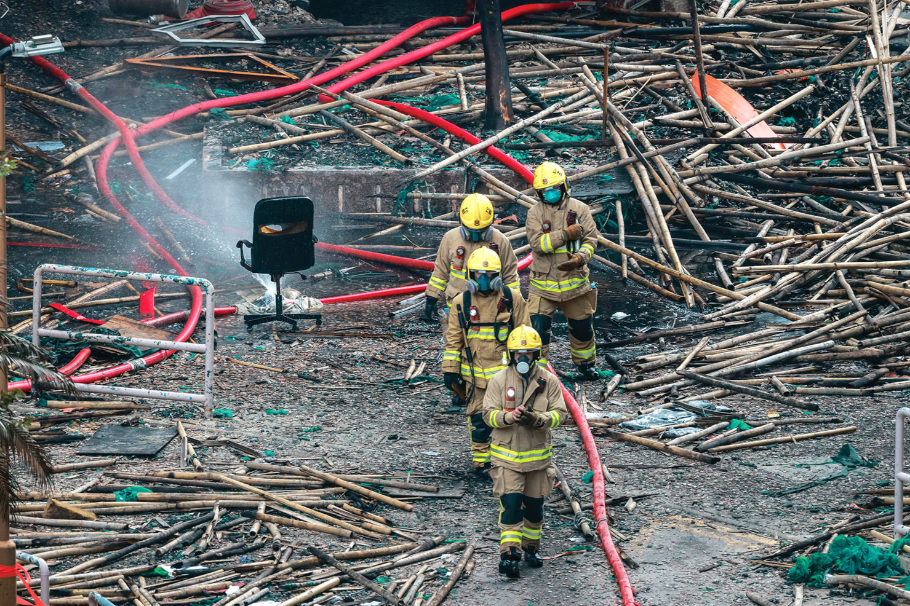
    Hong Kong has initiated a comprehensive response to the catastrophic Wang Fuk Court fire that claimed 161 lives, with an independent investigation committee formally commencing its work on Friday. The nine-month probe will examine the causes and circumstances surrounding the December tragedy in Tai Po.

    Chairman David Lok presided over the inaugural meeting of the Independent Committee, established by the Chief Executive on December 12. Joined by members Chan Kin-por and Rex Auyeung, the panel outlined work priorities and preparation strategies for their complex mandate. The committee’s extensive terms of reference include investigating the fire’s origin and rapid propagation, construction safety protocols, building maintenance standards, renovation works oversight, and systemic issues in large-scale maintenance tendering processes.

    Concurrently, the Hong Kong Special Administrative Region government filed legal proceedings to dissolve the housing estate’s owners’ corporation management committee. The administration seeks to appoint Hop On Management Company, a Chinachem Group subsidiary, as interim administrator to handle daily operations during the transition.

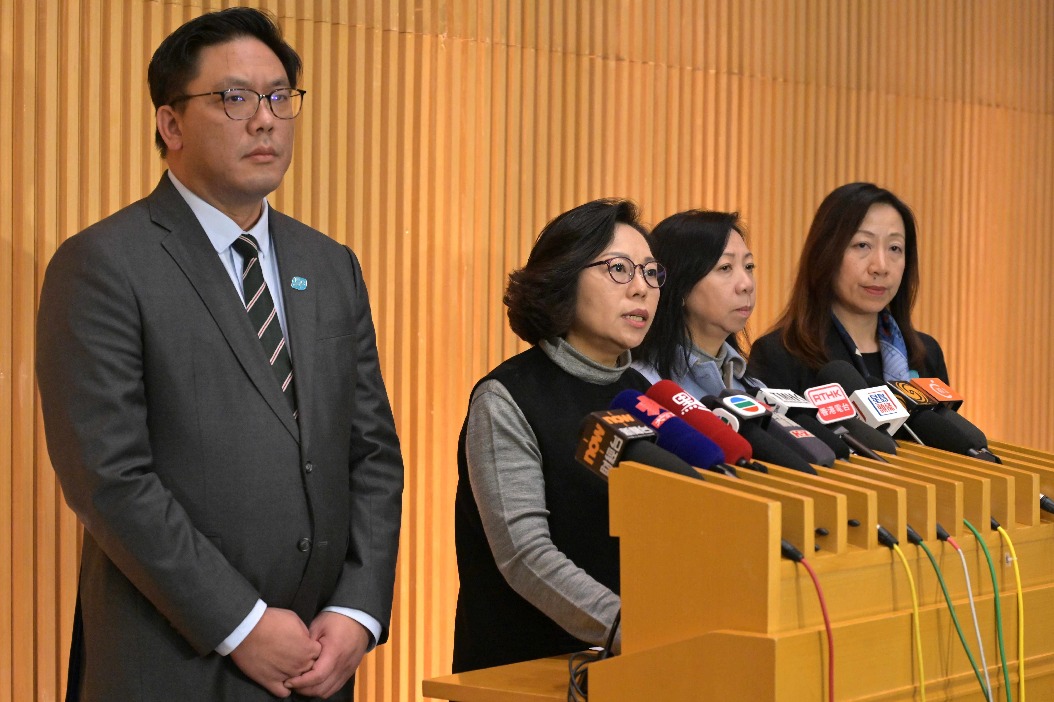
    Secretary for Home and Youth Affairs Alice Mak Mei-kuen emphasized that the government’s intervention aims to assist residents through complex legal and accounting procedures with professional support. ‘Our action is to help the owners of Wang Fuk Court navigate these challenging circumstances with expert assistance,’ Mak stated during a media briefing attended by senior officials including Permanent Secretary Shirley Lam Shuet-lai and Under Secretary Clarence Leung Wang-ching.

    The management company will provide services pro bono, supported by a HK$5 million contribution from the Nina Wang Charity trustees for professional costs associated with estate management. Chairman Lok confirmed the committee’s final report and recommendations will be publicly disclosed, excluding information related to ongoing judicial proceedings.

  • Tai Po fire death toll climbs to 161

    Tai Po fire death toll climbs to 161

    The catastrophic fifth-alarm fire that engulfed Wang Fuk Court in Tai Po last month has now claimed 161 lives, according to the latest official update from Hong Kong police. The grim milestone was confirmed on Saturday, December 20, 2025, following comprehensive DNA analysis that identified previously discovered remains as belonging to two separate victims.

    Police Commissioner Joe Chow Yat-ming addressed the media after inspecting a passing-out parade, revealing that advanced forensic testing had determined one set of remains actually belonged to a couple rather than a single individual. The identification process has now confirmed the identities of all six individuals previously reported missing—five fire victims and one person who had died in 2023.

    The devastating blaze, which broke out on November 26, 2025, raged for over 43 hours and caused extensive damage to seven of the eight residential blocks within the housing estate. The inferno represents one of Hong Kong’s deadliest building fires in recent history.

    Commissioner Chow cautioned that the death toll might still rise as DNA testing continues on additional remains recovered from the scene. The painstaking identification process involves matching genetic material from victims with samples provided by anxious family members awaiting news of their missing relatives.

    The tragedy has prompted widespread scrutiny of building safety standards and emergency response protocols in Hong Kong’s densely populated residential areas. The community of Tai Po continues to mourn the devastating loss while supporting those injured and displaced by the catastrophic fire.

  • Israel kills six Palestinians in strike on Gaza school hosting wedding

    Israel kills six Palestinians in strike on Gaza school hosting wedding

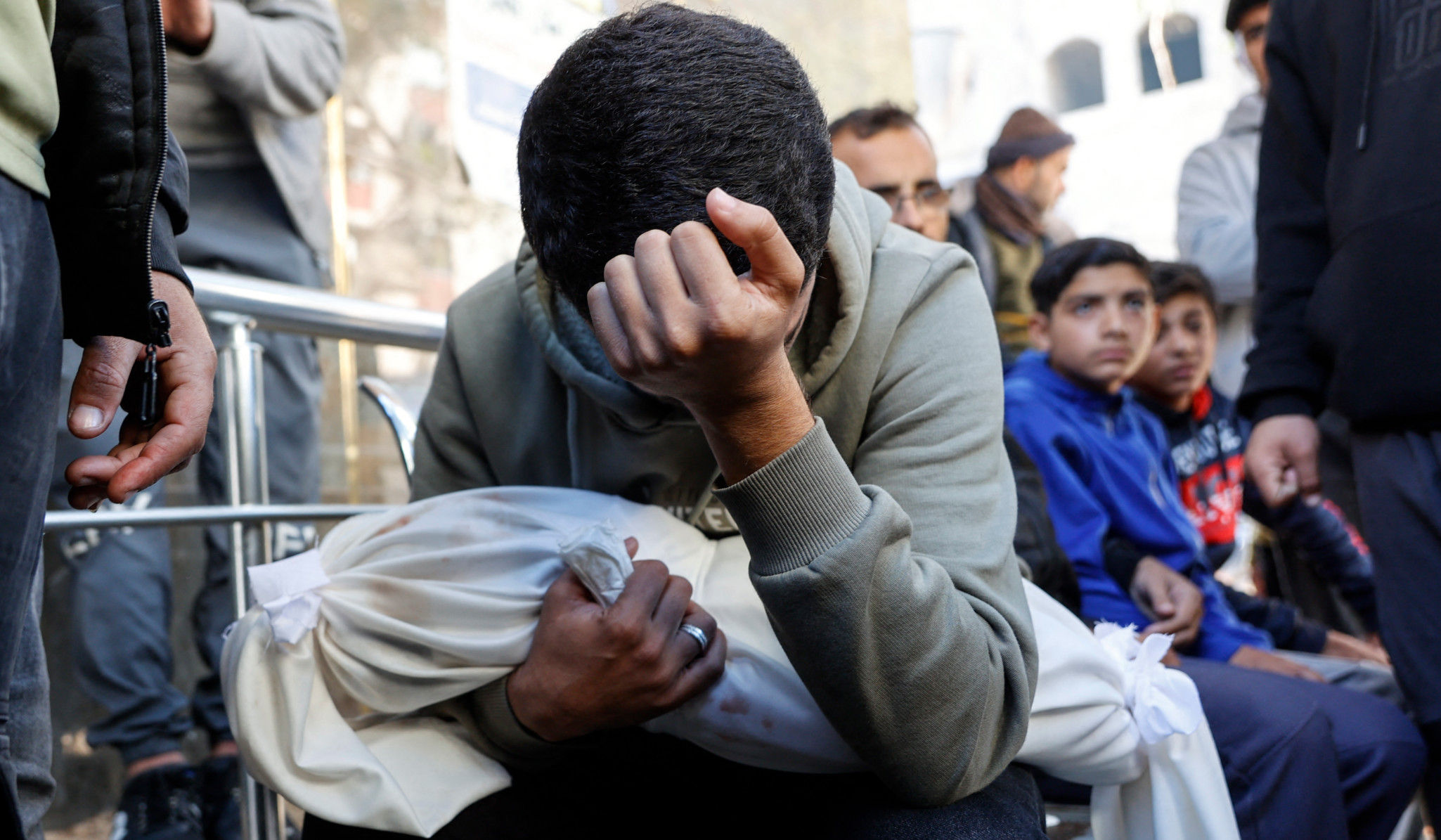
    Israeli military forces shelled a United Nations-operated school in Gaza on Friday, resulting in multiple casualties among displaced Palestinians gathered for a wedding celebration. The attack on Gaza Martyrs School in the Tuffah neighborhood east of Gaza City killed at least six civilians, including a five-month-old infant, and wounded several others according to Palestinian emergency services.

    Eyewitness accounts describe an Israeli tank advancing into the area and targeting the school’s second floor where families had assembled. Medical responders reported being deliberately blocked from accessing the scene for over two hours by Israeli forces, significantly delaying victim evacuation efforts. The Palestinian civil emergency service confirmed they only recovered bodies after the UN Office for the Coordination of Humanitarian Affairs intervened with Israeli authorities.

    This incident represents one of hundreds of alleged ceasefire violations since the Sharm El-Sheikh agreement took effect on October 10. Gaza’s health ministry reports at least 395 Palestinian fatalities from Israeli military actions during this period. The bombing occurred as US Special Envoy Steve Witkoff and senior officials prepared for Miami negotiations regarding the next phase of the Gaza agreement, which anticipates greater challenges including international stabilization forces, technocratic governance establishment, Hamas disarmament, and Israeli territorial withdrawal.

    Hamas political member Bassem Naim emphasized public expectations for these talks to end ‘Israeli lawlessness’ and ensure compliance with existing agreements. The broader conflict has resulted in over 70,660 Palestinian fatalities according to Gaza health authorities, with approximately half being women and children.

  • Frenchman holds Tokyo exhibition to expose Japan’s wartime atrocities

    Frenchman holds Tokyo exhibition to expose Japan’s wartime atrocities

    A French national has launched a bold initiative in Japan’s capital to shed light on historical wartime atrocities. Marcus Detrez, collaborating with associates Zhong Haosong and Bastien Ratat, inaugurated a comprehensive exhibition in Tokyo on December 19th documenting Japan’s aggressive military actions during World War II.

    The exhibition represents the culmination of an international advocacy journey. Prior to their arrival in Japan, the organizers participated in China’s National Memorial Day ceremonies in Nanjing—a city that suffered profoundly during Japanese occupation. The group further expanded their awareness campaign with a photographic exhibition in Seoul, South Korea.

    Detrez emphasized the strategic timing of their Tokyo presentation, stating, ‘We believe we arrived at exactly the right moment to facilitate meaningful dialogue about historical accountability.’ The exhibition features extensive documentation, including photographic evidence and firsthand accounts, focusing particularly on atrocities committed during Japan’s imperial expansion across Asia.

    The initiative emerges amid ongoing regional tensions regarding historical interpretation and reconciliation. While Japan has made formal apologies for certain wartime actions, many neighboring countries maintain that adequate acknowledgment and education about this period remain insufficient. This exhibition represents one of the few foreign-organized efforts to directly address these historical issues within Japan itself.

  • Bangladesh tightens security after youth leader’s killing, mob attacks on media

    Bangladesh tightens security after youth leader’s killing, mob attacks on media

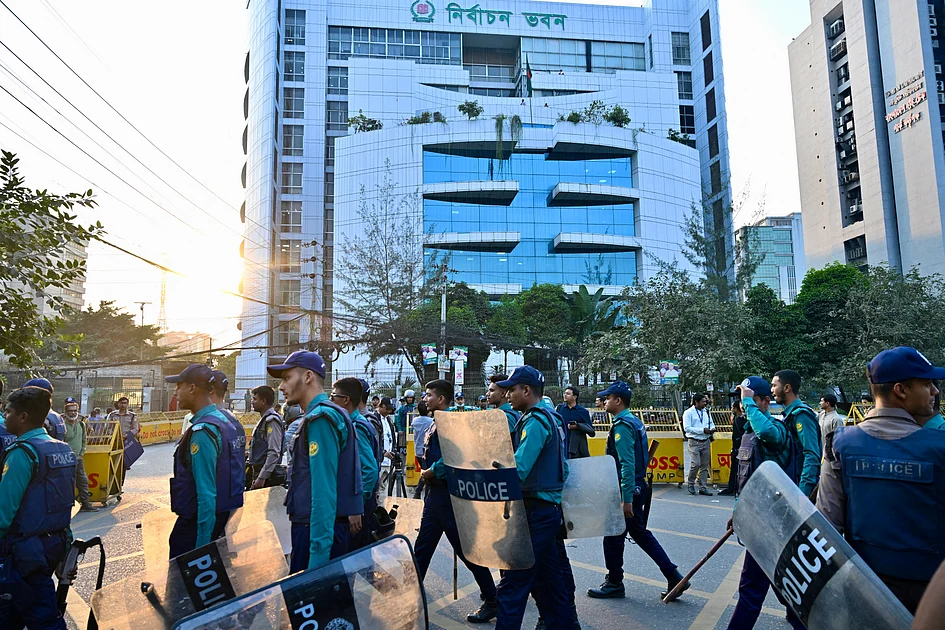
    Bangladesh has intensified security measures across the capital Dhaka following the assassination of prominent youth leader Sharif Osman Hadi, whose death has triggered widespread violence and targeted attacks on media institutions. The interim government of Nobel laureate Muhammad Yunus declared Saturday a day of state mourning while appealing for public resistance against “mob violence by fringe elements.

    Hadi, a central figure in the 2024 student-led uprising that ousted long-serving Prime Minister Sheikh Hasina, was fatally shot by masked assailants during his campaign launch last week. The 32-year-old activist succumbed to his injuries Thursday night in Singapore after six days on life support, sparking coordinated attacks on major newspapers and cultural organizations.

    The ongoing turmoil presents significant challenges to Bangladesh’s fragile democratic transition ahead of February 12 parliamentary elections. The violence has exposed governance limitations within Yunus’s interim administration and threatens to undermine the nation’s recovery from nearly two years of political instability.

    International human rights organizations have condemned both the assassination and subsequent attacks on press freedom. Human Rights Watch described Hadi’s killing as a “terrible act” and called for urgent government action to curb the violence that has persisted since Hasina’s ouster in August 2024. Amnesty International has demanded independent investigations into both the assassination and the systematic targeting of media institutions.

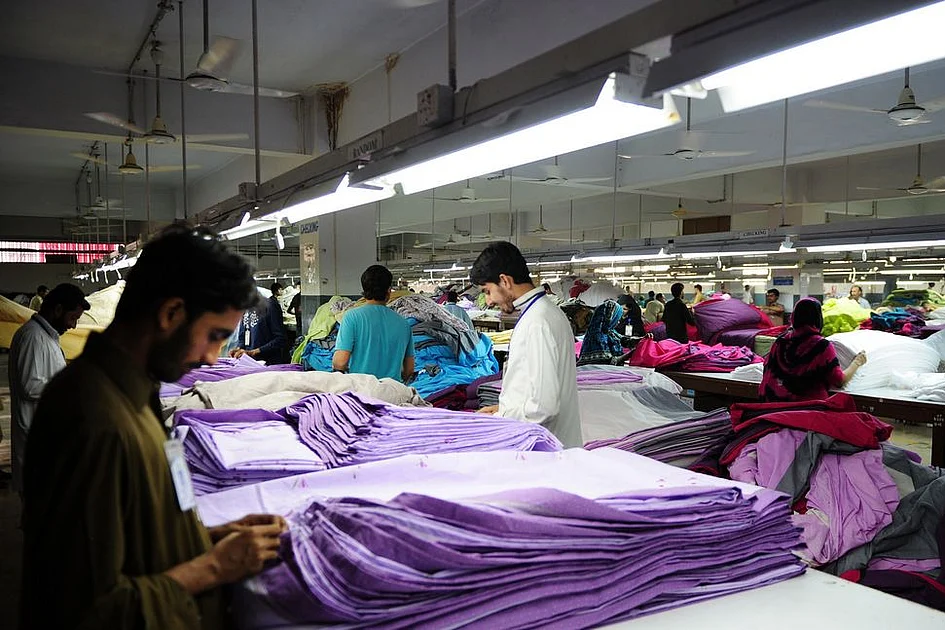
    The unrest has extended beyond Dhaka, with protesters attacking the Indian Assistant High Commission in Chittagong—reflecting growing anti-India sentiments since Hasina sought refuge in New Delhi. The banned Awami League party has threatened further unrest, raising concerns about potential election disruption in the world’s second-largest apparel manufacturing nation.

  • Tens of thousands attend funeral of killed Bangladesh student leader Osman Hadi

    Tens of thousands attend funeral of killed Bangladesh student leader Osman Hadi

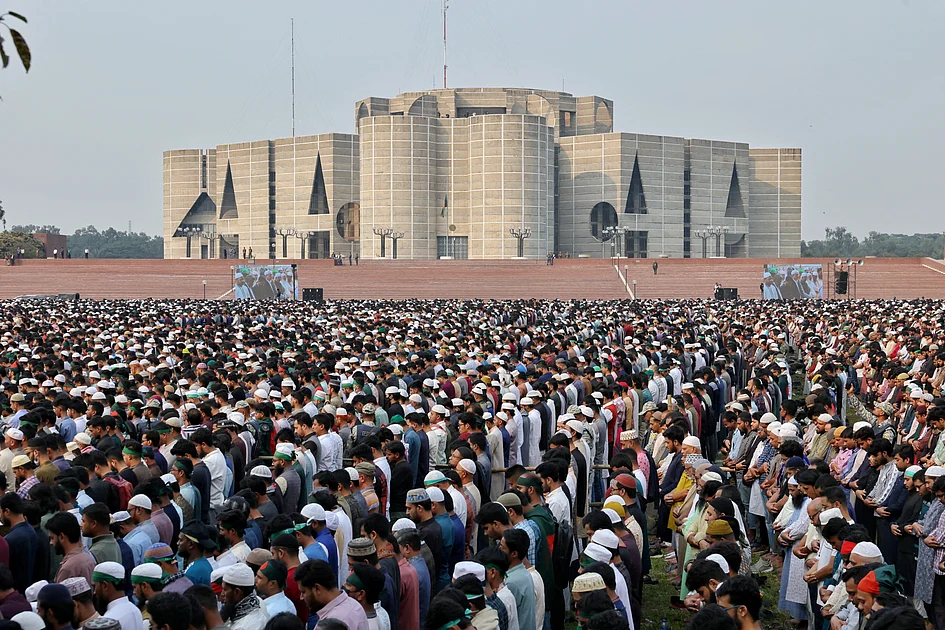
    Dhaka witnessed an overwhelming outpouring of grief as tens of thousands of mourners gathered Saturday for the funeral of Sharif Osman Hadi, a prominent student leader whose assassination has plunged Bangladesh into renewed political turmoil. The massive procession followed two days of violent protests that have shaken the nation’s interim government.

    Hadi, 32, a central figure in last year’s pro-democracy uprising, succumbed to injuries Thursday in a Singapore hospital after masked gunmen opened fire while he was departing a mosque in Dhaka. His body was repatriated to the capital Friday ahead of the solemn funeral rites held at the parliament building, where police in body cameras maintained a vigilant presence.

    Interim leader Muhammad Yunus delivered an emotionally charged eulogy, declaring, “We have not come here to say goodbye. You are in our hearts and will remain in the heart of all Bangladeshis as long as the country exists.” Hadi, known for his vocal criticism of India, had been preparing to contest February’s general elections.

    The assassination has triggered widespread civil unrest, with protesters demanding justice and accountability. Late Thursday, demonstrators targeted media institutions, setting fire to offices of leading newspapers Prothom Alo and Daily Star, which critics accuse of pro-India bias. The publications have been particularly scrutinized since ousted Prime Minister Sheikh Hasina sought refuge in India following the 2024 uprising.

    In a separate incident adding to the tension, Hindu garment worker Dipu Chandra Das was lynched Thursday in Mymensingh district following blasphemy allegations. Yunus confirmed seven suspects have been arrested in connection with this religiously-motivated killing.

    Amnesty International issued a statement Saturday urging Bangladesh’s interim government to conduct “prompt, thorough, independent and impartial” investigations into both Hadi’s killing and the subsequent violence. The rights organization expressed particular alarm over the deteriorating security situation and growing religious tensions.

    The convergence of political assassination, religious violence, and anti-media attacks presents a severe challenge to Bangladesh’s fragile transitional government as the nation approaches critical elections.

  • Philippines: Nearly 1 million passengers expected at airports during Christmas rush

    Philippines: Nearly 1 million passengers expected at airports during Christmas rush

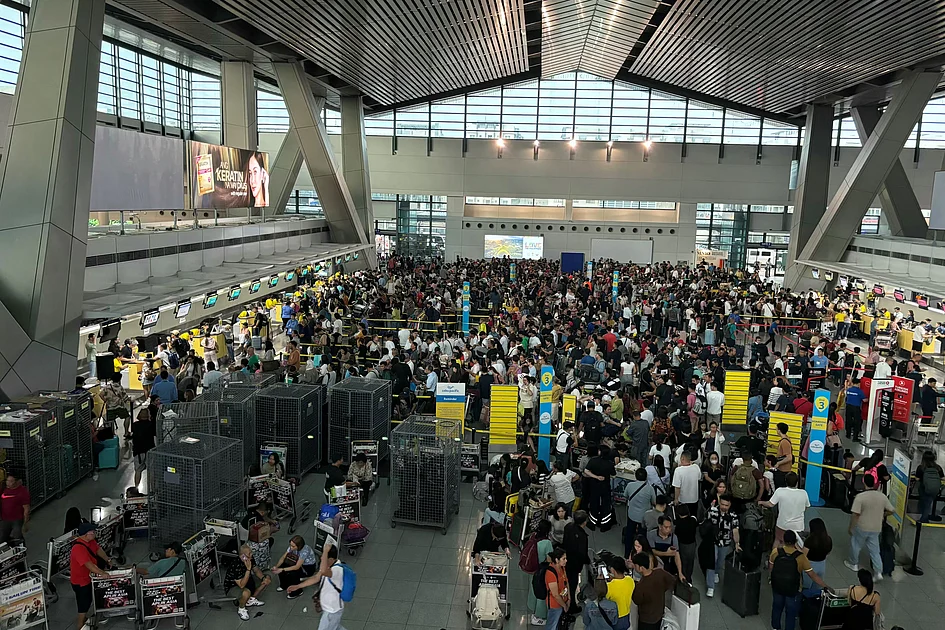
    The Civil Aviation Authority of the Philippines (Caap) has declared a state of heightened alert across all national airports in anticipation of approximately 960,000 passengers expected to travel during the Christmas holiday period. This operational status will remain in effect from December 20, 2025, through January 4, 2026, representing a proactive response to a projected 7% increase in air traffic compared to the previous year’s figures.

    According to aviation officials, the enhanced security and operational measures include the establishment of dedicated passenger assistance help desks, deployment of additional security personnel, and placement of medical teams on standby at key transportation hubs. The Ninoy Aquino International Airport (NAIA) in Manila, which processed 4.62 million passengers in December 2024 alone, serves as the primary gateway for both international and domestic travel during this peak season.

    Director General Raul Del Rosario emphasized that ensuring passenger safety and operational efficiency remains the paramount priority for aviation authorities. ‘We are implementing comprehensive measures to guarantee that all travelers experience safe, orderly, and efficient airport operations throughout the holiday period,’ stated Rosario in an official communication released Friday.

    The annual travel surge is deeply rooted in Filipino cultural traditions, where Christmas represents a profoundly significant occasion for family reunions. Overseas Filipino workers particularly prioritize returning home during this season, often undertaking considerable financial and logistical efforts to participate in family celebrations. This cultural phenomenon consistently generates one of the most substantial annual passenger volume increases within the Southeast Asian aviation sector.

  • China’s top specimen event lands in Shanghai

    China’s top specimen event lands in Shanghai

    Shanghai is currently hosting the nation’s most prestigious biological specimen exhibition, showcasing exceptional works from across China. The 6th China Animal Specimen Competition officially opened its doors on December 20, 2025, at the China-Israel (Shanghai) Innovation Hub in Putuo District.

    The event features 738 carefully selected entries, with the exhibition running through March 2026, offering free public access to these remarkable scientific artworks. Among the standout contributions is a project by a seventh-grade student from Tianjin, who created a detailed specimen from a crucian carp rescued from a local vegetable market. This young participant’s work demonstrates how practical specimen preservation serves as both scientific practice and conservation advocacy.

    Experts at the event emphasized the broader significance of specimen preservation, noting that each preserved specimen represents a conserved natural resource. The competition not only highlights technical excellence in taxidermy and preservation techniques but also fosters public awareness about biodiversity conservation and environmental stewardship.

    The exhibition provides a unique platform for scientists, educators, students, and the general public to engage with natural history preservation. By bringing together works from professional institutions and amateur enthusiasts alike, the event bridges the gap between academic research and public education in the biological sciences.

  • AI for farmers: UAE builds free tool trained to answer crop specific issues

    AI for farmers: UAE builds free tool trained to answer crop specific issues

    The United Arab Emirates has unveiled a groundbreaking artificial intelligence system specifically engineered to address agricultural challenges worldwide. Developed by ai71 in collaboration with 15 global organizations including CGIAR and the Gates Foundation, the AgriLLM platform represents a significant advancement in agricultural technology.

    Unlike commercial AI tools such as ChatGPT, AgriLLM operates on an open-access model, allowing free usage, modification, and development by users globally. This initiative addresses a critical gap identified by the UN’s Food and Agriculture Organization, which reports that 75% of family farmers worldwide lack reliable agricultural support systems.

    According to Mehdi Ghissassi, Chief Product and Technology Officer at ai71, the system distinguishes itself through specialized training on high-quality agricultural datasets. “While general models like ChatGPT are trained on broad, multi-domain data, AgriLLM is trained on meticulously curated agricultural information from our global partners,” Ghissassi explained.

    The system’s effectiveness is demonstrated through rigorous testing, with internal evaluations showing AgriLLM delivers factually correct responses approximately 30% more frequently than GPT-4o when addressing agricultural queries. The model prioritizes accuracy over response length, providing concise, evidence-based guidance rather than potentially misleading comprehensive answers.

    AgriLLM’s training incorporates an extensive knowledge base including over 350,000 agricultural documents, 50,000 research papers, and 120,000 validated farming questions and answers. This specialized training enables the system to address crop-specific issues, regional growing conditions, and climate-related challenges that typically challenge general-purpose AI systems.

    The platform’s functionality adapts to user specificity, with broad queries generating general advice while follow-up questions regarding soil type, location, or climate conditions trigger increasingly targeted responses drawn from its verified agricultural knowledge base.