标签: Asia

亚洲

  • Myanmar’s election ends amid mixed intl response

    Myanmar’s election ends amid mixed intl response

    Myanmar’s military government concluded its three-phase general election on Sunday, marking the country’s first electoral process since the 2021 coup that ousted Aung San Suu Kyi’s democratically elected administration. The final voting round occurred across approximately 60 townships, completing a staggered electoral schedule that began December 28 and continued through January 11.

    Senior General Min Aung Hlaing, head of the ruling military junta, emphasized domestic validation over international recognition, stating: “The people’s vote is the recognition we need.” In televised remarks, the military leader expressed indifference toward the international community’s stance on the election’s legitimacy, asserting that Myanmar citizens retain the freedom to support their preferred candidates.

    Electoral participation metrics revealed modest turnout rates of 52.13% and 55.59% during the initial two phases, with over 24.22 million eligible voters selecting representatives from nearly 5,000 candidates representing 57 political parties. The complex electoral process will determine composition of the Pyithu Hluttaw (lower house), Amyotha Hluttaw (upper house), and various state and regional parliaments.

    Preliminary results indicate dominant performance by the military-backed Union Solidarity and Development Party (USDP), which analysts project may secure 80-90% of parliamentary seats. Despite the military government’s plans to establish a new administration through this electoral process in April, experts anticipate continued domestic instability due to escalating conflicts between opposition factions and military forces.

    The international response remains divided, with ASEAN preparing to address the Myanmar situation during its upcoming Foreign Ministers’ Retreat in the Philippines. While the regional bloc continues advocating its five-point consensus peace plan, ASEAN special envoy Theresa Lazaro confirmed the organization has not endorsed the electoral process, emphasizing continued engagement with diverse Myanmar stakeholders.

  • ‘Beijing Rocket Street’: A launchpad for accelerated development

    ‘Beijing Rocket Street’: A launchpad for accelerated development

    Beijing’s Economic-Technological Development Area, known as E-Town, has launched a groundbreaking initiative called ‘Beijing Rocket Street’ to transform China’s commercial aerospace sector through shared infrastructure and collaborative platforms. This innovative approach addresses critical industry challenges while accelerating satellite and rocket production capabilities.

    The comprehensive project, spanning 145,000 square meters, represents China’s first shared commercial aerospace research and production base. The facility has completed final inspections and is now transitioning to operational status, featuring four specialized zones: a common technology platform, innovation and research center, high-end manufacturing center, and display/operations control center.

    This development comes as China’s commercial space sector demonstrates remarkable growth. Official data reveals that in 2025, the country conducted 50 commercial space launches—representing over half of all missions—while deploying 311 commercial satellites that accounted for 84% of total orbital placements.

    According to Zhang Rusheng, deputy director of the commercial aerospace department at the China National Space Administration, ‘Commercial aerospace has progressed across the full industrial chain, from research and development to satellite launches, tracking and control, and downstream applications.’ He emphasized Beijing’s evolving role as a global innovation hub shaping the sector’s development trajectory.

    The shared infrastructure model specifically addresses industry pain points including fragmented resources, redundant testing facility investments, and infrastructure limitations that particularly affect private companies. The Rocket Street initiative offers more than 10 specialized services, including vibration testing, thermal vacuum analysis, and separation testing for both rockets and satellites.

    Ma Zhao, deputy director at E-Town’s robotics and intelligent manufacturing industry bureau, explained the strategic vision: ‘This initiative is designed to expand industrial development space and strengthen industry support with shared platforms. By doing so, we aim to release new productive capacity while boosting confidence across the industry.’

    E-Town has emerged as China’s most concentrated commercial aerospace cluster, with rockets developed in the area accounting for 24 launches in 2025—more than 90% of the nation’s commercial rocket missions. Industry leaders have welcomed the supportive ecosystem, with Galactic Energy’s vice-president Xia Dongkun highlighting benefits in talent acquisition, investment facilitation, and insurance solutions.

    The innovation extends beyond traditional aerospace boundaries. Liu Chang, co-founder of Galaxy Space, noted the advantage of E-Town’s cutting-edge industrial foundation, including intelligent driving systems and embodied intelligent robotics. The company plans to establish a factory with annual production capacity for 500 satellites, potentially becoming China’s largest facility for mass-producing low Earth orbit satellites using extensive automation.

    Looking forward, E-Town officials outlined ambitious plans focusing on reusable rockets, satellite internet technologies, future space innovations, and next-generation infrastructure. The development area aims to attract up to 1,000 companies, support over 1,000 commercial rocket launches, and generate hundreds of billions of yuan in revenue, solidifying Beijing’s position as a national center for high-quality commercial aerospace advancement.

  • Capital city targets 5% GDP growth for 2026

    Capital city targets 5% GDP growth for 2026

    Beijing has established an ambitious economic target for 2026, aiming to achieve over 5% GDP growth following its milestone achievement of reaching 5 trillion yuan ($717 billion) in economic output during 2025. Mayor Yin Yong announced this objective while presenting the government work report at the city’s annual legislative and advisory sessions, marking a strategic commencement to China’s 15th Five-Year Plan period (2026-2030).

    The municipal government outlined comprehensive plans to deepen regional integration with Tianjin and Hebei province while accelerating scientific and technological innovation. Statistical data reveals substantial progress in regional collaboration, with 689 enterprises relocating from Beijing to register at the Binhai-Zhongguancun science park in Tianjin’s Binhai New Area. Technology contract transactions from Beijing to Tianjin and Hebei surged to 99.6 billion yuan, representing an 18.1% year-on-year increase.

    Significant advancements were reported across key industrial sectors including biopharmaceuticals, complemented by the launch of a new energy vehicle ecological port within the region. Mayor Yin emphasized enhanced focus on optimizing regional technological innovation mechanisms, stating: “We will implement a series of initiatives to pioneer basic research and overcome critical core technologies, while strengthening strategic scientific capabilities including Beijing’s national laboratories.”

    Beijing plans to establish innovative research platforms in cutting-edge fields such as brain-computer interfaces and high-temperature superconductors. The city will further reinforce its innovation infrastructure, with Zhongguancun Science Park prioritizing artificial intelligence development. Concurrently, the Huairou National Comprehensive Science Center will advance high-end scientific equipment manufacturing, while accelerated development of Nankou and Machikou national-level key centers alongside Changping district’s science town will facilitate industrial achievement transformation.

    Lin Jianhua, Deputy Director of the Beijing Municipal Commission of Development and Reform, revealed the launch of an “AI Plus” initiative designed to expand artificial intelligence integration across quantum technology, commercial aerospace, and biopharmaceutical sectors. “This strategic approach will cultivate new industrial growth engines,” Lin affirmed.

    The municipal government also highlighted quality-of-life improvements, particularly for elderly residents. Li Fengqin, member of the Beijing Municipal Committee of the Chinese People’s Political Consultative Conference, shared an impactful anecdote demonstrating enhanced government services: an elderly man expressed profound gratitude through a banner presentation after his 90-year-old disabled mother received professional bathing assistance through the district’s long-term care insurance program after four years of inability. This initiative, described as a “sixth type” of social insurance, addresses China’s aging population challenges and after six years of pilot implementation in Shijingshan district, is poised for expansion across Beijing and nationwide.

  • Egypt to adopt restrictions on children’s social media use to fight ‘digital chaos’

    Egypt to adopt restrictions on children’s social media use to fight ‘digital chaos’

    Egyptian lawmakers are initiating legislative measures to control minors’ access to social media platforms, responding to growing concerns about digital exposure risks. The House of Representatives announced Sunday it would develop comprehensive regulations addressing what it termed ‘digital chaos’ affecting Egyptian youth.

    The parliamentary initiative follows direct instructions from President Abdel-Fattah el-Sissi, who urged government officials during televised remarks to study international approaches to social media restrictions for children. The president specifically referenced Australia and the United Kingdom as models for potential legislation.

    According to recent data from the National Center for Social and Criminological Research, approximately half of Egypt’s under-18 population engages with social media platforms. The 2024 report highlights significant exposure risks including harmful content, cyberbullying, and various forms of digital abuse.

    The proposed legislation will involve consultations with government agencies and expert organizations to create protective measures safeguarding children’s cognitive development and behavioral patterns. This move aligns with global trends, as Australia implemented groundbreaking restrictions in December prohibiting social media access for children under 16, while Britain and France consider similar age-based limitations.

    The Egyptian initiative reflects growing international consensus regarding the need for balanced approaches to digital protection that address both child safety concerns and developmental considerations.

  • Tributes pour in across India for revered BBC broadcaster Sir Mark Tully

    Tributes pour in across India for revered BBC broadcaster Sir Mark Tully

    The world of journalism is mourning the loss of Sir Mark Tully, the legendary BBC correspondent whose name became inseparable from the broadcaster’s identity in India for over half a century. Sir Mark passed away on Sunday at the age of 90 in a Delhi hospital, following a period of illness. The city had been his long-time home, and his cremation is scheduled for Monday.

    Widely celebrated as the definitive ‘voice of India’ for international audiences, Sir Mark’s career encompassed the most pivotal historical moments across South Asia. His reporting provided the world with critical insights into events that shaped the region, including the Indian Army’s operation at the Golden Temple, the emergence of Bangladesh, periods of martial law in Pakistan, the Tamil Tigers insurgency in Sri Lanka, and the Soviet invasion of Afghanistan.

    His commitment to truth often placed him in perilous situations. In 1992, while covering the controversial demolition of the Babri Mosque by Hindu extremists, he was threatened by a mob and confined for several hours before being rescued through the intervention of a local official and a Hindu priest.

    Indian Prime Minister Narendra Modi led tributes, describing Sir Mark as ‘a towering voice of journalism’ whose profound connection with India was evident throughout his body of work. This sentiment was echoed across the journalistic community. Author William Dalrymple honored him as ‘a giant among journalists and the greatest Indophile of his generation,’ noting his unwavering commitment to speaking truth to power.

    Sir Mark’s distinctive, measured delivery and authoritative reporting made him the most trusted news source for millions of Indians during eras of limited media freedom. Political scholar Pratap Bhanu Mehta recalled how during the 1984 anti-Sikh riots, Sir Mark’s broadcasts became ‘the only voice of Indian history as it happened,’ providing clarity amidst chaos with what he described as ‘controlled despair.’

    His credibility was such that, as veteran journalist Coomi Kapoor noted, his voice on the BBC offered the only alternative to government-controlled All India Radio. This trust reached the highest levels of society—former Prime Minister Rajiv Gandhi reportedly refused to believe reports of his mother Indira Gandhi’s assassination until hearing confirmation on the BBC.

    Born in Calcutta (now Kolkata) in 1935 during British rule, Sir Mark received numerous honors for his contributions to journalism, including a knighthood in 2002 and two of India’s highest civilian awards, the Padma Shri and Padma Bhushan—exceptional recognition for a foreign national.

  • 17 rescued Filipino sailors handed over

    17 rescued Filipino sailors handed over

    In a significant international maritime rescue operation, the China Coast Guard (CCG) successfully transferred 17 Filipino sailors to Philippine authorities on Sunday following a dramatic cargo ship capsizing near Huangyan Island. The incident, which occurred Thursday night, left 21 crew members in perilous waters approximately 55 nautical miles northwest of the strategic island.

    The comprehensive rescue mission began early Friday morning when the CCG received an emergency alert from Sansha’s maritime search and rescue center in Hainan province. Within hours, two specialized vessels—the Dongsha and Sanmen—were dispatched to the disaster zone. The Chinese People’s Liberation Army Southern Theater Command provided crucial aerial support, deploying military aircraft for continuous surveillance over the vast search area.

    Advanced rescue protocols were immediately implemented upon arrival, with crews establishing systematic search grids and employing radar technology, high-intensity illumination, and persistent communication attempts. The operation yielded success as responders located multiple survivors in the water, carefully extracting them from the hazardous conditions.

    Medical teams aboard the CCG vessels provided comprehensive emergency care, addressing conditions ranging from dehydration and abrasions to serious water aspiration. Medical personnel performed respiratory clearance procedures, administered wound treatments, and maintained constant vital sign monitoring. A dedicated medical station was established where survivors received warm nourishment and hydration. Despite the trauma, the rescued sailors maintained composure through interpreter-assisted communication and expressed profound gratitude to their rescuers.

    The Philippine Coast Guard vessel 9701 joined the operation Friday, collaborating in sector-by-sector search efforts. By midday Friday, 17 individuals had been recovered—15 in stable condition and two deceased. Four crew members remain unaccounted for despite intensive search efforts. The formal handover occurred Sunday afternoon following official coordination between the two nations’ coast guard services.

    This operation continues the CCG’s established pattern of international maritime assistance, having previously rescued eight South Korean fishermen in May 2025 during another emergency at sea.

  • Restored wetlands welcome new flocks of migratory birds

    Restored wetlands welcome new flocks of migratory birds

    China’s comprehensive wetland restoration initiative is demonstrating remarkable success as critical habitats along the East Asian-Australasian Flyway witness unprecedented surges in migratory bird populations. At Poyang Lake, China’s largest freshwater lake and a crucial wintering terminus, systematic ecological management has transformed the region into a biodiversity hotspot supporting nearly 400 bird species and approximately 700,000 birds during wintering seasons.

    The transformation stems from a multi-faceted approach combining advanced technology with traditional conservation methods. The Jiangxi Poyang Lake National Nature Reserve has implemented an intelligent management platform featuring high-definition cameras and sensors that operate continuously, utilizing artificial intelligence to identify and document bird species, population numbers, and distribution patterns. This technological integration complements drone patrols on preset flight routes and ground-based monitoring, creating a comprehensive ecological oversight system.

    Beyond technological innovation, regulatory measures have played a pivotal role. Since January 2020, a comprehensive fishing ban has been enforced throughout the Jiangxi section of the Yangtze River and Poyang Lake basin. Additionally, Jiangxi implemented China’s first provincial regulation specifically targeting phosphorus pollution in lake basins in January 2024, significantly improving water quality and ecosystem health.

    The conservation success extends beyond Poyang Lake. In Heilongjiang province’s Sanjiang Plain, large-scale wetland restoration has revitalized the northern starting point of the migration corridor. Over 3,000 hectares of wetlands have been restored following the implementation of the Heilongjiang Wetland Protection Regulation a decade ago, with the province now recording 390 bird species, including 297 migratory and summer-resident species.

    Critical stopover sites like Tianjin’s Qilihai Wetland have implemented sophisticated management strategies, including scientific water level adjustments during migration seasons to facilitate feeding for species such as oriental storks. These measures have yielded significant breakthroughs, including the first confirmed nesting of spoonbills in the western wetland area.

    International collaboration has further strengthened these efforts. The Food and Agriculture Organization and Global Environment Facility’s provincial-level wetland protection project has trained over 3,000 government officials and technicians through more than 60 capacity-building programs, fostering expertise in wetland management, biodiversity monitoring, and sustainable development.

    The appearance of rare species like the great white pelican—typically found in Africa, eastern Europe, and parts of South and Central Asia—at Poyang Lake signals the exceptional improvement in ecosystem conditions. Conservation experts note that healthy wetland environments, abundant food resources, and enhanced safety measures are attracting these unusual visitors, demonstrating that years of dedicated protection along the entire flyway are converging to create optimal conditions at migration destinations.

  • Myanmar military using paramotors and gyrocopters for aerial attacks on civilians, opposition forces

    Myanmar military using paramotors and gyrocopters for aerial attacks on civilians, opposition forces

    BANGKOK — Myanmar’s military junta is increasingly deploying commercially available paramotors and gyrocopters as improvised aerial weapons in its ongoing civil war, according to a comprehensive report by human rights organization Fortify Rights. These low-tech aircraft enable forces to conduct surprise attacks on civilian populations and anti-government militias across central Myanmar’s flat terrain.

    The documented use of paramotors (motorized paragliders) emerged in early 2024, with gyrocopters (ultralight rotorcraft) joining the arsenal by March 2024. Pilots manually drop mortar shells from these aircraft, often cutting engines during final approach for silent, undetected attacks. The organization verified through eyewitness interviews that these tactics have resulted in numerous civilian casualties, including a October attack that killed 24 protesters at a candlelight vigil in Sagaing region.

    Analysts note these cheap, operable-from-field aircraft provide strategic advantages despite vulnerability to sophisticated defenses. They carry 30-40 shells for three-hour missions, allowing the military to preserve advanced aircraft for border conflicts while dominating central lowlands where opposition forces lack aerial defense capabilities.

    The escalation coincides with the junta’s contested electoral process, with attacks intensifying during voting periods that critics describe as legitimacy-building exercises. Fortify Rights documented 304 paramotor/gyrocopter attacks on civilians between December 2024 and January 2026, though conflict databases suggest approximately 350 total incidents involving these aircraft during this period.

    Despite territorial gains by ethnic minority groups and pro-democracy forces, the persistent aerial threat demonstrates ongoing challenges in protecting civilians. While China and Russia continue military supplies to Myanmar, other nations maintain sanctions that Amnesty International reports are being circumvented by ‘ghost ships’ smuggling aviation fuel with disabled tracking systems.

    Human rights organizations are urging strengthened sanctions enforcement specifically targeting components for these aerial weapons, emphasizing the need to prevent the Myanmar military from adapting commercial technology for warfare against civilians.

  • A search for 6 presumed dead in a New Zealand landslide is expected to take days

    A search for 6 presumed dead in a New Zealand landslide is expected to take days

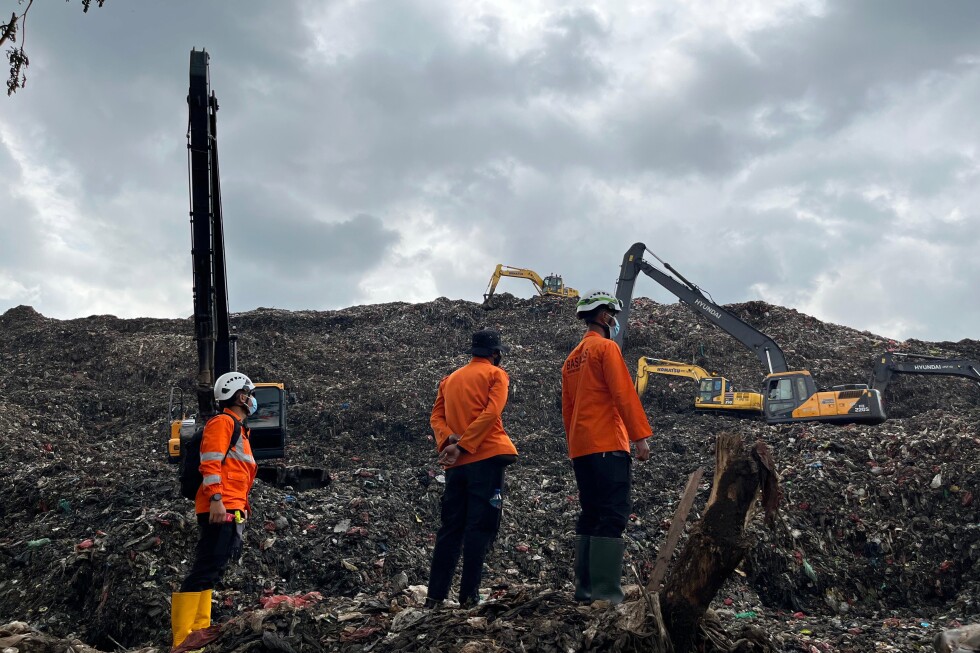
    WELLINGTON, New Zealand — Recovery operations for six individuals presumed deceased in a catastrophic landslide at Beachside Holiday Park, one of New Zealand’s premier coastal camping destinations, are anticipated to extend over several days due to perilous ground conditions. Authorities confirmed the challenging search efforts resumed Monday following a weather-induced suspension over the weekend.

    The devastating incident occurred Thursday when torrential rains triggered a massive mudslide from Mount Maunganui during a severe summer storm across the North Island. The missing victims, ranging from 15 to 71 years old, include international visitors from Sweden and Italy alongside New Zealand residents.

    Police Superintendent Tim Anderson emphasized the operational challenges, stating, ‘We’re maintaining hope for improved weather conditions as saturated ground remains our primary concern. What we require are consecutive days of dry weather to ensure recovery team safety.’

    The landslide unleashed a torrent of mud that engulfed the picturesque campground, crushing vehicles, travel trailers, and facility buildings beneath debris. Initial rescue efforts Thursday detected voices beneath the rubble, but by Saturday, authorities concluded no survivors remained among the missing.

    Identified victims include Lisa Anne Maclennan (50), Måns Loke Bernhardsson (20), Jacqualine Suzanne Wheeler (71), Susan Doreen Knowles (71), Sharon Maccanico (15), and Max Furse-Kee (15).

    The tragedy struck during New Zealand’s peak summer holiday period, with the surrounding Tauranga region recording its wettest 24-hour period since 1910. The storm system claimed three additional lives elsewhere on the North Island, including two residents buried in a separate Papamoa landslide and a Kiribati national swept away by floodwaters.

    Growing questions about evacuation protocols have emerged after revelations that fire services relayed a public landslide warning to Tauranga City Council four hours before the fatal event. The council, which owns the campground land, has committed to an independent inquiry into the circumstances surrounding the tragedy.

  • Actor’s fans raise funds to save hospital

    Actor’s fans raise funds to save hospital

    In an extraordinary display of public solidarity, hundreds of thousands of supporters converged on actor Li Yapeng’s Douyin livestream Friday evening, creating a charity-driven purchasing frenzy for Yunnan Pu’er tea products. The massive digital gathering aimed to generate crucial funds for Beijing Smile Angel Children’s Hospital, a specialized facility co-founded by Li in 2012 that provides free and subsidized cleft lip and palate surgeries to children in need.

    The hospital’s financial crisis came to public attention earlier this month when Li revealed the institution faced accumulated debts exceeding 26 million yuan ($3.5 million) in unpaid rent and operational fees, pushing it to the brink of permanent closure. This disclosure triggered an immediate public response, with donations to the Smile Angel Foundation—established by Li in 2006 under the Chinese Red Cross Foundation—surpassing 23 million yuan from hundreds of thousands of contributors within days.

    However, experts subsequently clarified that these donations were legally restricted to covering medical procedures rather than operational expenses, necessitating alternative fundraising approaches. Li’s strategic pivot to e-commerce philanthropy proved remarkably successful, with his Friday livestream dominating Douyin’s sales charts by generating 16.84 million yuan ($2.42 million) in revenue—nearly quadruple the sales of the platform’s second-ranked broadcaster.

    During the broadcast, Li demonstrated ethical entrepreneurship by repeatedly urging viewers toward rational consumption. “I know why everyone is here,” he acknowledged, directly referencing the hospital’s predicament while encouraging viewers to “only buy if you drink tea.”

    The overwhelming response forced Li’s commercial partner, a Yunnan Pu’er tea company, to announce a temporary suspension of upcoming livestreams to focus exclusively on processing the unprecedented volume of orders. “The order volume far exceeded expectations,” the company stated Saturday, explaining the pause would ensure “timely and accurate delivery.”

    Despite this remarkable show of public support, the hospital’s future remains uncertain. Wednesday’s official statement confirmed ongoing negotiations with the landlord regarding potential relocation or lease renewal, with no final resolution reached.