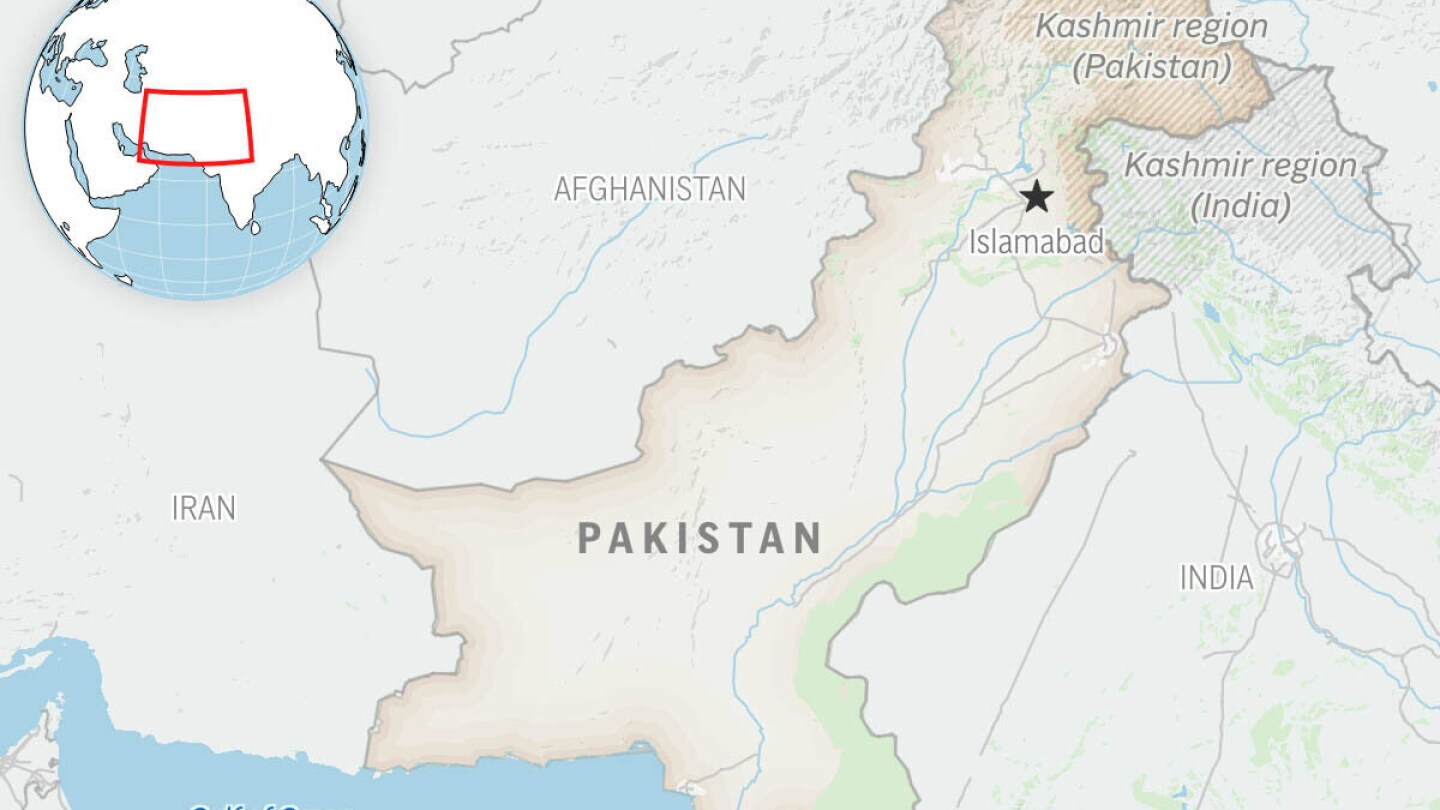
A devastating roadside bomb attack targeted a police vehicle in Hangu, a city in Pakistan’s Khyber Pakhtunkhwa province near the Afghan border, on Friday. The explosion claimed the lives of a city police chief and two junior officers, according to local officials. The attack occurred as the officers were en route to a police station that had been assaulted less than an hour earlier, said Adam Khan, the local police chief. No further details were provided. Interior Minister Mohsin Naqvi condemned the incident, attributing it to the Pakistani Taliban, a group closely allied with Afghanistan’s Taliban, which regained power in Kabul in August 2021 following the withdrawal of U.S. and NATO forces. Pakistan has accused Afghanistan of harboring Pakistani Taliban militants who conduct cross-border attacks, a claim Kabul denies. In a separate operation on the same day, Pakistani security forces raided a militant hideout in the Tank district, killing eight Pakistani Taliban militants, as stated in a military release. This surge in violence comes just ahead of a second round of peace talks between Pakistan and Afghanistan, scheduled to take place in Istanbul. The talks, brokered by Qatar and Turkey, follow an initial meeting in Doha on October 19, which aimed to address cross-border violence and establish a monitoring mechanism. Meanwhile, all border crossings between the two nations remain closed since October 13 due to recent clashes, significantly impacting trade. In another incident, insurgents in Pakistan’s Balochistan province kidnapped 13 construction workers in the Khuzdar district, according to local police.
标签: Asia
亚洲
-

China launches Long March 5 carrier rocket to deploy new satellite
In a significant milestone for China’s space program, the Long March 5 carrier rocket was successfully launched on the evening of October 23, 2025, from the Wenchang Space Launch Center in Hainan province. The mission, orchestrated by the China Aerospace Science and Technology Corp (CASC), deployed the Communications Technology Demonstrator 20 satellite into its designated orbit. This satellite, developed by the China Academy of Space Technology, aims to test advanced multi-band high-speed communication technologies. The Long March 5 rocket, designed by the China Academy of Launch Vehicle Technology, featured an extended fairing measuring 18.5 meters, making it the tallest rocket ever produced in China. This launch marks China’s 66th space mission of the year and the 602nd flight of the Long March series, underscoring the nation’s growing prowess in space exploration and technology.
-

Rain respite aids fall harvest in Shandong
Recent clear skies have provided a much-needed boost to Shandong province’s autumn harvest, allowing farmers and local authorities to accelerate crop collection after unprecedented October rainfall disrupted agricultural activities. According to the Shandong Provincial Department of Agriculture and Rural Affairs, as of Wednesday, approximately 82.8% of the province’s autumn grain, covering around 3.63 million hectares, had been harvested. This includes 3.34 million hectares of corn, representing 85.8% of the total planting area for this key crop. The harvest was initially delayed due to rare continuous rainfall in early October, with precipitation levels soaring to 141.3 millimeters—751.2% higher than the historical average for the same period. To address the challenges posed by the prolonged wet weather, the central government allocated 484 million yuan ($68 million) for agricultural disaster relief in seven provinces, including Shandong. These funds are being used to expedite harvesting, dry damp grain, and drain waterlogged fields. Shandong’s agricultural authorities have also mobilized resources, deploying 426 mobile drying units to major grain-producing areas and providing detailed information on accessible grain drying service centers. Farmers like An Senping, who owns a crawler harvester capable of operating in wet conditions, have been instrumental in gathering crops, even assisting neighboring smallholders. However, drying the harvested corn remains a significant challenge, as improper drying can lead to mold and substantial losses. To address this, local authorities have partnered with grain enterprises to offer purchasing and drying services, with designated drying locations available to farmers. Despite the hurdles, farmers are making the most of the improved weather, coordinating efforts across harvesting, drying, storage, and planting to ensure a successful harvest. Nationwide, the autumn grain harvest has reached nearly 80%, reflecting the resilience and adaptability of China’s agricultural sector.
-

Israel freezes legislative process for West Bank annexation
In a significant political development, Israel has temporarily suspended the legislative process for annexing parts of the West Bank. The decision came after two controversial bills, which aimed to apply Israeli law and administration to all settlements in Maale Adumim and the West Bank, passed a preliminary vote in the Knesset on Wednesday. The move has sparked widespread debate and criticism, particularly during the visit of US Vice President JD Vance to Israel. Ofir Katz, chairman of the government coalition, announced that the bills would not be advanced until further notice, citing the need for further deliberation. The parliamentary vote, which occurred during Vance’s visit, was described by the US Vice President as a ‘political stunt’ with no practical significance. Israeli Prime Minister Benjamin Netanyahu’s office countered that the vote was a deliberate provocation by the opposition to disrupt the visit. Netanyahu’s Likud party did not support the bills, making their passage unlikely without their backing. The suspension of the annexation process underscores the complex political dynamics in the region and the delicate balance of international relations.
-

Snowstorms forecast as La Nina onset nears
China is bracing for a series of snowstorms and extreme weather conditions as the La Nina climate pattern approaches. The China Meteorological Administration (CMA) has issued warnings of moderate to heavy snowfall in western regions, including Qinghai, Xizang, western Sichuan, and parts of Gansu, from Thursday to Sunday. Some areas may experience blizzard conditions, potentially disrupting agriculture, animal husbandry, and transportation. Zhang Daquan, an official from the National Climate Center, highlighted that recent oceanic and atmospheric monitoring indicates a transition to La Nina conditions, which historically brings colder winters to China. However, experts caution that La Nina does not always guarantee extreme cold, as global warming could lead to warmer winters. The interplay of Arctic sea ice, snow cover, and atmospheric circulation further complicates winter weather predictions. Additionally, the Yellow River is entering its ice jam flood season, with the Ministry of Water Resources warning of sharp temperature fluctuations and challenging flood prevention efforts. Authorities are preparing for potential impacts on production and daily life, urging vigilance against extreme weather events.
-
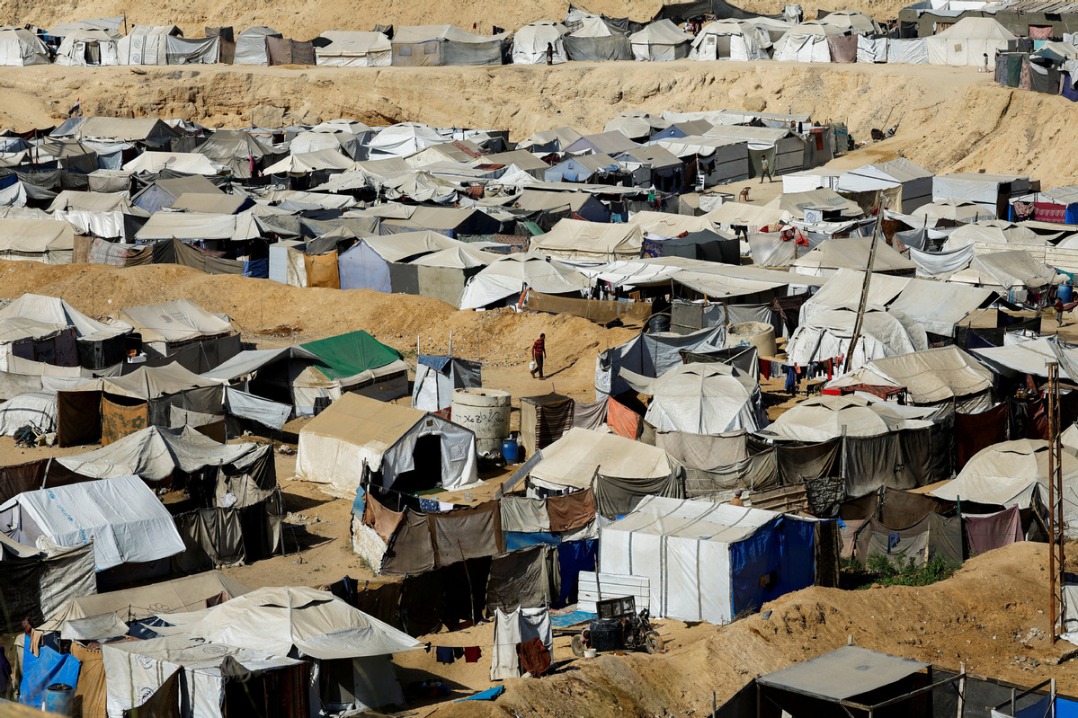
Hamas, Fatah hold talks on post-war arrangements in Gaza
In a significant development, delegations from Hamas and Fatah convened in Cairo to deliberate on post-war arrangements for the Gaza Strip. The meeting, reported by Egyptian TV channel Al-Qahera News, marks a pivotal step towards Palestinian unity and reconstruction efforts. The Hamas delegation, led by senior leader and chief negotiator Khalil al-Hayya, met with Fatah’s representatives, including Palestinian Vice President Hussein al-Sheikh and intelligence chief Majed Faraj. The discussions also encompassed the second phase of former US President Donald Trump’s peace plan for Gaza, with Egypt preparing to host a reconstruction conference in November. Concurrently, Egypt’s intelligence chief Hassan Mahmoud Rashad engaged with Fahd Suleiman, Secretary-General of the Democratic Front for the Liberation of Palestine, to foster national consensus on Trump’s plan. Rashad also reiterated opposition to the Israeli Knesset’s recent bill on annexing the occupied West Bank. The talks follow a ceasefire brokered by the US, Egypt, Qatar, and Turkiye, which took effect on October 10, 2025, after two years of conflict. Despite the truce, Gaza’s health authorities reported ongoing casualties, with 89 deaths and 317 injuries since October 11, and a staggering toll of 68,280 deaths and 170,375 injuries since October 7, 2023.
-
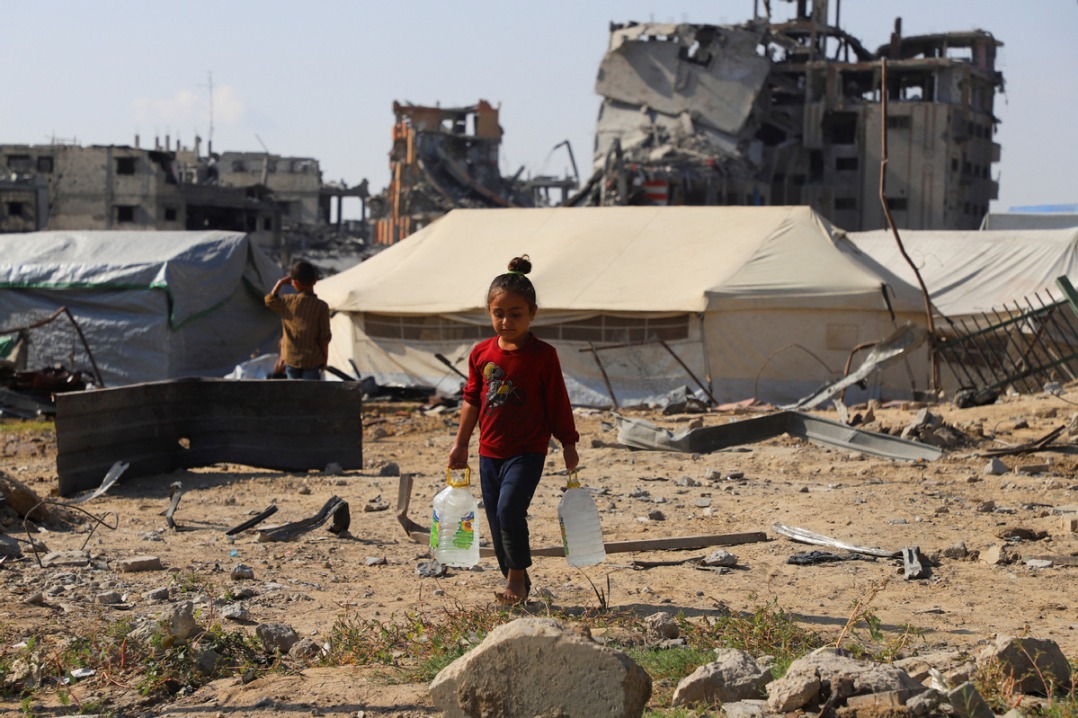
UN aid team finds poor hygiene, widespread skin diseases among displaced people in Gaza
A recent assessment by a United Nations aid team in Gaza City has unveiled alarming hygiene and health conditions among displaced populations. The UN Office for the Coordination of Humanitarian Affairs (OCHA) reported on Thursday that severe challenges, including a lack of clean water, widespread skin diseases, and damaged sanitation systems, are prevalent in the region. The team conducted evaluations at two collective centers in Gaza City’s Az Zaitoun neighborhood, which currently shelters over 200 families. Residents at these sites face dire circumstances, with reports of individuals walking up to two kilometers to access water due to a shortage of containers. The urgent need for repairs to latrines and sewage networks was emphasized to prevent further contamination. Displaced families also expressed immediate needs for food, clean water, hygiene items, and materials to repair water and sanitation infrastructure. Additionally, cash assistance is required for winter clothing, shoes, tarpaulins, and kitchen sets. The World Health Organization (WHO) facilitated the medical evacuation of 41 critical patients and 145 companions from Gaza, marking the first such operation since the October 10 ceasefire. However, approximately 15,000 patients remain on a waiting list for external medical care. Humanitarian partners have provided protection support to around 21,000 people in displaced and returnee communities, including psychosocial first aid for 3,000 children and caregivers. Hygiene kits were distributed to over 30 temporary learning spaces, benefiting 6,800 school-age children. The World Food Programme has also begun distributing high-energy biscuits and fortified date bars to children in 18 temporary learning spaces. On Tuesday, 147 UN and partner trucks delivered essential supplies, with two-thirds of the cargo comprising food aid. Other items included diapers, hygiene kits, and tarps for emergency shelter assistance. The UN Office for Project Services collected and distributed significant quantities of diesel and gasoline to support critical humanitarian operations.
-

China’s largest all-electric bulk carrier launched in Central China
In a groundbreaking development for the maritime industry, China has launched its largest all-electric bulk carrier, named Gezhouba, in Yichang, Hubei province. This event, which took place on October 23, 2025, signifies a major leap forward in the nation’s pursuit of green and intelligent shipping solutions. The Gezhouba, measuring nearly 130 meters in length and capable of carrying over 13,000 tonnes, is powered by 12 lithium battery units with a combined energy capacity of 24,000 kWh. Notably, the vessel features rapid battery-swapping technology and can travel up to 500 kilometers on a single charge. This innovation underscores China’s commitment to reducing carbon emissions and advancing sustainable transportation technologies. The launch of the Gezhouba is expected to set a new benchmark for eco-friendly shipping globally, as industries worldwide seek to adopt cleaner energy alternatives.
-
Trade cooperation continues to anchor Sino-Japanese ties
Despite the global rise in protectionism, supply chain realignments, and Japan’s political shift to the right, economic collaboration between China and Japan continues to be a cornerstone of their bilateral relationship. This was highlighted during the Beijing launch of the 2025 Blue Book of Japanese Economy, a report co-authored by the Institute of Japanese Studies at the Chinese Academy of Social Sciences and the Chinese Association for Japanese Economic Studies. The report emphasizes the enduring significance of the Chinese market for Japanese businesses, even as Japan’s foreign direct investment in China has seen a decline due to global supply chain shifts, the yen’s depreciation, and rising labor costs. According to Japan’s Finance Ministry, China ranked ninth among destinations for Japanese investment last year, with direct investment totaling 493.1 billion yen ($3.23 billion). Yang Bojiang, director of the Institute of Japanese Studies, noted that Japan’s net investment in China last year was nearly 60 percent below its 2017 peak, largely due to the relocation of manufacturing lines for U.S.-bound exports out of China to avoid tariff barriers and geopolitical risks. However, experts caution against interpreting this decline as the full picture. A survey by the Japanese Chamber of Commerce and Industry in China revealed that 56 percent of respondent companies plan to ‘increase or maintain’ investment in China this year, with 54 percent considering the Chinese market as ‘the most important’ or ‘one of the top three important markets.’ Chang Sichun, an associate researcher at the Institute of Japanese Studies, pointed out that China remains Japan’s fourth-largest destination for direct investment, following the U.S., the U.K., and the Netherlands. Japanese companies in China have consistently maintained high returns on investment, particularly in the services sector, where recent performance has been strong. The Japanese Chamber of Commerce and Industry in China reported that the return on direct investment for Japanese companies in China rose from 12.1 percent in 2015 to 18.4 percent in 2022, outperforming returns in the U.S. (8.8 percent) and the U.K. (14.7 percent). This strong performance has led to a rebound, with China’s Commerce Ministry reporting a 58.9 percent year-on-year increase in actual investment from Japan in the first eight months of this year. Yang also highlighted China’s modernization achievements as a key attraction for Japanese businesses, noting growing appreciation in Japan for China’s path to modernization, particularly in areas like poverty reduction and the digital economy. However, experts warned of potential uncertainties arising from Japan’s increasingly rightward political shift, which could suppress Japanese investment in China, particularly in high-tech sectors. Despite these challenges, the significant presence of Japanese companies in China and their substantial accumulated investment form an important channel for stabilizing bilateral relations. Strengthening bilateral exchanges and ensuring the healthy development of China-Japan relations not only serves the fundamental interests of both countries but also contributes to regional prosperity and global economic recovery.
-

Nation to update cyber law to strengthen AI oversight
China is set to amend its Cybersecurity Law to bolster oversight of artificial intelligence (AI) security risks, ensuring the technology evolves in a safe, fair, and beneficial manner. Wang Xiang, spokesperson for the Legislative Affairs Commission of the National People’s Congress (NPC) Standing Committee, announced the move on Thursday, emphasizing the need to balance AI development with robust cybersecurity measures. The Cybersecurity Law, enacted in June 2017, has been instrumental in advancing China’s cyber capabilities and fostering the integration of digital and real economies. Wang highlighted AI’s transformative role in driving technological innovation and industrial progress, while also acknowledging the challenges it poses, such as increased cybercrime. To address these issues, the draft amendment includes provisions to support foundational AI research, improve ethical standards, and enhance risk monitoring and regulation. Additionally, the amendment aligns with existing laws like the Civil Code and the Personal Information Protection Law. The NPC Standing Committee will review the draft during its upcoming session, alongside revisions to the Organic Laws of Villagers’ and Urban Residents’ Committees, which aim to strengthen community governance and care for vulnerable groups. The session will also discuss amendments to the Environmental Protection Tax Law and a draft law on procuratorial public-interest litigation.