标签: Asia

亚洲

  • ‘No work, no money’: Somali migrants in Yemen long to return home

    ‘No work, no money’: Somali migrants in Yemen long to return home

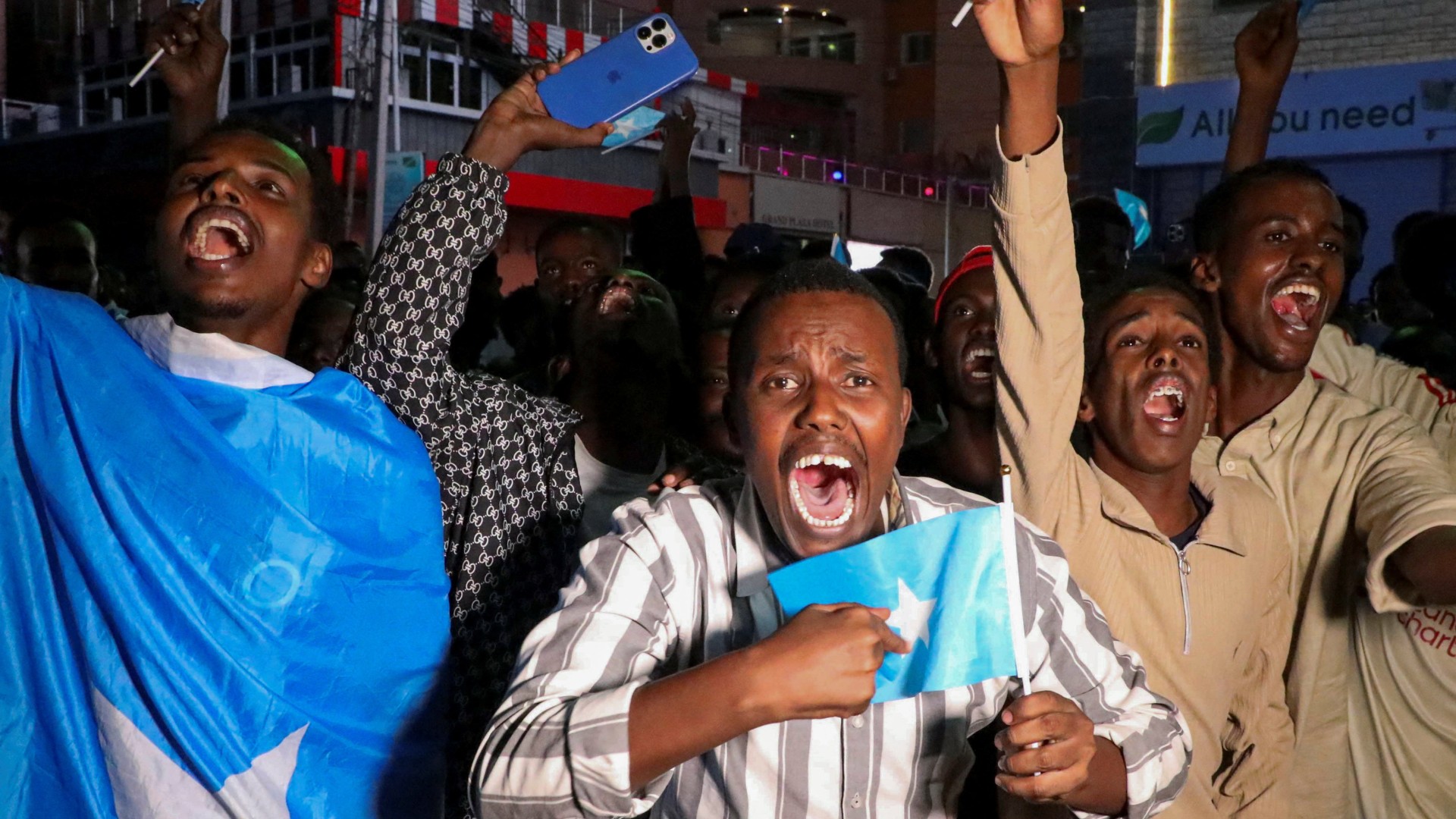
    In the sprawling settlement known as ‘Little Mogadishu’ within Yemen’s port city of Aden, thousands of Somali migrants endure crushing poverty amidst makeshift shelters surrounded by garbage piles and unpaved roads. These displaced individuals, who initially envisioned Yemen as a transit point toward prosperous Gulf states, now find themselves trapped in a worsening humanitarian catastrophe.

    Yemen, recognized as the Arabian Peninsula’s most impoverished nation, has become an unintended destination rather than a thoroughfare for African migrants. Despite the country’s own devastating civil war that has claimed hundreds of thousands of lives and decimated infrastructure, approximately 17,000 Africans arrived in Yemen in October 2025 alone—representing a startling 99 percent increase from previous months according to United Nations data.

    The reality for these migrants stands in stark contrast to their aspirations. Somali refugees, who constitute 63 percent of Yemen’s 61,000 registered refugees and asylum seekers, face extreme hardship with limited access to employment, education, or basic necessities. Men line roadways daily seeking temporary work, while many resort to scavenging through refuse heaps for edible items to sustain their families.

    Abdullah Omar, a 29-year-old Somali father of four, exemplifies this struggle. Having invested $500 with human traffickers to escape Somalia’s instability, he now survives on occasional car washing jobs that yield mere dollars per day. ‘Some days we eat, some days it’s up to God. That’s life,’ Omar told journalists, explaining his decision to enroll in a UN repatriation program after finding ‘no work, no money, and no schooling for the children.’

    The UN Refugee Agency reports that 56 percent of returning Somalis cite ‘lack of income opportunities’ in Yemen as their primary reason for repatriation. A voluntary return program provides transportation and transitional financial assistance, having facilitated the return of over 500 Somalis in 2025 with additional flights planned.

    Ahmed Abu Bakr Marzouk, a 58-year-old contractor who lived in Yemen for 25 years, represents another dimension of this crisis. Once prosperous enough to build homes in Mogadishu, he now sees returning to Somalia’s relative stability as his only option. ‘If peace returns, I’ll come back,’ Marzouk stated. ‘If not, I won’t.’

    This migration paradox continues despite Yemen’s overwhelming challenges: 19.5 million people requiring humanitarian assistance, mass unemployment, currency depreciation, halted oil exports, and insufficient international funding create an environment where neither locals nor migrants can thrive.

  • Saadiyat Beach Golf Club to host 2025 IGS Challenge with new format and bigger field

    Saadiyat Beach Golf Club to host 2025 IGS Challenge with new format and bigger field

    The prestigious Indian Golfers Society (IGS) has announced groundbreaking enhancements to its flagship tournament, the IGS Challenge, scheduled for December 11, 2025, at Abu Dhabi’s acclaimed Saadiyat Beach Golf Club. This premier social golfing event will feature an expanded field of over 100 participants competing under a revamped competitive structure.

    The 2025 edition introduces a sophisticated Individual Stableford format with three distinct divisions designed to maximize competitive fairness. Elite Division players will contend for gross prizes from the championship blue tees, while Division A (handicap index 0-11.5) and Division B (handicap index 11.6+) will compete from composite tees with separate net prize categories. The tournament will additionally feature nine on-course specialty prizes, ensuring golfers across all skill levels have opportunity for recognition.

    Arjun Khanna, Member of the IGS Management Committee, noted the society’s remarkable growth trajectory: ‘The response to this year’s Challenge reflects the expanding appeal of our community. Saadiyat’s spectacular oceanfront course provides the perfect backdrop for competitive excellence and camaraderie.’

    The event boasts support from premium sponsors including BMW, Glenlivet, Nexus Insurance Brokers, and The Brain & Performance Centre, whose involvement elevates the tournament experience. Established in 1996 as the UAE and Middle East’s exclusive community of its kind, IGS unites over 140 golf professionals, business leaders, and high-net-worth individuals through premium golf experiences.

    Participants will face the dual challenge of Gary Player’s championship-designed course and Saadiyat’s characteristic coastal winds, creating what promises to be both a thrilling and demanding competition. The tournament will commence with a 12:30 pm shotgun start, followed by traditional hospitality events and evening celebrations that have become hallmarks of the IGS experience.

  • Chinese universities set to launch embodied intelligence majors to fill talent gap

    Chinese universities set to launch embodied intelligence majors to fill talent gap

    In a strategic response to mounting industry demands, China’s leading academic institutions are pioneering undergraduate programs in embodied intelligence—a cutting-edge field centered on intelligent systems with physical presence, exemplified by humanoid robotics.

    Prestigious universities including Shanghai Jiao Tong University, Beihang University, and Zhejiang University are establishing dedicated curricula to cultivate expertise in this emerging discipline. The Shanghai Jiao Tong University initiative, spearheaded by Professor Lu Cewu—co-founder of embodied intelligence firm Noematrix—exemplifies the industry-academia integration central to these programs. The university aims to create collaborative platforms with leading companies and develop industry-linked practicum centers.

    Employment prospects form a cornerstone of these programs. Beijing Institute of Technology’s embodied intelligence major plans to enroll 120 undergraduates, with approximately 58% expected to pursue advanced education and 42% transitioning directly to employment sectors including state-owned aerospace corporations, automotive manufacturers, and tech giants Huawei and Tencent.

    This educational shift responds to substantial market growth projections. According to the Development Research Center of the State Council, China’s embodied intelligence industry is forecast to reach 400 billion yuan ($56.5 billion) by 2030, exceeding 1 trillion yuan by 2035. Current industry compensation reflects this demand, with embodied intelligence professionals commanding average annual salaries of 333,400 yuan—surpassing other AI sectors by approximately 14%.

    The talent deficit is particularly acute, with Beijing Institute of Technology estimating a industry shortfall of approximately one million qualified professionals. Current educational offerings remain fragmented across traditional disciplines, with insufficient practical engineering training and outdated laboratory facilities.

    Government prioritization has accelerated program development, with embodied intelligence designated a key future industry in China’s recent policy directives. The field joins quantum technology, biomanufacturing, and 6G communications as identified economic growth engines for the coming five-year period.

    Global investment trends underscore the field’s prominence: humanoid robotics attracted over 32.8 billion yuan in financing through September 2025, with Chinese markets accounting for more than 80% of worldwide funding activities.

  • Australia opener Khawaja ruled out of second Ashes Test

    Australia opener Khawaja ruled out of second Ashes Test

    In a significant development for the ongoing Ashes series, Australian cricket officials confirmed on Tuesday that veteran opener Usman Khawaja has been medically ruled out of the second Test match against England. The 38-year-old left-handed batsman continues to struggle with persistent back spasms that initially surfaced during the series opener in Perth.

    Khawaja’s condition showed no signs of improvement during Monday’s net session at Brisbane’s Gabba ground, where the crucial second Test is scheduled to commence this Thursday. The team’s medical staff determined that the player’s back issues would prevent him from participating effectively in the upcoming match.

    Despite this setback, Cricket Australia has opted against adding a replacement batsman to the squad. This decision strongly indicates that Travis Head will retain his position as opener following his spectacular performance in Perth, where his brilliant 123-run innings propelled Australia to an eight-wicket victory in the first Test.

    The selection committee has considered several alternatives, including potential openings for Marnus Labuschagne or Steve Smith, both of whom have previous experience as openers since David Warner’s retirement nearly two years ago. However, Labuschagne explicitly stated on Monday that neither he nor Smith would be assuming the opening role in the immediate future.

    Notably, Khawaja will remain with the Australian squad throughout his recovery period, maintaining hope that he can extend his Test career beyond his 39th birthday next month. His continued presence with the team provides an opportunity for rehabilitation while staying integrated with the squad’s preparations for subsequent matches in the prestigious Ashes series.

  • Sister of former Pakistani leader Imran Khan says he is in good health, quelling rumors

    Sister of former Pakistani leader Imran Khan says he is in good health, quelling rumors

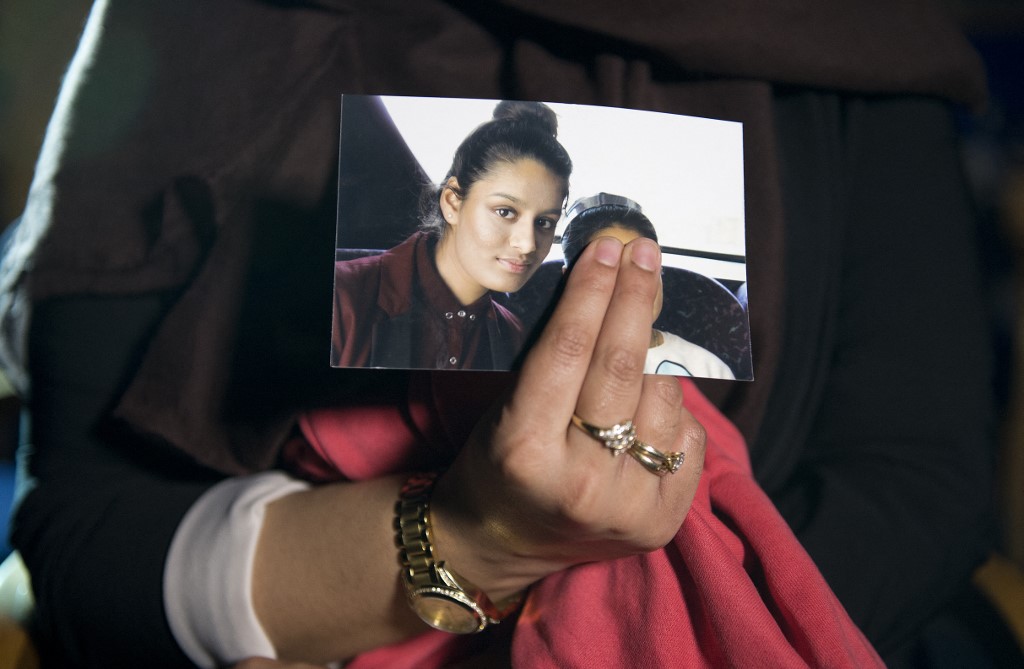
    ISLAMABAD — In a highly anticipated family visit to Rawalpindi’s Adiala Prison, Uzma Khan, sister of incarcerated former Pakistani Prime Minister Imran Khan, reported Tuesday that the opposition leader remains in good physical health but is experiencing extreme distress due to prolonged solitary detention conditions.

    The visitation marked the first familial access granted to Khan since November 4, ending weeks of speculation about the politician’s wellbeing that had prompted concerns among his supporters nationwide. During her brief meeting, Uzma Khan characterized her brother’s condition as “perfectly in good health” but noted he expressed profound anger regarding his isolation, which he described as “mental torture worse than physical abuse.”

    Khan’s political party, Pakistan Tehreek-e-Insaf (PTI), had mobilized hundreds of supporters outside the prison facility throughout the day, awaiting confirmation about their leader’s status. Security forces responded with significant deployments around the complex and implemented rally bans in both Rawalpindi and the capital Islamabad to prevent large gatherings.

    The 73-year-old former cricket icon has been serving multiple concurrent prison sentences since 2023 following convictions on corruption and other charges that his supporters allege are politically motivated attempts to dismantle his political career. His wife, Bushra Bibi, remains incarcerated in the same facility on graft convictions, though prison authorities prohibit direct contact between the couple except during court appearances.

    Khan’s spokesperson, Zulfiquar Bukhari, condemned the restrictive visitation policies as inadequate, demanding regular access for both family members and legal representatives while characterizing the isolation measures as psychological torture.

    The political context remains intensely charged, with Khan’s party maintaining that their electoral mandate was illegitimately overturned in the 2024 parliamentary elections through systematic rigging favoring current Prime Minister Shehbaz Sharif—allegations the sitting government consistently denies. Khan was originally removed from power through a parliamentary no-confidence vote in April 2022 and now leads the opposition movement from his prison cell.

  • Look: Hong Kong fire survivor recalls story of saving beloved pet from blaze

    Look: Hong Kong fire survivor recalls story of saving beloved pet from blaze

    In the aftermath of Hong Kong’s most devastating residential fire in decades, a story of canine rescue has emerged as a poignant symbol of hope. Jacky Lee, a 43-year-old airline engineer, experienced an emotional rollercoaster when the Wang Fuk Court complex—her residential estate—became engulfed in flames that would claim at least 151 lives and rage for over 40 hours.

    Upon hearing news of the inferno, Lee immediately rushed back to save Jason, her 15-year-old grey poodle left inside their 27th-floor apartment. She joined anxious residents at a temporary shelter where a district councillor delivered the grim news that pet rescue operations had been suspended due to intensifying flames.

    Just as hope seemed lost, Lee received an unexpected phone call from a firefighter confirming they had located her dog in unit 2703 of the Wang Kin House tower. The rescue team had been guided by handwritten notes Lee had posted throughout her apartment identifying her pet.

    The following day, Jason was delivered safely into Lee’s arms by volunteers, trembling but physically unharmed. ‘He was still shaking when I saw him from afar, then I called his name, he saw me and stopped. Then he smiled,’ Lee recounted to AFP, describing her overwhelming emotional response to the reunion.

    The successful rescue operation highlighted broader concerns about pet welfare during emergencies. Hong Kong’s social media platforms were flooded with posts from distressed pet owners throughout the 40-hour blaze, while animal welfare organizations worked tirelessly to match rescued animals with their families.

    The Society for the Prevention of Cruelty to Animals (SPCA) reported that 209 animals were extracted from the burned complex, with 63 fatalities among various species including dogs, cats, fish, and hamsters.

    District Councillor Lau Chun-hoi emphasized animals’ ‘very strong will to live’ and proposed measures to support remaining strays within the damaged structures. The tragedy has sparked calls for improved emergency protocols for pets, with Lee advocating for pet-friendly temporary housing arrangements for displaced residents.

    Despite psychological trauma that has left the poodle timid and clingy, veterinary examination confirmed Jason suffered only mild dehydration and has since returned to his normal disposition—a small victory amid overwhelming tragedy.

  • Indonesia to repatriate 2 convicted Dutch drug traffickers, including one on death row

    Indonesia to repatriate 2 convicted Dutch drug traffickers, including one on death row

    In a significant diplomatic development, Indonesia and the Netherlands have formalized an agreement to repatriate two Dutch citizens convicted of serious drug offenses in Indonesia. The arrangement, signed simultaneously in Jakarta and Amsterdam on Tuesday, involves 74-year-old Siegfried Mets, who faces capital punishment, and 65-year-old Ali Tokman, currently serving a life imprisonment sentence.

    The transfer initiative emerged following a formal appeal from Dutch King Willem-Alexander and the Netherlands’ foreign ministry, citing the detainees’ deteriorating health conditions as primary humanitarian grounds. Indonesian Senior Law Minister Yusril Ihza Mahendra, who endorsed the agreement during a ceremonial signing in Jakarta, confirmed that President Prabowo Subianto had authorized the arrangement with an anticipated transfer date of December 8.

    Siegfried Mets received the death penalty for his involvement in smuggling 600,000 ecstasy tablets from the Netherlands to Indonesia in February 2008, having spent 17 years in Jakarta’s detention facilities. Ali Tokman was apprehended at Surabaya Airport in December 2014 after customs officials discovered approximately 6 kilograms of MDMA in his possession, serving 11 years of his life term.

    Dutch Foreign Minister David van Weel concurrently signed the agreement in Amsterdam, with diplomatic delegations from both nations witnessing the proceedings. Marc Gerritsen, Netherlands Ambassador to Indonesia, expressed profound gratitude for Indonesia’s humanitarian consideration, noting that the transfer would enable both detainees to be nearer to their families while demonstrating strengthened bilateral cooperation in judicial matters.

    This development aligns with President Prabowo’s administration pattern of facilitating foreign prisoner repatriations through bilateral agreements. Previous transfers include a Filipina facing drug-related execution, five Australians convicted of heroin trafficking, and two British nationals sentenced for drug smuggling offenses.

    Despite maintaining some of the world’s strictest narcotics regulations, Indonesia remains a significant trafficking hub according to the United Nations Office on Drugs and Crime. Recent data from Indonesia’s Ministry of Immigration and Corrections indicates approximately 530 individuals await execution on death row, primarily for drug-related crimes, including nearly 100 foreign nationals. The country last performed executions in July 2016, involving one Indonesian and three foreign citizens.

  • Southeast Asia floods kill 1,200, leaving hundreds of thousands stranded

    Southeast Asia floods kill 1,200, leaving hundreds of thousands stranded

    Southeast Asia confronts one of its most devastating natural disasters in recent history as catastrophic flooding claims over 1,200 lives across four nations. The region faces immense humanitarian challenges with hundreds of thousands displaced and critical supply chains disrupted.

    Unprecedented monsoon deluges, intensified by dual tropical cyclones, unleashed destruction across Sri Lanka, Indonesia’s Sumatra island, southern Thailand, and northern Malaysia last week. Although floodwaters have begun receding, the aftermath reveals widespread devastation that has overwhelmed local response capabilities.

    Indonesia’s Aceh province emerges as among the hardest-hit areas, where survivors describe tsunami-like waves that swept through communities without warning. “The water was unstoppable, resembling a tsunami wave,” recounted Zamzami, a 33-year-old East Aceh resident. Critical infrastructure damage has severed road access, creating severe supply shortages and dramatic price inflation for essential goods, with chili peppers reaching approximately $18 per kilogram.

    The Indonesian government has initiated large-scale relief operations, distributing 34,000 tonnes of rice and 6.8 million liters of cooking oil to Aceh, North Sumatra, and West Sumatra provinces. Agriculture Minister Andi Amran Sulaiman emphasized the urgency: “There can be no delays” in assistance delivery.

    Humanitarian organizations warn of impending food crises if supply routes remain compromised. Islamic Relief cautioned that “communities across Aceh face severe risk of food shortages and hunger” without restored access within seven days. The organization deployed 12 tonnes of supplies via Indonesian naval vessels arriving Tuesday.

    Meanwhile, Sri Lanka confronts parallel devastation with at least 390 confirmed fatalities and 352 individuals missing. President Anura Kumara Dissanayake has declared a national state of emergency, characterizing the event as “the most challenging natural disaster in our history” and appealing for international support. Military forces from India and Pakistan have joined evacuation and supply delivery operations.

    Meteorological experts note that climate change contributes to more intense precipitation events, as warmer atmospheric conditions retain increased moisture while elevated ocean temperatures amplify storm intensity. This scientific context underscores the growing frequency and severity of such extreme weather phenomena across vulnerable regions.

  • Paleontologists uncover ancient elephant relative in Ningxia

    Paleontologists uncover ancient elephant relative in Ningxia

    In a significant paleontological discovery, researchers have unearthed a remarkably well-preserved fossil of a tetralophodon—an ancient progenitor of modern elephants—from a retired mining site in Wuzhong, Ningxia Hui Autonomous Region. The specimen, estimated to be approximately 9 to 11 million years old, represents the first completely intact large-mammal fossil recovered in the region over the past decade.

    The excavation team, comprising leading paleontologists, conducted meticulous fieldwork at the location, revealing the exceptional preservation of the skeletal remains. Tetralophodons, characterized by their four-ridged molar teeth, inhabited various ecosystems during the Miocene epoch and are considered crucial evolutionary links in understanding proboscidean development.

    This discovery provides unprecedented insight into the migration patterns and anatomical evolution of prehistoric elephant species across Asia. The finding’s significance extends beyond mere anatomical preservation, offering researchers valuable data about regional climate conditions and ecological systems that existed millions of years ago in what is now northwest China.

    The Ningxia discovery marks a substantial contribution to vertebrate paleontology, potentially reshaping understanding of proboscidean dispersal routes across the Asian continent. Local authorities have implemented enhanced protective measures at the excavation site while scientists continue detailed analysis of the specimen, which may reveal new information about the species’ adaptation mechanisms and eventual extinction.

  • Apple to not comply with India order to preload govt ‘cyber safety’ app on phones

    Apple to not comply with India order to preload govt ‘cyber safety’ app on phones

    In a significant stand against digital surveillance concerns, Apple Inc. has declared its intention to reject an Indian government directive requiring smartphone manufacturers to preinstall the state-developed ‘Sanchar Saathi’ application on all devices. The controversial mandate, issued confidentially to industry giants including Samsung and Xiaomi, provides a 90-day compliance window for embedding the cyber safety tool designed to track stolen phones and prevent misuse.

    The Indian telecommunications ministry has characterized the measure as an essential security protocol to combat rising cyber threats, particularly addressing the proliferation of duplicated IMEI numbers that facilitate scams and network exploitation. However, privacy advocates and political opponents of Prime Minister Narendra Modi’s administration have condemned the move as governmental overreach that could potentially grant authorities unprecedented access to India’s 730 million smartphone users.

    According to three industry sources familiar with Apple’s position, the technology giant plans to formally communicate its objections to New Delhi, emphasizing that such mandates contradict its global privacy standards and threaten the security integrity of its iOS ecosystem. Two sources confirmed that Apple will neither comply with the order nor pursue legal action, but will instead present its security concerns through diplomatic channels.

    The development occurs amid Apple’s ongoing legal confrontation with Indian antitrust regulators regarding penalty provisions that could potentially expose the company to $38 billion in fines. While Samsung and other Android-based manufacturers reportedly continue evaluating the mandate, Apple maintains its distinctive position due to its tightly controlled App Store and proprietary software architecture—key components of its $100-billion annual services business.

    India’s primary opposition party, the Congress Party, has demanded immediate revocation of the mandate, with senior leader KC Venugopal declaring on social media platform X that ‘Big Brother cannot watch us.’ The government maintains that the initiative addresses legitimate security concerns in a market with substantial second-hand device circulation, where stolen or blacklisted phones frequently reappear in commerce.