标签: Asia

亚洲

  • US: Tom Barrack says ‘benevolent monarchies’ work best in Middle East

    US: Tom Barrack says ‘benevolent monarchies’ work best in Middle East

    In a striking departure from conventional diplomatic rhetoric, US Special Envoy for Syria Tom Barrack has articulated a controversial vision for Middle Eastern governance during the Doha Forum. The billionaire diplomat asserted that Western-imposed democratic models have consistently failed in the region, while suggesting that benevolent monarchies have demonstrated greater effectiveness.

    Barrack, appointed by former President Donald Trump, delivered his assessment during a panel discussion on Syria’s future. He characterized the post-Assad administration under President Ahmad al-Sharaa as achieving ‘epic’ and ‘heroic’ accomplishments since assuming power in December 2024. The envoy specifically criticized Western interventionist policies, stating that ‘almost every decision that the West has imposed on the region, rather than allowing it to evolve on its own, has been a mistake.’

    Drawing from recent historical examples, Barrack noted that Western efforts in Libya, Iraq, and other nations have resulted in political paralysis rather than sustainable governance. He advocated for international support that empowers Syrians to establish their own sovereign government without external pressure or unrealistic timelines.

    Regarding ongoing Syrian-Israeli border tensions, Barrack proposed resolving conflicts through incremental ‘baby steps’ rather than comprehensive imposed solutions. In a particularly provocative statement, he questioned Israel’s democratic credentials, suggesting that monarchical systems have proven more successful in the region despite democratic claims.

    The envoy’s comments align with his unconventional diplomatic approach, having previously described himself as an ‘events-driven mercenary’ during an August interview. Barrack has consistently challenged established geopolitical narratives, including describing regional peace as ‘an illusion’ and questioning the relevance of Sykes-Picot established borders in contemporary Middle Eastern politics.

  • Hong Kong’s Legislative Council  election held successfully

    Hong Kong’s Legislative Council election held successfully

    Hong Kong has successfully concluded its eighth-term Legislative Council election, marking a significant democratic milestone for the Special Administrative Region. The election, held on December 7, 2025, demonstrated robust public participation with voter turnout across all constituencies substantially exceeding previous records.

    The Hong Kong and Macao Affairs Office of the State Council issued an official statement Monday congratulating the successful electoral process, noting that the high participation rates reflected broad societal recognition and strong support for the new political framework. The statement emphasized that the election results genuinely represent the will of Hong Kong citizens while advancing democratic development under the ‘one country, two systems’ principle.

    Despite challenges including a recent devastating fire in Tai Po during the campaign period, the election proceeded smoothly through effective coordination between government agencies and emergency services. Chief Executive John Lee Ka-chiu and the SAR government implemented numerous innovative measures to ensure electoral arrangements complied strictly with legal requirements while simultaneously managing disaster relief operations.

    The newly structured Legislative Council comprises 90 members representing three electoral pathways: 40 selected by the Election Committee, 30 from functional constituencies, and 20 through geographical constituency direct elections. All elected members have been characterized as patrions committed to Hong Kong’s prosperity, with demonstrated capabilities, sense of responsibility, and dedication to public service.

    The central government expressed confidence that incoming legislators will uphold national sovereignty and security interests while supporting the executive-led governance structure. Expectations include effective management of executive-legislative relations, responsiveness to public needs, and consensus-building to drive post-disaster recovery, governance reform, and long-term stability. The eighth-term Legislative Council will commence its four-year mandate on January 1, 2026.

  • Court outlines boundaries in property service disputes

    Court outlines boundaries in property service disputes

    China’s Supreme People’s Court has issued definitive judicial guidance on property management conflicts through the publication of five landmark cases, establishing clear legal boundaries between homeowners and service providers. The move represents a significant judicial intervention aimed at elevating service quality standards and addressing both persistent and emerging challenges within the rapidly evolving property sector.

    The court emphasized the critical role of property management in fulfilling citizens’ aspirations for improved living standards, particularly as China’s urban development strategy shifts from rapid expansion to the enhancement of existing residential properties. This transition has positioned community living as a central component of modern urban existence, consequently driving increased public demand for superior living environments, housing quality, and professional property services.

    In response to the frequent, widespread, and recurrent nature of disputes between residents and property companies, the Supreme Court has directed nationwide judicial bodies to proactively address public concerns and utilize legal mechanisms to facilitate conflict resolution. One illustrative case involved a homeowner identified only by the surname Zhang, who found himself denied access to his building’s elevator and entry systems due to outstanding property fees. Although Zhang eventually reached a settlement with the management company, he proceeded with legal action to challenge the punitive measures.

    Referencing China’s Civil Code, a local court determined that property service providers are expressly prohibited from suspending essential services including electricity, water, heating, or gas to compel fee payments. The judiciary acknowledged homeowners’ contractual obligation to pay agreed-upon fees while recognizing that payment delays and refusals have become commonplace, sometimes prompting companies to employ inappropriate pressure tactics.

    The court explicitly stated that restricting access cards or limiting elevator usage for fee collection constitutes improper infringement of homeowners’ property rights. Such approaches lack legal foundation and exceed reasonable boundaries, frequently exacerbating rather than resolving conflicts. Instead, the judiciary emphasized that service providers should employ reasonable communication methods to encourage payment and pursue their legitimate rights through formal channels including mediation, litigation, or arbitration—all without disrupting residents’ daily lives.

  • Tsunami warning after earthquake strikes off Japan

    Tsunami warning after earthquake strikes off Japan

    A powerful 7.6 magnitude earthquake struck northeastern Japan on Monday evening, triggering immediate tsunami warnings and mass evacuation orders for approximately 90,000 residents along the Pacific coastline. The seismic event occurred at 23:15 local time (14:15 GMT) at a depth of 50 kilometers, approximately 80 kilometers off the coast of Aomori region according to the Japan Meteorological Agency.

    Japanese television broadcasts urgently displayed emergency messages reading ‘Tsunami! Run!’ and ‘Tsunami warning issued for central Hokkaido’s Pacific Coast’ as authorities scrambled to alert coastal communities. Initial wave observations recorded tsunami surges reaching 40 centimeters in some areas, though officials warned of potentially larger waves to follow.

    The quake resulted in multiple injuries according to local media reports, with Japanese public broadcaster NHK quoting a hotel employee in Hachinohe confirming several casualties. Transportation networks were significantly disrupted with train services suspended throughout the affected region as a precautionary measure.

    Critical infrastructure monitoring confirmed no abnormalities at the Higashidori and Onagawa nuclear power plants, as reported by Tohoku Electric Power Company. This reassurance came as particular relief given Japan’s heightened sensitivity to seismic events affecting nuclear facilities since the 2011 Fukushima disaster.

    The earthquake serves as another stark reminder of Japan’s vulnerability to seismic activity, occurring in a nation that experiences tremors approximately every five minutes due to its position along the Pacific Ring of Fire. Emergency response systems were fully activated with evacuation centers established for displaced residents.

  • IndiGo shares plunge further after regulatory action threat amid flight crisis

    IndiGo shares plunge further after regulatory action threat amid flight crisis

    India’s aviation sector is experiencing significant turbulence as IndiGo, the nation’s dominant carrier, faces mounting operational challenges that have triggered substantial financial losses and regulatory intervention. The airline’s shares plummeted an additional 8% on Monday, extending a devastating decline that has erased approximately $4 billion from its market valuation, bringing total losses to 16% over the past week.

    The crisis stems from inadequate preparation for new aviation regulations implemented on November 1st, which mandated stricter night flying protocols and enhanced weekly rest requirements for pilots. These operational shortcomings became critically apparent during December’s peak travel season, when holiday and wedding travel typically surge across India.

    The cascading effects have been severe: thousands of flight cancellations have stranded passengers nationwide, prompting government authorities to intervene and prevent predatory fare inflation. Aviation regulators have issued a 24-hour ultimatum demanding justification for why regulatory action shouldn’t be imposed against the carrier.

    While IndiGo maintains 65% market dominance in India’s aviation landscape, competitors are capitalizing on the disruption. Shares of SpiceJet, one of India’s few publicly-traded airlines, surged 13.9% as investors anticipate market share redistribution. The airline has expressed confidence that normal operations will resume by Wednesday, but the damage to consumer trust and investor confidence remains substantial.

    This operational breakdown highlights systemic vulnerabilities within India’s aviation infrastructure and raises questions about capacity planning during peak travel periods. The situation continues to develop with ongoing monitoring by aviation authorities and financial markets.

  • Intl students showcase business acumen at Shanghai competition

    Intl students showcase business acumen at Shanghai competition

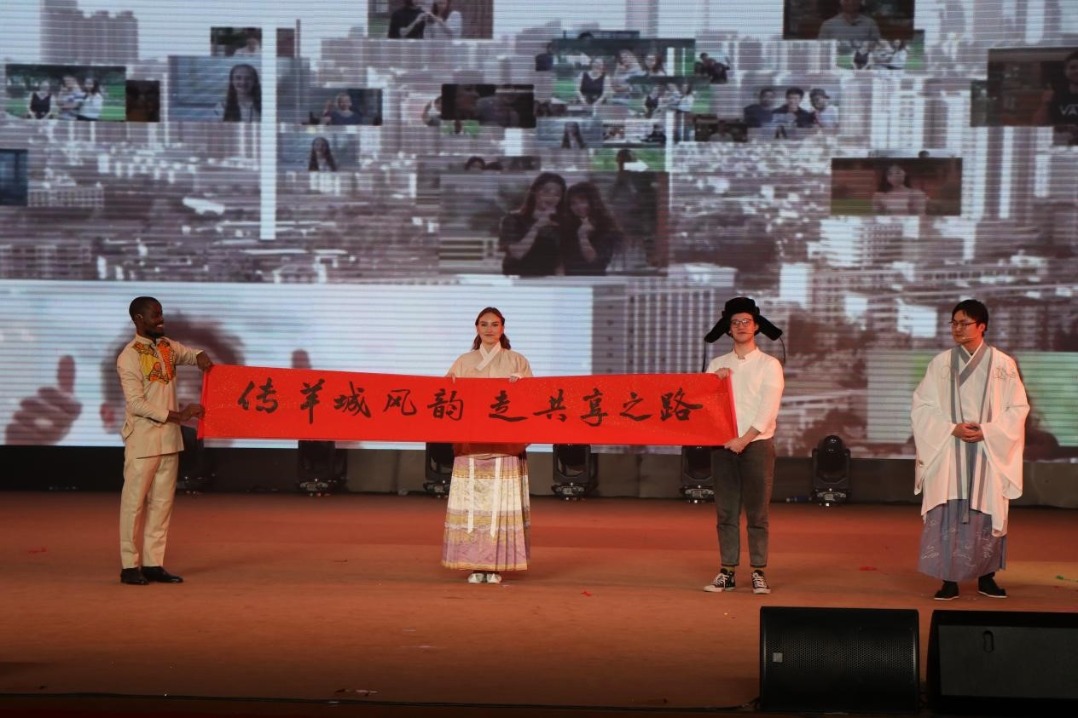
    Shanghai University of Finance and Economics recently hosted the third International Business Simulation Competition, an event that brought together 450 students from 74 countries and regions. The two-day competition, held from December 2-3, featured 140 teams representing 25 Chinese universities, with Shenzhen University’s ‘absolute four’ team claiming top honors among 33 finalists.

    This year’s competition introduced an innovative ‘AI coach’ system, reflecting the growing integration of artificial intelligence into business education. The event emphasized AI-driven decision-making while maintaining focus on sustainable development and corporate social responsibility principles.

    Vice-President Yao Lingzhen of SUFE highlighted the university’s commitment to digital transformation in business education. ‘As a pioneer in business education in China, SUFE maintains its dedication to cultivating financial talent while embracing technological innovation,’ Yao stated during the opening ceremony. ‘The incorporation of AI coaching represents our progressive approach to combining artificial intelligence with practical business education.’

    The competition’s interdisciplinary nature proved particularly valuable, bringing together students from diverse academic backgrounds. Chong Hong Xuan, a Malaysian international student at Fudan University, noted how varied expertise enhanced the experience: ‘Our team’s diverse backgrounds in economics, international affairs, and journalism sparked productive debates that significantly enriched our decision-making process.’

    The event served as both a competitive platform and a demonstration of how international education in China is evolving to incorporate cutting-edge technology while fostering global collaboration and cross-cultural exchange in business education.

  • Secretariat for Global South alliance launched in Shanghai

    Secretariat for Global South alliance launched in Shanghai

    Shanghai’s Fudan University has become the permanent home for a new international intellectual cooperative as the Secretariat of the Global South Think Tanks Alliance was formally inaugurated on Thursday. The establishment occurred during the third Global South Think Tanks Dialogue, marking a significant advancement in South-South cooperation frameworks.

    The alliance, initially proposed during the ‘BRICS Plus’ leaders’ dialogue in Kazan, Russia in October 2024, represents a strategic initiative to strengthen collaborative networks among developing nations. Its core mission centers on advocating for a more balanced multipolar world order and promoting inclusive global governance structures that better represent Global South interests.

    Operating under the auspices of Fudan University’s School of International Relations and Public Affairs, the Secretariat will function as the central coordinating body for member institutions worldwide. It will facilitate academic exchanges, joint research initiatives, and expert personnel deployments across the alliance network. The Secretariat will additionally serve as a knowledge repository and resource hub supporting collaborative projects among participating think tanks.

    A distinctive feature of the initiative involves leveraging Fudan University’s artificial intelligence capabilities to address development challenges specific to Global South nations. The Secretariat will pioneer innovative cooperation models through technological integration, positioning AI as a transformative tool for southern hemisphere development.

    Fudan University President Jin Li emphasized the institution’s longstanding commitment to Global South studies during the launch ceremony. ‘Our university has cultivated specialized expertise in Global South research and educated generations of students dedicated to southern hemisphere development,’ Jin stated. He further committed to deepening collaboration with alliance members to advance modernization efforts across developing nations and establish a more equitable international architecture.

  • Harbin kicks off annual Ice Harvest Festival on Songhua River

    Harbin kicks off annual Ice Harvest Festival on Songhua River

    Harbin launched its sixth annual Ice Harvest Festival this Sunday along the frozen expanse of the Songhua River, strategically timed to coincide with Daxue, the traditional Chinese solar term marking ‘Major Snow.’ The ceremony unfolded with deep cultural reverence as workers adorned in historical costumes performed the ritual extraction of the inaugural ice block from the river’s thick frozen surface.

    The opening ceremony featured a formal blessing reading that paid homage to ancient traditions before the skilled harvesters commenced their work. This ceremonial commencement signals the official start of Harbin’s winter tourism season, drawing both domestic and international visitors to witness this unique cultural spectacle.

    The Ice Harvest Festival serves multiple purposes: preserving northeastern China’s winter cultural heritage, boosting local tourism during the cold months, and providing raw materials for the city’s world-renowned ice sculpture exhibitions. The harvested ice blocks, known for their exceptional clarity and structural integrity from the Songhua River’s pristine waters, will be transformed into elaborate artistic installations throughout the city.

    This year’s festival continues Harbin’s legacy as China’s ‘Ice City,’ combining traditional practices with modern tourism development. The event showcases how ancient winter survival techniques have evolved into celebrated cultural practices that attract global attention and contribute significantly to the regional economy during the winter season.

  • ‘Record high’ number of Palestinians died in Israeli prison as a result of Ben Gvir’s policies

    ‘Record high’ number of Palestinians died in Israeli prison as a result of Ben Gvir’s policies

    Israeli media outlet Walla has revealed a disturbing surge in Palestinian fatalities within Israeli detention facilities, documenting 110 deaths over the past two and a half years under the restrictive policies of far-right National Security Minister Itamar Ben Gvir. This figure represents a dramatic escalation when compared to historical data, which recorded approximately 187 Palestinian detainee deaths between 1967 and 2007—an average of fewer than five per year. The current rate equates to nearly one death per week, a pace described as a “record high” by the report.

    The investigation attributes this alarming mortality rate to a series of severe measures implemented by Ben Gvir. These include significantly reduced food rations, deprivation of sunlight, limitations on warm clothing and access to showers and hygienic products, and systematic violent beatings and cell raids. While Walla’s data indicates that most deaths occurred in hospitals during treatment rather than inside detention centers, the conditions leading to these medical emergencies are directly linked to prison policies.

    Human rights organizations have long documented the mistreatment of Palestinian detainees, but reports confirm that abuses have intensified sharply since the onset of Israel’s war on Gaza in October 2023. Systemic torture and abuse have reached unprecedented levels, with at least 100 prisoner deaths documented under these conditions. Both international and Israeli human rights groups, including B’Tselem, have condemned the situation, with the latter referring to the prisons as “torture camps.”

    Israel’s Public Defender’s Office recently reported on deteriorating conditions, noting that Palestinians endure extreme hunger, overcrowding, and systematic violence by prison staff. This assessment was corroborated by a UN Committee Against Torture report last month, which found the use of torture by the Israeli state to be “organised and widespread” and noted a grave intensification since October 2023.

    An estimated 9,250 to 10,000 Palestinians are currently held in Israeli prisons, with nearly half detained without charge or trial under indefinitely renewable administrative detention orders. This reporting on prison deaths emerges alongside deliberations on a new bill, championed by Ben Gvir, that would allow the death penalty for Palestinian prisoners convicted on “nationalistic” grounds—a penalty that would not apply to Israelis under similar circumstances. The bill has advanced through a preliminary reading in the Knesset, with Ben Gvir symbolically wearing a noose pendant during discussions to emphasize his commitment to the legislation.

  • ‘We got rid of a tyrant’: Syria’s tumultuous first year without Assad

    ‘We got rid of a tyrant’: Syria’s tumultuous first year without Assad

    December 8, 2024, marked a seismic shift in Syrian history as Bashar al-Assad’s five-decade dynastic rule abruptly collapsed under a lightning rebel offensive. The overnight disappearance of his regime transformed Damascus from a surveillance state to a city of liberation, with Assad’s omnipresent portraits replaced by revolutionary martyrs’ memorials.

    The initial euphoria saw prisoners emerging from notorious detention centers while citizens celebrated in streets once patrolled by leather-jacked security forces. Yet this victory remains bittersweet for families like that of content creator Abd al-Hadi Safi, whose brother vanished into Assad’s prison system in 2012. “We got rid of a tyrant, but without justice, this story isn’t finished,” Safi told Middle East Eye, echoing sentiments of thousands seeking accountability.

    President Ahmad al-Sharaa’s transitional government faces monumental challenges in reconciling sectarian divisions that erupted violently throughout the year. Alawi communities suffered retaliatory massacres despite comprising only 10-15% of the population, while July’s Sweida province operations triggered catastrophic Druze-Bedouin violence that killed hundreds and required tribal peace agreements.

    The Kurdish northeast presented different complications, with nominal reintegration agreements masking deep distrust between the Syrian Democratic Forces and Damascus. While Sharaa’s administration canceled millions of Assad-era travel bans and formed transitional justice committees, many victims’ families perceive continued impunity for former regime officials.

    Internationally, Syria’s diplomatic transformation has been remarkable. Sharaa’s pragmatic approach—dismantling Assad’s captagon empire, confronting Hezbollah supply lines, and cooperating on counterterrorism—earned him an unprecedented Oval Office meeting and gradual sanctions relief. Analyst Kamal Alam notes: “Sharaa understood the previous regime never compromised and paid the price. He has been the opposite—flexible, pragmatic.”

    One year into this transition, Syria stands between celebration and reckoning—having toppled a dictator but not yet built a fully just state from the ruins of his police regime.