标签: Asia

亚洲

  • International mayors given a taste of Harbin

    International mayors given a taste of Harbin

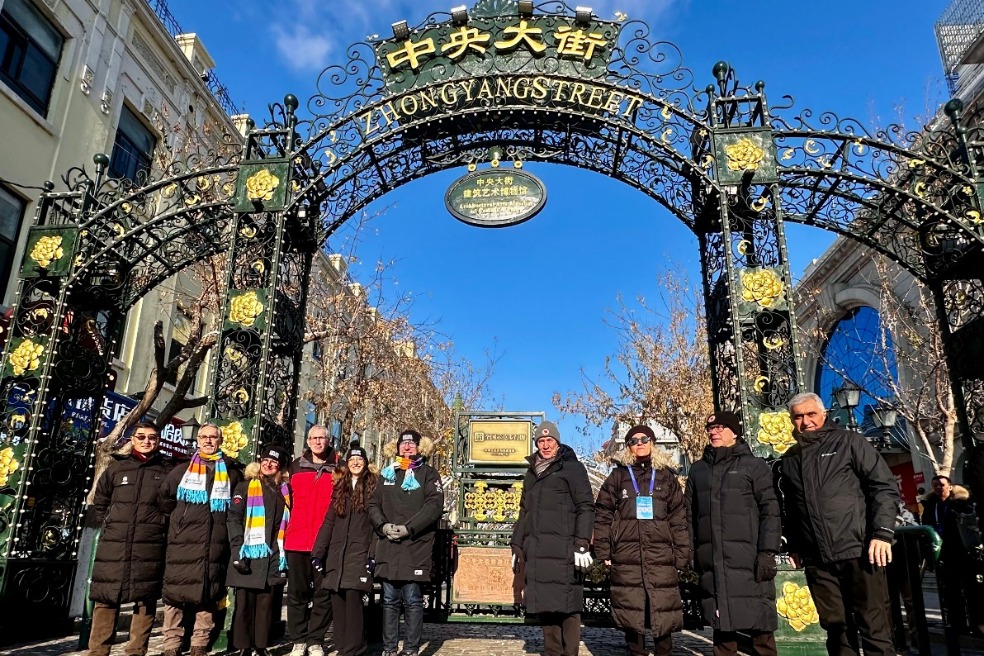
    Harbin recently played host to an international delegation of city leaders during the Global Mayors Dialogue, where discussions extended beyond urban governance to include immersive cultural experiences. The mayors embarked on a sensory journey through the city’s iconic landmarks, beginning at the historic courtyards of Zhongyang Street and continuing to aromatic century-old cultural halls.

    The visiting dignitaries warmed themselves with traditional hot kvass and sampled buttery Medovik bread, experiencing firsthand how local cuisine serves as a gateway to understanding urban identity. This culinary diplomacy component demonstrated how cultural immersion can foster deeper international connections and mutual understanding among global leaders.

    The event highlighted Harbin’s growing significance as a destination for international diplomatic gatherings, showcasing how Chinese cities are increasingly leveraging their unique cultural heritage to facilitate global exchanges. The mayors’ experience underscored the importance of cultural diplomacy in building bridges between cities worldwide, proving that sometimes the most effective diplomacy happens not in conference rooms but through shared culinary experiences and cultural exploration.

  • Tianmen grand bridge under construction in China’s Guizhou

    Tianmen grand bridge under construction in China’s Guizhou

    Southwest China’s mountainous Guizhou province has reached a significant infrastructure achievement with the recent completion of the main structural framework for the Tianmen Grand Bridge. This engineering marvel, captured in aerial photography on January 6, 2026, stretches an impressive 1,553 meters in length while soaring approximately 560 meters above the terrain below.

    The bridge represents a critical component of the developing Anshun-Panzhou highway system, designed to enhance transportation connectivity through Guizhou’s challenging landscape. The region’s complex topography has historically presented substantial obstacles to infrastructure development, making this construction achievement particularly noteworthy.

    Engineering teams have employed advanced construction methodologies and cutting-edge materials to overcome the geographical challenges posed by the mountainous territory. The bridge’s design incorporates state-of-the-art seismic resistance features and wind stability technology, essential for the region’s environmental conditions.

    This transportation project forms part of China’s broader initiative to improve interregional connectivity and stimulate economic development in previously isolated areas. The enhanced infrastructure is expected to facilitate more efficient movement of goods and people, potentially boosting local economies and reducing travel times significantly.

    The completion of the main structure marks a pivotal phase in the overall project timeline, with subsequent work now focusing on deck finishing, safety installations, and connecting roadways. Transportation authorities anticipate the bridge will serve as a vital link in western China’s expanding highway network upon its scheduled opening.

  • International mayors attend ice and snow expo in Harbin

    International mayors attend ice and snow expo in Harbin

    Harbin transformed into a diplomatic winter wonderland as mayors from across the globe convened at the 2026 International Ice and Snow Economy Expo this Tuesday. The event, occurring alongside the Global Mayors Dialogue conference, showcased China’s northeastern city as an emerging hub for cold-weather economic development.

    Edmonton Mayor Andrew Knack emerged as one of the most impressed delegates after experiencing Harbin’s extensive winter tourism infrastructure. The Canadian leader acknowledged his city’s substantial winter programming while emphasizing the learning opportunity presented by Harbin’s approach. “There is a lot of experience we can take back to further grow our new winter tourism and winter economy,” Knack stated, highlighting the potential for international knowledge exchange.

    The exposition demonstrated Harbin’s sophisticated integration of traditional winter culture with modern economic development strategies. Delegates participated in hands-on experiences including ice hockey practices, symbolizing the city’s commitment to blending recreational activities with economic opportunity.

    This gathering of municipal leaders from diverse climate regions signifies a growing recognition of specialized seasonal economies as drivers of urban development. The Expo serves not merely as a display of winter attractions but as a platform for cross-border collaboration in cold-weather technology, tourism infrastructure, and sustainable winter city planning.

    The event underscores China’s strategic positioning within the global winter economy network, with Harbin emerging as a model for other cities seeking to leverage their climatic conditions for economic growth. The knowledge sharing between international delegates suggests a new era of cooperation in developing cold-weather industries worldwide.

  • Philippines evacuates 3,000 villagers after volcano activity raises alert level

    Philippines evacuates 3,000 villagers after volcano activity raises alert level

    MANILA, Philippines — Philippine authorities have initiated large-scale evacuations surrounding Mayon Volcano, the nation’s most active volcano, following a series of mild eruptions and increased seismic activity. Nearly 3,000 residents residing within the designated permanent danger zone have been relocated as scientists monitor concerning developments.

    The Philippine Institute of Volcanology and Seismology elevated the alert status to Level 3 on Tuesday after detecting intermittent rockfalls from the summit crater, some involving debris the size of automobiles, alongside dangerous pyroclastic flows—rapid avalanches of superheated rock fragments, ash, and volcanic gases.

    According to Teresito Bacolcol, the country’s chief volcanologist, the current activity constitutes a quiet eruption characterized by lava accumulation at the peak, causing the dome to swell and fracture. While these developments signal volcanic unrest, Bacolcol noted that key indicators of an imminent major eruption—such as significant volcanic earthquakes and elevated sulfur dioxide emissions—remain absent, making predictions about escalation uncertain.

    Military personnel, police, and disaster-response teams coordinated the evacuation of 2,800 villagers from 729 households within the 6-kilometer (3.7-mile) radius permanent danger zone. An additional 600 residents living beyond the official danger boundary have voluntarily relocated to government-operated emergency shelters as a precautionary measure.

    The evacuation highlights ongoing challenges with enforcement in high-risk areas. Despite long-standing prohibitions marked by concrete warning signs, thousands continue to inhabit the volcano’s foothills, maintaining generational farms and businesses including sand quarrying and tourism operations. Mayon has erupted 54 times since records began in 1616.

    The 2,462-meter (8,007-foot) volcano represents both a premier tourist attraction, renowned for its perfect conical shape, and a persistent threat. The buried belfry of a 16th-century Franciscan church—all that remains of Cagsawa town after the catastrophic 1814 eruption that killed approximately 1,200 people—stands as a somber monument to Mayon’s destructive potential.

    This situation underscores the broader challenge facing impoverished communities across the Philippine archipelago, where economic necessity often forces populations to inhabit geologically hazardous zones, including volcanic slopes, landslide-prone mountainsides, earthquake fault lines, and typhoon-vulnerable coastlines.

  • Trumpet trees blanket district in Xiamen with purple blossoms

    Trumpet trees blanket district in Xiamen with purple blossoms

    The coastal city of Xiamen in Fujian province has been transformed into a breathtaking floral spectacle as thousands of purple trumpet trees (Tabebuia impetiginosa) reached full bloom in early January. This extraordinary natural display has turned Jimei district’s Xixi village into a major attraction for both local residents and tourists seeking respite in nature’s vibrant colors.

    The remarkable transformation occurred in Xiazhuangli, where approximately 7,000 trumpet trees have converted a previously dormant orchard into a magnificent floral landscape. The trees, known for their vibrant purple blossoms, create an astonishing visual effect when viewed from elevated perspectives—appearing as an expansive purple carpet covering the terrain.

    This annual flowering period typically extends from January through March, offering an extended window for visitors to experience the phenomenon. The timing provides a unique winter bloom spectacle that contrasts with the traditional spring flowering seasons common in other regions.

    Botanical experts note that the trumpet tree, native to South America but successfully cultivated in Xiamen’s subtropical climate, has adapted remarkably well to the local environment. The successful cultivation of such a substantial collection represents a significant achievement in horticultural planning and urban beautification efforts.

    The spectacle has generated substantial attention on social media platforms, with aerial photographs and videos circulating widely, showcasing the stunning transformation of the landscape. Local authorities have implemented additional visitor services to accommodate the increased tourism while ensuring the preservation of the natural display.

    This floral phenomenon not only enhances Xiamen’s reputation as an ecologically conscious city but also demonstrates successful urban planning that integrates natural beauty with community spaces. The event has become an important seasonal attraction, contributing to both local tourism and environmental appreciation.

  • Indian rupee slips past 90 US dollar mark, central bank intervenes

    Indian rupee slips past 90 US dollar mark, central bank intervenes

    The Reserve Bank of India executed significant market intervention on Wednesday to stabilize the national currency after the rupee weakened beyond the psychologically significant 90-per-US dollar barrier. According to six market traders, the central bank deployed aggressive measures reminiscent of its 2025 strategy to counteract one-way currency movements.

    The rupee opened trading at 90.2250 against the US dollar (24.5844 versus UAE dirham) before the RBI’s intervention propelled it to 89.9325 (24.5047 against UAE dirham), representing a 0.26 percent daily gain. During the session, the currency reached an intraday peak of 89.7550 (24.4564 against UAE dirham) on the interbank order-matching platform.

    Market analysts identified two primary pressures driving the rupee’s depreciation: sustained foreign capital outflows from Indian equity markets that have continued from 2025 into the new year, and ongoing uncertainties regarding US-India trade negotiations. These factors have created consistent downward pressure on the currency.

    Traders noted that the rapid reversal following the market open left little doubt about central bank involvement, contrasting with Tuesday’s session where market participants were divided on whether the RBI had intervened. “The velocity of today’s recovery unmistakably signals official action,” commented a private sector bank trader. “The movement was too abrupt to attribute to ordinary market dynamics.”

    Banking sector experts monitoring foreign exchange markets observed that the RBI typically intervenes when speculative long dollar positions accumulate and market expectations lean heavily toward consistent rupee depreciation. Prior to Wednesday’s engineered recovery, the rupee had declined approximately 1 percent over the preceding fortnight.

  • UAE sugar tax impact: Price hike leads consumers to choose healthier options

    UAE sugar tax impact: Price hike leads consumers to choose healthier options

    The United Arab Emirates has witnessed a significant consumer behavior transformation following the implementation of its revised excise tax structure on sweetened beverages effective January 1, 2026. Retail industry leaders report a substantial market shift as price-sensitive consumers increasingly opt for healthier alternatives in response to the new tiered taxation model.

    The Federal Tax Authority’s progressive excise framework calculates levies based on sugar content rather than applying a blanket tax rate. Beverages containing less than five grams of added sugar per 100ml remain tax-exempt, while those with 5-8 grams incur AED 0.79 per liter, and drinks exceeding 8 grams face AED 1.09 per liter. Notably, products containing exclusively natural sugars or artificial sweeteners without added sugar maintain their tax-free status.

    Dr. Dhananjay Datar, Chairman of Adil Group of Supermarkets, observed that “customer purchasing patterns have demonstrably shifted since the tax implementation. Consumers are actively seeking low-sugar and zero-sugar alternatives due to both economic considerations and growing health awareness.” This behavioral change has prompted beverage manufacturers to reformulate products and expand healthier offerings to align with market demand.

    Industry executives emphasize that the new system represents a more logical approach to public health taxation. Tom Harvey, General Manager for Commercial at Spinneys Dubai, noted that the previous flat 50% excise tax has been replaced with a structure that “makes drinks with less sugar substantially more affordable for consumers,” effectively incentivizing healthier choices.

    Beyond consumer impact, the tax overhaul introduces new compliance requirements for businesses. Anurag Chaturvedi, CEO of Andersen UAE, highlighted that manufacturers must obtain certified laboratory reports to validate sugar content classifications and update product registrations within the excise framework. Robust documentation practices have become essential for maintaining regulatory compliance and avoiding audit complications.

    Market analysts anticipate sustained growth in the low-sugar beverage segment as both consumer preferences and economic incentives continue to drive the UAE’s health-conscious consumption trend.

  • Watchdog halts a Japanese nuclear plant’s safety review after seismic data found to be fabricated

    Watchdog halts a Japanese nuclear plant’s safety review after seismic data found to be fabricated

    Japan’s Nuclear Regulation Authority (NRA) has terminated the safety evaluation process for two reactors at the Hamaoka nuclear facility following revelations that the plant operator systematically manipulated seismic risk data. The decision marks a significant impediment to the nation’s efforts to expand nuclear energy utilization.

    Chubu Electric Power Company had submitted applications in 2014 and 2015 to resume operations at reactors No. 3 and 4 at the Hamaoka plant, situated approximately 200 kilometers west of Tokyo in a region historically vulnerable to massive Nankai Trough earthquakes. The facility’s two additional reactors are currently undergoing decommissioning while a fifth remains inactive.

    The regulatory investigation commenced in February after authorities received whistleblower information regarding data integrity issues. NRA Chairman Shinsuke Yamanaka confirmed the suspension of safety assessments after verifying the falsification, with Chubu Electric formally acknowledging the misconduct in mid-December. The regulatory body is now contemplating inspections at the utility’s corporate headquarters.

    Chubu Electric President Kingo Hayashi publicly admitted the improprieties on Monday, conceding that employees deliberately utilized inaccurate seismic measurements to minimize perceived earthquake risks. Hayashi offered formal apologies and committed to establishing an independent investigative panel.

    Chairman Yamanaka characterized the data manipulation as “an act of betrayal that fundamentally undermines nuclear safety principles,” emphasizing that operators bear primary responsibility for ensuring safety protocols. The NRA indicated that any future screening processes would necessitate completely restarting the evaluation procedure, with potential for outright rejection of applications.

    This development represents a substantial setback for Japan’s energy strategy, which has sought to accelerate nuclear reactor reactivation to address escalating energy expenses and carbon reduction commitments. Public sentiment remains polarized regarding nuclear power due to persistent safety apprehensions stemming from the 2011 Fukushima Daiichi nuclear disaster.

    According to NRA statistics, Japan currently operates 13 of its 57 commercial nuclear reactors, with 20 non-operational units and 24 undergoing decommissioning procedures.

  • Global guests discuss sustainable development in Harbin

    Global guests discuss sustainable development in Harbin

    Harbin’s unique fusion of winter artistry and technological innovation provided the backdrop for critical sustainability discussions as mayors from across the globe gathered for the Global Mayors Dialogue on January 7, 2026. The event, hosted at the prestigious Harbin Institute of Technology, saw city leaders explore the institution’s aerospace museum—a symbolic venue where frozen sculptures coexist with space exploration technology.

    The dialogue focused on developing practical strategies for urban centers to drive sustainable development initiatives. Against the striking contrast of Harbin’s famous ice artworks and cutting-edge technological displays, participants exchanged insights on addressing environmental challenges while maintaining economic growth. The location choice emphasized the importance of blending cultural heritage with innovation in creating sustainable urban futures.

    Delegates examined how cities can implement green technologies, reduce carbon footprints, and develop climate-resilient infrastructure. The discussions highlighted the role of educational institutions like Harbin Institute of Technology in providing research and technological solutions to urban sustainability challenges. The mayors also shared best practices from their respective cities, creating a framework for international cooperation on sustainable urban development.

    The event underscored the growing recognition that cities—as centers of population density and economic activity—must lead the transition toward more sustainable living models. Participants committed to establishing ongoing collaboration channels to continue sharing knowledge and implementing the strategies developed during the dialogue.

  • Philippines: Magnitude 6.7 earthquake strikes near Baculin

    Philippines: Magnitude 6.7 earthquake strikes near Baculin

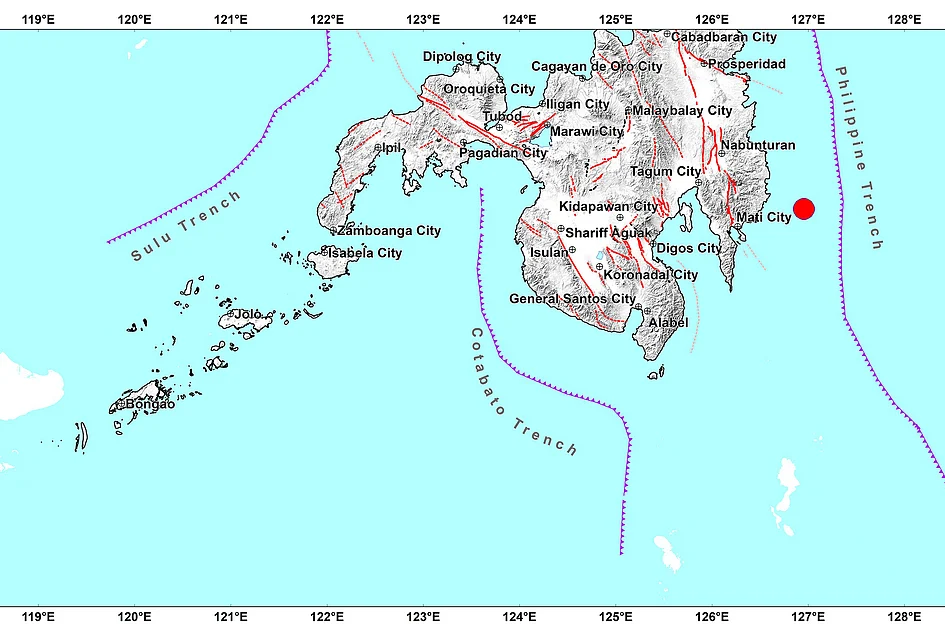
    A substantial seismic event measuring 6.7 on the Richter scale occurred approximately 68 kilometers east of Baculin, Philippines, on Wednesday morning, according to the United States Geological Survey (USGS). The earthquake originated at a relatively shallow depth of 10 kilometers, amplifying its potential impact on the region.

    The Philippines Institute of Volcanology and Seismology (PHIVOLCS) immediately issued a statement confirming the seismic activity and warning residents to prepare for subsequent aftershocks. By 11:25 AM local time, monitoring equipment had already detected at least six distinct aftershocks, with magnitudes gradually decreasing from 3.9 to 2.1.

    Despite the significant magnitude of the initial quake, authorities confirmed that no tsunami alert or warning has been issued for coastal areas. The USGS and local Philippine agencies continue to monitor the situation closely, assessing potential structural damage and ensuring public safety protocols are implemented throughout affected regions.

    Earthquakes are relatively common in the Philippine archipelago due to its position along the Pacific Ring of Fire, a geologically active zone characterized by frequent seismic and volcanic activity. The shallow depth of this particular event, combined with its substantial magnitude, warranted immediate attention from geological authorities worldwide.

    Emergency response teams remain on high alert as damage assessment operations commence in potentially affected areas. Residents in proximity to the epicenter have been advised to exercise caution regarding structural integrity of buildings and to prepare for additional aftershocks that typically follow major seismic events.