标签: Africa

非洲

  • ‘Miracle baby’ born in a tree above Mozambique floodwaters dies aged 25

    ‘Miracle baby’ born in a tree above Mozambique floodwaters dies aged 25

    Rosita Salvador Mabuiango, the Mozambican woman whose dramatic birth in a tree during catastrophic flooding made her an international symbol of survival, has died at age 25 after battling a prolonged illness. Her sister Celia Salvador confirmed to the BBC that Rosita passed away on Monday morning following more than two weeks of hospitalization.

    The story of Rosita’s extraordinary entry into the world captured global attention in February 2000 when the Limpopo river burst its banks, creating Mozambique’s worst recorded floods. Her mother, Carolina Cecilia Chirindza, along with 14 other villagers, sought refuge in trees as rising waters engulfed their community. After four days stranded without food or supplies, Carolina gave birth to Rosita in the early hours of Wednesday morning, just as South African military helicopters spotted the desperate group.

    The iconic image of mother and newborn being winched to safety became the defining visual representation of the disaster that claimed hundreds of lives and displaced hundreds of thousands. Their survival story transcended national borders, leading to a trip to the United States where they addressed Congress to raise awareness about the Mozambique crisis.

    Despite her miraculous beginning, Rosita’s life was marked by health challenges. Family sources indicate she had been fighting anemia for several years, with her condition deteriorating recently. She leaves behind a five-year-old daughter and a legacy that touched her nation deeply.

    Mozambican President Daniel Chapo expressed profound sorrow, describing Rosita as “a symbol for girls in Mozambique” and extending condolences to the entire nation. The tragedy has sparked broader conversations about healthcare deficiencies in the country, with political analyst Charles Mangwiro calling her death a “wake-up call for the government to improve service delivery in the entire health system.”

    Rosita completed her education in her native Chibuto district, demonstrating resilience throughout her life. Local authorities have begun coordinating with the family regarding funeral arrangements, which the municipality will oversee.


  • Rani Mukerji reflects as she completes three decades in Indian cinema

    Rani Mukerji reflects as she completes three decades in Indian cinema

    Celebrated Bollywood actress Rani Mukerji has marked a significant milestone in her distinguished career, completing three decades in Indian cinema. The accomplished performer commemorated the occasion by sharing an emotionally charged reflection on her Instagram account, tracing her evolution from an uncertain newcomer to an established artist of profound depth and influence.

    Mukerji’s journey commenced unexpectedly with the 1996 debut ‘Raja Ki Aayegi Baaraat,’ which she recalls as her introduction to cinema’s transformative power rather than mere glamour. ‘Acting made me feel alive,’ she revealed, emphasizing how portraying a woman fighting for dignity early in her career fundamentally shaped her artistic identity.

    The actress identified several pivotal projects that defined her professional trajectory, including ‘Saathiya’ (2002), which she described as a liberating turning point that allowed her to embrace flawed, authentic characters rather than pursuing perfection. She reserved particular reverence for Sanjay Leela Bhansali’s ‘Black’ (2005), co-starring Amitabh Bachchan, which she characterized as a transformative experience that redefined her understanding of acting’s emotional dimensions.

    Mukerji also highlighted her socially conscious roles, especially the ‘Mardaani’ franchise where she portrayed determined police officer Shivani Shivaji Roy. She expressed particular pride in these narratives that combine quiet strength with meaningful social commentary, noting they represent cinema’s capacity to provoke discomfort while inspiring hope.

    The actress openly discussed how marriage and motherhood refined her professional focus, making her more selective about projects that align with her evolving personal values. Her National Award-winning performance in ‘Mrs. Chatterjee vs Norway’ held special significance, as she believes motherhood provided the emotional maturity necessary to fully embody such a profoundly maternal character.

    Mukerji concludes her reflection by emphasizing that after thirty years, her primary measures of success are no longer box office numbers or awards, but rather the authentic moments of creative connection and emotional truth. Her milestone year coincides with the anticipated January 30th release of ‘Mardaani 3,’ directed by Abhiraj Minawala and produced by Aditya Chopra, demonstrating her continued relevance in contemporary Indian cinema.

  • Photos: Best-dressed celebrities at the 2026 Golden Globes

    Photos: Best-dressed celebrities at the 2026 Golden Globes

    The 83rd Annual Golden Globe Awards, held at the Beverly Hilton on January 12, 2026, established a remarkable standard for red carpet fashion this year, championing what industry observers are calling the ‘high-fashion hybrid’ trend. This aesthetic seamlessly blended timeless elegance with bold, avant-garde design statements, creating a visually stunning spectacle.

    Celebrity fashion choices demonstrated a fascinating dichotomy. While many stars embraced dark, moody color palettes that conveyed sophistication and depth, others made daring statements with vibrant patterns and unconventional designs. Jennifer Lawrence, for instance, defied conventional expectations in a striking floral ensemble by Givenchy, showcasing the range of creative expression on display.

    Priyanka Chopra Jonas captivated photographers and fashion critics alike in a regal, sculptural Dior creation that exemplified architectural fashion at its finest. Simultaneously, Selena Gomez turned heads in breathtaking custom Chanel that perfectly balanced classic Hollywood glamour with contemporary design elements.

    The ceremony’s fashion landscape revealed two dominant trends: the thoughtful revival of archival silhouettes that paid homage to fashion history, and the introduction of bold new design icons that pushed sartorial boundaries. This combination created a red carpet narrative that celebrated both tradition and innovation in equal measure.

    The diverse array of designer presentations—from established luxury houses to emerging talents—highlighted the evolving relationship between celebrities and fashion brands in creating memorable moments that transcend the awards themselves, cementing the Golden Globes’ position as a premier fashion event on the entertainment calendar.

  • Alike launches customisable digital city tourist passes for travellers visiting Dubai, London, Paris, and Singapore

    Alike launches customisable digital city tourist passes for travellers visiting Dubai, London, Paris, and Singapore

    In a significant advancement for the travel technology sector, Alike has unveiled its innovative customizable digital tourist passes for four of the world’s most visited destinations: Dubai, London, Paris, and Singapore. This AI-driven platform enables travelers to design personalized city itineraries rather than being constrained by pre-packaged attraction bundles, offering unprecedented flexibility alongside substantial cost savings of up to 50% compared to individual ticket purchases.

    The launch represents a strategic expansion of Alike’s modular pass infrastructure following the remarkable success of The Abu Dhabi Pass, developed in collaboration with the Department of Culture and Tourism – Abu Dhabi. These four metropolitan hubs collectively attracted approximately 80 million international visitors in 2024, positioning Alike at the forefront of a rapidly growing personalized travel market projected to surge from $170 billion in 2025 to over $315 billion by 2029.

    Ashish Sidhra, Co-founder of Alike, emphasized the shifting consumer expectations: ‘Modern travelers demand that tourism adapts to their preferences rather than conforming to rigid packages. Traditional bundled passes frequently include attractions that visitors never intended to experience. Our solution provides genuine choice and transparency, enabling travelers to craft their unique journeys while paying exclusively for what they value.’

    Powered by Alike’s proprietary Infinity technology platform, these digital passes consolidate the entire travel experience—from discovery to ticket redemption—into a seamless digital journey accessible across all devices. Key features include instant booking confirmations, digital QR codes for attraction entry, and online management systems for timed access requirements. This integrated approach significantly reduces queuing times, eliminates paper tickets, and enhances completion rates at selected attractions.

    Additional benefits encompass fully customizable attraction selection without compulsory pre-set bundles, transparent savings structures, seamless QR entry across all participating partners, and round-the-clock customer support. The global city pass market, currently valued at approximately $2.5 billion in 2024, is anticipated to expand to nearly $6.5 billion by 2033. Leveraging its platform-oriented methodology, Alike plans to extend its tourist pass ecosystem to more than 25 major destinations across Europe, Asia, and North America by the conclusion of 2026.

    This ambitious expansion strategy is underpinned by a replicable launch framework, an extensive partner-led attraction ecosystem, unified technological infrastructure, and robust consumer demand for flexible, digital-first travel solutions that prioritize personalization and convenience.

  • Dubai sells 500 homes valued at over $10 million in 2025, sets new record

    Dubai sells 500 homes valued at over $10 million in 2025, sets new record

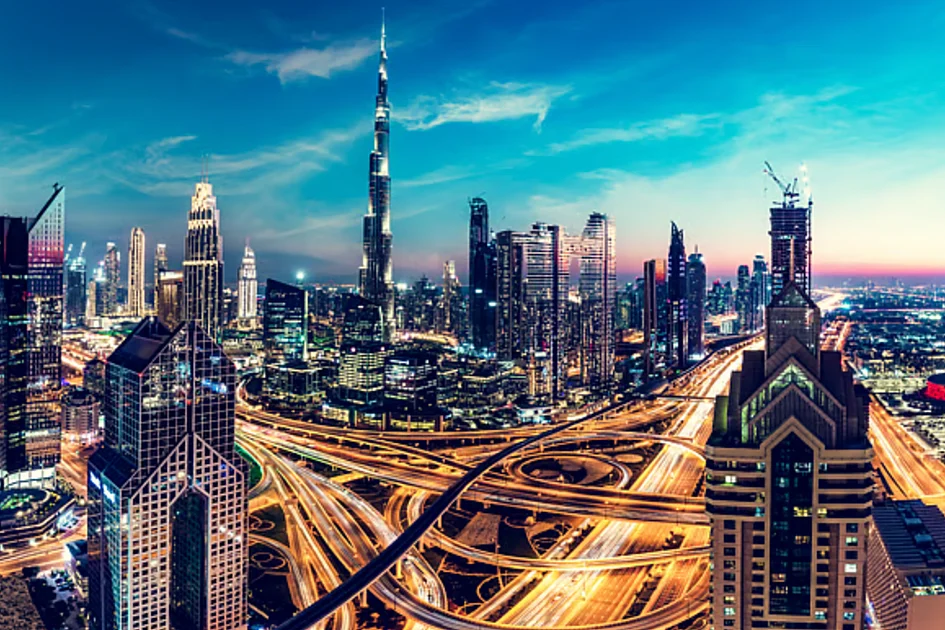
    Dubai’s luxury real estate market has established an unprecedented global benchmark, closing 2025 with a historic 500 residential transactions valued above $10 million each. This remarkable performance, documented by property consultancy Knight Frank, represents a significant 15% increase from the 435 ultra-luxury homes sold in 2024. The market’s most exclusive segment—properties exceeding $25 million—witnessed even more dramatic growth, with 68 transactions completed compared to 46 the previous year, marking a 45% year-on-year surge.

    The fourth quarter of 2025 alone accounted for 143 premium property sales, generating a total transaction value of $9.05 billion annually. The market’s pinnacle transaction occurred in Business Bay’s Bugatti Residences by Binghatti, where a six-bedroom apartment commanded Dh550 million ($149.7 million).

    Faisal Durrani, Knight Frank’s Partner and Head of Research for Mena, attributes this explosive growth to Dubai’s evolving reputation as a sanctuary for global elites. ‘The emirate’s transformation from just 30 premium sales in 2020 to 500 today demonstrates its powerful appeal among high-net-worth individuals worldwide,’ Durrani noted. This attraction stems from Dubai’s exceptional quality of life, superior infrastructure, and government-led investment initiatives.

    Geographic distribution data reveals Palm Jumeirah as the preferred destination for luxury buyers, with 28 transactions in Q4 2025. Palm Jebel Ali followed with 22 sales, while La Mer (16), Jumeirah Second (13), and Tilal Al Ghaf (9) completed the top five locations.

    Will McKintosh, Regional Partner and Head of Residential for Mena at Knight Frank, emphasized Dubai’s unique market positioning: ‘The creation of comprehensive destination communities that integrate leisure, safety, and convenience into self-contained ecosystems has differentiated Dubai from other global gateway cities, attracting unprecedented attention from the world’s wealthiest individuals.’

    Supporting this luxury property boom, Dubai’s millionaire population has grown substantially, now hosting 86,000 millionaires, 251 centi-millionaires, and 23 billionaires according to mid-2025 data. World-class healthcare, education facilities, and unparalleled security continue to drive this demographic shift, cementing Dubai’s status as a premier global wealth hub.

  • Nigerian stars dominate All Africa Music Awards

    Nigerian stars dominate All Africa Music Awards

    LAGOS, NIGERIA – The Nigerian music industry delivered an extraordinary performance at the 9th Annual All Africa Music Awards (AFRIMA), capturing multiple top honors during Sunday night’s grand finale ceremony. The week-long celebration of African musical excellence concluded with Nigeria’s artists claiming the most prestigious categories, highlighting the nation’s continuing influence on the continental music scene.

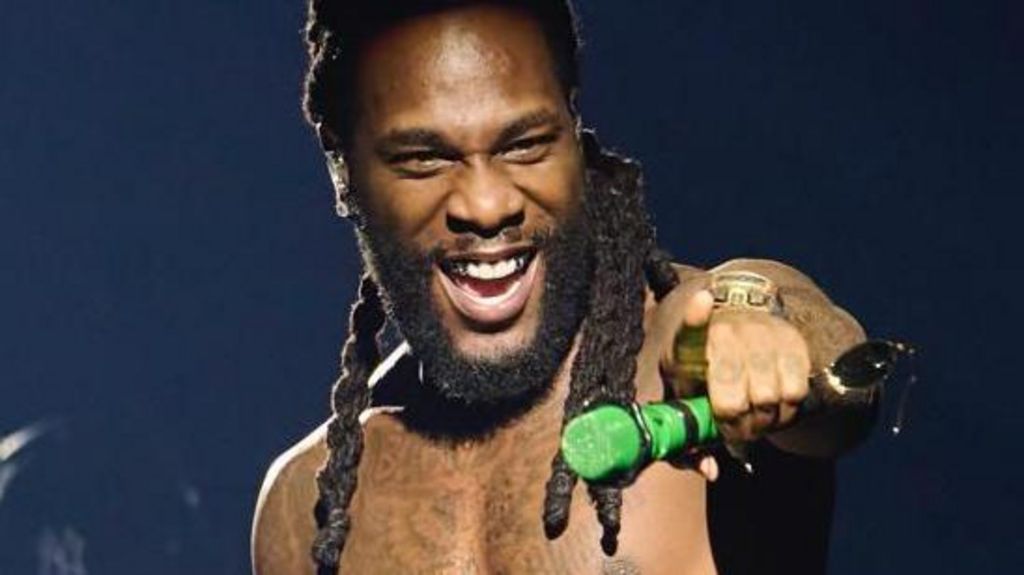
    Global afrobeats phenomenon Burna Boy secured the coveted Album of the Year award for his critically acclaimed July 2025 release ‘No Sign of Weakness,’ reinforcing his status as one of Africa’s most impactful musical exports. The Grammy-winning artist additionally shared the Best African Collaboration award with rapidly emerging Nigerian talent Shallipopi, who separately earned Song of the Year recognition for his social media sensation ‘Laho’.

    The evening’s most decorated performer proved to be hitmaker Rema, who achieved a remarkable triple victory by claiming Artiste of the Year, Best Male Artiste in Western Africa, and Best African Artiste in RnB and Soul categories. His wins underscored the diverse musical talent emerging from Nigeria’s vibrant music industry.

    Veteran artists also received significant recognition, with Yemi Alade winning Best Soundtrack in a Movie, Series or Documentary for her contribution ‘You Are’ from the animated series Iyanu. Meanwhile, hip-hop pioneer Phyno was honored as Best African Artiste in African Hip-Hop, demonstrating the genre’s continuing evolution.

    The ceremony also spotlighted Africa’s next generation of musical talent. Qing Madi received the Most Promising Artiste of the Year award, while Chella earned the African Fans’ Favourite distinction through popular vote.

    While Nigerian artists dominated the winner’s circle, the awards maintained their pan-African character by celebrating exceptional talent from across the continent. Ghana’s Wendy Shay claimed Best Female Artiste in West Africa, South Africa’s Nontokozo Mkhize won Best Female Artiste in Southern Africa, and Tanzania’s Juma Jux was named Best Male Artiste in Eastern Africa.

    The overwhelming success of Nigerian performers at this year’s AFRIMA awards underscores the continuing global ascent of Afrobeats, which blends traditional African rhythms with contemporary Western influences. Burna Boy, who has been instrumental in the genre’s international breakthrough, continues to serve as one of its most prominent ambassadors, with his latest album victory further cementing his influential status within the global music landscape.

  • Africa’s megacity of Lagos reshapes its coast by dredging and puts environment at risk

    Africa’s megacity of Lagos reshapes its coast by dredging and puts environment at risk

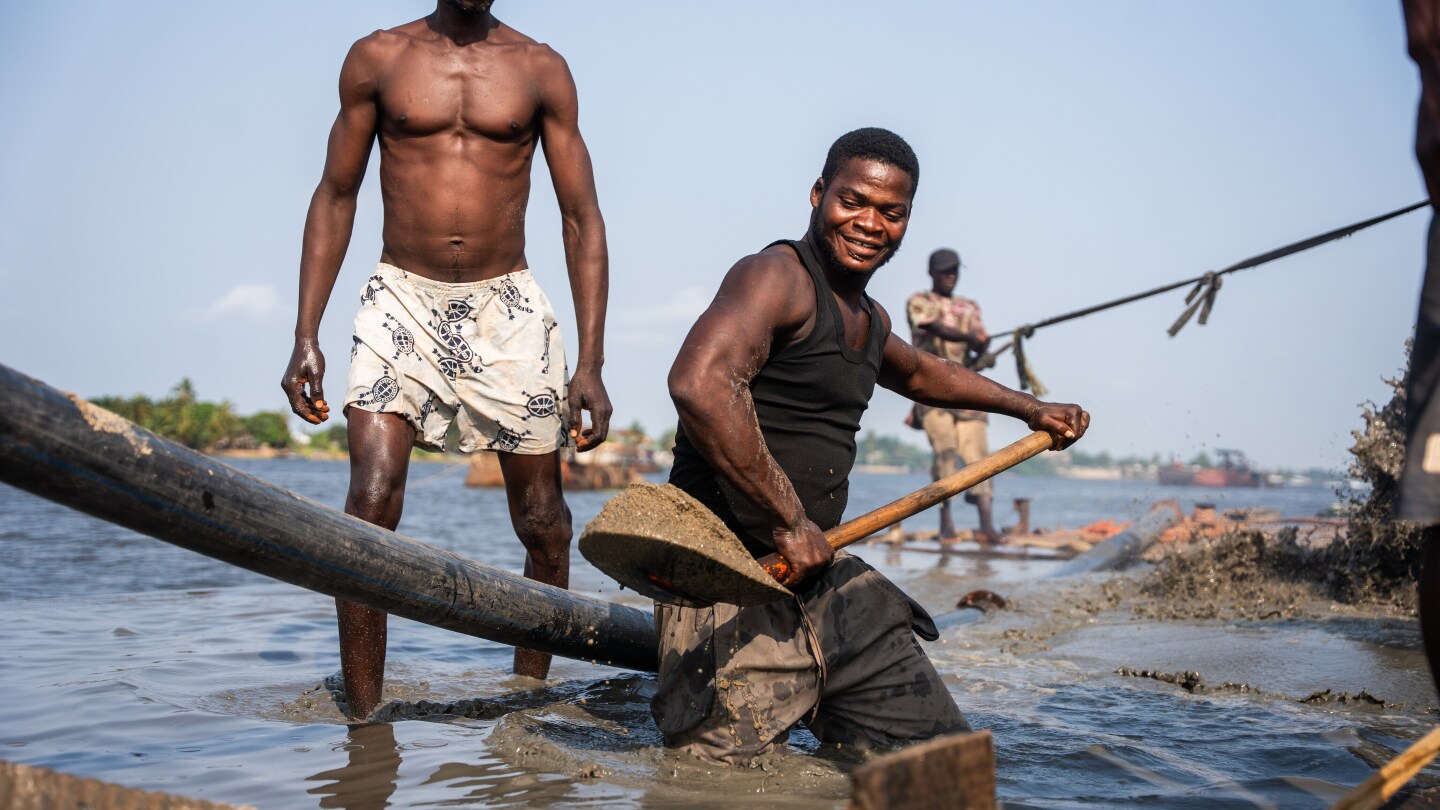
    LAGOS, Nigeria — Along the bustling waterways of Lagos, Africa’s most populous metropolis, a stark economic dichotomy unfolds beneath the surface. Teams of Nigerian dredgers stand immersed in the Lagos Lagoon’s murky waters, harvesting sand bucket by bucket to feed the city’s insatiable construction appetite. This underwater gold rush is dramatically reshaping the coastline while simultaneously eroding traditional fishing grounds that have sustained communities for generations.

    The manual dredging process reveals the human cost of urban development. Artisanal sand miners like 34-year-old Akeem Sossu dive repeatedly for 15-second intervals, filling wooden boats over three-hour shifts that yield approximately $8 per worker. Formerly a tailor, Sossu now depends on this hazardous work to support his household, beginning his days as early as 5 a.m. based on tidal patterns.

    Market dynamics reflect Lagos’s construction explosion, with a standard 30-ton truckload of coarse ‘sharp sand’ now commanding roughly $202—a price surge driven by massive demand for concrete. Industry analysts estimate annual consumption reaches tens of millions of cubic meters, equivalent to approximately 16,000 Olympic-sized swimming pools.

    The environmental transformation is unmistakable. Previously open waterways now display fragmented sandy patches, narrowed channels, and altered currents. The changes are particularly evident near Makoko, one of Lagos’s oldest fishing communities where stilt homes face encroachment from dredging barges and upscale waterfront developments.

    ‘Dredgers have spoiled the entire waters,’ laments Baale Semede Emmanuel, a Makoko community leader. ‘Anywhere dredging is happening, there’s no fish. The noise drives them away and their reproduction grounds have disappeared.’

    Scientific research corroborates these observations. Nigerian studies along the Ajah–Addo-Badore dredging corridor document water turbidity levels exceeding national safety standards, disrupting fish feeding and migration patterns. Researchers also note unstable seabeds, erosion-prone zones, and bacterial contamination in groundwater samples.

    The ecological damage has forced fishermen to choose between dangerous extended voyages with prohibitive fuel costs or abandoning their livelihoods entirely. Joshua Monday, who transitioned from fishing to mechanics, encapsulates the community’s plight: ‘Big men are stressing us. When they come, you have no option. You pack your things and leave.’

    Despite government pledges to curb illegal dredging, enforcement remains inconsistent. Dredging operators describe making regular payments to authorities including the Marine Police and National Inland Waterways Authority to maintain operations. Environmental advocates argue these arrangements blur legal boundaries while exacerbating flooding risks and coastal degradation.

    Scientists warn that removing natural buffers like wetlands and shallow areas reduces the lagoon’s capacity to absorb floodwaters, increasing vulnerability for Lagos’s approximately 17 million residents. As the city continues building on reclaimed land, the tension between development ambitions and environmental sustainability creates an increasingly precarious future for both the coastline and its traditional communities.

  • Off the ballot, Ugandan president’s son waits in the wings this election

    Off the ballot, Ugandan president’s son waits in the wings this election

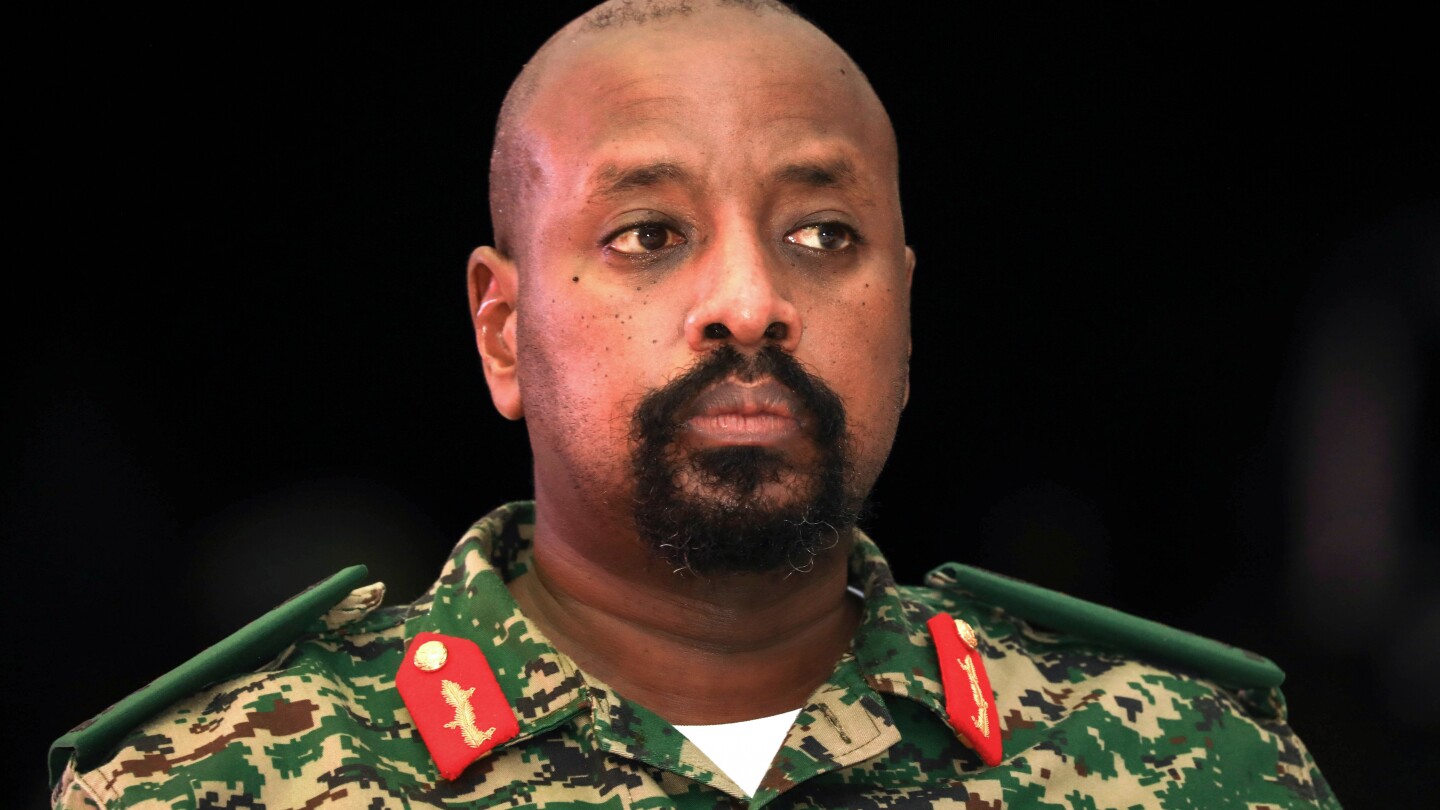
    As Uganda approaches its pivotal elections, the nation’s political landscape is dominated by a figure not formally on the ballot: Muhoozi Kainerugaba, the president’s son and top military commander. While stepping aside to allow his father, Yoweri Museveni, to pursue an unprecedented seventh term that would extend his rule toward five decades, General Kainerugaba maintains immense influence as the primary enforcer of his father’s regime.

    The four-star general’s appointment as army chief nearly two years ago temporarily suspended his political ambitions—though critics suggest this pause lasts only as long as Museveni desires to remain in power. Many citizens now accept the inevitability of hereditary leadership, despite previous government denials of a covert ‘Muhoozi Project’ aimed at securing dynastic succession.

    Kainerugaba has been remarkably transparent about his presidential aspirations, declaring on social media platform X in 2023: ‘I will be President of Uganda after my father. Those fighting the truth will be very disappointed.’

    His authority has expanded significantly since February 2024, when the president delegated substantial commander-in-chief powers to the military leadership. This unprecedented transfer enables Kainerugaba to promote high-ranking officers and establish new army departments, granting him more influence than any previous military commander.

    According to Mwambutsya Ndebesa, a political historian at Makerere University, constitutional change appears increasingly unlikely. ‘Elections just waste time, legitimizing authority but not intended as democratic goals,’ Ndebesa observed. ‘Any transition from Museveni will be determined by the military high command.’

    A burgeoning personality cult surrounds Kainerugaba, complete with public birthday celebrations and political campaigns featuring his Patriotic League of Uganda emblem. Parliament Speaker Anita Among notably referred to him as ‘God the Son,’ highlighting his elevated status within Uganda’s power structure.

    Critics point to Kainerugaba’s inflammatory behavior, including social media threats against opposition figures like Bobi Wine—whom he threatened to behead—and Kizza Besigye, whom he suggested should be hanged ‘in broad daylight.’ These outbursts occasionally prompted disciplinary action, such as his temporary removal from military duties in 2022 after threatening to invade Nairobi.

    Amnesty International reports security forces are conducting a ‘brutal campaign of repression,’ citing incidents like the November 28 rally where military forces blocked exits and opened fire on crowds, resulting in one death.

    Despite overwhelming support within the regime, retired Major General Kahinda Otafiire—a longtime Museveni ally—stands as a rare voice against hereditary succession. Serving as interior minister, Otafiire advocates for merit-based leadership, warning that dynastic rule would undermine democratic principles fought for during Uganda’s liberation struggle.

    The military’s dominance in Ugandan politics suggests any future transition will be determined less by electoral processes and more by internal power dynamics within the security establishment.

  • UAE: Amazon Creators Foundry announced to help creators sell products online

    UAE: Amazon Creators Foundry announced to help creators sell products online

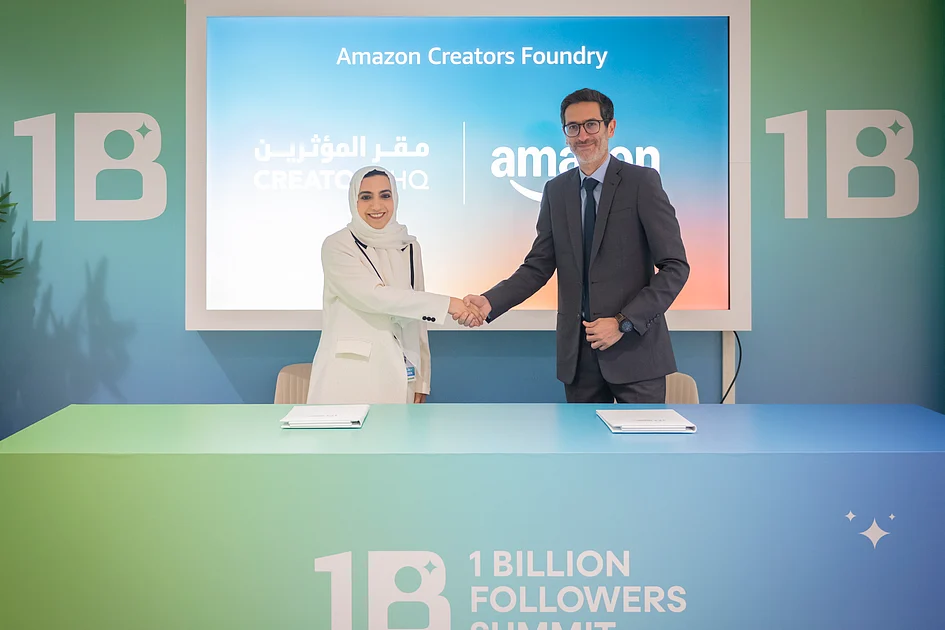
    In a significant move to bolster the creator economy, Amazon has unveiled the Creators Foundry initiative in collaboration with Creators HQ, the Middle East’s first dedicated creators’ hub. Announced during the fourth edition of the 1 Billion Followers Summit in Dubai, this program represents a strategic partnership between Amazon Ads and the UAE Government Media Office.

    The initiative establishes a comprehensive framework to empower UAE-based content creators by providing end-to-end support for launching and scaling product businesses on Amazon.ae. The program addresses the evolving nature of the creator economy, which is rapidly transitioning from content monetization to full-scale entrepreneurship.

    Eligible participants within the Creators HQ network will gain access to Amazon’s extensive infrastructure, seller tools, and global marketplace reach. The program includes specialized education covering retail fundamentals, product development strategies, digital marketing techniques, and brand building in the digital age. Participants will also receive mentorship opportunities and Amazon Ads credits to enhance their market visibility.

    A distinctive feature of the initiative enables creators to expand beyond local markets through Amazon’s global selling registration program, connecting them with hundreds of millions of international customers across Amazon’s worldwide store network.

    Alia Al Hammadi, Vice Chairperson of the UAE Government Media Office, emphasized the strategic importance of this initiative: “The UAE has established itself as a global destination for the creator economy, and Amazon Creators Foundry demonstrates how this vision translates into tangible opportunities for digital entrepreneurs. We’re nurturing a new generation of innovators who will shape the future of commerce and drive the growth of the UAE’s digital economy.”

    Rayan Karaky, Managing Director of Amazon Ads for EMEA and Southeast Asia, noted the transformative nature of the program: “The creator economy is entering a phase where influence meets innovation. Creators understand their audiences better than anyone—they know what truly resonates and what their communities want. Amazon Creators Foundry bridges the gap between these unique insights and commercial success.”

    The announcement coincided with the 1 Billion Followers Summit, which brought together over 15,000 content creators and influencers alongside 500 speakers representing a combined global audience of 3.5 billion followers. This initiative reinforces the UAE’s position as a leading global hub for the digital creator economy and innovation ecosystem.

  • He once criticised African leaders who cling to power. Now he wants a seventh term

    He once criticised African leaders who cling to power. Now he wants a seventh term

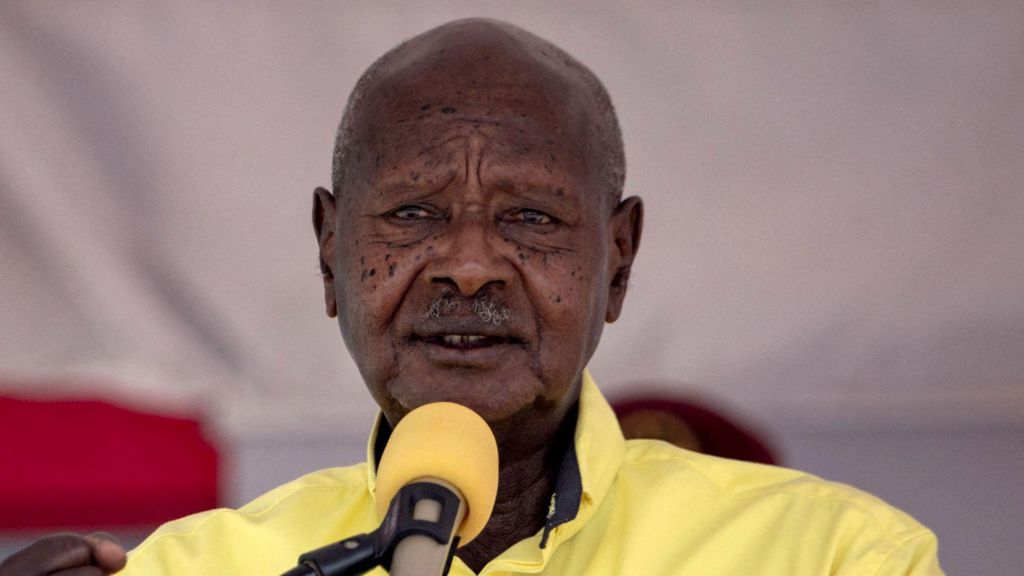
    President Yoweri Museveni’s remarkable 38-year tenure continues to define Uganda’s political landscape, with over three-quarters of the population having never experienced alternative leadership. The 81-year-old leader, who assumed power through armed rebellion in 1986, maintains firm control despite growing international concern about democratic backsliding.

    Museveni’s administration has delivered notable achievements including sustained economic growth averaging over 6% annually for a decade, doubled primary school enrollment, and successful HIV/AIDS mitigation programs. These developments initially positioned him as a favored partner among Western nations. However, his governance approach has increasingly drawn criticism for systematically undermining democratic institutions and political opposition.

    The constitutional landscape has evolved significantly during Museveni’s rule. In 2005, term limits were abolished, followed by the 2017 elimination of presidential age restrictions—a controversial move that sparked violent parliamentary clashes. These changes have effectively paved the way for potential lifelong presidency.

    Opposition figures face severe challenges under Museveni’s regime. Dr. Kizza Besigye, the president’s former personal physician turned political rival, has endured repeated arrests and prosecutions since first challenging Museveni in 2001. Most recently, he mysteriously disappeared in Nairobi only to reappear in Ugandan military custody. Contemporary opposition leader Bobi Wine, leveraging his celebrity status to mobilize youth support, has faced similar persecution including treason charges and violent suppression of his gatherings.

    International observers have documented concerning patterns of state violence. United Nations reports indicate security forces routinely employ live ammunition against peaceful assemblies and utilize unmarked vehicles for abductions. The judiciary faces allegations of compromised independence through the appointment of ‘cadre judges’ loyal to the administration.

    The president’s family has assumed prominent roles within government structures. First Lady Janet Museveni serves as Education Minister while their son General Muhoozi Kainerugaba commands the military. The recent enlistment of Museveni’s grandson has further fueled concerns about dynastic succession planning.

    Despite these developments, Museveni’s supporters highlight Uganda’s relative stability and humanitarian contributions. The nation currently hosts approximately 1.7 million refugees fleeing regional conflicts—a dramatic reversal from Uganda’s historical role as a refugee exporter. The administration continues pursuing foreign investment partnerships with China, the UK, and UAE as part of its Vision 2040 development strategy.

    As Museveni campaigns for a seventh term, he maintains his signature blend of paternalistic rhetoric—referring to young supporters as ‘Bazukulu’ (grandchildren)—and demonstrations of physical vitality. However, questions about succession planning and democratic integrity continue to overshadow his legacy of stability and development.