标签: Africa

非洲

  • Rand slips before South African Reserve Bank’s rate decision

    Rand slips before South African Reserve Bank’s rate decision

    The South African rand experienced a slight decline on Thursday as investors awaited the South African Reserve Bank’s (SARB) interest rate decision. By 0622 GMT, the rand was trading at 17.45 against the US dollar, marking a 0.3% drop from its previous close. Economists surveyed by Reuters anticipate that the central bank will maintain its benchmark lending rate at 7.00%, despite a surprising slowdown in headline inflation for August, driven by lower fuel and food prices. Independent economist Elize Kruger noted that while the August inflation data aligns with the SARB’s target of 3%, elevated inflation expectations and a projected rise to 4.2% by December 2025 are likely to deter any rate cuts. However, some analysts suggest that the softer inflation figures could prompt a closely contested decision. Meanwhile, South Africa’s benchmark 2035 government bond remained stable in early trading, with yields edging up by half a basis point to 9.175%. The market remains watchful as the SARB’s announcement could influence future economic trajectories.

  • African pride as Rwanda prepares for cycling history

    African pride as Rwanda prepares for cycling history

    The 2025 UCI Road World Championships, set to begin in Rwanda on Sunday, represent a monumental milestone for African cycling. For the first time since the event’s inception in 1921, the prestigious competition will be held on African soil, with Kigali’s BK Arena serving as the starting point for the women’s individual time trial. This historic moment underscores the growing influence of African cyclists on the global stage. Among the standout competitors is Kim Le Court from Mauritius, who earlier this year became the first African to wear the leader’s yellow jersey in the Tour de France Femmes. Le Court expressed her excitement, stating that competing in Africa’s inaugural World Championships is ‘really special’ and a testament to the potential of riders from smaller nations. The event will feature 13 races across time trials and road races, with gender parity and three age categories: junior, Under-23, and elite. Rwanda’s selection as host in 2021 prompted African cycling federations to intensify their efforts in nurturing young talent, with around 150 professional cyclists from the continent now competing at the highest levels. However, Rwanda’s challenging terrain, characterized by its ‘land of a thousand hills,’ may pose difficulties for some riders, including Eritrea’s Biniam Girmay, Africa’s top male cyclist. Despite his sprinting prowess, Girmay acknowledges the grueling nature of the men’s road race, which includes over 5,500 meters of climbing. Nevertheless, he remains committed to supporting his national team and inspiring the next generation of African cyclists. The event is expected to draw massive crowds, with Rwanda’s passion for cycling evident in the annual Tour du Rwanda, which attracts over one million spectators. Despite security concerns stemming from the ongoing conflict in neighboring DR Congo, the UCI confirmed the event would proceed as planned. UCI President David Lappartient emphasized the importance of uniting the global cycling community in Africa, while Kimberly Coats of Team Africa Rising highlighted the potential for long-term investment in the sport. For young African riders, the championships offer a platform to showcase their talent and attract development opportunities. Ethiopia’s Tsige Kahsay Kiros, an 18-year-old junior competitor, is among those making waves after her impressive performance at the Tour de l’Avenir. As the event unfolds, it promises to leave a lasting legacy, firmly placing African cycling on the global map.

  • In Congo, army and rebels dig in for war Trump says is over

    In Congo, army and rebels dig in for war Trump says is over

    In the eastern Democratic Republic of Congo (DRC), the fragile peace process is unraveling as both the Congolese army and the Rwandan-backed M23 rebel group reinforce their military positions. This escalation comes amid missed deadlines for peace agreements brokered by the U.S. and Qatar, raising fears of a renewed regional conflict. The M23, which seized two major cities earlier this year, demands prisoner releases and power-sharing in the territories they control, while the Congolese government refuses to cede authority or release detainees.

  • Togo leader’s sister-in-law arrested after calling for end to family rule

    Togo leader’s sister-in-law arrested after calling for end to family rule

    Marguerite Gnakadé, a former defense minister and prominent critic of Togo’s government, has been arrested, according to security sources. Gnakadé, the sister-in-law of long-serving leader Faure Gnassingbé, recently called for his resignation and urged the military to support the people in ending decades of dynastic rule. A police source told AFP that she was arrested for serious acts, including inciting the military to rebellion. Local media reported that she was taken into custody by security forces at her home in the capital, Lomé, on Wednesday. Togo has been experiencing deadly protests demanding Gnassingbé’s resignation and the release of political prisoners. These protests reflect widespread anger and fatigue with a family-run regime that has been in power for six decades. Gnassingbé, who has led the country since 2005, succeeded his father, Gnassingbé Éyadéma, who ruled for 38 years from 1967. A new constitutional structure that allows Gnassingbé to prolong his hold on power while shifting to a new role as President of the Council of Ministers has further fueled the protests. In May, Gnassingbé was sworn into this new position, which has no official term limits. Gnakadé, who served as defense minister from 2020 to 2022, has been a vocal critic of Gnassingbé, writing articles calling for his resignation and supporting protests against his leadership. Her arrest has sparked outrage on social media, and she is currently being questioned by authorities. Some reports suggest the charges against her are related to alleged connections with exiled opposition figures and attempts to incite disobedience within the armed forces. If proven, these allegations could result in a prison sentence of 10 to 20 years. Opposition parties and civil society groups have condemned her arrest, calling it an abuse of power aimed at silencing dissent. A youth-led movement, M66, has issued a 72-hour ultimatum demanding her release, threatening nationwide demonstrations if their demand is not met. The situation remains tense as more details about her arrest are expected to emerge in the coming days.

  • Peru president signs contract allowing Chevron, Westlawn entry

    Peru president signs contract allowing Chevron, Westlawn entry

    In a significant move for Peru’s energy sector, President Dina Boluarte announced the formalization of a modified hydrocarbon exploration and exploitation contract on Wednesday, September 17, 2025. The agreement paves the way for U.S. energy giants Chevron and Westlawn to enter the Peruvian market through a consortium operated by Anadarko, a subsidiary of Occidental Petroleum. The consortium will focus on three offshore blocks—Z-61, Z-62, and Z-63—located in Peru’s northern La Libertad region. President Boluarte emphasized that Chevron’s involvement, as the world’s third-largest oil company, underscores Peru’s reputation as a reliable and stable destination for large-scale investments. She expressed optimism that successful exploration could lead to an energy renaissance, fueling decades of economic growth. The consortium’s ownership structure allocates 35% stakes to Chevron and Anadarko, with Westlawn holding the remaining 30%. The initial phase of exploration is backed by a $100 million investment, as previously announced by the government. The contract amendment was signed by executives from the three companies and Perupetro, Peru’s state regulator. Pedro Romero, Occidental Petroleum’s vice president of international exploration, hailed the project as the culmination of years of preparation and the start of a promising new chapter in Peru’s energy landscape.

  • South African court annuls permit for Eskom to build new gas power plant

    South African court annuls permit for Eskom to build new gas power plant

    In a landmark decision, South Africa’s Supreme Court of Appeal has nullified a government permit granted to state utility Eskom for the construction of a 3,000-megawatt natural gas power plant in Richards Bay. The court ruled that the project lacked proper public consultation, rendering the authorization invalid. This ruling mandates Eskom to reapply for the permit after conducting the necessary public participation processes. The proposed plant, part of the government’s strategy to address chronic electricity shortages and reduce reliance on coal, has faced significant opposition from environmental groups. These groups argue that Eskom’s operations have historically caused environmental injustices and pollution in nearby communities. The judgment aligns with previous rulings against energy companies that failed to engage affected communities adequately. Richards Bay, the site of the planned plant, is also set to host South Africa’s first liquefied natural gas import terminal. Environmental advocates have welcomed the court’s decision, emphasizing the need for accountability and sustainable development. Eskom and the Department of Forestry, Fisheries, and the Environment have yet to comment on the ruling.

  • In coastal Ghana, female oyster farmers try to save an old practice threatened by climate change

    In coastal Ghana, female oyster farmers try to save an old practice threatened by climate change

    In the coastal mangroves of Tsokomey, Ghana, Beatrice Nutekpor, a 45-year-old oyster farmer, continues a family tradition that has sustained her community for generations. Despite the challenges posed by climate change and economic instability, Nutekpor and other women in her community are determined to preserve their way of life. Oyster farming, a practice dominated by women, has been a vital source of income for families in this region. However, the depletion of mangroves due to rising sea levels, coastal development, and deforestation has threatened this livelihood. The Development Action Association, a nonprofit organization, once provided training in eco-friendly farming methods, including mangrove preservation and selective harvesting, to mitigate these challenges. However, the organization lost its U.S. funding following cuts to foreign aid, leaving the women to fend for themselves. Despite these setbacks, the women’s efforts to replant mangroves are yielding results, with oysters beginning to attach to the newly planted trees. Yet, the struggle persists. A single basin of oysters sells for approximately $4, barely enough to sustain families. The loss of mangroves forces farmers like Nutekpor to dive deeper into dangerous waters to find oysters, increasing the risk of drowning. The Densu Oyster Pickers Association has implemented strict guidelines to protect the mangroves, including penalties for unauthorized cutting. For Nutekpor, the fight is not just about survival but also about preserving a family legacy. ‘I want to teach my daughter so she can teach her child,’ she says. The battle to save Ghana’s mangroves and oyster farming is a testament to the resilience of these women, who are determined to secure a future for their families and generations to come.

  • Nigeria’s Tinubu lifts emergency rule in oil-rich Rivers State

    Nigeria’s Tinubu lifts emergency rule in oil-rich Rivers State

    In a significant move to restore democratic governance, Nigerian President Bola Tinubu has officially ended the six-month emergency rule in Rivers State. The decision, announced on Wednesday, reinstates Governor Siminalayi Fubara and other state officials, marking the resolution of a constitutional crisis that had brought governance to a standstill. The emergency rule was initially imposed on March 18 following a political standoff between Governor Fubara and the state legislature, which had disrupted budget approvals and left the government in a state of paralysis. President Tinubu emphasized that the measure was crucial to prevent anarchy and restore order. Rivers State, a key hub in Nigeria’s oil-rich Niger Delta, plays a vital role in the country’s crude exports. The region has previously faced security challenges, including pipeline attacks by militants, which have impacted oil output and revenue. Tinubu cited intelligence reports indicating a newfound spirit of cooperation among political stakeholders, which facilitated the return to normal governance. Governor Fubara, his deputy, and the 31-member House of Assembly are set to resume their duties on September 18. The emergency declaration had sparked over 40 legal challenges across courts in Abuja, Port Harcourt, and Yenagoa. Tinubu defended the use of emergency powers as a constitutional mechanism to restore stability, while acknowledging that dissent remains an integral part of democratic processes.

  • Ghana central bank delivers another larger-than-expected rate cut

    Ghana central bank delivers another larger-than-expected rate cut

    In a bold move signaling confidence in Ghana’s economic recovery, the Bank of Ghana announced a record-breaking interest rate cut of 350 basis points on Wednesday, reducing its main rate to 21.5%. This decision marks the second consecutive aggressive rate reduction, following a 300 basis point cut in July, bringing the cumulative reduction to 650 basis points over two meetings. The central bank’s decision reflects a sustained decline in inflation and an improving macroeconomic outlook in the West African nation, renowned for its gold and cocoa production. Economists had anticipated a more modest cut of 200 basis points, but the Monetary Policy Committee (MPC) opted for a more substantial reduction, citing favorable economic conditions. Leslie Dwight Mensah, an economist at the Institute for Fiscal Studies, praised the move, stating, ‘The MPC has been emboldened by the expectation that inflation will soon reach the target range of 8-10%. This is a positive development for the economy, particularly the real economy sector.’ Bank of Ghana Governor Johnson Asiama highlighted the nation’s robust economic growth, with GDP expanding by 6.3% year-on-year in the second quarter of 2025, up from a revised 5.7% in the same period last year. The services sector showed particularly strong improvement. Inflation has also been on a steady decline, dropping for the eighth consecutive month to 11.5% in August, the lowest since October 2021. Asiama expressed optimism that inflation would continue to ease, projecting it to fall within the bank’s target range of 8% (±2%) by the end of the fourth quarter. This rate cut is expected to stimulate economic activity, particularly in sectors sensitive to borrowing costs, further solidifying Ghana’s recovery trajectory.

  • UNHCR in Libya says 13 people survived after vessel carrying 74 people capsized off Tobruk

    UNHCR in Libya says 13 people survived after vessel carrying 74 people capsized off Tobruk

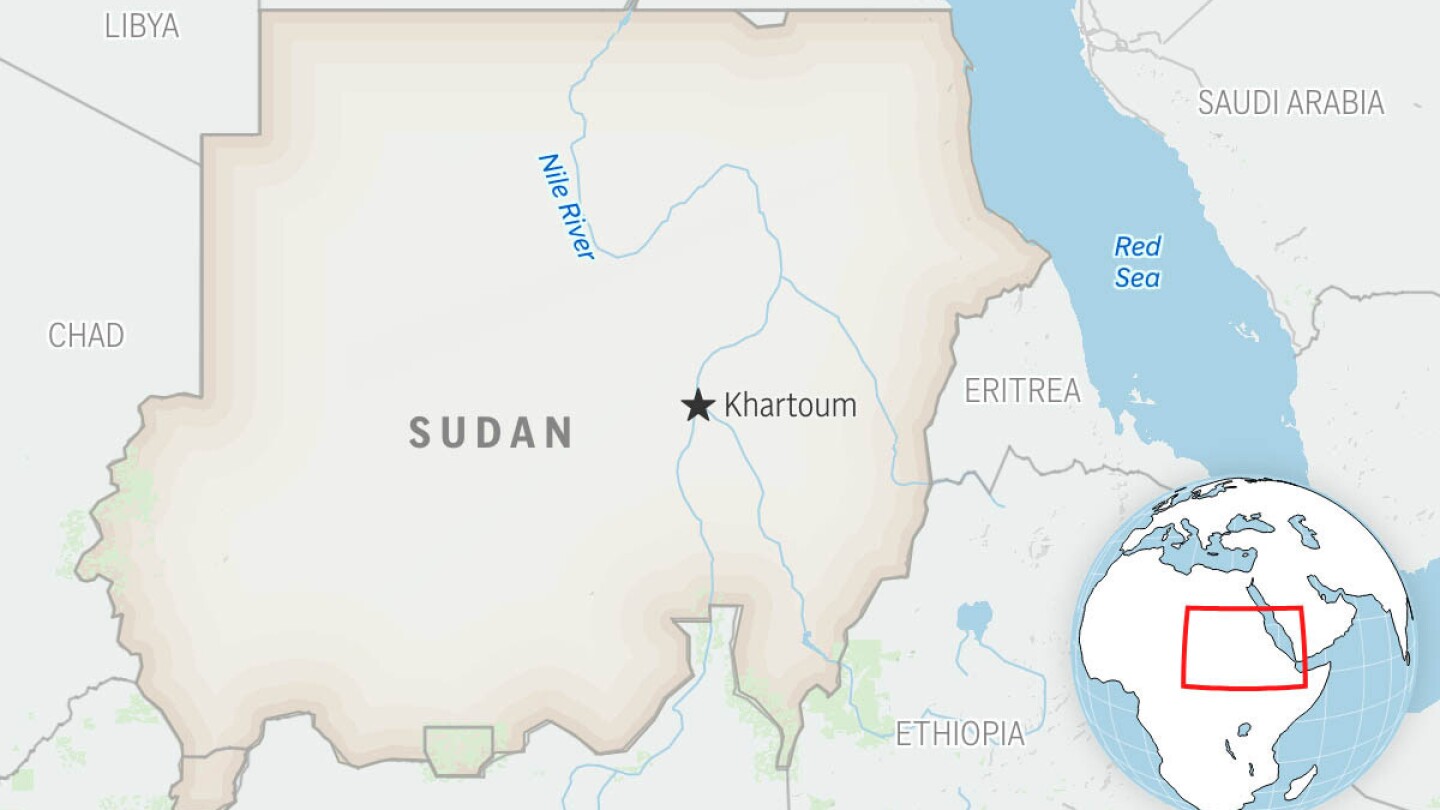
    In a devastating maritime incident off the coast of Tobruk, eastern Libya, a vessel carrying 74 individuals, predominantly Sudanese refugees, capsized on Wednesday. The United Nations High Commissioner for Refugees (UNHCR) in Libya confirmed that only 13 people survived the tragedy. Dozens remain unaccounted for, with rescue operations likely ongoing. The incident underscores the perilous journeys undertaken by refugees seeking safety and better opportunities, often risking their lives in overcrowded and unsafe vessels. The UNHCR shared the grim update via a post on X (formerly Twitter), highlighting the ongoing humanitarian crisis in the region. The Libyan coast has become a notorious route for such dangerous crossings, with similar incidents frequently reported. This tragedy adds to the growing list of maritime disasters in the Mediterranean, where refugees and migrants face life-threatening conditions. The international community continues to grapple with the complexities of migration and the urgent need for safer pathways for those fleeing conflict and hardship.