
Stemaide, a Ghana-based technology firm founded in 2022, is making waves with its mission to equip young Africans with essential science and technology skills. Under the leadership of CEO Prince Boateng Asare, the company has developed a groundbreaking science kit designed to function seamlessly in areas without internet access. This innovation aims to bridge the digital divide and prepare the continent’s youth for future job markets. As part of a six-part series on African technology, Stemaide’s initiative highlights the transformative potential of localized technological solutions. By focusing on accessibility and education, the firm is paving the way for a more inclusive and technologically adept Africa.
标签: Africa
非洲
-
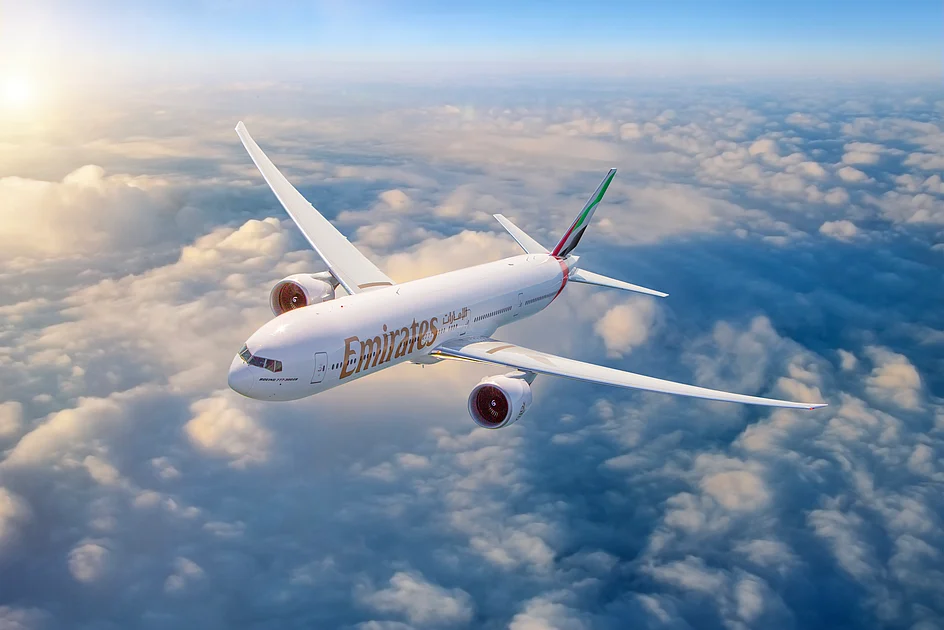
For small states, air links can be the first step in welcoming international investment
In the early 1980s, the Maldives was among the world’s poorest nations, with a fragile economy and minimal global presence. Today, it stands as a testament to transformation, with a tripled population, per capita income exceeding $18,000, and significant improvements in health, education, and life expectancy. A key driver of this success? Air connectivity. In 1987, Emirates launched biweekly flights to Malé, a bold move that unlocked the Maldives’ potential as a global tourism hub. Today, Emirates operates multiple daily flights, supporting a tourism sector that contributes nearly a third of the nation’s GDP. This story underscores the pivotal role of air links in economic development, particularly for small states. Airlines not only facilitate tourism but also attract investment, foster innovation, and reduce operational friction for international businesses. They enable students to study abroad, entrepreneurs to access new markets, and nations to integrate into the global economy. Antigua and Barbuda, a small island nation, recognizes this potential. Recent discussions with Emirates on potential air routes aim to deepen connectivity and economic opportunities. The nation has also signed bilateral air service agreements with Qatar and visa waiver agreements with several African countries, positioning itself as a hub between the Caribbean, the Middle East, and Africa. These efforts are part of a broader strategy to attract visitors, investment, and partnerships. However, as small states expand their air networks, they must balance growth with environmental responsibility. Emirates’ commitment to sustainable aviation fuel and cleaner technologies aligns with this vision, offering a model for sustainable development. Air connectivity is more than a logistical tool; it is a catalyst for transformation, unlocking potential and fostering resilience in small states.
-
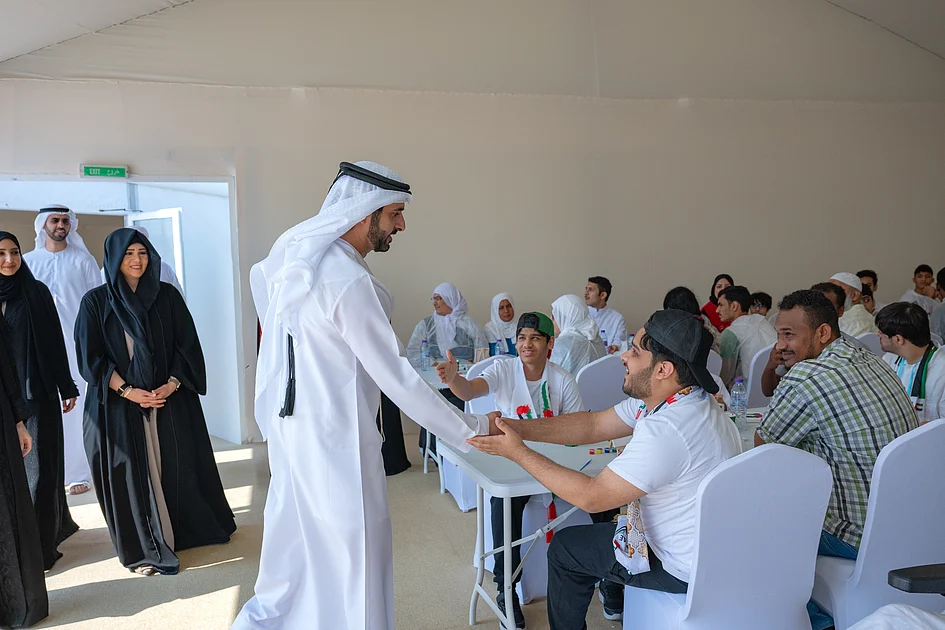
Look: Sheikh Hamdan meets people of determination painting Flag Day mural on Mamzar beach
In a vibrant celebration of UAE Flag Day, Sheikh Hamdan bin Mohammed bin Rashid Al Maktoum, Crown Prince of Dubai, joined over 200 individuals of determination and 400 volunteers at Al Mamzar Park for a special art session. The event, titled ‘Art Session with People of Determination’, was part of the ‘7 Over 7’ initiative, aimed at fostering skill-based volunteering and community engagement across the UAE’s seven emirates. Participants showcased their artistic talents by creating a series of artworks that celebrated the UAE’s identity and heritage, with the highlight being the painting of the UAE flag on the outer theatre wall at the park. Sheikh Hamdan praised the creativity and unity displayed, emphasizing the importance of volunteerism and the role of art in uniting the community. The event also saw the presence of Sheikha Latifa bint Mohammed, Chairperson of Dubai Culture and Arts Authority, and other officials, who commended the participants for their inspiring contributions to the nation’s cultural development.
-
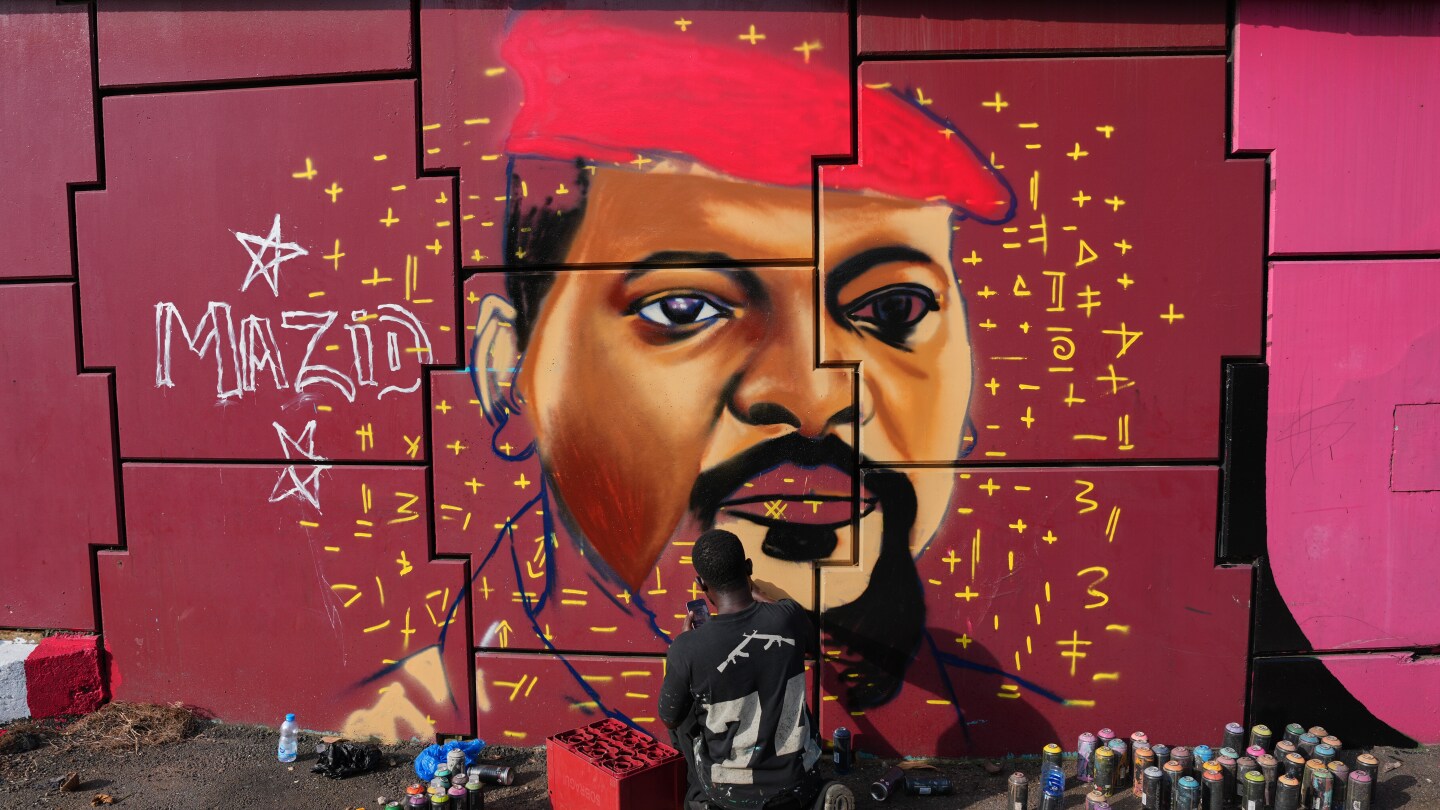
Guinea’s junta leader decides to run for president 4 years after leading a coup
In a surprising turn of events, Guinea’s junta leader, General Mamadi Doumbouya, has officially announced his candidacy for the upcoming presidential election scheduled for December 28, 2024. This move contradicts his earlier commitment to refrain from seeking office after leading a military coup in September 2021. Since assuming power, Doumbouya has served as both the junta leader and interim president, and a victory in the election could extend his leadership for another seven years. The election will be conducted under a new constitution, recently approved via referendum, which permits junta members to run for office and extends the presidential term from five to seven years. Guinea joins a growing list of African nations, including Mali, Niger, and Burkina Faso, where military leaders who seized power have backtracked on promises to restore democracy. Doumbouya’s candidacy comes amidst a weakened opposition, with key leaders like Cellou Dalein Diallo and Sidya Toure forced into exile and their parties unlikely to participate in the election. Additionally, the junta has established a new electoral body, with its heads to be appointed by decree, further consolidating Doumbouya’s position.
-
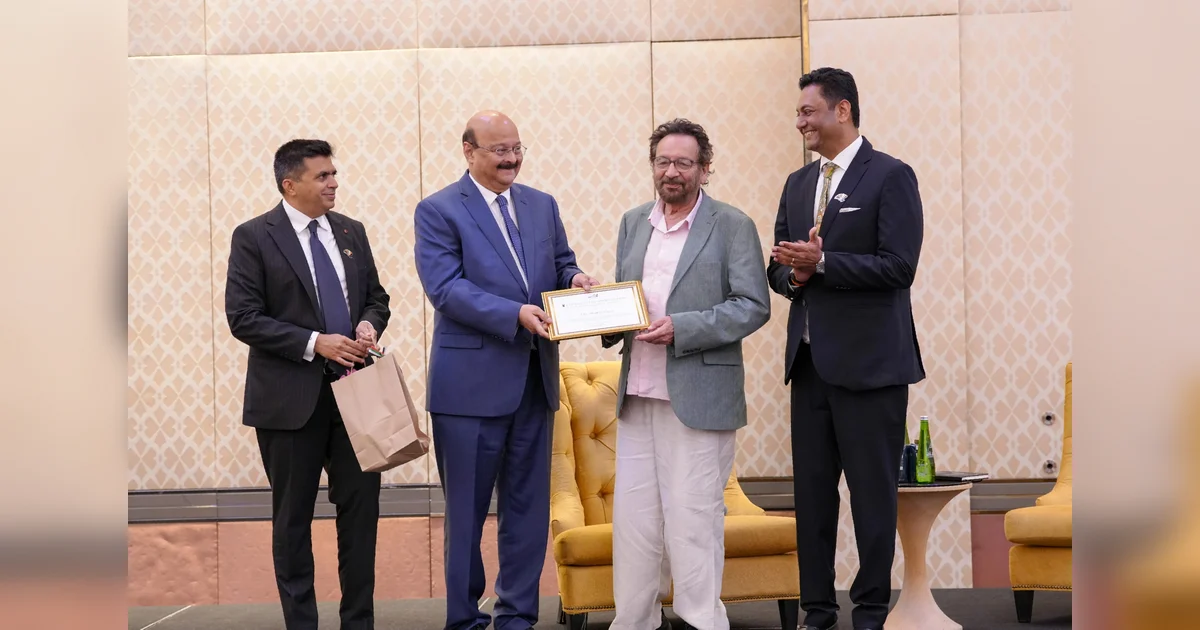
The Indian Business & Professional Group (IBPG) sparks pivotal conversation on AI’s future
The Indian Business & Professional Group (IBPG) in Abu Dhabi recently hosted a groundbreaking event titled ‘AI – Friend, Foe, or Future?’ The session brought together a diverse array of thought leaders, innovators, and young voices to delve into the transformative role of artificial intelligence in shaping industries, human potential, and the future of business. With over 250 attendees, the event underscored the growing global interest in AI’s impact on progress. Rajiv Shah, President of IBPG, reflected on the group’s achievements in 2025, including tripling membership and hosting over 30 impactful events, expressing optimism for an even more dynamic 2026. The event featured insights from industry pioneers such as Shekhar Kapur, a visionary filmmaker and Padma Bhushan awardee, and Vishal Mishra, Director of AI Software Engineering at Inception. Young leaders from Abu Dhabi Indian School also shared Gen-Z perspectives on AI’s societal implications. Kapur emphasized the inevitability of AI adoption, while Hamad Al Hamed of Gracia Group highlighted sustainable agriculture initiatives. Varun Wahi, General Secretary of IBPG, stressed AI’s transformative potential across business and society. The event concluded with IBPG and Gracia Group signing an MoU to plant 500 trees in Abu Dhabi, reinforcing their commitment to environmental stewardship. Membership in IBPG is open to Indians, individuals of Indian origin, and corporate entities.
-
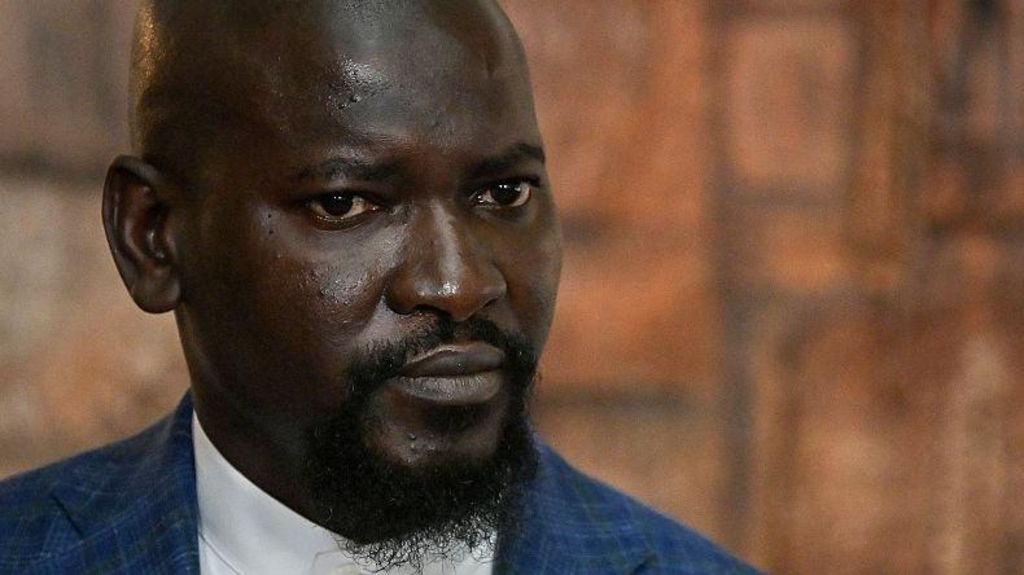
Guinea’s coup leader enters presidential race
In a surprising turn of events, Colonel Mamady Doumbouya, the military leader who has governed Guinea since a coup in 2021, has officially entered the presidential race, reneging on his earlier commitment to transition power to a civilian government. Doumbouya submitted his candidacy at the Supreme Court on Monday, accompanied by soldiers and donning black sunglasses, though he refrained from making any public statements. His decision has sparked widespread concern over the credibility of the upcoming December elections, particularly as two major opposition parties, RPG Arc en Ciel and UFDG, have been barred from participating. The election is being conducted under a new constitution that permits Doumbouya to run, despite his previous pledge to abstain from any candidacy. Critics argue that his administration has stifled dissent, suspended media outlets, restricted internet access, and violently suppressed protests, mirroring the very issues he cited when overthrowing former President Alpha Condé in 2021. Condé, now 83, along with other prominent political figures, remains in exile, further diminishing the election’s inclusivity. Doumbouya, a 40-year-old former middle-ranking soldier with a 15-year military career spanning multiple international missions, is currently the youngest head of state in Africa. His candidacy has cast a shadow over Guinea’s democratic aspirations, raising questions about the nation’s political future.
-
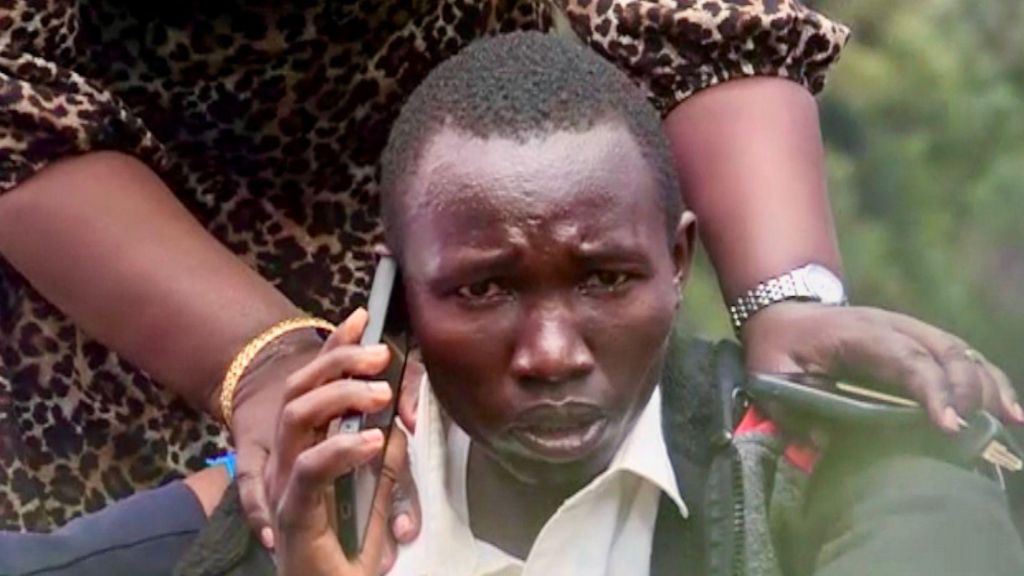
Agony for families as landslide death toll climbs in Uganda and Kenya
A series of devastating landslides has struck the mountainous border region between Kenya and Uganda, claiming the lives of over 40 people and leaving many more missing. The tragedy has left communities in shock, with survivors recounting harrowing experiences of loss and destruction. Felix Kemboi, a 30-year-old from Kenya, lost six relatives, including his grandmother, aunt, uncle, two sisters, and a cousin, who were all residing in Kaptul village. The emotional toll on survivors like Felix is immense, as they struggle to articulate their grief. On both sides of the border, search and rescue operations are underway, though the risk of further landslides remains high due to ongoing heavy rainfall. Kenyan Interior Minister Kipchumba Murkomen has issued warnings about the heightened risk in the Kerio Valley region and urged residents to remain vigilant. In Uganda, the Red Cross Society reports at least 18 fatalities, with 20 people still unaccounted for in the districts of Kapchorwa, Bukwo, and Kween. Survivors like Helda Narunga Masai from Kween village have shared terrifying accounts of the disaster, which destroyed her home and claimed the lives of her niece and brother. The Ugandan government has announced compensation for bereaved families and survivors, while Kenya has yet to make a similar declaration. The landslides have also disrupted access to some areas, complicating rescue efforts. This disaster echoes the 2010 Bududa landslide in Uganda, which killed approximately 300 people, highlighting the recurring nature of such tragedies in the region.
-
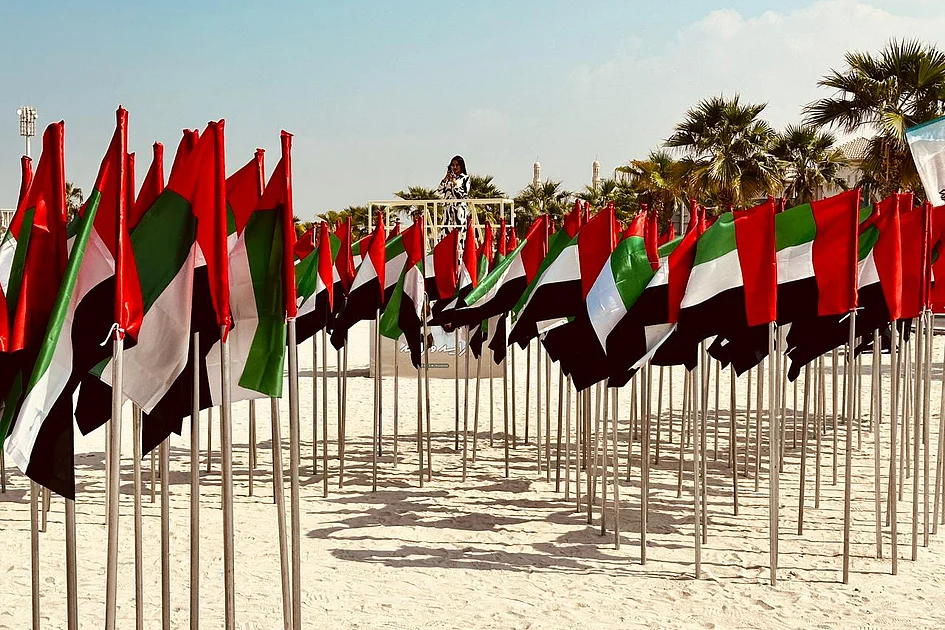
Look: UAE residents celebrate Flag Day; beaches, landmarks full of colour
On November 3, 2025, the United Arab Emirates (UAE) came alive with patriotic fervor as residents celebrated Flag Day, a cherished occasion that honors the nation’s unity, heritage, and future. At precisely 11 a.m., the country paused as the national anthem resonated across schools, government buildings, homes, and even public beaches. Flags were raised high, symbolizing loyalty, belonging, and gratitude for the UAE’s founding values. Introduced in 2013 by Sheikh Mohammed bin Rashid Al Maktoum, Vice-President and Prime Minister of the UAE and Ruler of Dubai, Flag Day commemorates the anniversary of Sheikh Khalifa bin Zayed Al Nahyan’s presidency in 2004. This annual event, observed on November 3, serves as a powerful reminder of the nation’s shared identity and collective pride. From Dubai’s iconic Flag Garden, where thousands of flags formed breathtaking aerial portraits of Sheikh Zayed and Sheikh Rashid, to Sharjah’s towering Flag Island, the celebrations were a visual spectacle. Families, children, and government employees gathered in unity, waving flags and capturing the moment on social media with captions like ‘Proudly raising our flag.’ Maitha Al Harbi, a Dubai teacher, expressed the sentiment shared by many: ‘It’s a proud day, every year it feels special all over again.’ While Flag Day itself is brief, it marks the beginning of a month-long National Month, leading up to Eid Al Etihad in December. This period is dedicated to celebrating the UAE’s national identity through events and initiatives, ensuring the spirit of unity continues to inspire residents and visitors alike.
-
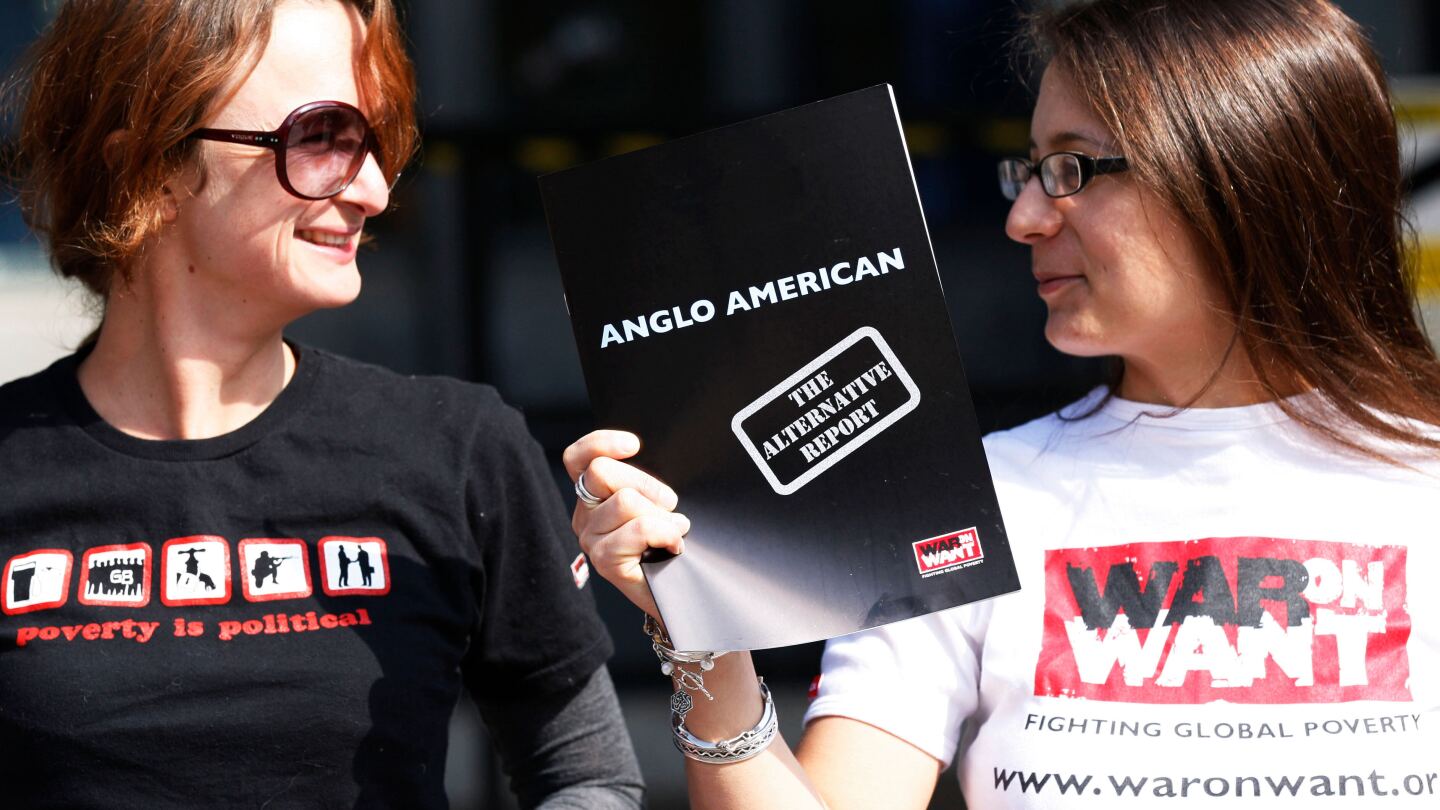
Mining giant Anglo American faces class action appeal over alleged lead poisoning in Zambia
An appeal hearing commenced on Monday in South Africa’s Supreme Court of Appeal, addressing whether a subsidiary of British mining giant Anglo American PLC bears responsibility for decades-long lead poisoning that allegedly affected approximately 140,000 individuals in Zambia. The class action lawsuit, brought by women and children, seeks to overturn a 2023 lower court ruling that dismissed their case against Anglo American South Africa. The plaintiffs argue that a mine in Kabwe, Zambia, which Anglo American South Africa was involved with from 1925 to 1974, caused severe environmental and health damage, poisoning generations of local residents. The lower court had dismissed the case, citing insufficient initial evidence and deeming it ‘an unmanageable class action’ due to the need for each of the 140,000 claimants to individually prove illness caused by lead poisoning. The judge estimated that consulting all claimants could take up to a decade. Kabwe, one of the world’s most polluted areas, was highlighted in a 2022 UN report as a region permanently scarred by mining activities. A 2023 Human Rights Watch report revealed soil lead contamination levels of 60,000 milligrams per kilogram in Kabwe, far exceeding the U.S. Environmental Protection Agency’s hazardous threshold of 200 milligrams per kilogram. Medical studies supported by Amnesty International indicate that Kabwe’s children exhibit record-high lead levels in their blood, which can cause irreversible damage to internal organs, including the brain. While Anglo American acknowledges severe contamination in Kabwe, it denies liability, stating it only held a minority stake in the Zambian company operating the mine and attributes the pollution to other parties. This case follows another recent mining disaster in Zambia, where a Chinese company was accused of concealing a toxic spill that contaminated a major river, impacting millions reliant on it for drinking water and irrigation.
-
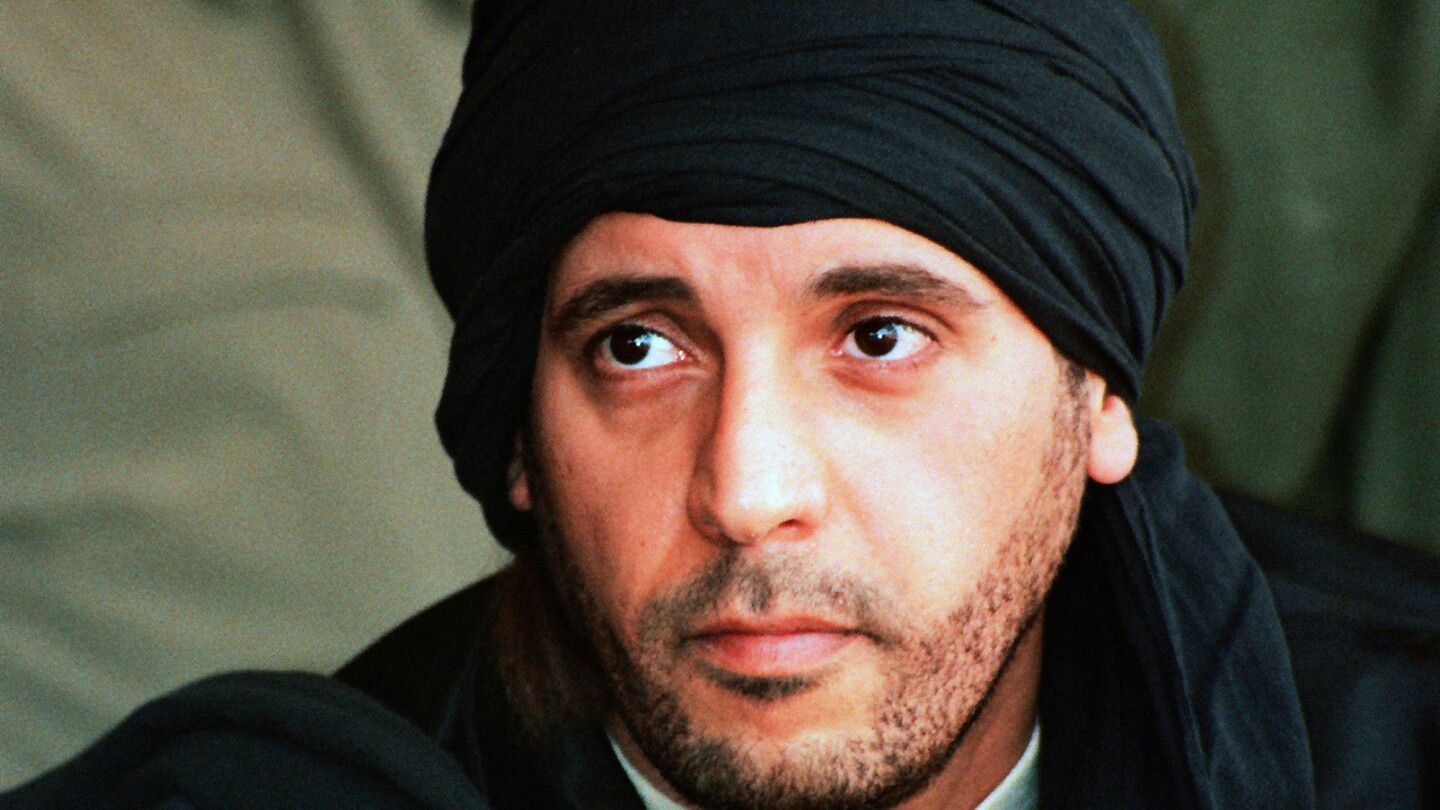
Libyan delegation in Beirut seeks release of the son of late Libyan leader Moammar Gadhafi
A Libyan delegation in Lebanon made significant strides in discussions with Lebanese judicial officials on Monday regarding the potential release of Hannibal Gadhafi, the son of the late Libyan leader Moammar Gadhafi. Gadhafi has been detained in Lebanon without trial since 2015. The five-member delegation, led by senior judicial officials including prosecutor Jamal Hajar, engaged in talks to address the conditions of Gadhafi’s release. Lebanese judicial sources, speaking anonymously, confirmed that the discussions focused on reducing the $11 million bail imposed on Gadhafi and lifting his travel ban. The Libyan delegation also presented a detailed report on the investigation into the disappearance of Lebanese Shiite cleric Moussa al-Sadr, who vanished during a trip to Libya in 1978. Gadhafi, who was less than three years old at the time of al-Sadr’s disappearance, has been accused of withholding information about the cleric’s fate. The case has been a contentious issue in Lebanon, with al-Sadr’s family believing he may still be alive in a Libyan prison, while most Lebanese presume he is deceased. The Libyan delegation’s visit also included a meeting with Lebanese President Joseph Aoun, where they emphasized Tripoli’s desire to reactivate bilateral relations with Beirut and resolve pending issues. Gadhafi, who had been living in exile in Syria before his abduction in 2015, is expected to relocate to Qatar if released. The Hostage Aid Worldwide organization has long advocated for his release, citing concerns over his prolonged detention without due process. The case remains a complex and sensitive matter, intertwined with the histories of both Libya and Lebanon.