标签: Africa

非洲

  • Bridging economies, building futures – India and the UAE as global partners in progress

    Bridging economies, building futures – India and the UAE as global partners in progress

    The strategic economic partnership between India and the United Arab Emirates has evolved into a transformative force driving mutual prosperity and global innovation. Under the groundbreaking Comprehensive Economic Partnership Agreement (CEPA), bilateral trade has experienced remarkable acceleration, creating unprecedented opportunities for businesses across both nations.

    This enhanced economic connectivity has fundamentally reshaped commercial relationships, with Indian enterprises increasingly utilizing the UAE as their primary global expansion hub. Simultaneously, UAE investors are directing substantial capital toward India’s rapidly evolving innovation ecosystem. The agreement has particularly benefited small and medium-sized enterprises, startups, and major corporations alike, generating employment opportunities and enhancing competitive capabilities across diverse sectors.

    Future-oriented collaborations are now emerging in renewable energy, with joint ventures advancing green hydrogen technology, solar power innovations, and sustainable urban development projects. The digital transformation sector demonstrates equal dynamism, with fintech, artificial intelligence, health technology, and smart manufacturing experiencing substantial growth through the India-UAE corridor. This technological synergy thrives within an environment of progressive regulation and vibrant entrepreneurial activity.

    The India Business and Professional Council (IBPC) Dubai has played a pivotal role in facilitating this partnership for over two decades. Throughout 2025, the organization orchestrated numerous high-impact events including an AI Summit at Dubai Chambers, Youth Conclave gatherings, and specialized symposiums covering steel and alloy industries. The Capital Connect Series provided direct access to regional investors, while high-level governmental engagements with Indian Chief Ministers further strengthened institutional cooperation.

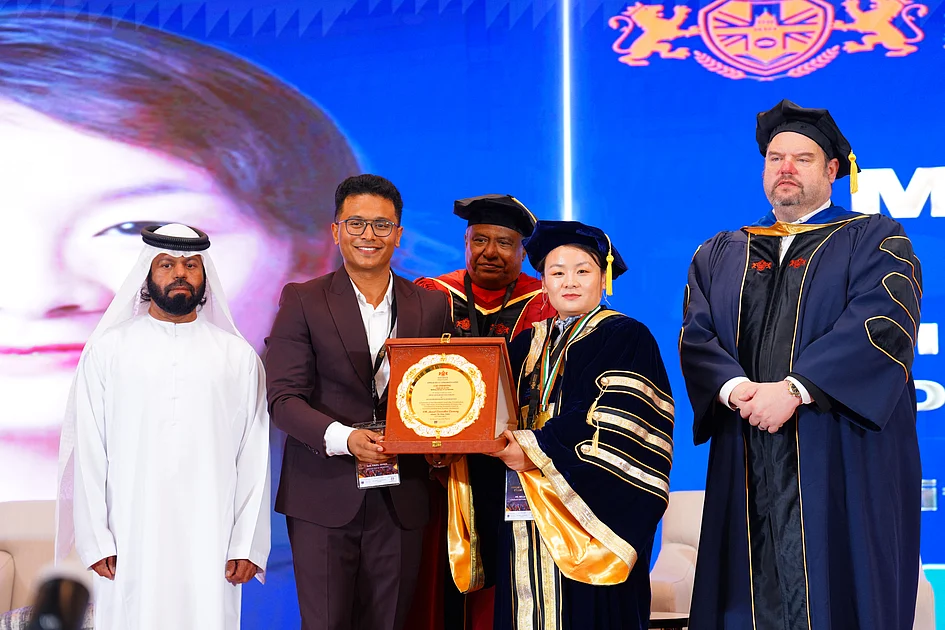
    Notably, the partnership has received robust support from Emirati leadership, including Dr. Tayeb Kamali of IOD India and Thani bin Ahmed Al Zeyoudi, UAE’s Minister of State for Foreign Trade. Dubai Chambers has consistently amplified these initiatives, enabling IBPC Dubai to effectively bridge commercial interests between both nations.

    Beyond economic metrics, the relationship thrives through cultural exchanges and community engagements celebrating India’s Independence Day, Republic Day, and International Women’s Day. These people-to-connections form the foundational bedrock of what has evolved from traditional trade partnership into comprehensive global cooperation aimed at building sustainable futures through shared vision and mutual respect.

  • Nigeria’s defence minister resigns amid kidnapping crisis

    Nigeria’s defence minister resigns amid kidnapping crisis

    In a significant development for Nigeria’s security apparatus, Defense Minister Mohammed Badaru Abubakar has abruptly resigned from his cabinet position citing health concerns. The 63-year-old’s departure comes at a critical juncture as the nation grapples with worsening security challenges, particularly a surge in mass abductions targeting civilians.

    The timing of Abubakar’s exit coincides with alarming reports from the UN Human Rights Office indicating at least 402 kidnappings since mid-November, predominantly affecting schoolchildren. Recent incidents include the abduction of 20 individuals during separate raids in northern Nigeria, capturing a Christian pastor alongside a Muslim bride and her bridal party. Approximately 250 students and 12 educators from a Catholic school in Niger state remain missing following what represents one of the largest kidnapping events in recent weeks.

    While analysts predominantly attribute these crimes to criminal syndicates seeking ransom payments, presidential representatives have suggested jihadist involvement. The minister, who previously served two terms as governor of Jigawa state from 2015 to 2023, played a pivotal role in President Bola Tinubu’s 2023 electoral victory by delivering his home state.

    President Tinubu has accepted the resignation with acknowledgments for Abubakar’s national service. Concurrently, the administration has declared a national security emergency, unveiling plans to expand police capabilities by recruiting 20,000 additional officers to reach a force strength of approximately 50,000.

    Nigeria currently confronts multiple security threats including criminal kidnappings, Islamist insurgencies in northern territories, separatist violence in southeastern regions, and resource conflicts between herders and farmers in central areas. Presidential spokespersons indicate Tinubu will present Abubakar’s successor to the Senate for confirmation within days.

  • Nigeria grants asylum to Guinea-Bissau presidential candidate after coup

    Nigeria grants asylum to Guinea-Bissau presidential candidate after coup

    In a significant diplomatic move, Nigeria has provided political asylum to Fernando Dias, a presidential contender from Guinea-Bissau, following a military takeover that disrupted the electoral process. The 47-year-old candidate from the Party for Social Renewal sought refuge at the Nigerian embassy in Bissau after reporting direct threats to his safety.

    The political crisis erupted when military forces suspended the electoral proceedings three days after the November 23 presidential vote, blocking the release of election results that both Dias and incumbent President Umaro Sissoco Embaló had claimed to win. The junta justified its intervention as necessary to prevent what it described as a plot to destabilize the politically volatile nation.

    Nigerian Foreign Minister Yusuf Tuggar confirmed the protective measures, stating President Bola Tinubu authorized Dias’s sanctuary at the embassy compound. “This decision demonstrates our unwavering commitment to protecting democratic aspirations and the sovereign will of Guinea-Bissau’s people,” Tuggar communicated to the ECOWAS Commission.

    The military regime has implemented stringent measures including a ban on public demonstrations and installed General Horta N’Tam as transitional leader for a one-year period. Meanwhile, ECOWAS mediators led by Sierra Leone’s Foreign Minister Alhaji Musa Timothy Kabba have engaged in tense negotiations with the junta, described as “productive” yet contentious.

    International scrutiny intensifies as Senegal’s Prime Minister Ousmane Sonko and former Nigerian leader Goodluck Jonathan have suggested the coup might be fabricated, though without presenting substantiating evidence. Local civil society organizations have accused Embaló of orchestrating a “simulated coup” to manipulate electoral outcomes—allegations the president has not addressed.

    Embaló, who departed for Senegal before reportedly continuing to Congo-Brazzaville, has historically faced accusations of exploiting crises to suppress opposition. The current turmoil adds to Guinea-Bissau’s extensive history of political instability, with at least nine coups or attempted takeovers since gaining independence from Portugal in 1974.

    ECOWAS has suspended Guinea-Bissau from all decision-making bodies pending restoration of constitutional order, while deploying security personnel to protect the Nigerian embassy where Dias remains under protection.

  • Salah a top professional after being dropped – Slot

    Salah a top professional after being dropped – Slot

    In a significant tactical shift, Liverpool manager Arne Slot made the decisive choice to relegate star forward Mohamed Salah to the bench for the club’s pivotal Premier League clash against West Ham. This move, which contributed to a crucial 2-0 victory, marked the first time since April 2024 that the Egyptian international was omitted from the starting lineup in league play. The decision arrives amidst a dire run of form for the Reds, who have suffered nine defeats across their last twelve matches in all competitions. Slot publicly lauded Salah’s reaction to the demotion, characterizing the prolific scorer as a ‘top professional’ for his disciplined response. Despite winning the Golden Boot last season with 29 goals, Salah’s production has sharply declined this campaign, netting only four times in the Premier League. Slot acknowledged it was a ‘fair assumption’ that the player was displeased, noting such a reaction is normal for a player of his caliber. The manager further emphasized Salah’s critical future role with the club while confirming his imminent departure for the Africa Cup of Nations (Afcon) beginning December 15th. His absence could extend until January 19th if Egypt reaches the final, potentially causing him to miss seven fixtures, including a high-stakes encounter with league leaders Arsenal. Currently sitting eighth in the table and trailing Arsenal by nine points, the defending champions now face the immediate challenge of fixtures against Sunderland and Leeds as they navigate a period of transition without their key attacker.

  • Emirati recalls standing behind Sheikh Zayed when UAE flag was raised for the first time

    Emirati recalls standing behind Sheikh Zayed when UAE flag was raised for the first time

    On the dawn of December 2, 1971, a profound historical transformation unfolded at Union House in Dubai as the United Arab Emirates flag ascended for the inaugural time, heralding the birth of a sovereign nation. Among the privileged few witnessing this seminal event was Khalifa Al Suwaidi, who accompanied the revered Founding Father Sheikh Zayed bin Sultan Al Nahyan on his momentous journey from Abu Dhabi to Dubai.

    In exclusive recollections shared with Khaleej Times, Al Suwaidi delineated the pre-dawn departure from Abu Dhabi, emphasizing Sheikh Zayed’s remarkable composure amidst the epochal significance of the day. “I occupied the vehicle directly trailing Sheikh Zayed’s conveyance,” Al Suwaidi recounted. “His demeanor remained characteristically tranquil and contemplative, as though he visualized the nation’s entirety before its formal proclamation.”

    The procession incorporated a strategically pivotal interlude at Jebel Ali—then an undeveloped desert terrain, now a globally consequential economic zone. Here, Sheikh Zayed engaged in profound discourse with his compatriots regarding the philosophical foundations of statehood. Al Suwaidi preserved the leader’s indelible declaration: “Today, we initiate national construction not merely upon sand, but upon mutual affection and collaborative endeavor.”

    The culminating ceremony at Union House witnessed Al Suwaidi positioned mere steps behind Sheikh Zayed during the flag-raising ritual. “As Sheikh Zayed grasped the flagpole, profound silence enveloped the assembly,” he described. “Universal awareness prevailed that we observed the genesis of extraordinary historical developments. The flag’s ascent elicited visceral chills and emotional tears among attendees.”

    Beyond the political implications, Al Suwaidi’s reminiscences illuminate Sheikh Zayed’s exemplary human qualities and leadership paradigm. “His consistent reverence toward all individuals—leaders, military personnel, and laborers alike—manifested his conviction that authentic unity originates from benevolence, reciprocal cooperation, and unified objectives.”

    Five decades subsequent to this transformative occurrence, Al Suwaidi acknowledges persistent emotional resonance when observing the UAE flag aloft. The memory embodies not merely historical recollection but an enduring testament to visionary leadership and the nation’s extraordinary developmental trajectory.

  • Devastating toxic spill seen as test of whether African countries will stand up to China

    Devastating toxic spill seen as test of whether African countries will stand up to China

    A catastrophic dam failure at a Chinese-operated copper mine in Zambia’s Copperbelt Province has unleashed an environmental disaster with far-reaching consequences for both human health and diplomatic relations. The collapse of the tailings dam at Sino-Metals Leach Zambia—a subsidiary of a Chinese state-owned corporation—released between 50,000 to 1.5 million tonnes of toxic debris into surrounding waterways, according to conflicting government and environmental assessments.

    The toxic spill has contaminated Zambia’s longest river, the Kafue, a crucial drinking water source, while devastating local agriculture and fisheries. Heavy metals including arsenic, mercury, and lead have permeated farmland and water systems, creating immediate health risks and potential long-term ecological damage. Medical experts warn these contaminants can cause kidney damage, cancers, and gastrointestinal illnesses, with concerns that seasonal rains may distribute pollutants downstream toward the capital Lusaka.

    Despite Chinese embassy claims that pollution remained contained and water acidity normalized, local testimony reveals profound impacts. Farmers report complete crop failure and soil contamination, while fishermen describe aquatic ecosystems devoid of life. Affected communities describe worsening malnutrition, health complications, and economic devastation.

    The incident has triggered one of Zambia’s largest environmental lawsuits, with 176 farmers seeking $80 billion in damages from Sino Metals and NFC Africa. This legal action represents a critical test case for holding Chinese corporations accountable in Africa, where China maintains substantial economic influence through mineral extraction investments exceeding $1.7 billion in Zambia alone.

    Complex power dynamics underlie the crisis, with Zambia owing China approximately $5 billion in debt while simultaneously engaging with American diplomatic and economic overtures. This triangular relationship may empower Zambian authorities to demand greater accountability, according to regional analysts.

    Remediation efforts face significant challenges, with experts predicting complete environmental recovery could require over a decade. While Sino Metals has provided limited compensation to some households and promised restoration measures, implementation remains inconsistent. The Zambian government has mandated mitigation strategies including lime treatment and reforestation, but structural tensions between consultants and the mining company have delayed comprehensive cleanup operations.

    The disaster highlights broader tensions in China-Africa relations, where Chinese investment provides crucial employment and infrastructure while facing accusations of neocolonial practices, environmental negligence, and failure to develop local workforce capabilities. As Zambia navigates this crisis, its handling may signal a new era of African agency in negotiating with global superpowers.

  • ‘We love you, UAE!’: Residents celebrate Eid Al Etihad in colourful parade

    ‘We love you, UAE!’: Residents celebrate Eid Al Etihad in colourful parade

    City Walk in Dubai transformed into a spectacular tapestry of international unity on Monday as thousands of residents gathered for the Eid Al Etihad parade, celebrating the UAE’s 54th National Day. The vibrant procession showcased an extraordinary display of cross-cultural harmony with participants from Russia, the Philippines, India, Pakistan, China, Turkey, and numerous other nations marching in unison while waving UAE flags and chanting expressions of affection for their host country.

    The thoroughfares brimmed with enthusiastic spectators adorned in the UAE’s distinctive colors, enthusiastically recording the dynamic performances on their mobile devices. Attendees journeyed from across the emirates to participate in the festivities, creating an atmosphere of genuine international camaraderie.

    Varvara Petrova, a Russian expatriate who accessorized with a traditional platok scarf, expressed how marching in the parade fostered a profound connection to the UAE. ‘Having resided here for four years, this procession demonstrates the nation’s remarkable inclusivity toward all nationalities,’ she remarked.

    Mary Marisol, representing the Filipino community contingent, emphasized their heartfelt gratitude through chants of ‘We love UAE.’ She elaborated, ‘Our chants reflect genuine appreciation for everything this nation has provided us. The collective celebration created an immensely uplifting experience.’

    Pakistani participant Bilal Ahmed highlighted the cultural fusion as the event’s defining characteristic. ‘Witnessing diverse nationalities marching together with authentic affection and brotherhood is uniquely Emirati. This unity exists nowhere else quite like this,’ he observed.

    The parade featured an enthralling sequence of cultural presentations, commencing with an Indian community band delivering spirited musical performances. Filipino groups followed with energetic cheers praising the UAE, while Chinese performers captivated audiences with an elegant umbrella dance that elicited enthusiastic applause. Russian contributors added chromatic vibrancy in traditional attire, and Pakistani contingents waved their flags with evident pride. Turkish residents displayed dual flags symbolizing their dual allegiances.

    Families with children clad in national colors frequently paused to photograph the multicultural displays. Ayesha Khan from Al Nahda brought her children specifically to demonstrate the UAE’s multicultural coexistence, noting, ‘This resembled an enormous international family gathering. My children were delighted seeing everyone united in celebrating the UAE.’

    Throughout the event, resonant chants of ‘We love UAE’ echoed across City Walk, powerfully conveying the profound connection expatriates feel toward their adopted homeland.

  • Carse says England bowlers have plans to tackle Head in Brisbane

    Carse says England bowlers have plans to tackle Head in Brisbane

    England’s cricket team is refining specialized bowling strategies to neutralize Australian batsman Travis Head’s explosive form, following his match-winning performance in the Ashes opener in Perth. Fast bowler Brydon Carse confirmed the team has developed specific tactical plans regardless of Head’s batting position in the upcoming day-night Test at Brisbane’s Gabba ground.

    Head’s extraordinary second-innings performance saw him score 123 runs from just 69 deliveries while opening in place of injured Usman Khawaja, recording the second-fastest century in Ashes history. His aggressive left-handed batting propelled Australia to an eight-wicket victory within two days, demonstrating remarkable offensive capabilities that England must counter to level the series.

    Carse, who claimed five wickets during the Perth defeat, acknowledged Head’s ‘phenomenal knock’ while emphasizing England’s preparedness. ‘We’ve got set plans we’ll look to implement if he opens again,’ Carse stated. ‘He had an incredible day out that afternoon, but our mindset remains unchanged. Whatever batting order we face, we’ll stick to our disciplined approach.’

    The England bowling unit faces additional challenges with concerns about Mark Wood’s fitness for the pink-ball Test. Carse emphasized the team’s adaptability to bowling under lights and the settled nature of their bowling group, noting his readiness to adjust to varying match situations. The 30-year-old bowler stressed the importance of role clarity within the bowling unit as England seeks to overcome their initial defeat in the historic rivalry series.

  • James says 10-man Chelsea could have won against Arsenal

    James says 10-man Chelsea could have won against Arsenal

    Chelsea FC demonstrated remarkable fortitude during Sunday’s Premier League clash against Arsenal, securing a 1-1 draw despite playing with reduced numbers for over an hour at Emirates Stadium. The London derby witnessed Chelsea’s Moises Caicedo receive a straight red card following a VAR review in the 38th minute for his challenge on Mikel Merino.

    Despite this significant disadvantage, Chelsea stunned the home crowd when defender Trevor Chalobah connected with captain Reece James’ precision corner kick, directing a brilliant header into the net just three minutes after halftime. The Blues maintained their defensive discipline until the 59th minute when Merino redeemed himself by meeting Bukayo Saka’s cross with an equalizing header.

    Chelsea’s resilience continued throughout the match as they created several scoring opportunities. Pedro Neto consistently threatened down the right flank, while substitute Liam Delap forced a crucial save from Arsenal goalkeeper David Raya in the 78th minute. Captain James expressed immense pride in his team’s performance, emphasizing their dominant display against the current league leaders.

    The result leaves Chelsea positioned third in the Premier League table with 24 points, trailing Arsenal by six points. Chelsea now prepare for their midweek fixture against Leeds United at Elland Road on Wednesday, carrying momentum from their impressive defensive performance against the league’s top side.

  • Groundbreaking HIV prevention shots begin in Africa

    Groundbreaking HIV prevention shots begin in Africa

    A new era in HIV prevention has commenced across Southern Africa with the landmark public rollout of lenacapavir, a groundbreaking injectable medication demonstrating unprecedented efficacy against HIV transmission. The revolutionary prevention tool, administered just twice annually, has shown remarkable 99.9% effectiveness in clinical trials, positioning it as a functional equivalent to a powerful vaccine against the virus.

    South Africa, Eswatini, and Zambia initiated their respective programs on World AIDS Day, marking the first real-world implementation of this long-acting preventive solution in low- and middle-income nations. The Wits University research unit in South Africa—where approximately 20% of adults live with HIV—spearheaded the rollout through an initiative funded by Unitaid, the United Nations global health agency.

    The launch ceremonies featured significant public engagement, with dozens lining up for injections in Eswatini’s Hhukwini constituency amid celebratory songs and dances. Eswatini’s Prime Minister Russell Dlamini declared the development “a turning point in our national HIV response” that provides “fresh hope and a powerful tool to protect our citizens.”

    Despite the enthusiasm, significant challenges remain regarding accessibility and cost. The medication carries a staggering $28,000 annual price tag per person in the United States, raising concerns about affordability in resource-limited settings. Under a current arrangement, manufacturer Gilead Sciences has committed to providing lenacapavir at no profit to two million people in high-HIV burden countries over three years through a US program.

    Notably, South Africa—despite its participation in clinical trials—will not receive doses through this initiative due to ongoing policy disagreements between Washington and Pretoria. A senior US State Department official indicated that countries with substantial means should fund their own prevention programs.

    Health advocates emphasize the critical need for expanded access throughout Eastern and Southern Africa, which accounts for 52% of the global HIV burden according to 2024 UNAIDS data. The region continues to face severe challenges, with Zambia reporting approximately 1.4 million people living with HIV and 30,000 new infections annually.

    The future outlook appears promising, with generic versions expected to become available by 2027 through agreements between Unitaid, the Gates Foundation, and Indian pharmaceutical companies. These generic alternatives are projected to cost approximately $40 annually, potentially transforming HIV prevention accessibility across more than 100 countries.