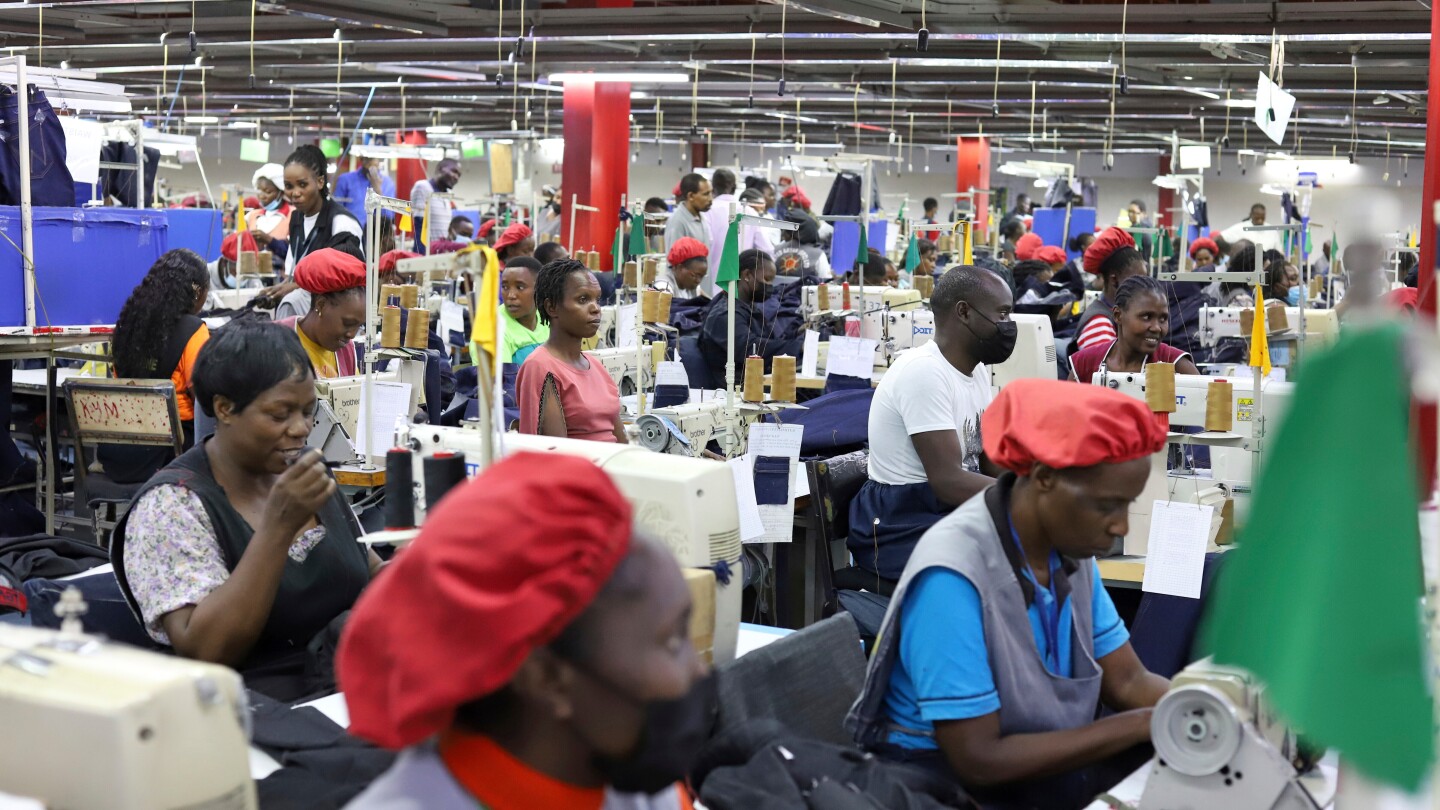
The expiration of the African Growth and Opportunity Act (AGOA), a pivotal U.S. trade agreement that has provided African exporters with duty-free access to American markets since 2000, is set to take effect this Tuesday. This development has left businesses across the continent grappling with heightened competitive pressures and the looming imposition of new tariffs. AGOA has been instrumental in bolstering industries such as Kenya’s textile and apparel sector, enabling it to compete effectively with Asian counterparts like Bangladesh and Vietnam. However, with the agreement’s termination, Kenyan manufacturers, including United Aryan, a Nairobi-based apparel exporter, fear they will lose their competitive edge. ‘Without AGOA, we stand no chance against Asian competitors,’ lamented Pankaj Bedi, owner of United Aryan, which exports Levi’s and Wrangler jeans to the U.S. Kenyan President William Ruto has urged the U.S. to consider renewing and extending AGOA for at least five years, emphasizing its role as a vital link between Africa and the U.S. The end of AGOA coincides with the introduction of new U.S. tariffs, announced in April, which could further exacerbate challenges for African exporters. Kenya, for instance, already faces a 10% tariff on non-AGOA exports, and its manufacturers are hindered by high energy costs, imported raw materials, and limited domestic supply chains. African leaders, including Ruto, are pushing for last-minute renegotiations and bilateral agreements with the U.S., but uncertainty remains. The termination of AGOA threatens to disrupt industries that employ millions, particularly in countries like Kenya, where over 66,000 workers in the textile sector are at risk of job losses. The broader economic implications include reduced foreign investment, weakened supply chains, and rising poverty, according to researchers at the German Institute of Development and Sustainability. For workers like Julia Shigadi, a machinist at United Aryan, the end of AGOA is not just a professional setback but a personal crisis. ‘This job is my lifeline,’ she said. ‘If it’s gone, my life is over.’
标签: Africa
非洲
-
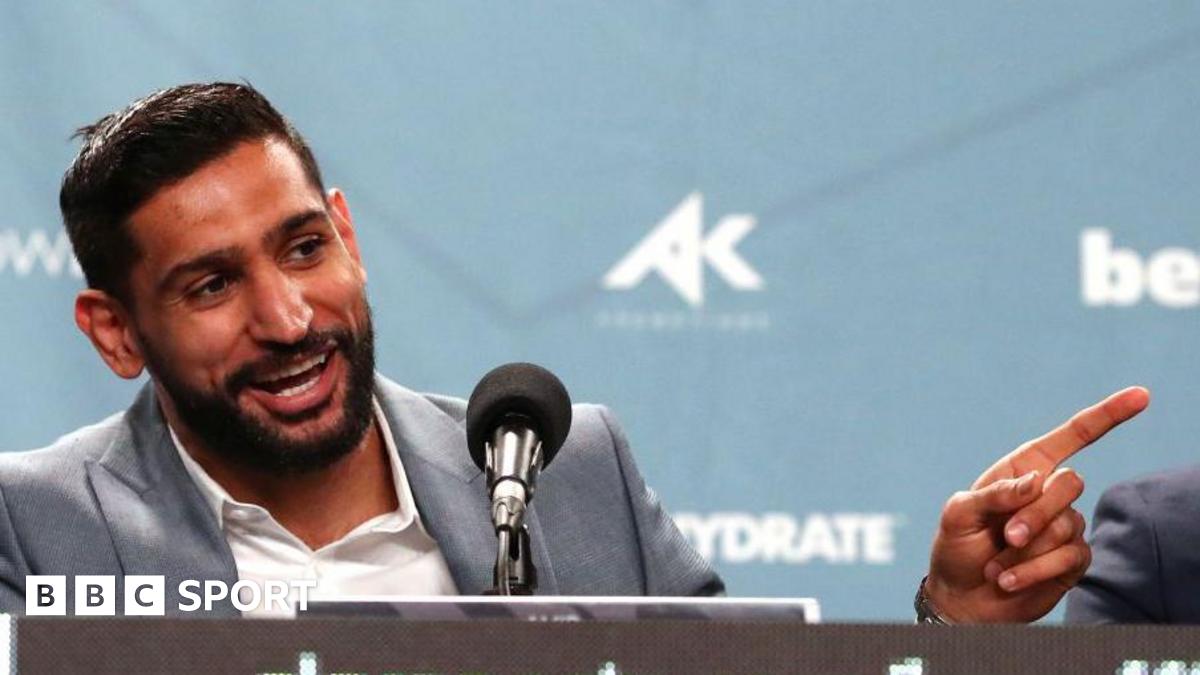
Khan ‘rolling dice’ as promoter with Nigeria fight night
Amir Khan, the British boxing legend who retired in 2022 after a storied career, is now embarking on a new chapter as a boxing promoter. Known for his Olympic silver medal at 17, unified world titles, and unforgettable bouts with fighters like Marcos Maidana and Saul ‘Canelo’ Alvarez, Khan is shifting his focus from the ring to the boardroom. His latest venture, ‘Chaos in the Ring,’ marks the first time top-tier professional boxing will be held in Nigeria, coinciding with the country’s Independence Day celebrations in Lagos. The event, promoted by Khan’s AK Promotions in partnership with Balmoral Group Promotions, aims to bring the excitement of boxing to an untapped market in Africa. The main event features a cruiserweight clash between Brandon Glanton and Marcus Browne, while British light-heavyweight Dan Azeez fulfills a personal dream by fighting on Nigerian soil. Khan, who has previously organized a successful event in Ghana, believes Lagos will be an even bigger success. ‘I’m still new to the game, but I want to learn quick and move quick,’ Khan told BBC Sport from his home in Dubai. ‘Why Africa? I think it’s an untouched market.’ Khan’s promotion strategy also emphasizes reconnecting fighters with their roots, as seen with Londoner Ohara Davies boxing in Ghana earlier this year. While Khan never had the chance to fight in Pakistan, his heritage has always been a source of pride and connection with fans in South Asia. Transitioning into promotion has been a learning curve for Khan, who likens the negotiation process to a game of chess. Despite the challenges, he remains optimistic, drawing on his own experiences as a fighter to build trust with athletes. ‘I’m not expecting to make anything in the next couple of years as a promoter,’ Khan said. ‘I’m happy to roll the dice because I want to learn the trade as I go.’ Khan’s long-term vision includes expanding the sport in Africa and the Middle East before re-entering the UK market. He also dreams of staging fights in Saudi Arabia as part of the lucrative Riyadh Season. However, he acknowledges the need for support from broadcasters, co-promoters, and former allies. ‘I made them millions, let’s see if they do the same for me now,’ he added. While Khan officially retired after his defeat to Kell Brook in 2022, he admits that a comeback could be tempting if a fight with Manny Pacquiao or Floyd Mayweather materializes. ‘The only fight I’d come back for is a Manny Pacquiao or a Floyd Mayweather fight,’ Khan said. ‘If it happens, it happens. I’d love to take it.’ Though a return to the ring seems unlikely, Khan is determined to create a legacy outside of it, proving that his impact on boxing extends far beyond his days as a champion.
-
Thousands of workers in limbo as US-Africa trade deal set to expire
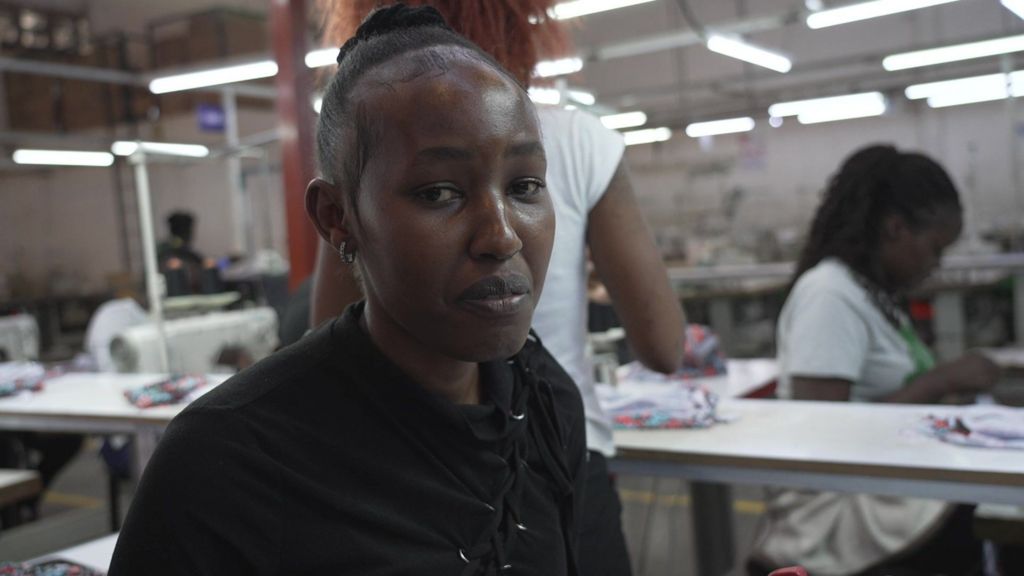
At Shona EPZ, a bustling garment factory in Nairobi, Kenya, the hum of sewing machines and the chatter of workers typically create a reassuring rhythm. However, today’s atmosphere is tinged with anxiety as the factory’s future hangs in the balance due to the impending expiration of the African Growth and Opportunity Act (Agoa). This landmark US trade policy, which has granted duty-free access to the US market for African goods for 25 years, is set to expire on Tuesday, leaving thousands of workers like Joan Wambui uncertain about their livelihoods. Joan, a 29-year-old mother, has been employed at Shona EPZ for six months, sewing sportswear exclusively for the American market. Her salary supports her four-year-old daughter, two college-going sisters, and her mother. Losing her job would not only disrupt her family’s stability but also strip her of the dignity and hope that come with a steady income. Shona EPZ, which employs 700 people, has already seen a significant drop in output due to buyer hesitancy amid the uncertainty. Factory director Isaac Maluki warns that without an Agoa extension, layoffs and even shutdowns may be inevitable. The stakes are high not just for Kenya but for over 30 African countries that rely on Agoa to export over 6,000 products to the US. Kenyan Trade Minister Lee Kinyanjui is pushing for at least a short-term extension to allow for transition mechanisms, while President William Ruto seeks a bilateral trade deal with the US. Meanwhile, trade experts like Teniola Tayo urge African nations to diversify their markets and leverage the African Continental Free Trade Area to reduce overreliance on the US. For workers like Joan, the urgency of feeding their families overshadows the slow pace of diplomatic negotiations. Her plea to governments is simple: provide young people with opportunities to showcase their potential.
-
Nigeria banned shea butter exports to help women profit. But it backfired
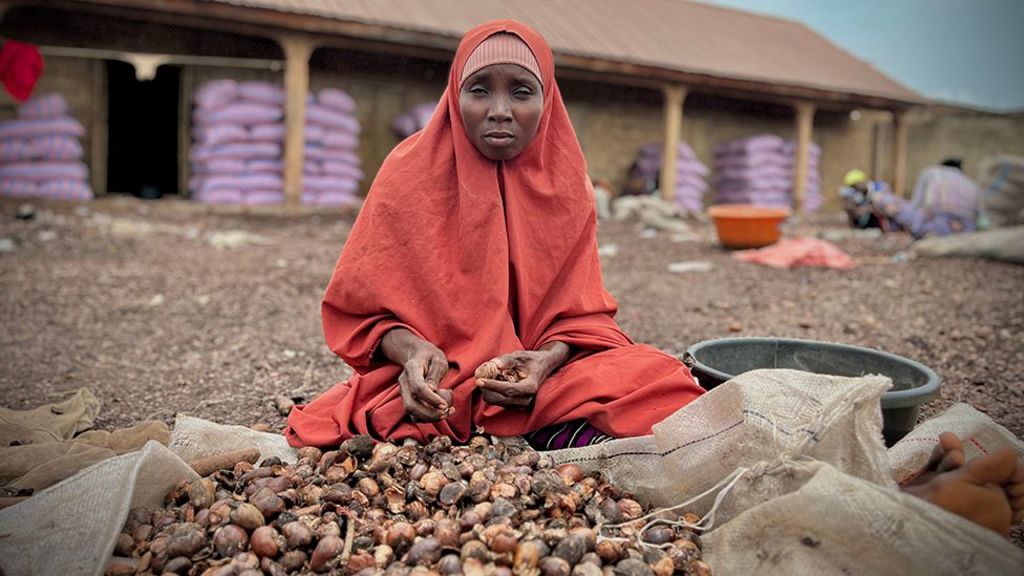
In the heart of Nigeria’s shea butter industry, women like Hajaratu Isah are grappling with the harsh realities of a sudden government policy shift. The Nigerian government’s six-month ban on the export of raw shea nuts, announced in late August, has sent shockwaves through the industry, leaving thousands of women struggling to make ends meet.
-
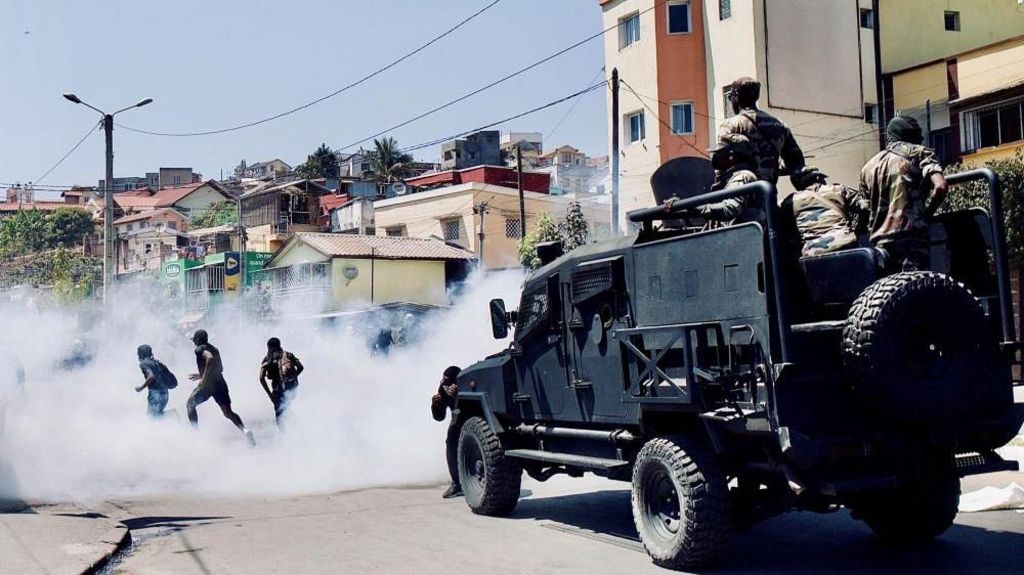
Madagascar’s president dissolves government after ‘Gen Z’ protests
Madagascar’s President Andry Rajoelina announced the dissolution of his government on Monday, following days of intense youth-led protests over persistent water and power shortages. The demonstrations, which began on Thursday in the capital Antananarivo, quickly spread to eight cities across the country, with thousands of predominantly Gen Z protesters rallying under the slogan, ‘We want to live, not survive.’
In a televised national address, Rajoelina acknowledged the government’s shortcomings, stating, ‘We apologize if members of the government have not carried out the tasks assigned to them.’ He revealed that the prime minister and the entire cabinet had been dismissed, and applications for a new premier would be accepted within three days. Rajoelina also expressed his willingness to engage in dialogue with young people to address their grievances.
The protests, initially peaceful, turned violent, prompting the imposition of a dusk-to-dawn curfew in Antananarivo. Security forces were accused of using excessive force, resulting in at least 22 deaths and over 100 injuries. UN Human Rights Chief Volker Türk condemned the ‘unnecessary and disproportionate force’ and called for the immediate release of arbitrarily detained protesters. However, Madagascar’s foreign ministry disputed the UN’s casualty figures, claiming they were based on ‘rumours or misinformation.’
The unrest marks the most significant challenge to Rajoelina’s leadership since his re-election in 2023. Madagascar has a history of political upheaval, including the 2009 protests that ousted former President Marc Ravalomanana and brought Rajoelina to power. The current crisis underscores deep-seated frustrations over the government’s inability to address basic infrastructure issues, fueling widespread discontent among the nation’s youth.
-
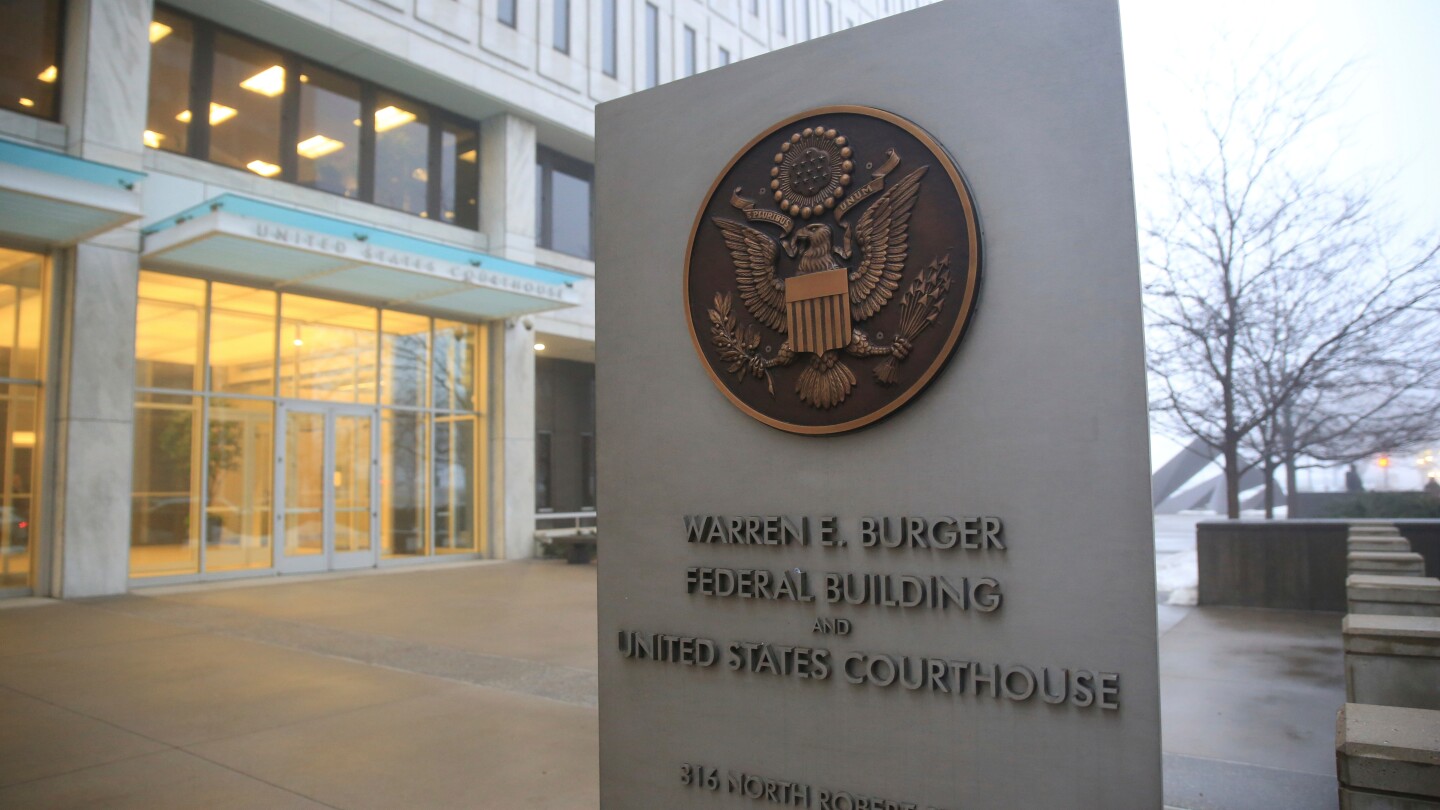
Minnesota man pleads guilty to attempting to join Islamic State group
A 23-year-old Minnesota man, Abdisatar Ahmed Hassan, pleaded guilty on Monday to charges of attempting to provide material support to a designated foreign terrorist organization, the Islamic State group. The plea was entered before U.S. District Judge Donovan Frank in St. Paul. Hassan, a naturalized U.S. citizen, had previously expressed admiration on social media for the perpetrator of a deadly truck attack on Bourken Street in New Orleans, which resulted in 14 fatalities. The attacker, who was subsequently killed by police, had displayed the Islamic State group’s flag on his vehicle. Prosecutors revealed that Hassan made two unsuccessful attempts in December to travel from Minnesota to Somalia to join the Islamic State group and fight on its behalf. The FBI, having been alerted to a social media user expressing support for both the Islamic State group and the Somali militant group al-Shabab, conducted surveillance on Hassan during these attempts. The first attempt was thwarted when the airline denied him boarding due to insufficient travel documents, and he missed the second flight while being questioned by federal officers. Hassan was not detained until his arrest in February. The FBI also observed Hassan driving with the Islamic State group’s flag the day before his arrest. Acting U.S. Attorney Joe Thompson emphasized the zero-tolerance approach to terrorism, stating, ‘There is no margin for error when it comes to terrorism. Hassan flew the ISIS flag, venerated attacks on the homeland, and wanted to kill Americans. We are not taking chances. We will not let Minnesota become a safe haven for terrorists.’ Hassan remains in custody, and a sentencing date has yet to be set. Under a plea agreement, the government has agreed not to seek a sentence longer than 17 years, while the defense is free to recommend any sentence. The final decision rests with the judge. This case is part of a broader pattern, with several Minnesotans having been suspected of attempting to join the Islamic State group in recent years. In 2016, nine Minnesotans were sentenced for conspiring to join the group, and one individual who fought for the group in Iraq was sentenced last year to 10 years in prison.
-
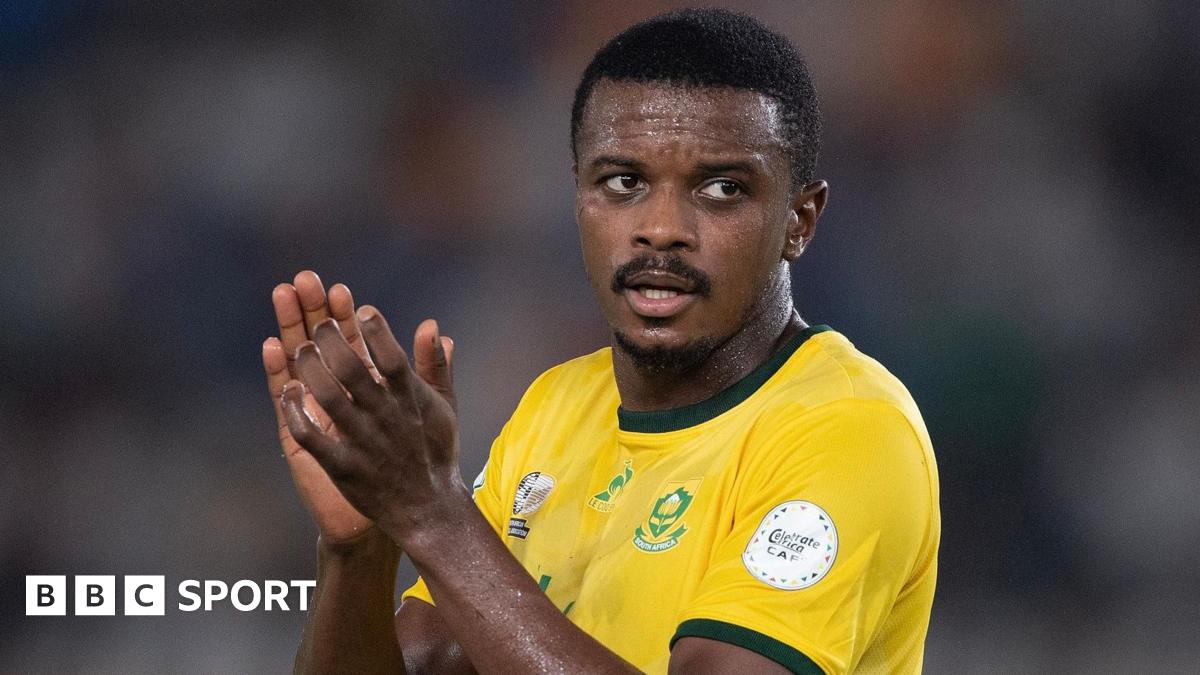
South Africa’s 2026 World Cup hopes hit by forfeit
South Africa’s aspirations to secure a spot in the 2026 FIFA World Cup have been severely compromised following a ruling by FIFA’s disciplinary committee. The committee found that the South African national team violated competition regulations by fielding an ineligible player, Teboho Mokoena, during their 2-0 victory over Lesotho in March. Mokoena, a 28-year-old midfielder, was supposed to serve a suspension after accumulating two yellow cards in previous matches. As a consequence, FIFA has imposed a 3-0 forfeit on South Africa, fined the South African Football Association (Safa) 10,000 Swiss Francs ($12,500), and issued a warning to Mokoena. This decision has dramatically reshaped the standings in Group C of the African World Cup qualifiers. South Africa, previously leading the group, has now dropped to second place, trailing Benin on goal difference. The outcome has also reignited the hopes of Nigeria and Rwanda, who are now just three points behind the top two teams. With the final rounds of qualifiers scheduled for October 10-14, Benin will face Rwanda and Nigeria, while South Africa will play Zimbabwe and host Rwanda. Safa has a 10-day window to appeal FIFA’s decision, but the road to the World Cup has undoubtedly become more challenging for Bafana Bafana.
-
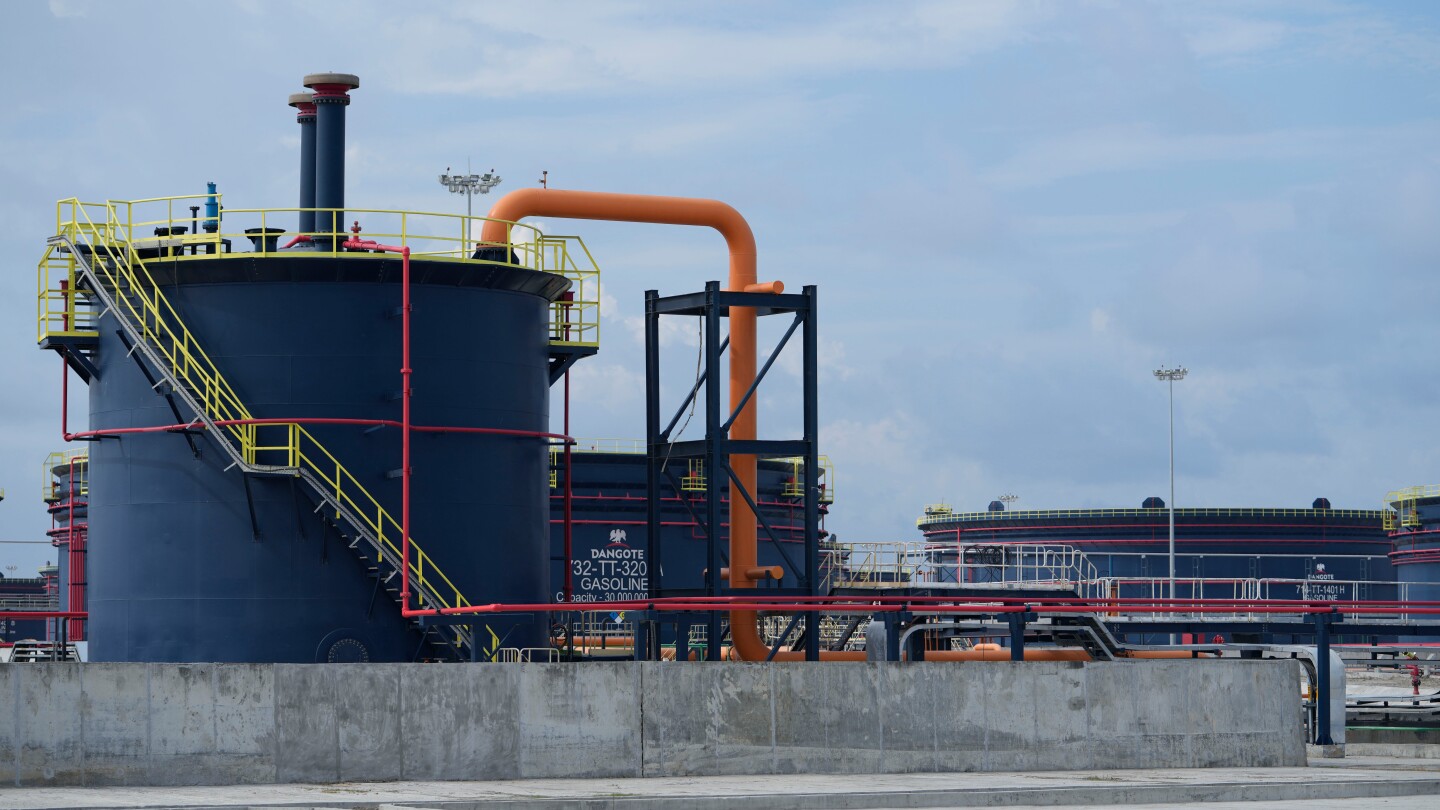
Nigerian government to meet oil workers’ union after strike halts nationwide supply
LAGOS, Nigeria — A critical meeting is scheduled between Nigerian government officials and representatives of the country’s oil workers union on Monday, following a nationwide strike triggered by the dismissal of 800 employees at Dangote Refinery, Africa’s largest refining facility. The strike, initiated by the Petroleum and Natural Gas Senior Staff Association of Nigeria (PENGASSAN), has disrupted operations across key oil and gas institutions, threatening to halt national supply chains.
-
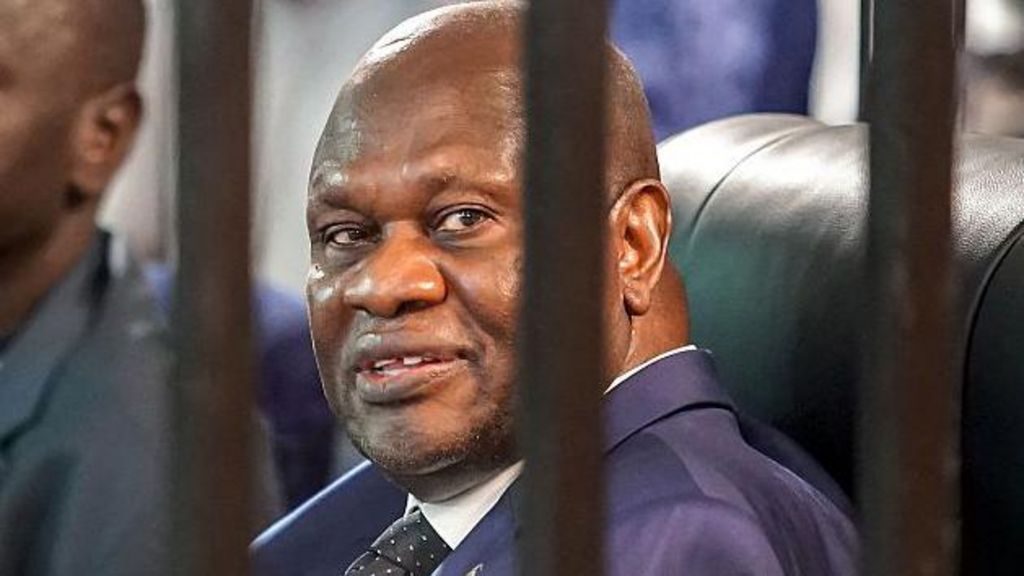
South Sudan court rejects ex-VP’s bid to halt murder and treason trial
A special court in South Sudan has firmly established its jurisdiction to prosecute suspended Vice-President Riek Machar and seven co-defendants, who face grave charges including murder, treason, and crimes against humanity. The court dismissed all objections raised by Machar’s legal team, which challenged its authority, the constitutionality of the proceedings, and his claimed immunity from prosecution. The trial is set to resume on Wednesday. Machar, who has been under house arrest since March, has labeled the charges as a politically motivated ‘witch-hunt,’ sparking fears of a potential resurgence of civil war in the fragile nation. The charges stem from a March militia attack allegedly linked to Machar, which resulted in the deaths of 250 soldiers and a general. Machar’s defense argued that the case should be handled by a hybrid court under the African Union, as stipulated in the 2018 Peace Agreement that ended the five-year civil war between his forces and those loyal to President Salva Kiir. However, the court countered that it has the authority to try national offenses, as no hybrid court has yet been established. Presiding Judge James Alala emphasized that the special court’s jurisdiction is grounded in the amended 2011 Transitional Constitution. The court also rejected the claim of immunity for Machar, stating that such protection is exclusively reserved for the president. Additionally, two of Machar’s lawyers were barred from the proceedings due to invalid licenses, though they may rejoin once their credentials are renewed. Machar’s lead lawyer, Geri Raimondo Legge Lubati, accused the government of conducting a ‘politicized media campaign’ against his client, violating the constitutional presumption of innocence. The case has drawn international concern, with the UN, African Union, and neighboring countries urging calm in South Sudan, which gained independence from Sudan in 2011 after decades of conflict.
-
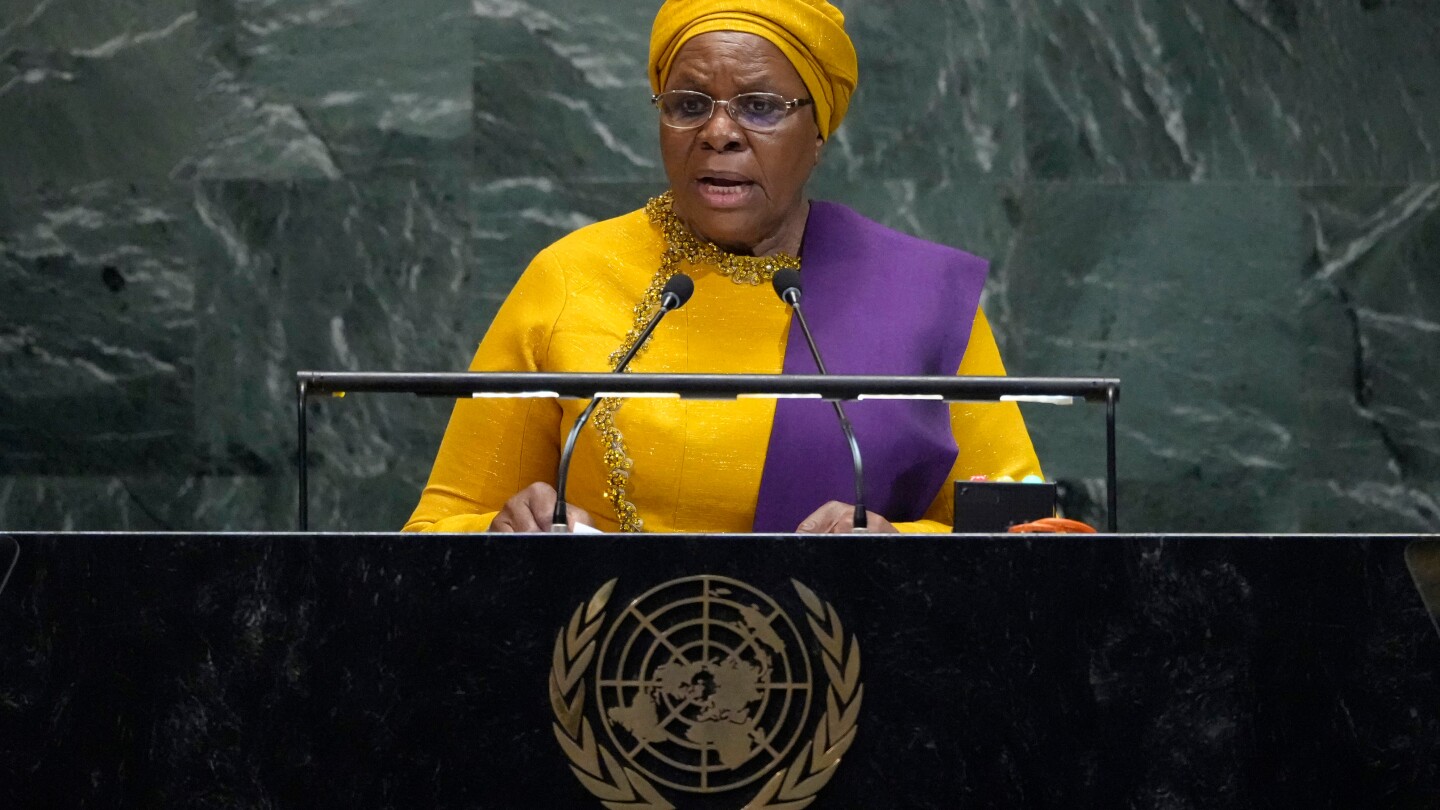
At the UN, African leaders did not draw attention to home conflicts, analysts say
LAGOS, Nigeria — African leaders took center stage at the United Nations General Assembly last week, delivering impassioned speeches on global issues such as climate change, inequality, and international conflicts. Prominent figures, including Nigerian Vice President Kassim Shettima, Senegalese President Bassirou Faye, and Namibian President Netumbo Nandi-Ndaitwah, strongly condemned Israel’s attacks on Gaza, emphasizing the humanity and rights of Palestinians. However, analysts noted a glaring omission: the lack of significant attention to Africa’s own protracted conflicts in Sudan and the Democratic Republic of Congo (DRC).
In Sudan, a civil war erupted in mid-2023 when the Rapid Support Forces (RSF) paramilitary group clashed with the national army, resulting in over 40,000 deaths and effectively splitting the country. The conflict has been marked by mass atrocities and a looming famine, exacerbated by restrictions on aid distribution. Meanwhile, in the DRC, the M23 rebel group, allegedly backed by Rwanda, has caused widespread devastation, displacing millions and killing thousands. Despite these crises, African leaders offered only cursory mentions of these conflicts during their UN speeches.
Experts like Chris Ogunmodede, an Africa affairs analyst, criticized the lack of prioritization of African issues on the global stage. Beverly Ochieng, a senior security analyst, echoed this sentiment, calling it a missed opportunity to address the escalating humanitarian crises. The speeches also highlighted the limitations of African multilateral organizations, with external powers like the U.S., UAE, Saudi Arabia, and Egypt taking the lead in peace negotiations. These outside interests, often accused of involvement in the conflicts, wield significant leverage, overshadowing African institutions’ efforts to mediate.
The geopolitical complexities of these wars have drawn in neighboring countries and international actors, further complicating resolution efforts. For instance, Rwanda’s alleged support for M23 has strained regional relations, while the UAE faces accusations of arming Sudanese rebels. As African leaders focus on global issues, the pressing need for solutions to homegrown conflicts remains unaddressed, raising questions about the continent’s ability to manage its own affairs.