标签: Africa

非洲

  • People in Benin felt ‘total fear’ at attempted coup

    People in Benin felt ‘total fear’ at attempted coup

    Citizens of Cotonou, Benin’s economic hub, are grappling with profound shock and widespread terror following a destabilizing attempt by renegade soldiers to seize power from the democratically elected government. The incident, which unfolded with alarming speed, has cast a pall of fear over the city, with residents describing an atmosphere of ‘total fear’ as gunfire erupted and the specter of political chaos loomed.

    Eyewitness accounts detail scenes of panic as the attempted coup forced civilians to seek refuge indoors, disrupting daily life and commerce. The swift and decisive response from forces loyal to President Patrice Talon ultimately thwarted the insurrection, but the event has exposed underlying tensions within the West African nation. This attack on Benin’s institutions marks a serious challenge to its stability, which has been regarded as a democratic anchor in a region increasingly plagued by military takeovers and jihadist insurgencies.

    The failed coup has drawn international condemnation, with regional bodies and global powers reiterating support for constitutional order. Analysts are now scrutinizing the potential motivations behind the attempt, from internal political grievances to the broader regional trend of democratic backsliding. The event serves as a stark reminder of the fragile nature of governance in the region and has prompted a nationwide security crackdown as authorities work to identify and apprehend all conspirators involved.

  • Wonders of the Pyramids

    Wonders of the Pyramids

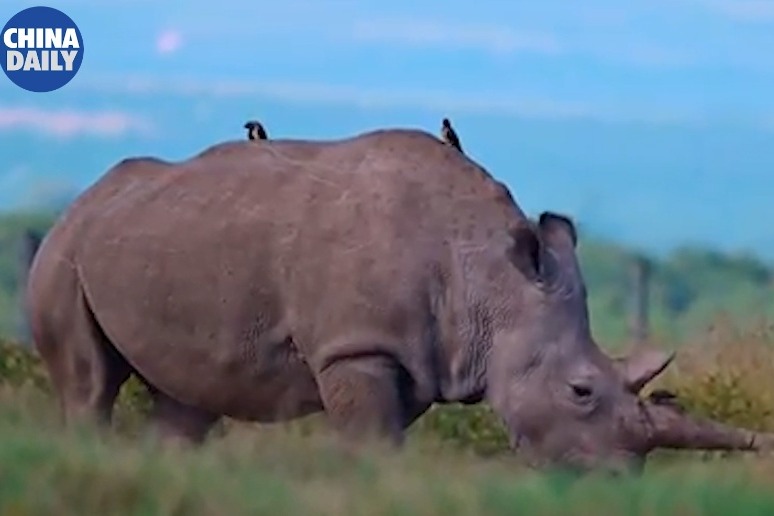
    The majestic Egyptian pyramids stand as far more than mere architectural marvels composed of colossal stone blocks. Each massive stone serves as an enduring testament to the extraordinary wisdom and engineering prowess that transcended the technological limitations of its era. A groundbreaking documentary series now invites global audiences to embark on an immersive journey alongside a China Daily correspondent and expert Egyptian guides, unraveling the fascinating mysteries embedded within these ancient wonders.

    This unprecedented exploration delves deep into the heart of ancient Egyptian civilization, offering viewers privileged access to archaeological insights and historical context that illuminate the sophisticated knowledge systems behind pyramid construction. The production represents a significant milestone in cultural documentation, blending on-site reporting with expert analysis to create a comprehensive understanding of these iconic structures.

    The inaugural episode, now available with professional English dubbing, marks the beginning of an educational series designed to make ancient history accessible to international audiences. Through high-quality cinematography and scholarly commentary, the documentary breaks down complex archaeological concepts into engaging content that appeals to both history enthusiasts and casual learners alike.

    This collaborative project between Chinese media and Egyptian cultural experts demonstrates the growing importance of international partnerships in preserving and interpreting world heritage sites. By combining modern journalistic techniques with ancient historical scholarship, the series creates a bridge between contemporary audiences and one of humanity’s most remarkable architectural achievements.

  • 2026 World Cup ‘Pride Match’ to feature Egypt and Iran

    2026 World Cup ‘Pride Match’ to feature Egypt and Iran

    In a striking juxtaposition of sporting values and national legislation, the 2026 FIFA World Cup’s specially designated LGBTQ+ ‘Pride Match’ will feature national teams from Egypt and Iran—two countries where homosexuality remains illegal. The match, scheduled for June 26th at Seattle’s Lumen Field, was designated by local organizers as part of the city’s Pride weekend celebrations long before the tournament draw determined the participating teams.

    The Seattle local organizing committee, operating independently from FIFA, planned the event to feature artistic displays celebrating LGBTQ+ communities throughout the city and stadium. This celebration directly contrasts with the legal environments in both competing nations: Iran imposes the death penalty for homosexual acts, while Egypt routinely employs morality laws to suppress LGBTQ+ rights and relationships.

    Organizers acknowledge the challenging context but reaffirm their commitment through the Seattle Pride Match Advisory Committee. A spokesperson told Outsports that ‘soccer has a unique power to unite people across borders, cultures, and beliefs,’ emphasizing the event’s purpose to ‘celebrate and elevate Pride events in Seattle and across the country.’

    This situation echoes previous conflicts between LGBTQ+ advocacy and international football, notably at the 2022 Qatar World Cup where FIFA threatened sporting sanctions against teams whose captains wore OneLove armbands in support of LGBTQ+ rights. Both the English and Welsh football associations ultimately abandoned their planned protest following FIFA’s intervention.

    The upcoming match highlights the ongoing tension between global sporting events and human rights considerations, raising questions about how international football navigates profound cultural differences among participating nations. FIFA, along with the Egyptian and Iranian football associations, has been contacted for comment regarding this developing story.

  • Record gold prices in Dubai: Will shoppers prefer 14K jewellery over 22K in UAE?

    Record gold prices in Dubai: Will shoppers prefer 14K jewellery over 22K in UAE?

    Dubai’s jewellery industry demonstrates remarkable resilience as gold prices reach unprecedented levels, with 24K gold surpassing Dh500 per gram in the UAE markets. Despite the Dubai Jewellery Group’s recent introduction of official 14K gold rates—a first for the emirate—industry leaders confirm that traditional 22K jewellery maintains its dominant position among consumers.

    Market analysis reveals that Dubai’s distinctive gold purchasing culture prioritizes purity over price sensitivity. According to Anil Dhanak, Managing Director of Kanz Jewels, “The Dubai jewellery customer has always been extremely particular about purity. Buyers may compromise on design or reduce overall weight, but they rarely compromise on purity.” This sentiment is particularly strong among residents from the Indian subcontinent and GCC regions, where 22K gold carries significant cultural and investment value.

    The recent pricing milestone saw 24K gold at Dh505.75 per gram, with 22K, 21K, 18K and 14K trading at Dh468.25, Dh449.0, Dh385 and Dh300.25 per gram respectively. While globally gold closed at $4,197.81 per ounce, Dubai’s market dynamics differ substantially from Western trends.

    Industry executives indicate that 14K gold will likely find its niche in diamond-studded jewellery and contemporary designs targeting younger, fashion-conscious consumers. Chirag Vora of Bafleh Jewellers noted that select pilot programs for 14K bracelets, pendants, and studs are underway, with broader rollout plans pending market response.

    Shamlal Ahamed of Malabar Gold and Diamonds emphasized that record prices reinforce gold’s status as a value-appreciating asset, combining aesthetic appeal with investment security. The consensus among jewellers suggests that while 14K may expand product ranges, it cannot displace the deeply rooted preference for higher purity gold that defines Dubai’s reputation as the ‘City of Gold.’

  • One hundred abducted schoolchildren released in Nigeria

    One hundred abducted schoolchildren released in Nigeria

    Approximately 100 students kidnapped from St Mary’s Catholic school in Nigeria’s central Niger state last month have been successfully released, according to official confirmations from both religious and law enforcement authorities. The development marks a partial resolution to one of the latest mass abductions that have gripped the nation.

    Niger State Police Commissioner Adamu Abdullahi Elleman and Bishop Bulus Dauwa Yohanna, the local Catholic leader overseeing the school, independently verified to BBC that they received official notification regarding the children’s liberation. Government authorities indicated that the reunification process between the freed students and their families would commence on Monday, though specific operational details remain classified.

    The November 21st assault on St Mary’s Catholic school in Papiri resulted in the abduction of more than 250 students alongside 12 staff members, representing merely one incident in an escalating pattern of coordinated kidnappings targeting educational and religious institutions across northern and central Nigeria.

    Critical aspects surrounding the release operation remain shrouded in secrecy. Authorities have not disclosed whether the children’s freedom was achieved through tactical military intervention or negotiated settlement, nor have they confirmed if financial ransoms were exchanged. Abdullahi Sule, Governor of neighboring Nasarawa state, acknowledged the federal government’s pivotal involvement while emphasizing that operational sensitivities prevent full transparency regarding the rescue methodology.

    The liberation follows last week’s visit to Papiri by National Security Adviser Nuhu Ribadu, who personally assured community representatives led by Bishop Yohanna that authorities were prioritizing the safe recovery of all captives.

    This incident occurs within a broader context of intensified attacks against soft targets. Mere days before the St Mary’s abduction, parallel incidents unfolded at the Christ Apostolic Church in Kwara state (resulting in two fatalities and 38 kidnappings) and Government Girls’ Secondary School in Kebbi state (where two were killed and 25 Muslim students captured). While victims from these prior attacks have since gained freedom, the systematic targeting continues unabated.

    Just last week, armed assailants seized approximately 20 individuals across two separate events—including worshipers at a newly established church in Kogi state and wedding participants in predominantly Muslim Sokoto state.

    Analytical consensus predominantly attributes these kidnappings to criminal syndicates seeking monetary gains, though presidential representatives have alternatively suggested jihadist involvement. Nigeria’s official prohibition of ransom payments intends to disrupt terrorist financing, though widespread noncompliance reportedly persists.

    The security crisis attracted international scrutiny when former US President Donald Trump recently threatened potential military intervention should Christian persecutions continue. Nigerian officials counter that violence affects all religious communities equally, rejecting allegations of sectarian targeting.

  • Salah is destroying his legacy – Rooney

    Salah is destroying his legacy – Rooney

    Former Manchester United striker Wayne Rooney has issued a stark warning to Liverpool’s Mohamed Salah, asserting that the Egyptian forward is jeopardizing his storied legacy at Anfield through his recent public criticisms of the club. The comments come in response to Salah’s post-match statements following Liverpool’s 3-3 draw with Leeds United, where the 33-year-old claimed he felt “thrown under the bus” by the club and revealed a fractured relationship with head coach Arne Slot.

    Rooney, speaking on his latest podcast episode, characterized Salah’s remarks as “disrespectful” and urged manager Arne Slot to demonstrate authority by excluding the Egyptian international from upcoming Champions League and Premier League fixtures. “Arne Slot must show his authority and pull him in to say ‘you are not traveling with the team, what you said is not acceptable’,” Rooney stated. “Take yourself off to Afcon and let everything calm down.”

    The situation has escalated rapidly as Liverpool struggles through a disappointing season, currently sitting ninth in the Premier League table with just seven wins from their opening fifteen games. Salah’s contribution has diminished significantly this campaign, with only four goals in thirteen top-flight appearances—a stark contrast to his 29-goal performance that propelled Liverpool to the title last season.

    Rooney particularly criticized Salah’s assertion that he shouldn’t have to “fight for my position because I earned it,” calling this attitude arrogant and detrimental to team morale. “Time catches up with all of us,” Rooney noted, “and this season he hasn’t looked at his best, at his sharpest. You want to see him roll his sleeves up and say ‘ok then, I’ll show you’.”

    The former England captain suggested that Salah’s comments have created negative energy around the training ground and damaged relationships with teammates, management, and fans alike. While acknowledging Salah’s incredible contributions to Liverpool—250 goals in 420 appearances since joining from Roma in 2017—Rooney believes the player will eventually regret his public outburst.

    The situation presents a critical juncture for both player and club, with Rooney emphasizing that the matter “needs to be sorted out quickly either way”—either through reconciliation or separation.

  • White South Africans divided on US refugee offer

    White South Africans divided on US refugee offer

    In South Africa’s rural Free State province, a white Afrikaner farmer identified only as Marthinus navigates daily life behind 4-meter electric steel gates topped with spikes, surrounded by barbed wire and surveillance cameras. This fortress-like environment reflects the pervasive fear driving his family’s decision to seek refugee status in the United States.

    Marthinus’s personal history fuels his anxiety: both his grandfather and his wife’s grandfather were murdered in farm attacks. He lives just two hours from where 21-year-old farm manager Brendan Horner was found dead five years ago, tied to a pole with a rope around his neck. “I will give my whole life just so that my wife and my kids can be safe,” Marthinus states, expressing a sentiment shared by thousands of Afrikaners applying for US refugee status since President Donald Trump signed an executive order prioritizing their resettlement.

    Contrary to claims of targeted racial persecution, the reality of farm violence appears more complex. The latest crime statistics reveal South Africa’s enduring security crisis, with an average of 63 daily murders in the first quarter of 2025. While showing improvement from 2024, this maintains the country’s position among the world’s highest homicide rates.

    Black farmer Thabo Makopo, tending 237 acres on the outskirts of Ficksburg, shares similar security concerns. “It’s all of us. I could be attacked today – it could happen to any of us,” he acknowledges, emphasizing the universal vulnerability of farmers regardless of race. This perspective is reinforced by official data: between October 2024 and March 2025, Police Minister Senzo Mchunu reported 18 farm murders nationwide, with 16 black victims and only 2 white.

    The term ‘white genocide’ promoted by some international figures faces strong rejection from within the farming community. White farmer Morgan Barrett, protecting his six-generation family farm with nightly patrols, challenges this narrative: “I don’t buy that narrative that in this area the attacks are against whites only. If they thought that the black guy had 20,000 rand sitting in his safe, they’d attack him just as quickly.”

    South Africa’s historical context adds complexity to current tensions. Despite apartheid ending in 1994, racial inequalities persist, with white farmers still controlling 72% of private farmland despite constituting just 7.3% of the population. The government’s land reform programs have shown limited progress, while new expropriation powers remain constrained to rare circumstances according to legal experts.

    Beyond farms, violence affects all communities. In Meqheleng township, Nthabiseng Nthathakana mourns her husband Thembani Ncgango, murdered during a robbery at their small store. With no arrests made, she now solely provides for their four children, representing the broader human cost of South Africa’s security challenges.

    As Marthinus prepares for relocation following his successful refugee application, he maintains his belief in targeted persecution: “A lot of people believe that it’s a political thing to get rid of us as white farmers.” Yet the evidence suggests a more nuanced reality—a nation grappling with widespread criminal violence that transcends racial boundaries, compounded by historical inequalities and inadequate police response that has driven millions to rely on private security forces now outnumbering the national police and army combined.

  • Somalia’s poets keep hope alive for storytelling and for peace

    Somalia’s poets keep hope alive for storytelling and for peace

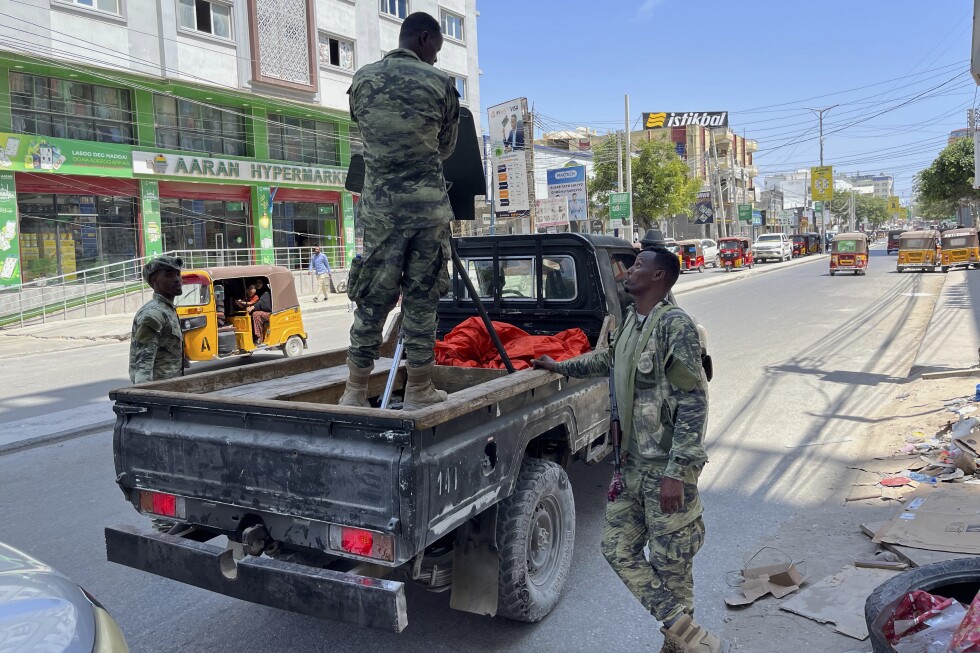
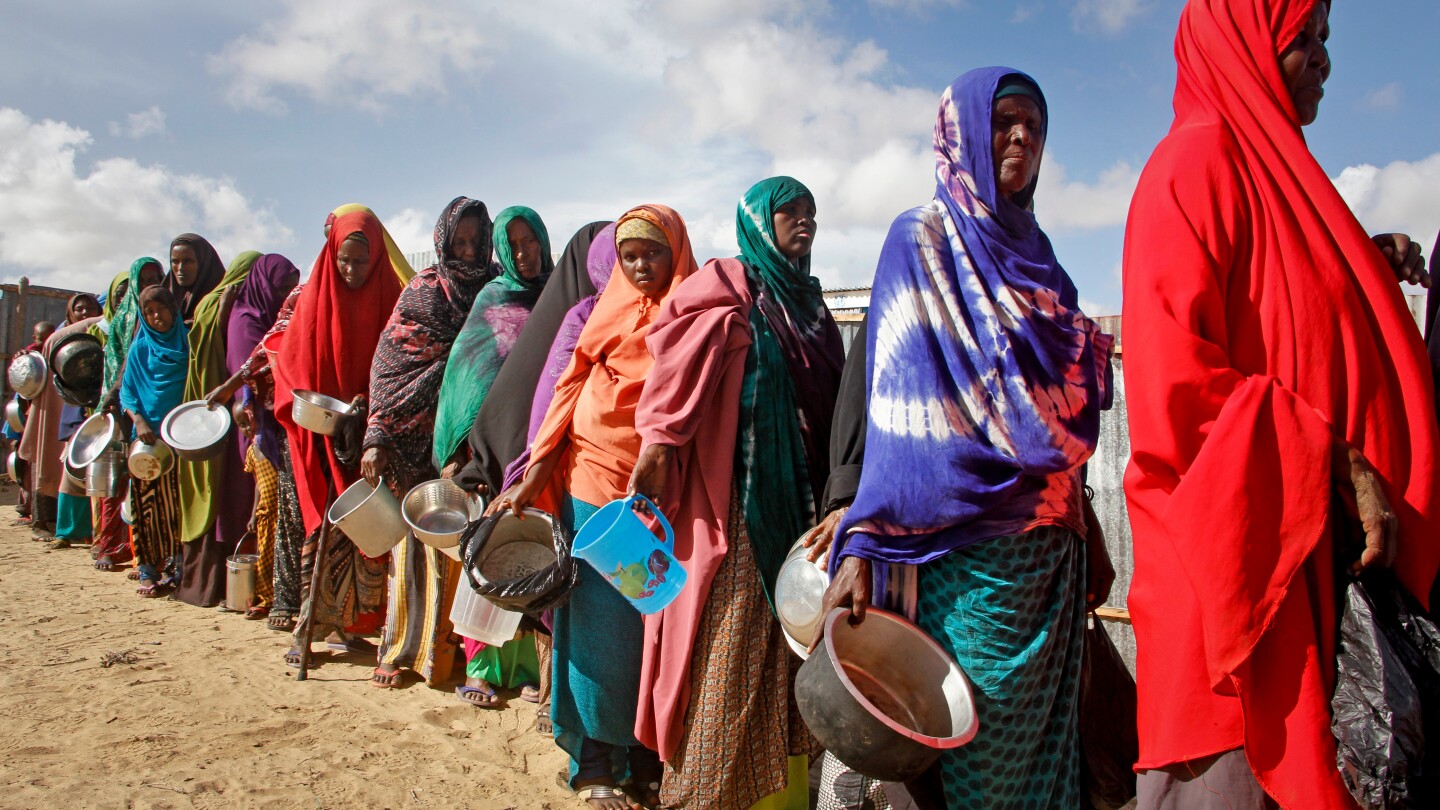
    MOGADISHU, Somalia — In the shadow of past violence at Somalia’s National Theater, where a suicide bomber once detonated, elderly poets now gather to preserve the nation’s rich oral tradition. Among them is 70-year-old Hassan Barre, who recently stepped to the podium in the largely empty hall to recite verses emphasizing civic responsibility and national unity.

    These aging wordsmiths, some with henna-dyed beards and clouded eyes, represent a fading cultural beacon in one of the world’s most volatile nations. Their presence underscores a profound contrast: Somalia, often described as “a nation of poets,” has become better known for bombings than verse after decades of conflict stripped away its cultural wealth.

    Oral poetry remains Somalia’s highest art form, recited in remote outposts and even among militants in the bush. Legendary figures like Hadraawi—the “Shakespeare of Somalia” who died in 2022—achieved universal recognition for works spanning love songs to war laments.

    The current fragile federal government allocates most resources to national security, leaving cultural institutions like the National Theater and adjacent museum largely inactive. Access requires notifying intelligence agencies in advance with detailed vehicle information—a testament to security concerns that constrain artistic expression.

    Poets recall flourishing during Siad Barre’s iron-fisted rule (1969-1991), when some received free housing and were “treated like kings.” His ouster triggered civil war and the rise of al-Shabab militants, devastating cultural infrastructure.

    Despite challenges, traditional poets still perform at weddings, and verses air daily on radio stations. The Somali Council of Poets claims 400 members, including diaspora Somalis, all advocating for peace while avoiding direct politics.

    Culture Minister Daud Aweis acknowledges poets’ “vital role” as “a foundational pillar for cultural vitality” but offers limited funding. The ministry’s long-term goal is expanded support.

    The National Theater itself symbolizes resilience: inaugurated in 1967, closed in 1991, reopened in 2012 after AU peacekeepers pushed al-Shabab from Mogadishu, then attacked months later by a suicide bomber during a prime ministerial speech.

    Yet poets persist. Maki Haji Banaadir, the theater’s deputy director and popular cultural figure, exemplifies this determination. He helped lead a 2003 cross-country reconciliation tour now impossible due to limited government control outside the capital and secessionist movements.

    As these guardians of tradition work “day and night” to groom new generations, their verses continue echoing through a sandbagged city ringed by checkpoints—a testament to culture’s endurance amid conflict.

  • Etihad’s fly-past paints sky in UAE colours, marks start of F1 finale at Abu Dhabi Grand Prix

    Etihad’s fly-past paints sky in UAE colours, marks start of F1 finale at Abu Dhabi Grand Prix

    In a breathtaking aerial spectacle that captivated both live spectators and global television audiences, Etihad Airways marked the commencement of the Formula 1 season finale with an extraordinary fly-past over Yas Marina Circuit. The UAE’s national carrier deployed its iconic A380 Superjumbo alongside the precision-driven Al Fursan Aerobatic Team, transforming the Abu Dhabi skies into a dynamic canvas of national pride.

    The synchronized aerial performance, executed at low altitude, vividly painted the atmosphere with the distinctive red, green, black, and white hues of the UAE flag. This visually stunning display occurred as millions of Formula 1 enthusiasts worldwide tuned in for the championship-deciding Abu Dhabi Grand Prix, creating a memorable fusion of aviation excellence and motorsport prestige.

    Arik De, Chief Revenue and Commercial Officer at Etihad Airways, emphasized the significance of this tradition: ‘The Abu Dhabi Grand Prix represents one of the most exhilarating periods in the capital’s calendar, drawing thousands of international visitors. This fly-past tradition originated with the inaugural Abu Dhabi race in 2009, and we remain profoundly honored to showcase our livery above this spectacular circuit alongside the exceptionally talented Al Fursan demonstration team.’

    The complex aerial maneuver required meticulous preparation and expertise, with Etihad’s most senior pilots—Captain Adel Al Zubaidi, Captain Azizan Bin Othman, Captain Harris Kynigos, and Captain Abdulla Alafeefi—conducting rigorous training to ensure perfect execution of the low-level flight operation.

    The event further solidified Yas Island’s status as a premier global destination for world-class entertainment and leisure, demonstrating Abu Dhabi’s continued capacity to host internationally significant sporting events with unmatched spectacle and precision.

  • Supply squeeze is reshaping bitcoin market, says industry expert

    Supply squeeze is reshaping bitcoin market, says industry expert

    The Bitcoin market is undergoing a fundamental transformation characterized by unprecedented supply constraints that are reshaping the cryptocurrency’s economic landscape, according to industry analysis. Abdumalik Mirakhmedov, Founder and Executive President of global mining firm GDA, reveals that available Bitcoin for immediate trading has dwindled to critically low levels, creating what may become one of the most significant supply squeezes in the asset’s history.

    With nearly 20 million of Bitcoin’s fixed 21 million coin cap already mined, the convergence of institutional accumulation, long-term holding strategies, and permanently lost coins has created structural scarcity. Mirakhmedov estimates that accounting for coins held by steadfast investors and approximately 18% lost in inaccessible wallets, the truly liquid supply may have contracted to just six million coins.

    This scarcity dynamic is being accelerated by three pivotal developments: the emergence of spot Bitcoin ETFs that physically custody vast quantities of Bitcoin, institutional and governmental adoption treating Bitcoin as a reserve asset, and the permanent loss of early coins through discarded hardware or misplaced private keys.

    Unlike traditional currencies or commodities, Bitcoin’s decentralized nature prevents any central authority from increasing supply or manipulating availability. This immutable scarcity framework, combined with growing institutional participation from banks, pension funds, and sovereign wealth managers, is transforming Bitcoin from a speculative instrument into a digital store of value.

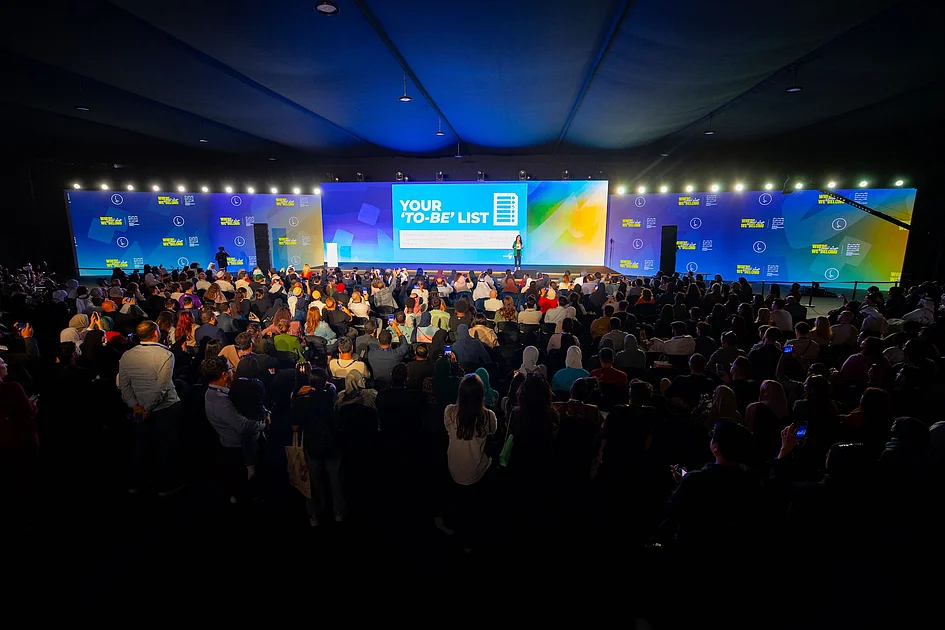
    Mirakhmedov, who will address these developments at the Bitcoin MENA conference in Abu Dhabi, emphasizes that this supply contraction represents a permanent market structure shift rather than temporary cyclical patterns. As more Bitcoin becomes locked in long-term custody solutions and institutional portfolios, the actively traded supply continues to diminish, potentially creating sustained upward pressure on valuations.

    The conference will feature further discussion on Bitcoin mining’s role in global energy transitions, highlighting the evolving narrative around cryptocurrency’s place in institutional portfolios and global financial infrastructure.