
The rapid advancement of deepfake technology has reached a point where distinguishing between real and fabricated videos is nearly impossible, according to experts. At the Dubai Business Forum–USA Edition, Ben Colman, CEO and Co-founder of Reality Defender, highlighted the growing dangers of synthetic media. He emphasized that deepfakes, which can now be created in minutes, pose significant risks to individuals, businesses, and governments. Colman noted that even a single image or a few seconds of audio can be used to create convincing fake videos, making it alarmingly easy for malicious actors to spread misinformation or damage reputations. The UAE, with its push to become a global tech hub, is at the forefront of addressing these challenges. UAE Economy Minister Abdullah Bin Touq Al Marri recently condemned a series of deepfake videos falsely depicting him promoting investment schemes, urging the public to rely on official channels for accurate information. Colman also warned that AI tools are becoming increasingly accessible, enabling even non-experts to launch sophisticated cyberattacks. To combat this, Reality Defender has developed advanced detection tools capable of identifying AI-generated content in real-time. However, Colman cautioned that as deepfake technology continues to evolve, the line between reality and fabrication will only blur further, making vigilance and verification more critical than ever.
标签: Africa
非洲
-

‘Back to the drawing board’ for Nigeria after World Cup qualifying failure
Nigeria, a three-time African champion and the continent’s fifth-ranked football team, will be conspicuously absent from the 2026 World Cup in the United States, Mexico, and Canada. This marks their second consecutive failure to qualify for the global tournament, a bitter pill to swallow for a nation with a rich footballing history. The Super Eagles’ disjointed qualifying campaign, marred by managerial changes, player boycotts, and on-field struggles, culminated in a heartbreaking penalty shootout loss to DR Congo in the African play-off final. Despite boasting stars like Victor Osimhen, Ademola Lookman, and Alex Iwobi, Nigeria could not secure one of the 48 coveted spots at the expanded finals. The team’s woes were compounded by off-field controversies, including unpaid allowances and accusations of ‘voodoo’ by coach Eric Chelle during the penalty shootout. Nigeria’s inability to perform without Osimhen, who scored eight goals in seven qualifiers, was glaring, as they managed just four points from 15 without him. The campaign’s low points included a home draw against Lesotho and a defeat to Benin under interim manager Finidi George. While Chelle brought some stability, Nigeria’s lack of ambition in key matches, such as a 1-1 draw in South Africa, proved costly. Fans have expressed frustration with the Nigeria Football Federation (NFF), citing poor governance and a lack of investment in local facilities. As Nigeria shifts focus to the 2025 Africa Cup of Nations, the NFF faces tough decisions, including Chelle’s future, to ensure a return to the World Cup stage in 2030.
-

‘Shock, happiness’: How 17-year-old Elliott Bathe got top role in Dubai Student Council
In a significant move to celebrate the 54th Eid Al Etihad, the government of Sharjah has announced a five-day paid holiday for its employees. This decision underscores the emirate’s commitment to fostering a work-life balance and honoring national traditions. Additionally, the UAE Ministry of Education has declared a holiday for both public and private schools across the country, allowing students and educators to partake in the festivities. Eid Al Etihad, marking the unification of the UAE, is a pivotal occasion that unites citizens in celebration of their shared heritage and progress. The extended holiday period is expected to boost morale, encourage family gatherings, and stimulate local tourism and commerce. This dual announcement reflects the UAE’s dedication to preserving cultural values while enhancing the well-being of its workforce and younger generation.
-

Dubai: Multi-vehicle crash on Al Maktoum Airport Road; broken car parts swept by motorists
A significant multi-vehicle collision occurred on Monday morning along Al Maktoum Airport Road in Dubai, causing substantial delays for motorists and visitors on the first day of the Dubai Airshow. The incident, which involved several vehicles, left an overturned van and other damaged cars scattered on the roadside. Witnesses reported that glass and broken car parts were strewn across the road, prompting concerned motorists to assist affected drivers and passengers by clearing debris. Despite the chaos, there have been no immediate reports of injuries. The crash occurred during a busy period, as the area was bustling with traffic due to the ongoing airshow. Authorities have yet to release detailed information about the cause of the accident or the extent of the damage. The incident highlights the challenges of managing traffic safety in high-density urban areas, especially during major events.
-

Teacher killed and 25 girls abducted in gunbattle at Nigerian school
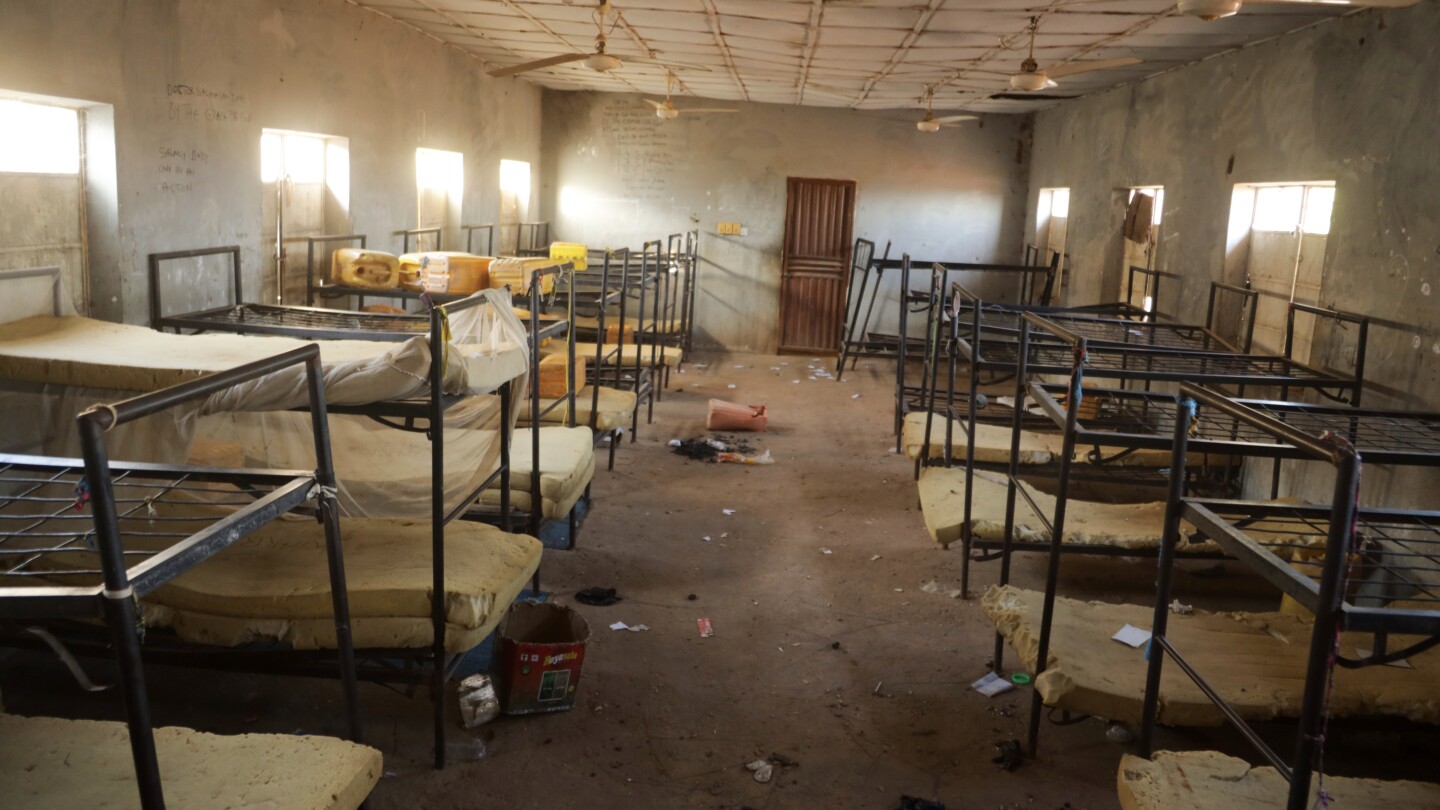
In a harrowing incident at a girls’ secondary school in north-western Nigeria, armed assailants killed a teacher and abducted at least 25 students. The attack occurred at the Government Girls Comprehensive Secondary School in Maga, Kebbi State, in the early hours of Monday. According to police reports, the attackers engaged in a gunfight with on-duty officers before breaching the school’s perimeter fence and forcibly taking the students from their hostel. One staff member lost their life while attempting to protect the students, while another sustained gunshot wounds and is currently receiving medical treatment. Eyewitnesses described the attackers, locally referred to as bandits, as a large group that fired sporadically to instill panic. Residents reported that the gunmen led a number of girls into nearby bushland. In response, Nigerian authorities have deployed additional police tactical units, military personnel, and vigilante groups to the area. A coordinated search and rescue operation is now underway in surrounding forests and suspected escape routes. This attack underscores the ongoing security crisis in northern Nigeria, where schools have increasingly become targets for armed groups seeking ransom or leveraging deals with the government. The incident has left families in Maga in a state of fearful exhaustion as they await the safe return of their daughters.
-

Dozens die in DR Congo mine after makeshift bridge collapses
A devastating bridge collapse at a cobalt mine in the Democratic Republic of Congo (DR Congo) has resulted in the deaths of at least 32 people, with rescuers still searching for survivors. The incident occurred at the Kalando mine in the southern Lualaba province on Saturday, where unauthorized miners had forcibly entered the site despite a ban. According to local official Roy Kaumba Mayonde, military personnel guarding the mine reportedly fired shots, causing panic among the miners. In their haste to flee, the miners overloaded a makeshift bridge, leading to its collapse. The military has yet to comment on these allegations. DR Congo, the world’s largest supplier of cobalt—a critical component for electric vehicle batteries—has long struggled with safety and regulation in its artisanal mining sector. Approximately 1.5 to 2 million people work in this unregulated industry, which supplies copper, cobalt, and other minerals to global markets. Mayonde described the incident as “tragic” and highlighted the recurring issue of illegal miners invading mining concessions. The miners had constructed the unstable bridge themselves, which could not withstand the sudden rush of people. Unverified images on social media show the aftermath, with locals witnessing the grim scene. Congolese authorities have urged artisanal miners to consider government-sponsored training in agribusiness to prevent such tragedies. The cobalt extraction process in DR Congo has been marred by allegations of child labor, human rights abuses, and corruption, further complicating the industry’s challenges.
-
Gunmen abduct 25 girls from a high school in northwestern Nigeria
In a brazen pre-dawn attack on Monday, armed assailants stormed a boarding school in Nigeria’s northwestern Kebbi state, abducting 25 schoolgirls and killing at least one staff member. The incident, which occurred in the Maga area of Danko-Wasagu, underscores the persistent security challenges plaguing the region. Police spokesperson Nafi’u Abubakar Kotarkoshi confirmed the attackers, armed with sophisticated weapons, engaged in a firefight with guards before seizing the students from their dormitories at 4 a.m. No group has yet claimed responsibility for the abduction, and the motives remain unclear. A coordinated search and rescue operation is underway, with security forces combing suspected escape routes and surrounding forests. One fatality and one injury were officially reported, though a local resident claimed two deaths occurred during the raid. Nigeria has faced escalating violence from armed bandits, who frequently kidnap for ransom, particularly in the mineral-rich but poorly policed northern regions. While not linked to militant groups like Boko Haram, these bandits have terrorized communities, targeting schools since the infamous 2014 Chibok abduction, which saw 276 students taken. Despite some progress in reducing school raids through enhanced security measures, the latest incident highlights the ongoing vulnerability of educational institutions in the region.
-
ICC prosecutors seek life sentence for Janjaweed leader convicted of Darfur crimes
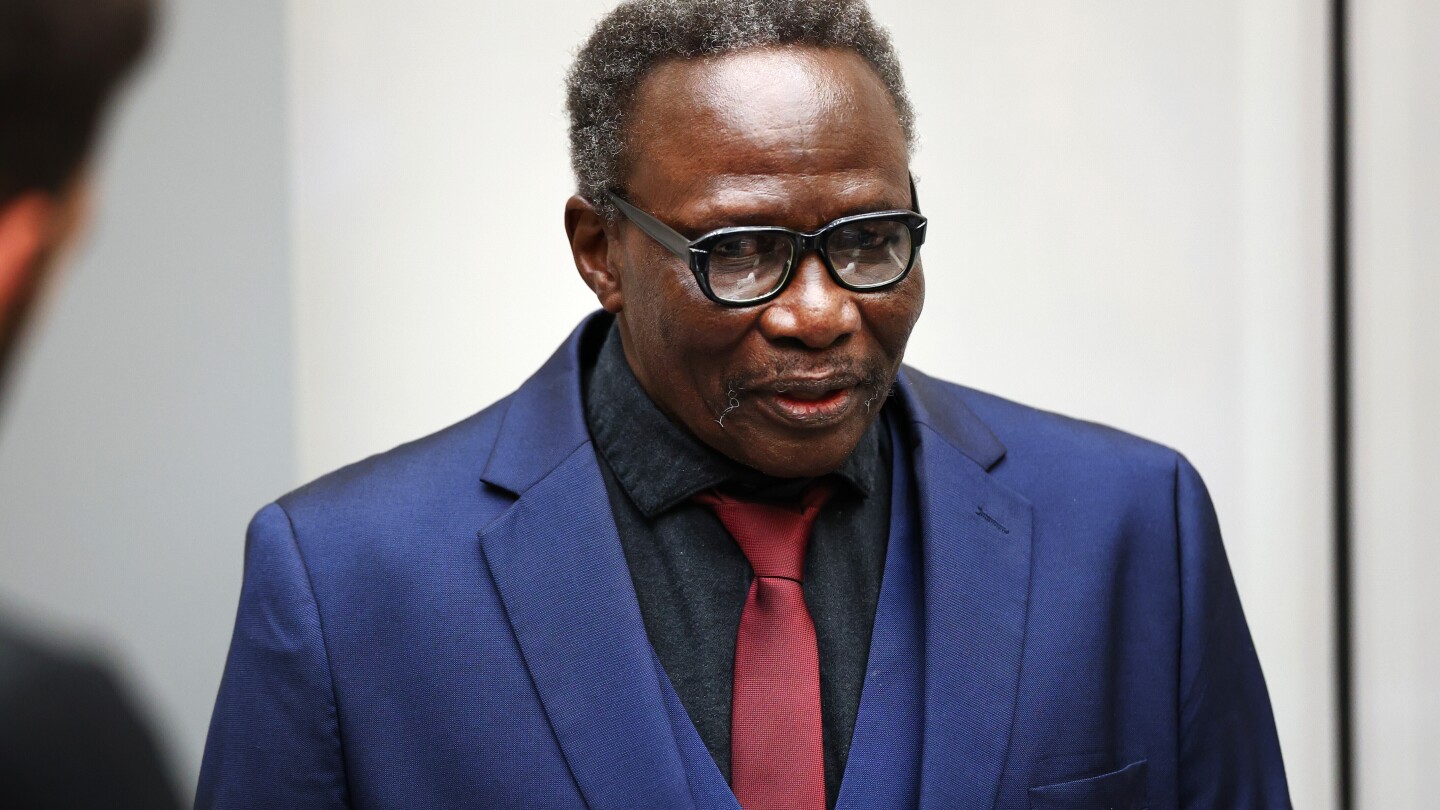
In a landmark case at the International Criminal Court (ICC) in The Hague, prosecutors have demanded a life sentence for Ali Muhammad Ali Abd-Al-Rahman, a senior leader of the notorious Janjaweed militia. Abd-Al-Rahman, also known as Ali Kushayb, was convicted last month on 27 counts of war crimes and crimes against humanity, including mass executions, rapes, and the brutal ax murders of two prisoners during the Darfur conflict in 2003-2004. This marks the first ICC conviction related to the Darfur atrocities. Prosecutor Julian Nicholls emphasized the defendant’s active and enthusiastic participation in these crimes, stating, “You literally have an axe murderer before you.” Abd-Al-Rahman, who surrendered in 2020, initially pleaded innocent, claiming mistaken identity, but judges dismissed his defense, citing evidence of his self-identification in a video. His defense team has requested a seven-year sentence, which could see the 76-year-old released within 18 months due to time served. The Darfur conflict, sparked by an insurgency against the Arab-dominated Sudanese government, led to widespread violence, with up to 300,000 deaths and 2.7 million displaced. Former President Omar al-Bashir, also charged by the ICC, remains unextradited. The sentencing hearing coincides with renewed violence in Sudan, where clashes between the military and paramilitary Rapid Support Forces have claimed over 40,000 lives and displaced 12 million people since 2023.
-

South African man seen at neo-Nazi rally has Australian visa revoked
Matthew Gruter, a South African national who relocated to Australia in 2022, has had his visa revoked after being identified at a neo-Nazi rally outside the New South Wales parliament. The protest, organized by the National Socialist Network on November 8, featured approximately 60 men dressed in black, with Gruter prominently positioned in the front row. The group displayed a banner reading ‘Abolish the Jewish lobby’ and chanted slogans associated with the Hitler Youth, such as ‘blood and honour.’ The event, which lasted less than 20 minutes, was legally authorized but has sparked widespread condemnation. Australia’s Home Affairs Minister Tony Burke emphasized that visa holders are guests in the country and must adhere to its values. Gruter, a civil engineer and senior member of the National Socialist Network in New South Wales, now faces deportation. This incident highlights the growing concern over right-wing extremism in Australia, which recently criminalized the Nazi salute with mandatory prison terms.
-
Timbuktu’s famed manuscripts escaped al-Qaida but the threat remains
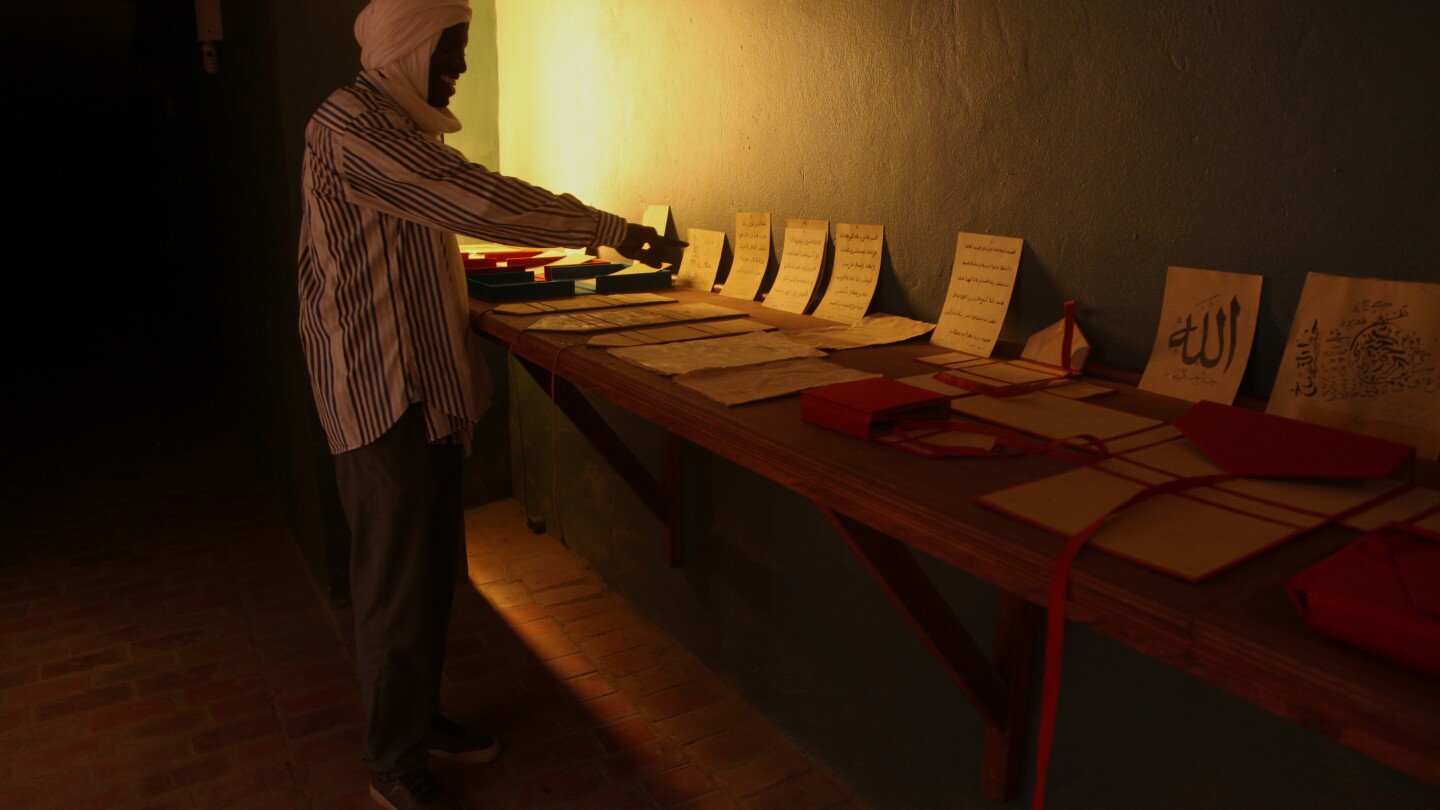
In a daring act of cultural preservation, Abdoulaye Cissé, the general secretary of the Ahmed Baba Institute of Higher Islamic Studies and Research, risked his life to smuggle 28,000 fragile manuscripts out of Timbuktu thirteen years ago. This heroic effort unfolded as al-Qaida-linked extremists overran the historic desert town. Under the cover of darkness, Cissé and his team transported the manuscripts via donkey carts, wooden boats, and buses on a perilous 1,200-kilometer journey to Mali’s capital, Bamako. The operation, which took a month, was fraught with danger but ultimately successful in safeguarding these irreplaceable artifacts of West African history. In August, the manuscripts were returned to Timbuktu, a move celebrated by local leaders and the Malian government as a triumph of cultural pride and preservation. However, the threat of al-Qaida persists, with recent attacks and a fuel blockade imposed by the JNIM group underscoring the ongoing instability in the region. Timbuktu, once a global center of Islamic learning, houses an estimated 377,000 manuscripts in both public and private collections. These documents, many of which were also smuggled to Bamako, challenge the misconception that African history was primarily oral. They provide a rich archive of West African empires, scholarly debates, and historical events dating back centuries. The manuscripts reveal a tolerant and respectful Islamic tradition, with one decree in a private library explicitly protecting women’s rights. The destruction of over 4,000 manuscripts and UNESCO World Heritage Sites by al-Qaida in 2012 was a devastating blow, prompting renewed efforts to digitize and protect these treasures. Today, nearly all of the institute’s manuscripts are digitized, with backups stored on remote servers. Despite these advancements, challenges remain, including the need for modern storage facilities and surveillance systems. Timbuktu’s residents, deeply committed to their cultural heritage, strive to balance preservation with accessibility, ensuring that these manuscripts continue to inspire and educate future generations.