标签: Africa

非洲

  • Ajyal Al Falah’s bilingual literacy model shows strong early years success

    Ajyal Al Falah’s bilingual literacy model shows strong early years success

    A pioneering educational approach at Ajyal Al Falah International School in Abu Dhabi is transforming early childhood language acquisition through an innovative bilingual literacy framework. The institution’s methodology, which has garnered substantial parental endorsement, integrates a comprehensive Bilingual Literacy Curriculum with Content and Language Integrated Learning (CLIL) principles and translanguaging pedagogy.

    This educational model enables young learners to develop simultaneous proficiency in both Arabic and English while engaging with academic content. Early-years educators have masterfully blended language instruction with play-based activities, creative construction, and subject-specific learning. The approach follows a constructivist pedagogical philosophy, recognizing that children learn most effectively through inquiry, peer interaction, and guided exploration.

    Principal Dr. Antoinette Brown, in collaboration with kindergarten teachers, developed a five-step language development strategy based on qualitative phenomenological research. Teacher reflections revealed their active involvement in curriculum design, incorporating technology, culturally responsive resources, and subject-specific vocabulary to support literacy development.

    Critical findings indicate that the CLIL and translanguaging methodology significantly enhanced student receptiveness and confidence in both languages. Children demonstrated improved vocabulary comprehension through peer dialogue, increased participation, and deeper engagement with children’s literature. The model successfully maintains Arabic’s academic and social prestige in alignment with UAE Ministry of Education standards, preventing marginalization of the native language.

    Classroom implementation strategies included:
    – Deployment of specialized bilingual resources and modeling of bilingual phrases
    – A “repair and talk” technique to scaffold student dialogue
    – Strategic technology integration
    – Cross-curricular vocabulary practice through meaningful play-based activities

    Researchers noted that emotional and social readiness substantially contributes to successful language acquisition. Teachers observed elevated levels of well-being, motivation, and self-expression during student-directed activities compared to teacher-centered instruction. Notably, Arabic-speaking students naturally employed ‘amiya (spoken Arabic) to support peers through translanguaging, fostering collaborative comprehension across languages.

    The school’s kindergarten program establishes that early investment in Arabic-English integration through play and dialogue creates essential foundations for advanced academic success. By embedding bilingual education, CLIL, and translanguaging into daily practice, Ajyal Al Falah sets a new standard for early childhood pedagogy while providing the cognitive and academic groundwork for future educational achievement.

    Admissions are currently available from Pre-KG through Grade 12 for the 2026–2027 academic year.

  • Ugandan MP and Bobi Wine ally arrested over election violence

    Ugandan MP and Bobi Wine ally arrested over election violence

    Ugandan authorities have taken into custody Muwanga Kivumbi, a prominent opposition parliamentarian and key associate of opposition leader Bobi Wine, regarding alleged involvement in recent electoral violence. The arrest intensifies political strains following President Yoweri Museveni’s controversial re-election to an unprecedented seventh term.

    Kivumbi, serving as deputy leader of Wine’s National Unity Platform (NUP), faces accusations of orchestrating assaults on police facilities and vote-processing centers after his party’s electoral defeat—charges the NUP vehemently denies. The Uganda Police Force announced via social media platform X that Kivumbi would face judicial proceedings, characterizing his detention as connected to “recent incidents of political violence.”

    Conflicting narratives emerge regarding casualty figures. Official police reports indicate seven fatalities during the disturbances, while Kivumbi presents a contradictory account alleging ten individuals were killed at his residence while awaiting parliamentary election outcomes.

    President Museveni, during his victory address, specifically cautioned opposition elements including Kivumbi about alleged coordinated plans to target polling stations. He detailed that security forces neutralized seven individuals in Butambala district, outside Kampala, when groups reportedly armed with machetes attempted violent attacks.

    The political climate remains volatile with Bobi Wine—Museveni’s primary electoral opponent—currently in hiding after fleeing a post-election raid on his residence. Wine has repudiated the election results as fundamentally “fake” due to systematic electoral fraud, and alleges an ongoing “silent massacre” targeting political activists.

    Further complicating the situation, Uganda’s military commander General Muhoozi Kainerugaba—who is both Museveni’s son and presumed successor—disclosed that security forces eliminated 22 opposition supporters during election-related clashes. This contrasts with Wine’s unverified social media assertion of over 100 election violence fatalities.

    Authorities have reportedly detained dozens of youths in Kampala on various election-related charges, signaling a broader crackdown. Uganda, which has never experienced peaceful presidential transition since independence, continues under Museveni’s rule that began in 1986 and could extend to 45 years by 2031.

  • UN warns of ‘catastrophic’ hunger crisis in Nigeria as food aid funding runs out

    UN warns of ‘catastrophic’ hunger crisis in Nigeria as food aid funding runs out

    DAKAR, Senegal — The United Nations World Food Programme (WFP) issued an urgent warning Thursday that over one million vulnerable people in northeastern Nigeria face imminent loss of critical food and nutrition assistance due to severe funding shortages. This crisis emerges amid escalating violence and worsening hunger conditions in the conflict-ridden region.

    The UN agency announced drastic reductions in its emergency operations, projecting assistance for merely 72,000 individuals in February—a catastrophic drop from the 1.3 million people supported during last year’s lean season from May through October. This represents the most severe operational contraction since WFP initiated humanitarian operations in Nigeria in 2015.

    According to recently compiled data, approximately 35 million Nigerians are projected to experience acute hunger this year, marking the highest food insecurity rate on the African continent since WFP began systematic data collection in the country.

    David Stevenson, WFP’s Nigeria Country Director, emphasized the grave implications: ‘This funding collapse will produce catastrophic humanitarian, security and economic consequences for the most vulnerable populations who have been forcibly displaced from their homes in search of sustenance and safety.’

    The crisis has been exacerbated by renewed violence across northern Nigeria, where approximately 3.5 million people have been displaced in recent months. Widespread attacks by armed groups have devastated agricultural production, destroyed food supplies, and driven malnutrition to critical levels. Security concerns have prevented farmers from accessing their lands, creating a self-reinforcing cycle of food insecurity.

    The situation deteriorated further last week when gunmen abducted over 150 worshippers in coordinated attacks targeting three separate churches in northwest Nigeria, demonstrating the expanding security crisis.

    Compounding these challenges, Nigeria has been severely affected by the large-scale reduction of UN food assistance following structural changes to the United States Agency for International Development. Nigeria stands among several West and Central African nations where these funding cuts have significantly deepened preexisting food crises, prompting WFP to suspend assistance programs across the region since July.

  • After presidential election, Ugandan police detain a key ally of opposition figure Bobi Wine

    After presidential election, Ugandan police detain a key ally of opposition figure Bobi Wine

    Ugandan authorities have escalated their crackdown on opposition forces following last week’s contentious presidential election, detaining a senior ally of opposition leader Bobi Wine amid allegations of electoral violence. Muwanga Kivumbi, deputy president of Wine’s National Unity Platform party and a sitting lawmaker, was taken into custody Thursday for his purported involvement in deadly clashes within his Butambala constituency that resulted in seven fatalities.

    The detained parliamentarian, who recently lost his parliamentary seat, stands accused of instigating violence that prompted security forces to open fire on his residence. Kivumbi emotionally addressed the tragedy during victim funerals, maintaining that those killed were innocent casualties of state-sponsored aggression rather than perpetrators.

    President Yoweri Museveni, extending his 35-year rule with a declared 71.6% victory that opposition forces decry as fraudulent, has taken a confrontational stance against dissent. In a nationally televised address, the 81-year-old leader alleged opposition elements attempted to disrupt voting processes, claiming victims in Butambala had assaulted police officers with machetes. Museveni specifically urged religious leaders to intervene with youth he described as vulnerable to political manipulation.

    Despite police spokesman Kituuma Rusoke’s assurance that Bobi Wine (legally named Kyagulanyi Ssentamu) faces no current accusations and remains under state protection, the opposition leader reports being in hiding due to safety concerns. The electoral process itself faced widespread criticism following a multi-day internet blackout and technical failures in biometric voting systems that disproportionately affected opposition strongholds including the capital Kampala.

    International observers note this election continues Uganda’s six-decade absence of peaceful presidential transitions since independence. Museveni’s forthcoming seventh term will extend his leadership toward a half-century, cementing his dominance over a political landscape where no clear successors have emerged within his National Resistance Movement party.

  • Guinea-Bissau coup leaders set December election date

    Guinea-Bissau coup leaders set December election date

    Military authorities in Guinea-Bissau have officially scheduled presidential and legislative elections for December 6th, marking a critical development in the nation’s turbulent political landscape. The announcement comes despite mounting international pressure for an accelerated transition to civilian governance following last November’s coup that ousted President Umaro Sissoco Embaló.

    Transitional President Horta N’Tam formalized the electoral timeline through a presidential decree on Wednesday after extensive consultations with the National Transitional Council, military representatives, government officials, and electoral commission members. N’Tam publicly affirmed that all necessary conditions for conducting free and fair elections had been satisfactorily established.

    The military junta has faced sustained pressure from the Economic Community of West African States (ECOWAS), which previously rejected the junta’s proposed one-year transition framework. The regional bloc had suspended Guinea-Bissau from its decision-making institutions and threatened additional sanctions unless a shorter transitional period was implemented. The international community now awaits ECOWAS’ formal response to the announced December timeline.

    The November 2025 power seizure occurred under controversial circumstances, with military leadership justifying their intervention as necessary to prevent alleged destabilization plots during the tense period preceding official presidential election results. Both incumbent President Embaló and primary opposition candidate Fernando Dias had declared victory simultaneously, creating a political impasse that the military cited as justification for their takeover.

    Notably, the transitional charter explicitly prohibits interim leader N’Tam and his appointed prime minister from seeking presidential office. However, regional observers remain skeptical given recent patterns across West Africa where military leaders have frequently extended transitional periods and consolidated political power. The international community continues monitoring whether Guinea-Bissau will break this regional trend and facilitate genuine democratic restoration through transparent electoral processes.

  • BRI activity hits record high in 2025

    BRI activity hits record high in 2025

    The Belt and Road Initiative achieved unprecedented momentum in 2025, reaching a record $214 billion in global engagement according to a comprehensive study by Fudan University’s Green Finance & Development Center and Australia’s Griffith Asia Institute. This remarkable growth represents China’s most active year since the initiative’s 2013 launch, driven primarily by massive renewable energy investments and strategic infrastructure development.

    Construction contracts accounted for $128.4 billion while investments exceeded $85 billion, with energy sector engagement surging to $94 billion—more than double the 2024 figures and the highest in BRI history. The scale of individual projects expanded dramatically, with investment deals over $100 million reaching $939 million and average construction project sizes nearly doubling to $964 million.

    Africa emerged as the primary beneficiary of construction activities, with Nigeria leading at approximately $25 billion, followed by the Republic of Congo at $23 billion. Middle Eastern nations also received significant attention, while Central Asia became the top investment destination with Southeast Asia and Africa following at $21 billion and $19 billion respectively.

    The renewable energy transition proved particularly noteworthy, with green energy investments hitting their highest level since 2013. Wind, solar, and waste-to-energy projects attracted over $18 billion, complemented by $3 billion in hydropower investments, bringing total green energy engagement to more than $21 billion.

    Aly-Khan Satchu, a prominent Kenyan investment banker, emphasized Africa’s strategic importance to China, noting that “China has been the cheerleader for Africa’s infrastructure investments—whether railways, roads or digital infrastructure—without which no jobs will be created.”

    However, experts caution that future growth may face constraints. Frederick Otieno, a China-Africa relations scholar, noted that financial risks, geopolitical concerns, and stricter lending regulations are prompting Chinese lenders to adopt more selective approaches. “BRI engagement might remain considerable but is likely to level off into a selective, risk-aware pattern,” he observed.

    The report anticipates continued Chinese engagement in energy, mining, and emerging technologies throughout 2026, though potentially with fewer megadeals as global trade volatility and supply chain considerations shape more targeted investment strategies.

  • South African police not yet able to defeat gangs, minister says

    South African police not yet able to defeat gangs, minister says

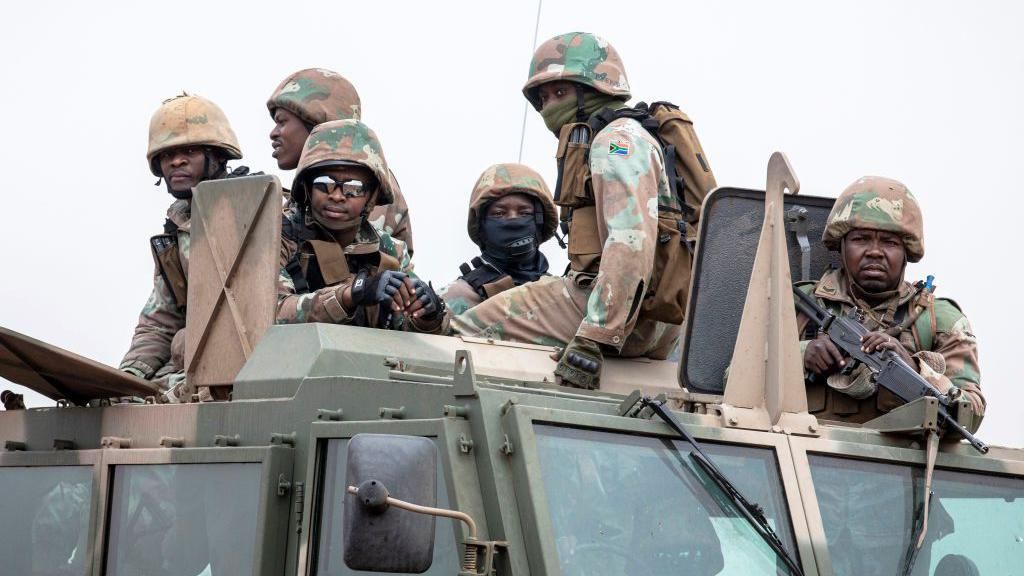
    South Africa’s Police Minister Firoz Cachalia has delivered a sobering assessment of the nation’s security capabilities, acknowledging that law enforcement lacks adequate resources to combat increasingly sophisticated criminal gangs. This admission comes amid escalating violence that has plagued multiple provinces, particularly the Eastern Cape and Western Cape regions.

    Minister Cachalia characterized gang violence as a ‘grave problem throughout the country’ during a press conference Wednesday, noting that criminal cartels ‘wield significant wealth and power’ that continues to undermine public safety. His comments followed a visit to Nelson Mandela Bay in Eastern Cape, where he described gangs as being on a ‘killing spree’ that has persisted into the new year.

    Statistical evidence underscores the severity of the crisis. Official police data reveals an average of 63 daily homicides between April and September last year, while local prevention groups documented 118 deaths in Nelson Mandela Bay alone from August to December. The violence has continued unabated in 2026, with approximately 40 fatalities reported across the region in January.

    The proliferation of illegal firearms exacerbates the situation. According to statistics cited by Gideon Joubert of the South African Gunowners’ Association, the country’s 63 million citizens possess approximately 3 million legally registered firearms—matched by an equal number of unlicensed weapons in circulation.

    Recent months have witnessed several high-profile incidents highlighting the crisis. These include a mass shooting near Johannesburg that claimed 11 lives in connection with illegal mining turf wars, a hostel attack in Pretoria that killed 11 people including a three-year-old child, and a tavern shooting in Durban that left eight patrons dead.

    Despite the establishment of a specialized anti-gang unit in 2019, Minister Cachalia indicated that traditional policing approaches have proven insufficient. He criticized ad hoc responses to the growing problem, emphasizing that ‘establishing gang units from time to time’ represents an inadequate solution to deeply entrenched organized crime.

    President Cyril Ramaphosa has pledged strengthened law enforcement measures and increased police deployments to address the violence. However, Minister Cachalia’s assessment suggests that without significant resource allocation and strategic overhaul, South Africa’s security forces remain outmatched by well-funded criminal networks.

  • Slashed incomes and gamers go cold turkey: the fallout from Uganda’s internet shutdown

    Slashed incomes and gamers go cold turkey: the fallout from Uganda’s internet shutdown

    Uganda’s recent general election triggered a nationwide internet shutdown with profound consequences for citizens, businesses, and democratic processes. The government-ordered blackout, officially implemented to ‘ensure peace and protect national stability’ during the electoral period, effectively paralyzed the digital economy and restricted information flow throughout the country.

    Mobile money agent Mirembe Tracy experienced immediate financial devastation when withdrawal systems disconnected. Her weekly earnings of approximately 450,000 Ugandan shillings (£130) vanished entirely, leaving her unable to pay rent. ‘That money is what I use to pay rent. Losing it was a total loss,’ she told the BBC. Like thousands of others dependent on digital transactions, she found herself with no income source beyond minimal prepaid airtime sales that provide no commission.

    The disruption extended throughout Kampala’s economy. SafeBoda, the popular ride-hailing platform for motorcycle taxis, saw its entire server infrastructure rendered inoperative. Co-founders reported that both riders and dependent businesses were forced offline indefinitely. Meanwhile, entrepreneur Namukwaya Olivia, who relies on Instagram, TikTok and WhatsApp to market traditional cultural clothing, described complete operational paralysis: ‘We could not send pictures, we could not receive orders, and we could not make deliveries.’

    Journalists faced particularly severe challenges in fulfilling their professional duties. Ngabo Amon described smartphones becoming ‘largely useless’ as research, communication, and content transmission capabilities disappeared. The blackout created an information vacuum that prevented accurate election coverage and real-time reporting of developing situations. Some journalists resorted to physically transporting footage by bus from rural areas to Kampala—a process that rendered news obsolete by arrival time.

    The African Union election observation mission noted that the shutdown ‘limited access to information, freedom of association and curtailed economic activities,’ while simultaneously ‘creating suspicion and mistrust’ in the electoral process. President Yoweri Museveni’s landslide victory extended his 40-year rule amid opposition allegations of ‘fake results’ and ‘ballot stuffing.’

    Beyond economic and professional impacts, the blackout created personal hardships. Kenyan journalist Caroline Mutai described the psychological toll: ‘The shutdown almost gave me depression.’ Students like Aaron Benitez lost educational connectivity as online learning platforms and communication channels failed. ‘We usually study online, sometimes on Zoom, but during that time everything just stopped,’ he reported.

    Even after partial restoration following President Museveni’s victory declaration, many social media platforms remain restricted or slow, driving widespread adoption of VPN services. The episode served as a stark demonstration of how deeply digital accessibility underpins modern life, economic stability, and democratic transparency in contemporary Uganda.

  • Sobha Realty sales jump 30% to Dh30 billion in FY2025

    Sobha Realty sales jump 30% to Dh30 billion in FY2025

    Dubai-based luxury property developer Sobha Realty has reported extraordinary financial performance for fiscal year 2025, achieving sales of Dh30 billion—representing a substantial 30 percent year-on-year growth that solidifies its position as a premier real estate developer in the Gulf region.

    The remarkable performance was fueled by multiple strategic factors including vigorous off-plan sales activity, the successful launch of new masterplanned communities, and surging interest from international investors. Notably, the emerging northern emirate of Umm Al Quwain contributed significantly to this growth, generating Dh8 billion in sales from developments such as Downtown UAQ | Sobha Realty and Sobha Siniya Island.

    Dubai’s luxury residential sector served as a powerful catalyst, with prime residential prices escalating over 15 percent throughout 2025 according to industry data from Knight Frank and ValuStrat. This appreciation was driven by substantial inflows of global capital, unprecedented population expansion, golden visa initiatives, and sustained demand from high-net-worth individuals relocating to the emirate. The premium segment exceeding Dh10 million per transaction reached unprecedented volumes, particularly for waterfront villas, branded residences, and comprehensive masterplanned communities—all areas where Sobha maintains significant development expertise.

    Chairman Ravi Menon characterized FY2025 as a landmark period for the group’s domestic expansion, highlighted by the introduction of four new masterplans: Sobha Solis, Downtown UAQ | Sobha Realty, Sobha Central, and Sobha SkyParks. These additions bring Sobha’s UAE portfolio to 14 developments, with 12 located in Dubai and two in Umm Al Quwain, demonstrating the company’s growing influence in shaping future urban landscapes.

    The company simultaneously accelerated its global expansion strategy with strategic entries into the United States and Australian markets. Sobha established regional offices and secured prime land parcels in Texas, Queensland, and Sydney, marking a significant evolution into an international real estate platform.

    Capital markets responded enthusiastically to Sobha’s financial strength, with the company’s sukuk issuances attracting massive institutional demand. Its debut offering was oversubscribed by approximately 300 percent, while its green sukuk achieved roughly 280 percent oversubscription—representing the largest green sukuk issuance by any real estate developer worldwide. Listed on both the London Stock Exchange and Nasdaq Dubai, these transactions enhanced funding flexibility and bolstered international investor confidence.

    Concurrently, Sobha reinforced its sustainability leadership through groundbreaking achievements. Sobha One became the first building outside Singapore to obtain the Green Mark Platinum Super Low Energy certification, while the company earned an exceptional score of 97 in the 2025 GRESB Real Estate Assessment, securing a four-star rating.

    Supported by robust sales momentum, expanding global operations, and sustained premium housing demand across the UAE, FY2025 emerged as one of the most transformative years in Sobha Realty’s five-decade history, establishing a solid foundation for continued growth in both regional and international markets.

  • Meta’s new AI team delivered first key models internally this month, CTO says

    Meta’s new AI team delivered first key models internally this month, CTO says

    Meta Platforms has achieved a significant milestone in its artificial intelligence development, with its newly established Meta Superintelligence Labs delivering its first high-profile AI models internally this month. Chief Technology Officer Andrew Bosworth confirmed the development during a press briefing at the World Economic Forum’s annual meeting in Davos on Wednesday.

    The technology executive revealed that the team, formed just six months ago as part of CEO Mark Zuckerberg’s strategic reorganization of Meta’s AI leadership structure, has already produced models demonstrating substantial promise. While Bosworth did not specify which particular models were delivered, previous media reports indicated Meta was developing a text-based AI system codenamed ‘Avocado’ scheduled for first-quarter release, alongside an image and video-focused model known as ‘Mango’.

    This development follows Zuckerberg’s aggressive moves to reposition Meta in the intensely competitive AI landscape, including leadership restructuring, establishing specialized labs, and recruiting top talent with exceptionally generous compensation packages. The initiatives represent Meta’s strategic response to criticism surrounding the performance of its Llama 4 model and the significant advancements made by competitors including Alphabet’s Google.

    Bosworth emphasized that while the initial models show impressive capability, the technology remains unfinished. He detailed the extensive post-training work required to refine AI systems before they become usable both internally and for consumer applications. Despite these ongoing development challenges, the CTO indicated that Meta’s substantial investments and strategic gambits initiated throughout 2025 are beginning to yield favorable returns, positioning the company more competitively in the race for transformative AI technology.