标签: Africa

非洲

  • UAE flights: Air Arabia starts daily flights between Sharjah, Krabi

    UAE flights: Air Arabia starts daily flights between Sharjah, Krabi

    Sharjah-based carrier Air Arabia has officially launched daily nonstop flights between Sharjah International Airport and Krabi, Thailand, marking a significant expansion of its Southeast Asian network. The inaugural flight departed on November 28, 2025, receiving an official welcome in Krabi attended by Thai Deputy Prime Minister and Minister of Transport Phipat Ratchakitprakarn alongside senior aviation officials.

    This new route establishes the third Thai destination in Air Arabia’s expanding network from Sharjah, complementing existing services to Bangkok and Phuket. The daily direct connection enhances travel convenience while strengthening economic and tourism ties between the United Arab Emirates and Thailand’s southern coastal region.

    Adel Al Ali, Group Chief Executive Officer of Air Arabia, characterized the Krabi launch as a strategic milestone that provides customers with increased accessibility to Thailand’s most popular destinations. “This new daily service offers our customers greater convenience and strengthens the growing travel and trade links between the UAE and Thailand,” Al Ali stated.

    The Krabi initiative coincides with Air Arabia’s broader network expansion strategy, which recently included the announcement of new twice-daily services connecting Sharjah to London Gatwick commencing March 29, 2026. These developments collectively represent the airline’s concerted effort to enhance its global footprint while reinforcing Sharjah International Airport’s position as a growing aviation hub.

  • Hrithik Roshan praises Farhan Akhtar’s war drama ‘120 Bahadur’

    Hrithik Roshan praises Farhan Akhtar’s war drama ‘120 Bahadur’

    Bollywood luminary Hrithik Roshan has delivered a resounding endorsement of Farhan Akhtar’s latest cinematic venture, the war drama ‘120 Bahadur,’ through an enthusiastic social media tribute. On his official Instagram account, Roshan celebrated the film as a “beautifully crafted” masterpiece distinguished by “incredible aesthetics” and outstanding performances.

    Roshan specifically commended Akhtar’s portrayal in the film while praising director Razneesh Ghai’s “flawless” artistic direction. The actor’s post emphasized the collective achievement, noting that “every department deserves a pat on their backs” for their contribution to the production.

    The historical drama depicts the heroic actions of Major Shaitan Singh Bhati, who was posthumously awarded India’s highest military honor, the Param Vir Chakra, for his leadership during the 1962 Battle of Rezang La. The film focuses on the valor demonstrated by Singh’s unit, composed primarily of soldiers from Rewari and surrounding regions, who defended the strategically crucial Rezang La Pass along the India-China border.

    In previous interviews with ANI, Akhtar reflected on the particular challenges inherent in bringing such historically significant stories to the screen. The actor-producer emphasized the additional responsibility of ensuring accurate and respectful depiction of military sacrifice, noting the importance of creating a narrative that would inspire pride among the families of those represented.

    The ensemble cast features Raashii Khanna, Sparsh Walia, Vivan Bhatena, and Dhanveer Singh in significant roles, contributing to what industry observers are calling a landmark in Indian war cinema.

  • ‘Is this the start of Liverpool’s life without Salah?’

    ‘Is this the start of Liverpool’s life without Salah?’

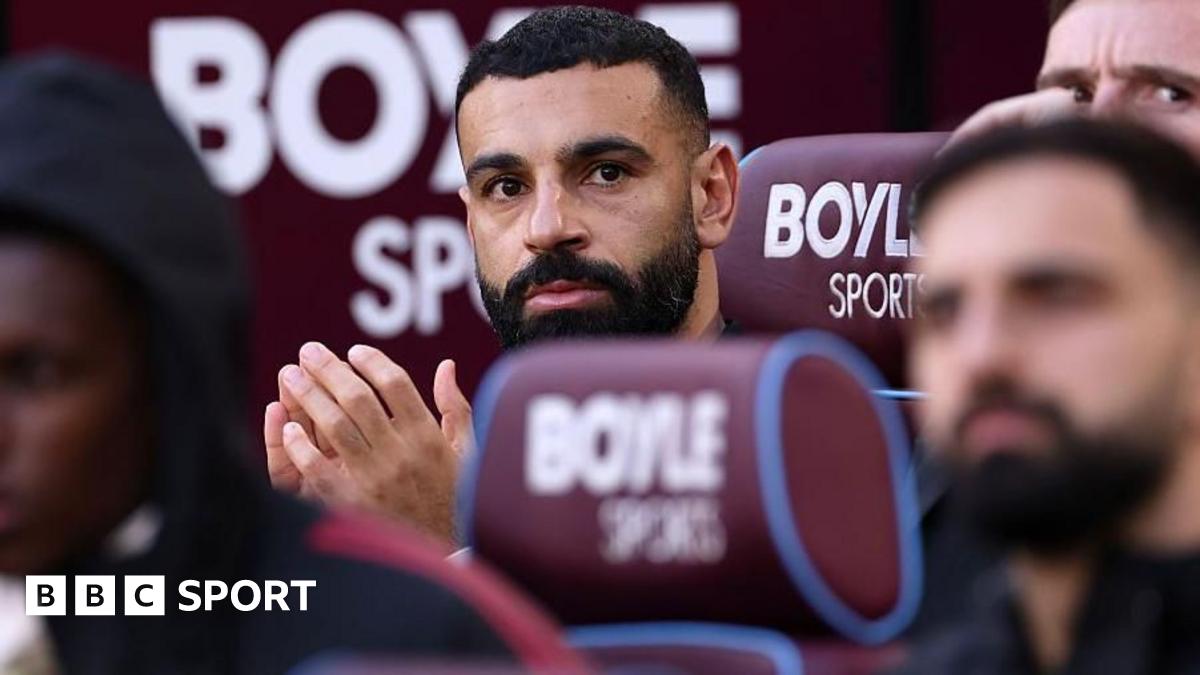
    In a strategic masterstroke that signals potential transition, Liverpool secured a vital 2-0 Premier League victory against West Ham United while legendary forward Mohamed Salah watched from the substitutes’ bench for the first time since April 2024. Manager Arne Slot’s bold lineup decision on November 30, 2025, proved transformative as the Reds ended their concerning slump of nine defeats in twelve matches.

    The tactical reshuffle saw record-signing Alexander Isak break his league goal drought since his £125 million transfer from Newcastle United, while creative maestro Florian Wirtz demonstrated why Liverpool invested £116 million in his services. The Dutch manager’s reconstruction included deploying Joe Gomez at right-back for his first league start in eleven months, which simultaneously solidified Liverpool’s previously leaky defense and liberated Dominik Szoboszlai from defensive duties to focus on attacking contributions.

    Cody Gakpo delivered a standout performance, providing the assist for Isak’s opener before sealing the victory with a powerful stoppage-time finish. The clean sheet marked a significant defensive improvement after conceding ten goals across their previous three matches.

    While Salah’s benching dominated pre-match discussions, Slot emphasized the Egyptian’s continued importance to the club, noting his recent contract extension and ‘special player’ status. However, with Liverpool’s dramatic dip in form and Salah’s upcoming participation in the Africa Cup of Nations, the manager’s selection suggests strategic planning for the future.

    The victory provides crucial breathing space for Slot amid mounting pressure, demonstrating that his ambitious £450 million summer rebuild might finally be showing promising signs of cohesion and effectiveness.

  • UAE’s scientific talent strategy earns global praise at Hong Kong forum

    UAE’s scientific talent strategy earns global praise at Hong Kong forum

    The United Arab Emirates has received significant international recognition for its comprehensive approach to cultivating scientific leadership, with officials at the recent Hong Kong Laureate Forum praising the nation’s strategic investment in research talent development. Speaking at the four-day gathering that concluded November 8th, 2025, HKLF representatives highlighted how the UAE’s government-led initiatives establish a remarkable regional benchmark in preparing future generations of scientific innovators.

    The UAE’s multifaceted strategy encompasses several pioneering programs including the National R&D Leadership Programme, which provides specialized training in research management and evidence-based policymaking for professionals across government, academic, and private sectors. The Mohammed bin Rashid Government Fellowships extend this effort through international partnerships with prestigious institutions like Oxford and MIT, developing national expertise in artificial intelligence, economics, and global policy.

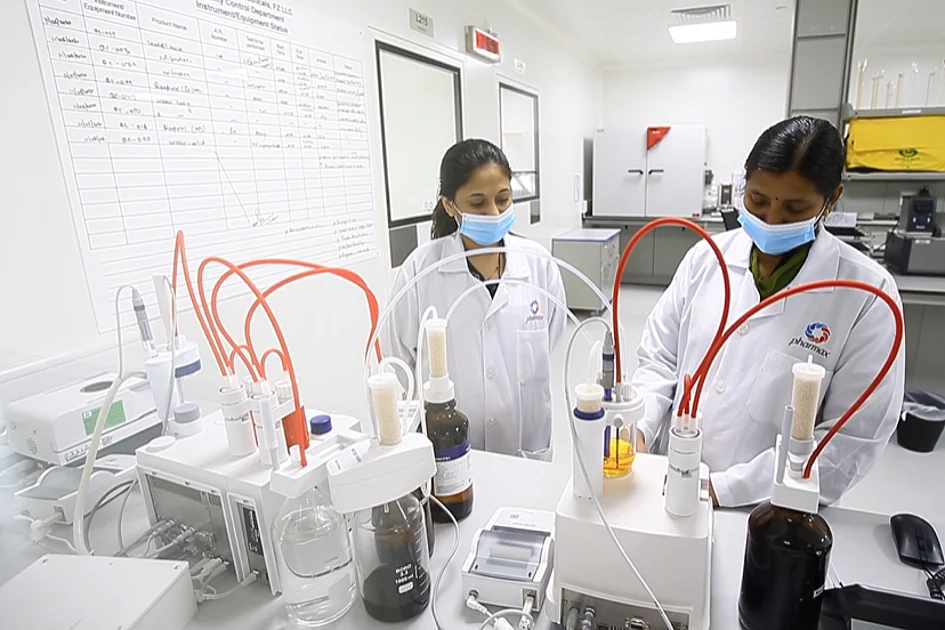
    Infrastructure development plays a crucial role in the Emirates’ scientific vision, exemplified by the Open Labs platform—the country’s first national database connecting researchers with more than 150 advanced scientific instruments. This initiative aims to democratize access to cutting-edge equipment and accelerate progress in biotechnology, materials science, and related fields.

    Additional components of the UAE’s scientific ecosystem include the Mohammed bin Rashid Academy of Scientists, the Dubai Science Park Leadership Network, and the Dubai Research, Development and Innovation Grant. Collectively, these programs support the nation’s ambition to transform into a global hub for advanced research and talent attraction.

    While acknowledging differences in approach—the UAE’s government-coordinated model contrasts with HKLF’s emphasis on intergenerational mentorship and global exchange—forum representatives noted both share the fundamental mission of empowering young scientists to make discoveries that benefit humanity. The 2025 Hong Kong Laureate Forum itself brought together 12 Shaw Laureates and over 200 emerging scientists from more than 20 countries, creating rare opportunities for direct interaction between established leaders and the next generation of researchers.

    Professor Timothy Tong, Chairman of the HKLF Council, emphasized the forum’s unique ability to foster meaningful personal exchanges that transcend traditional academic conferences. ‘Young scientists sit with laureates during meals and discussions,’ Tong noted. ‘They share ideas, experiences and challenges. These conversations inspire young people to stay in science and pursue bold ideas.’

    Hong Kong officials highlighted the event’s significance in the city’s innovation agenda, with Chief Secretary for Administration KK Chan noting how the forum demonstrates Hong Kong’s capacity to ‘link technology with talent and industry to build a competitive and globally connected innovation ecosystem.’ This recognition of the UAE’s scientific development strategy positions both regions as emerging nodes in the global network nurturing tomorrow’s scientific leadership.

  • Hollywood icon Linda Hamilton embraces ageing, says ‘This is the face I’ve earned’

    Hollywood icon Linda Hamilton embraces ageing, says ‘This is the face I’ve earned’

    Veteran actress Linda Hamilton, renowned for her groundbreaking portrayal of Sarah Connor in the ‘Terminator’ film series, is receiving widespread acclaim for her performance in the concluding season of Netflix’s ‘Stranger Things’. At 69, Hamilton is simultaneously making a powerful statement about aging with dignity in an industry often obsessed with youth.

    In a candid interview with AARP’s Movies for Grownups, the Hollywood icon articulated her firm stance against pursuing a perpetually youthful appearance. She characterized the aging process as both natural and meaningful, something to be embraced rather than reversed. Hamilton explicitly stated she dedicates zero effort to attempting to look younger, declaring complete surrender to the face she has ‘earned’ through her life experiences. She finds profound value in her appearance, noting it tells a rich and personal story.

    While firmly rejecting surgical alterations to her face, Hamilton emphasized her commitment to physical wellness. During her work on ‘Stranger Things’, she maintained a rigorous fitness regimen, visiting the gym three times weekly. Her holistic approach combined Pilates, yoga, and a diverse range of weight training, focusing on what her body needed to ‘loosen up and stretch out’ each day rather than adhering to a rigid, aesthetic-driven routine.

    The final season of the hit sci-fi series has been released in two parts. Netflix debuted the first four episodes, plunging viewers into a darker and more expansive Hawkins. According to the platform’s Tudum fan site, the narrative will conclude with episodes 5, 6, and 7 arriving on December 25, culminating in the highly anticipated series finale on New Year’s Eve, December 31.

  • ‘I can’t see TV anymore’: Judi Dench opens up on worsening eyesight

    ‘I can’t see TV anymore’: Judi Dench opens up on worsening eyesight

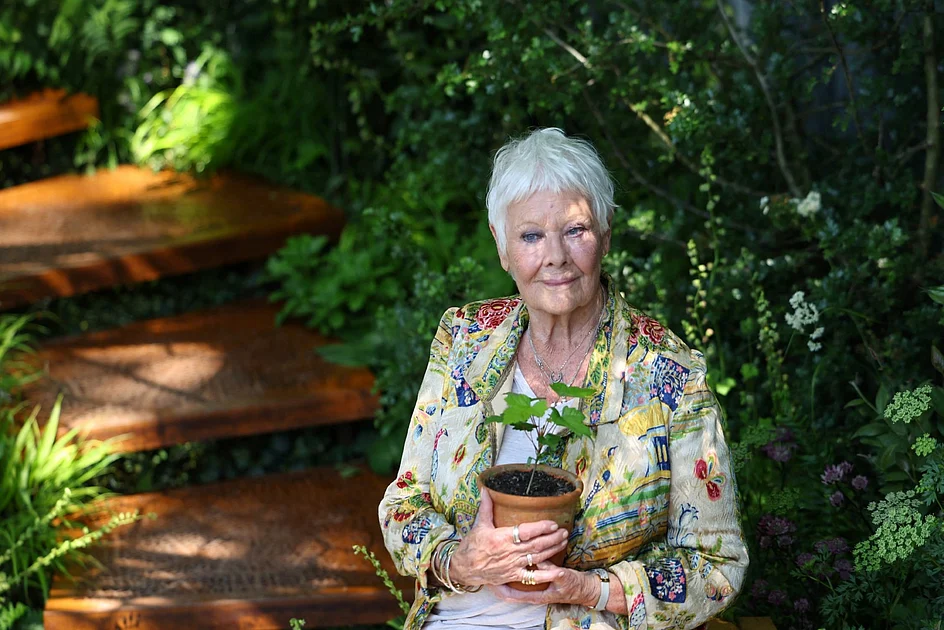
    Dame Judi Dench, the revered Academy Award-winning actress celebrated for her iconic portrayal of ‘M’ in the James Bond series, has provided a poignant update on her deteriorating eyesight, revealing the condition has severely impacted her professional and personal life. In a candid interview with ITV News, the 90-year-old theatrical legend disclosed she can no longer recognize faces, read scripts, or watch television due to advanced macular degeneration.

    Speaking alongside her longtime friend and collaborator Sir Ian McKellen, Dench described the practical realities of her vision loss. When met with a light-hearted remark from McKellen, she responded with characteristic wit, noting she could only perceive his outline and recognized him by his distinctive scarf. The actress confirmed that the degenerative eye disease, which damages the central retina and causes progressive central vision distortion, has made continuing her acting career nearly impossible.

    Dench first publicly addressed her diagnosis with age-related macular degeneration (AMD) in 2012. Over the past decade, the condition has advanced significantly, prompting her to scale back her professional commitments. She revealed in previous interviews that she relies on friends to help her learn scripts due to her inability to read them herself, despite having what she describes as a ‘photographic memory.’

    With a career spanning seven remarkable decades, Dench has accumulated an extraordinary collection of honors including an Oscar, a Tony Award, two Golden Globes, and multiple BAFTA and Olivier Awards. Her most recent appearance was a 2022 cameo in the Apple TV+ holiday film ‘Spirited.’ Her openness about her vision struggles provides a sobering look at the challenges facing performers with age-related health conditions.

  • Dubai: Meet Indian expat who arrived 52 years ago when gold cost only Dh6 a gram

    Dubai: Meet Indian expat who arrived 52 years ago when gold cost only Dh6 a gram

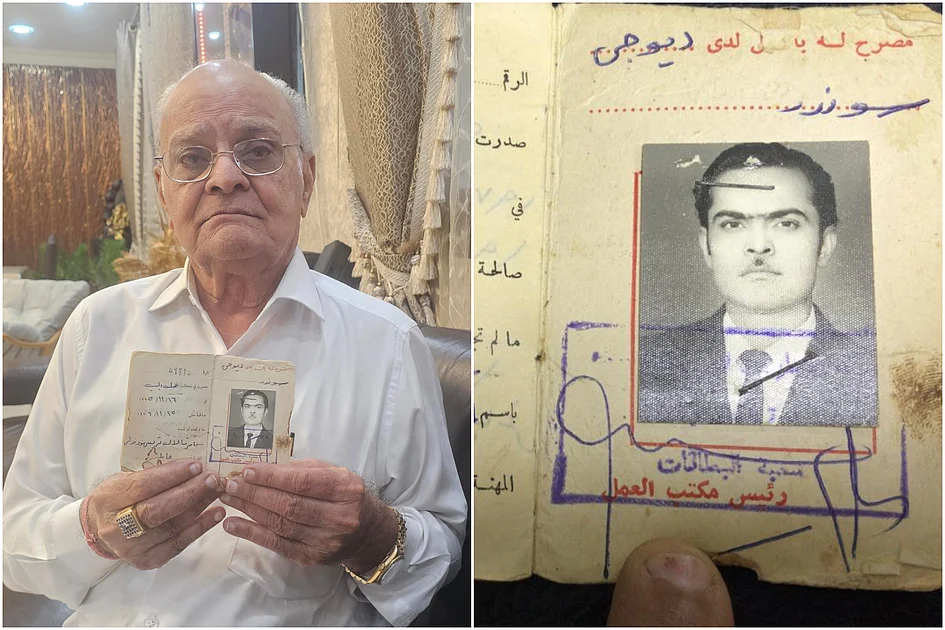
    In 1973, when gold traded at a mere Dh6 per gram, Amratlal Tribhovan Das arrived in Dubai with minimal possessions but immense ambition. Now, 52 years later, his manufacturing facility produces approximately 150 kilograms of gold ornaments monthly, supplying clients throughout the GCC region.

    Das vividly recalls his arrival on December 13, 1973, via an Air India flight from Mumbai. The Dubai he encountered contrasted sharply with today’s metropolis—a modest settlement with approximately ten gold shops lining Dubai Creek, where hand-paddled abras transported passengers for just 10 fils.

    Born in Gujarat’s Junagadh district in 1941, Das trained as a goldsmith in Mumbai before seizing emerging Gulf opportunities. His relocation occurred unexpectedly when his intended ship transport encountered mechanical issues, forcing him to utilize his expiring visa via air travel—a substantial investment costing Rs1,100 at the time.

    Initial attempts to establish a workshop in Dubai proved challenging, prompting relocation to Sharjah where electricity availability was limited to three-hour intervals per street. This obstacle inspired adaptive work patterns: crafting jewelry during powered hours and resting during outages.

    A pivotal shift occurred in 1976 when revised trade license regulations enabled entrepreneurial expansion. Das partnered with a relative, combining financial investment with artisanal expertise to establish a home-based workshop. This venture evolved into Yogesh Jewellers near Sharjah Cinema by 1980, eventually transitioning exclusively to manufacturing.

    Das’s craftsmanship gained recognition through an Italian-style bangle design that achieved remarkable popularity within two months of its introduction. This innovation established his reputation within UAE’s gold industry, continuing a nine-generation family legacy in goldsmithing.

    The expatriate’s journey mirrors Dubai’s transformation—from residency visas costing Dh10 in 1975 to contemporary global gold markets. Despite manufacturing expansion and 85 employees, Das cherishes the memory of purchasing his first Rado watch in 1979, which he continues to wear as a symbol of perseverance and realized dreams.

  • Inside Dubai nurseries where kids are turning into confident, curious learners

    Inside Dubai nurseries where kids are turning into confident, curious learners

    Dubai’s nurseries are undergoing a transformative educational shift through the implementation of a groundbreaking Quality Framework for Early Childhood Care and Education. Spearheaded by the Knowledge and Human Development Authority (KHDA), this initiative centers on developing the “Dubai Child” concept—a vision for young learners who embody capability, curiosity, and strong cultural connections.

    The comprehensive framework establishes five foundational pillars: learning and curriculum development; family and community partnerships; optimized learning environments; health, safeguarding and wellbeing prioritization; and enhanced system leadership. This structured approach provides educators with clear guidelines while offering parents greater confidence in their children’s early development.

    Leading nursery operators have embraced the framework with innovative adaptations. Lama Bechara-Jakins, CEO Middle East at Babilou Family, explains their implementation of the Sustainable Education Approach across all teaching and care practices. “Our six pillars—Emotional and Physical Security, Natural Curiosity, Nature-based Learning, Child Rhythms, Inclusion, and Partnering with Families—form the foundation of daily routines,” she notes.

    Classroom environments have been deliberately designed using a ‘less is more’ philosophy, creating calm, uncluttered spaces that reduce overstimulation and enhance focus. Natural elements and sensory-rich outdoor experiences help children feel grounded and connected to their environment.

    IdeaCrate Edutainment CEO Shifa Yusuff Ali emphasizes the framework’s alignment with child-centered learning principles. “We’ve strengthened staff upskilling in Montessori-inspired practices, child wellbeing, and safeguarding protocols,” she states. Their classrooms and outdoor areas are intentionally designed to feel calm and warm while providing rich sensory opportunities.

    The British Orchard Nursery and Teacher Training Centre has responded with enhanced planning and observation systems. Dr. Vandana Gandhi, CEO and Founder, describes their project-based, child-led learning approach where educators build on children’s interests to create purposeful experiences. “We’re expanding Arabic exposure through natural, joyful activities like stories and songs,” she adds.

    Inclusion practices receive particular emphasis across all institutions, with specialized initiatives like BONSAI (British Orchard Nursery’s Speciality for Accessibility and Inclusion) ensuring every child receives appropriate support. The framework promotes early identification systems and close family communication to create truly welcoming environments for all learners.

    This educational transformation represents Dubai’s commitment to developing future generations who are not only academically prepared but emotionally resilient, culturally connected, and naturally curious about the world around them.

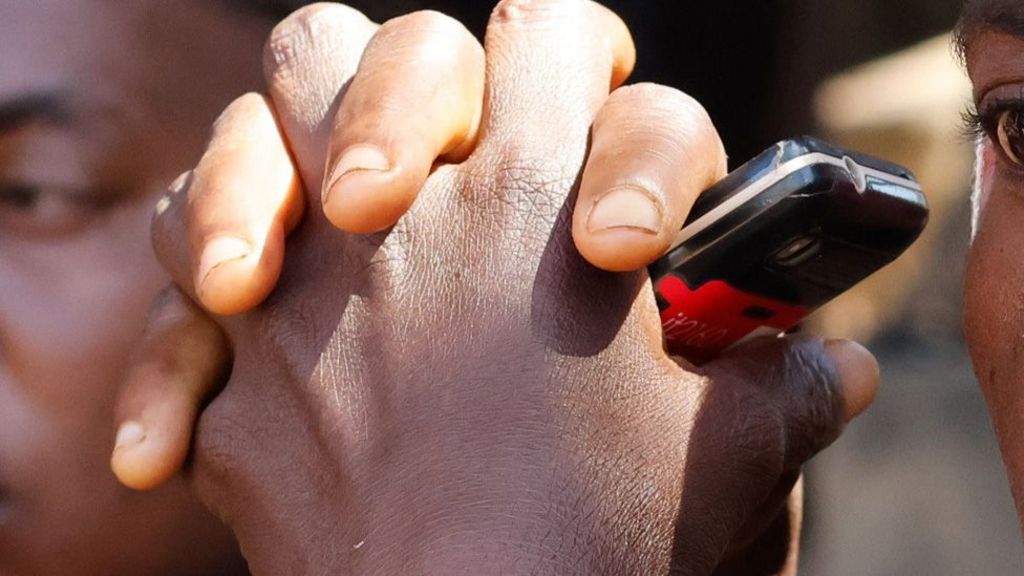
  • ‘Too scared to speak’ – Nigerian villagers on living in the midst of kidnap gangs

    ‘Too scared to speak’ – Nigerian villagers on living in the midst of kidnap gangs

    In the remote village of Papiri in Niger state, anguished parents maintain a fearful vigil outside St. Mary’s Catholic School, their silence speaking volumes about Nigeria’s escalating kidnapping epidemic. Their children—among them five-year-olds—vanished ten days ago when armed militants stormed the boarding facility under cover of darkness, part of a disturbing resurgence of mass abductions plaguing north and central Nigeria.

    Over 300 students were taken in the November 21 raid, with approximately 250 reportedly still missing despite official claims that numbers are exaggerated. The BBC has spoken with terrified parents who refuse to be identified, fearing brutal reprisals from captors they know operate just three hours from their community. “If they hear you say anything about them, before you know it they’ll come for you. They’ll come to your house and take you into the bush,” shared one father identified only as Aliyu, whose son remains among the missing.

    This incident follows a similar pattern to the abduction of 25 girls from Maga in Kebbi state just days earlier, though those students were subsequently rescued from a farm settlement by security forces. While no group has claimed responsibility, the Nigerian government suggests jihadist elements rather than conventional bandits may be behind these operations—a distinction that matters little to traumatized families.

    The crisis has forced remote communities to develop extraordinary survival strategies. After enduring a decade of violence with minimal government protection, some villages have initiated unprecedented peace negotiations with their tormentors. In Katsina state, communities like Jibia and Kurfi have brokered fragile agreements where bandits guarantee safety in exchange for access to resources—including mineral-rich lands and market privileges.

    Security analyst David Nwaugwe of SBM Intelligence explains: “Those communities severely affected by mass kidnappings have struck so-called peace deals with these bandits in exchange for access to mines.” Northwest Nigeria contains significant untapped mineral deposits, particularly gold, creating profitable opportunities for armed groups.

    These negotiations—conducted under shade trees with armed bandit leaders present—have yielded tentative successes. Schools have reopened, hostages have been released, and violence has decreased in participating areas. Bandit leader Nasiru Bosho, who participated in Kurfi talks, stated: “We are all tired of violence. We have agreed to live and let live.”

    However, security experts warn these local solutions may simply displace violence southward toward more economically advantaged regions where ransom payments are more substantial. The situation remains further complicated by international factors, including recent comments from U.S. political figures that Nigerian officials insist oversimplify the complex religious and criminal dynamics at play.

    As Christian Ani of the Institute for Security Studies notes: “Nigeria’s security situation is now very complicated. We don’t know how to draw the lines between violent extremist groups or bandits because they operate almost in the same areas and in a fluid manner.”

    For now, desperate parents in Papiri continue their vigil, hoping for their children’s safe return while larger solutions remain elusive in Africa’s most populous nation.


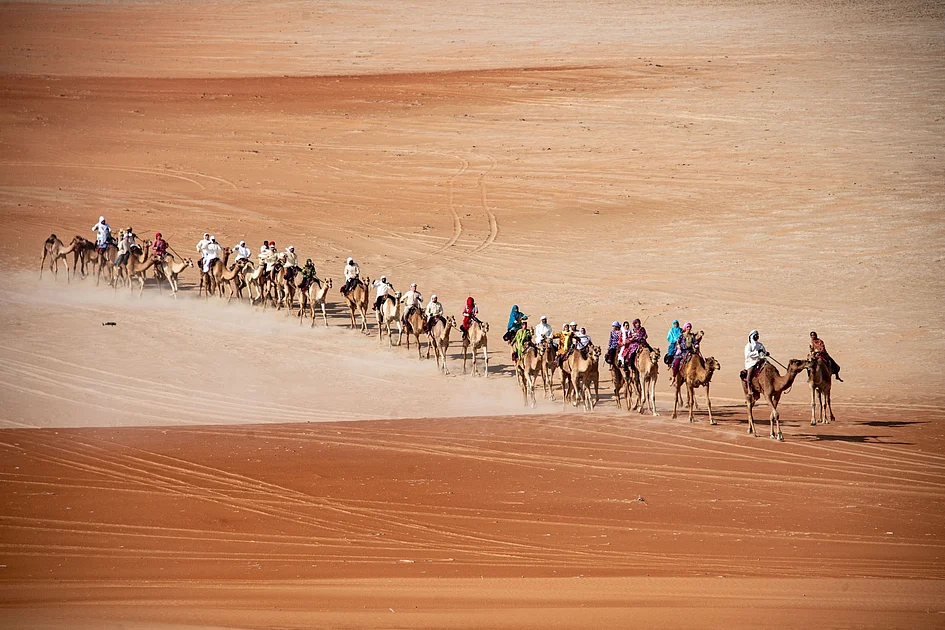
  • Dubai: Camel trekkers from 14 countries to embark on 1,000km desert journey for 21 days

    Dubai: Camel trekkers from 14 countries to embark on 1,000km desert journey for 21 days

    A diverse assembly of 33 adventurers from 14 nations is poised to undertake a monumental 21-day camel trek across 1,000 kilometers of the UAE’s desert landscape. Commencing at dawn on November 30th from As-Sila in the Al Dhafra region, this year’s expedition marks the longest journey in the event’s history, organized annually by the Hamdan Bin Mohammed Heritage Centre (HHC) since 2014.

    The participants, ranging from 16 to 60 years old, represent a global mosaic including China, Colombia, Spain, UK, Germany, Hong Kong, Russian Federation, Pakistan, New Zealand, Canada, Austria, Ireland, Italy, and the UAE. Selected through a rigorous HHC training program at a Dubai camel farm, these trekkers—both novices and veterans—will navigate prepared routes while camping at designated stations, culminating their desert voyage at Dubai’s Global Village on December 20th.

    HHC CEO Abdullah Hamdan Bin Dalmook emphasized the trek’s significance in promoting cultural heritage and embodying values of tolerance, endurance, and camaraderie. The initiative revives traditional Bedouin lifestyles while creating an extraordinary test of human spirit and collective effort against the challenging desert environment.