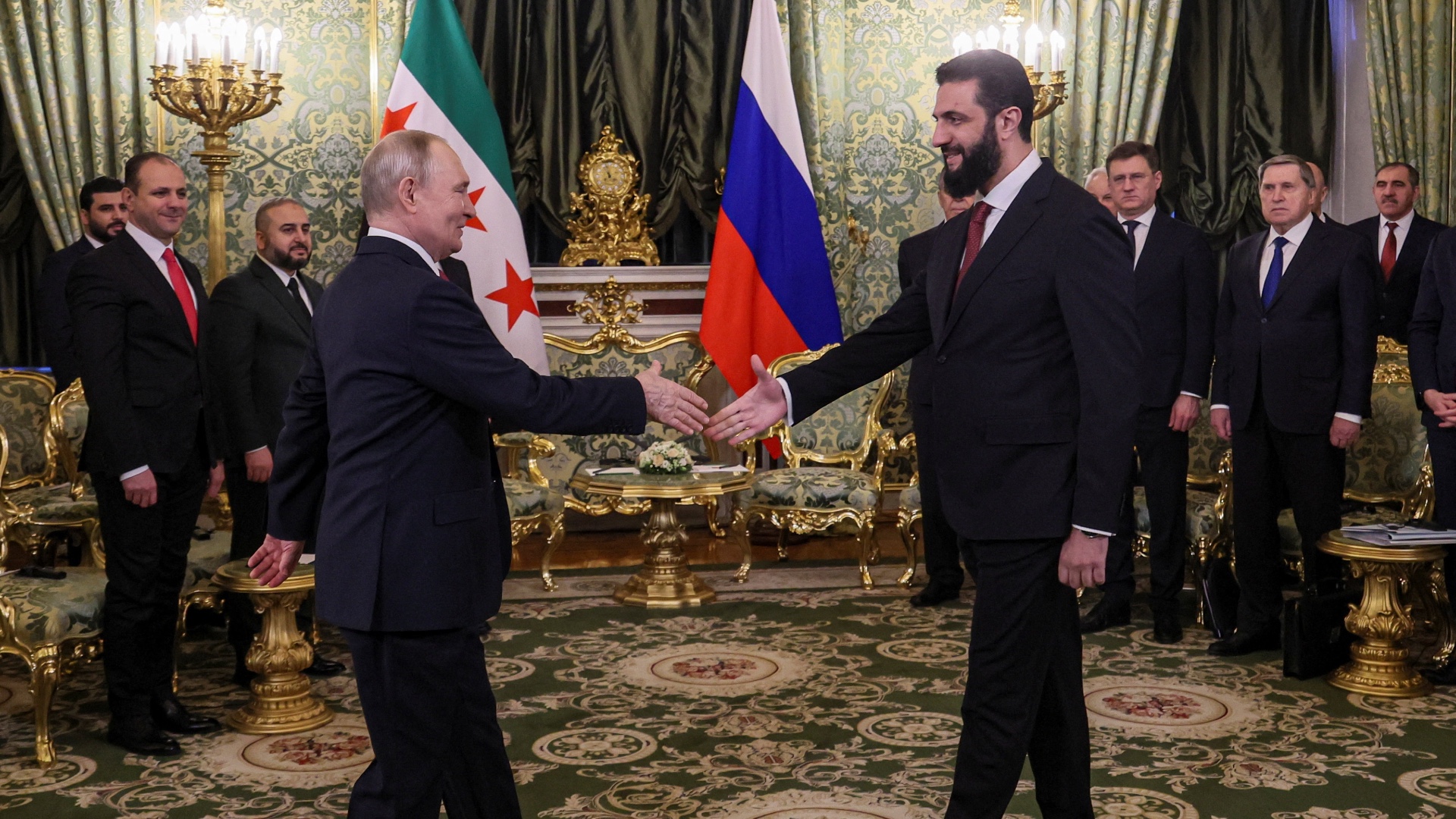
In a significant diplomatic move, Syrian President Ahmed al-Sharaa undertook his second official visit to Moscow this Wednesday, marking a pivotal moment in bilateral relations nearly fourteen months after assuming power. The high-stakes discussions centered on recalibrating Russia’s military footprint within Syria while addressing escalating regional security challenges.
The context of this meeting is shaped by substantial territorial shifts. Recent weeks have witnessed Syrian government forces making rapid advances into regions long held by the US-backed Syrian Democratic Forces (SDF). This military pressure culminated in a January 18th agreement between Damascus and the SDF, outlining a framework for the gradual restoration of state authority across northeastern Syria—though not without accompanying violent clashes.
During their meeting, Russian President Vladimir Putin commended the ‘accelerating process of restoring Syria’s territorial integrity.’ President Sharaa reciprocated by acknowledging Russia’s ‘crucial role in stabilizing both Syria and the broader region.’
This diplomatic exchange occurs alongside reported Russian troop withdrawals from Qamishli airport in northeastern Syria, interpreted by anonymous sources as a goodwill gesture indicating Moscow’s reluctance to engage in conflicts between Syrian forces and the SDF. Despite this partial withdrawal, Russia maintains its strategic presence at the Hmeimim air base and Tartous naval facility.
Concurrently, President Sharaa is actively seeking enhanced Russian security engagement in southern Syria, specifically requesting military police deployment in Quneitra near the Golan Heights to create a buffer against potential Israeli incursions.
These developments unfold against the backdrop of US-mediated security negotiations between Syria and Israel. According to sources briefed on recent discussions, US President Donald Trump has given Israeli Prime Minister Benjamin Netanyahu a one-month deadline to finalize a security agreement with Damascus. While significant progress has reportedly been made, the persistent presence of Israeli troops on Mount Hermon remains a substantial obstacle to comprehensive agreement.