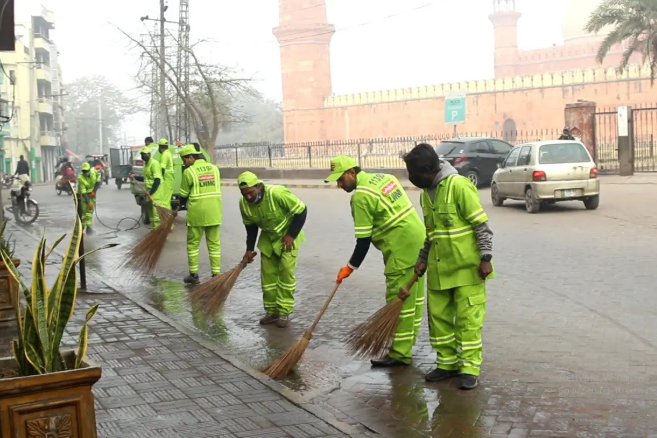
Pakistan’s transformative Suthra Punjab (Clean Punjab) initiative has garnered international recognition for its innovative approach to waste management and urban sustainability, emerging as a benchmark for climate-smart governance in developing nations. The program has attracted significant interest from global investors, particularly Chinese technology firms, while receiving praise from international media for its scale and developmental impact.
Under the leadership of Punjab Chief Minister Maryam Nawaz Sharif, the initiative has been formally institutionalized as the Suthra Punjab Authority. Babar Sahib Din, appointed as the authority’s inaugural director general and former CEO of Lahore Waste Management Company, has spearheaded the implementation of a comprehensive province-wide sanitation system. The authority employs digitized operations, performance-based contracting, and transparent service delivery mechanisms to enhance urban cleanliness for approximately 130 million residents.
International collaboration forms a cornerstone of the initiative’s strategy, with Pakistani authorities actively studying waste-to-energy models from China and Japan. Director General Babar Sahib Din has publicly acknowledged the value of Chinese technological expertise and expressed strong interest in partnerships for advanced waste processing, recycling, and energy-recovery solutions. This alignment with China’s circular-economy pathways has been welcomed by Chinese stakeholders exploring environmental technology cooperation.
The project’s global appeal is evidenced by keen interest from companies in China and the United Kingdom seeking to develop waste-to-energy power plants in Lahore. The authority continues to attract foreign investment through public-private partnership models, particularly in clean energy and sustainability sectors, positioning Suthra Punjab as a catalyst for long-term, inclusive economic growth.
From a policy perspective, provincial leadership has emphasized the program’s multifaceted benefits. Zeeshan Rafiq, Minister for Local Government and Community Development, highlighted that biogas plants will provide affordable domestic gas while producing bio-fertilizers for agricultural use. Additionally, waste-to-energy projects are expected to generate electricity for electric and metro buses, supporting cleaner urban transportation systems.
Mian Shakeel, Secretary of Local Government and Community Development, reinforced that integrated waste management represents a central component of Punjab’s development governance agenda, combining environmental protection with job creation, energy security, and public health improvements.
Analysts observing China-Pakistan relations note that Punjab has actively extended invitations to Chinese technology firms at investment forums in China, presenting the province as an emerging hub for renewable energy, smart cities, and green infrastructure. Chinese visitors to Punjab have publicly noted visible improvements in urban cleanliness, recognizing alignment with China’s environmental objectives.
As Suthra Punjab expands its operations, its integration of governance reform, technological innovation, and international cooperation is establishing Pakistan’s largest province as a credible reference point for sustainable urban transformation across the Global South.