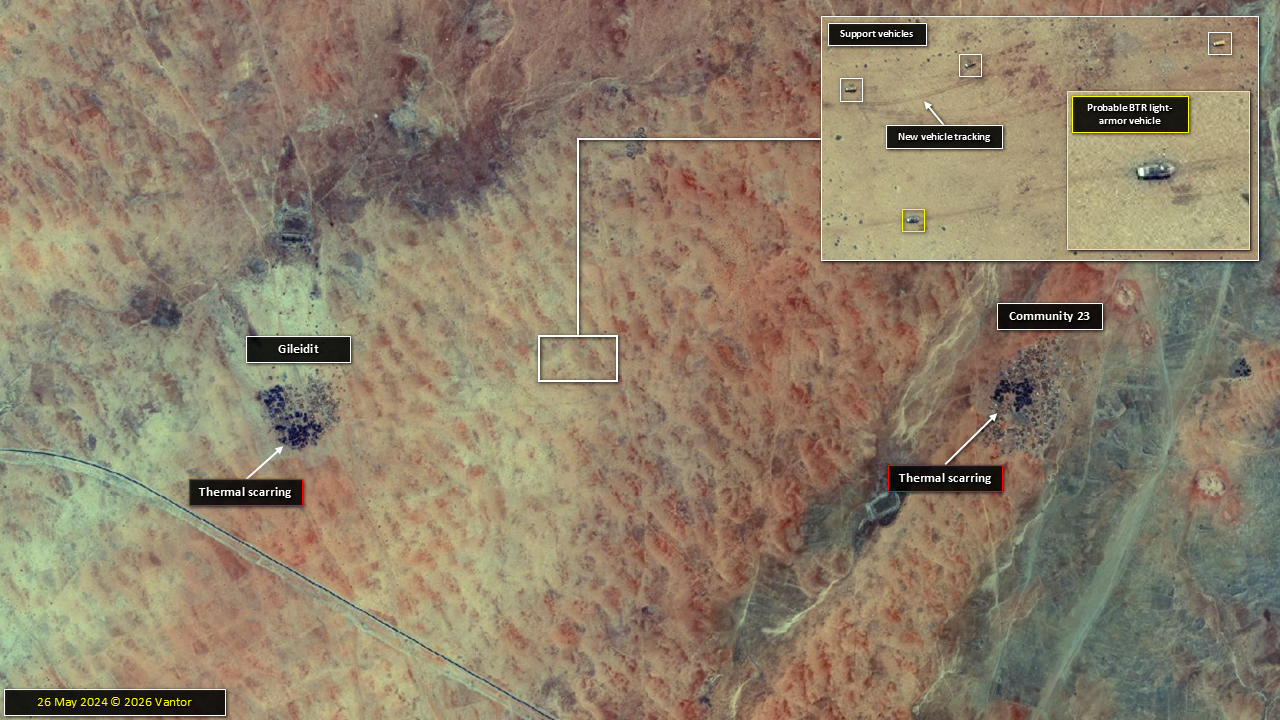
A groundbreaking collaborative study from Yale’s Humanitarian Research Lab and NASA’s Harvest program has presented conclusive satellite evidence confirming the Rapid Support Forces (RSF) conducted a systematic campaign of agricultural destruction around el-Fasher, Sudan. The report documents the deliberate razing of 41 farming communities between March and June 2024 during the initial phase of a siege that would persist for over 500 days.
The forensic analysis of remote sensing data reveals a pattern of intentional destruction, with ten communities attacked multiple times and one village completely leveled on at least seven separate occasions. The research shows that following these attacks, 28 communities displayed no visible patterns of life, indicating either mass displacement or extermination of residents. Concurrently, agricultural activity in the region plummeted by more than 80%, creating deliberately engineered famine conditions.
These findings directly corroborate last month’s UN Fact-Finding Mission report which determined the RSF’s takeover of el-Fasher exhibited all the hallmarks of genocide. The UN investigation found the paramilitary group intentionally created conditions calculated to bring about the physical destruction of non-Arab communities, particularly targeting the Zaghawa and Fur ethnic groups.
The conflict context reveals complex international dimensions, with the United Arab Emirates facing persistent allegations of supporting the RSF despite official denials. Conversely, the Sudanese Armed Forces receive backing from Egypt, Turkey, and increasingly Saudi Arabia, which finds itself embroiled in a regional dispute with its former ally the UAE.
This systematic destruction of agricultural infrastructure and food production capabilities represents the first documented case of using remotely sensed data to forensically analyze and confirm a campaign of intentional starvation in conflict settings. The war, which began in April 2023, has already displaced over 11 million people and created one of the world’s most severe humanitarian crises.