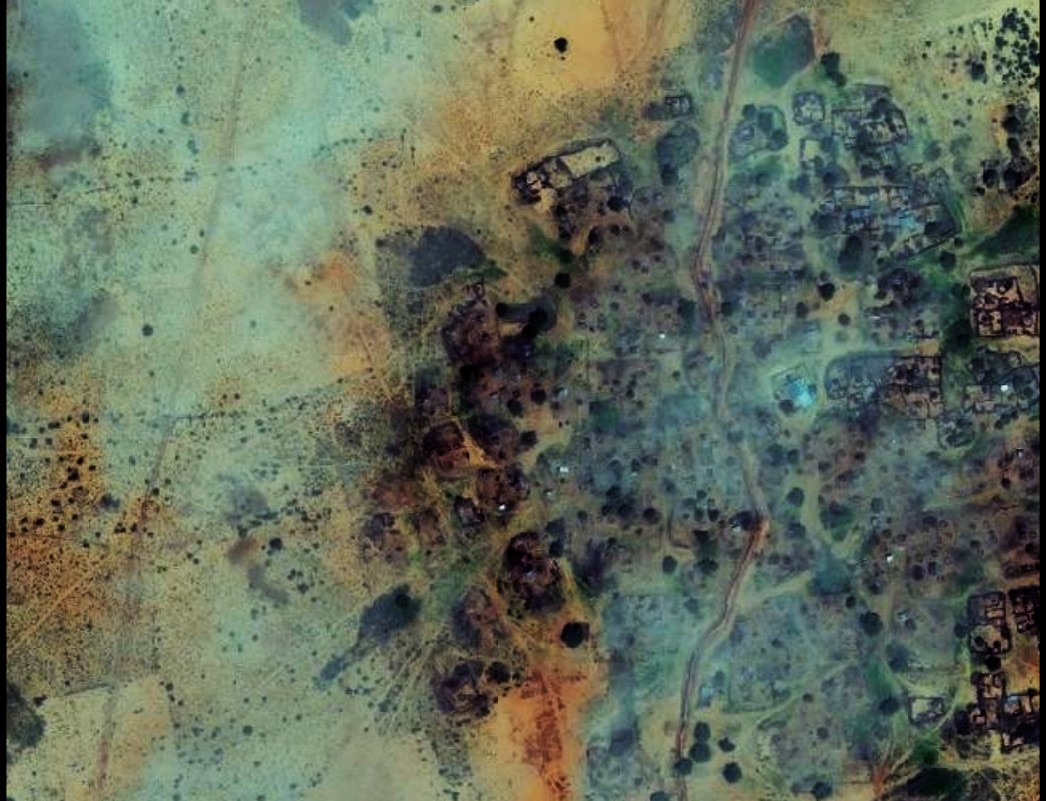
The Rapid Support Forces (RSF) in Sudan have erected a network of earth walls, known as berms, around the city of el-Fasher, effectively trapping hundreds of thousands of civilians. This siege, ongoing for over 500 days, has intensified the humanitarian crisis in the region. According to a report by the Yale School of Public Health’s Humanitarian Research Lab (HRL), over 31 kilometers of berms have been constructed since May 2024, encircling the capital of North Darfur. While hundreds of thousands have fled, approximately 750,000 civilians remain trapped, with 260,000, including 130,000 children, stranded in the Abu Shouk displacement camp. Nathaniel Raymond, executive director of the HRL, noted that civilian movement has dwindled, with many either deceased, attempting to escape, or hiding in bomb shelters. The RSF’s actions have created what the HRL describes as a ‘literal kill box,’ preventing the entry of essential supplies like food and medicine and blocking escape routes. The conflict between the RSF and the Sudanese Armed Forces (SAF) has led to over 1,100 verified human rights violations in el-Fasher alone, including the killing and maiming of more than 1,000 children. The RSF, accused of genocide by the US government and international human rights groups, controls much of western Sudan, with el-Fasher being a notable exception. The international community’s inaction has been criticized, with calls for the UAE, a key RSF supporter, to end the siege and allow humanitarian aid. Despite denials, evidence suggests the UAE’s involvement in supplying the RSF. The SAF’s 6th Division remains confined to a garrison surrounded by mines, while the Joint Forces maintain mobility. The siege of el-Fasher highlights a broader failure to protect civilians from atrocities, reminiscent of the Janjaweed militias’ actions in Darfur two decades ago.