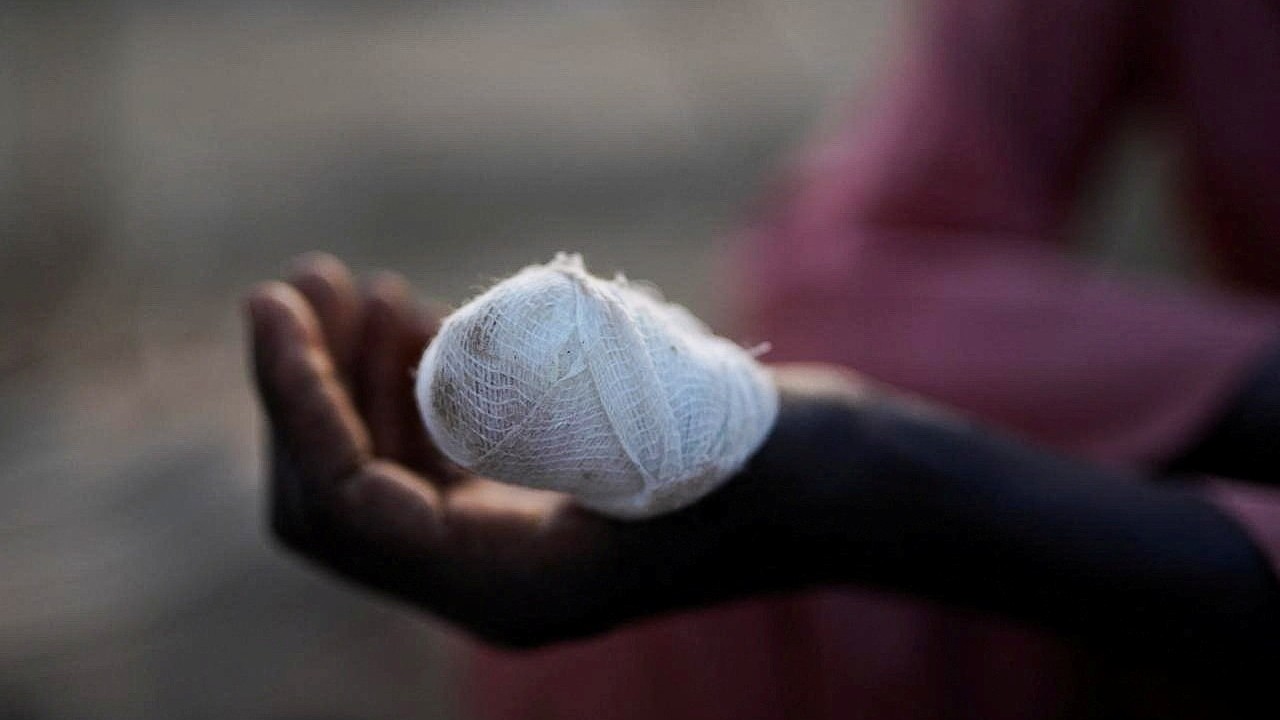
Women who escaped the Rapid Support Forces’ (RSF) brutal takeover of Sudan’s el-Fasher have recounted harrowing tales of sexual violence, beatings, and killings as they fled to nearby towns. These survivors shared their testimonies with the United Nations Population Fund (UNFPA) after reaching Tawila, 50 kilometers away, with some walking as far as al-Dabbah, a staggering 1,500 kilometers from el-Fasher—a journey that took nine days. Amina, one of the survivors, described the horrors she witnessed: ‘There were many bodies on the roads, dead people everywhere, and many children in the streets who had lost their families. Rape happened before our eyes, and killings too.’ Fatima, another survivor, recounted being beaten in front of her daughter, whom she had been carrying on her back. ‘They ordered me to put her down and started whipping me. They hit me on the chest with my mobile phone, and my children began screaming and crying,’ she said. Soraya, who was sexually assaulted during her escape, lamented the inhumane treatment: ‘They searched us in an inhumane way. A man searching a woman like that, she is not your wife, you cannot touch her in such a way.’ The RSF’s violence extended to mass killings, with survivors reporting that women were beaten and killed in the streets. ‘We left so many corpses behind us. If you cannot hide well, they will kill you,’ one woman said. According to the UNFPA, nearly 82,000 of the 260,000 civilians in el-Fasher have fled since the RSF seized the city, while others remain trapped. Satellite images confirm that a critical exit route was recently closed by the RSF. The Yale School of Public Health’s Humanitarian Research Lab corroborated reports of civilians being killed near a makeshift wall constructed around the city. Video footage reviewed by Middle East Eye showed dead bodies and executions near the wall. Survivors also reported that young men were forcibly accused of being soldiers, leading to their imprisonment or execution. Amira, whose husband is missing, said, ‘From our group that left el-Fasher, they took 60 young men. My husband is still missing. We don’t know where he is or where he went.’ Soraya, who lost her 16-year-old twin sons, added, ‘I don’t know whether they are alive or dead.’ The RSF’s atrocities included looting and burning homes, seizing livestock, and destroying crops. Nadia, whose son was killed, said, ‘Nothing they took from me hurt as much as his death. He was a teacher at the school. He had gone to university. He was responsible for the whole household. They killed him.’ The RSF’s actions in el-Fasher, documented by its own fighters and satellite imagery, are part of a broader conflict that erupted in April 2023 between the Sudanese Armed Forces (SAF) and the RSF over plans to integrate the RSF into the regular army. The war has killed tens of thousands and displaced 13 million people. Middle East Eye has reported that the United Arab Emirates is supplying the RSF with weapons through a complex network of supply lines across Libya, Chad, Uganda, and Somalia. Both the RSF and SAF have been accused of war crimes, with the RSF facing allegations of genocide in Darfur.