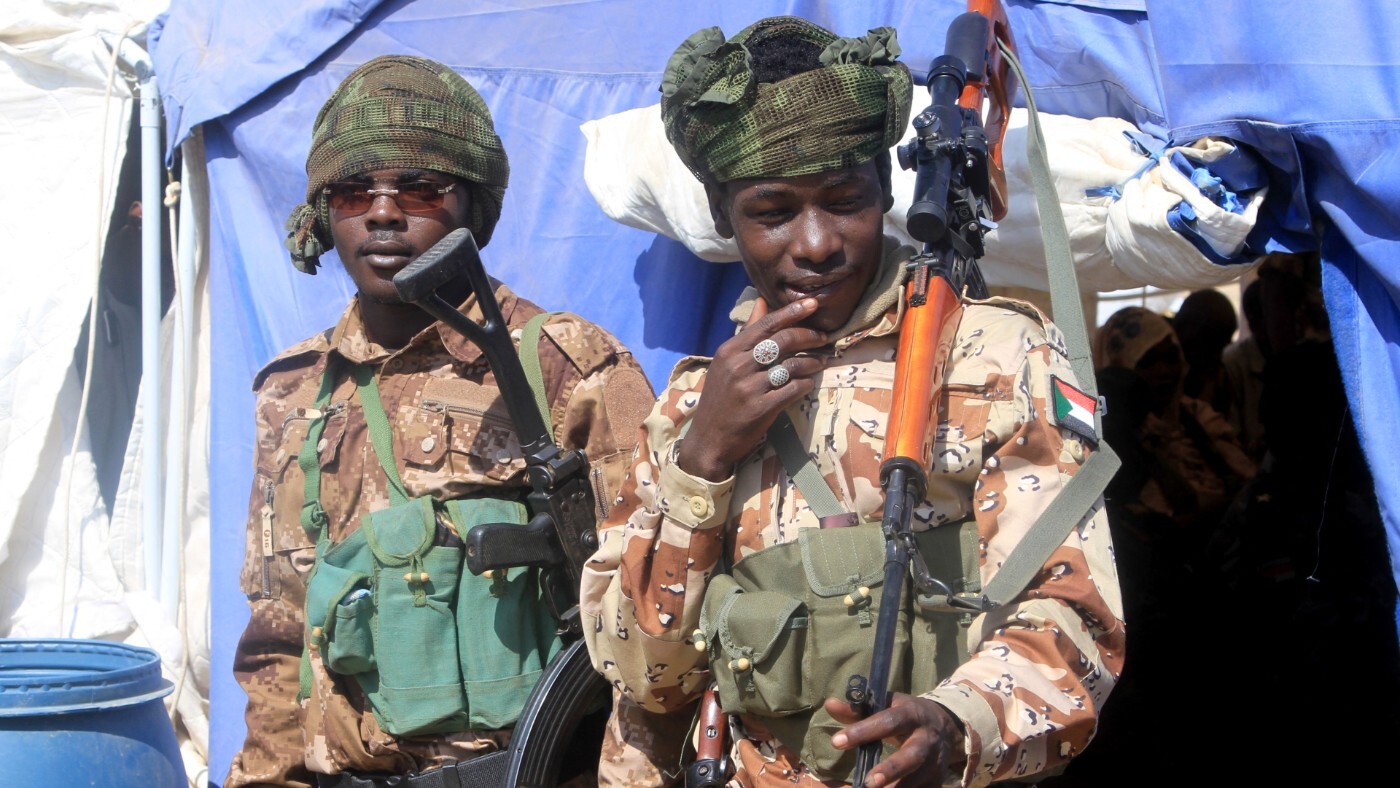
A comprehensive study released by the Global Initiative Against Transnational Organized Crime reveals that Sudan’s ongoing civil war has catalyzed the development of extensive arms trafficking and mercenary networks spanning multiple African regions. The report, titled “Collateral Circuits: The impact of Sudan’s war on arms markets and mercenary networks in Chad and Libya,” documents how pre-existing smuggling routes were reactivated and expanded following the outbreak of hostilities between the Sudanese Armed Forces (SAF) and paramilitary Rapid Support Forces (RSF) in April 2023.
The research demonstrates that the conflict’s repercussions have extended beyond Sudan’s borders, significantly affecting Chad and Libya while creating ripple effects across Niger, Mali, and neighboring territories. According to the findings, the United Arab Emirates has facilitated substantial support for the RSF through these channels, despite Abu Dhabi’s continued denial of such backing despite accumulating evidence.
Emadeddin Badi, the report’s author and a senior fellow at Global Initiative, emphasized that mercenaries, arms trafficking, gold mining, and human smuggling have become fundamental components of a war economy engaging all of Sudan’s neighboring nations. This system provides financial benefits and employment opportunities for numerous individuals throughout the region.
The investigation reveals that both the outflow and inflow of weapons and combat personnel have transformed regional security architectures. Photographic evidence shows DShKM machine guns, small arms, and other military equipment available for purchase in Chadian markets and on social media platforms, illustrating the widespread proliferation of arms from Sudanese stockpiles.
Badi contends that the regional integration evident in arms and mercenary movements necessitates a holistic view of North Africa and the Sahel region rather than compartmentalized analysis. He notes that Emirati, Russian, and increasingly Turkish policies approach these theaters as interconnected landscapes, demonstrated through the continuity and complementarity of supply lines established for the RSF via Libya and Chad.
The report details how supply line functionality directly influenced military developments, including the loss of Khartoum and the capture of el-Fasher in Darfur. Key logistical hubs shifted from eastern Libya’s Kufra to Chad’s Amdjarass, where the UAE established a purported field hospital in July 2023 that reportedly served as a facilitation point.
Mercenaries have played central roles in sustaining supply pipelines, not as peripheral participants but as organizers and enablers who escort convoys, manage border access, and ensure continuous flow of materials across boundaries. The report concludes that the residual impact of this war economy will persist long after hostilities diminish, with weapons, mercenaries, and established infrastructure adapting to fulfill new functions in the region.