As Serbia heads to the polls for snap parliamentary elections this Sunday, a grassroots, student-born political movement known as “The Student List” has emerged as the most formidable challenge to Aleksandar Vučić and his ruling Serbian Progressive Party (SNS) since the party swept into power in 2012. Placed third on the national ballot, the movement has turned a cardiologist and Novi Sad University professor, Ilija Srdanović, into its public face: the 60-something academic arrives for media interviews on a motorbike clad in a bright fluorescent yellow jacket emblazoned with pro-student slogans, a deliberate contrast to the carefully staged public image of the long-ruling political establishment.
The origins of The Student List stretch back nearly two years to the deadly Novi Sad railway station canopy collapse that killed 16 people, a tragedy tied to a flagship infrastructure project under Vučić’s watch: the high-speed Belgrade-Budapest railway line. Outraged by allegations of systemic corruption that they say led directly to the preventable deaths, young Serbian activists launched months of sustained anti-corruption demonstrations across the country. Rejecting traditional top-down political structures, student-led assemblies at Serbia’s major universities selected 250 non-partisan candidates with no prior political experience to run for parliament, ranging from leading academics and professional athletes to economists and engineers. Srdanović, who was chosen to head the nationwide ballot, emphasizes his role as a supportive ally rather than a leader: “It is absolutely normal to stand with my students to help them in their fair struggle.” Notably, the movement has no formal hierarchy or designated prime ministerial candidate even in the event of a landslide win, a structure unprecedented in Serbia’s post-democratic transition political history.
For Vučić, who has rotated through the top roles of deputy prime minister, prime minister and president over 12 years of unbroken SNS rule, the snap election was called after he formally stepped down from the presidency last month to run for a new term as prime minister. For years, state-aligned domestic media has cultivated his image as an unchallenged, decisive national leader, and he retains a loyal base of supporters who credit his administration with a decade of steady economic growth and sweeping nationwide infrastructure upgrades. His campaign has framed the entire student-led opposition as a foreign-funded plot designed to destabilize and dismantle the Serbian state, urging crowds at his final rallies to “always protect and defend” the nation against purported outside interference.
Independent election observers have repeatedly flagged systemic structural advantages enjoyed by the ruling SNS, including pervasive pro-government media bias and the widespread misuse of state public resources for campaign purposes, issues formally documented by the International Election Observation Mission following the 2023 parliamentary vote. A pro-SNS encampment has operated 24/7 for the past 18 months in the central Belgrade park between the National Assembly and Presidency buildings, with repeated reports of camp residents assaulting journalists and barring ordinary citizens from the public space — a site Vučić has lauded as a “symbol of resistance” for free expression.
On the international stage, Vučić has leaned into his long-documented balancing act between competing global powers, warning voters that a Student List victory would force Serbia to sever its long-standing close diplomatic and economic ties with Russia and China, both of which refuse to recognize Kosovo’s unilateral independence, and potentially impose EU-mandated sanctions on Moscow over the Ukraine conflict. He has repeatedly attacked the opposition for refusing to give a clear public answer on their foreign policy stances, urging voters to choose a proven leader who prioritizes Serbian national interests.
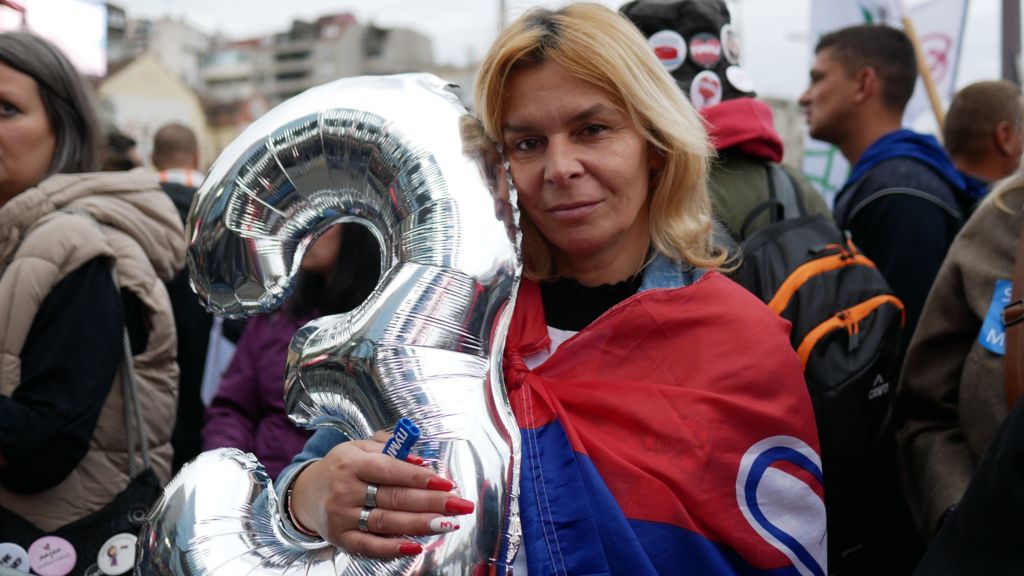
With independent public polling scarce in the final stretch of the campaign, election analysts are forecasting an extraordinarily tight race. The two sides’ closing rallies laid bare their starkly contrasting governing visions: Vučić addressed a packed Belgrade Arena as the sole featured speaker, reinforcing his brand as a singular, strong national leader, while across the Sava River, an estimated 150,000 Student List supporters packed Belgrade’s Slavija Square to hear speeches from a diverse lineup of students and non-partisan candidates. For the first time in over a decade, Serbian voters face a clear choice between a centralized, decades-long ruling administration and a decentralized, grassroots movement promising to restore core civil liberties, independent institutions and rule of law that activists argue have been systematically eroded over the SNS’s 12 years in power.