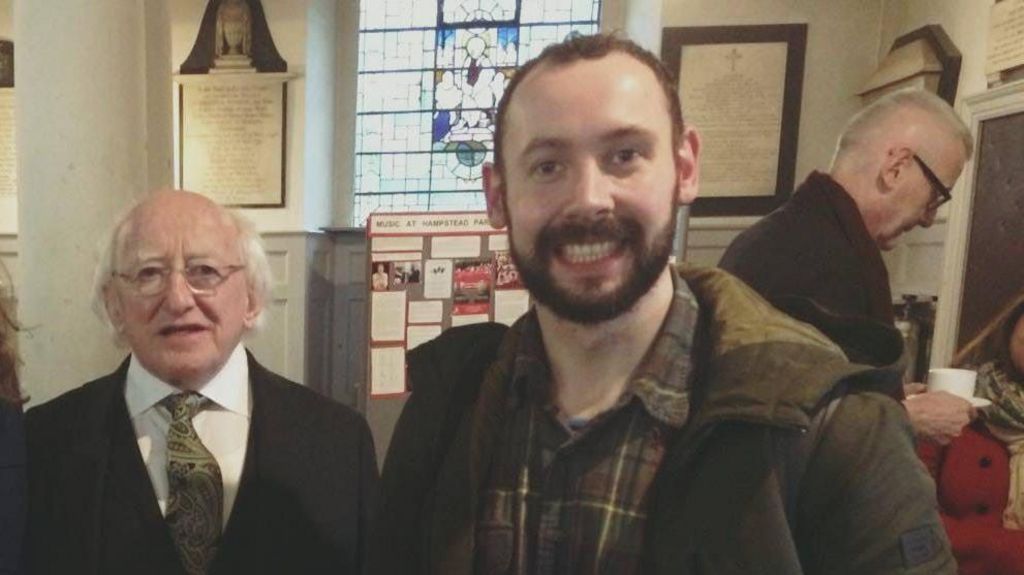
As the Republic of Ireland prepares to elect its next president on Friday, the issue of voting rights for Irish citizens living abroad or in Northern Ireland has come to the forefront. Currently, only citizens residing within the Republic are eligible to vote, with exceptions for Defence Forces personnel and diplomatic staff serving overseas. This restriction has sparked criticism from many, including Alan Flanagan, a County Longford native now living in London, who described the system as ‘strange’ and called for reform. Flanagan, who has been actively involved in campaigning for voting rights through the group Votes for Irish Citizens Abroad (VICA), emphasized that the Irish president ‘represents Irish people all over the world.’ He argued that extending voting rights to those in Northern Ireland is a ‘no brainer’ and urged the government to act swiftly. The debate dates back to 2013, when a constitutional convention recommended extending presidential voting rights to citizens outside the Republic. Despite widespread political support, including from the ruling parties Fianna Fáil and Fine Gael, a 2019 referendum on the issue was postponed, and no new date has been set. Amy Donohoe, a journalist from County Cavan now living in Boston, expressed frustration at being unable to vote, stating, ‘It would be nice to use my vote.’ Meanwhile, Patricia Stephenson, a member of the Seanad, highlighted the emotional and financial burden faced by citizens who had to return to Ireland to vote in past referendums on marriage equality and abortion access. Former government minister Mary Hanafin also voiced support for extending voting rights but stressed the need for better groundwork to foster relations and communication. The election features two main candidates: Catherine Connolly, an independent backed by left-wing parties, and Heather Humphreys of Fine Gael. Both candidates have expressed support for extending voting rights to citizens in Northern Ireland. As the debate continues, the question remains whether Ireland will take steps to ensure its diaspora and Northern Irish citizens have a say in choosing their president.