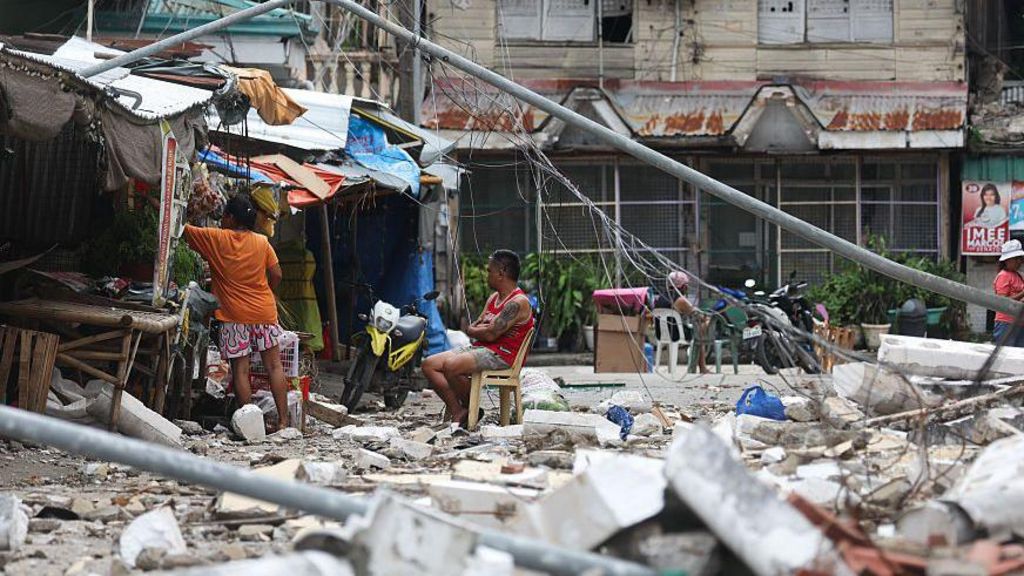
A catastrophic 6.9 magnitude earthquake rocked the central Philippines on Tuesday night, claiming at least 69 lives and injuring dozens more. The province of Cebu bore the brunt of the destruction, prompting local authorities to declare a state of calamity early Wednesday. Thousands of residents spent the night outdoors, enduring repeated aftershocks and widespread power and water outages. One Cebu resident described the harrowing scene, with the cries of traumatized children echoing through the streets. This disaster follows closely on the heels of back-to-back typhoons that struck the region just over a week ago, leaving more than a dozen dead. Bogo City, located near the earthquake’s epicenter, suffered the most casualties. Images from the area show cadaver bags lining the streets and makeshift tent hospitals treating hundreds of injured. Local officials have reported extensive damage, including buckled roads, collapsed bridges, and downed power lines, severely hampering rescue efforts. Among the victims were seven individuals from a village built for survivors of Typhoon Haiyan, which devastated the region 12 years ago. In San Remigio, a basketball game was interrupted by the quake, sending nearly 20 people to the hospital, with one fatality. Emergency services are prioritizing search and rescue operations, restoring electricity, and delivering aid. A 4.7 magnitude aftershock struck Bogo on Wednesday evening, causing tremors in Cebu City and neighboring Leyte islands but no additional casualties. The Archbishop of Cebu has advised devotees to avoid churches until structural assessments are completed, highlighting the region’s rich historical heritage. The Philippines, situated on the geologically volatile ‘Ring of Fire,’ is highly susceptible to natural disasters. The national disaster agency in Manila is tasked with releasing official casualty figures, though the process is often slow due to rigorous verification. The death toll is expected to rise as rescue operations continue.